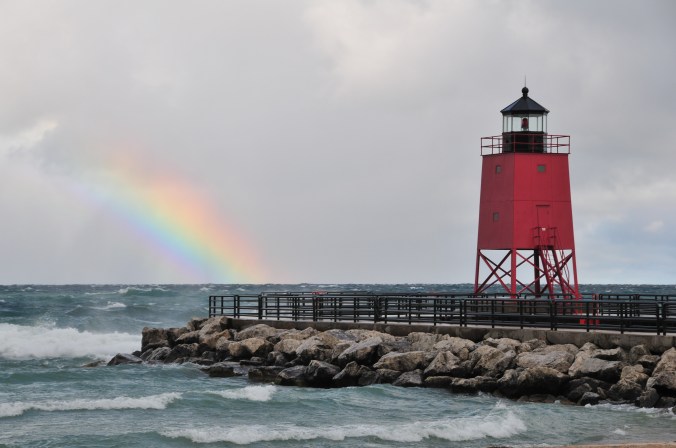
Untitled. abarndweller. CC-BY
The Scottish poet Robert Burns wrote, in “To A Louse: On seeing one on a Lady’s Bonnet at Church”: O wad some Pow’r the giftie gie us/ To see oursels as others see us! It wad frae monie a blunder free us…
I have often pondered that idea, people needing to see themselves as others see them. To see myself as others see me. What a frightening prospect. Certainly the power to see ourselves as others see us would free us from many a blunder … one would hope.
The lines spark a question I pose to myself and teacher colleagues: What signals are we unwittingly sending to students?
Years ago, I wasn’t sure I wanted to teach. I thought I would try it, almost reluctantly, as I needed a job and my own children were still in school. I wasn’t thinking of teaching as a calling or whether or not I was cut out for it. I took a temporary position, fifth grade remediation in reading and math, with some trepidation.
“I am not sure what to do,” I confessed to the hiring principal. “I don’t know if I can really help the kids.”
She smiled. “Just love them. The rest will come.”
Here goes, I thought on Day One, as I stepped into a classroom where kids milled about, working collaboratively on math. It’s sink or swim.
From across the room, a boy saw me standing in the doorway. He didn’t know me, didn’t know why I was there, but he shot across the room through the throng of his classmates to throw his arms around me.
That was my induction to being a public educator.
A child, sinking fast, clung to me like I was a life preserver. Perhaps he perceived, instantly, that we were in – or out – of the same boat. It was sink or swim for both of us.
In this classroom, I watched the boy try his hardest to swim. He struggled academically. He struggled with controlling his impulses. He struggled socioeconomically – he wore the same heavy black ski jacket every day, even when the weather was hot. He was chastised by his teacher for every infraction, great or small. The teacher – widely respected by colleagues – was clearly suffering from burnout, undoubtedly tired of swimming herself. Whether or not she intended it, she sent a signal: Do not approach me or question me.
Do we, as teachers, send a signal – with or without words – that we are safe harbors or treacherous ground?
I remembered a teacher of my own. She stayed in a constant state of frustration with our geometry class, once giving me detention for leaving paper in my desk despite my impassioned protest that I hadn’t done it. Math wasn’t my strong suit and I sank to the point of dropping the course, as I had all the math credits I needed to graduate. Later that year I landed a role in the school play and this teacher came to watch it. As people congratulated me backstage after the performance, this teacher stepped forward:
“Well,” she said, “I never would have believed you had it in you.”
You decide: Would I have ever been successful in her class?
One last note on my little friend back in the fifth grade: He went on to graduate.
On his behalf, I thank all those teachers who were, along the way, safe harbors for him.
Reflect: What messages do you send to others, verbally and non-verbally, about their value? Think of the teachers you had: Were they repellents to the learning in their classrooms, or were they encouragers? Were they the treacherous ground or the safe harbors? Write. Find a viable preserver when you need to. Rest a for bit. Then keep on swimming, mindful of those who are swimming so hard, so close by.
Discover more from lit bits and pieces
Subscribe to get the latest posts sent to your email.
 lit bits and pieces
I think about this frequently! I’m a teacher-librarian at a Title 1 school where less than 1% look like me. I feel I have added “pressure” to prove who I am and that I love each and every one of my 589 students. And that I want each and everyone of them to succeed. Some days are easy. Some are not. It’s what I do on the “are not” days that I think make the biggest difference. Thank you for your thoughtful post!
LikeLike
Thank you for your extraordinarily thoughtful, reflective reply! I love your point about what we do on the “are not” days being so important. So true. You’re undoubtedly a great blessing and encouragement to your students.
LikeLike