The swallows

In a corner
of a window
sheltered by
the carport
at my son’s home

a pair of swallows
built a nest

not well

as my son realized
one morning
when he found
a hatchling
naked, new
and dead
on the concrete
floor

the others
seemed safe
in the faulty nest

until the next day
when my boy
found all
the swallow babies
naked, new
so tiny
so dinosauresque
splayed across
the concrete
floor

some still living

and their mother
fluttering over by
the recycling bin
in the corner
crying
trying
to gather
her broken babies

they couldn’t be saved
my boy told me
with a breaking
in his voice

so I buried them
around
the oak
tree

I cannot think
about the ring
of baby birds
there in the ground
among the roots
of the old live oak

instead I stand
under the carport
noting the stillness
of the air

the silence
naked, new
in the absence
of swallows

somewhere out there
a mama
knows how much
she’s lost

like a child
I wonder
if she grieves

I grieve
for her
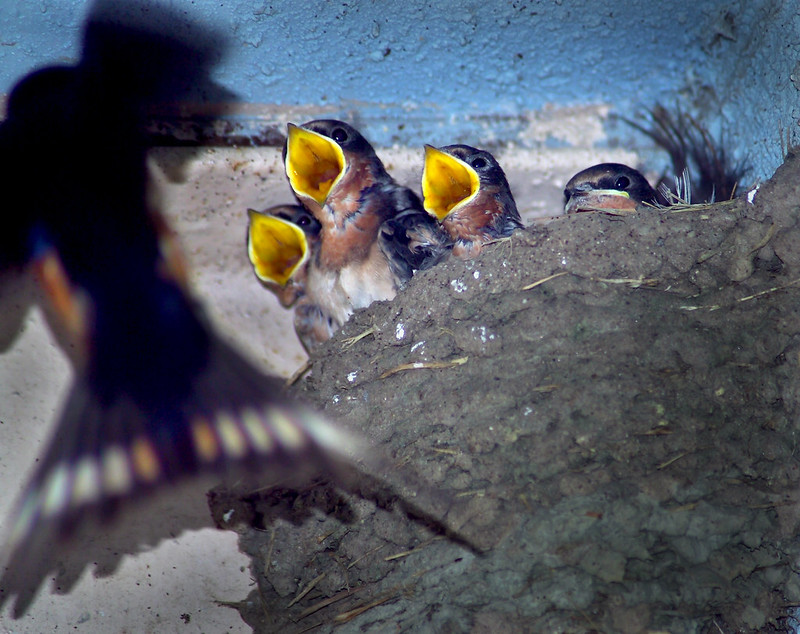

Baby swallows singing to their mother. Brookhaven National LaboratoryCC BY-NC-ND 2.0.


Patch of earth

Sunny afternoon
visiting my son

my granddaughter
walks me out
to a patch
of dusty gray soil
shadowed by
the old live oak
not far from
the swingset

here, she says,
is where
we saw the turtle
laying eggs
then she
went away
into the woods

that is the way
of turtles, I say
she will not
come back

my granddaughter nods
and I recall
that her first word
was turtle

my son has placed
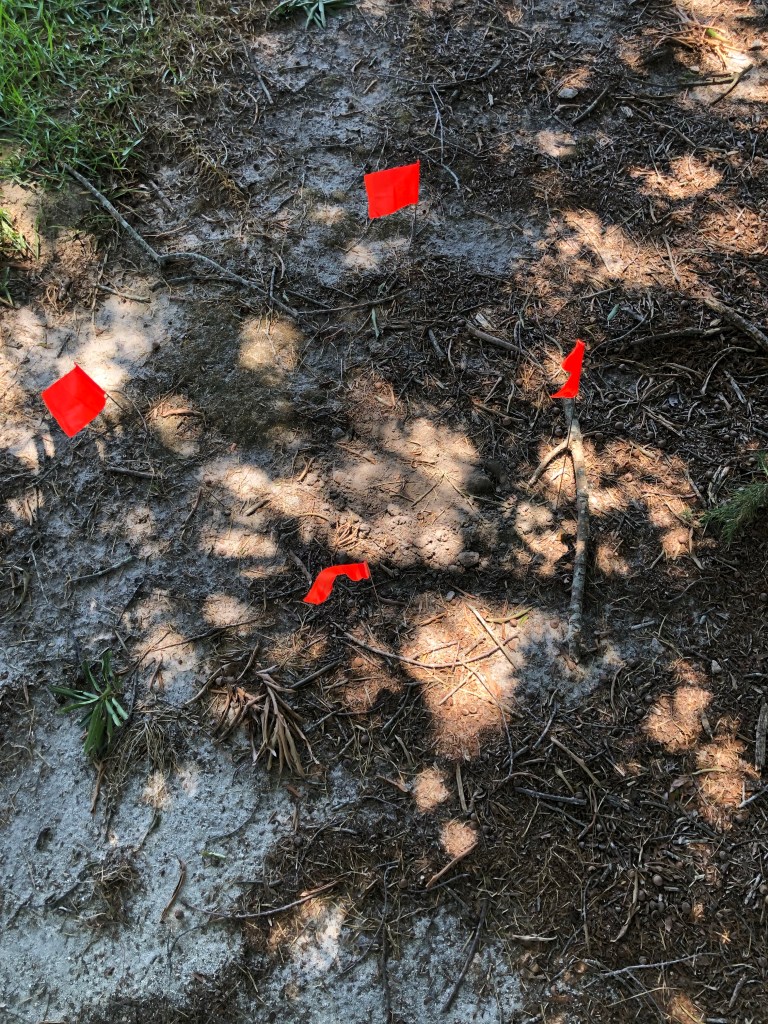
fluorescent stake flags
around this patch
of incubating earth

for the benefit
of his expectant
child

Not sure how many eggs are hidden here in this patch of earth so near my granddaughter’s playground.

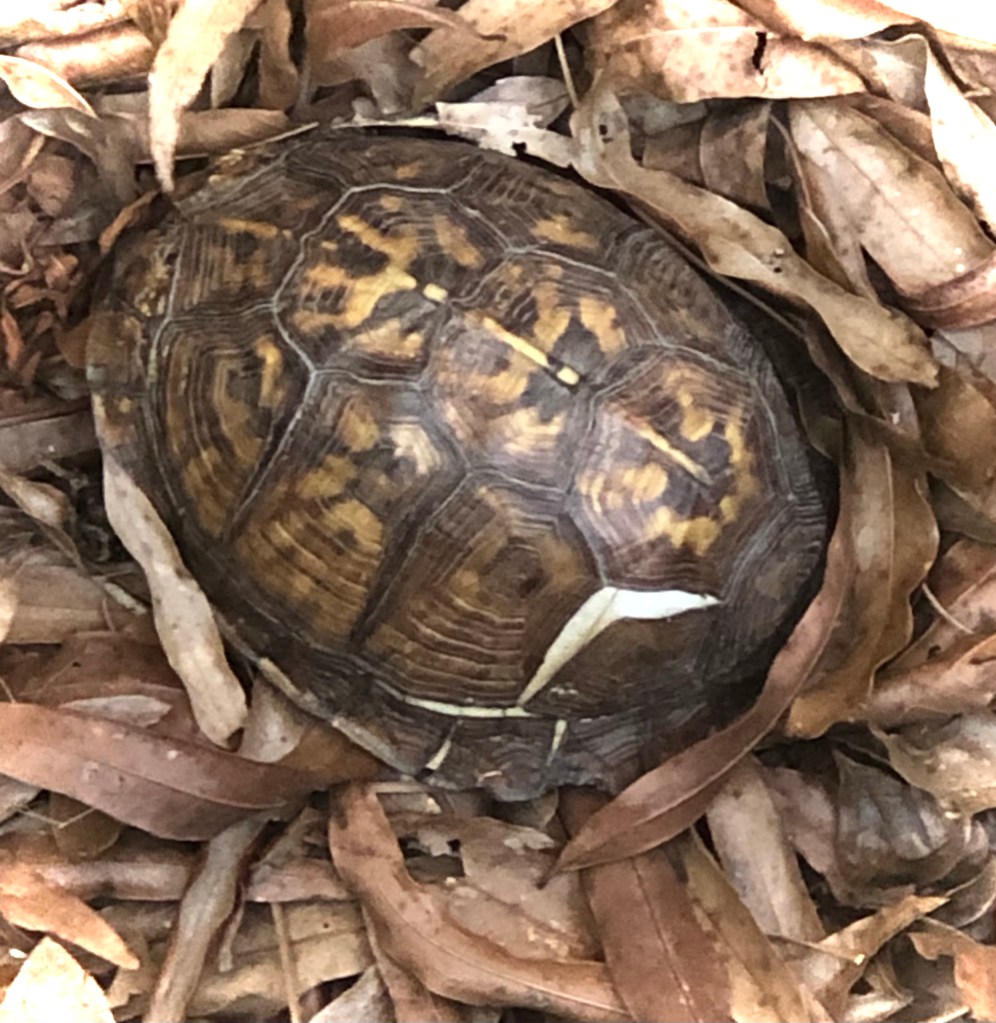
Empty box turtle shell discovered by my son’s basement. The turtle died some time ago. Not the mother, but apparently she was also an eastern box turtle. Under good conditions, the eastern box turtle can live over a hundred years. It’s a symbol for patience and is also the state reptile of North Carolina.

Mimosa memory

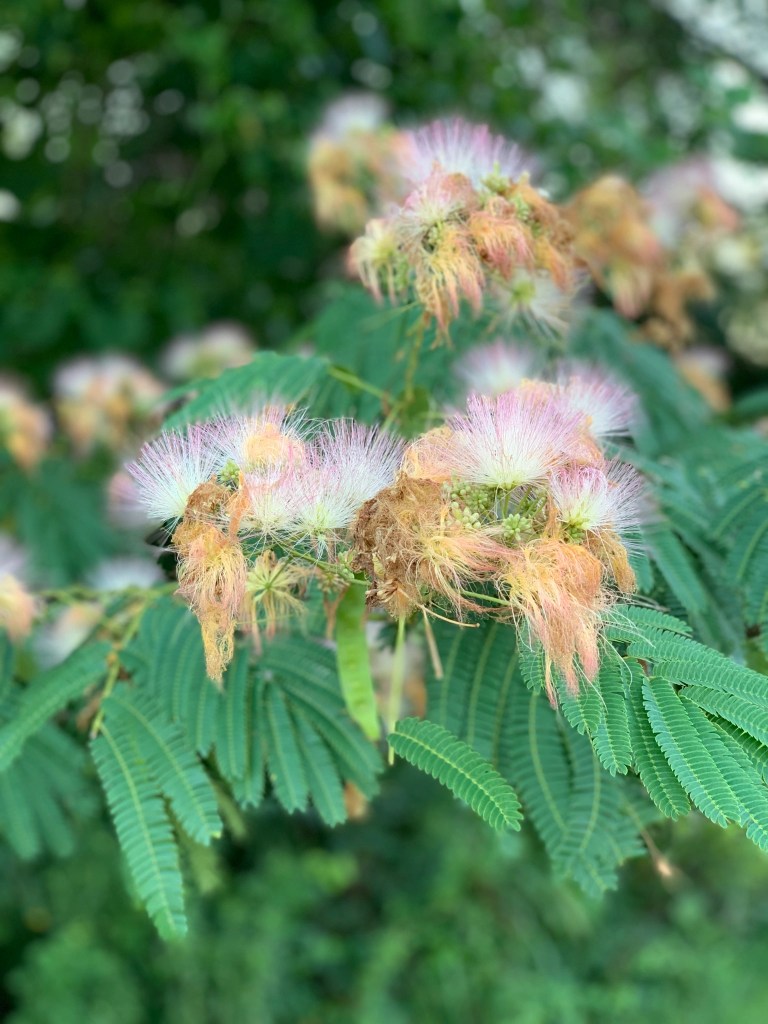
with thanks to Margaret Simon for her photo, inspiring “This Photo Wants to Be a Poem” at Reflections on the Teche.

The mimosa tree was a frequent, ethereal sight in the southern summers of my childhood.


In backlit childhood memory
grows an enchanting peach-fuzz tree
waving its handlike fronds at me
fairies beckoning merrily

Making it count (syllabic verse)

Today I have the pleasure of hosting the final day of the June Open Write at Ethical ELA. 

I shared syllabic verse:

My youngest son is a musician. When he was four or five he’d stand at a whiteboard easel making tally marks as he listened to cassettes of his favorite songs. When I asked what he was doing, he replied: “Counting the syllables.”

He meant beats. 

Like heartbeats, rhythms of life surround us. Let us listen and take note. Moments and words count…down to the last syllable. Last year I attended a workshop led by a poet who said: “Experiment with the rhythms of your voice. Find a syllable count that’s natural for you.” 

Process

Perhaps there’s a line of unwritten poetry playing in your mind, waiting for its moment. Now’s the time. Count the syllables. Maybe it’s five, eight, or iambic pentameter. Or simply begin by crafting a line that relates to something important to you (listen for it in the beatings of your heart) and count the syllables. 

Once you know the count, try writing the remainder of your lines with the same number of syllables. See where the beats take you.

Maybe play with more sound by incorporating internal rhyme, alliteration, and so on.

My poem, sparked by the words of a teacher during a memorable job interview, came out in lines of five syllables.

All in for the Kids

In the interview
the candidate said
we don’t get credit
for all we’ve endured
on behalf of kids
in these past two years

and apologized
for the sudden tears

surfacing from depths
immeasurable
a soul subjected
to intense pressure
somehow withstanding
high temperatures
beyond description

the weight of the world
in every teardrop
salt-worth far beyond
the rarest diamond

culminating crown
of love resounding
courage rebounding
in five wondrous words:
“I still want to teach”

*******

As the day progresses, I am savoring the poetry being posted over on Ethical ELA.

Every bit of it counts. In the end, I think that’s the poet’s job…showing just how much.

Every moment
every heartbeat
every today
all tomorrows
count forever

Anagram poetry

Today I had the pleasure of hosting Day Four of the June Open Write at Ethical ELA.

I shared anagram poetry:

Sometimes there’s a need for words when the words won’t come. Sometimes in naming the emotion we open ourselves to finding our words and our way.

As the events in Uvalde unfolded on May 24th, I couldn’t encapsulate my thoughts or my feelings. No words seemed appropriate or meaningful enough. 

One word kept resurfacing: heartbroken. I finally resorted to examining its anagrams. 

Those became a poem.

Process

What are you feeling today? What are you grappling with or celebrating? What words or phrases might you explore with anagrams to express your sorrow, fear, or joy?  You can type your word or expression in this Anagram Generator to get phrases. For example, if you type POETRY BLISS in the generator and select “Anagrams” instead of “Words,” 10,0000 phrases appear, including best prosily, blip oysters, blistery sop, priestly sob, and sibyl tropes, not to mention bless or pity. Tap into your feelings, type in your words (maybe not too many!) and see what comes. Weave the anagrams of your choosing into your own meaningful expression any way you like.

I left my anagram poem simple and stark. It’s what I needed to say.

May 24th (originally entitled Heartbroken)

broken hater
broken Earth

broken heart
heartbroken

Uvalde
valued

*******

I’ve enjoyed reading the many varied poems in response today. Some are gleefully nonsensical, sparking giggles. Some are deeply moving.

What fascinates me with this particular wordplay are the hidden meanings that lie in words, brought to light in rearranging the letters. It’s a unique alchemy, peculiarly lyrical:

it’s all such
lovey trope
lye overtop
overtly Poe

every lop to
ole poverty

love or type
poetry love

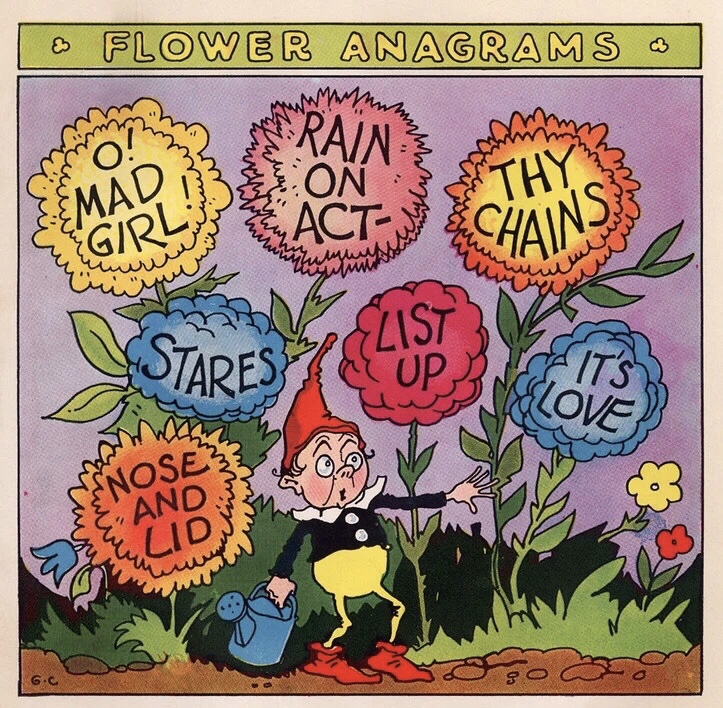
If nothing else, imagine a poem made from this elf row danger (flower garden):

Photo: flower anagrams. gilliflowerCC BY-NC-ND 2.0.

Word-association poem

with thanks to Allison Berryhill for this inspiration on today’s Open Write at Ethical ELA: Look around the room. Let your eyes rest on an object. Let that be your first word. List a word associated with it, then another…keep going until you’re ready to stop and “poetically connect the brain’s chain of associations.”

My word list:

pitcher
pour
tea
sweetness
childhood
sugar

Drinking Deep

I remember the pitcher
in my grandmother’s hand, mid-pour
tea flowing like memory
me drinking deep of the sweetness
a childhood steeped in dinner-stories
Daddy saying Slide up to the table, Sugar.


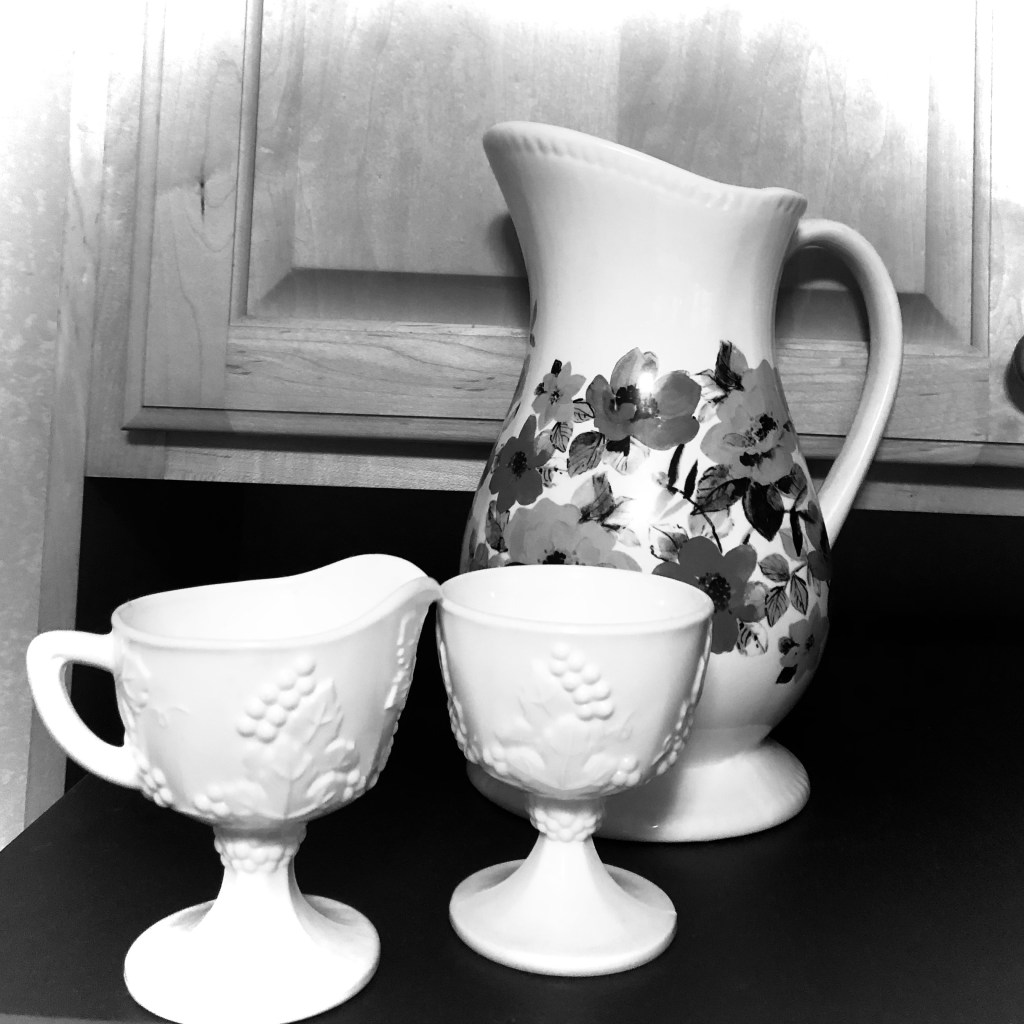
The pitcher that sparked the associations. It’s just decor; didn’t consciously think, in the moment, about the milk glass creamer and sugar bowl being my grandmother’s.

Treasure hunt poem

with thanks to Allison Berryhill for the inspiration on today’s Open Write at Ethical ELA, inviting participants to walk outside and collect objects for writing a poem

The Treasure

In the backyard
by the fence
it lies half-buried

sun-bleached
pristine white
glowing with 
ethereal light

holy relic
enshrined in earth

beloved remnant
of a creature
who carried it
in his kingly jaws
who stretched out
his golden body
this ivory scepter clutched
in big leonine paws

a treasure left behind
for me to find

monument
to lazy afternoons
when he was
here

so full of love
unwritten
in stone

yet still
resounding
abounding
surrounding
the bone

Things you can do with crayons poem

with thanks to Allison Berryhill for the inspiration on today’s Open Write at Ethical ELA

Things You Can Do with Crayons

admire the colors
gold silver and copper
aren’t the only metallics
anymore
now there’s glitter
neon
and glow-in-the-dark

admire the names:
Macaroni and Cheese
Inchworm
Robin’s Egg Blue
Purple Mountains’ Majesty
Bluetiful 
Mauvelous
—such poetic pun

arrange your favorites
in the shape of your initial
or anything you want
glue them down
in a shadow-box
or on canvas

—drat, broke one
—wait, don’t throw it away
anymore

make something new
instead

break more
on purpose (!!)

slice ‘em 
into dots
for a mosaic

shave ‘em
spice up
your homemade slime

melt ‘em
and not just for candles

pour the running colors
into molds

make Legos
build anything
you can think of

oh and
once in a while
just color

make a scribble-scrabble

if you don’t like it
scrape it off
with your fingernail
and start over

smell ‘em

remember
your childhood

On letting things go

At Sharing Our Stories: Magic in a Blog, Ruth Ayres shares this quote:

I realize there’s something incredibly honest about trees in the winter, how they’re experts at letting things go. —Jeffrey McDaniel

She goes on to offer this reflection and invitation:

I like the thought of honesty in letting things go. 

Do you believe this is true? If so, how will you live today?

As I contemplate these questions, my mortuary-apprentice son is counting the number of death calls, services, and cremations he’s attended to this year.

Sooner or later comes a time of having to let things go.

Seems if we are wise, we choose before that time. A shedding, of sorts.

For in daily living there are worlds of difference between minutiae, minutes, and moments.

As much as I can, I choose moments.

As in the final words of Shakespeare’s Sonnet 73: To love that well which thou must leave ere long.