Changed and transformed

This week, my friends from across the country have reached out to see if my family and I are okay in the wake of Hurricane Helene.

We are. Here in central North Carolina we did not suffer damage like the western part of the state, where many people are dead and many more are still missing. East of us, a tornado flattened buildings in a city where my youngest son once served as a church worship leader.

Speaking of my son: He was in the North Carolina mountains when the storm struck. He and his bride spent the last day of their honeymoon without power, food, and water, trapped by downed trees on the only path to the main road. After someone eventually arrived with a chainsaw, my new daughter-in-law navigated their journey out by using her phone to pull up road closings.

They were fortunate to even have cell service. Thoughout the region, service failed just when it was needed most. It has yet to be restored in many places, meaning that families and friends still cannot communicate with loved ones.

Travel remains precarious. 300 roads are still closed, many of which are shattered with portions and bridges washed away. Mudslides added to the havoc of catastrophic flooding. The picturesque little village of Chimney Rock has been wiped out; “there’s nothing there,” says one eyewitness, except muddy brown water and debris choking swollen Lake Lure. A clogged sea of splintered wood and trash. A friend of mine was in Boone like my son during the deluge and saw a house carried off by the river; it floated away before her eyes. Asheville, a favorite destination and home to the famous Biltmore, is devastated. My husband and I watched the news unfolding and saw this beautiful city submerged. It looks wartorn. We no longer recognize the familiar streets where we love to walk. Recovery will extend well into next year, meaning that the major tourist season and local income is also destroyed.

We North Carolinians know that bodies are still being recovered (some from trees) and that the extent of the damage is not fully depicted in the news.

Words that keep recurring in the reports are transformed and changed. The mountain communities have been “utterly transformed and cut off from the outside world.” An artist with the River Arts District of Asheville, a hub of warehouses converted to thriving studios, galleries, music venues, and businesses, spoke to its ruination: “This changes everything.”

Loss does change everything. Life is forever categorized into before and after. Overcoming is a long, arduous journey, moment by moment, like breathing. Even though restoration may eventually diminish the pain of loss, soul-scars remain with us as long as we live. We are changed.

For those of you who pray, please do so for the victims of Helene. For those of you with means, please offer any help you can to organizations taking donations for those who have lost all. My school, my church, my community are doing so.

I think of the process of refining gold. I will not apply it to suffering and loss but to the effort of alleviating them. In this act, I believe, we are most transformed… in responding to the alchemy of the Spirit working in us to love our neighbors as ourselves.

It changes everything.

with thanks to all of you reached out to check on my family this week
and to my fellow Spiritual Journey writers

Litany

Did you cry, people asked me.

I didn’t.

I am not sure it will make sense: I rested.

In the deep, wordless way of culmination.

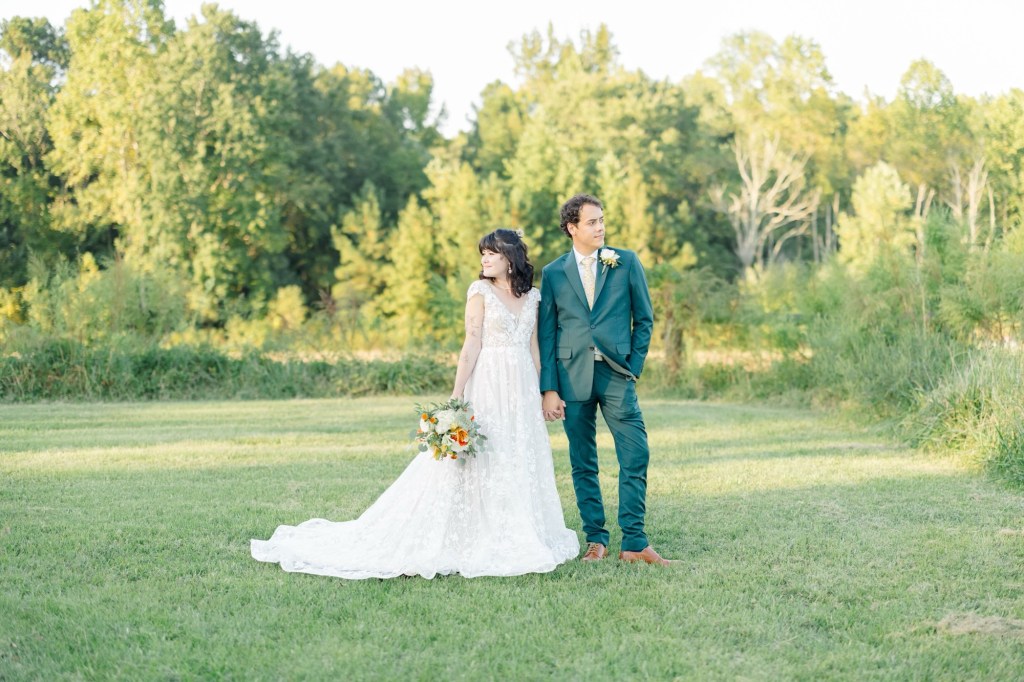
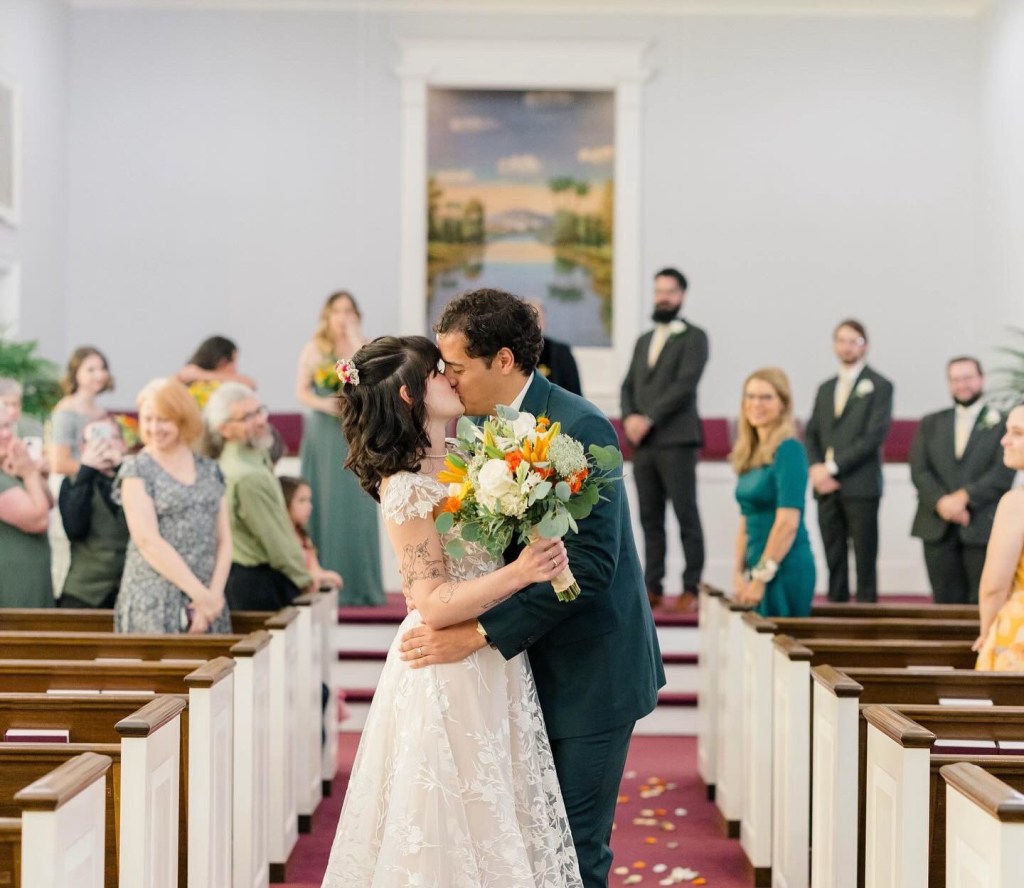
My boy walked me down the aisle and seated me at the second pew, in the same spot where I sit each Sunday while his father preaches. In the same spot where I sat while I was expecting him and felt him stop moving whenever the piano was played, where I knew he was listening to the music before he was ever born. In the same spot where I sat with him in my arms for the first time during worship, when he was four days old.

I rested in the remembering.

I rested in the preparations being complete, and the long-awaited moment at hand.

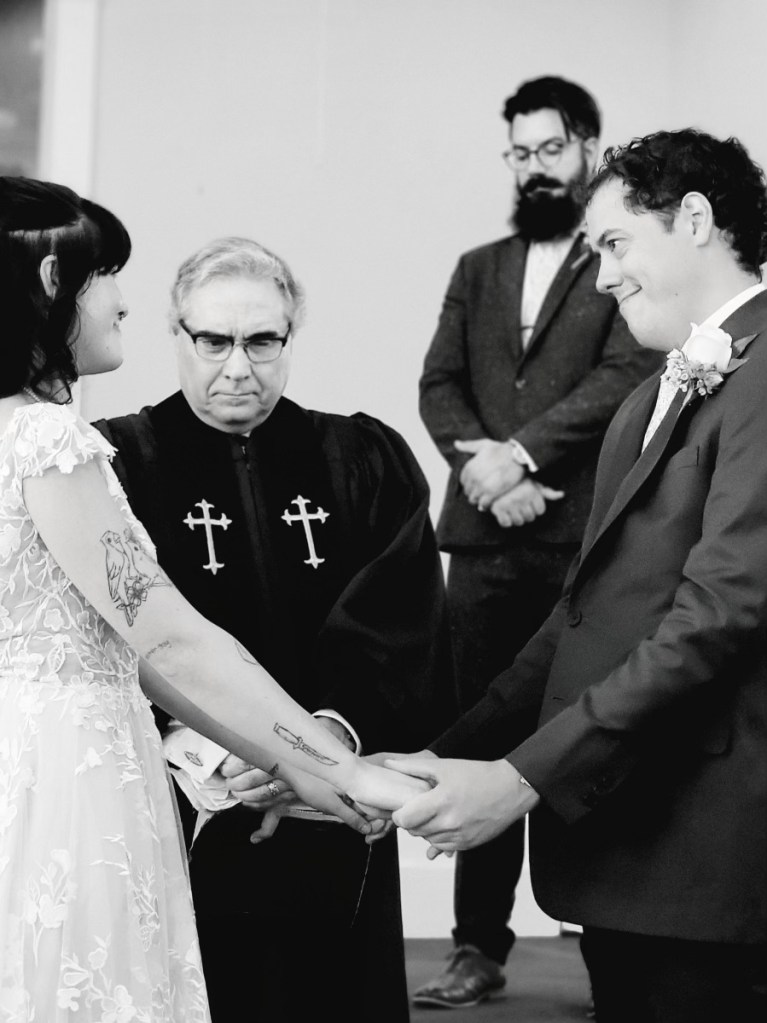
I rested in the expression on my boy’s face, making his vows to his bride. I have never seen a groom with so tender a countenance. I marveled, and rested.

I rested, and rejoiced, that his father lived to officiate after suffering such serious health setbacks in recent years.

His father began to cry during the ceremony.

I rested in that love. In the overcoming. In the triumph.

I rested in the presence of my husband’s sister, that she traveled to be here, that she reminded my boy of his grandmother who loved him so. Ma-Ma is here, you know, she told my boy just before the wedding. She cried, too, over how much he looks like her mother.

I rested in the knowledge that my sister-in-law remembers her mother every time she sees a cardinal, her mother’s favorite bird. A symbolic bird, representing Christ. I remembered that my sister-in-law and my boy were holding Ma-Ma’s hands when she died. I rested in the serendipity of my boy’s bride choosing her wedding gown before she knew it was named “The Cardinal.” It happens to be her own grandmother’s favorite bird.

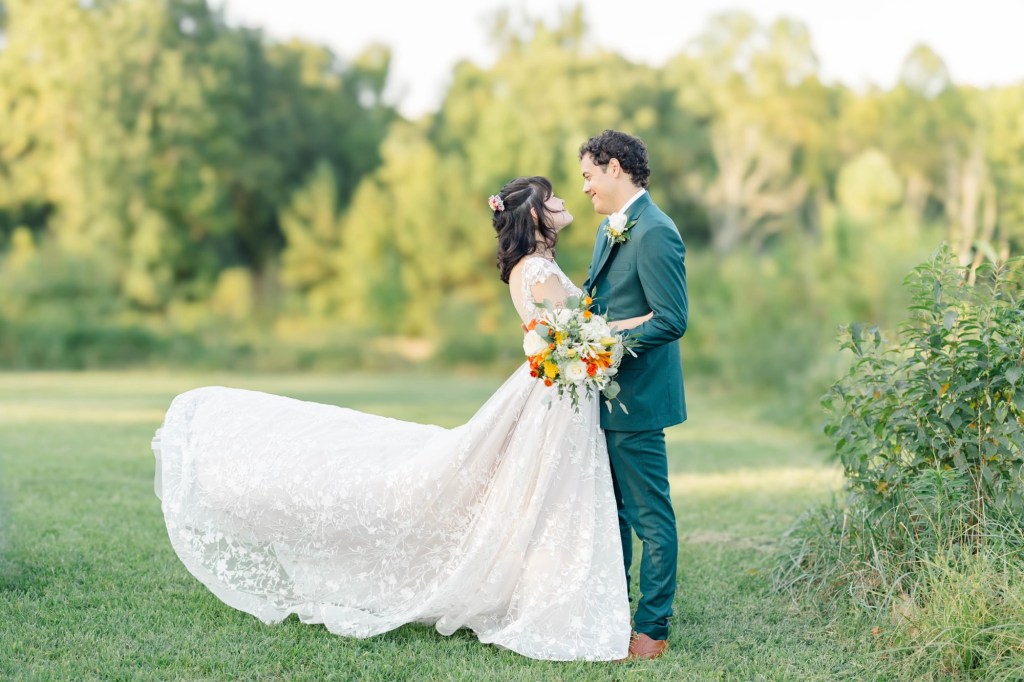
I rested in the significance of my boy’s precious bride wearing her grandmother’s pearls and my earrings, the third bride in the family to do so, after my first daughter-in-law and my youngest niece, who came with her new baby to see her cousin married. I recalled buying those earring for my twenty-fifth wedding anniversary.

I rested in that.

I rested in the timing, in late September marking the births of my grandfather and my husband as well as the loss of my father, and that it now marks new joy.

I rested in the day, in the glorious cusp-of-autumn sunshine, in this season of scuppernongs and piercing calls of red-shouldered hawks. I rested in the symbolism of wildflowers that my new daughter-in-law loves so well; although delicate and fragile, they are incredibly adaptable and resilient. They represent delight of the soul. She carried wildflowers; they were the pattern of my boy’s tie. Her dress and their wedding rings also bear vines—a symbol of deep spiritual significance.

I rested in the Scripture my husband read, from the second chapter of the Song of Solomon, the first time he’s ever used it in a wedding:

My beloved spake, and said unto me, Rise up, my love, my fair one, and come away.
For, lo, the winter is past, the rain is over and gone.
The flowers appear on the earth; the time of the singing of birds is come, and the voice of the turtle is heard in our land;
The fig tree putteth forth her green figs, and the vines with the tender grape give a good smell.
Arise, my love, my fair one, and come away.

I rest in the fact that my boy and his bride reside just four minutes away from me.

And I rest in the vows that they wrote and spoke to each other, and in the invisible thread that pulled them together, drawn by the hand of God.

Yes.

I rest in the litany of it all.

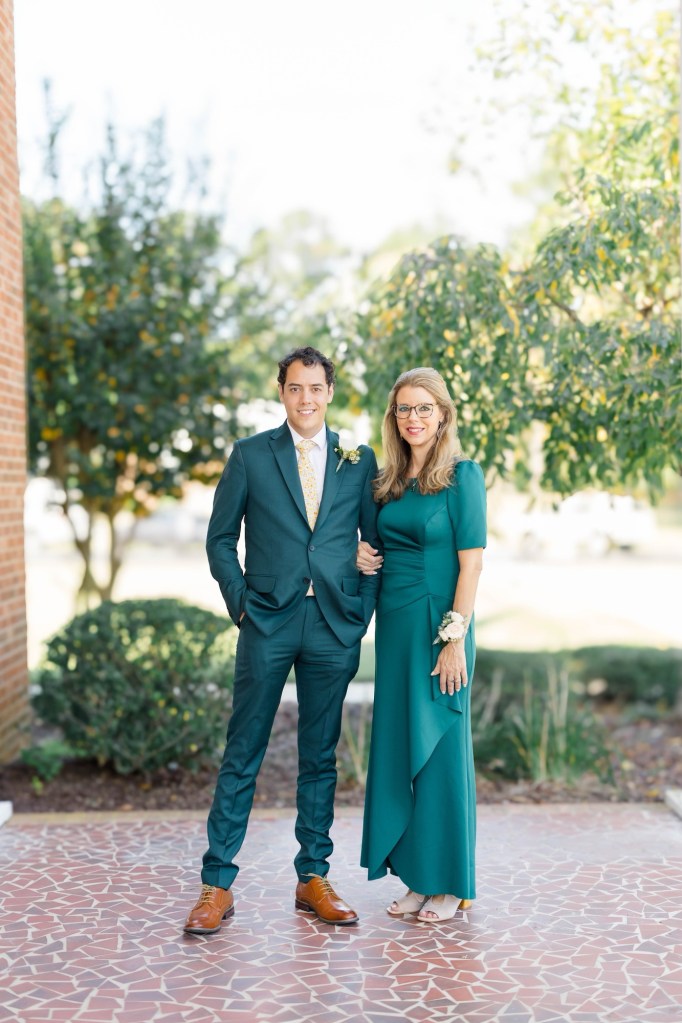
My boy and me in front of the church after the ceremony.
Behind us is the parsonage where we lived when he was born.

Photos by Kailey B. Photograhy

*******

with thanks to Two Writing Teachers for the wonderful sharing-place
known as the Tuesday Slice of Life Story Challenge

My last hummingbird

She’s still here.

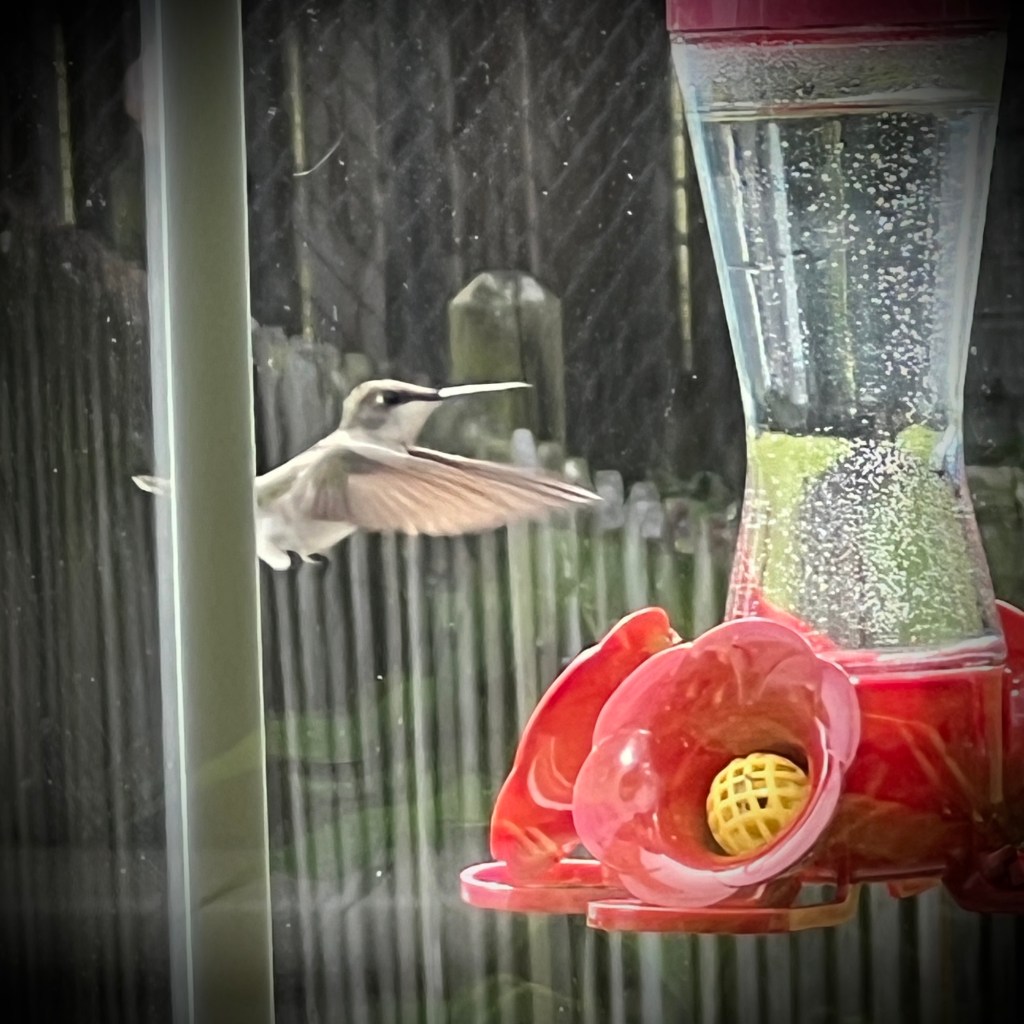
As of yesterday evening, anyway, after I went out in the rain to refill the almost-empty hummingbird feeder.

One little female, silvery-cream, with the faintest dark speckling on her breast.

Upon my return to the house, I stand a few feet back from the window in the unlit kitchen, and —zip! —she appears like a fairy out of nowhere. She perches on the feeder (attached to my window with a suction cup hanger), gripping the thin red rim with unspeakably tiny feet. Her back appears gray in the dusk but I know how it shimmers in the sunlight: gold-dusted, olive-green, smooth as glass. Ethereal. I marvel at the exotic lining around her eye. For a moment, I forget to breathe.

For several days prior, she and another hummingbird were fighting like mad for possession of the feeder. Clearly a high-stakes frenzy. Remarkably loud squeaking. Palpable urgency. Throughout the summer, four or more of them kept vying for a turn. They do not share. They drive each other away. Each bird has her own unique markings, but the astonishing speed of movement sometimes makes individual identification impossible. Except for the one female with a rare dot of red at her throat. Fancy.

Ornithologists say that male ruby-throats return first each spring, but my first hummingbird sighting this year, at the outset of April, was a female. I pushed up the kitchen blinds one chilly morning and there she was, right before my eyes, hovering for a split second before darting away. I caught the implied question: Ummm…where’s my nectar?!

I like to think it was this same female. The first to arrive. The last to leave.

I wonder why she lingers.

It’s mid-September. The males left at the end of August. Punctually. I saw the last one on the last day of the month: A male perched on the feeder, his black ascot turning to crimson-fire whenever he lifted his head. I watched him take his fill of sugar-water. I noted the date. By Labor Day, I knew that was it. He’d gone, as if in keeping with the calendar page flipping or an inner alarm clock going off: Ding! Male hummingbirds vanish all at once. Now you see them, now you don’t. Poof.

Females remain for a few more weeks. I’ve sensed that mine have been leaving, one by one, in the last few days. Off to Mexico or Central America or wherever they winter. I am curious about where my birds go. I am certain each goes to its own exact spot; there’s no shadow of turning with hummingbirds.

I’ve read of their long, lonely, exhausting migration, but I can’t imagine hummingbirds ever feeling sorry for themselves. Prosaic writers have described them as “made of air” and “tricks of light” — I love the lyricality.  I also know that the hummingbird’s fragile appearance belies a tenacity and ferocity unrivaled by any other bird around, even the huge red-shouldered hawk that sits so majestically on our power lines and poles, scrutinizing the landscape for prey.

Last week I heard the cries of a hawk. I went out on my porch to listen and was rewarded with the sight of two red-shouldered hawks flying, one after the other, in the patch of tall pine woods across my street. I suspect there’s a nest nearby. While I stood gazing in awe, there came a sudden vibration: vvvvRRRR! A female hummingbird materialized to hover three feet away from my face, her wings beating like tiny fan blades on high.

I said, Oh it’s you.

I feel sure she was saying the same thing.

We seem to be equally curious about each other.

Maybe she was the one that still lingers, my last hummingbird.

She won’t stay much longer.

In the predawn hours, with a rainstorm raging and my electricity out, it’s too dark to see anything beyond my window except for the feeder. It still holds. Freshly replenished. I will ensure that it remains so for as long as my hummingbird should have need of it.

When she’s gone, I’ll experience a little autumnal pang of loss, the expected but unwanted shedding, the indefinable ache of transition, the instinctive pulling-inward preparation against the coming cold and dark. For a time. A season.

Until the morning I push up my blinds and we meet face-to-face once more.

 Godspeed, precious spark.

*******

With thanks to Two Writing Teachers for the Tuesday Slice of Life Story Challenge

and to the hummingbird that remains
even now, in the wind and rain
while I write

A girl and her grandpa

She’s almost three now. When he leaves the room, she asks: “Where’s my grandpa?”

She’s not afraid of his eyepatch or his closed eye beneath it. She commands him: “Open your eye. It’s laying down.” He can’t keep it open, even with the prosthesis. One day he’ll tell her how he lost that eye, that beautiful brown eye, so like her own. But not yet.

She knows he takes heart medication. She sees the bottles and pats her own chest: “That’s Grandpa’s medicine. For his heart. From the doctor.”

She knows he’s wearing a heart monitor. She crawls in his lap, tugs on his shirt, and says, “I want to see your heart.” He pulls the fabric over to reveal the monitor. She studies it. Her little brows knit.

She knows he sometimes walks with a cane. She finds it leaning against the wall and carries it to him. She doesn’t appear to recall his recuperation from spine surgery last fall, or that it was months before he could pick her up again. He started doing it before he should have. He couldn’t resist those little outstretched arms and the request, “Hold you.”

She wants me to play hide-and-seek in the house with her so he can find us. She hides in the same place every single time: behind a chair in the living room. She wriggles with anticipation and puts her fingers to her lips with a loud, stage whisper directed at me: “SHHHHHH!” She doesn’t know how obvious we are in our so-called hiding place. He plays along, walking through the house: “Where’s Micah? Where’s Franna? Are they in the closet? Are they in the bathroom?” She answers him with a high-pitched, drawn-out “Noooooo!” When he peers over our chair, she shrieks with delight.

She demands: “Grandpa, upside down!” He takes her little legs, swings her upside down like a pendulum. Her brown hair flies and her face radiates with glee. “Again!” she cries. “Again!” He will keep doing it until his back makes him stop.

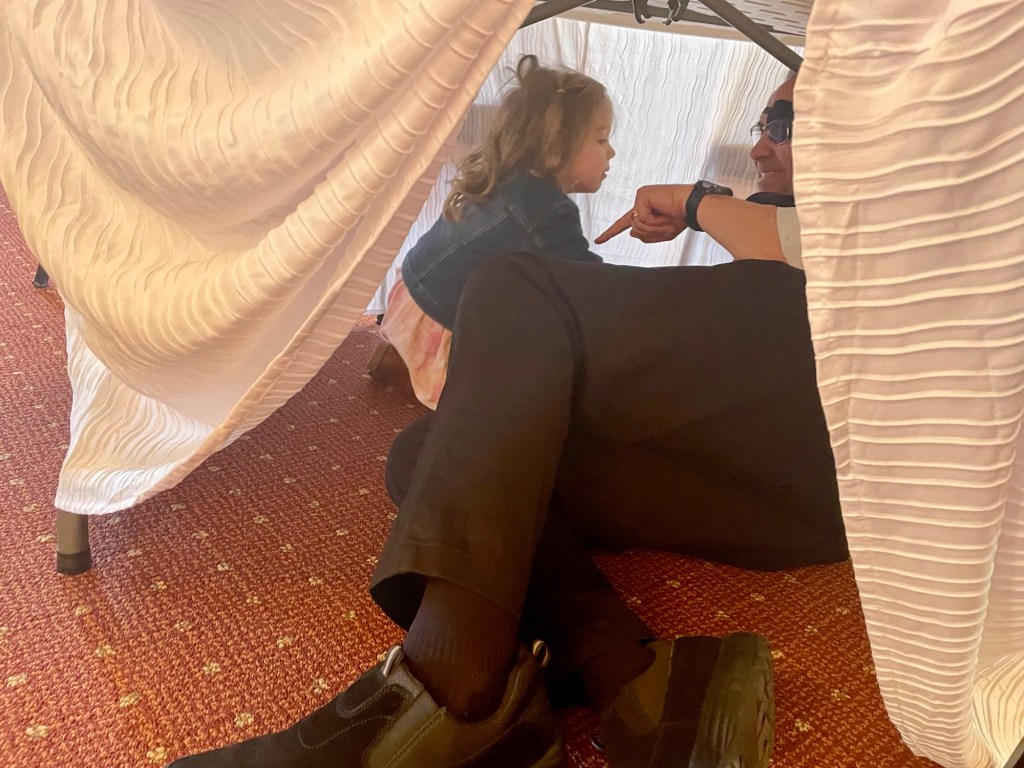
She came to the recent wedding shower for her Dada’s younger brother. She crawled under the church fellowship hall table to play. Grandpa, the pastor, crawled under with her.

My first thought: They really are on the same level.

Second thought: Look how that back surgery paid off!

At dinner this week, he told her: “You are Grandpa’s little angel, Micah.”

She looked at him a moment, those dark eyes shining. She replied, “You are Micah’s angel.”

He always will be, my little love.

*******

with thanks to Two Writing Teachers for the Tuesday Slice of Life Story Challenge

The important thing poem


For today’s Ethical ELA Open Write, host Gayle Sands invited poets to compose “important thing” poems. She offered this form, based on the boiled-down essence of children’s books and Aristotle’s philiosphy on the accidental purpose of things:

  • Begin with:  “The important thing about __________ is that ________________”.
  • Follow with:  An assortment of supporting facts and ideas
  • End with:  “But the important thing about  _______________ is that _______________”.

The poem could be about an object, person, concept, or belief. Anything.

For some reason, AI came to mind.

As it happens, Two Writing Teachers offered a suggestion for today’s Slice of Life Story Challenge: Write about a time you felt fear.

Many people fear AI.

So here we are.

The Important Thing About AI

The important thing about AI
is that it can do 
so many important things. 

It can
plan your lesson
make your presentation
craft your poem (in any form you choose)
write your dissertation
and your novel.

It can
compose your music
reinvent your image
create believable deepfakes
of visuals and news
that fit perfectly
in the alternate reality
of your preference.

It can
design your clothes
your house
your city
your travel
your vehicle
your financial portfolio
pretty much anything.

But the important thing
about AI is
that it’s the tool

not the builder.

Photo: pexels.com

*******

with thanks to Gayle and the vitally important communities at Ethical ELA and Two Writing Teachers

The greening

The Greening

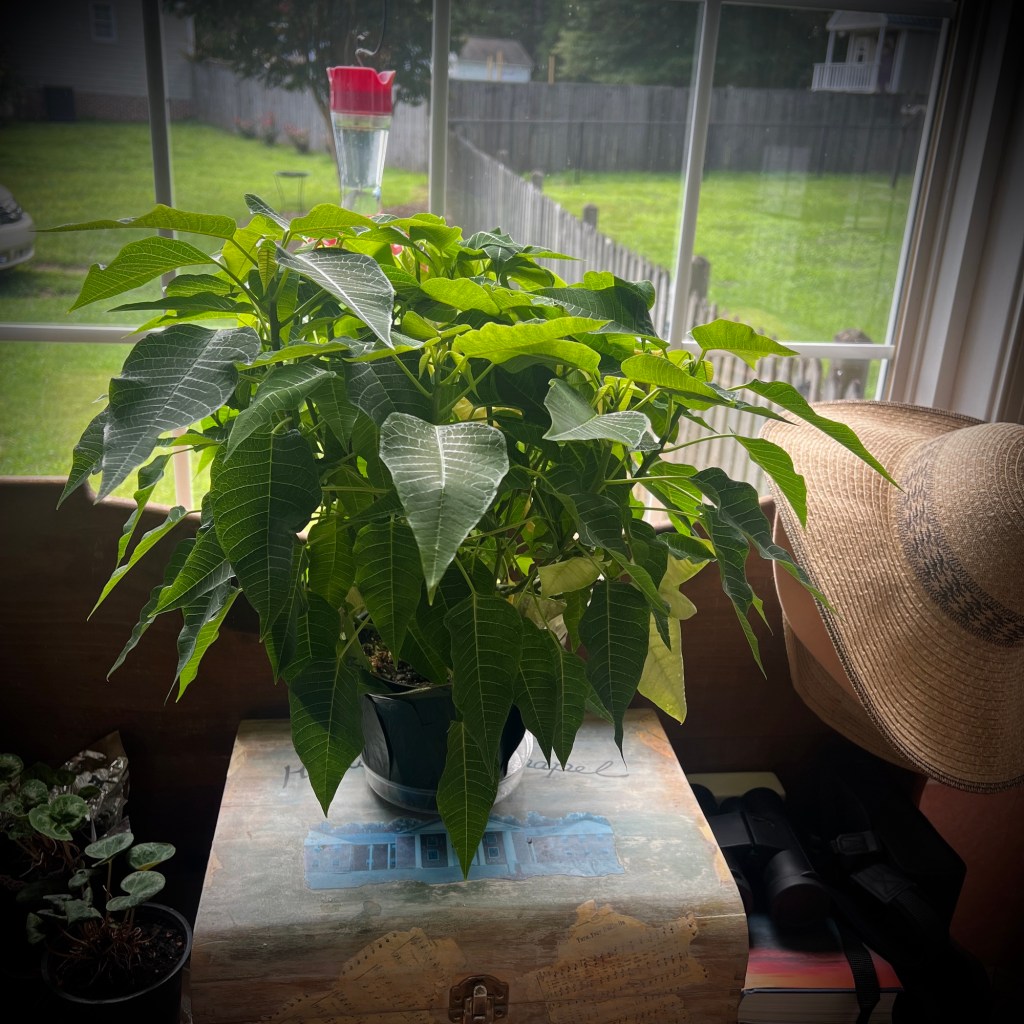
On Christmas, my firstborn son
brought me a white poinsettia
from the altar of his church

I set it by the window
in the kitchen, facing east
expecting it would die soon

but it lives on, lush and green
from the abundance of light
and my increased watering

For reblooming, it must go
in the dark, thirsty and dry
but I can’t, I can’t do it

It’s the only poinsettia
I haven’t managed to kill
and my boy gave it to me

Let it stay pure emerald
drinking all the light it can
in its summer of content

growing a little bigger
every day, like my spirit
while my leaves begin to fall

*******

with thanks to Denise Krebs for the inspiration and septercet poem form in today’s Open Write at Ethical ELA

Green comfort

Written 7/9/2024

Today I type my thoughts while sitting by the green-gray Atlantic. Ancient undulations roll on and on like Time itself, cascading into new foam as brief and bright as this new morning.

The older I become (this is the last year of my fifties) the more I contemplate the brevity of things. Suddenly—it seems—the kids are grown with lives of their own. The granddaughters are older and smarter every day. Micah, age two-and-three-quarters, carries on a conversation like an adult. She knows what “be brave” means. She will need that attribute in life more than she can know.

I have.

My husband walks out into the waters for a moment. He’s not much of a beachgoer anymore, after all his medical crises in recent years. He’s here because I want to be. Because I need a little salt, a little sun, probably a lot of Vitamin D, and the comfort of this vast continuum. We loved the beach when we were young. Almost thirty-nine years into the marriage, the ocean is personal metaphor, a living promise, ceaseless.

Ever how grounded I may be in my faith, I am not immune to lapses. Today, as I logged on to write this post, WordPress offered a prompt:

What strategies do you use to increase comfort in your daily life?

And in my email inbox, a devotion from Our Daily Verse on increasing perseverance.

For me, the key to increasing comfort and perseverance in daily life begins with remembering that God is still God. No matter what. Not merely the limb on which I perch when I’m tired and despairing, but the whole of existence. The true eternal. Generations of our whole human history rise and fall like the ocean waves, and God holds it all.

The sun grows hot. My husband can’t take it for long, and, truth be told, neither can I. Our morning by the sea is brief. We must seek a respite. Somewhere shadowy and green.

I can’t help thinking of forgiveness as a green thing…well-watered with tears, surely, but under its lush canopy, comfort. Rest. Freedom. Peace. As we prepare to leave the shore, my husband and I watch parasailors. How peaceful it must be, so high above it all. I wonder what they hear up there. Here on the ground I hear the ocean’s roar, a strain of cicadas in the scrubby brush, and a baby laughing nearby, playing in the sand.

Some of my favorite sounds on Earth.

Along with the house finch singing as soon as we arrived at the beach this morning. I heard it as soon as I opened the car door. Instantly recognizable. It’s the beautiful song I hear on my front porch every spring and summer. In itself, the sound of perseverance. Of home. It seems to follow me everywhere I go. “Hello, Finch,” I called back to him, perched there in his crape myrtle tree, his little head and breast as red as sunset.

At a recent gathering, my neighbor joked that we’ve reached the time of life in which we just want to watch birds.

There’s comfort in it.

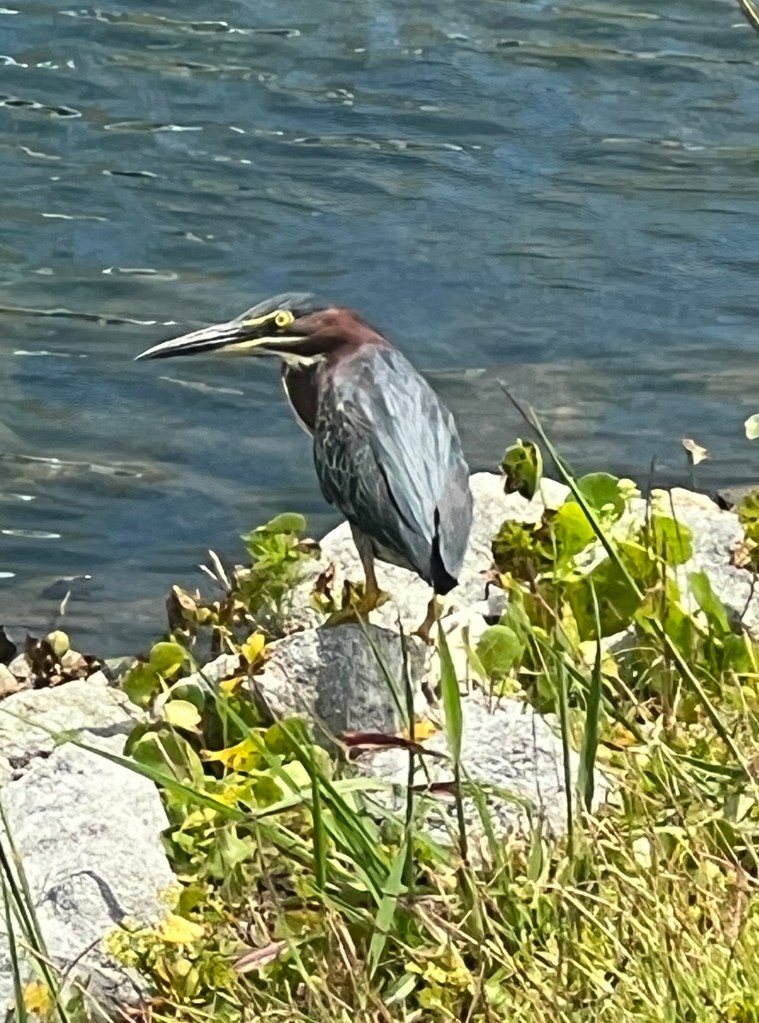
Yesterday while walking through the beach community I saw a green heron. I don’t recall ever having seen one before. A week ago I responded to a fellow blogger, wishing I could have seen the green heron she wrote of, so lyrically.

And one came to me.

The heron and I watched each other for a long awed moment, before she (?) flew to the other side of the pond and I walked on, to let her be.

I contemplate the symbolism of the green heron.

From a biblical perspective, my first go-to, it’s not great. Herons are “unclean” per the Law, i.e., not suitable for consumption, although one resource states that “The very poor of our western and southeastern coast states eat them”(in 1915, that is to say, per the ISB Encyclopedia, written just before the birds were protected by the Migratory Bird Treaty Act). I wasn’t expecting this, the act or the desperation. It’s been illegal to hunt and kill herons for over a hundred years. Furthermore, the green heron is known to be an irritable, angry bird.

Sounds like some people l know. I don’t want to be one of them.

There are a number of other spiritual meanings associated with the green heron, among them humility, patience, adaptability, wisdom, the ability to focus intently (heaven knows I need this; I used to be better at it than I am now)… and perseverance.

What it really comes down to, however, is how I felt when I encountered this bird. I’d desired to see it, and it came. We were maybe ten feet apart. The heron fixed its bright golden eye intently on me and I was awed. Encouraged. Curious.

It didn’t say anything but I imagine if we spoke the same language, it might have said Be watchful. Be brave. You will persevere. What you need will be provided.

All this in a space of a held breath, in a flutter of green wings, beside the still waters…

I believe. I walk lighter, a wordless green song in my heart.

My green heron

*******

with thanks to Two Writing Teachers for the Tuesday Slice of Life Story Challenge

Ghosted

A slice of memoir for my writing friends, who requested the story of my mail-order ghost…

******

The 1970s were steeped in tabloids, monsters, horror, psychics, UFOs, and ghosts.

Weird times.

And I was a weird little kid.

I thought I could see a lady sitting high atop a tree across the street from my house. Every day, year after year, she sat there, a regal bark-colored woman, never moving, just looking out over the world from her tall branchy throne.

I thought I saw feet in a pair of bedroom slippers left in my Grannie’s hallway…where was the rest of the person? None of the adults could make sense of my sudden hysteria.

Speaking of hysteria: My young parents, for some inexplicable, out-of-character reason, carried me through a haunted house before I was two. Just as they were exiting, a witch popped out from a secret chamber and her long hair swept over me. I have no memory of this. My father told me the story; he said I screamed and screamed, like I’d been burned. I figure it marked me permanently. Like a smallpox vaccination. I wonder what kind of immunity witch hair carries…

I recall being really being burned. I was afraid of cigarettes, of their red-hot circular tips, because some grown-up or other at a family gathering hadn’t thought to move his indolent hand out of the way when my preschool self went running through the living room. Maybe this is why I also feared flames shooting up from backyard charcoal grills (smell that lighter fluid?), from the flattop grill behind the counter of the local diner, and the whoosh of brilliant blue whenever someone turned the burner knob on a gas stove.

I was afraid of big smells. Like collards cooking. I’d gag and run out of the house (love to eat ’em now, though, with plenty of hot pepper vinegar).

My weirdest childhood fear (perhaps): Black toilet seats. Utterly terrifying. Why did anyone ever think these were a great idea? I wouldn’t even enter the bathroom at the doctor’s office, let alone “go,” because of that ominous seat. I sobbed and tried to get away from my mother. Not understanding, she became angry.

And I was afraid of ghosts.

So much so that I didn’t want to go to sleep the first night I stayed with my grandparents after Granddaddy retired and they moved back home to the countryside. Their cozy little house sat amid whispering woods, strange canals, and a tiny dappled cemetery situated diagonally to the left of their front yard, across the dirt road.

I took one look at those weathering old tombstones gleaming white in the dusk and thought Ghosts.

Grandma, I’m scared of that place.

Oh, honey. Don’t ever fear the dead. Fear the living.

It didn’t help.

Oddly enough, TV shows about monsters and ghosts did.

The Addams Family: How did Morticia move at all in that skinny black dress, drawn so tight ’round her ankles? How could a disembodied hand called Thing materialize from random tabletop boxes throughout the psuedo-gothic house to deliver mail or light cigars? My parents’ then-childless friends got a black Lab puppy and named it Thing. I loved that dog. She dug a big hole in our backyard; in the years to follow, I’d expand Thing’s hole many times over, along with my imagination.

The Munsters: Who could be afraid of Herman, with his goofy laugh?

Casper the Friendly Ghost: I quickly grew to love him and all the dark gray haunted-house scenery on the Viewmaster reels Grandma bought me. Casper wasn’t remotely scary. He was cute. And comforting. Somehow.

And so it was, one summer when I was nine or ten, I happened upon the little ad in the back pages of a magazine (or maybe it was in a novelty catalog, another 1970s staple):

Order Your Own Ghost!

I didn’t bother to read the rest of the details. The creepy illustration sold me.

I went in search of Grandma.

I would have it. My own ghost.

My land. What do you want this for?

I just do… please, Grandma?

She sighed, clipped out the form, addressed the envelope, enclosed the couple of dollars (?), and mailed it.

When the package arrived she helped me open it. One doesn’t want to slit a ghost by accident.

I’m not sure what I expected. I knew the ghost couldn’t be “real,” yet the ad had conjured a misty apparition in my mind, a filmy thing that would do my bidding. Could it be the allure of supernatural power? The need to overcome a fear by mastering it? Sheer curiosity? All of the above?

Would the the thing rise before me as soon as the package was opened?

Um.

No.

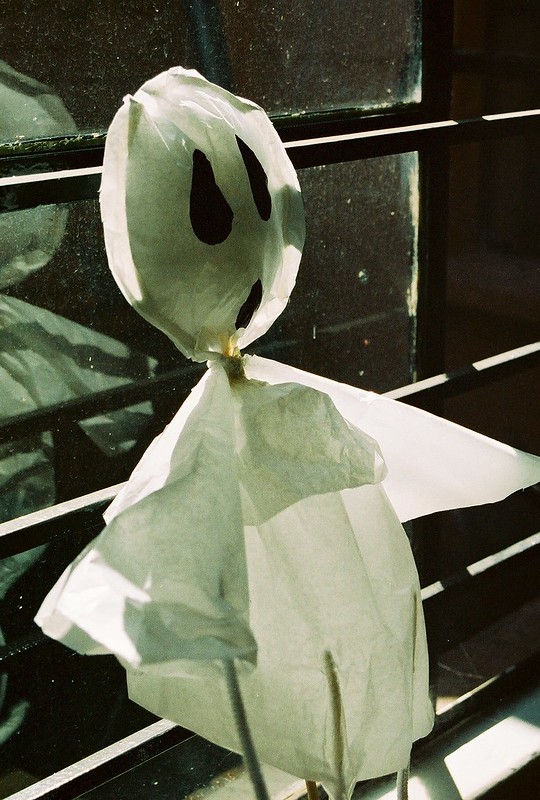
Opening the package the rest of the way, I found a folded white plastic sheet, deeply creased when I shook it out, a white balloon to blow up and place under the thin plastic, white thread for tying under the balloon “head” and to be taped to the top of the plastic so that the ghost could then be hung from a door or hook, etc., where it might move a little whenever we passed by (or if I decided to turn Grandma’s floor fan on it).

Oh, and helpful directions to locate a marker for drawing draw eyes and a mouth, if desired.

I felt like throwing the worthless stuff straight in the trash. When I eventually learned the term rip-off, this mail-order ghost would drift to mind.

Grandma, who’d tried to discourage the purchase in the first place, now tried to placate me: Here, I’ll blow up the balloon…

We assembled the sorry specter and strung it on the old bedroom doorknob where it dangled in front of the metal keyhole. I hated the sight of it hanging there, grinning at me.

I didn’t know it then, but Lessons were afoot…

Be careful what you wish for. You might get it.

It may not be at all what you thought.

Fears are exhausting.

Fears can be overcome by recognizing the inherent ridiculous (look up Harry Potter boggart).

Things and people will sometimes (oftentimes) turn out to be something other than they seem.

Above all: Life is a carnival, a strange journey of compelling facades and disappointing realities, a house of shattered mirrors with perpetual distortions and misperceptions obscuring truth, of false narratives and unseen, lingering harm lurking in the darkest corners, where occasionally flares a red-hot tip held in an indolent hand…

Ghosts are, in the end, about loss; what do we fear more than that?

I’d had enough. I balled up my ghost and smushed it into the trashcan where it belonged.

It was a beginning.

Ghost. David Ludwig. CC BY-SA

*******

with thanks to Two Writing Teachers for the Tuesday Slice of Life Story Challenge

Parched

She perches
atop the hummingbird feeder
at my kitchen window

Mama Bluebird

haven’t seen her in a while
she keeps a low profile

when new fledglings
are about

I think she’s playing defense
watching me
watching her
(bluebirds are
ferocious guardians)

until I see
her open beak

she doesn’t close it

I’ve never seen
such behavior
before

from any bird

I look it up

she’s suffering
from the heat

trying to
cool off

birds can’t sweat

she stays on this perch
watching me
watching her

I sense a plea…

I take a cup

run a little water
at the kitchen sink

carry it out
into the drought

(she flies away)

pour it on the top
of the hummingbird feeder

(it’s really meant
to be an ant moat)

and as soon as I return
to the kitchen

I see she’s back
sipping
sipping
sipping

she stays a good while

perched
parched

until she’s refreshed enough
to close her beak again

and fly

maybe back
to help her children

all I know
is that my soul

(sometimes just as parched)

rejoices
that I was able
to provide

this little oasis

when I have felt
so utterly unable

to ease
the longsuffering

of others

Thank you
Mama Bluebird

for refreshing
me

******

with thanks to Two Writing Teachers for the Tuesday Slice of Life Story Challenge

For love of reading

with thanks to Anna J. Small Roseboro, today’s Open Write host at Ethical ELA, for inviting teachers to write poems of reflection on the past school year and projections for next…my thoughts came out this way, and so I’m calling it a prose poem.

For Love of Reading

Reading and writing were the great loves
of my childhood…for birthdays and Christmas,
I wanted books. And more books. I never thought
about them as keys to unlock life’s doors. In retrospect
I see that books were my lifeline, keeping me afloat
in a muddy sea of existence. I would read and find myself
in another world, another life. I didn’t think about reading
as amassing riches in my mind. My family didn’t have wealth
but I was rich, rich, rich in books. They were my
greatest treasures.

I never planned to be a reading teacher. I didn’t pursue
the vocation; it pursued me. My professional role changes
every year depending on funding and the current trend
for helping children learn to read. For many the struggle
is great. The battles waged by the Educational-Powers-That-Be
are great. Year to year the sands shift, the tides of research turn,
blame is passed, and verbal artillery is fired.
I have served in ranks wearing armor that didn’t fit me,
using approaches that didn’t dovetail with desired outcomes…
furthermore, we are not talking about war.
We are talking about what children need.

Every so often, the winds of war abate and through the smoke
blows a bit of fresh breeze. Let us name it Opportunity.
It comes offering me a chance to recruit volunteers
from the community to read with students each day. It comes
with a whole new library that I inventoried and archived
in preparation for next fall, a wealth of beautiful books
that are windows and mirrors for our young students
to pick from, with their volunteer readers. It comes
with taking donations of books to give to students
to keep at home. It comes with redecorating
a neglected space in the building, with an astounding gift
of bright new seating from the PTA, to make this space
special for our students. This is a sacred space.
Here people will give of themselves to others,
here relationships and lives will be built, here love will be born…

My reading soul rejoices.

*******

with thanks also to Two Writing Teachers for the Tuesday Slice of Life Story Challenge
—writers need community. ❤