To today and the tortoise

In an instant, life changes. Without warning, parameters close in. Existence is not what it was or ever will be again, for one can only endure each moment in the moment, with no sense of what lies beyond the shell, the shadowy vignette of Now, the eternity of it, the temporality of it. There is no turning of Earth, no movement of Time, no tortoise-crawl into tomorrow where Now could ever be snared in the net of memory…

Until all of a sudden, it is.

For five months Life As We Know It has been suspended by COVID-19. We’ve yet to crawl beyond its grasp.

For my family, however, today makes a year since the borders of our being were reduced, abruptly, to a sand-like speck floating in minutes as vast and endless as the sea.

One year since the Sunday afternoon that my youngest and I took our last routine walk around the church, talking about life and the future as he prepared for his final year of college.

One year since we came back home, hot and tired, and the dog went crazy barking at the patrol car pulling into our driveway. One year since the officer asked if this is where my husband lived, because he’s been in an accident, ma’am, and do you have a way to the hospital…

One year since my husband, coming home from the gym, suffered cardiac arrest while driving and his truck veered off the road, into the woods, stopping just short of a ravine.

One year since not knowing what our boys and I would learn when we walked into the ER entrance, where we were met by a nurse waiting for us, who took us into a side room…

One year since the attending physician told the boys and me it was a “big” heart attack, that their dad was alive because the EMTs were heroes, because he was not when they found him.

One year since we learned that EMS in this county happens to have the second-highest resuscitation rate in the nation.

One year since the night spent sleeping on chairs in the cardiac ICU waiting room as hypothermia was induced to give my husband’s brain time to recover.

One year of not knowing how much could be, or would be, recovered.

Time slowed to a crawl so infinitesimal that it could never really pass.

But it did, and it has, and it is.

Today makes one year, somehow. A compromised year, one in which I didn’t start or end the school year normally, a year of resuming life only to hit another prolonged pause, a year of no traveling beyond the necessary, first because of my husband’s mending heart and then the pandemic. A year of time outside of time, or time folding in on itself… I am not sure which. A year of near-implosion, of living and dying strangely, epically. A year of not knowing, globally or nationally, how much recovery there can be, or will be…

My husband has recovered remarkably well, in all ways except for a span of memory for the month or two prior to his cardiac arrest. The brain seeks to protect itself from trauma; it’s a survival mechanism. All my husband’s long-term memory, all his beloved sports trivia and history lore, remains intact for instant recall. But for a vague recollection of leaving the gym on that fateful day one year ago, my husband’s brain erased last July. He has no memory of our last family vacation to the beach, of long walks on the shore, of plunging into the bracing, beckoning ocean, of trying new restaurants, of the little Guatemalan shop he loved and visited several times, where he encouraged the rest of us to buy whatever handmade items we wanted because a portion of proceeds supports the native artisans. We ask him: Do you remember the putt-putt game? How you got beat by one point? How you demanded a rematch? Do you remember the storm blowing in on the 4th, when we ate at that new place in the enclosed deck by the marina and you said it was the best fish you ever had? Do you remember the music and dancing in the square? Don’t you remember buying this tapestry bookbag and the belt?

He looks as if we are speaking a different language, one we have created, one he has never heard and can’t grasp. No. No. Really? That happened?

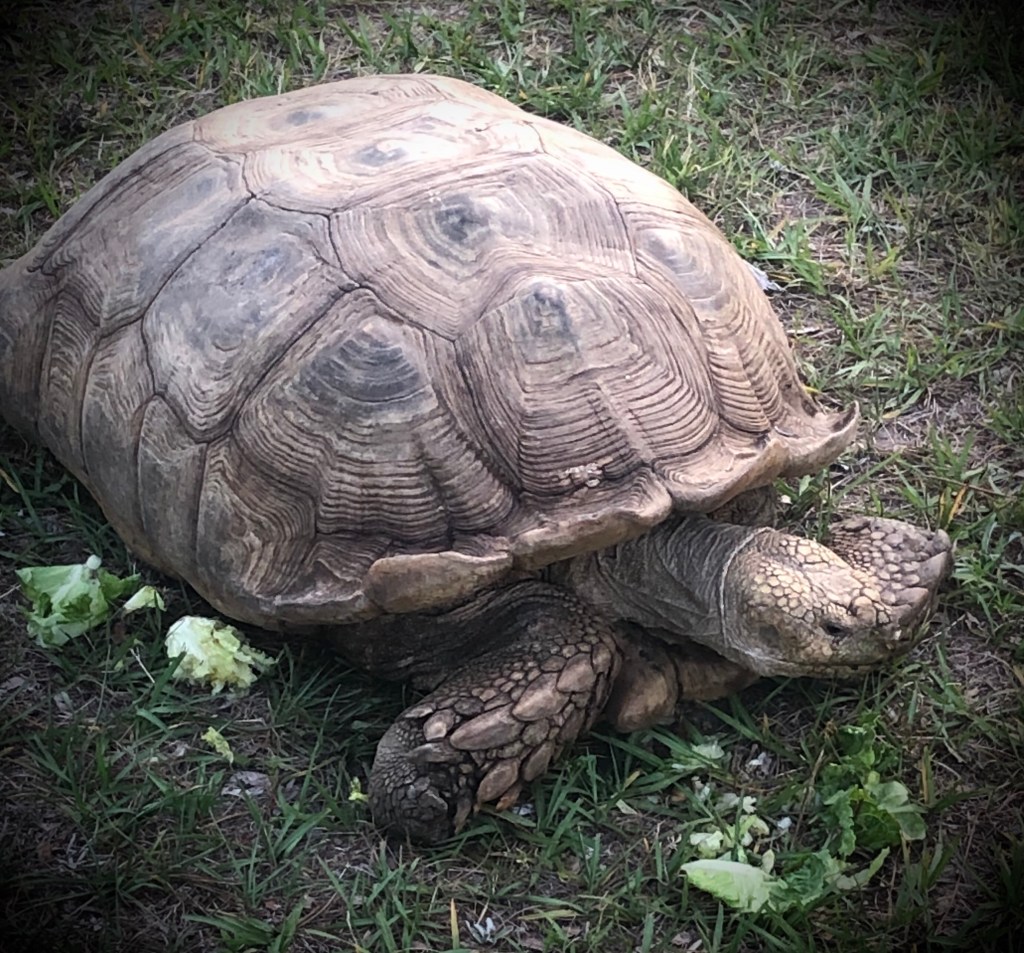
One night last week he and I were watching a nature TV program. The camera zoomed in on a tortoise. Instantaneously, my husband said: ” I remember that.”

“What?”

“The tortoise. We saw one like it on the beach trip last year.”

He is right. We did. We saw a giant tortoise on the side of the road while driving. We pulled off to encounter several tortoises owned by a man who had them out for visitors that day. Tortoises, we discovered, enjoy having their heads petted; they’ll stretch their necks out to you for more.

And I know, looking away from the tortoise on the screen to the intent expression on my husband’s face as he watches it, that the return of the tortoise in his memory means that what is good remains, even if hidden. It is never just gone. Despite the extent of trauma, pain, and suffering, endurance is possible, and healing more than possible.

Here’s to today. And the tortoise.
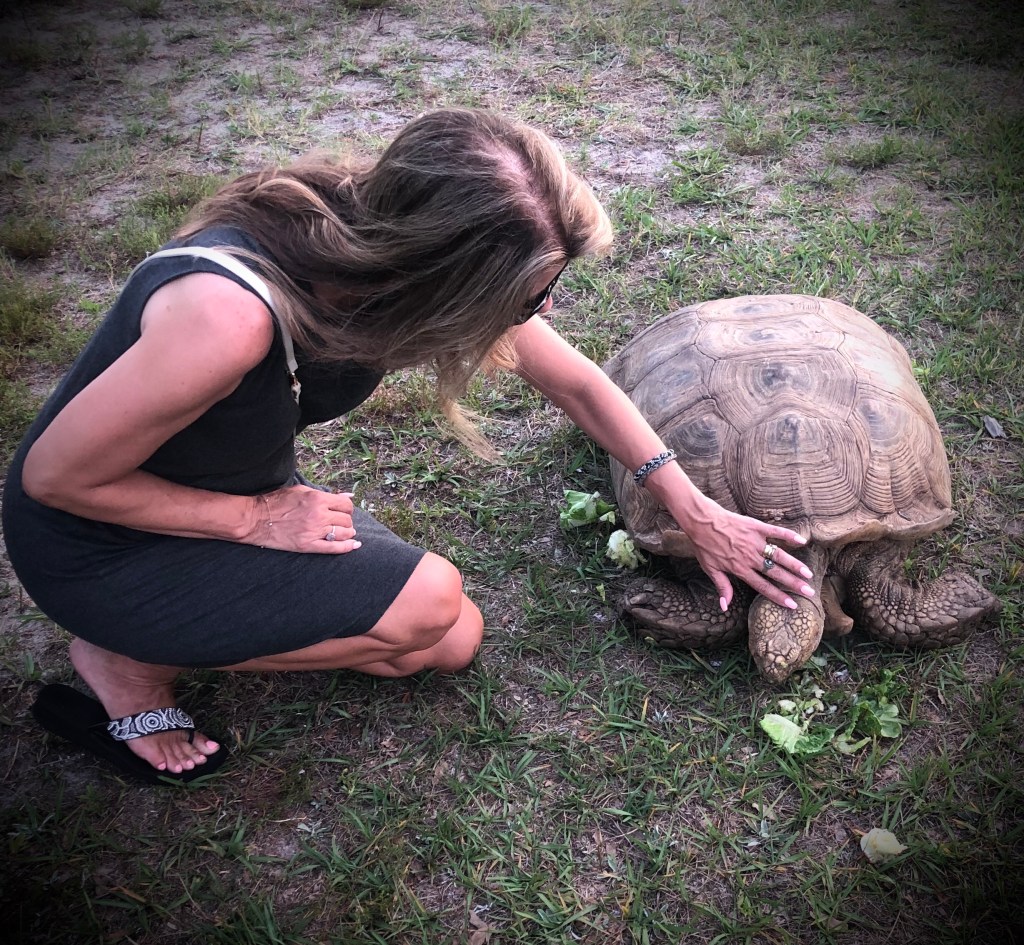
Last July. I could not have imagined the significance of this moment, one year later.
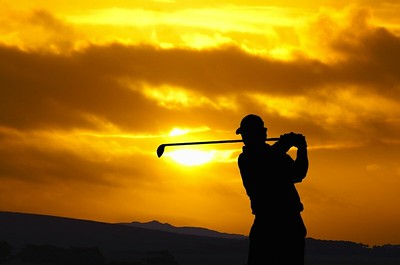
Spiritual Journey Thursday: On golf and good-bye

An elegy.

Again I saw that under the sun the race is not to the swift, nor the battle to the strong, nor bread to the wise, nor riches to the intelligent, nor favor to those with knowledge, but time and chance happen to them all.

-Ecclesiastes 9:11

He was born nearly seventy years ago.

With cerebral palsy.

He would never be able to go up a flight of stairs, for both halves of his body wouldn’t work together.

He would partake of the Lord’s Supper at church with a special goblet reserved for him; the tiny communion cups required too much finesse.

His ever-present smile, however, set his entire face alight with a magnificent inner glow that never dimmed, his piercing blue eyes as bright as the unclouded summer sky.

Perhaps it began with his father, who chose to believe.

Who loved the game of golf and decided his son would, too.

And so he taught his boy.

As if there were no handicap.

Always make a total effort, even when the odds are against you.

-Arnold Palmer

It’s a game of precision, skill, and amazing grace.

The boy loved it.

He excelled at it.

He entered tournaments, won trophies.

A whole case full of them.

I have to believe in myself. I know what I can do, what I can achieve.

-Sergio Garcia

He liked people even though many could not understand his labored speech and, in their discomfiture, avoided him.

He could drive a car and on occasion came to visit the parsonage where my husband and I lived, when our children were small.

I learned he had a mischievous sense of humor, that his brain was, in fact, brilliant.

I wonder how many people understood this.

When I told him that I had to complete a required PE credit on my path to becoming a teacher, and that the only thing currently available was golf, and that I was already in danger of failing it due to my abysmal performance, he coached me.

Brought me pages of yellow legal paper covered with handwritten notes far clearer, finer, and consistent than my own, organized under this heading: The Fundamentals of Golf. Another heading: Form. Accompanied by his sketches of how to stand, how to hold the club, body position, dotted lines for movement…

I contemplated these golden pages with absolute awe.

He brought me newspaper clippings and magazine articles on women golfers. Hoping, perhaps, I’d love the sport. His sport. That I’d maybe rise, somehow, to the glimmering, glorious heights of it…

I never did. Never learned to love golf, not even a little.

The university instructor declared, in utter exasperation, that I looked like I was chopping wood.

But I got an A in the course.

Thanks to my coach.

Golf is the closest game to the game we call life. You get bad breaks from good shots; you get good breaks from bad shots—but you have to play it where it lies.

-Bobby Jones

He taught me much.

He wanted to be married, to have a family.

It didn’t happen.

“People don’t understand God,” he told me during one of his last parsonage visits. “But I understand God.”

I looked at his face, bright and earnest as ever, uncharacteristically serious, eyes fierce, blazing.

And I believed him.

As you walk down the fairway of life, you must smell the roses, for you only get to play one round.

-Ben Hogan

He lived with his mother, who cared for him until her illness and death, after which he went to an assisted living facility.

Parents gone, driving gone, golf gone. Seasons come and gone with slow decline, languish, only memories left of moments in the sun, walking the fairway, making your best shot.

With the arrival of COVID-19, even visitors were gone.

And now so is he.

He could be considered a victim. Of the cerebral palsy that marked an existence of suffering from birth to his death by a pathogen that, in electron-microscope images, looks like a golf ball with extruding dimples.

Some might say his life wasn’t fair… what if his father thought this?

I say he was a conqueror.

More than a conqueror, never separated from the love of God.

He understood.

Only a few will be allowed at the memorial today.

Just know that I remember, old Friend. Farewell. You were, you remain, always, a gift from our Father.

Photo: Chris Urbanowicz. CC BY

*******

Special thanks to Carol Varsalona for hosting Spiritual Journey Thursday today at Beyond Literacy Link.

I’m the one who leaps

On Ethical ELA today, Margaret Simon shared the work of fellow Louisiana native and Pulitzer Prize-winning poet, Jericho Brown. For the Open Write challenge, Margaret encouraged writers to use an echo line, anaphora, in composing poetry, something Brown does so magnificently. You can read an excerpt of his work and many other moving poems on being “a marcher or a leaper” here.

I lifted a line of Brown’s from The Tradition: “I’m the one who leaps.” My poem is based on a long-ago story told by someone who mattered to me, so much …

I’m the One Who Leaps

I’m the one who leaps
not from here to there
but within.

I’m the one who leaps
not like the farm boy standing rooted
to the old front porch
listening to hounds on the hunt.
Baying, fever pitch, nearing, nearing
when in the clearing
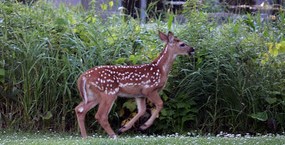
bursts the fawn from the brush.
White spots still visible
here and there
on the body running, running
right toward the farm boy standing rooted
to the old front porch.

No time to think
No turning back
Hounds closing in
-the fawn cries, that final sound
a creature makes when it knows
it’s reached the end.

The boy stands rooted.
No time to think
he just does it
he just opens his arms.

No time to think
The fawn just sees,
sees and leaps …

The farm boy
who caught the fawn
on the old front porch
became a preacher
standing rooted
in the Word of God.

Be the one who leaps,
he told us children,
into the Father’s open arms.
You cannot save yourselves.

I sat rooted to the pew
hearing the hounds on the hunt,
seeing the fawn
and those open arms.

I’m the one who leaps
not from here to there
but within.

Photo: Running fawn. Cropped. USFWS Midwest Region. CC BY

Memory poem: Pier

For Day Three of a five-day Open Write Challenge on the Ethical ELA blog, Margaret Simon invites memory poem writing. See her glorious sensory poem and one penned by her second-grade student, as well as other offerings and the inspiring “mystery of memory” mentor-poem from Nikki Grimes, here.

Today’s poem challenge begins with the word Think, followed by a word linked to childhood associations and evocative detail. Grimes’ poem begins with Think food and leads to her grandmother’s pineapple upside-down cake and food being “so much more” than nourishment. Margaret’s poem begins with Think dirt and brings the reader into a very real moment of making mudpies (you can feel and smell it) and the deeper context within.

Memoir is probably my favorite type of writing; it is a chance to stand once more in your childhood shoes, experiencing the world just as you did, only framed by knowledge gained since. I had to think a while before an image came to mind foe this memory poem. Then I had to think a while longer about what it meant …

Here’s “Pier.”

Think pier
and danger comes to mind.
Weathered gray boards
armed with splinters
meant for tender young feet
encased in sneakers
that Grandma made me wear.
Sneakers stepping deliberately
from slat to solid slat
avoiding intervals of nothingness
where water laps dark and green
below, moving and moving
until it seems the whole pier
is floating out to sea
with me.
Summer sun beating down
casting our squatty silhouettes
on grainy gray wood-canvas.
Grandma’s sunhat fluttering
in the river’s breath
brine in my nose, my mouth
endless expanse of silver-green water
glinting, beckoning,
reckoning—
there are no rails.
There are nails.
Tie the string to the raw chicken neck
toss it over—plop
and wait.
Let the nail-anchored string
rest on your fingers
until it moves with strange little jerks
then pull so so slowly
so carefully.
Use both hands but
have your net ready
for the greedy green-brown crab
with fierce orange ‘pinchers’
—keep your fingers away!—
and legs painted bright watercolor blue
soon scuttling around in
Grandma’s galvanized tub.
Think pier
and she’s right there again
between me and danger
showing me how to navigate.

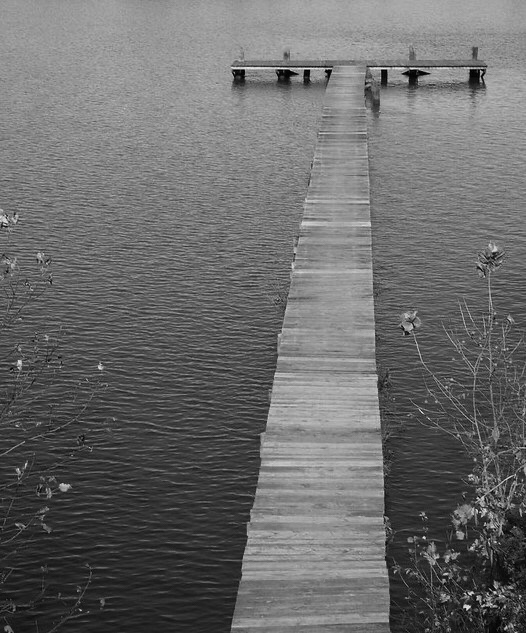
Photo: Pier. Richmond AACA. CC-BY. Cropped and converted to black-and-white. The pier of my long-ago childhood memory is so like this one.

On children and hope: Spiritual Journey Thursday

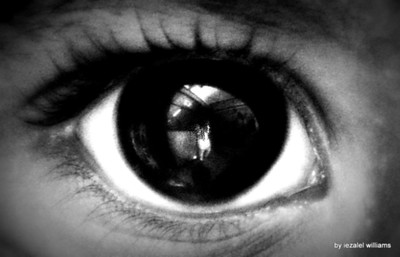
Photo: Child of Vision. Baby eye in black and white. Iezalel Williams. Public domain.

I’m a hopeful person. A hopeful writer. I created this blog in hopes that whomever encountered it would come away feeling uplifted. There’s already too much in the world pulling us down, every day. Burdens can pile until one hardly feels able to move. Grief is like this. Depression is like this. Oppression is like this.

Always, I am looking for a way, or writing my way, through to the better I believe is there. That, to me, is hope. Coming through. Knowing that possibility exists, sensing it, even when I cannot see exactly what it looks like. Eventually it reveals itself. And so I hope.

Yesterday I read that hope is not enough for one of humanity’s biggest burdens. Not COVID-19, which will eventually pass, although it will destroy many more of us before it is done. But we will be fighting diseases as long as we’re alive. No—hope is not enough, in itself, to remove the unbearable burden of racism.

As hopeful as I am, I know this is true.

Yesterday evening I watched a news segment featuring families talking to their children about racism. Black families, families with brown skin. A beautiful little girl—little girl—coached by her dad on how to respond if she should be singled out by those in law enforcement. Eyes wide, brow slightly knit in concentration, the child dutifully repeated everything her dad taught her on how to move, how to hold her hands … she covered it all. Dad paused in his feedback. He nodded. Then he said, quietly: “I did all that. And they still tased me.” The little girl’s face froze, then crumpled. Weeping, she climbed into her father’s lap, into his arms.

Another parent, a mother, said that as awful as it is to burden her children with this knowledge, it’s ultimately for their protection. They need to know.

A boy and another little girl from different families said they know it’s wrong for people to treat each other this way. “We are all human,” said the boy, a young teen. “It doesn’t matter what color skin anybody has,” said the girl (is she maybe six? seven?). “We should all be good to each other and love each other.”

Love one another.

The greatest spiritual journey we can ever take.

Loving means bearing each other’s burdens; it does not mean hoping the burdens go away. It means putting love into action, working to remove the burden, the systems, the structures that oppress others. The possibility is there; our hearts just have to be burdened enough, collectively, to usher it into reality.

For what’s the alternative? Hopelessness. The deadliest thing of all.

As I tried to sleep last night, so many images flooded my mind. Mostly children. Many I’ve known over the years. Black, brown, white faces, eyes full of light, little arms open wide, always ready to give away their love. How easily laughter, wonder, song, and joy come to them … my daughter-in-law texted that my granddaughter woke up singing yesterday morning, before she got out of bed: “Everyone is a star, and everyone has to see how strong and powerful, and everyone has to see how much I love you and how much I’ve grown.” She is four. The thought of anyone robbing the pureness of her heart is … inhuman. It should not happen to any child. Ever. But it does. It is the most terrible of dichotomies, that the big love we have for one another as children does not grow as we do. If it did, the world would be an entirely different place … and if we have any hope of it being better, it begins with acting now. Understanding now. Changing now. Breaking out of age-old racist, prejudiced molds that may have shaped us, now … or they remain intact, shaping those who follow.

I remembered a thing last night, as I finally fell asleep only to dream about children (babies, in fact, standing in a crib, laughing because they’d just learned to pull themselves up). Somewhere there is a photo of me in a crib with my doll, Suzy. So long ago. I saw her in the store while shopping with my grandmother. Beautiful doll. What was it about Suzy that I loved? Her dark eyes, like my own? Black hair and skin, not like mine? I don’t even remember the shopping trip; my Grannie told me years later how I asked for that doll. So she, a white woman from the rural South, bought it for me—in the late 1960s.

Every day, every action, great and small, every word … colors the picture of society that the children see.

That’s us, reflected in their eyes.

In kindergarten I drew a family picture that made my mother angry: “Why did you have to draw me with a cigarette?”

I blinked, and couldn’t respond: Because I always see you smoking.

Children.

On my mind when I go to bed.
On my mind when I wake.
Not just my own
or ones I’ve known.

Children.

So full of love.
So full of song.
So free with their giving
in everyday living.

Children.

We hand them the crayons.
Blank sheets of paper.

And set little hearts so earnestly
to coloring the world they see.

Children.

Is there a crayon called Hope?
To color Tomorrow?

And what will that picture be
if they copy you and me?

My little granddaughter once explained sadness this way: “I was crying with my blue eyes.”

I know, Baby. Same as I cry with my brown ones.

Everyone is a star, and everyone has to see how strong and powerful … let us all keep loving. And growing. And working together to help and heal. Daily finding the way.

That, I’d say, is what hope really looks like.

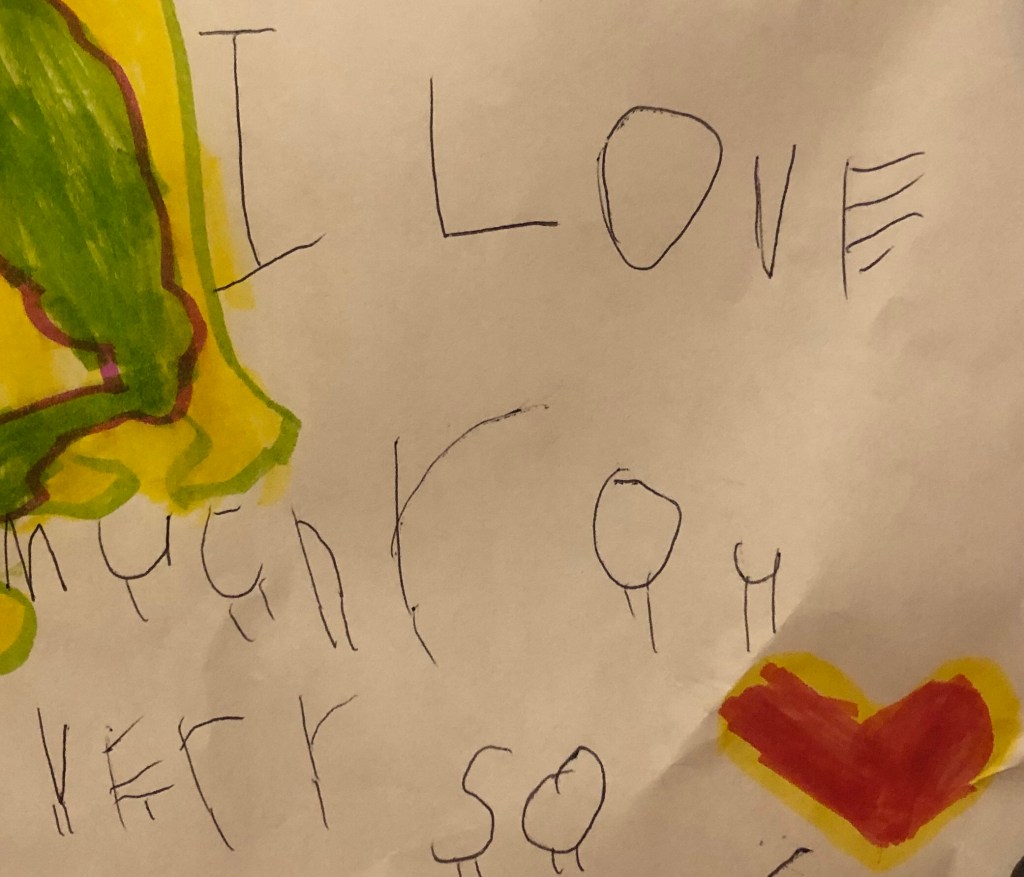
From my granddaughter’s heart: I love you so very much.

Special thanks to Ruth Hersey for hosting Spiritual Journey Thursday, and to all my friends and sojourners. You are welcome to continue the journey by reading their thoughts on the theme of Hope here.

Sidewalk surprise

Sunny May afternoon. Warm, lazy. Neighborhood moderately quiet but for the occasional baby-like cry of young goats from a pen hidden in a snatch of mixed-woods across the street. They sound like little kids … which is exactly what they ARE …

Absolutely nothing is happening.

I will check the mail.

Again.

Patches of thick, furry moss nestled in the wide brick steps of the porch. Clean fragrance of mulch from the empty beds along the house. Sudden coolness on rounding the corner, where the sun casts the shadow of the house across the sidewalk—

Snake.

Right in front of me, in my immediate path. If I hadn’t been looking down …

Two steps backward.

I am not a fan of snakes.

It’s little. The second of its kind I’ve seen. The first one appeared on this sidewalk months ago, belly-up, dead, when the old boxwoods were pulled out. I needed to know what kind of snake it was, so I researched it: Smooth earth snake. Lives in woodsy debris, usually underground (technical term: “fossorial”). Nonpoisonous. Very shy.

—This one isn’t moving at all. Is it dead, too?

—Do I really want to know?

I do.

Two steps forward, leaning over as far as I dare.

Almost imperceptibly, its sides rhythmically expand and contract.

It is breathing.

I have never seen a snake breathing.

But I don’t usually get close enough to determine such.

I wonder if it is scared of me.

I won’t harm it. This is a living thing, lying here on my sidewalk, breathing rather hard for a snake, I think.

It won’t harm me.

We’re just occupying the same shadow, breathing the same air.

I can see a dark lump through its translucent beige-gray skin, about halfway through its body. Is that part of the snake? Or something it ate?

Then …

I don’t expect anyone to believe this. I’m not completely sure that I do.

I hesitate to say. It sounds crazy.

But…

A little light flickers inside the snake.

Just for a second or two.

A fluid-like glimmering, mid-snake, very near that dark lump.

—Am I dreaming?

I stare, unblinking, not sure I trust my eyes or my brain. Have I ever even heard of such a thing?

And then, one more glimmering of light, faint, in the tail region.

I did see it.

Twice.

Is it just a reflective shimmer of sunlight?

But this snake lies wholly in the shadow of the house; the sun’s not shining on anything close by.

A reflection of something I am wearing, then?

But I am wearing no rings, no glittery flip flops. Only one fine, rose-gold chain on my right arm that I never remove (my son gave it to me), and it’s wholly in the shadow, too. Not catching the sunlight. Not casting it.

Furthermore, the glimmer came from inside the snake. It radiated only within the confines of its motionless body. Not on the sidewalk. Nowhere else.

—A trick of my eyes, then.

But my optometrist has never seen anything amiss with my eyes. Got a fabulous report at my last checkup in December: “No change in your vision. Everything looks great. See you next year!”

A migraine for me begins as a spot of light in my eyes; it grows until I can only see the outer edges of things.

But I don’t get migraines often, and am not getting one now.

Nor, to my knowledge, have I ever had a hallucination.

—I shall need proof, then. A picture.

My phone is in the house.

Stepping backward, I ease to the corner of the house, out of sight of the snake (well, at least until it’s out of my sight. Snakes don’t see well). I make a run for the porch steps, the front door, the bedroom where my phone is charging.

The snake has not moved by the time I return.

I wait for the longest time, phone poised, cued to video, but the glimmering doesn’t come again. I record a few seconds of the snake breathing. Zoomed, of course, from a comfortable distance.

Absolutely nothing is happening.

So I walk way around in the grass, giving the snake a wide berth. Short jaunt down the driveway to the mailbox, retrieving uninteresting, unimportant ephemera.

Back up the driveway to the sidewalk …

—The snake is gone.

Where?

—There in the mulch, just ahead of where it had been.

I try for several minutes more to capture some glowing, any glowing, on video, but the phenomenon is over. Whatever caused it has apparently conspired not to do so again, certainly not for one wishful human.

I do, however, get a bit of video of the snake’s tiny black tongue flickering — from a safe and comfortable distance.

I wonder if any neighbors have spotted me, if they’re wondering what in the heck I am doing, hunched over for so long here in my yard. But there’s nothing really stirring outside except those goats in their secluded pen, a meandering bee, birds in the distance, a random, rusty cock-a-doodle-doo from the rooster who lives up the street, as, in his mind, anything with ears to hear needs reminding he’s king of all times of day, not just the morning.

I have troubled this shy little snake enough. Time to let it be. Live and let live.

Trudging up the steps to my porch, wonder and hesitation stir my soul: I will write about this. I think. Or should I? How can one explain the inexplicable? How can one know what is really real? When “I saw it with my own eyes” isn’t exactly enough to drive away doubt? What about logic: Have earth snakes ever been known to glow? Is there a plausible scientific explanation? Bioluminescence is a real thing. In some eels, for example. Fireflies. Glow worms. Perhaps my snake ate one of these larvae—? Might that be the dark lump in its midsection? Perhaps some released phosphorescence traveled through its body, which is just transparent enough to reveal it. Or maybe this is a defense mechanism? A means of survival for a thing that usually lives underground? Did it ingest some compound in the soil that might give off a glow? Or did this snake simply, literally absorb some sunlight?

All I know is that I saw a light glimmering inside a rather translucent little earth snake. Twice. And that I am unaccustomed to seeing random light running along anything in shadows.

Not physically, anyway. Metaphorically I see light in the shadows all the time.

I sit rocking in my new porch chair. My thoughts sway back and forth, rolling over and over and over like paper in the wind … and I realize that my questioning awe is tinged, the tiniest bit, with something like sadness: I am not likely to ever see this again, let alone prove that I saw it. Some things are once-in-a-lifetime occurrences, one-shot-only golden glimpses, like the eagle I saw last spring, sitting huge and majestic by the side of the road. Not that I want to encounter another snake (any more, I am sure, than one wants to encounter me). No. Still not a fan. Not aiming to be a herpetologist. Although I could contact one and ask if earth snakes ever glow … what’s the risk, other than skepticism and dismissiveness?

I just want to know why. That is all. And am having to accept that I likely never will.

That glimmering … if nothing else, it means Aliveness. The little snake is alive. I am alive. For one moment, maybe, the life force acknowledged and honored itself …

For all I know, the snake saw the same glimmer in me.

Maybe.

Cookie commemoration

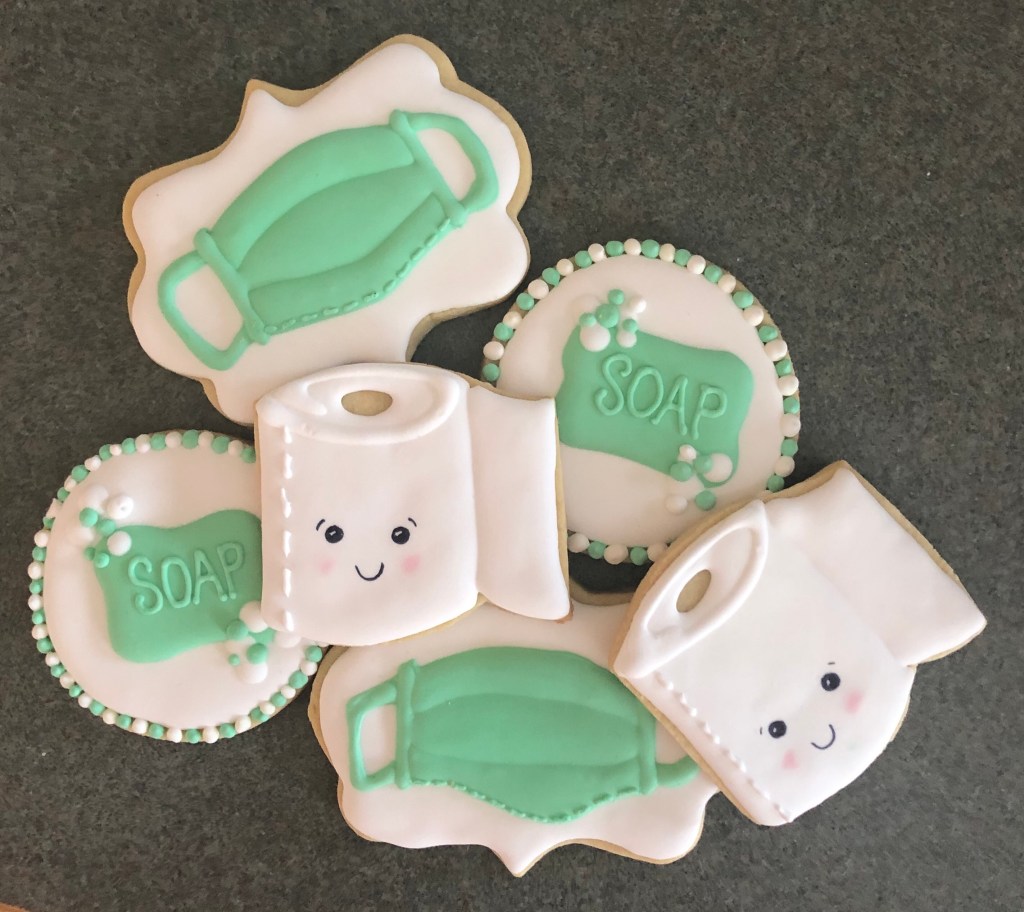
Quarantine cookies are a real thing.

Not just the baking of them as a means of COVID-coping productivity, but as an expression of the times.

My daughter-in-law—artist, baker, craftsperson extraordinaire—created these cookies a few weeks ago. She and my son delivered them with my granddaughter via a front porch social-distance visit:

My ebullient four-year-old granddaughter belly-laughed on presenting these whimsical delights: “TOILET TISSUE COOKIES!!!!!”

“And face masks and soap!” I exclaimed.

“They’re too pretty to eat!” said my husband.

But we did. Every crumb. With joy.

I thought about the joy with which these cookies were infused, how ingesting them was an antidote to the virus zeitgeist. What you put into a thing is what you get out of it …

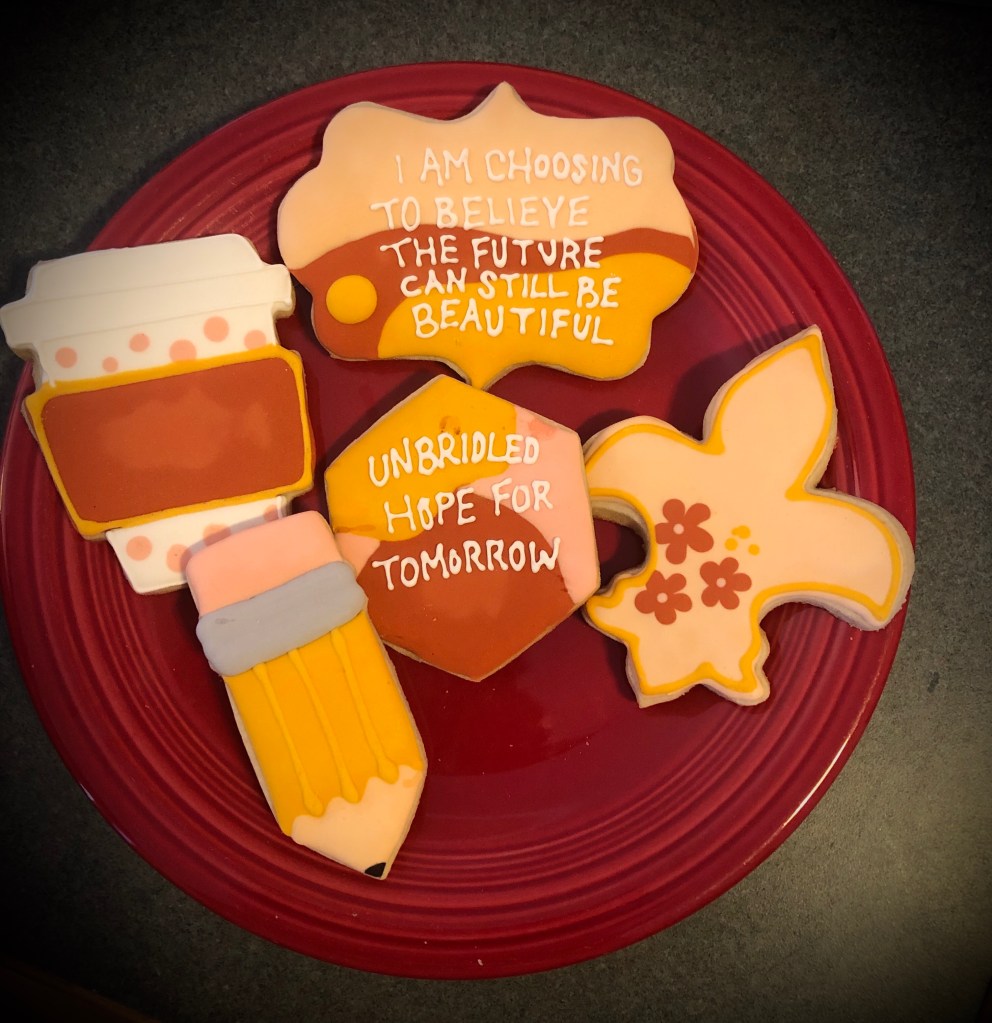
Yesterday my son and his family made another delivery:

“Ooooohhhhh,” my husband and I breathed in unison.

As we admired the astonishing artistry, I noted a shift in the cookie symbolism: Not just physical survival, as in the previous batch, but spiritual (coffee counts as both, right?). The fleur-de-lis, emblem of our daughter-in-law’s Louisiana roots, long associated with Christianity and the church, an icon from antiquity for royalty and protection. Choosing to believe, as the stages of isolation drag on, that the uncertain future can, and will, be beautiful. “Unbridled hope for tomorrow” … such trust. Such zest for life.

And a pencil.

Truth is, we write our tomorrows by our choices today … and nothing represents spiritual survival to me more than writing.

I call it: “The pencil is mine.”

“I want this one,” said my husband, picking up the fleur-de-lis. How he misses going to church, being with the flock he pastors. A shepherd pining for restoration, preservation.

We share the consumption of hope.

Every sweet crumb of it.

I am from poem

How have I lived to be this old without attempting an “I Am From” poem?

A rectification …

I am from sharp pencils
from Ivory soap and Duke’s mayonnaise
I am from the secret vault under the concrete back steps
(cool, cobwebby, smelling of ghosts)
I am from gardenias
from towering Eastern pines
heavy boughs whispering
waving to me like a vertical green sea
I’m from storytelling and dogs
from Columbus and Ruby
I’m from Reader’s Digest and gospel music
From “You’re the oldest, set the example”
and “take care of your precious self”
I’m from Jesus Loves Me, red-letter Bibles, put your offering in the plate
I’m from the riverside and the shipyard
from collards with hot pepper vinegar and carrot cake from scratch
From my father’s crew-cut ever since his head was pierced
by a friend’s cleats in a childhood game of deer and dog,
from three translucent pink moles on Grandma’s chin.
In trunks and in closeted boxes my grandmother’s painstaking albums
rest atop layers of loose photos, paper strata of many eras.
I am etched deep in this phosphorite, the living reliquary
of all the stories.

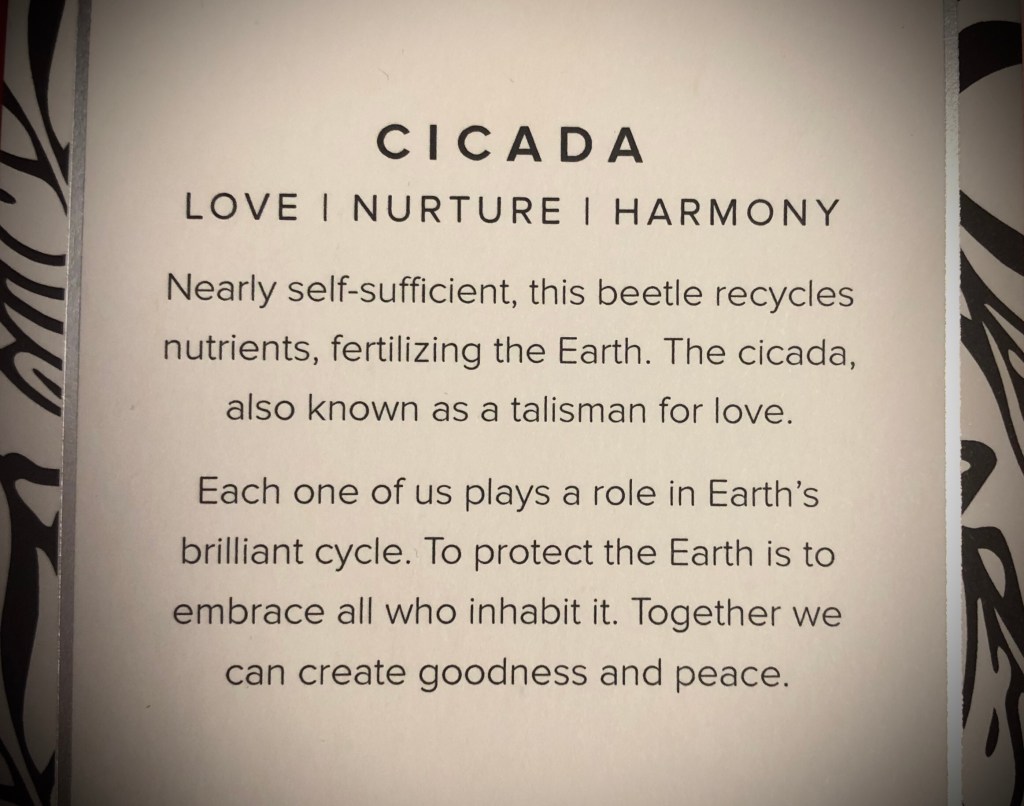
Earth song of life: cicadas

My love for the sound of cicadas is a recurring motif in my writing.

It stems from childhood summers spent with my grandparents in the country, the most idyllic days of my existence.

In thinking of Earth Day, my first inclination is to write on In the sweat of thy face shalt thou eat bread, till thou return unto the ground; for out of it wast thou taken: for dust thou art, and unto dust shalt thou return.

That verse, Genesis 3:19 in the King James, conjures images from At Home: A Short History of Private Life. Here’s Bill Bryson’s observations of country churchyards in England where churches seem to be sinking into the ground: Think about it. A country parish like this has an average of 250 people in it, which translates into roughly a thousand adults deaths per century, plus a few thousand more poor souls who didn’t make it to maturity. Multiply that by the number of centuries that the church has been here and you can see that what you have here is not eighty or a hundred burials but probably something more on the order of, say, twenty thousand … that’s a lot of mass, needless to say. It’s why the ground has risen three feet.

In other words … we are the earth.

Times being the pandemic they are, death surrounds us. April 22 also marks the anniversary of the sudden passing of my husband’s father at the age of fifty-four. My husband was just twelve.

But I do not wish to turn Earth Day into a death knell.

I write about cicadas today because they lie in the earth and emerge—some after seventeen years—to sing their song of life.

In the thick woods and byways of North Carolina, from May through September, it’s a deafening cacophony; but as beauty is in the eye of the beholder, so there is beauty in the ear of the listener.

In honor of Earth Day, a “found poem,” of sorts, from a former blog post I wrote, entitled Cicada Rhythms:

The song of cicadas
calls to me
from long ago
from sultry summers
in the country
where narrow dirt roads
keep an ominous forest
from encroaching
on rustic homeplaces
from tiny cemeteries
where baby after baby
is buried
under white monuments
adorned with lambs
at the old church
just around the bend.
The song is of the ages
of the rising and falling
of generations
all of us coming and going
in our time
a song reverberating
from oaks, pines,
cypresses
across canals
teeming with frogs
and turtles
to white-tailed deer
standing along the fields
at dusk.
It is the bright song
of the sun
of hope
of continuity.
It is the dark song
of the night
oddly comforting—
something out in the blackness
is vibrant, alive
maybe keeping watch
while children
drift off to sleep.
It is the sound
of safety
of stability
of belonging.
Calling, calling
the crescendo mirrors
the rhythm of life
brimming with promise
echoing eternity.
When I hear it
I am a child again
no matter
how many summers
have come and gone.
Every spring as I mark
another year of existence
I listen
for the first rattle.
You’re back! my heart sings.
Ah, but we were here all along
they might say
if cicadas had words.
There’s a lot of living
and loving
yet to do.
You have today.
Carry on.

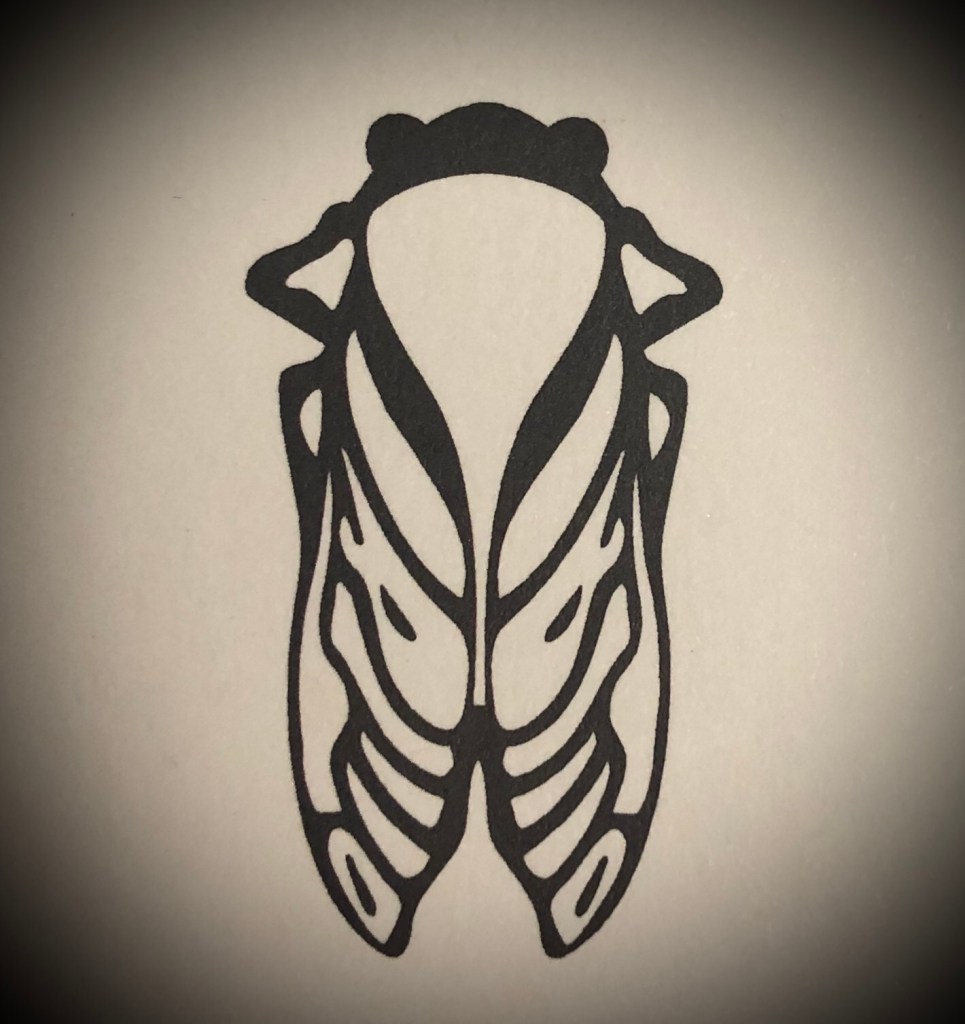
The cicada isn’t exactly a beetle, but a “true bug.”
They symbolize renewal, rebirth, transformation, change.
They can disappear for many years to return en masse.
Their buzzing call is made by the males, who begin singing soon after emergence.

A passing prayer

Heard today that a friend and former colleague passed away.

We worked together for a few short years as paraprofessionals, until I switched schools to complete student teaching, the final step in my university degree. It was an unexpected door that opened later in life for me.

My colleague encouraged me. She was an interesting, eclectic person who celebrated individuality and embraced life even as she absorbed some of its severest blows. I remember one sunny conversation we had about the word “eviscerated” — the gleam in her steely blue eyes never dimmed, whether burning with impassioned convictions or shining with compassionate discernment. She loved to laugh, to comfort, to speak of spiritual things.

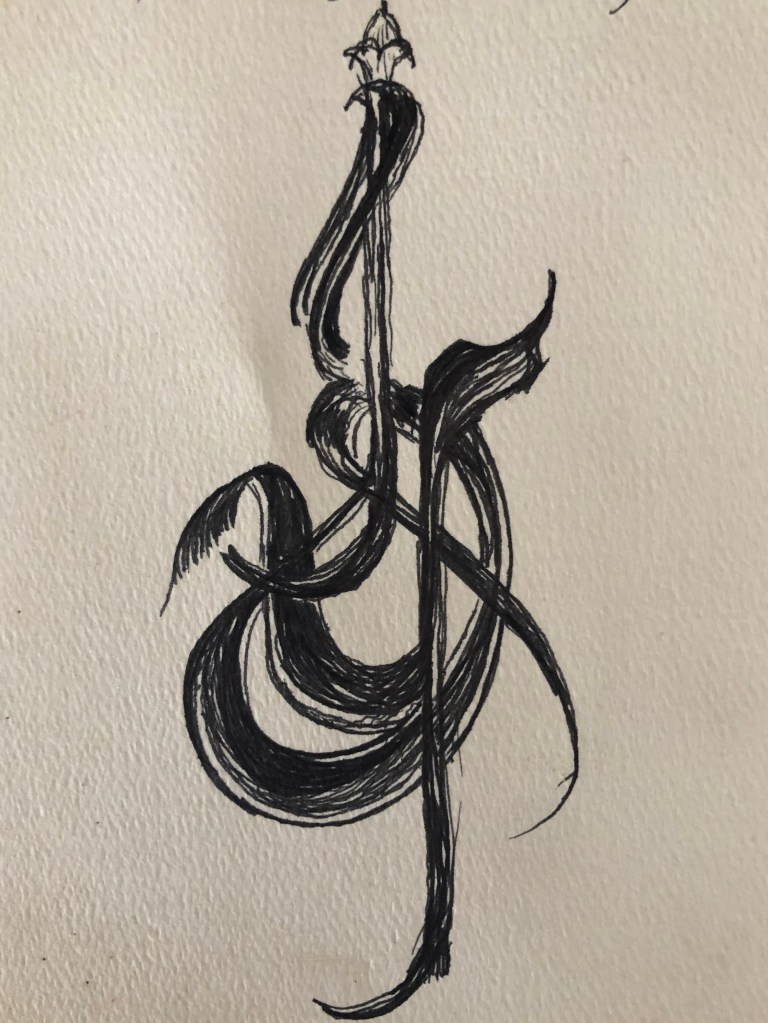
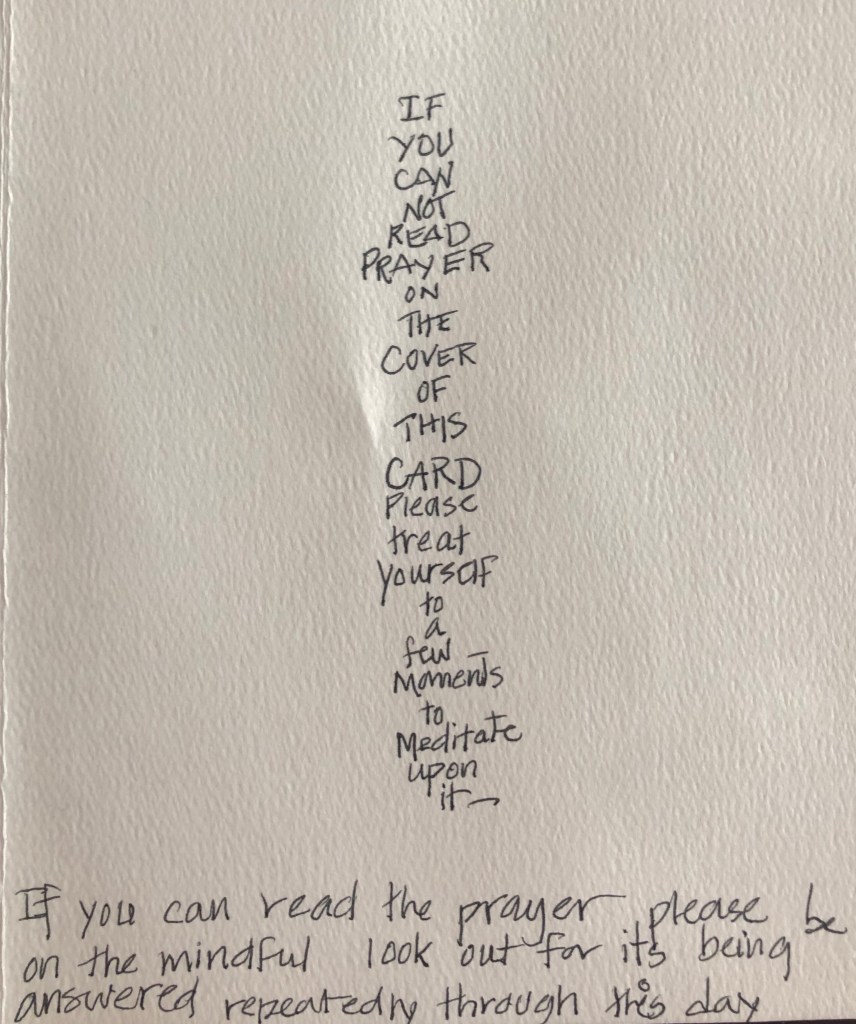
One day she surprised me with a handmade card bearing a mysterious drawing on the front: “This is my prayer for you,” she said with a smile and those unwavering, bright eyes.

I kept it all these years, long after we lost touch. Long after I heard that her compromised, declining health rendered her unable to work.

I found the card again this week during my incessant pandemic purge. With the TV in the background broadcasting the rise of coronavirus deaths at a local nursing home, I reread the card, marveled anew at its artistry and sentiment, thought of her, wondered what became of her.

Today I learned she’s numbered among those dead.

—How many messages do we miss in life, because we aren’t “still” enough to receive them. How many moments do we miss because we don’t make time. How many gifts go unacknowledged because we can’t see them while looking through the lens of unfairness.

My friend didn’t miss. She understood. Far better than most.

She reminded me once, long ago.

She reminds me, still.

It’s a choice.

Just now, seize the day
Offer your own gifts in return
You’ll find joy for the taking

Seize Heaven now, joyful old friend.

Rest in sweet peace.