My grandfather, St. Patrick

Columbus St. Patrick

Columbus St. Patrick Brantley, circa 1924-1925, age 18 or 19.

On a small family farm in Beaufort County, North Carolina, in late September of 1906, my great-grandmother had her fifth of ten children. Her previous children were named Franklin, James, William Hosea, and Penelope (not pronounced pe-nel-o-pee, mind you, but pen-a-lope, rhyming with cantaloupe).  Thankfully the girl was called Penny,  which the family spelled Peaney.

This new son was named Columbus St. Patrick.

We do not know why.

He wasn’t born on March 17th.

The family wasn’t Catholic; they were Baptists and Methodists.

Legend has it that a great-great ancestor came over from Ireland, but this isn’t evident in the family tree roots running deep in North Carolina and Virginia to the 1700s. In fact, as Columbus St. Patrick grew up, his southern dialect carried traces of Elizabethan English: He pronounced his brothers’ middle names as Acey and Hosey – that’s Asa and Hosea – and a neighbor’s name as Miss Etter, which I believed was spelled that way until I saw it on her mailbox: Etta.

His middle name troubled him.

I became fascinated by names around the age of five. My own given name is in honor of my grandmother, Ruby Frances. I asked her: “What’s Granddaddy’s middle name?”

“It’s just S,” Grandma replied.

“S?”

“Yes.”

“How can a name be S? That is just a letter.”

“It’s an initial. He had his name changed to an S.”

I didn’t know anyone could do that. Your name is your name; it’s who you are.

Grandma went on: “It’s S because his middle name was St. Patrick and it bothered him his whole life, so he changed it.”

Even as a preschooler who knew nothing of Saint Patrick yet, I felt a pang at this. What a magical-sounding name. Strange, but pretty.

Later that day I crawled into his lap and in the blunt way of children, asked: “Granddaddy, why did your mother name you St. Patrick?”

Granddaddy shook his head, briefly drawing a hand over his face as if to brush the thought away.

“I have no ideer,” he replied, sighing.

Those who did know were already long gone.

When St. Patrick’s Day rolls around, of course I think of Granddaddy. He was St. Patrick. He was a man of faith and a man of the earth, a farmer; Saint Patrick is depicted holding a cross and a shamrock. Saint Patrick sailed on ships in the fifth century; his namesake built them in World War II. Columbus St. Patrick spent his life serving others, putting their needs ahead of his own, always a compass for doing what is right, what is good.

The venerated saint is said to have driven the snakes out of Ireland. I recall Granddaddy killing copperheads with a hoe on the dirt road of his country home when I was a child. When he grew too old to manage the hoe, he simply grabbed his shotgun and that was it for the copperheads. No harm was going to come to his own, not on his watch.

“Never kill a black snake,” he told me. “They keep rats and mice away.”

I suppose it would not do for North Carolina to be rid of all snakes.

Today I celebrate my heritage as do many others, but I suspect very few can say they are St. Patrick’s granddaughter.

slice-of-life_individualEarly Morning Slicer

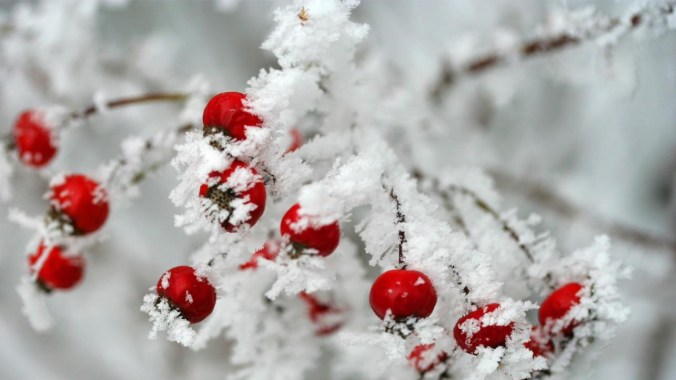
Morning snow

Snow

There was crisp, dry snow under his feet and more snow lying on the branches of the trees. Overhead there was a pale blue sky, the sort of sky one sees on a fine winter day in the morning. Straight ahead of him he saw between the tree trunks the sun, just rising, very red and clear. Everything was perfectly still, as if he were the only living creature in that country.

-C.S. Lewis, The Lion, the Witch and the Wardrobe

Snow swirled down in the gray dawn yesterday, winter whispering farewell in its dying breath: I’m still here, but not for long. Just one more time . . . .

There’s a silence, a stillness, to Sunday mornings anyway, a sense of expectancy, an invitation to step away from the world.

Of course I think of Narnia. I always do when it snows.

I was ten years old, scouring the school library shelves for a book I hadn’t read yet, when I encountered a compelling title: The Lion, the Witch, and the Wardrobe. 

“Sounds interesting,” I thought, opening the cover, not realizing that it was a portal to another world that I’d never fully leave  – or want to leave. I fell in and never climbed all the way out again. Part of that pull is the longing C.S. Lewis infused into the Narnia Chronicles, the sense of “realness” that pervades the magic. Lewis poured what he loved into the stories, and they live because of it.

Having facilitated a writing workshop for teachers just the day before on “creating the magic” – writing about what matters to you, tapping into your heart, your dreams, your struggles, your memories, making your writing authentic so you can help students do the the same – I watched the snow, remembering Narnia.

Writing is the closest thing to magic that there is. As teachers we create the atmosphere for our writers. It’s one of excited expectancy, of energy, when young writers discover the power within them, learning how to harness words to impact readers. Writing, after all, is meant to be shared – it’s the connecting of human minds and hearts.

Which is why, for me, Narnia is never very far away.

Especially when it snows.

slice-of-life_individualEarly Morning Slicer


Around the bend

white-peacock

Rezervatia de zimbrii Dragos Voda. Cristian Bortes. CC-BY 2.0 

I live in the country.

Long before daybreak, a rooster crows for all he’s worth, a passionate, guttural cry signifying that the dark night is ending.

My kitchen bay window faces east, catching the first glimmers of pink in the sky.

A short drive on the winding road by my home carries me past weathered stables and tobacco barns, abandoned unpainted houses from a bygone era, and fields where farmers still make their living.

There’s a horse or two in the pastures, innumerable goats, and the occasional delightful donkey, silvery-gray and calm. I have learned that donkeys keep coyotes away – how extraordinary.

One day, along a bend in the road, beside an old gate overgrown with brambles, a peacock strutted, the morning light electrifying the brilliant blue of his body. I slowed down, wishing I could see the long green train of his feathers fan out, but the peacock was skittish and went back through the gate via some hidden hole. Surely he should not have been out by the road, although the sight of him made me grateful to be alive. From then on, I looked for him.

Until the day I rounded that same curve and there, in the middle of the road, stood a white peacock.

I could not believe my eyes – I never knew such a thing existed.

But there he was, gleaming like some divine messenger, standing right on the double yellow lines. I slowed to a stop. He looked at me through the windshield; I hardly dared to breathe. He took his time heading back to the lush bank by the brambly gate, as if he owned this road, maybe this entire world, his long white tail feathers dragging behind him like a bridal train or a king’s ermine robe.

I watched him go, oblivious of everything around me except the sheer splendor of his presence.

I have learned, then, that every day is new, that there are unexpected wonders waiting just around the bend. In the middle of the familiar and mundane might be something rare, glorious, breathtaking.

Be watching.

slice-of-life_individual


What lies within


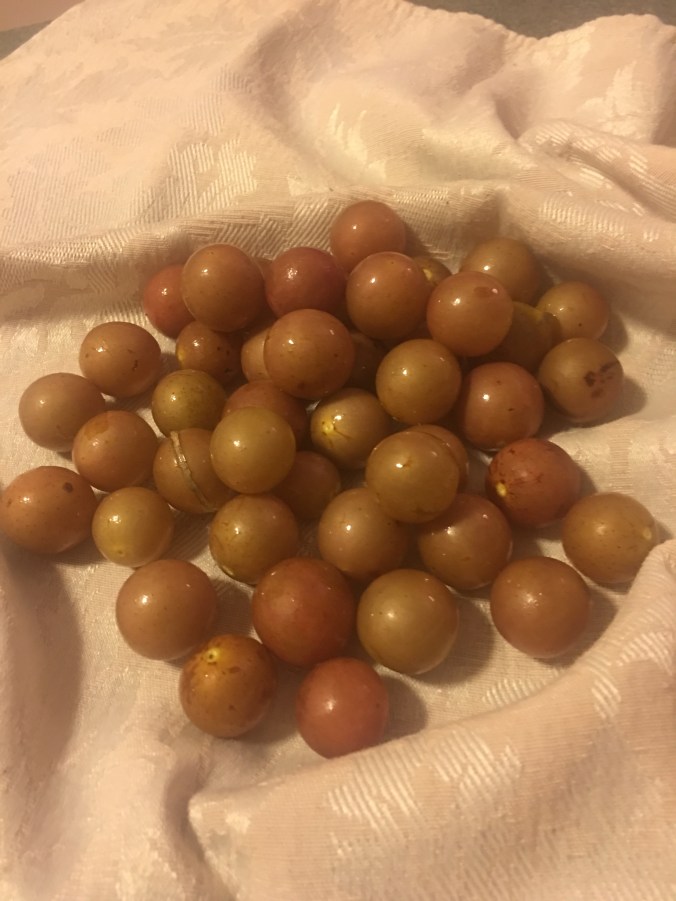
scuppernongs

They aren’t beautiful, scuppernong grapes. Their unassuming greenish-bronze skins are flecked as if with age spots. Hardly inviting.

If you have never tasted one, you have not fully lived.

Yes, the seeds are a nuisance, difficult to manage in polite company, as one must spit them somewhere.

But put one in your mouth, gently split its remarkably thick skin open with your teeth … oh! The burst of richness is almost breathtaking. Embryonic wine, a touch of dying summer, a whisper of sweet things to come, something of all Christmases and bit of Heaven is encased in that homely little orb. No other taste on Earth compares. When I first studied mythology, I wondered if ambrosia, the food of the gods, was actually scuppernongs.

I first encountered scuppernongs as a young child. I can see the vines towering over my head, the flickering sunshine and shadow of wide leaves, the poles my grandfather erected, his straw hat, the plaid pattern of his sleeve as his big wrinkled hand reached up to pick the grapes for me. No words; just richness. Just joy.

A lot of things are like scuppernongs – unappealing on the outside, messy and more work than seems necessary. Teaching is like that. Writing is like that. Living is like that. Get beyond that first impression; it’s misleading. Press on to the heart of it. What you find there will take your breath away.

Reflect: When has the appearance of a thing, an experience, deceived you? What surprise was waiting for you within?


Cicada rhythm

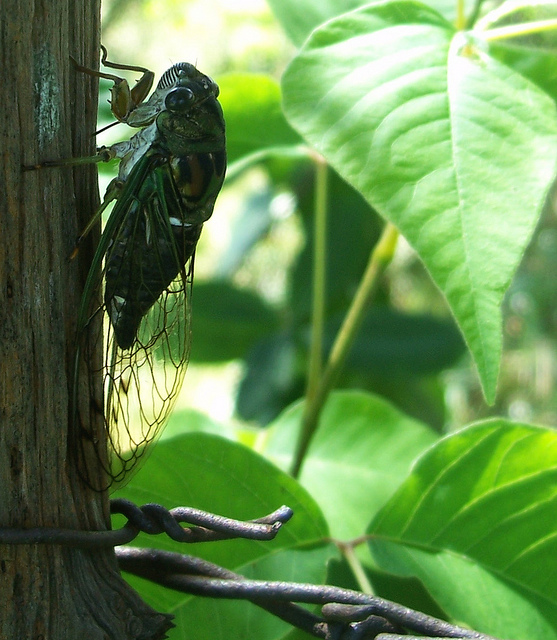
cicada-on-post

Image: Cicada on a post. Jo Naylor CC BY 

Summer is dying now, taking with it one of the things I love best: The song of cicadas.

If you’ve ever heard cicadas in full throttle, you might not agree with “song” as a fitting description of their cacophonous buzzing. It’s not pretty. The noise can be deafening.

Yet when I hear that first discordant rattle sometime in May, my spirit rises, my own heart sings in response.

The song of cicadas calls to me from long ago, when I was a little city girl spending sultry summers in the country. The song evokes narrow dirt roads keeping an ominous forest from encroaching on rustic homeplaces, tiny cemeteries where baby after baby is buried under white monuments adorned with lambs, and the old church just around the bend. The song is one of ages, the rising and falling of generations, all of us coming and going in our time. It is a song reverberating with tire swings hanging from pecan trees, canals teeming with frogs and turtles, white-tailed deer bounding up from lush ditch banks along fields at dusk. It is the bright song of the sun, of hope, of continuity. It is the dark song of the night, oddly comforting; something out in the blackness is vibrantly alive, maybe keeping watch, while children drift off to sleep. It is the sound of safety, stability, belonging. Calling and calling, the crescendo mirrors the rhythm of life, brimming with promise, echoing eternity. When I hear it, I am a child again, no matter how many summers have come and gone. My home is in the countryside now and it is with a deeper pang each September that I note the song fading out. Every May, as I mark another year of my existence, I listen for the first returning rattle. You’re back! my heart sings. Ah, but we were here all along, they might say, if cicadas had words. There’s a lot of living and loving yet to do. You have today. Carry on.

Reflect: What’s one thing in nature that inspires you? Why?


Seeing past the surface

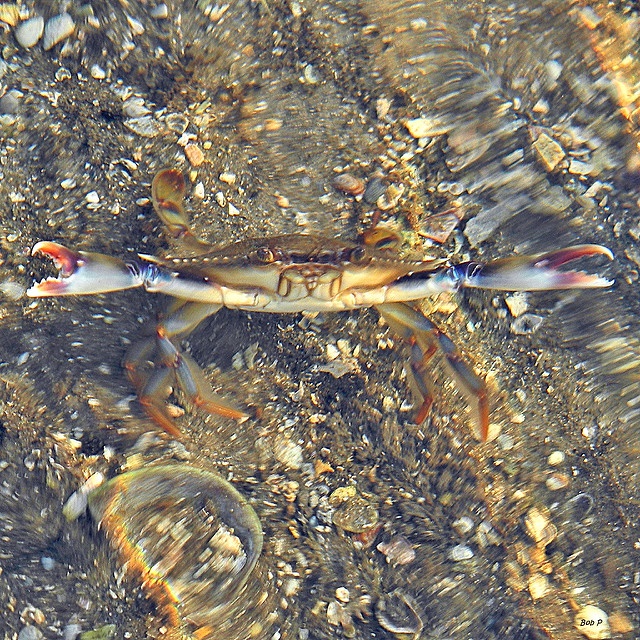
Blue crab

Blue crab (Callinectes sapidus). Image: Bob Peterson CC BY

One summer long ago, my grandmother took me crabbing at South Creek, a tributary of the Pamlico River. We knelt on the weather-beaten pier, tied a long string of twine to a raw chicken neck, and lowered the bait into the murky green depths. Grandma anchored the loose end of twine to a rusty nail jutting out from a piling.

“Now we wait,” she said. “But keep your hand on the string so you can feel when a crab starts nibbling.”

Being a novice, I was sure I felt a crab nibbling right away. I pulled up the length of twine ever so slowly, only to see the fleshy chicken neck. I released the twine. The bait plummeted out of sight again. Within minutes, I was positive I felt nibbles. Reeling in my string, I found only the bait once more.

Grandma chuckled. “You have to be patient. Give the crabs time.”

“I thought I felt nibbles,” I said in my own defense.

“You feel the bait drifting. You’ll know when it’s a crab.”

I waited, my mind wandering. The day was bright; Grandma’s sunhat cast a ruffled shadow on the gray boards, warm and splintery.

Next thing I knew, there were erratic tugs on my line.

“Easy,” said Grandma, sensing my excitement. “Pull slow and easy or you’ll lose it. Pull so the crab doesn’t realize you’re pulling.”

Bit by bit, I inched the twine up through the water to find not one but two – two! – blue crabs picking at opposite ends of the chicken neck. Holding my breath, I pulled until the crabs were just below the surface of the water. I dared not move as Grandma scooped them up with the dip net.

As the crabs scuttled inside a galvanized tub, I tossed the slightly-gnawed chicken neck back into the water, observing: “It would be a lot easier if we could just see to the bottom. Then we would know when we have a crab.”

“Well, isn’t that the fun of it?” asked Grandma. “Not being able to see what’s there, but pulling until you can?”

Decades later, I sat listening to a group of fourth grade intervention students rereading a script.

“You’ve all come a long way with your fluency, recognizing words automatically without needing to self-correct. I can hear some great expression,” I commended them. “I have one question: What is this scene really about?”

As students tossed out random answers, images of a weather-beaten pier, twine, and raw chicken necks came to mind. “Wait, you guys. You’re all skimming along the surface, just seeing the words. There’s a deeper meaning you’re not seeing; it goes past the words into the ideas behind them.” I told them of my long-ago crabbing days, how I knew the crabs were there, hidden from my view, and how I had to watch, feel, and finally pull them to the surface. “Reading is like that,” I told the kids. “There is more than what you see at first. To infer, you have to take your time, go back, and try to feel what’s not actually said before you can grasp the meaning. Some words give you more clues than others, but a deeper understanding is always there. Sometimes you have to wait, think, and work to pull the meaning out.”

Until that moment, I hadn’t imagined crabbing as a metaphor for reading comprehension, or, for that matter, teaching. The students often come to us with their backgrounds, experiences, struggles, and gifts hidden from us at first. The depths can be murky, indeed; how easy teaching would be if we could automatically see everything that each child needs to be successful. The best way to start is by throwing out the greatest “twine” we have: the love of learning. Keep your hand on the string, Grandma said. You’ll know. Pull easy so you won’t lose them. Be patient. 

To me, the true joy of teaching is first hooking students with a love of learning, then watching myriad treasures rise from those depths, especially when students start pulling on their own.

Reflect: Where can you strive to see past the surface of experiences and relationships to something deeper, of value? What unique exploration can you share with a child?