A rising tide lifts all boats

Boats

Fishing boats. karol m. CC BY

At a recent team meeting of K-12 cross-curricular educators dedicated to improving writing instruction, we discussed the Calkins and Ehrenworth article entitled “Growing Extraordinary Writers: Leadership Decisions to Raise the Level of Writing Across a School and a District” (The Reading Teacher, Vol. 70, No. 1, July/August 2016). While takeaways included the need for a shared vision of good writing and good writing instruction, as well as a need for shared expectations and ways to track growth – the reason for the formation of this team – what struck me most was this line on the transformative power of professional development: “It should be focused on strengthening teachers’ methods and spirits.”

Yes. Spirits must rise, I thought. Before we can raise the level of writing, before we can raise the students at all,  we must first raise each others’ spirits. 

The truth is that professional development is so seldom inspirational. For the last year, when I planned professional development in writing for teachers, my driving question was, How can I inspire them? How can they tap into the wellspring of their own power, their own voices, all that matters to them?

When I spoke on this at the meeting, a colleague chimed in: “We have to be the rising tide. If we rise, we’ll raise others with us.”

“Yes – a rising tide lifts all boats,” I responded, recalling those words associated with John F. Kennedy.

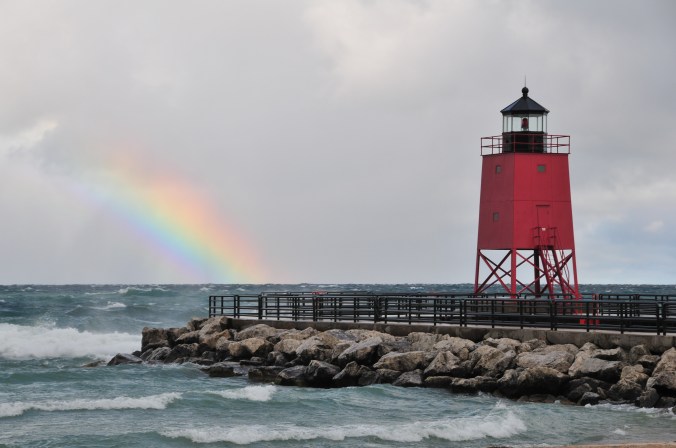
I grew up in the Tidewater region of Virginia. I have been on the Chesapeake Bay-Bridge Tunnel when the tide was high, in a storm; as I descended into the tunnel, waves crashed above the entrance and spilled over the car. A layer of salt remained on the windshield when it dried. I’ve seen boats grounded when the tide was low, making the would-be sailors push and pull that much harder to get them afloat. I’ve walked floating docks of marinas on sunny days, feeling the sway of the boards under my feet as boats rocked with the incoming tide, the metal of their moorings and buoys clanking softly, rhythmically, as if coming to life with with the rising flow.

When the tide rises, it lifts everything with it – everything rises.

When our spirits rise, we lift others around us – everyone rises.

That’s so needed in education today.

It’s so needed everywhere.

The power lies within you. Tap into that inner wellspring; let it flow.

And rise.

Note: The one word I chose for for myself at the beginning of this year is Rise. If you’re interested, here’s my little poem: Rise.

slice-of-life_individual

But I’m not a teacher

Encourage

He’d saved his own money to buy me a Christmas present. He told his dad he wanted to go to the bookstore, so his dad took him.

He bought me a picture instead of a book and watched with great pride as the clerk wrapped it.

“I got it for my mom,” he told the clerk.

“Oh, she’ll love it!”

He clasped it to his heart all the way home.

He burst into the house, calling, “Mom! Mom! I got you a present!”

His dad said, “Son, just put it under the tree. It’s for Christmas.”

“I want to give it to her now!”

“All right,” I said,  sitting down on the couch. My little boy scrambled up beside me. “I’ll go ahead and open it, if that’s what you want.”

He watched my every move as I unwrapped the paper and pulled out the matted picture bearing the quote: A teacher in wisdom and kindness helps children learn to do exactly what they thought could not be done.

I didn’t know what to say for a moment.

“It’s beautiful, honey,” I said, hugging him. “Thank you so much.”

“Do you love it, Mom?”

“I do … but I’m not a teacher.”

My son surveyed me with huge dark eyes that seemed far older than his six years: “Oh yes you are, Mom.”

At the time, I wasn’t even a college graduate. Teaching wasn’t on my radar. Thirteen years, a degree, and another baby later, I actually became a teacher. In all of those education courses that required me to describe my educational philosophy, I wrote: A teacher is an encourager, recalling that solemn little face, those big eyes, the absolute conviction shining in them. Children, sometimes, are the greatest of sages, the most profound of prophets.

Three more years, and the boy graduated college himself with a degree in history. “What am I going to do for a job?” he asked one afternoon, a slight hint of anxiety in his voice.

“Teach,” I answered, smiling.

He didn’t smile back. “But I’m not a teacher.”

“Oh yes you are, Son.”

Before the summer ended, he had a job teaching social studies at his old high school. When he went to set up his classroom, he cleaned out the cabinets and found old tests – including his own.

He also became a soccer coach, taking his team to the championships and winning regional Coach of the Year this past season.

We didn’t seek teaching; it found us. We’ve done exactly what we thought could not be done – we do it every day, all over again.

And every day is new, if not easy; every day offers wisdom, beckons kindness, invites us to believe in others, in ourselves, every moment a chance to create, to reinvent, to overcome. It can be done.

Encourage one another.

slice-of-life_individualEarly Morning Slicer


Lighting the way

Lumos

Yesterday a fifth-grader caught me in the hallway:

“Mrs. Haley, do you have a copy of Harry Potter and the Chamber of Secrets in your room?”

 “I have two copies. Ask your teacher if you can walk with me to get one.”

He did. As we walked, I said, “The Chamber of Secrets is a great book. I enjoyed it more than The Sorcerer’s Stone.”

“Yeah, I haven’t read Chamber of Secrets. I saw the movie and my favorite part is when Harry gets the cloak of invisibility and finds that mirror where he sees his family.”

“Ah, the Mirror of Erised … I just read that aloud to two classes at another school last week while they were studying fantasy.”

In that chapter, Harry receives the cloak of invisibility at Christmas with an anonymous note explaining that it had belonged to his father; he is admonished to “use it well.” He sneaks around Hogwarts, hidden by the cloak, and ends up in a remote, off-limits part of the building in what appears to be a storage room. He finds a large, ornate mirror. Erised backwards is desire – looking in the Mirror of Erised shows a person the deepest desires of his or her heart. Harry’s family is dead; he desperately wishes he could have known them. He is transfixed by their images in the mirror – they wave at him, and his mother wipes away her tears as she smiles at Harry.

I think, as I rummage through my basket of Potter books, Fascinating how it’s the humanity that draws us, more than the magic. 

“Here you, go,” I say to the student. “The Chamber of Secrets.”

His face lights up when I place it in his hands. “Thanks, Mrs. Haley!”

“Read it well,” I call after him, as he walks away, flipping pages.

I look around my room, my own chamber decorated with Potter memorabilia that draws children from across grade levels. They love to drop by to show me their owl collections, to ask if I’ve read The Cursed Child, to share anything Harry Potter that they’ve recently acquired. The Harry Potter club meets here twice a month, students from third through fifth grades, and we talk so much more about what motivates the characters than the magic they employ.

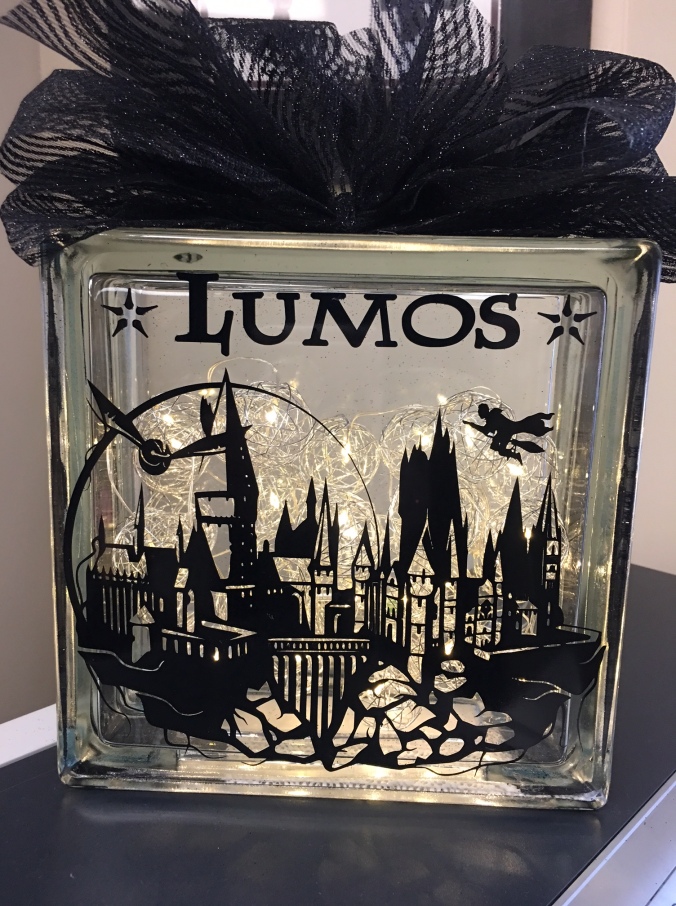
My Lumos glass box gleams in the corner by the doorway. I think of all the times that teachers might wish we had magic wands to show us everything the kids need, to fix all that needs fixing. I recall J.K. Rowling’s quote from her 2008 Harvard speech, now connected to her Lumos charity on behalf of children:

“We do not need magic to transform the world. We carry all the power we need inside ourselves already.”

It’s apparent whenever I read with the kids, whenever the Potter club meets and someone has an epiphany about a character, whenever I walk into a classroom to write with students and teachers. The essence of teaching, of reading, of writing more than anything else, is the connection of human minds and hearts. It’s all part of same story, the triumph of the human spirit. Teach it, read it, write it well – tap into all you’ve known, all you’ve loved, all you’re wrestling with, and watch their faces.

It’s all inside you. Light the way.

slice-of-life_individualEarly Morning Slicer


Signals

signals

Untitled. abarndwellerCC-BY

The Scottish poet Robert Burns wrote, in “To A Louse: On seeing one on a Lady’s Bonnet at Church”:  O wad some Pow’r the giftie gie us/ To see oursels as others see us! It wad frae monie a blunder free us…

I have often pondered that idea, people needing to see themselves as others see them. To see myself as others see me. What a frightening prospect. Certainly the power to see ourselves as others see us would free us from many a blunder … one would hope.

The lines spark a question I pose to myself and teacher colleagues: What signals are we unwittingly sending to students?

Years ago, I wasn’t sure I wanted to teach. I thought I would try it, almost reluctantly, as I needed a job and my own children were still in school. I wasn’t thinking of teaching as a calling or whether or not I was cut out for it. I took a temporary position, fifth grade remediation in reading and math, with some trepidation.

“I am not sure what to do,” I confessed to the hiring principal. “I don’t know if I can really help the kids.”

She smiled. “Just love them. The rest will come.”

Here goes, I thought on Day One, as I stepped into a classroom where kids milled about, working collaboratively on math. It’s sink or swim.

From across the room, a boy saw me standing in the doorway. He didn’t know me, didn’t know why I was there, but he shot across the room through the throng of his classmates to throw his arms around me.

That was my induction to being a public educator.

A child, sinking fast, clung to me like I was a life preserver. Perhaps he perceived, instantly, that we were in – or out – of the same boat. It was sink or swim for both of us.

In this classroom, I watched the boy try his hardest to swim. He struggled academically. He struggled with controlling his impulses. He struggled socioeconomically – he wore the same heavy black ski jacket every day, even when the weather was hot. He was chastised by his teacher for every infraction, great or small. The teacher – widely respected by colleagues – was clearly suffering from burnout,  undoubtedly tired of swimming herself. Whether or not she intended it, she sent a signal: Do not approach me or question me.

Do we, as teachers, send a signal – with  or without words – that we are safe harbors or treacherous ground?

I remembered a teacher of my own. She stayed in a constant state of frustration with our geometry class, once giving me detention for leaving paper in my desk despite my impassioned protest that I hadn’t done it. Math wasn’t my strong suit and I sank to the point of dropping the course, as I had all the math credits I needed to graduate. Later that year I landed a role in the school play and this teacher came to watch it. As people congratulated me backstage after the performance, this teacher stepped forward:

“Well,” she said, “I never would have believed you had it in you.”

You decide: Would I have ever been successful in her class?

One last note on my little friend back in the fifth grade: He went on to graduate.

On his behalf, I thank all those teachers who were, along the way, safe harbors for him.

Reflect: What messages do you send to others, verbally and non-verbally, about their value? Think of the teachers you had: Were they repellents to the learning in their classrooms, or were they encouragers? Were they the treacherous ground or the safe harbors? Write. Find a viable preserver when you need to. Rest a for bit. Then keep on swimming, mindful of those who are swimming so hard, so close by. 

Open a book and dance

dance-metaphor

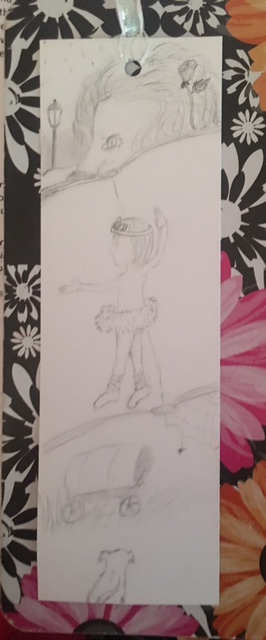
During a recent study of Who’s Doing the Work? How to Say Less So Readers Can Do More (Burkins and Yaris, 2016), the facilitator encouraged participants to jot notes or sketch on blank bookmarks as reflections of our learning.

Throughout the book, the authors use dance lessons as a metaphor for how learning to read works. As aspiring dancers watch proficient ones with a desire to emulate them, to navigating increasingly challenging choreography, so young readers develop skills along with a desire to read for the sake of it. My chapter was “Independent Reading: Learning to Love to Read,” in which independent reading is compared to a dance recital. Students have practiced and the teacher watches from the wings, not interfering when there are missteps, but “noting ways to fine-tune the their next performance.” The line that struck me most: “Most important, teachers let students read, allowing them the glorious luxury of falling in love with books.”

That got me thinking about my early reading life and the hand that teachers played in it.

In fourth grade, my teacher began the year by reading Charlotte’s Web to the class. Naturally we wept at the death of Charlotte (don’t we all, still?). I was so captivated by the story that I bought a copy at the book fair, to reread it to my heart’s content. This teacher knew what she was doing: she ended the year by reading Old Yeller aloud to outright sobbing from the class. I had to read the book again on my own, to grapple further with Travis’s extraordinary courage and the horror of the decision he had to make after that old yellow dog had saved his life. Old Yeller was outdone only by my own discovery of Where the Red Fern Grows in the school library – I cried every day for weeks after that one. I remain eternally grateful to Mrs. Cooley for hooking me with the power of story.

My fifth-grade teacher suggested that I read the Little House series. I loved Laura so much that I sometimes wore my long brown hair in braids and had my mother make sunbonnets for me (to wear at home, not to school). Laura was real. She wasn’t perfect and she knew it; I admired her backbone and the way she faced challenges. I also loved going back in time, reveling in Laura’s descriptions of the natural world and everyday life long ago. There’s such poignancy in the line “Now is now. It can never be a long time ago” (Little House in the Big Woods). As a child I pondered that line, knowing the story took place over a hundred years in the past – then realized that, in the pages of a book, time is preserved, all that happened is still unfolding, those who are gone still live. In the pages of an engrossing book, at least, now is now. How wise my teacher was, guiding me to books that would make reading part of my everyday life.

I was given lots of opportunity to explore books in the sixth grade. That year I was scouring the school library shelves for titles I hadn’t already read when I encountered an especially intriguing one: The Lion, the Witch and the Wardrobe.  “Sounds interesting,” I thought, taking it from the shelf, never suspecting what a defining life moment this would be. When I opened the cover, the magic poured out and pulled me in; I devoured every one of the Narnia Chronicles with an insatiable hunger. I loved them for the beauty of the setting, for their Britishness, for the author’s gift of turning a phrase and his humor, and most of all, for the hope they contain. I was encouraged to reenact scenes from the book for my classmates: I roped a friend into portraying Jadis while I dressed up as Aslan, complete with mane and tail. It’s the old good vs. evil theme, resurfacing many times throughout one’s academic and life experiences.

The influence and insight of my  of my teachers, along with the freedoms they gave me, had much to do with the reader I am, with person I am, today. They provided me the “glorious luxury of falling in love with books” – as you can see in the bookmark above, my tribute to them. I was never much of a real dancer, but metaphorically speaking – as a reader – I dance each day with wild abandon and absolute joy.

Reflect: Who helped you fall in love with reading? Write about this experience – and if these people are still living, write to thank them for their great gift to you. If you teach: How can you better provide “the glorious luxury of falling in love with books” for your students?

The Harry Potter club

harry-potter-club

Every semester a new group of them arrives, fresh-faced, wide-eyed, often clutching owls or wands, quivering with excitement and  ready to be sorted into one of the four houses … no, they’re not at Hogwarts. These are third, fourth, and fifth grade students who signed up to be in the Harry Potter club at our magnet school.

A colleague and I are the founders, the “co-deputy headmistresses” of the club, formed in conjunction with the school’s mission to expand arts and science integrated opportunities for the students. Staff chooses what to offer; students can sign up for anything from cooking classes to a foreign language to astronomy. Since it began, the Harry Potter club has operated at maximum capacity. Once we know students’ names, they receive their own rolled parchment letter of acceptance (as yet not delivered by owl, but we headmistresses are working on that).

My colleague and I expected to have fun – after all, we chose a theme that was fun for us. We expected that the kids would have fun, and they do. From Day One when they are sorted with the help of an online quiz  – we call it the “technological Sorting Hat” and we always end up with an alarming number of Slytherins, prompting discussions about character traits – through sessions of making their own wands, Quidditch pencil brooms, golden snitches, and patronus pictures, the students savor every moment. One of us, a teacher or student volunteer, reads aloud from the books while the club members work on their crafts. As students are sorted, someone reads Harry’s sorting experience to the group; when students make wands, one of us reads the scene where Harry goes to Ollivander’s for his wand. All students chime in right on cue, because they’ve seen the movies and they know: “The wand chooses the wizard.”

What my colleague and I didn’t expect were the far-reaching effects. Parents frequently tell us: “My child is SO excited about being in the Harry Potter club!” We didn’t expect the depth of the discussions students would initiate on their own, regarding various characters and their motivation:

“Professor Snape was really protecting Harry the whole time, not trying to hurt him.”

“That’s because Snape loved Harry’s mother – they knew each other when they were little, before she knew Harry’s father.”

“It was Harry’s mother’s love that protected him – she died to save him, and that’s why Voldemort couldn’t defeat Harry.”

One would have expected students to be drawn most by the magic, the fantastic, or the old good vs. evil theme, but at the ages of eight to ten or eleven, the students talk more about love, the huge, shining thread that winds through the stories and ties them all together.

My colleague and I certainly never anticipated one student’s attending the club from its inception to the day he left for middle school. As the club is in high demand, repeaters are not usually allowed. One of his teachers made the appeal: “He doesn’t like school, but he loves the Harry Potter club. He’s always here on club days. Can he please be in it again?”

His mother said: “It’s all he ever talks about – the Harry Potter club.”

Our young friend turned out to be a jubilant Gryffindor (as is yours truly, for the record). By his third go-round in the club, he was made Head Boy; he coached newcomers on club matters. He occasionally stopped by my room to discuss Potter trivia and other topics of his interest, always smiling. When he graduated from the fifth grade, my colleague and I presented him with a Hogwarts T-shirt. He wore it for the ceremony.

Just before his departure, our veteran member was asked why he loved the club so much. His brow furrowed in thought for a moment before he replied: “It’s this whole story about a boy who loses his parents and everything is hard for him all the time, but he still tries to save everyone. He’s so brave.”

He paused. We listeners wondered, with tears brimming, what sage, profound connection might be coming next. Our Head Boy just shrugged: “And there’s no Star Wars club.”

Ah, perspective.

Reflect: The power of story is limitless. Read a story to someone. Tell yours. It matters.


Making it real


4790195477_6dc88e3c93_b

Image: Porch front. Liz West CC BY

Many of the second graders were bent over their desks, writing. Others were rereading their work with pencils in hand, like diminutive journalists editing reports in a newsroom. A few more looked off into space, thinking, before returning to the pages lying before them.

One of the joys of my role as literacy coach is getting to write with students and teachers across grade levels. The previous day I had come to model realistic fiction writing for this class, focusing on how to bring the stories to life with detail and dialogue:

“When I write realistic fiction, ladies and gentlemen, I often use what has happened in my own life. That’s why you were sad when my main character’s favorite toy got ruined – you felt what she felt, because it was something that had happened to me. I could give a lot of descriptive detail because I really lived it. That’s why you laughed at the conversation between my characters, because those were real conversations I had when I was that age. I just let my characters say those things. If you want to bring your realistic fiction to life, try using some things you have really seen, said, done, or felt.”

The children decided individually whether dialogue or more detail in setting was the thing they most needed to work on, and today I was back to see how it was going. One by one, I knelt beside them to hear revisions they’d made. I noted excited twitches as I approached – these kids knew their work was better.

I paused by a desk where a girl was absorbed in writing. I remembered her piece from the day before, in which she described a porch where two little girls were having a conversation. When she’d read it aloud, I could envision the girls sitting together on the porch, but the dialogue didn’t seem to be about anything in particular. “Try to think of what might matter to these girls,” I had advised. “Are they happy about something? Worried? Think about what matters to you and see if you can help your characters have a meaningful conversation that a reader would want to read.”

Now I knelt beside her. “Do you want to read your writing to me, or keep working?”

“I want to read it to you.”

She did. As I listened, a line from Emily Dickinson’s letter to a publisher sprang to mind, asking if her verse “was alive”: Should you think it breathed – and had you the leisure to tell me, I should feel quick gratitude . . .

“What a major improvement in dialogue! This part, here, where your main character tells her friend that she’s excited about getting a stepfather to do things with, but is also a little afraid – that’s the best line in your story. This is where it really comes to life. It’s great writing.”

She looked up at me, eyes big and solemn. “I did what you said. That’s how I feel. My mom is getting married again.” And she bent back over her writing, drawn like a duck to water or a swallow to the air, a compulsion I fully recognized, for when we write, we are putting pieces of our souls on the page. Facing our fears, meeting ourselves where we are, daring to hope, finding a safe haven, maybe to heal. Even in the second grade.

Very real, indeed.

Reflect: What truth will you write about today?


Seeing past the surface

Blue crab

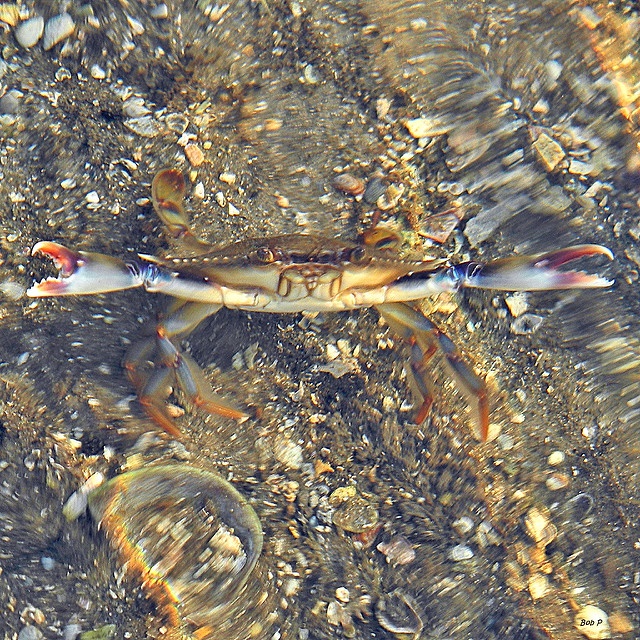
Blue crab (Callinectes sapidus). Image: Bob Peterson CC BY

One summer long ago, my grandmother took me crabbing at South Creek, a tributary of the Pamlico River. We knelt on the weather-beaten pier, tied a long string of twine to a raw chicken neck, and lowered the bait into the murky green depths. Grandma anchored the loose end of twine to a rusty nail jutting out from a piling.

“Now we wait,” she said. “But keep your hand on the string so you can feel when a crab starts nibbling.”

Being a novice, I was sure I felt a crab nibbling right away. I pulled up the length of twine ever so slowly, only to see the fleshy chicken neck. I released the twine. The bait plummeted out of sight again. Within minutes, I was positive I felt nibbles. Reeling in my string, I found only the bait once more.

Grandma chuckled. “You have to be patient. Give the crabs time.”

“I thought I felt nibbles,” I said in my own defense.

“You feel the bait drifting. You’ll know when it’s a crab.”

I waited, my mind wandering. The day was bright; Grandma’s sunhat cast a ruffled shadow on the gray boards, warm and splintery.

Next thing I knew, there were erratic tugs on my line.

“Easy,” said Grandma, sensing my excitement. “Pull slow and easy or you’ll lose it. Pull so the crab doesn’t realize you’re pulling.”

Bit by bit, I inched the twine up through the water to find not one but two – two! – blue crabs picking at opposite ends of the chicken neck. Holding my breath, I pulled until the crabs were just below the surface of the water. I dared not move as Grandma scooped them up with the dip net.

As the crabs scuttled inside a galvanized tub, I tossed the slightly-gnawed chicken neck back into the water, observing: “It would be a lot easier if we could just see to the bottom. Then we would know when we have a crab.”

“Well, isn’t that the fun of it?” asked Grandma. “Not being able to see what’s there, but pulling until you can?”

Decades later, I sat listening to a group of fourth grade intervention students rereading a script.

“You’ve all come a long way with your fluency, recognizing words automatically without needing to self-correct. I can hear some great expression,” I commended them. “I have one question: What is this scene really about?”

As students tossed out random answers, images of a weather-beaten pier, twine, and raw chicken necks came to mind. “Wait, you guys. You’re all skimming along the surface, just seeing the words. There’s a deeper meaning you’re not seeing; it goes past the words into the ideas behind them.” I told them of my long-ago crabbing days, how I knew the crabs were there, hidden from my view, and how I had to watch, feel, and finally pull them to the surface. “Reading is like that,” I told the kids. “There is more than what you see at first. To infer, you have to take your time, go back, and try to feel what’s not actually said before you can grasp the meaning. Some words give you more clues than others, but a deeper understanding is always there. Sometimes you have to wait, think, and work to pull the meaning out.”

Until that moment, I hadn’t imagined crabbing as a metaphor for reading comprehension, or, for that matter, teaching. The students often come to us with their backgrounds, experiences, struggles, and gifts hidden from us at first. The depths can be murky, indeed; how easy teaching would be if we could automatically see everything that each child needs to be successful. The best way to start is by throwing out the greatest “twine” we have: the love of learning. Keep your hand on the string, Grandma said. You’ll know. Pull easy so you won’t lose them. Be patient. 

To me, the true joy of teaching is first hooking students with a love of learning, then watching myriad treasures rise from those depths, especially when students start pulling on their own.

Reflect: Where can you strive to see past the surface of experiences and relationships to something deeper, of value? What unique exploration can you share with a child?