To dream, to write, perchance to connect

Connection

“Connection” by Dylan O’Donnell

Henry is sound asleep on the sofa, his head on two throw pillows, snoring like a middle-aged man.

He is my family’s  endearing, shamelessly-babied Lab-Pit mix. Three years old and in his mind, he owns this sofa. It exists solely for him.

We don’t tell him otherwise.

Within moments, Henry’s breathing changes. His smoky gray body shakes; his white paws twitch. He whimpers at a higher pitch than he ever does when he’s awake.

“He’s dreaming,” we humans say to each other.

That whimper. It sounds puppy-like. Afraid. Vulnerable. Nothing like the rumbling from deep within his chest when Henry “talks” to us (translating to “Hello, I want something, so drop what you’re doing, pronto, to do my bidding”).

Which leads me to wonder: What is he dreaming about?

He is a rescue dog, found wandering the streets. He was timid for a long time before attaining his current level of confidence (and world domination).

Is he reliving a scene from his early life? Was he mistreated? Abandoned? Did something frighten him badly when he was a puppy?

Do dogs really dream like humans do?

The answer, according to Live Science, is yes: “Dogs likely dream about waking activities much like humans do.”

I am the one chasing a rabbit here: Captivated by the article,  I keep on reading beyond dogs to rats to flies—yes, says a cognitive scientist, even flies may dream in some form.

Sounds like something straight out of fantasy . . .

You may visit the site to read about the rats and flies yourself, if you like, but here are the article’s big clinchers for me: That sleep “adds something” to the process of learning and remembering, that sleep is “a sort of categorizing of the day’s activities” and a chance for the brain “to explore in a consequence-free environment”:

The idea is that, in sleep, the brain is trying to find shortcuts or connections between  things that you may have experienced but you just hadn’t put them together.

Cognitive scientist Matthew Wilson, “What Do Dogs Dream About?” Live Science

Categorizing of the day’s activities . . . yes, this often happens to me as I fall asleep. Reliving moments, subconsciously archiving them in specific mental folders for future retrieval as needed. A subliminal attempt at order and organization—how I appreciate that. The brain is an indescribable marvel, the ultimate computer. I envision lines arcing this way and that along a grid, an image of our brains actively searching, reaching, connecting and grouping things, while we rest.

My uncle once told me he could sleep on a problem and before he woke, the solution would materialize in his mind. Some mornings, in the transition between sleeping and waking, I can “see” the day’s events before me, and a detail or an approach will offer itself in a way I hadn’t thought of before. This has a name: liminal dreaming. 

But as I am awake, here is where I very consciously, intentionally, connect some psychological dots.

As Henry lay dreaming, prompting me to wonder about his background and the stuff of his dreams, I happened to be reading Ruth Ayres’ new book, Enticing Hard-To-Reach Writers. It is a must-read for educators, whether one teaches writing or not. Ayres has a lot to say, from firsthand experience, about the brains of children who’ve suffered extreme trauma and neglect. She also has a lot to say about the power of writing, of story, to heal and to save . . . I cannot help thinking now of the thirteen Turpin children in the news and the discovery of  their “hundreds of journals” which officials speculate may have helped them survive the unimaginable at the hands of their parents. If this is true, we’ll soon know.

But as for my dog, his dream, a website, the book in my hands . . . they all converge on the work of the brain:

When I write, I realize new ideas. I make connections. I figure out what I need to do next. When I write about what’s happening . . . something significant happens: I begin to see things from a new perspective. This is how learning happens. This is how growth happens. 

-Ruth Ayres, “Writing Always Gives More Than It Takes,” Enticing Hard-To-Reach Writers

To sleep, to dream, to subconsciously categorize, make connections, problem-solve . . .

To wake, to write, to consciously realize ideas, make connections, problem-solve . . .

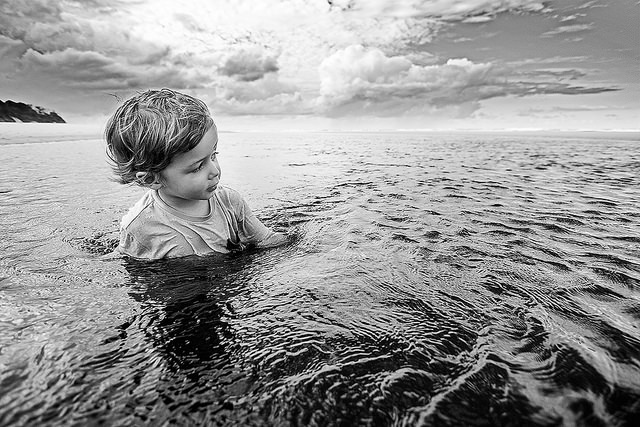
Revisit the child in the photo at the top of this post. He’s immersed in water, a symbol of life, an expression of contemplation on his little face. He’s absorbing the experience. The world is big. Sometimes alarming. Not always fair. When he lies down to sleep, what dreams may come? Will they haunt or heal? Hold him back, or help him overcome? He is at the mercy of his dreams. As are we all.

But to wake, to write, is to immerse in thought, to gain unexpected perspective, to remain open to questions, to answers, to possibility, to wonder, to hope.  Dreams, in all their mystery, come and go at random; their meanings and value often elude us. When we write—an equally mysterious process—we actually take hold of meaning. We continually unfold it, one layer of thought leading to another, branching off in directions previously unseen. To write is to go both deep and wide, to actively broaden the scope of one’s own world, to expand one’s sphere of interest, to explore what’s within to better relate to what’s without  . . . to connect.

I mark the page in my book and reach over to rub my quivering dog.

“Shh, shh, Henry. It’s okay. I’m here.”

At the touch of my hand he eases. He lifts his head, regards me with bleary eyes. His tail thumps. He readjusts, curling himself into a tighter ball there on his sofa.

He sighs.

The sound of satisfaction, of being connected, of being safe.

Calling The Roll

Old telephone

Vintage rotary dial desk telephone. Joe HauptCC BY-SA

Kindergarten is fun.

Most of the time.

We have two pet turtles. They are green with bright orange stripes on their necks. They fit right in our hands when we take them out of their tank to race on the floor.

One turtle crawls so fast. “Go, Speedy, go!” we shout, scrambling beside him on our knees.

The other turtle stays in one spot.

We try tapping his behind.

He won’t move.

“Oh, Slowpoke,” we sigh.

I love the turtles so much that Mama makes me a dress out of turtle fabric she found. It’s “navy blue,” she says, with white turtles all over it. She sews on a ruffled white collar trimmed in red and blue. It’s a little bit like a clown collar. 

I am so proud of my turtle dress. I wear it for Picture Day.

But that is not my favorite part of kindergarten.

And I do not know why it is called a garden — I don’t see a garden anywhere.

My favorite part is the rocking boat.

It is brown. It has two benches, so that two of us can sit on one side and two more on the other. We can rock it kind of like a seesaw.

“Row, row, row your boat,” we sing to each others’ faces, “gently down the stream . . . “

Our Teacher teaches us how to sing a Round.

It is SO MUCH FUN, singing the Round, rocking the boat, holding our toys we brought for Show and Tell.

In a box on the floor there are things we can put on — hats, costumes. 

I put on a wig so my hair can be long and not short with two cowlicks in the front.

I wonder why a cow would lick my hair and when I ever saw a real cow anyway. I do not remember this. But, during circle time, when The Teacher asks us one by one what we want to be when we grow up, I try to think of something different from everyone else. When my turn comes, I say, “A cowgirl.” 

Maybe my cowlicks made me think of it. Or maybe because I love boots (since they don’t have laces that need to be tied) and that job lets you wear them all the time.

I don’t know any cowgirls or cowboys, though. We live in the city.

The Teacher stares at me for a second. She doesn’t smile. She moves on to the next student — a boy who says “astronaut.” 

Anyway, I love my long hair when I put it on. If I can’t get anybody to rock the boat with me, I will rock it by myself, wearing my long hair. And sunglasses.

But then is the worst part of kindergarten.

“Class. It is time to take your seats. I am going to call The Roll.”

Our Teacher is very tall. Her voice is very . . .  unhappy. Someone has made her unhappy.

We all go to our seats without a sound.

What’s wrong? What have we done? I can’t figure it out.

She’s going to call The Roll.

Is The Roll like The Police?  What will The Roll do to us? 

Does The Roll wear a big shiny star like The Sheriff in cartoons? Does The Teacher have a secret phone somewhere on her desk, to call The Roll if we aren’t good?

Is this about the cowgirl thing? Maybe I should have said I want to be a Teacher. Like the other girls did.

I am scared.

I do not want her to call The Roll because of me so I stay very, very quiet.

*******

It took months, seriously, for me to understand what my stern, no-nonsense teacher was doing after she made this daily “calling The Roll” announcement. She never picked up a hidden phone to make a call. A shadowy figure wearing a law enforcement badge never materialized. After days and days of wondering why in the world she was just reading our names out loud, I finally figured it out.

Oh. THAT’S what calling The Roll means.

What a relief.

It’s my most vivid kindergarten memory. As much as I treasure the humor of my misconception now, it reiterates several important things to me, as an adult and an educator (for no, I never became a cowgirl, as I thought of that only in the spur of the moment, so to speak).

My takeaways from this trip back in time:

-We forget how literal young children are. How easily misconceptions occur. Someone once told me about hearing this line in Psalm 23 as a child: “Surely goodness and mercy will follow me all the days of my life.” It frightened her: Who is Shirley Goodness? Why are she and somebody named Mercy going to follow me around forever?  She kept looking back over her shoulder for them to show up. When my youngest son was little, he didn’t understand that “satisfied” was something good and fulfilling; he interpreted it as “sad-is-fied”: Why would anyone want to be sad? When someone asked him, “Are you satisfied?” he took it to mean Are you sad? and replied, “No, I’m fine.”

-Atmosphere is everything. We will never know what kids are thinking if they don’t feel comfortable asking questions, or if our body language, expression, and tone send the message that we’re unapproachable. Reliving the memory, I can now attach names to my five-year-old feelings: Confusion, apprehension, fear, inadequacy.  Remember, calling The Roll is my most vivid kindergarten recollection.

-Beware of what really causes harm. The sale of small pet turtles is illegal now because of salmonella. Multiple children sharing wigs or hats (IMAGINE!) is not permitted anymore because of lice (thankfully, we didn’t get them). Those changes were made for the safety of children, yet the turtles and the head coverings were a big part of the joy in our long-ago classroom. Of course we don’t want to breed disease and infestation; that would be unthinkable. But what about breeding — just as unintentionally — confusion, apprehension, fear, or the subliminal message that a child’s own thoughts, ideas, feelings, perspectives, experiences are not important? How damaging is that to young psyches? Should it be any less unthinkable?

-Time to imagine. The moments of play, of make-believe, kept the atmosphere in my kindergarten classroom from becoming one of complete compliance by encouraging some healthy free-spiritedness.  While academic expectations have changed dramatically for primary grades over the years, play, encouraging imagination, is still vital. I’ve never seen another wooden rocking boat and have forgotten what we actually called it. When my classmates and I were in it, we could be anything or anyone we wanted to be. We sailed out on a sea of our own making; we weren’t even in the classroom anymore.

Merrily, merrily, merrily, merrily

Life is but a dream.

Extremely deep philosophy, there, when you think about it.

I’ve heard it said of late that children don’t have imaginations anymore, that they’re all into video games and devices, that they can’t entertain themselves.

Maybe. Maybe not.

What I do know to be true about children —then, now, and for all time — is that they are always trying to make sense of the world around them, because it’s all still new to them. Children are virtually covered with invisible antennae, receiving and interpreting volumes of sensory experiences, some of which they’re not able to fully process, just yet. The world’s a busy place; there’s so much to learn, far beyond the confines of the school day. Infinite seas of thought to sail, so many adventures to have.

Remember being that age, Teacher, Grown-Up? Remember the uncertainty?

It pays to slow down a bit now and then, for you are the seasoned Guide. Readjust the sails as needed, for the children, for yourself. Row gently down that stream, for your living cargo is priceless and reading every one of your signals, all along the way.

And may no one ever need to call The Roll on you.

Snow day GIF documentary

If you work in education—in central North Carolina, anyway— you know that the merest rumor of snowflakes sends people into a frenzy. Mostly because 1) We must go buy bread and water in vast quantities, or at least the necessary ingredients to make big pots of chili; and 2) We want to be home quickly, because we really don’t know how to drive in this stuff.

Just to be safe, systems dismiss early, sometimes before any flakes fall.

Such was the case yesterday. The masses went home to stay glued to weather reports and social media, all the while asking: When will the snow start? How much will we get?

And the question of all questions: WILL SCHOOL BE CANCELED TOMORROW?

So, as a few flakes dropped in various areas, but not in others, as the evening wore on, the waiting intensified.

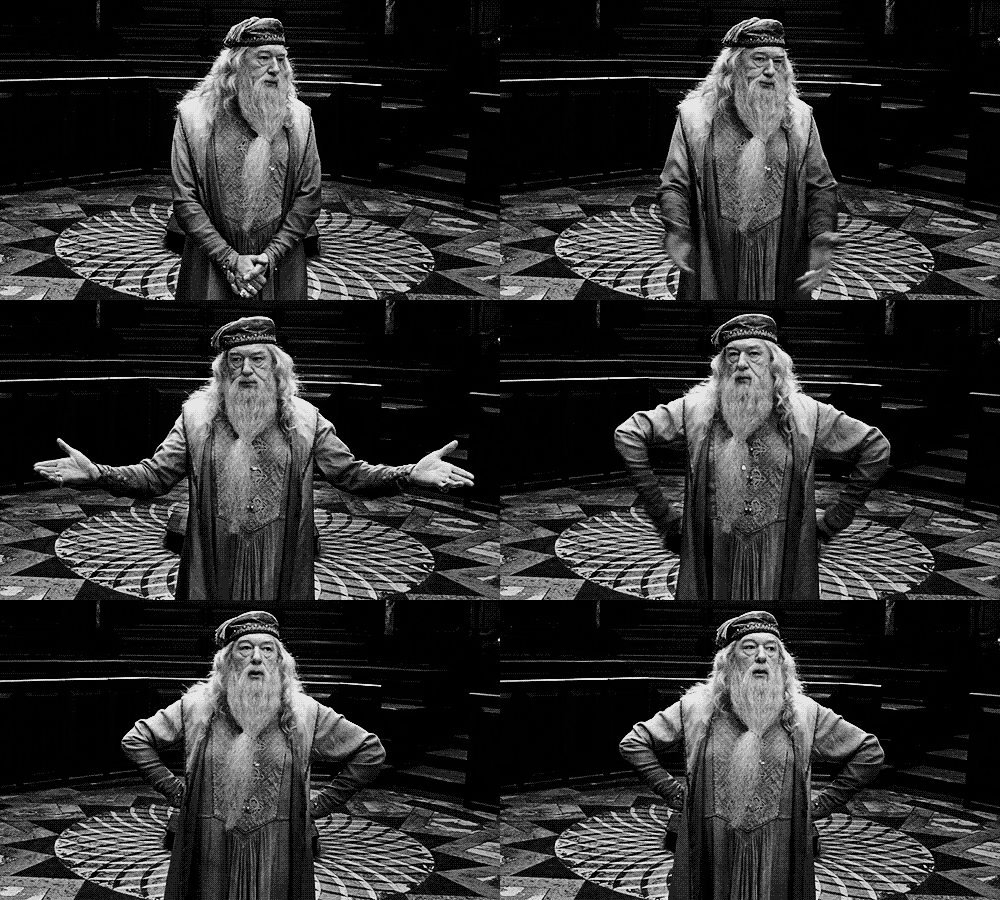
I amused myself by reading tweets to the school district about when a decision would be made about school closings. Many had GIFS such as these:

Dumbledore.gif

tenor.gif

Those, by the way, were sent by staff. Not students!

Then the announcement came: There were, in fact, enough snowflakes to cancel school today!

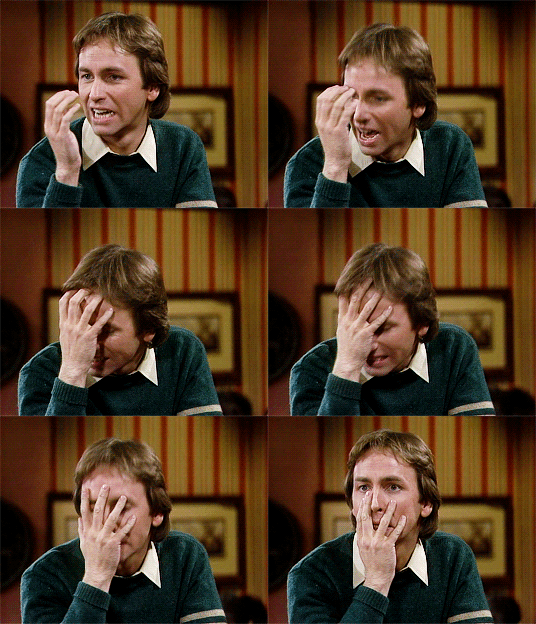
Someone tweeted this as the parent reaction across the district:

John Ritter.gif

Poor parents! And poor John Ritter, for that matter . . . is anyone else out there astonished that this will make fifteen years since he died?

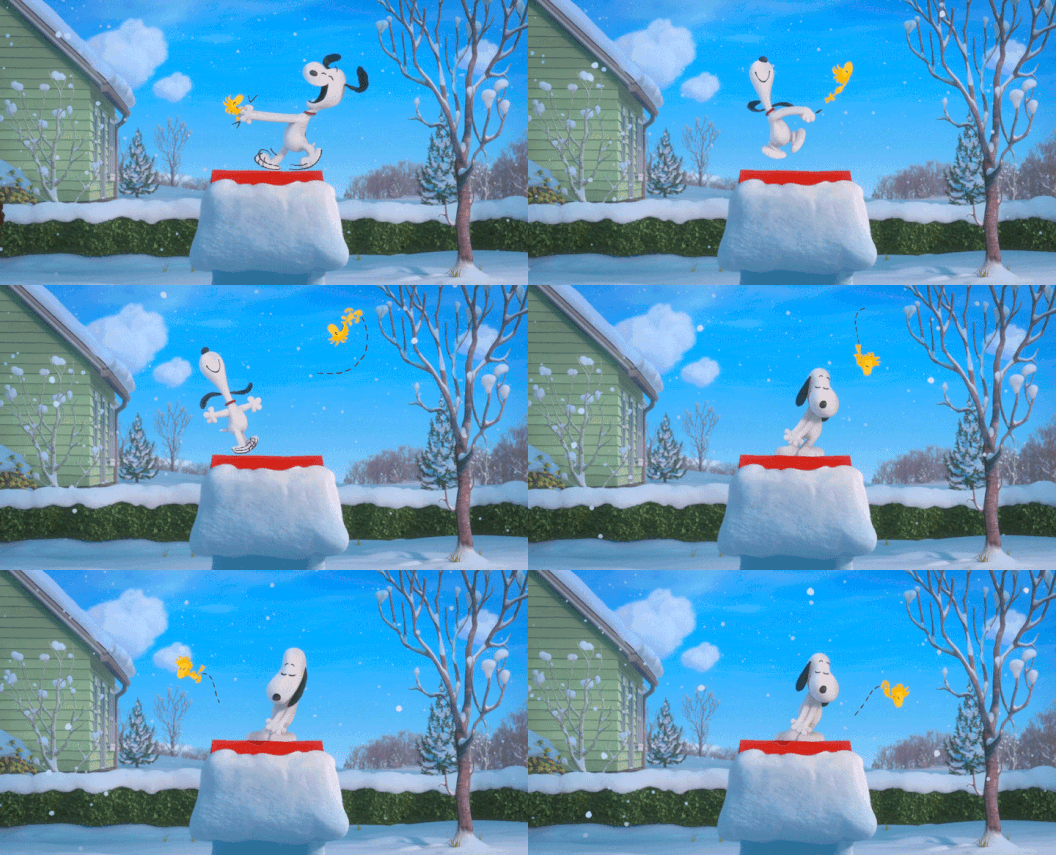
By and large, however, there were hundreds of celebratory tweets from students with variations of GIFs such as this:

Peanuts

Many of those tweets said something like: “THANK YOU! You saved me and my grades!”

Okay . . . that really begs more investigation as to exactly how one snow day can save a GPA . . . and why grades are the whole emphasis of education . . .

Then there was this cheery admonishment from the school system: “Everyone stay safe! Kids, don’t forget to read!”

Truly warms the cockles of your heart, doesn’t it?

Except for a long thread of student responses like this:

“Don’t expect us to read, though.”

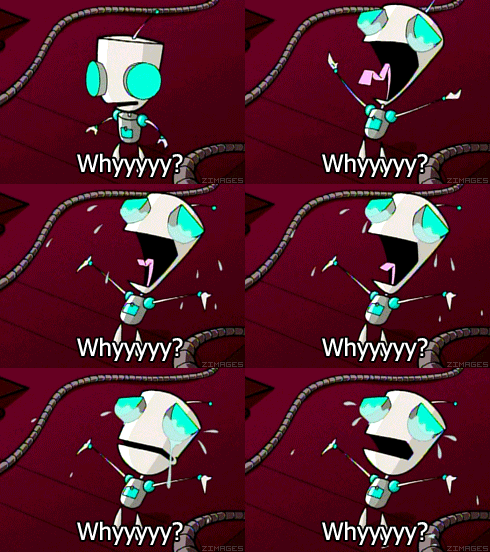
Reading that sentiment was, to me, like being impaled by a jagged icicle. My reaction:

Why.gif

Why do the kids hate reading so much? When they say “reading,” what do they actually mean? After all, they text constantly, they’re a huge presence in social media, and their choices of graphics to communicate feelings are both entertaining and dead-on. Today’s average student is quite literate, digitally.

I think—I shiver as I say this—that the aversion is to reading books. Whether it’s actual books or those on a screen is a moot point. My question is: How have we, educators, failed on such an epic scale to promote a love of reading, to the point that our students, especially those who NEED to read more, view it as such a hateful chore? As long as they feel this way, when will our students ever, hopefully, pick up a book that they simply want to read?

The year is young; there’s no time like the present. Snow days are ideal for thinking of ways to revamp instruction to help the kids get excited about books and develop a love—or at least a very strong like—of reading. Will they all? Truthfully, probably not. But that’s no excuse for not striving for something far better on their behalf:

Books are great.gif

New

New

The new year sparks contemplation of the word new.  

So the year is new, but what else? Monday still follows Sunday, January still follows December. The days roll into each other without any notable variance. Today looks almost exactly like yesterday; it’s still winter, still below freezing, and my dogs still do not want to stay outside more than the necessary few minutes. The holidays are ending and work is resuming, as they always do. None of this is new.

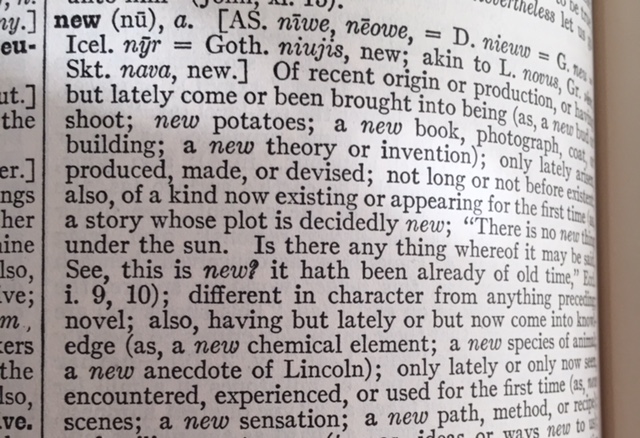
As I sought to apply new to something today—since the usual and very regular passing of time really should not count—I got the mental image of the word new on a dictionary page. This led me to do something paradoxical: I moved a chair over to one of my bookcases, pulled down a heavy volume, blew off the dust (alas!), and snapped the above photo of the definition in The New Century Dictionary. 

I say paradoxical because that dictionary, despite its title, is hardly new. It was published in 1952. The original copyright is 1927.

The dictionary and the definition are old indeed. I know there are better, far more concise definitions of new in online dictionaries now.

Why, then, turn to something so old to examine the meaning of new?

Well, first of all, I needed an image for this post and that’s the one that came to mind.

And I love old books, old things in general. Any vintage artifact holds great appeal to me, mostly because of the invisible layers of story wrapped around it. I never tire of stories of long ago. I am endlessly fascinated by how people survived and how resourceful they were, often with so little.

In fact, resourceful was nearly my chosen word for 2018, because of this definition on Dictionary.com:

able to deal skillfully and promptly with new situations, difficulties, etc.

And this one, at LearnersDictionary.com:

able to deal well with new or difficult situations and to find solutions to problems.

Resourceful seemed well-suited to my role as educator, instructional coach, and for life as a whole, really.

Then I realized that the thing that stood out to me in both of these definitions of the worthy word resourceful, aside from its emphasis on excellent problem-solving, is that one word, new. Coping with new and difficult situations.

Suddenly resourceful, for all its allure, was overshadowed. Do you remember the scene in The Wizard of Oz when Dorothy explained the demise of the Wicked Witch of the West? “Please sir, we’ve done what you told us. We brought you the broomstick of the Wicked Witch of the West. We melted her!” To which the Wizard replies (one of my favorite lines): “Oh, you liquidated her, eh? Very resourceful!” But remember Dorothy’s intent: When she threw that bucket of water on the Witch she was saving the Scarecrow, who was on fire. She didn’t mean to melt the Witch, or even think Hmmm, what would happen if I doused the Witch with water?

Resourceful, yes—in saving the Scarecrow. Dorothy’s use of the water was intentional. It implies thinking and quick action to solve a problem. Resourceful in her mission of getting rid of the Witch? No. That was a stroke of amazing luck.

I really wanted to write this post about being resourceful for my fellow educators who often work with so little, in adverse situations, to encourage all of us to be more mindful, intentional, and creative with what we have to reach intended outcomes, when it occurred to me that something else is needed before any of this can happen.

Something different from anything preceding, something only lately or now seen,  encountered, experienced, or used for the first time . . .

Something new, in the face of the same old same old.

If you look back at the photo for this post, you’ll see the morning light spilling across the old dictionary page, illuminating the word new.

And that’s exactly what is needed. Not new things or resources themselves, but light. Seeing things, situations, people in a new light.

My wish for students is that they see their learning in a new light, with excitement, with inspiration. For that to occur, their teachers, my colleagues and I, must see our work with new excitement and inspiration, pushing past layers of compliance, of going through the motions, of saying We can’t, because . . . .

Think of variations of new: renew, anew. Newness is generated. It is created. It starts with really seeing, then taking a step, even just one, out of the comfort zone, to see what will happen, what might actually change. For the better.

Whoever you are, whatever you do, new starts within you and moves outward. One ray of light, one spark at a time . . . keep it up, and there’s no telling how far the light will travel, and how much more will become new. We can’t change people (ever tried?). We can’t always change situations. Some old things will remain, and sometimes that’s good, for every new thing that comes along isn’t. But we can have new perspective, new vision, new vigor, new approaches. All of these are within our own power. A true and valuable new is both possible and attainable, if we aspire to it. If we dare.

That is my prayer for this new year, that we make it truly new.

What child is this

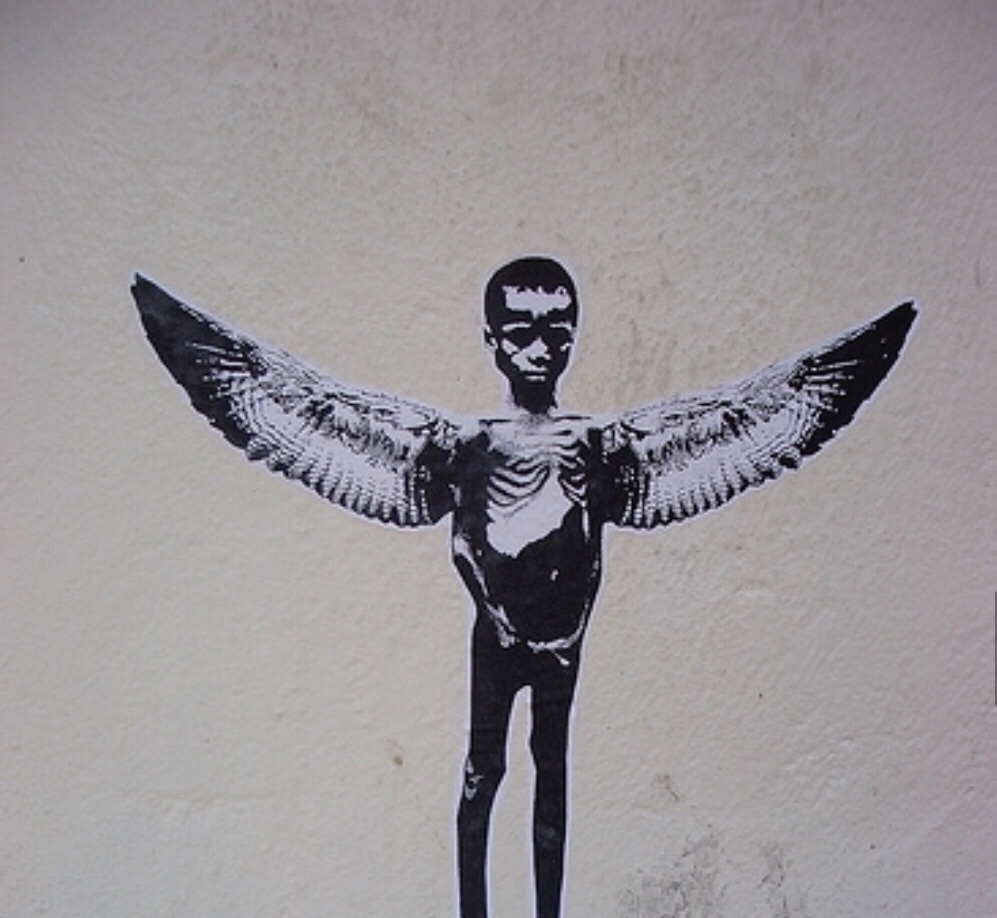
African Angel Boy. bixentroCC BY 

What child is this, who, laid to rest . . . .

Snow is falling. Huge flakes like white feathers shaken from the sky, a rare thing in the North Carolina Piedmont at the beginning of December.

Another rare thing: Today a former student is buried.

He was eleven years old.

I stand at the kitchen window, watching the snowflakes fall. Eleven years. That is all he had.

An only child. A latched seat belt—I can envision his mother reminding him—wasn’t enough.

I begin wondering about enough.

Did we do enough?

Nearly the whole of his short life was spent at elementary school. How much of our focus was data and test scores? Did he feel successful?

College and career ready doesn’t matter at all when you die at eleven.

Should it matter so much when you don’t die at eleven?

Were we enough? Did he enjoy coming to school, or did he endure it? 

I can hardly endure the heaviness of that thought.

The bleakness of the gray December day, but for the snow, matches the bleakness in my soul. On the television in the living room, Christmas music softly plays:

What child is this . . . .

He is Everychild now. Mine, yours, ours, all children, coming to school, day after day.

Do they have the chance to get out of the box, before they’re put in a box?

Do they have the opportunity to develop a hunger for knowledge? Do their teachers create dynamic experiences that empower the children to own their own learning? Or are the children starved for authenticity, their minds and days numbed by worksheets, by sameness, by constant assessment, by irrelevance, by teachers in survival mode, by hierarchical machinery?

Underneath all those wheels in motion lies the child. Motionless. Powerless.

Haunting that such a beautiful snow should pour on such an ugly day, for snow can mean many things beyond ice crystals. It represents death, yes, but also wisdom, purity, innocence, blessing.

Wisdom, blessing, and strength to you, Everyteacher, for Everychild in your hands. Strive for more than enough. For joy, for awe, for love-of-learning-for-life ready. There’s no way of knowing whether this child will live a hundred years, or just eleven.

What child is this, who, laid to rest . . . whom angels greet, with anthems sweet . . . .

Every minute matters.

Imagine

Central Park

On a Central Park pathway, near the Strawberry Fields memorial to John Lennon.

A group of fifth-graders sits in the hallway, making a poster about the human nervous system. I stop to admire their work:

“Wow, that’s a really vivid brain you have there.” It is, in fact, neatly colored with the brightest neon pink.

“Thanks,” grins one of the girls.

“We forgot the cerebellum, though,” says another.

“Yikes! That creates a problem for your diagram-person, doesn’t it?”

“Yeah, with his balance and movement and stuff.”

One of the boys turns away from his work drawing . . . something. “Do you know who Albert Einstein is?”

Struggling to keep my face composed, I reply, “Yes, he’s my favorite scientist.”

“I was thinking how we only use about ten percent of our brains and as smart as Albert Einstein was, just imagine what he would have done if he could’ve used the other ninety percent.”

“Fascinating, isn’t it?” I muse. “For all of us. If we could use our whole brains, we might be something like superheroes.”

The kids nod sagely.

“So, here’s my favorite Einstein quote,” I tell the kids, who pause in their illustrating. Expectation is clearly written on each face. They truly want to know what this brilliant man had to say. “When a parent asked Einstein how to raise a child to be a great scientist, Einstein replied: If you want your children to be intelligent, read them fairy tales. If you want them to be more intelligent, read them more fairy tales.”

As their brains process this thought, the young faces look ethereal. Unblinking, gazing somewhere beyond the immediate surroundings, bathed in a light from an unseen source.

Especially the boy who mentioned Einstein.

“Whoaaaaa,” he finally says.

“Think on that a while. Later you can tell me what you believe it means.” With that, I leave the children to their work.

Imagine.

As I walk down the hallway,  my own brain is ajumble: Cerebellum. Balance. Einstein. Intelligence. Fairy tales . . . fiction. A conversation with an esteemed colleague at a recent meeting returns to mind.

I am glad to see greater focus on nonfiction writing, she’d said. After all, these children won’t be writing fiction in college.

It took my breath away.

Perhaps none of the kids we teach will grow up to get MFAs in creative writing— in other words, possibly earning a degree in composing fiction.

But some might. And are there really no more creative writing electives in college these days?

I understand the rationale behind the words, that in college students will primarily be writing research papers and essays. It’s important to put the foundation in place now, at the elementary level, for their future success.

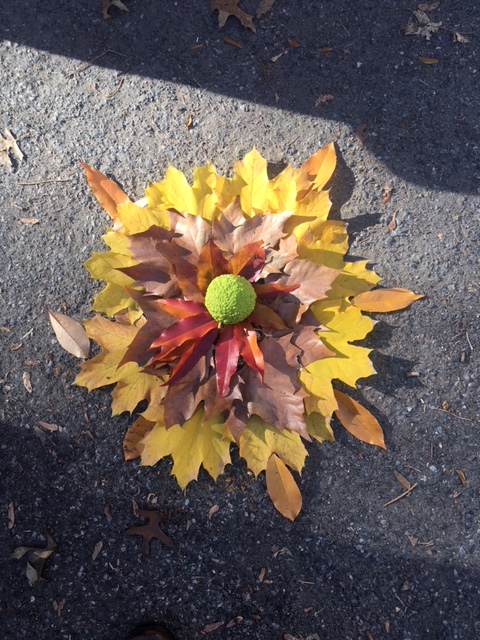
But are all students going to college? Aren’t the standards college and career ready? In a day and age when innovation and creativity in the workplace are highly valued, think about the impact of understanding plot, subplots, character motivation, personality traits, overcoming obstacles to reach goals, ingenuity—all of which can be developed by reading fiction, surely, but writing fiction takes complex problem-solving and creativity to incomparable heights. So many seemingly random pieces must connect pretty perfectly to make a finished, meaningful, compelling whole—much like the beautiful leaf-and-gumball mandala I discovered on a pathway while walking through Central Park.

And what about sheer enjoyment? And poetry, and songs, and plays?

Or being LIFE ready?

If you want your children to be intelligent, read them fairy tales. If you want them to be more intelligent, read them more fairy tales.

Imagine what we could accomplish if we all wrote them. Make-believe stories, making mandalas with words. Maybe we’d tap into some of that unused part of our brains.

Because, heaven knows, we need balance to move forward effectively.

Take the pencil, find the neon pink.

If the cerebellum is missing, draw it in.

First, do no harm

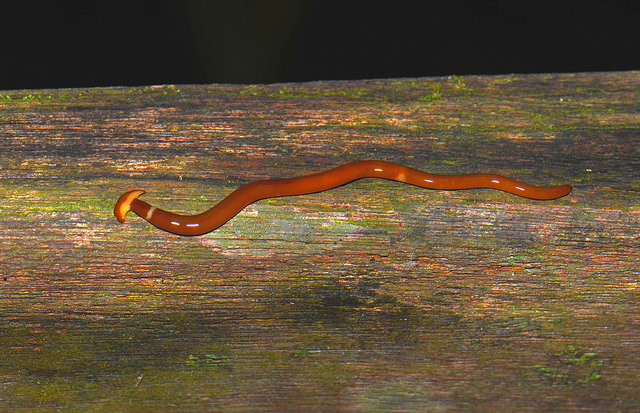
land planarian

Land planarian. Pavel KirillovCC BY-SA

Granddaddy and I are walking around “the horn.” I am puzzling over why he calls this path “the horn.” When he says it, I know he means the journey from his house down the gravel road past the formidable, fairy-tale-dark woods with a tiny cemetery in the clearing, past unpainted houses in various stages of falling down, to the narrow paved highway and on around to the other side of this gravel road where, in a tiny screened-porch house, an old widow woman dips snuff, on past Grandma’s homeplace where her disabled brother lives alone and grows sunflowers that loom over my head, always turning their faces toward the sun, which is now obscured. It rained earlier in the day, breaking the blazing summer heat. The thirsty ground drank its fill; the rest of the blessed rain hangs invisible in the air, as heavy and warm as bathwater, and drips amongst the trees, where the birds are chattering against a background of crickets who think it’s night again, along with cicadas buzzing in such numbers that the earth vibrates with the sound. Granddaddy and I are on the last leg of “the horn,” passing his garden, a steaming, lush, leafy paradise that looks to me like an artist painted it with watercolors. We walk by the ditch bank where his scuppernong vines drape the trellis he built, past the line of pink crape myrtles curving along the edge of the yard, back to the sidewalk in front of the house where we started.

Granddaddy stops to get the newspaper from the box and I go on ahead— 

“Granddaddy!” I shout, for he’s hard of hearing, although Grandma says he hears what he wants to. “What is this?”

There on the damp sidewalk, headed toward the house, are three long worms, side by side. They are tan like earthworms, but many times longer than any earthworm I’ve ever seen. Maybe a foot long. Their skinny bodies undulate like snakes; they glide over the cement holding up their big, almost-triangular heads. 

Granddaddy comes near, leans down. 

I don’t know,” he says after a moment. “I ain’t never seen anything like them before.”

I’m stunned. Granddaddy has farmed all of his life, except for the years he worked at the shipyard. He knows everything about the outdoor world, has told many stories of the things he’s seen, like a fully-formed tree growing underground when he had to dig a well once. If he doesn’t know what these worms are, they are strange indeed.

I look up at his pleasant, wrinkled face, shielded by his ever-present cap. His crinkly blue eyes are thoughtful. I wonder if he’ll kill these alien creatures, chop them up with the hoe like he does the copperhead who dares enter his realm.

But he pats my back: “Let’s get on in the house, hear.” 

And so we do. I don’t see where these three hammer-headed worms go, and I never see them or anything like them again.

The worms resurfaced in my memory recently; I’d almost forgotten them. If the Internet had been around at the time, Granddaddy and I could have learned within seconds that these were land planarians—toxic predatory monsters that destroy the ecology of a garden by feeding solely on earthworms, the great garden benefactors that aerate the soil and add rich nutrients. Planarians aren’t native to the United States; they hail from Asia, so a remaining part of the puzzle is how they ended up in the far reaches of rural, coastal North Carolina.

This story isn’t really about the planarians, however. It’s about my grandfather, infinitely wise despite having quit school in the third grade to work on the family farm. A man who used the phrase “the horn” which I have just now learned is a mathematical synonym for a cornicular angle, which, yes, describes the country path we walked (new question: How did he know?).  My grandfather saw something he’d never seen before, these three worms. He analyzed them carefully. He let them live, not knowing they could do harm to his garden. Which ended up being the best choice, for if he’d smashed them or chopped them up, every piece would have grown into a new planarian. He would have thereby ensured the destruction of his garden and its bounty, which benefited his whole family. He would have, essentially, spread the poison.

The lesson I take away from this long-ago surreal encounter is First, do no harm. In pretty much any situation. Analyze. Evaluate. Proceed with caution and discernment. Consider long-range ramifications; if they cannot be known at the moment, forbear. Poison is often invisible; be wary of tapping into it, spreading it.

Point to ponder: What are the planarians of your own life and work? What threatens to destroy what’s valuable? To answer that, you must define the garden, the earthworm, and their relationship. I speak as an educator. As a wise old farmer’s granddaughter. For me, metaphorically, the garden is not humanity itself, but something which springs forth from the human spirit—organic, beautiful, beneficial. In a sense, teaching (or writing, as I clearly do that also; think about your own work and how it applies here) is about being the earthworm, aerating the growing ground, devoting yourself to developing the richness and nutrients needed for the collective good of those who follow, that they might also produce that which is beautiful and beneficial. Harm comes in the form of anything that would limit, stunt, or destroy this exploratory, creative, thriving growth process. Planarians attack and destroy their own kind for their own benefit. We don’t always know them when we first see them, for they resemble that which is good.  Not everything has a noticeably triangular head. Watch, analyze, evaluate, discern over time. Avoid blindly buying into the toxicity, the very thing that counteracts and defeats all your best efforts, and multiplying it.

First, do no harm.

Reformation

SONY DSC

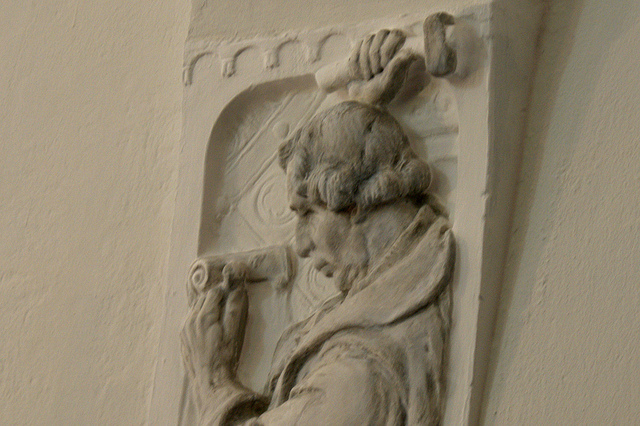
Martin-Luther. Awaya LegendsCC BY-SA

On this day, 500 years ago, Martin Luther hung his list of protests against corrupt practices on the door of the Wittenburg Castle church, igniting the Reformation that would change the course of human history.

Reform. The idea is like a diamond glittering in the dirt. Not change for the sake of change, but for the sake of those who are suffering, oppressed, under excessive pressure.

I can’t help but think of public education today – the pressure on teachers, on students. The need for large-scale reform is too widely known to be a point of dispute. The trouble with attacking any huge, knotty problem is figuring out where to begin, then where to go next, without re-tangling what’s just been untangled.

What are the oppressive practices that need to go for true education reformation? It varies, depending on who’s asked and what personal or professional interests are at stake. Luther wrote ninety-five theses; I’ll spare readers and list my top five, although they’re not anything new:

  1. Standardized testing. Everyone knows – don’t they? – that scores do not accurately reflect a person or that person’s potential. It’s a data point at a fixed moment in time, not for all time. How many students come through the system believing they are failures because they didn’t measure up? How many teachers and schools work hard, only to be considered the same? In a country historically admired the world over for creativity and innovation, giving and living the test is the best we can do?
  2. Teaching reading and writing as separate entities – often sacrificing writing for the sake of reading. It’s a dichotomy that sends the subliminal, counterproductive message that understanding others is more important than understanding self, which is what authentic writing does for people. If we want the world to be a better place, it begins with understanding why we think and feel the way we do. Empathy and compassion are born from this. Write.
  3. Cutting the arts. The test alone proves that people are diverse learners, and the great emphasis on improving reading scores already limits student self-expression. Students who have trouble focusing are often extraordinary actors and dancers; they bring powerful interpretations to scenes, can read and create brilliant choreography. Some students, considered struggling learners, are constantly composing songs in their heads and can sing with startling expression, emphasizing all the right phrases. My son, who showed an affinity for music early in life, asks: “Why aren’t kids given a chance to experiment and explore in ways they really enjoy? Why aren’t their talents or their strengths maximized?” He endured his education. Today he has a job in the music field.
  4. Teacher education and professional development as we know it. Sigh. That’s what we typically do, isn’t it? Better, deeper preparation for the diverse learners and the demands of the field is critical. Ongoing professional learning needs to be practical, designed specifically for the needs of the children AND the teachers. If we speak of deficits and gaps – how about creativity deficits and vision gaps? If the hallmark of a great teacher is getting students to love learning, shouldn’t we first love ours? How about some inspiration? It’s a pretty big motivator (wouldn’t you say, Martin Luther?).
  5. Whatever the expectations, the requirements, the new layers of things that come along as purported magic bullets that will save everything, hold these two things utterly sacred every single day: The read-aloud and time for students to generate writing that means something to them. These are proven to lift the level of thinking – authentically, organically – which will never come through compliance alone.

What are your theses for true education reform? Today, in the spirit of Martin Luther, be bold. Speak your mind through the power of the written word.

And if you teach, teach on.


Trust

Child jumping

Едно, две, триии…(One, two, three…). Vladimir Petkov. CC BY-SA

I am eleven years old, standing at the end of a pier beside my uncle. He’s holding both of my toddler cousin’s hands as she jumps from the pier’s edge toward the murky green depths of the Piankatank River. She squeals with delight. Just as she dips, her father swings her back. She lands safely on the wooden slats, laughing. Over and over she jumps. Her feet never touch the water. 

I know the water is over her head. The biggest jellyfish I’ve ever seen are floating all around. We can’t even go swimming because of these ghostly orbs, larger than my head and so heavy that when I catch one in the crab net, it fills the net and I can barely lift it from the water. Hunks of the jellyfish ooze through the net, too, plopping back into the water.

I shudder.

I’ve composed a song in my head:

The Piankatank River 

Ain’t the place to swim

Because it’s full of jellyfish

And other things within.

I don’t even know what other things are within but I sense that they’re utterly treacherous. My toddler cousin’s reflection zooms out again over the shimmering, placid surface. Back she swings to safety.

“Why isn’t she scared?” I ask my uncle.

He smiles, holding tight to his daughter’s small hands. “She knows I won’t let her fall. She has no fear because she trusts me completely.”

My little cousin jumps once more, with wild abandon. Her face turns toward the sky as she swings backward, dangling from her father’s hands.

Her expression is one of absolute joy.

That image, that moment, has never left me.

He was enjoying her joy. Allowing her freedom to dare, to be a risk-taker, yet keeping her safe at the same time. Had he been less attentive, less vigilant . . . she might have gotten wet, or worse. I knew what dangers awaited, the harm that could come, and also that my uncle wouldn’t be doing this if he weren’t confident in his own strength. I marveled at his easy assurance and peace of mind. He wasn’t afraid, either.

Of myriad connections I can make out of this moment, the one that rises to the surface of my mind first is teaching. Creating the conditions for good learning to occur means letting children explore, dare, make choices, take risks, all stemming from a foundation of safety, an environment of trust. Children have to know they can take leaps and that their teachers will not let them fall, that they have nothing to fear.

For that to occur, we as teachers must  recognize our own strength and continuously strive on behalf of those entrusted to us. Teachers must be risk-takers, too. We must believe that we can get students safely from where they are to where they need to be, even beyond. Not just for now, this quarter, this year, this test – but by inspiring students to actively pursue learning for the rest of their lives.

It’s no small feat, when our own piers stand in the murkiest of depths. But we’re standing in the singular position that affects outcomes. What lies within us is greater than external forces. By far. We make the leap when we move from belief to action, from self-esteem to self-efficacy. Trusting others, trusting self, trusting in the safety of shared trust, strengthening one another, propelling each other forward. Professional trust isn’t holding on loosely; it’s everyone holding on tight, not letting go. When done with confidence, responsibility, and mindfulness, we develop a dynamic of grace, a synergy of poetry in motion – swinging out over the depths with our faces turned skyward.

The safe environment of will not let you fall. 

A paradox, really, that it takes a collective grasping of hands to experience the freedom, the joy.

slice-of-life_individual

Parodial school

School

School. vazovskyCC BY-SA

Our people made that choice, the choice to go to Sameness. Before my time, before the previous time, back and back and back. We relinquished color when we relinquished sunshine and did away with difference. We gained control of many things. But we had to let go of others.

– Lois Lowry, The Giver


They come to us just as they are.

That’s a good thing. Educators are to value student diversity, to see it as a gift in the classroom community – in fact, a teacher can be evaluated on this.

For children, we know, are not standardized.

They are living portfolios of experiences, abilities, thoughts, feelings, perspectives. They are unfinished stories, works in progress, masterpieces in the making.

Some know several languages. That’s diversity – a gift.

This doesn’t always show on a fluency assessment.

Some are born storytellers, song composers on the fly, wordsmiths extraordinaire, but only when speaking – not always when reading or writing.

Data points can’t capture innate artistry.

Some are engaged in tough battles, have greater mountains to climb – these kids aren’t from houses covered with vines who will go everywhere in two straight lines – yet there’s a nobility within them, born of courage, of gaining hard-won ground, more so than any knight of legendary lore.

Many of these are innovators. Because they have to be. The bulk of their energy goes not into conforming, but into coping.

Their diversity might blow the top off the charts while their test scores might lie at the other end of the spectrum. Growth is difficult to measure in a constant state of change.

So, one cannot, in the same breath, value diversity and mandate standardization. To celebrate Not-Sameness, yet to penalize schools and teachers for not attaining Sameness – what words are there for this dichotomy?

Paradox? Oxymoron? Mixed messages?

Bizarro World?

Parodial school.

That students have a right to a quality education is an unequivocal point. That the absence of order and structure invites chaos is understood. Conformity, however, doesn’t beget excellence; inspiration does.

This is the hinge on which the entire portal hangs.

For what is true for students is also true for teachers.

As a non-traditional age undergraduate, I encountered The Giver for the first time as assigned reading in a course. I subsequently wrote an essay on its imagery that the professor believed could be entered in the university’s research and creative achievement competition. At this event, I walked hallways lined with exhibitions from the medical and engineering fields, until a university official greeted me: “Ah yes, you’re representing the Humanities Department.”

“No sir,” I replied, shaking his proffered hand. “I’m representing Education.”

His expression was clearly perplexed. “We hardly ever get anyone from Education here.”

This, at a celebration of research and creative achievement.

My question remains: Why, in the unlimited universe, not?

The answer, I suspect, is that teachers don’t realize they have that power.

We must, in turn, keep a wise perspective of the things over which we’re gaining control and those we are relinquishing – squelching – in the process.

In the hearts of students as well as in their teachers’.