A Jesus moment

Up until COVID-19 closed the churches, my choir and my son’s choir were practicing for a combined Easter cantata, one of his childhood favorites. His idea: “Your choir knows this, mine knows this, so we can just do it together at each church. I’ll lead the music. You can take care of the drama, Mom.”

Thanks, Boy.

But I got rolling.

We were one week away from the performance when everything shut down. Will we be able have the Easter production later this year? We don’t know … which reminds me of a complication the first time we attempted this drama about Jesus …

With no Jesus …

*******

Once upon a time, I started college to major in theater arts. I’d performed in plays all through high school, which lead to community theater. That’s where I met my husband. Never got that degree … a story for another day. My husband went into the ministry two years after we married and my love of theater took the form of small church productions.

Which grew bigger.

And bigger.

One year our choir director asked if I would help her look for an Easter cantata with a play: “People don’t come for plain old cantatas anymore. They’ll come if we add a play …”

We found a cantata we loved, but … only narration, no acting.

“Can’t you write one?” the choir director wanted to know. “I’ll handle the choir if you’ll handle the play.”

I opened my mouth to say No! but before I could speak it, something tugged on the sleeve of my mind (that is not a mixed metaphor, it’s what happened) and so I said, in a teeny-tiny voice:

“I’ll try…”

I listened to the songs over and over; they happen to form an ideal sequence for the last week of Jesus’ life. As I listened, I wrote the scenes as they materialized in my head … no speaking parts, just stage directions based on lyrics while the choir sings. Beginning with the busy streets of Jerusalem, people greeting one another, lining up with palm branches as Jesus walks through—Hosanna! Hosanna!—moving into the Last Supper with the twelve disciples, the garden scene, the betrayal, the arrest, the Roman soldiers gambling for the robe, the mourning of Mary the mother at the Cross with John, the distress of Mary Magdalene, the tomb, the Resurrection, Jesus reuniting with his disciples, even a scene of martyrs for the faith and a grand finale …

I figured out set pieces that would have to be made. Props that would have to be acquired. I came up with a head count of people—twenty-five!— seventeen of them men—Why were there SO MANY disciples?!—and asked if any ladies at church would be willing to make all these Bible costumes. Six of them took it on. Everything fell into place. I cast the parts …

All except for Jesus.

Which is kind of a problem.

My main issue: I didn’t want a fake-looking Jesus. If we had to put a wig and beard on some guy … it was going to detract. It would cheapen the whole thing. And: Who was going to be comfortable playing this part, anyway? In such a case, how does a church go about finding a Jesus? A believable one? It’s not like you can put an ad in the paper: Wanted: Church seeks Jesus … people would read that and purse their lips: “Tsk tsk, you church people, you oughta have Jesus already …”

I grew more nervous with each passing day: We still don’t have a Jesus

And then one Sunday, from my vantage point in the choir loft, I spotted visitors out in the congregation. A woman and a man.

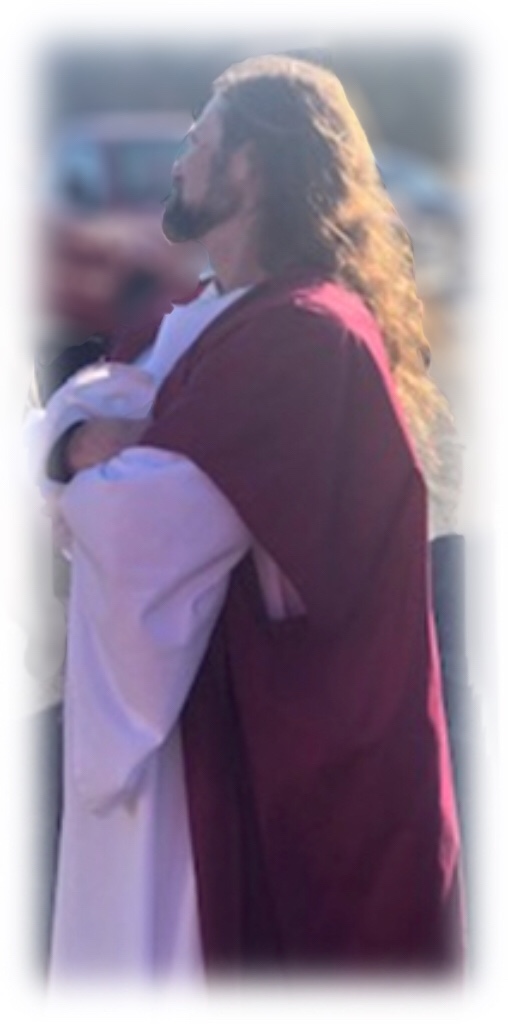
A man with long brown hair.

And a beard.

He was kind of olive-skinned …

When they came back the following week, I could have sworn he was wearing sandals.

I said to my husband: “Give me that guy’s number off the visitor’s card.”

“He’s only been here twice! How are you going to just call him up and ask him to be Jesus in this thing!”

“I am just going to do it. The worst he can say is No.”

And so I called. The conversation went something like this:

“Um, hi, I know you don’t know me, I’m the pastor’s wife at the church, we’re glad you and your wife have been joining us recently … welcome, welcome … I have sort of a question for you … see, we’re preparing to do an Easter production and it’s all set except for one little thing … we, um, don’t have a Jesus … when I saw you last Sunday, I knew you’d be perfect … was wondering if you would help us … there’s no lines to learn or anything, it’s really easy and fun, just reenacting the last week of Jesus’ life while the choir sings …”

He chuckled. “Okay, sure.”

“Wha— I’m sorry … did you say yes?”

“Yes, I’ll do it.”

“You—you will? Wow! Thank you! That’s awesome! I think you’ll enjoy it. I mean, we wouldn’t, like, really hang you on a cross or anything …” <relieved laugh>

Another warm chuckle: “It would be okay if you did. I’m full of nail holes anyway—I’m a carpenter.”
Carry on

The road is long
With many a winding turn
That leads us to who knows where
Who knows where …

—”He Ain’t Heavy, He’s My Brother,” B. Scott/B. Russell

Dear Son,

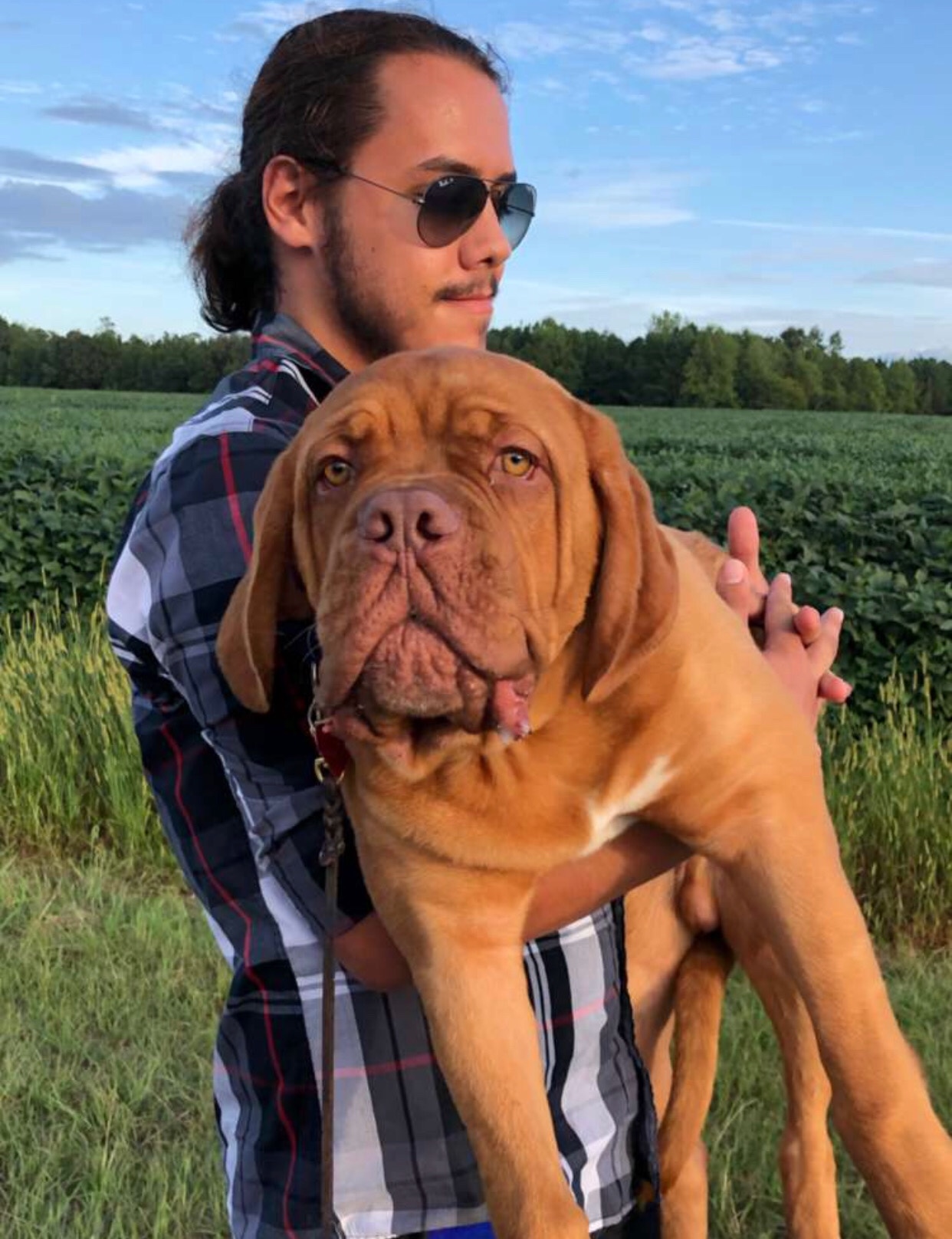
I think this may be my favorite picture of you. For several reasons. I like to see you in such a peaceful setting, walking that country path beside lush green fields, under the blue summer sky. You were walking with a friend, so you weren’t alone. You told me that her puppy followed youI still can’t believe that’s just a puppy; he’s massive!and he got tired, so you picked him up and carried him the rest of the way.

That is why I love the photo so much. It captures the essence of who you are.

Quietly bearing your burdens, no matter how heavy. There have been many in these past few years. Ever how burdened you were, ever how twisted and dark the path became, you kept on walking.

No one knows better than I what a long, long road it’s been, from the day you started college to now. Graduation being canceled, just when the end is in sight, feels like a coup de grâce.

It all started off on such a high note, didn’t it? Getting that phone call two weeks after you finished high school, a church looking for a music director. Your childhood dream. I still have your kindergarten “All About Me” book with the prompt ‘When I grow up, I want to be’ … where you drew yourself as a choir director in crayon. You attained it at seventeen, before your formal training even began.

That summer was glorious and brief.

That fall you started college and almost instantly the shadows came.

Your father‘s diagnosis of ocular melanoma, the loss of his eye, the weeks waiting for pathology to reveal no cancer cells had spread. Despite your new job and your courseload, you stepped up to help him readjust.

On the heels of his healing came Ma-Ma’s stroke, the beginning of her slow decline over the rest of that year. She knew how much you loved her. She treasured every minute with you; she savored every long phone call you made from the time you were little. She couldn’t keep from crying whenever you played the piano and sangremember how she organized for you to come play at her nursing home, near the last? I will never forget her wet, shining face. She was inordinately proud of you. She loved you fiercely.

How grateful I am that you and your dad were there, holding her hands, when she died.

And so you bore her loss on top of an unexpected one.

I know you’re marking the date. Three years ago today, the accident that took your friend. Your little childhood playmate who sang with you in preschool choir, your high school band mate, the organizer of the Sunday-nights-at-Bojangles gatherings. As I write, I hear her pure, high voice echoing in the church to your harmony and piano accompaniment. Her going left all of us reeling—a swift, severe, deep cut to the heart, a knotty scar we’ll bear forever. And yet you play on. You still sing. You stand by her family in their remembrances, your presence the only comfort that’s in your power to give. She would be graduating, too, this spring … but no one is graduating this spring …

It’s one of the hardest things in life, losing people, and not only to death. People will come and go because they choose to, no matter how much we wish they’d stay. You endured this, too, with uncommon grace, never lashing out, just walking on with your invisible pain. I knew it was there. I could feel the weight of it.

Seems we were due a respite, and if there was one, it was those few weeks of vacation last summer before your dad’s heart attack. You and I had just come home from walking when the officer arrived in the driveway to say your dad’s truck had run off the road and hit a tree, it might have been a medical event, maybe a seizure, no, he wasn’t sure what condition your father was in, EMS was working on him when he left, and did we have a way to get to the hospital? With your big brother too distraught to drive, you did it. Calmly, carefully, you drove us to the emergency room where the nurse met us at the door. You were beside me when she ushered us to the little room where the doctor met us to say your father had been resuscitated and was being prepped for heart surgery.

You were there with me that first night of sleeping on the waiting room chairs, not knowing what tomorrow would bring. You were there with me throughout that long week of his hospitalization, until your dad came home, battered, bruised, trying to recover his memory. You got his prescriptions so that I wouldn’t have to leave him … and when I took him back to the ER with chest pains a couple of weeks later, you met us there. Another hospital stay. Another heart surgery. Two more weeks of sleeping in the hospital. Do you remember the surreality of it all? How we felt like it would never end, like we were caught in the web of the wrong story, a movie with a terrible plot twist we didn’t see coming? How could this be?

Somehow you managed to keep your studies up, only leaving for your classes and your church services, making the music and leading the worship for others.

So here we are, at last. Your dad, recovered and restored … able to drive me back and forth to work with my broken foot … until this tiny pathogen bent on world domination closed the schools. Here you are, completing your final weeks of college online, being denied the walk to receive the reward of all your labors … it is unthinkable.

I think about the whole of your young adult life. How your road has been so long, with many a winding turn, through many a dark shadow. I watched how you went around, through, or over every obstacle on this arduous journey. You’ve endured what might have caused others to quit college, others who might have actually enjoyed their studies; I know you never loved the “game” of school and that for you it’s been a test of endurance, in itself. But the end is in sight—despite a pandemic. A plague. Who’d have ever believed, in our time …

You have come this far, bearing every heavy load. You’ve carried on. Often you, the baby of the family, carried the rest of us. You’ve fought internal battles for your own wellness more than anyone else knows; in this spiritual war, you’ve earned a Medal of Honor for exceptional valor. I know it and God knows it, Son. I stand in awe of your heart, full of love and mercy, so self-sacrificial, so willing to lighten others’ burdens as your own grew heavier. Like carrying a giant puppy during a long walk on a hot summer’s day, because it got tired.

That is why I love this picture. It is your story.

There are no words for how much I love you.

Keep walking, Son. Carry on. You are strong.

I am stronger because of you. Soon my foot will be well enough to walk with you again.

When we come through this present ominous shadow, college will be over, we’ll find ourselves in a whole new chapter in our lives, and we’ll celebrate all of it. Just a little farther alongI know that in your quiet way, you’ve already made your peace with it. I can almost hear you singing:

Here comes the sun, here comes the sun
And I say it’s all right
...

All my love, my always-little darling,

Your forever proud, grateful Mom

Global heart map

Yesterday I read about LitWorld’s Global Heart Map Project.

I’ve created heart maps before with students, for staff development, and for workshops on teachers as writers. I have, and love, Georgia Heard’s book: Heart Maps: Helping Students Create and Craft Authentic Writing.

But this global project literally caught my heart.

In the words of LitWorld: “Heart Maps allow us to connect with each other by sharing the ideas and feelings that define us in the most elemental of ways —and in these uncertain times, that connection is more important than ever.

Their call is for submissions of heart maps as a means of inspiring hope and strength around the world. For me, at the moment, it’s about the collective story of humanity, uniting now in time of great need. This is something children of all ages can do to express their fears, concerns, gratitude, and love. And, with distance learning in full force by necessity, I cannot think of a better way for teachers and students to connect, combine, and contribute to the world.

The directions on the site about how to submit are simple, as is the invitation to create the heart map: “Inside the heart, draw or write about the ideas, the feelings, and the things that are most important to you at this time.”

And so I did.

Up until now, I’ve only written words on my heart maps. This global one, in these times, seemed to call for something more … so I drew what’s in my heart today.

I’ll supply you with a key, in case.

In the center of my heart: Faith. I have never been more grateful for it. This is where my map begins.

At the bottom of the map: Hope, as the rising sun; I see everything else in its light.

The rays of Hope are shining on a clouded world. If you look closely, all around the rim of the world are the words The Earth is upside down. The Earth is upside down … the compass directions of N and W are there but the map must be turned upside down to see them as they should be.

On the left, Friends, above it, Family, and between them, Books; this wasn’t intentional but it occurs to me that books ARE my friends and my family, too … there’s clearly some subconscious stuff coming to the surface here…

Beneath Books: The American flag. My country, ’tis of thee, my home sweet home … how my concern increases daily for your well-being … for our well-being … Old Glory touches Faith. Behind the flag is is a chain; on each link, a tiny letter, spelling Technology. How grateful I am to be living in a time when isolation is only physical and that technology exists to keep us connected to one another.

Looming rather large at the top through the middle: A rose. It developed of its own accord out of the swirls around Family. I found myself just drawing it out. Why should a rose appear here in my heart map? What does it mean? Maybe it’s again representing my country; the rose is the national flower of the United States. And of course a rose stands for love. I think it may be a memorial flower, for those who’ve already died in the ravage of COVID-19. Most interesting to me … the words sub rosa, “under the rose,” mean secrecy and confidentiality … if you look, you’ll see the bottom of my rose is connected to Writing. I don’t know why I connected the rose to Writing. I just knew the rose should spring from the end of the word. I don’t know the secret yet. I’ll probably have to write to find out. Even further sub rosa are tiny music notes; at the edge of the upside down world, in light of Hope, a song remains in my heart.

Beside the pencil for Writing is a teardrop for losses and sacrifices made in this pandemic, and a caduceus representing the medical profession, fighting hard on behalf of us all.

Note that entire upper right corner is cracking. My heart breaks for Italy today; their losses, the horror. It’s staggering. That’s the Italian flag there behind the praying hands, encircled with the word PRAY repeated over and over: PRAY PRAY PRAY for the tide to turn in Italy …

Oh, World.

Today you are my heart.

Be still

Psalm 46:10 is one of my life’s verses: Be still and know that I am God.

It’s appeared, and re-appeared, at various junctures of my life. When I was a teenager, my youth minister presented me with a little plaque bearing this verse. It hung on my bedroom wall until I married and left home.

In recent years, a church member gave my family a stepping stone with Be still and know that I am God etched on it. That stone hangs on my bedroom wall now.

Imagine my delight— awe, rather — on researching quotes by Saint Patrick and discovering Psalm 46:10 and how it’s reduced, a line at a time, to one word:

Be still and know that I am God.
Be still and know that I am.
Be still and know.
Be still.
Be.

I can’t verify that Patrick actually deconstructed the verse this way, but it’s widely attributed to him. If so, what was he getting at?

My first thought: It’s an admonishment to be still. How fitting for the present time. With a pandemic on the rise, when we are at the mercy of a new ultramicroscopic virus with the power to deconstruct society, we must pull in and be still. Fear not. And wait.

It is not what we do best. We are not patient. We “do” fear and anger far better. We are accustomed to go go go and hurry hurry hurry and get get get. We have to-do lists that are never complete, that only grow longer.

And when do we ever just be?

Maybe right about now.

Oh, and by the way, here’s the whole of Psalm 46:10:

“Be still, and know that I am God.
    I will be exalted among the nations,
    I will be exalted in the earth!”

I shall leave you with the words of Saint Patrick — but not the one you know. This day cannot pass without mention of my grandfather, born in 1906 with the given name Columbus and the middle name St. Patrick (yes, for real). In one of our last phone conversations (his love for me evident in that he would talk to me on the phone, for he hated it; he was hard of hearing), I said, tears streaming, which he couldn’t see, thankfully: “I love you, Granddaddy. You’re safe in God’s hands.”

To which he replied, in his raspy, precious voice: “There’s no better place to be.”

Be still and know that I am God.
Be still and know that I am.
Be still and know.
Be still.
Be.

—St. Patrick’s Day blessings, dear hearts.

Empty church

Here’s the church

here’s the steeple

open the doors

see no people

We went anyway, my husband and I, on this dark Sunday.

Sanctuary silence. Stillness. Social distance.

But still a sermon, for social media.

A few friends, who filmed.

Here’s the preacher

in spite of the scares

here he is

saying our prayers

No hymns, no music, no choir except birdsong beyond the hallowed halls:

I sing because I’m happy
I sing because I’m fre
e

An ill wind moaning under the eaves, an unseen person pulling on locked doors:

I’m just a poor wayfaring stranger
Traveling through this world below
There is no sickness, toil, or danger
In that bright land to which I go…

I went to see. Found no one but me. The sky so moody, the day so broody, like forces dark. Sickness makes its mark. It lurks nearby and that is why—no immunity, no community, Day of Prayer, no one there. In the shadow of the steeple, no people; it’s safer to be home. The Vatican says there’ll be no Easter services in Rome.

Penitents without one plea. Lenten lament, mourning this morning.

Morning has broken like the first morning
Blackbird has spoken like the first bird
Praise for the singing
Praise for the morning
Praise for them springing fresh from the world

The songbirds sing, the recorder runs, Scripture is spoken.

“I am the light of the world. Whoever follows me will not walk in darkness, but will have the light of life.”

Only an interlude of isolation. Will be our preservation.

My husband, the preacher, prays without his congregation.

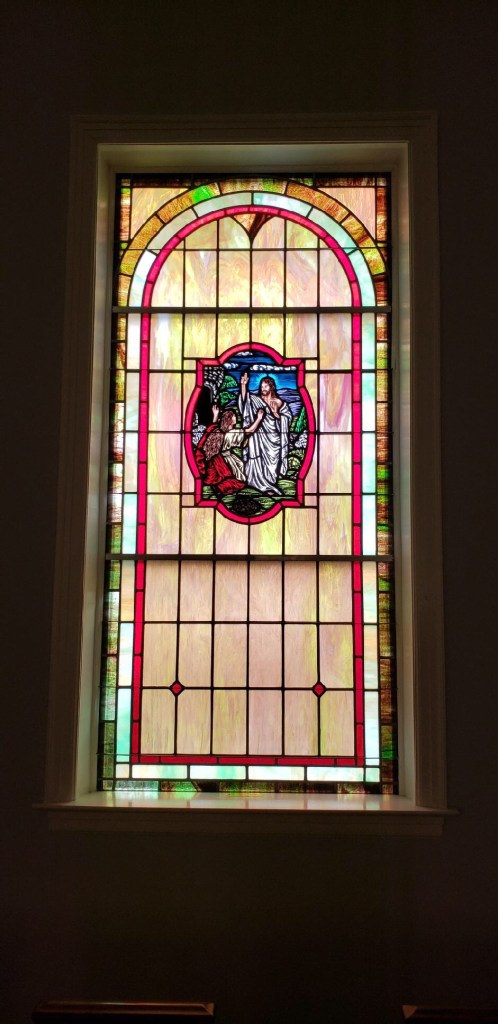
I bow, and feel a sudden warmth from the stained-glass.

The sun, at last.

Illumination.

Quotations: “Here’s the church, here’s the steeple” nursery rhyme, adapted; John 8:12.

Hymns: His Eye Is on the Sparrow, Wayfaring Stranger, Morning Has Broken

Photos: J. Pearce. 03/15/2020.

The prayer blanket

Last July, my husband suffered a heart attack and cardiac arrest. After thirty minutes of CPR, shocks with defibrillator paddles, an emergency stent (four telescoped stents, to be exact), induced hypothermia to minimize damage to his brain, and a week in the hospital, he came home. He was readmitted a few weeks later with chest pains—another heart attack. We spent two more weeks at the hospital for a “wash” of blood thinners and subsequent bypass surgery.

It was a long, bleak period. Time seemed to stop. We did not know what each day would bring, or how altered life would be.

Throughout this time, cards and calls kept pouring in. Not just from our church, where my husband is pastor, but from churches all across the area. We are praying, everyone said. We will keep praying.

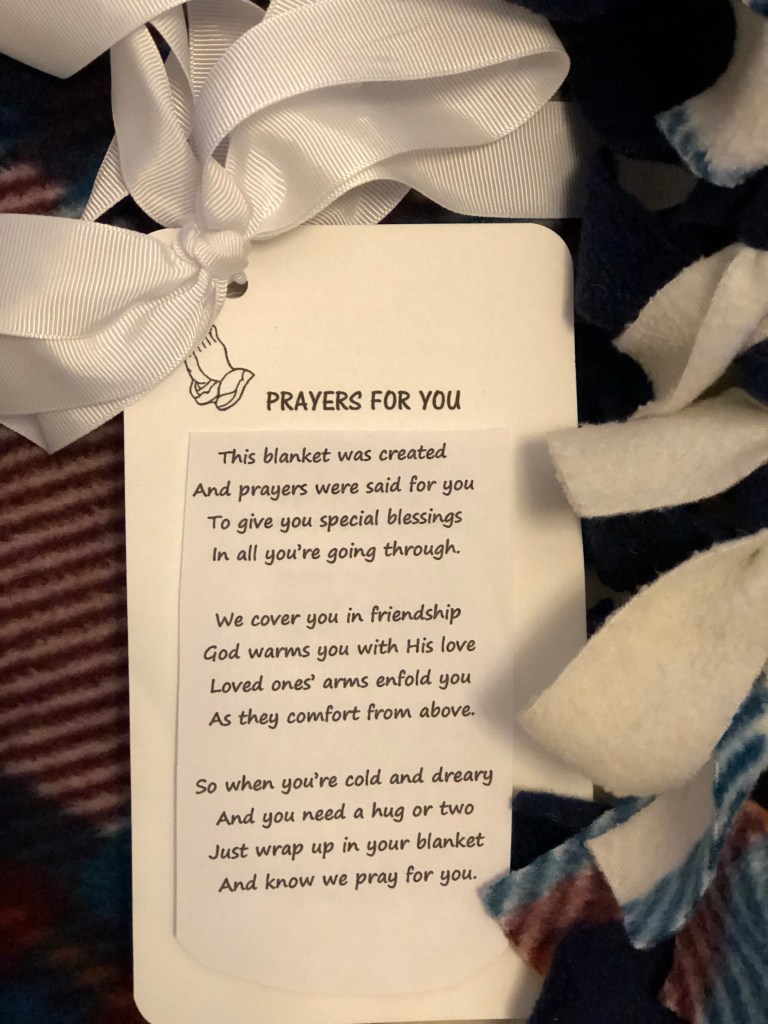
One night, when my husband was home at last, recovering, a friend came by with a special gift: “The Women on Mission at my church made this for you. We prayed for you out loud the whole time we worked on it.”

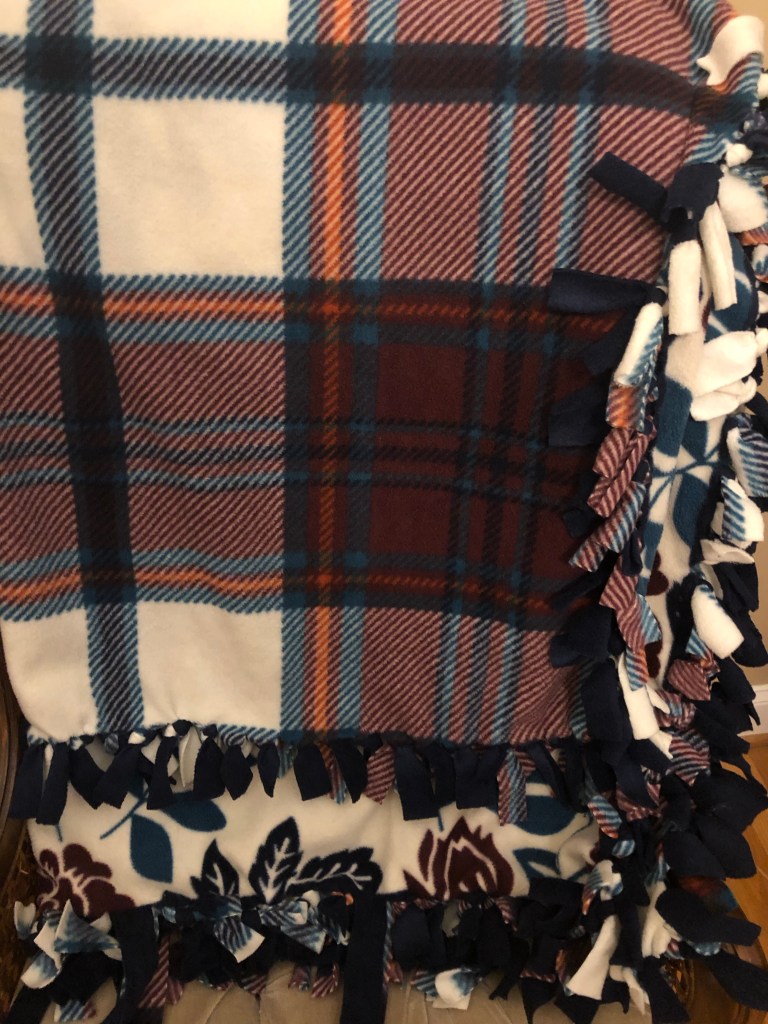
A blanket of many colors. Big, warm, laced with love, with faith.

My husband healed, wrapped in this prayer blanket.

Life slowly returned to normal.

I share it now with you, Friends, in this bleak period when time seems to stop, when life is unexpectedly altered.

You, too, are wrapped in a blanket of prayer.

Where the sunbeam ends

In late February, we had our only snow this winter.

I woke in the morning to find the sun shining through the crape myrtle I planted when we first moved here. Ice crystals glittered on the tree limbs like a thousand prisms—tiny, brilliant rainbow lights. I took a picture. When I looked at the image, the word that came to mind was holy.

Maybe it was the brightness of the sun. The reaching ray of light. The purity of snow. The hush, the stillness. Just a sense of divine glory, of peace.

And then I noticed where that sunbeam ended.

Oh, how I recalled, in that instant, first reading Where the Red Fern Grows when I was around ten years old. It tore my heart out. I wept for weeks. A dog story, of course. And hardship, love, and sacrifice. Wilson Rawls wrote:

I had heard the old Indian legend about the red fern. How a little Indian boy and girl were lost in a blizzard and had frozen to death. In the spring, when they were found, a beautiful red fern had grown up between their two bodies. The story went on to say that only an angel could plant the seeds of a red fern, and that they never died; where one grew, that spot was sacred.

That’s when the boy, Billy, finds a red fern growing between the graves of his two dogs.

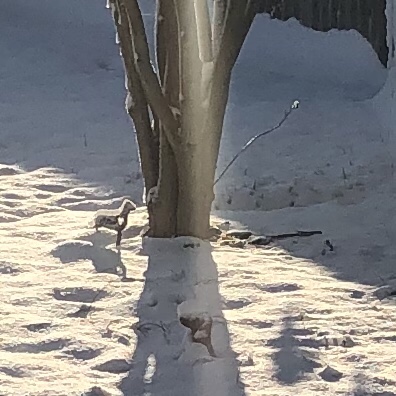
Look where my sunbeam ends.

Directly over the grave of my family’s little dachshund, Nik, who was with us for sixteen years. That’s his memorial statue rising up from the snow.

No red fern, of course.

But sacred, just the same.

Equinox

Today’s post serves a dual purpose: My daily Slice of Life Story Challenge and Spiritual Journey Thursday, organized by my friend Margaret Simon on the first Thursday of the month. Thank you, Margaret, for the invitation to host.

I chose to write around the theme of “balance.”

Not necessarily what you may think…

*******

It’s almost here.

Spring. The equinox.

A balance of light and dark in the world, or “equal night.”

My thinking radiates in a number of metaphorical directions here but I’ll begin with the moment I was at school grappling with a new data reporting system that I have to teach to colleagues. I logged in and discovered this message: Alternate Data Entry for Dark Period.

Dark Period?

It has the sound of a span in history, like it belongs in the Holocene Epoch of the Quaternary Period, the current one in which we live, geologically speaking (“current” meaning over 11, 000 years old, for the record). As if it can be marked in time like the Ice Age or at least the Dark Ages.

Dark Period.

All it means, apparently, is the time when the data reporting system is shut down to be updated. It’s tech housecleaning. During the Dark Period, no additional data entry can occur, until everything is verified and balanced.

The words stuck with me, though.

Many would say we are living in a Dark Period now. It’s an era of strife, vitriol, backlash. An age of ever-increasing concerns over mental health. Over health in general—the coronavirus.

And at the heart of the darkness is fear.

A. Roger Ekirch writes in At Day’s Close: Night in Times Past: “Night was man’s first necessary evil, our oldest and most haunting terror. Amid the gathering darkness and cold, our prehistoric forebears must have felt profound fear … that one morning the sun might fail to return.” He goes on to say that many psychologists believe that our early ancestors feared not the dark itself but harm befalling them in the dark (for it was an unlit world at night) and over time night became synonymous with danger.

Fear leads to anger and anxiety. In the dark, things don’t look as they should; they’re distorted.

What’s the balance?

Now we’re back to the equinox, metaphorically.

Light. Day. The assurance that there’s still good working in the world, undoing harm. Think of the destruction of Australia and the human involvement in deliberately setting bushfires. Then think of soldiers in the Australian army, lined up in rows, cuddling and nursing koalas when off duty. Then apply it to people suffering around our globe …

We are our own greatest enemy and helpmeet. We all hang in the balance of these: despair and hope, destruction and edification, hurt and healing.

In The Forgotten Beasts of Eld, Patricia A. McKillip describes a monstrous creature like “a dark mist” who embodies “the fear men die of.” The novel is about learning how to live and love in a different world.

That would mean overcoming the dark, the fear.

Incidentally, in a strange balance, the current virus causing so much alarm shares its name with the crown of the sun.

And, speaking of the sun, here’s the secret of the equinox, why it’s not really equal: There’s actually more day than night.

More light. Literally.

And figuratively, it has nothing to do with moving around the sun and everything to do with moving the human heart.

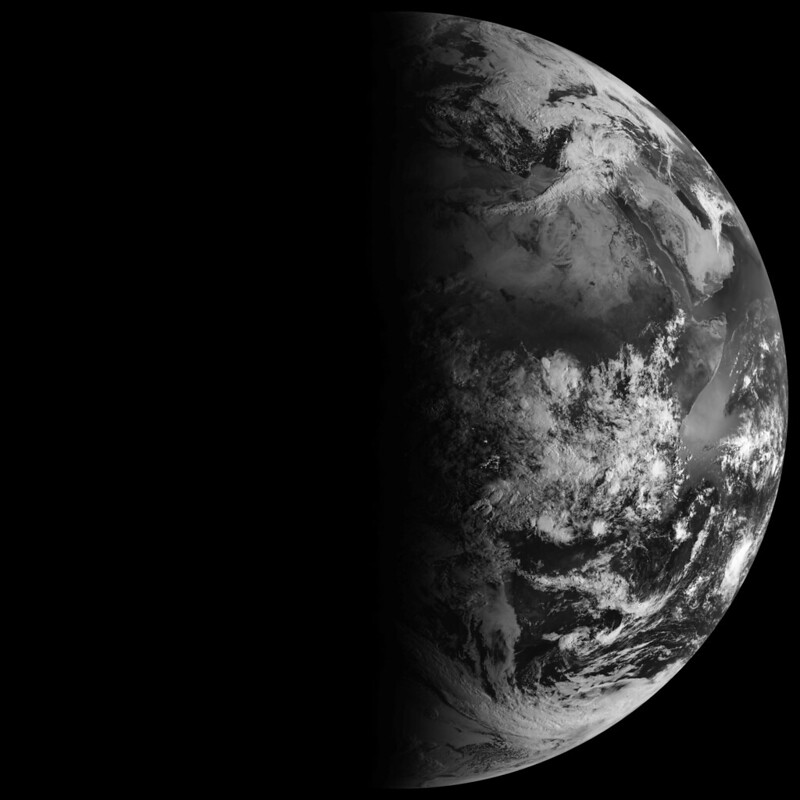
Photo: NASA Goddard Space Flight Center. CC BY

*******

Dear fellow Spiritual Journey Thursday sojourners: Please click the link to add your post to the “party”:

https://fresh.inlinkz.com/party/f941589ea3ed4e83be8dd519044d3bfd

Detour

This morning I planned to post a poem I’ve been working on for a while, about the brokenness of the human condition and the need for mending.

But the poem was stubborn; it wouldn’t allow itself to be finished. I ran out of time. A colleague came to pick me up for a meeting and we left early to beat traffic.

From the outset we encountered detours, one of which providentially took us by McDonald’s to grab a coffee. Liquid stamina.

There in the drive-through, between paying and receiving the order, my colleague and I watched a man pull into a parking place. He got out and opened the trunk of his car…

There wasn’t time to wonder, really, what he might be pulling out of that trunk, or for what purpose. He could have planned an act of destruction; isn’t that where our brains go first, nowadays?

I watched intently, not believing what I saw: The man took out a large bag. He shook it in a corner of the parking lot, by a curb and a tangle of trees.

Out of the brush ran a cat, followed by another.

To eat the food the man brought for them, from the bag he carried in his car.

Mission accomplished, the man returned the bag to his trunk and headed into McDonald’s for his own breakfast.

My colleague, a diehard cat-lover, took time to run in and thank this man. He laughed. “I do this everywhere I go. People either love me or hate me.”

It wasn’t a stop we planned to make, on a detour we hadn’t planned to take. This isn’t the piece on broken humanity I planned to post this morning.

Instead, the detour provided a glimpse of human compassion. A taste of the milk of human kindness.

Or, in this case, the cat food of human kindness.

If we can feel this for homeless cats, we can feel it for one other.

Meaning we’re not so broken. Not yet.

Sometimes a detour is about more than steering around a problem.

Sometimes it’s an opportunity to be fed.

Sometimes detours are a taste of the divine.

Joy

Yesterday I noted this reflection on social media: “All I did in 2019 was survive it.”

Why did I think of the pool of Bethesda and the legend of the angel “troubling the waters“? Was it the sense of just enduring? The lack of hope?

The words stirred my soul on multiple levels.

I can relate to surviving. In 2019, my husband almost didn’t. There is no control in the valley of the shadow of death, only submission. Each long, dark day must be endured; my boys and I waited for the ray of hope.

And the healing came.

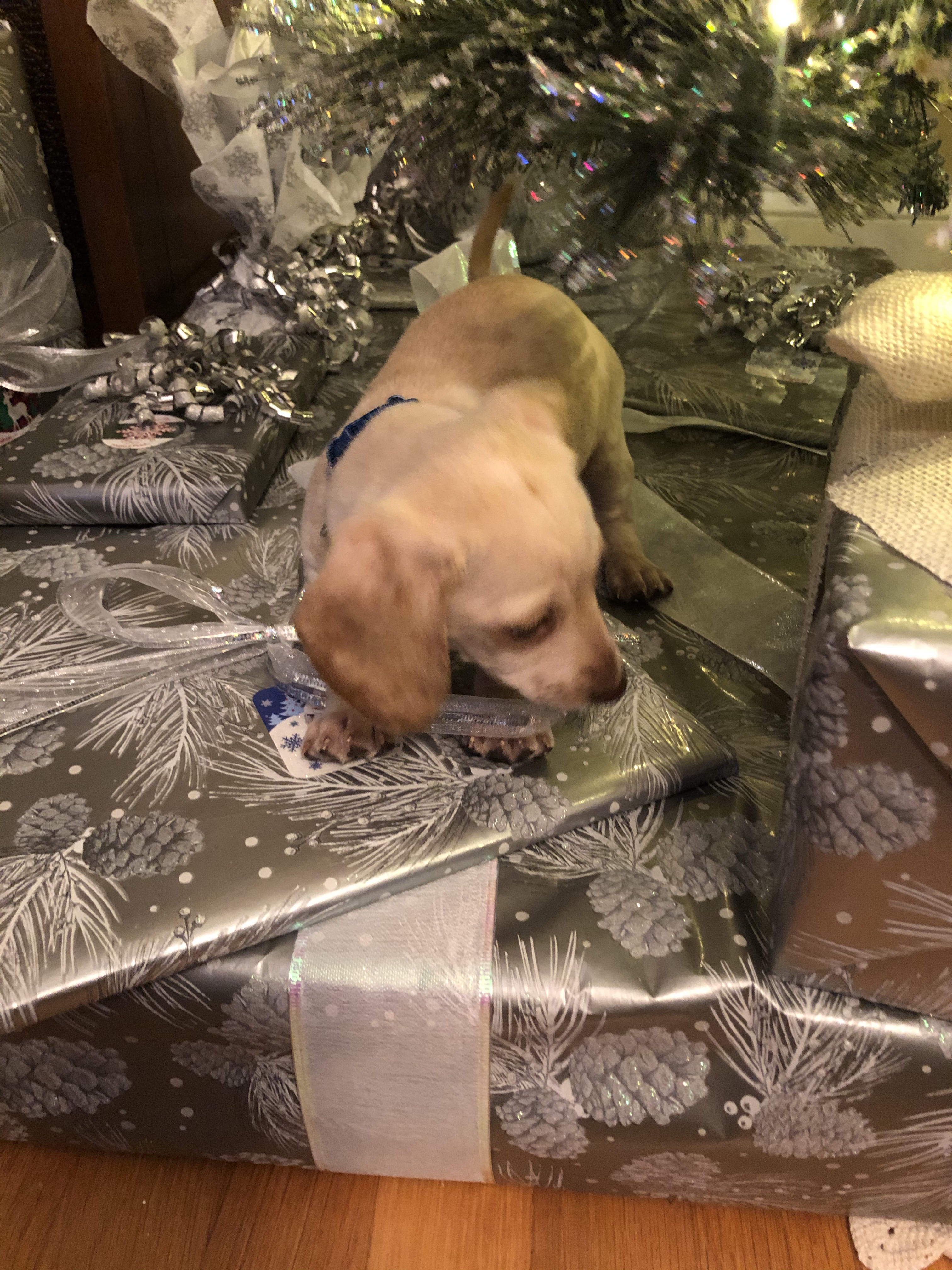
It was a year of survival, of change, of pain and loss, of life being altered. But then, joy: On the heels of his father’s recovery, our oldest married, went into the ministry, became a father. This Christmas, our family is bigger. This Christmas, we have so much more life to celebrate. This Christmas, inside the typical clamor, is a deep pocket of stillness. It is like the branches of our tree, frosted silver, catching the light, glimmering with tiny iridescent fire.

We survived, but more importantly, we live. We love. There’s always more love to give, another ray of light just ahead in the darkness, another healing after the troubling of the waters.

Life and hope renewed. Is that not the message of Christmas?

On that note . . . those of you who know this blog will know that 2019 was the first year we were “dogless” for a while.

That aching void is now filled.

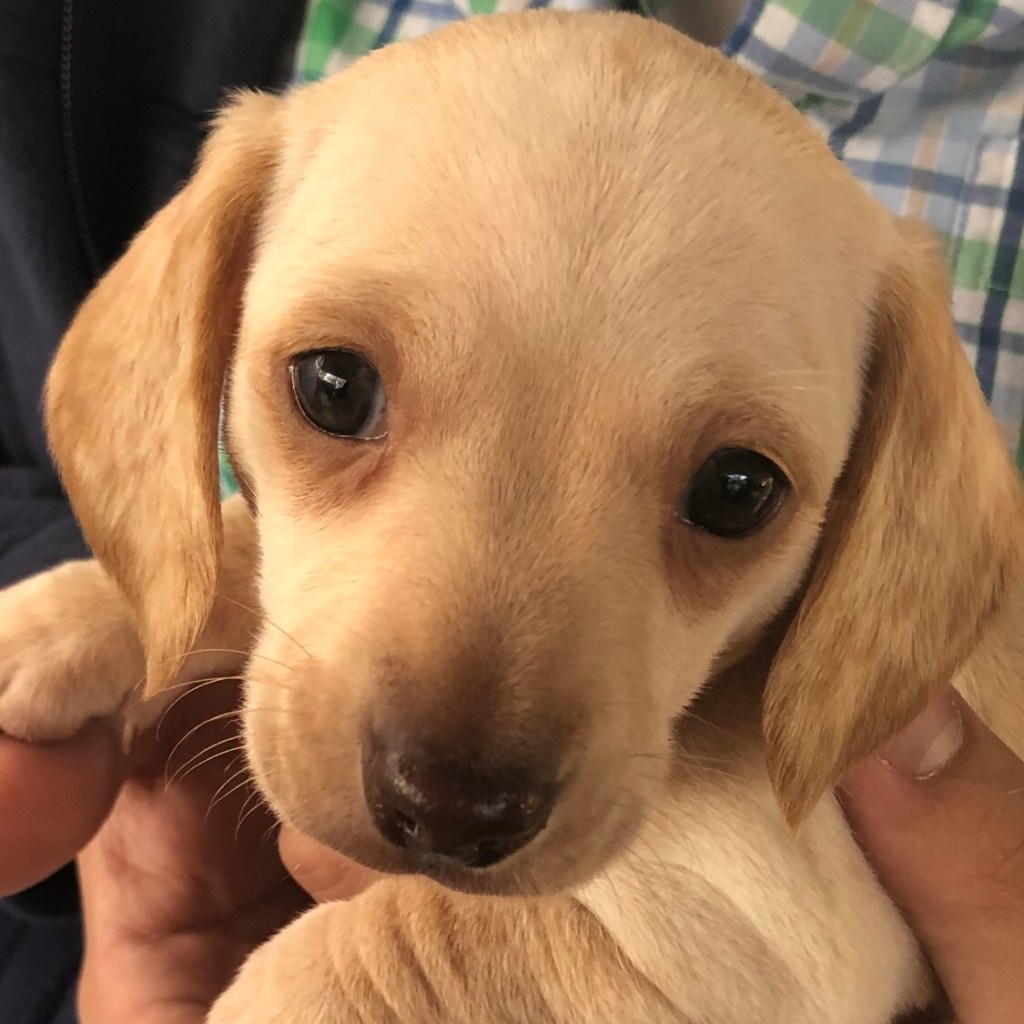
I shall leave you with wishes for a holiday in your heart every day that you live and three pounds of sheer joy.

Merry Christmas, loves.

Welcome home, Dennis

So this is Christmas

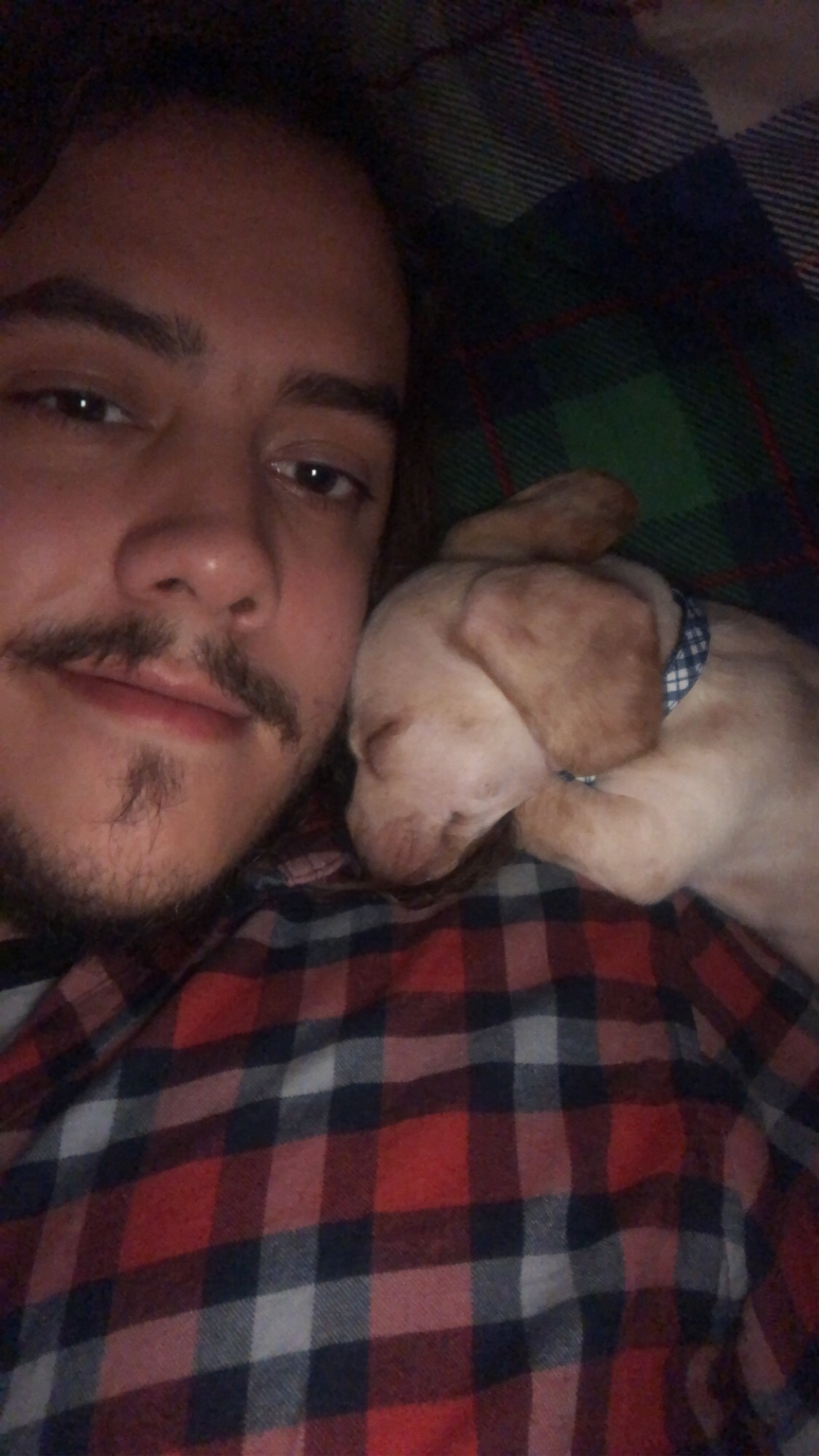
My boy Cadillac Man and his Dennis nestled all snug in their bed