Why I Write—2022

Every year for National Day on Writing, I reflect on why I write.

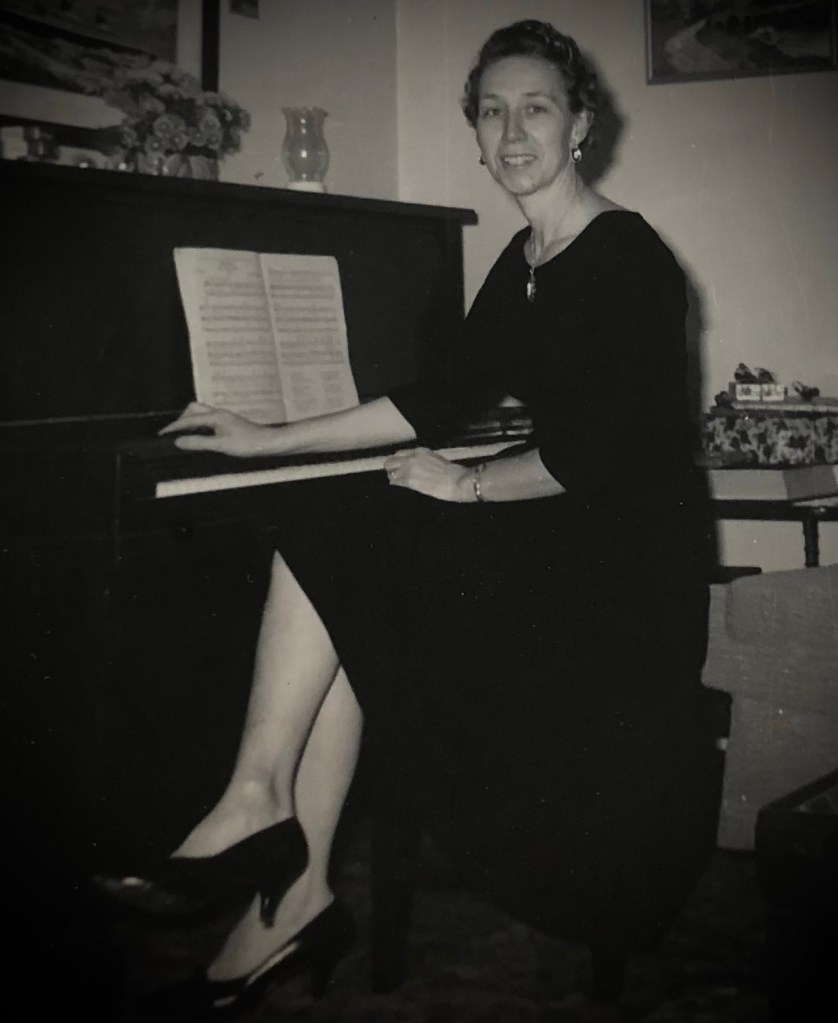
It’s like looking at a diamond ring in a semi-darkened room. Different facets catch the light, scattering sparks of brilliant color, red to orange, green to blue. Writing, for me, is an inner fire. A living fire. It is in my blood the way that farming was in my grandfather’s blood, that music is in my son’s, that crafting was in my mother’s, that a love of children was in my grandmother’s. I see different facets even in these comparisons. Farming is about sustenance. Cultivating the earth, harnessing resources to make it produce—this is what earth is designed to do. Music is expression, form, response, sounds in time, even color. It can be endlessly repeated and replicated; it is the unique and universal language of humankind. Crafting…it takes skill to make a new, useful thing from pieces placed exactly right, sewing them together so that the seams don’t detract. My mother was given a hand-me-down sectional sofa covered with pink scratchy fabric (it was 1970s horrible). She studied it, measured it, bought earth-tone floral fabric and cording and systematically created a custom slipcover that lasted for years. The love of children…does this not tie all of the above? Creating, nurturing, producing, expressing, a contribution to the future.

Writing is all of this.

One can make the argument that all these things are learned, and so they are. But that doesn’t account for the compulsion to do them even when there is no need. Granddaddy gardened into his nineties when he didn’t have to produce his own food anymore, when all he could manage was two small rows in the old dog pen after the dog was dead and gone. He carried a chair to sit on and rest between the kneeling to weed. My son hears all the instruments, all the harmonies, in a song; he spends hours recording a song over and over with different instruments, singing the different vocals, until it all comes together like he wants it…simply for the joy of accomplishing it. My mother received little income from the clothes she made for people; she crocheted countless baby blankets as gifts. She made flop-eared stuffed bunnies with changeable clothes, for the whimsical fun of it, never making a dime. Craftsmanship is beauty unto itself. Like art. Like music. My grandmother’s face shone like the sun at sight of children. I was one of her greatest beneficiaries, my life indelibly shaped, still being shaped, by her love. I might also mention it was Grandma who sparked my love of reading and writing long before I could do either.

Writing, in the end, has much to do with story. At least for me. The story of having lived and loved. The story of seeking the beautiful. The story of gratitude for finding it, in all of life’s brilliant facets and sparks, even in the shadows. There would not be shadows if there were no light. It is there, always there, for the capturing.

And so I write.
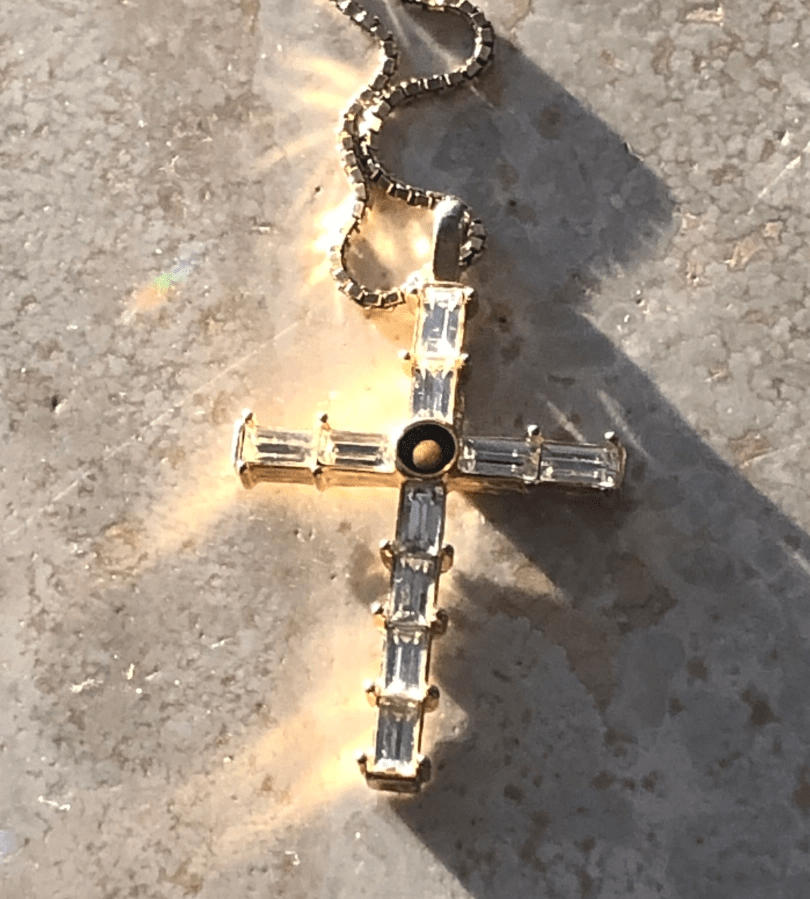
Necklace given to me by my father. Years later, it still shines.
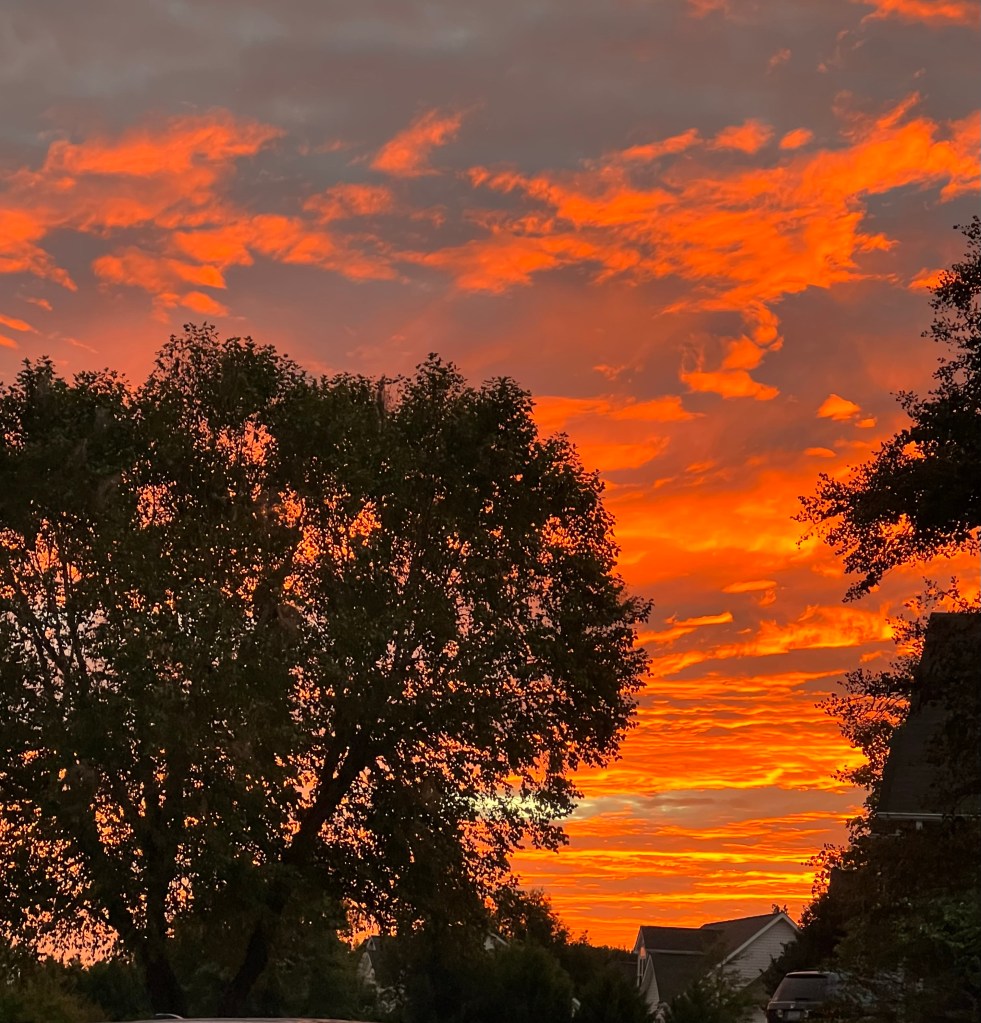
Twenty years

September, When Grass Was Green

Try to remember the kind of September
When life was slow and oh, so mellow
Try to remember the kind of September
When grass was green and grain was yellow…

(T. Jones/H. Schmidt, 1960)

I remember
our last conversation
in September
twenty years ago

you said you’d
been cutting the grass
and that maybe
you’d overdone it
going back and forth
with your mower
making a pretty pattern
—you thought your chest muscles
were sore from the turning

it worried me

—you were worried
about other things

but happy to be retiring
in two weeks

the thing about last things
is that you don’t know
they’re the last

I remember promising
to come celebrate your retirement
and how we spoke of you
having more time to spend with
your grandchildren

I remember getting the news
a week later
as soon as I walked in from shopping
with the retirement card I just bought
still in my hand

I remember that September day:
so glorious, cloudless
sky so blue it hurt
all the trees still green, sharp-edged,
clinging hard to the light

never again will September
be as bright

or kind

I remember coming home
for the last time

to speak at your funeral

to thank you,
my duty-minded, dedicated
father

twenty years
come this twenty-fifth day
of September

don’t you know
the grass is still oh so green
and Daddy, you are still
in the scent
of its cutting

Yesterday’s sunrise

with thanks to Susan Ahlbrand for the Do You Remember prompt with musical inspiration on Ethical ELA’s Open Write earlier this week. Susan remembered her own father’s passing with Earth, Wind & Fire’s “September”. I chose “Try To Remember” as a frame instead. The song predates me; I recall hearing it on my father’s radio when I was very small.

I still have the retirement card I bought for my father on the day that he died, with three workdays left to go. The card mentions that it’s a great time to be alive.

Twenty years, and that remains the great dichotomy of late September.

Poem of perspective

On the the fourth day of Ethical ELA’s Open Write, Ann Burg invites poets to “Think of a moment in time— an historical moment or a personal one. Place yourself outside yourself — as a favorite tree, a flower, even an inanimate object who has witnessed this moment…”

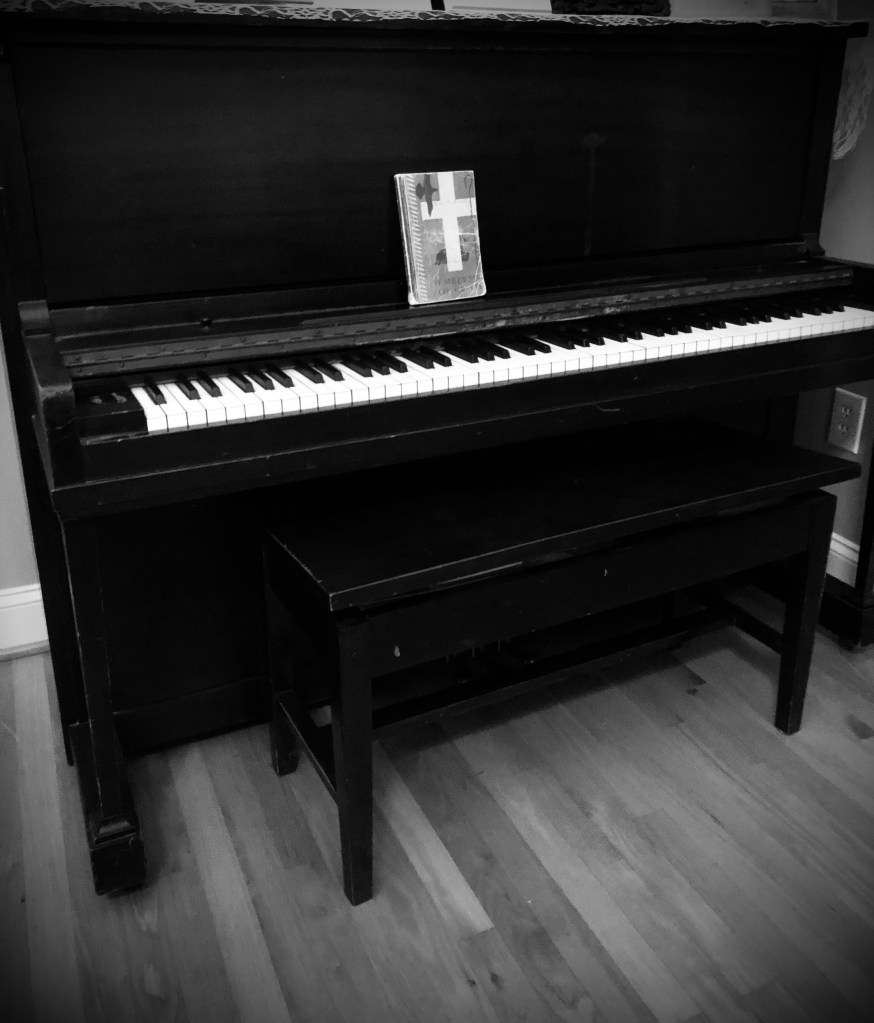
The Upright Mahogany Howard
(c. 1920s)

I grow old
I sigh
I know you hear
my bones creaking
as you walk by
I have no mirror
but your eyes
and there I see
my beauty
is not faded
although
I’m scarred
and snaggle-toothed…
you may not realize
my proclivity
for touch-memory
but I tell you
that baby on your lap
presently pounding
my ivories 
has the feel of her
—one day,
she will play
and I will respond
living on and on
in the song
for the chords
never broken
vibrate once more
stirring the dust
of five generations
in my bones…
I am
your reliquary.

The piano was my grandmother’s most-prized possession. My grandfather bought it secondhand sometime during WWII. My grandmother intended to bequeath it to my aunt, who also played; my aunt contracted MS in her 50s and died before my grandmother. Grandma then offered it to me. I do not play, but my youngest son is an extraordinary pianist with a degree in worship music. His brother’s baby, my granddaughter Micah, ten months old, is already showing an affinity for music. She sat on my lap ‘playing’ Grandma’s piano last week, thoroughly enchanted.

Remembering Olivia

Early 1970s:

My aunt bought a tape recorder
such a modern thing
she had my little sister and I
sing into the thing:

Let me be there in your morning 
Let me be there in your night 
Let me change whatever’s wrong

and make it right (make it right)
Let me take you through that wonderland 
That only two can share 
All I ask you-ou-ou
ou
is let me be there ..

We giggled
and felt so grown-up
singing the soul-felt words
of such
a beautiful
person

we knew
and believed
every word….

If you love me, let me know
if you don’t, then let me go
I can’t take another minute
of a day without you in it
If you love me, let it be
if you don’t, then set me free
Take the chains away
that keep me loving you….

We loved you,
Olivia,
from our very beginning.

Be still: Spiritual Journey

with thanks to Chris Margocs for the “Be still” invitation and to Margaret Simon for the “Presence” offering on behalf of our Spiritual Journey writer’s group on this first Thursday in July

Back in March of 2020, four days into COVID-19 lockdown, I wrote a post entitled Be still. It was based on Psalm 46:10, a verse with special significance to me since I was about thirteen, when a youth group leader gave me a little decorative plaque bearing the first line: Be still and know that I am God. The plaque hung on the wall of my bedroom throughout my tumultuous teenage years until I married and left home at twenty. I had no inkling, then, that my young husband would go into the ministry two years later or that we would eventually have two sons, the older of whom would become a pastor and the younger, a music minister and worship leader.

Throughout the decades I’ve received numerous gifts which have borne those words: Be still and know that I am God. The verse keeps returning to me. A few weeks ago my Sunday School co-teacher brought a handful of cards printed with Bible verses, held them out to the class facedown, and had each of us draw one. I drew Psalm 46:10. Be still and know that I am God.

I could write a lot about those eight words, having to do with trusting God in times of trouble and God’s unfailing faithfulness. Overcoming fear and despair. Carving out time away from the demands, vitriol, and horrors of the world. Finding peace in the rhythms of nature surrounding my home in the countryside (I have written a lot about that, actually).

But those eight words are only the opening line.

“Be still and know that I am God.
I will be exalted among the nations,
I will be exalted in the earth!”

—Psalm 46:10 (ESV)

The verse is a call to be in awe of the power of God, to be a people who carry forth the message of godly peace to the world, by which wars will cease (v. 9), and by which God will be exalted. It is a declarative, definitive statement. On the part of God: It shall be. On the part of humanity: Be awed.

Awe has been my guiding word for the past two years. It is likely to remain so as long as I live. In the context of inherent awe and Psalm 46:10, words of the song “Above All” by Michael J. Smith come to mind:

Above all powers, above all kings
Above all nature and all created things
Above all wisdom and all the ways of man
You were here before the world began

Above all kingdoms, above all thrones
Above all wonders the world has ever known
Above all wealth and treasures of the Earth
There’s no way to measure what You’re worth

Be still and know…God is above all.

My theologian son is studying the work of Eugene Peterson (1932-2018), minister, author, poet, and Professor of Spiritual Theology, Regent College, Vancouver. We have recently been discussing The Message: The Bible in Contemporary Language, Peterson’s idiomatic paraphrase of Scriptures, apparently written out of frustration with people not reading their Bibles.

Here’s Peterson’s paraphrase of Psalm 46:10:

“Step out of the traffic! Take a long,
    loving look at me, your High God,
    above politics, above everything.”

I cannot think of a more timely message.

I return now to the original Be still post I wrote on March 17, 2020, during the early days of the pandemic. We thought school would be closed for two weeks. We had no idea of all that lay ahead. Extended isolation. Loss. Rampant fear. Exacerbated discord. Death, violence, rage, destruction. War. Rising inflation.

Consider the verses immediately preceding Psalm 46:10, from the ESV translation:

The nations rage, the kingdoms totter; he utters his voice, the earth melts. The Lord of Hosts is with us; the God of Jacob is our fortress. Selah (6-7).

And then we are told Be still and know that I am God.

Who is above all.

I thought about linking Smith’s song here. Psalm 46 is, after all, a hymn.

I am linking another song instead, one of my longtime favorites for its plaintive beauty and quiet, meditative message—a little rest stop for the soul on the arduous spiritual journey through life in this world that God, incomprehensibly, still loves.

Be still my soul
the Lord is on your side…

Blessings of stillness, rest, and awe to you all.

Spiritual journey: Celebrating small things

Today’s spiritual journey theme is celebrating small things (thank you, Ramona, for hosting our group).

What’s been on my mind all week, however, is the brokenness of things.

I wrote a series of poem-posts on it.

In those posts on the brokenness of things I could have mentioned that the incalculable horror, loss, and grief in Uvalde still weigh heavy on my heart each day, that I mourn the state of humanity and the inability to spare children. I could have mentioned that this school year, another chapter in the continuing saga of COVID, has been the hardest yet on staff, students, and families. I could have mentioned my despair over diametrically opposed viewpoints about what’s best for students and how some educators cannot get beyond deficit thinking to see the wealth of creative and artistic gifts in the youngest among us…

I wrote instead about being a child. About breaking my arm on the school playground when I was nine. About fearing my father’s anger and being surprised by his gentleness. In an effort to comfort me he brought one of my dolls along to the orthopedic office. It embarrassed me. I felt too old for the doll. Maybe it was more a matter of not want anyone else to think I still played with dolls. Yet the gesture touched me, even then. To this day the memory of my father holding that doll, shouting at the orthopedist to stop when I screamed during the bone-setting, is one of the most indelible images of my life. There my father stood, unable to spare me more than a moment of the suffering I had to endure. I could see the intensity of his own suffering. It was written all over his pale, fierce-eyed face. His presence and the knowledge of his pain on my behalf somehow breathed a waft of courage into my terrified heart. This little stirring of courage would sustain me through a subsequent hospital stay when the bones in my arm slipped and had to be reset. It would prepare me to visit a five-year-old boy with a crushed foot across the hall as he screamed in pain and terror. It would beget empathy: me there in my wheelchair with a cast halfway to my shoulder and him in a hospital bed with crib rails, his poor damaged foot heavily bandaged and raised on a suspended sling. United in common suffering, we would find a glimmer of overcoming, in the very midst of our brokenness.

That is the thing about children. Before there are even words to express, there are keen understandings. Children are natural ambassadors of healing. They instinctively seek to comfort. Their native language is love.

I realize, now, what I was longing for when I went back to those childhood moments.

The spiritual journey is littered with broken things, broken people, broken self. I remember wondering how that little boy’s crushed foot would ever heal. At nine I imagined the bones in countless pieces and couldn’t conceive of how doctors could repair that much disconnectedness. I wondered if his foot would ever be okay…but I knew, somehow, he would be.

Which leads me, at last, to the Great Physician. Who, like my father, intervened on my behalf to alleviate my suffering, and who, unlike my father, is able to provide more than momentary relief.

I’m not sure yet if I’m done writing about the brokenness of things but here’s where I finally pick up the path of celebration. I celebrate the sustaining gift of faith. I celebrate the memory of my father, gone for twenty years now but so alive and active in my memory. I celebrate that the school year is now ending, that a desperately-awaited respite has arrived. I celebrate children.

It occurs to me that none of these are “small things.”

So, here is one: I celebrate the musicality of children.

For on the most hellish of days, when I hear them singing, I remember heaven.

For the kingdom of God belongs to such as these… Luke 18:16.

Salvador Dalí – Los niños cantores (Children singing) 1968. Cea. CC BY 2.0

Of racehorses and old roads

As I write, the National Anthem’s being sung at Churchill Downs for the start of the Kentucky Derby.

I’ll be pulling for a horse not favored to win.

His owner grew up in eastern North Carolina on a little stretch of road in the country. It’s paved now, but people have living memory of it being dirt… and I have an affinity for old dirt roads in these far reaches.

Once upon a time, I was a child who stayed in a little house on a dirt road in the summertime. I swung from a tire swing that Granddaddy hung from the pecan tree all studded with woodpecker holes. I swung to the deafening rise-and-fall rhythms of cicada-rattles, alongside the old dirt road across from the clearing where timeworn gravestones stood over people my grandmother knew when she was a child. I swung back and forth, round and round through the dappled afternoon, singing a favorite folk song from my father’s Peter, Paul, and Mary album…

Stewball was a racehorse
and I wish he were mine
he never drank water
he always drank wine…

The song goes on to say how the speaker bet on the gray mare and the bay, when:

ahead of them all,
came a-prancin’ and a-dancin’,
my noble Stewball.
The hoot owl, she hollered…

This past week, early one morning, I recorded a hoot owl (barred owl) hollering from the pines behind my home.

Memory runs so deep, so strong.

And so I pull for the horse named Barber Road, whose odds keep going down in these remaining moments before he gets to the gate.

Here’s to my own beloved road by another name in eastern North Carolina, and childhood, and belonging, and ol’ Stewball who wasn’t favored to win, either, but did, and to the hoot owl, the stories, the songs, and overcomings.

And here’s to you, Barber Road.

Run on.

Thoroughbred racehorseMIKI Yoshihito. CC BY 2.0.

Update: Barber Road finished 6th. By now the world knows that Rich Strike, the least-favored horse (80-1,) took the Derby in the second-biggest upset in its 148-year history. Secretariat, the first racehorse I remember, and who still fills me with awe to the point of tears, holds the record.

Song structures poem

On Day 7 of National Poetry month, for VerseLove at Ethical ELA, Chris Goering invites teacher-poets to compose around song structures by borrowing syllables, meter, rhyme scheme, etc.

My youngest son came immediately to mind.

Before he was born, he would get very still when the piano was played in church; he would become active again when it stopped. I was sure he was listening to the music. At five he said he wanted to be a choir director when he grew up… he now has a degree in worship ministry. 

Here’s a scene from long ago, about his first favorite song.

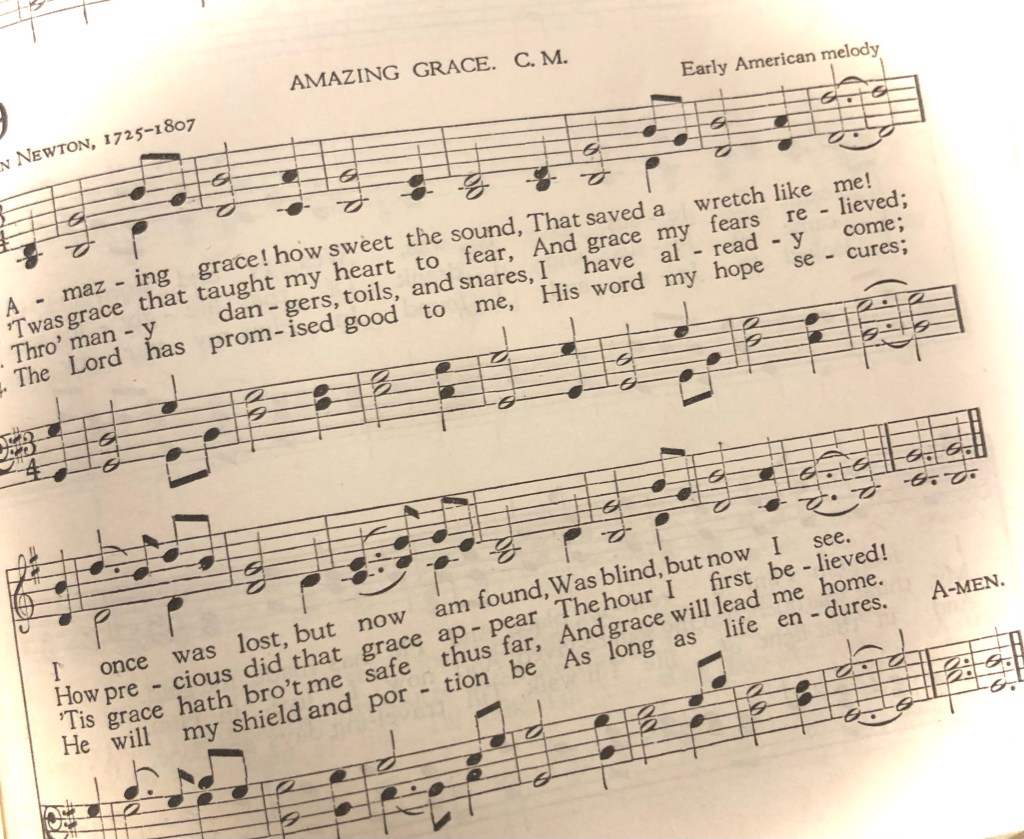
Amazing Grace, Age Three

My boy hummed the song before he knew
What it meant to weep for grace
What could he know of a shattered soul
In spite of his solemn face?

At the whiteboard he stood, making marks
Counting every beat he heard:
Adders deedle-dee, adders, adders…”
-For at three, grace needs no words

In the time of broken hearts

Heard on the news this week: Broken heart syndrome is a real thing.

It happens after significant stressors. Too much adrenaline. The heart is weakened. It hurts.

There’s a scientific name for it: takotsubo cardiomyopathy. It derives from the Japanese word for “octopus trap,” after the shape of the left ventricle of the heart in this condition.

It is temporary. The broken heart can heal in a short time, maybe days or weeks.

It can sometimes lead to complications. Rarely death, though.

It seems to affect mostly women 50 and older.

But I wonder.

I wonder, as I regularly step in for teachers who are out.

I wonder, as I absorb laments and frustration and anger about the depth of student struggles.

I wonder, as I listen to students reading poems about tasting the salt of their tears.

I wonder, when I wake up so tired on workdays, when I have so little left to give when I get home.

And I am usually one to see the glass half full, to find the awe in each day, like…

the blue heron standing a glassy pond on the drive to work

the whorls of white smoke floating up from the chimney of a little house in the countryside, struck by the rising sun and transformed into clouds of peach-colored light

the newest photo of my three-month-old granddaughter who’s beginning to smile more and more

hearing my boy play old hymns on the baby grand piano at church with such a multitude of notes and joyful liveliness that surely, surely the angels dance

the one little bird (a cardinal?) singing for all it is worth, from the treetops

-these things strengthen my heart.

And keep it, I think, from breaking.

It is a long season, this pandemic, with its deep layers of residue.

On this day of celebrating love and hearts…I wish you healing peace for the pieces.

Photo: Broken Heart Chalk 2Retta Stephenson.CC BY 2.0