The gift

I remember what you wrote but I came to find the book anyway, to read the inscription again.

I hold it in my hands and think about you for a long, long time.

You were the baby who was always smiling, the cheeriest toddler, until I had to launder your blanket. Then you leaned your head against the washer and cried.

You were the little boy in preschool who sat beside classmates on the playground when others overlooked them, excluded them. From the start you noticed the outcast, offered comfort, pulled for the underdog.

You were:

The winner of the Principal’s Leadership Award at the end of your senior year.

The college student who started teaching the men’s Sunday School class at church.

The young man who returned to high school, where your Leadership Award still hangs in the front office, to teach Social Studies. Remember how, when you were setting up your classroom, you cleaned out a cabinet and found your old history exams in that stack of papers?

The teacher who taught your students to dance the Charleston—and who taught your own brother in AP U.S. History (your Dad and I weren’t kidding when we said, “Don’t even THINK about calling us in for parent-teacher conferences”).

The soccer coach who built the program and took the team to the State playoffs for the first and only time. 

An inspiration to so many kids. Their parents still tell your father and me.

I remember it all.

Teachers don’t make a lot of money; you took an extra job at night.

I remember the call. You’d been taken to the hospital. You’d been assaulted. Emergency surgery, jaw wired shut, liquid diet for six weeks. Having to carry wire cutters if you should vomit, or you’d suffocate.

How you chose to visit that young man in prison, forgave him, became his friend.

How you adopted a rescue dog, reached a crossroads in your life, came back home, quit teaching, enrolled in seminary.

Almost immediately followed by your meeting the loveliest young woman and her little girl.

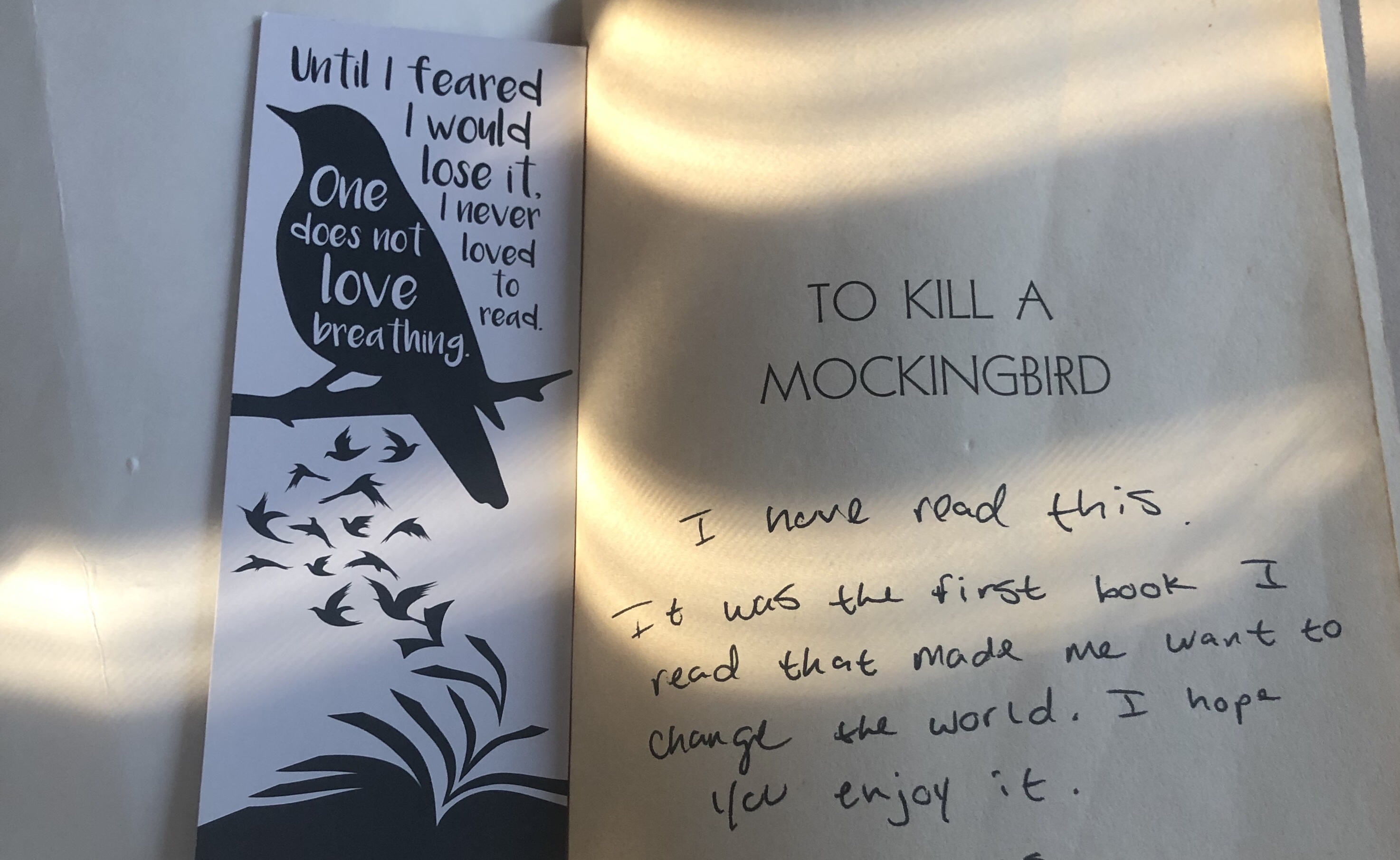
I think about all these things as setting sunlight spills through the blinds onto this book in my hands, illuminating the words you wrote to me that Christmas, years ago:

It is the first book I read that made me want to change the world.

You may not think so, but you’ve been changing the world since the day you first entered it, baby boy. One word, one breath, one heartbeat at time.

I’m quite sure you always will.

Maybe we should have named you Atticus.  

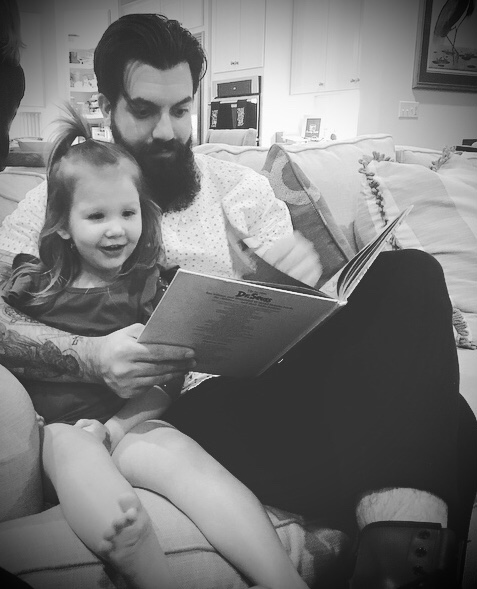
No matter, for things have a way of working out as they’re meant to. I watch you with your new loved ones. I marvel at the gift of it all, the sheer poetry of life writing itself a day at a time, in the most curious of rhythms—like how pages of a book that stirred your heart long ago should come to us, living and breathing, a young mom who loves the same book, and in a little girl named Scout, crawling into your lap for a story.

The gazebo

Gazebo at Night. Lori L. StalteriCC-BY

At first he thought he never wanted to see it again, the little gazebo on campus.

How perfect it was when he last saw it.

He couldn’t have orchestrated things better than they’d played out: the June sunlight just beginning to wane after dinner, shining in a deep, golden slant through the magnolias, the fragrance of the last blooms heavy in the air.

And her.

At last, and again, for they’d broken upon once. This time he knew it was meant to be. Side by side they sat, and he gave her the ring.

She started to cry.

“Will you marry me?”

She wiped her tears, laughed, hugged him. “Yes!”

Perfect. That one afternoon, in the whole of his life, was perfect.

In two weeks she was gone.

Not ready, she told him. They were too young.

That’s it then, he told her. Not now, not ever.  

His friends consoled him: “You ARE too young. Just enjoy life before you worry about getting tied down.”

Trouble was, he didn’t know how.

For days, all he wanted to do was sleep. He slept the rest of the summer away. He ate his way through autumn into the winter until he decided (while standing on the scales) that enough was enough.

He started walking, counting his calories. He lost seventy pounds.

He reconnected with old friends.

One asked, “Whatever happened, exactly?”

He told her all of it, just as they were driving past the campus. On the spur of the moment, he said, “I’ll even show you the gazebo where I gave her the ring.”

It was getting dark. He parked the car. They got out, walked the magnolia path. Lights in the lampposts flickered on. It was chilly; he hadn’t thought to wear a coat but he hadn’t planned on strolling to the gazebo tonight, or any night. He shivered as they stepped into the clearing . . .

The gazebo wasn’t there.

For a minute he thought he was dreaming. He looked every which way—yes, this is where it was. This is where it stood.

It’s gone!”

“Gone? How could it be gone?” asked his friend. “Are you sure this is the right place? That you haven’t made a mistake?”

“I made a mistake here, all right, but it wasn’t forgetting where the gazebo is. Was. I even used to ride my bike past it when I was little. Right here.” He scratched his head. “This is like something out of the Twilight Zone.”

His friend laughed. “Well, it’s twilight anyway. And maybe that gazebo didn’t disappear. Maybe it never existed at all, and maybe you never made that mistake because it’s been erased. It just never was.”

To this day, he hasn’t asked anyone who might know what happened to the gazebo, because, as far as he’s concerned, his friend is right.

Although he still occasionally checks, when he happens to think of it, which is less and less often.

It’s not there.

As if it never was.

*******

(True story)

Rabbit reverie

I saw the first one of the season just about a week ago, while driving along a back road on the blackest of nights. Through an infernal, eternal, cold Carolina rain, my headlight beams caught a flash of brown, a glimpse of white cottontail zigzagging like lightning off to the right.

—Rabbit.

—Spring is near.

The cheery thought sent me into a rabbit reverie.

My husband used to tell our boys when they were small that fog was really the rabbits making soup.  I immediately envisioned hundreds of tiny cast-iron pots over miniature campfires out in the woods, with rabbits meticulously stirring and stirring the steaming contents—Where’d you get this fanciful idea? I asked. My husband smiled: It’s what my father used to tell me. To this day, our sons, grown men,  look outside on a foggy day and nod sagely: “Rabbits making soup again.”

Baby rabbits hung out on our porch during the spring I was expecting the second of the two boys. The older one, seven turning eight, sat at the windows of his baby brother’s nursery-in-progress to watch them up close: Look, Mom, look! There they are! Easter bunnies!

I decorated the nursery with a Peter Rabbit theme.

The first good animal drawing that I ever did, that my first-grade classmates sincerely complimented, was of a rabbit. I didn’t tell them I’d traced it, as that seemed a totally insignificant point at the time.

I recalled my father mentioning the local radio station of his 1940s childhood, WRRF. He said it stood for We Run Rabbits Fast.

Life runs faster than rabbits, doesn’t it, Daddy. Too, too fast.

With that, all my rabbit thoughts left me as rapidly as they came.

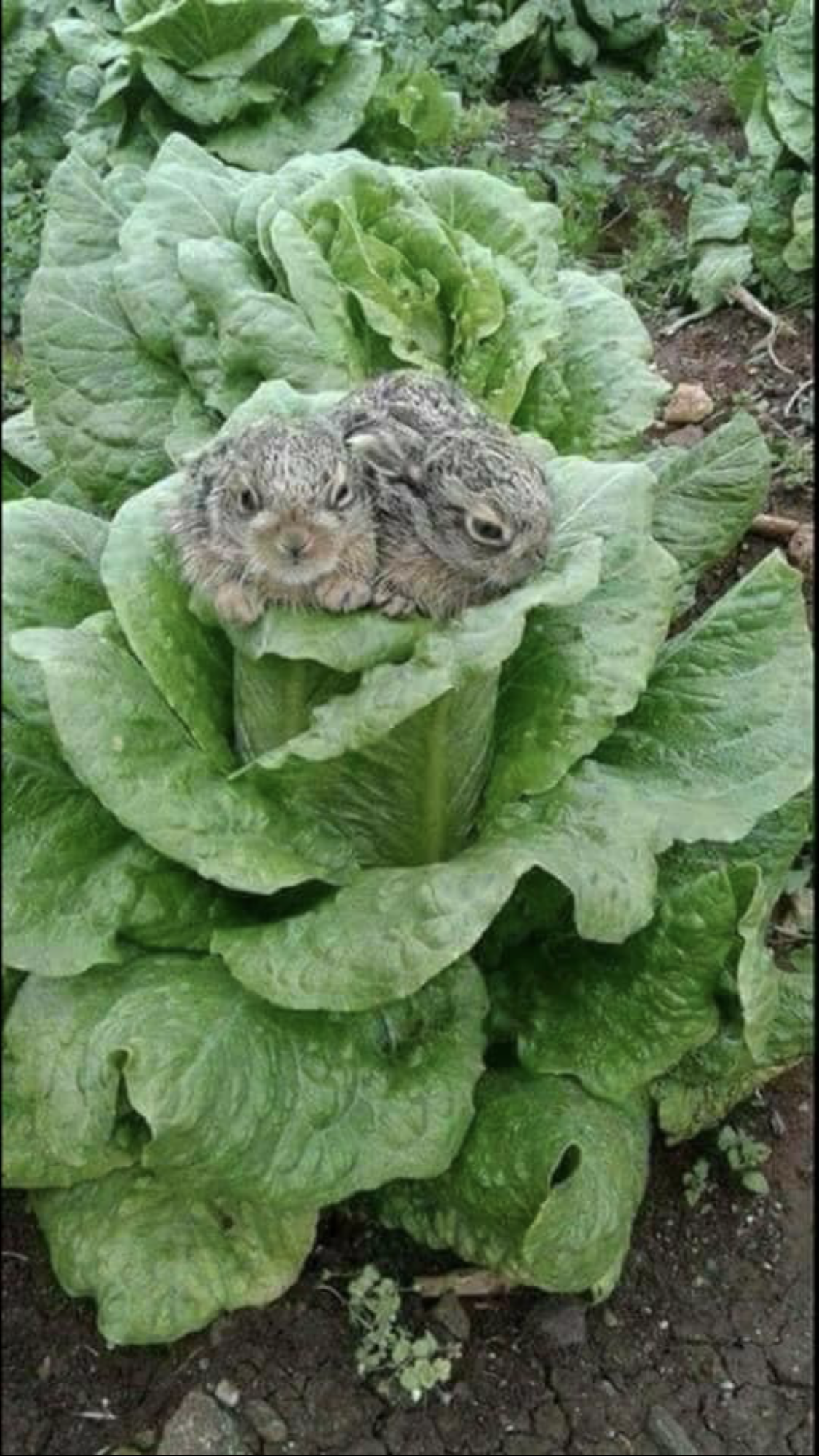
Until I promptly stumbled upon this garden photo with two baby bunnies nestled in a head of—cabbage?

So that’s what this is about. I am clearly dealing with a motif.

Okay, Bunnies, I acknowledge you, your contribution to my life, your secret culinary arts, your near-omnipresence in children’s literature, your real and mystical connections to springtime, even your voracity.

I’m grateful for you.

I’m also thankful that I don’t have a garden for you to destroy, just saying.

And I am really, really sorry that I carried around that rabbit’s foot (dyed aqua) when I was nine. It wasn’t lucky anyway; that’s the year I broke my arm . . .

Seems I’ve long since redeemed myself, little friends.

Tale of two chocolates

Last night I was privileged to have guests, one of whom is a three-year-old girl.

While seated at the dinner table, my son’s Valentine stash on the counter caught her eye.

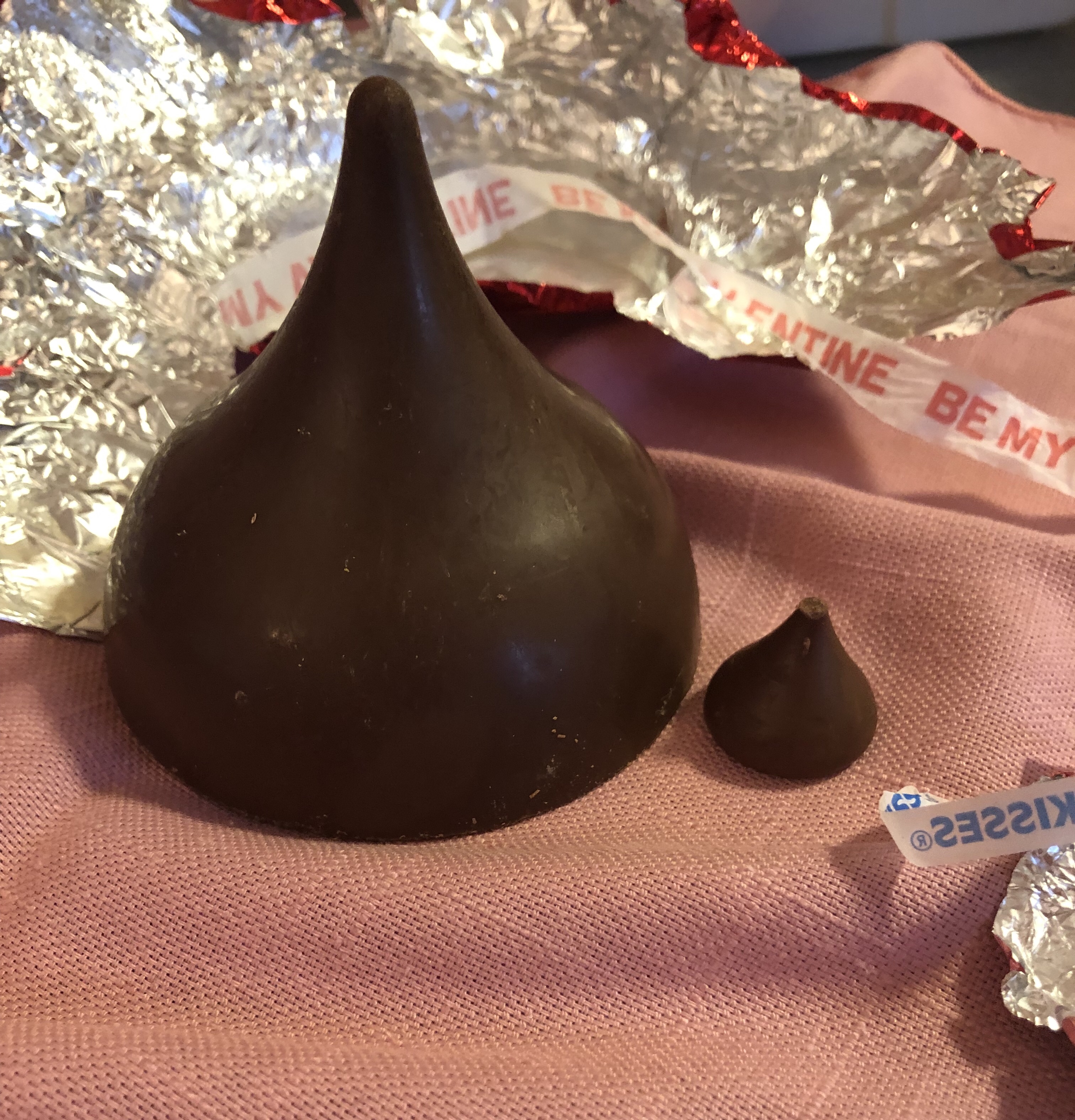
“What’s that?” she asked, pointing to a giant Hershey’s Kiss wrapped in red foil.

“Chocolate,” we told her.

“I want it!” she said.

“No, that’s too much chocolate,” said her mom.

Our little visitor looked at my husband (for support? For overruling authority?). She maintained solemn poise for a few seconds: “Mom says no.”

Then her mouth quivered and her blue eyes went watery.

Poor brave baby, I thought. Trying to accept ‘no’ is so hard.

Her mom got up and reached into the candy basket. “Wait, here’s a little one. You can have this little chocolate, okay?”

The watery eyes brightened: “A tiny one? I can have a tiny one?”

“Sure,” smiled her mom, handing over the regular-sized Kiss.

Small, chubby fingers nimbly divested this Kiss of its pink foil. But the child didn’t eat it. She studied it, then observed: “It’s a baby.”

The rest of us chuckled.

Our small visitor pointed back to the big Kiss and told my son: “I want to see it!”

“Okay,” he obliged. He got up from the table and fetched the giant chocolate.

“Open it! Open it!” demanded the girl, bouncing up and down in her chair.

Her mother looked hesitant as my son unwrapped it: “Just look—you’re not going to eat it, okay?”

As soon as the foil fell away, our little visitor’s face glowed. “It’s the mama!” She held the little Kiss up to the big Kiss: “Here’s your baby.” Wiggling the little Kiss, she said: “Hi, Mama! I missed you.”

As the rest of us dissolved in laughter, a grin spread across the child’s winsome face. She promptly ate the “baby” Kiss and went back to eating her dinner while my own thoughts enveloped me, momentarily drowning out the grown-up conversation.

The beauty, the lightning-quickness of a very small child’s mind, stirring, brimming, spilling over into a narrative with which she identifies, a defining of her world—a child, in fact, who hasn’t been verbal for very long. Easy to dismiss as a simple spur-of-the-moment burst of imagination, but in reality, it’s so much more. This is understanding at its finest, coming naturally through play, through story.

Oh, to bottle it . . . no. Never that. Oh, to open it, let it breathe, let it steep, becoming ever more potent each day, invincible against time and factors that will systematically dilute and evaporate it. Imagination, play, story, the core of who we are from our very beginning . . . the Mama Kiss.

—How we miss you.

The gesture

Pure love

Pure love. SurFerGiRL30CC-BY

Sunday morning at church. I took a seat by the aisle where sunlight poured through the stained glass window, where pale patches of pink, green, blue, and gold glimmered down the white wall.

In front of me sat a young man, a young woman, and a little girl, three years old.

The young man stretched his arm along the back of the pew, nearly but not quite embracing the young woman and child, just an easy drape of affection, of togetherness.

I could just see the top of the child’s head, two pinned-up pigtails coming loose, where his hand rested.

Then a chubby little hand crept up to pat his arm, once, twice, with all the grace of a ballerina. Two slow, deliberate, barely-discernible pats, before the dimpled hand disappeared again.

I watched, pierced by this silent message.

Maybe it was I love you. Or Thank you for being with me. Or quiet reassurance—I am fine, you are fine, we are fine together. Maybe even I’m here, you’re here, all is well with the world.

Such pureness of heart in that simple gesture. Such trust and confidence, such peace. How naturally it comes to a child, reaching out to someone else in benevolence, faith, and belonging.

And I mourned the incremental loss of it as we grow older, that it should fade like the colored patches of stained-glass light against the wall, that clarity of purpose should be obscured even as we accrue the words and language to better communicate our thoughts and feelings, that we should have to think twice about reaching out, or being the first to do so.

Two gentle pats, in them contained the original order and design of things, that together is the best place to be, that we are here for one another.

And so the children remind us.

The star

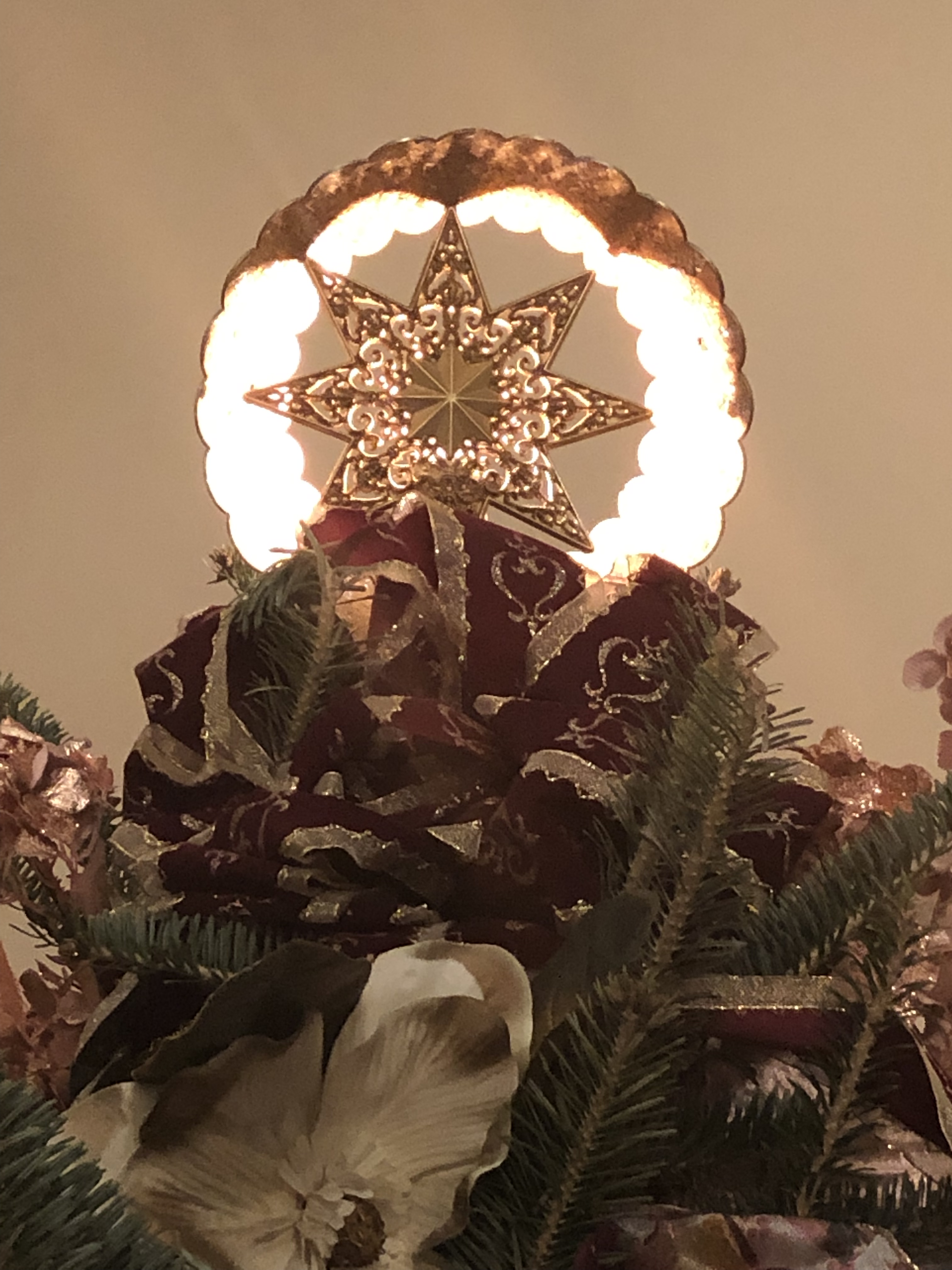
The first Christmas that we were married, my husband and I bought a star tree topper at a drugstore.

That was over thirty years ago.

The star was silver then.

Eventually I sprayed it gold so it would better match ornaments on the tree.

Every year I have to reinforce it with hot glue and duct tape. And every year I say it’s time for this old star to go.

But it still shines.

And I can’t find another tree topper I like better.

It’s older than our children. It’s presided over Christmas for their entire lives.

It’s outlasted the gingerbread ornament that my youngest made in preschool. The sweet ornament crumbled after a decade or so—ashes to ashes, dust to dust, gingerbread to cinnamon and cloves. Spice of life, formless and void, fragrant fragments in my hand when just the Christmas before, it was whole.

The star shone on when other lights went out, one by one. Lights in my life, not those of man-made strings on the tree. This star glowed above me as I decorated, year after passing year, listening to a particularly poignant version of Jesu, Joy of Man’s Desiring that pierced my soul. The haunting chords stirred an almost unbearable sense of loss. Of time, of people, of the inevitability of it all. For a moment, though, under that star, somewhere in the music, in the light, in the season, those who loved me were near again. Not visible, not tangible, yet present, perceptible. Very near.

It stands within its own circle, this star. I think of all that might symbolize. The circle of life. May the circle be unbroken. A wedding band, a halo, a covenant. Wholeness, holiness.

It is fragile.

It is old.

But the star hangs on. It still shines.

With Christmas grace.

Today


Bubble in reeds

Today … a bubble in the reeds. Claudia DeaCC BY

Today held some rare things.

A teacher said, “Come sit with me while I do my reading groups. I don’t learn by watching but by doing.  Just be there with me and jump in when you see a way I can make them better.”

A third-grader read me his rough draft about experiencing an eclipse, relating his understanding of the science behind it, yet conveying real fear at watching the sun go dark. I sat, listening, in awe of his inspiration, his words.

Another third-grader read her narrative draft to me. How she helps her grandmother to dress and brush her teeth, but not wanting to, wanting instead to go outside and play or watch TV . . . . I sat blinking back tears as she spoke her truths recorded there on the page. She has no idea how powerful this is. How powerful she is. And she’s eight.

I walked down an empty hallway and suddenly heard song—a student coming up the stairs, walking back to class, singing to herself in a vibrato that almost sounded trained. I turned around to see her moving her arms and hands in time with the words. Sign language. I didn’t know she could sing. Or sign.

Had I somehow fallen into a parallel universe, a facet of paradise, maybe, where beauty is multiplied exponentially? Somewhere over the rainbow?

But no, these were only moments in a regular day. Wondrous bubbles against the usual backdrop. Shining, ethereal, iridescent.

And all I really did was show up and listen.

Thank you, Brian Wilson

img_0617

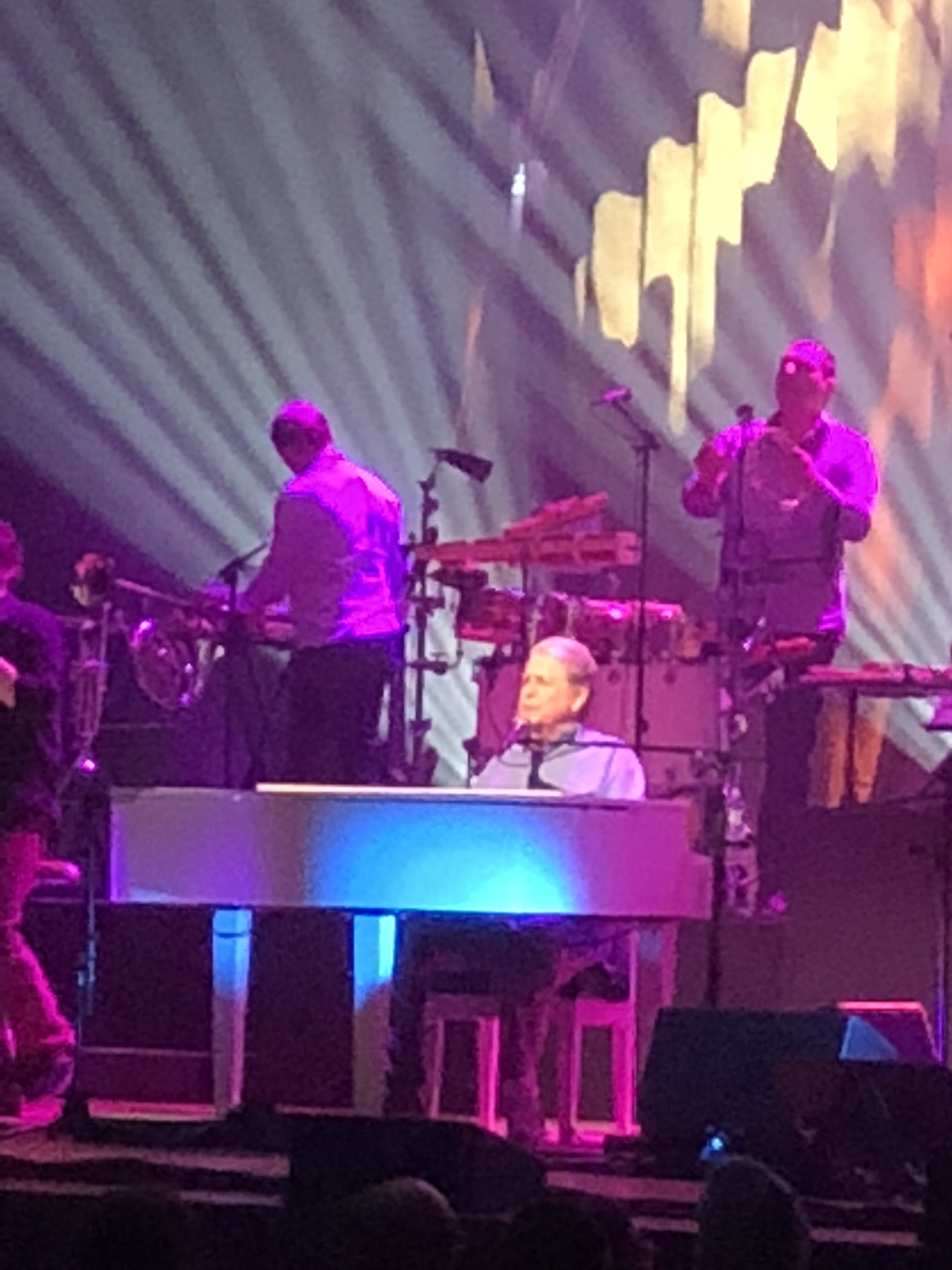
Brian Wilson sings his favorite song from Pet Sounds, “God Only Knows.” 11/02/2018. Richmond, VA.

If setting is everything, then tonight is mystical.

To begin with, the November evening is balmy. Few people in the crowd gathering on the sidewalk are wearing jackets. There’s quiet anticipation in the air, in the murmur of voices. It’s supposed to be raining but the sky above the city is dry, shimmering like a thick swath of navy blue velvet.

The sense of wonder deepens upon entering the auditorium. I’ve never been inside the Carpenter Theater in Richmond before and am unprepared for the splendor of it. Gilded walls, pillars wrapped in vines, balconies adorned with Roman statues, backlit alcoves with busts—it’s like stepping out of a time machine into Old World fantasyland. Overhead, white clouds frame the stage front against the dark auditorium sky —ceiling, I mean—where dozens of man-made stars sparkle an ethereal welcome.

The writer in me searches for words:

breathtaking 

otherworldly

adventure

expectancy

Apropos, I think, for our temporary raison d’etre: My family is here for the Brian Wilson Pet Sounds concert.

Primarily because the younger of my two sons (Cadillac Man), at twenty-one, avows Brian as the artist he most admires. He strives to emulate him in his own music. He studies how Brian deconstructed songs and what he did with vocals and chord progressions, complex, innovative stuff fifty-two years ago when Pet Sounds was released and still the stuff of legend, of music history. My son researches the Beach Boys and tells me things I never knew about their origins, talents, trials, and tragedies. He identifies with Brian on multiple levels—they both have a penchant for Cadillacs, both of their fathers lost their left eyes—but mostly my son relates to Brian’s musical thought and language. Cadillac Man confesses that he couldn’t concentrate on what his first grade teacher was saying in class years ago because “Sloop John B” was playing in his own head. This explains a few things about his childhood academics  . . . nevertheless, that this incident occurred nearly four decades after the release of Pet Sounds speaks to the timelessness of Brian’s work.

So we’re here to see an icon tonight. A glimpse of the extraordinary.

For me it’s not just the music, although I’ve always loved it, too.

It’s the story.

A boy deaf in one ear, teaching his younger brothers the harmonies he heard in his head, singing together in their bedroom at night. An athlete who once wrote in a high school essay: “I don’t want to settle with a mediocre life, but make a name for myself in my life’s work, which I hope will be music. The satisfaction of a place in this world seems well worth a sincere effort to me” (I Am Brian Wilson: A Memoir, 2016).

A name for himself, a place in this world, and a life that’s anything but mediocre . . .  I think about these things as the crowd greets him with a standing ovation. Brian is helped onstage, having had back surgery earlier this year. He wears a brace on one leg. His escorts seat him at a white piano, center stage, where his silvery hair glows in the spotlight.

I look at him and think about time. How quickly life passes. I think about the strange, sad, haunting truth of great gifts so often coming with equally great physical or mental afflictions attached, as if that’s part of the deal. We all have our demons. The ones that chase us, the ones that we chase. Brian’s battles are well-known. The most wondrous thing to me this night is that he’s still here, despite all, the only one of the Wilson brothers to reach old age, a survivor of so much. Still performing, sharing his profound gift.

He speaks just a little throughout the show. I wonder how he feels, what he thinks. At seventy-six, does he enjoy touring now? He wasn’t able to for years when he was young. Does anxiety still threaten to crush him? Is he in much physical pain?

If the answers are yes, then he’s mastered these demons. For the sake of the music, for others.

Brian sings his brother Carl’s solo in “God Only Knows” as stage lights come to rest on him like splintered sunbeams. God rays. I recall the clip of his speech for the Beach Boys’ Rock and Roll Hall Fame induction, in which he said that “music is God’s voice” and that he only ever wanted to create joyful music to make people happy.

He does just that, even now. At the end of the concert, this orderly, respectful crowd—comprised of multiple generations—is on its feet dancing to the old favorite songs. It’s a celebration of life, love, being young—whether now or long ago—and the creative power of humanity overcoming the terrible weight of being human. I think of these things as the audience thunders its applause, as Brian’s escorts return for him, as he’s carefully ushered away.

I wonder what it costs him, these moments of joy for other people. And marvel that he still has it in him to give.

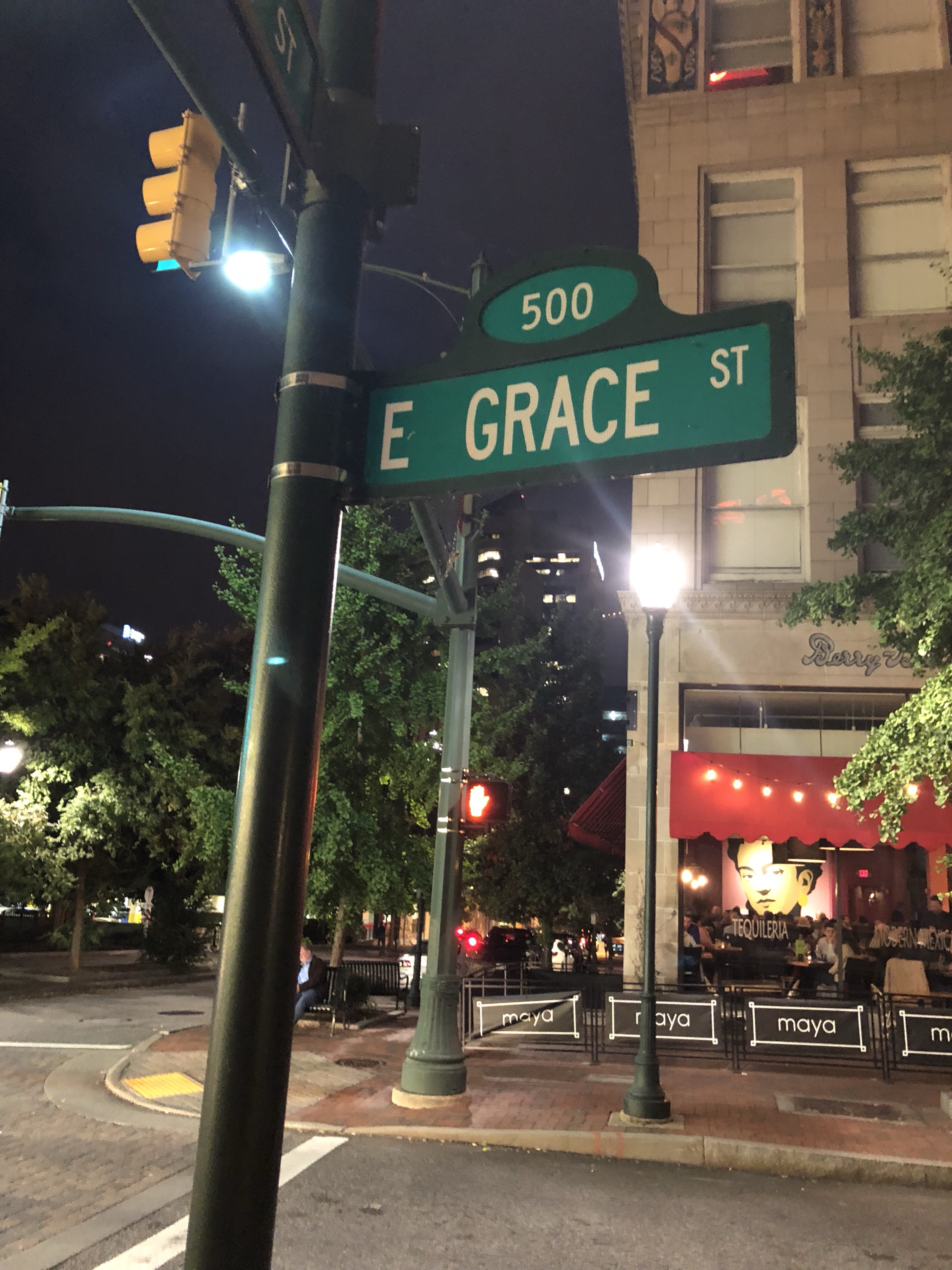
I leave the theater mentally wishing Brian peace in the days and years remaining to him and to his loved ones. I hope he can keep doing this for as long as he wants. I ponder the curious nature of gifts and how they’re so clearly bestowed on certain mortals. Maybe the Roman auditorium put me in mind of the Muses. There’s a word for the strength to overcome, to relentlessly pursue and attain the beautiful, despite unfathomable suffering, the Herculean feat of living. I can’t quite think of what it is. Overhead, the real stars glitter at random through an indiscernible cloud cover. The night is soft, quiet. And then—there it is. The word. I am not sure what Brian would say, but to me, the street sign says it all:
*******

I must also mention the timeless charisma of Al Jardine in this performance. He carried much of it while seeming to enjoy every moment. As did Blondie Chaplin, with absolute showmanship. All in all, the instrumentalists and vocalists paid exemplary homage to the music, which sounded unbelievably rich and true performed live. 
 

After

On a mission through the school’s main hall

a casual glance through the glass wall

fresh mulch, a sea of woody brown

a few dead leaves scattered round

—Fall.

It registers after I pass

something else beyond the glass

something crumpled on the woody bed

a conspicuous spot of red.

I turn around. 

A bird, lying on the ground

flat on its back

speckled white and black

white claws curled, scarlet head.

Little woodpecker. Dead.

Flew into the glass wall, it’s clear

from the way it’s lying here.

A broken neck, I think

but then, then—I see it blink.

What comfort can I give?

Is it even going to live?

I mustn’t touch it, must let it be

I won’t have it die for fear of me.

The hall’s deserted, what to do

people are waiting for me, too

—I’ll hurry. I can never atone

for letting it die alone.

On my hasty return, a wondrous sight

the woodpecker, sitting upright

scarcely moving, still dazed.

I am amazed.

It opens one eye, tests its beak

assessing the damage wreaked

turns that stunning head

of breathtaking red.

I silently celebrate

as I watch and pray and wait

for that one eye remaining shut

to be all right, to open, to see—but

the instant it does, without warning

with a flurry of wings, off in the morning

he goes. I didn’t see him fall

from my side of this glass wall.

I’m just here, rejoicing, for his open eyes

his reclaimed strength, his reclaimed skies.

My heart goes with him, as he flies

—I saw him rise.

Just before he took flight again. A woodpecker happens to symbolize communication, opportunity, and awareness. How grateful I am to have seen him, to have witnessed his overcoming.

A fine mess

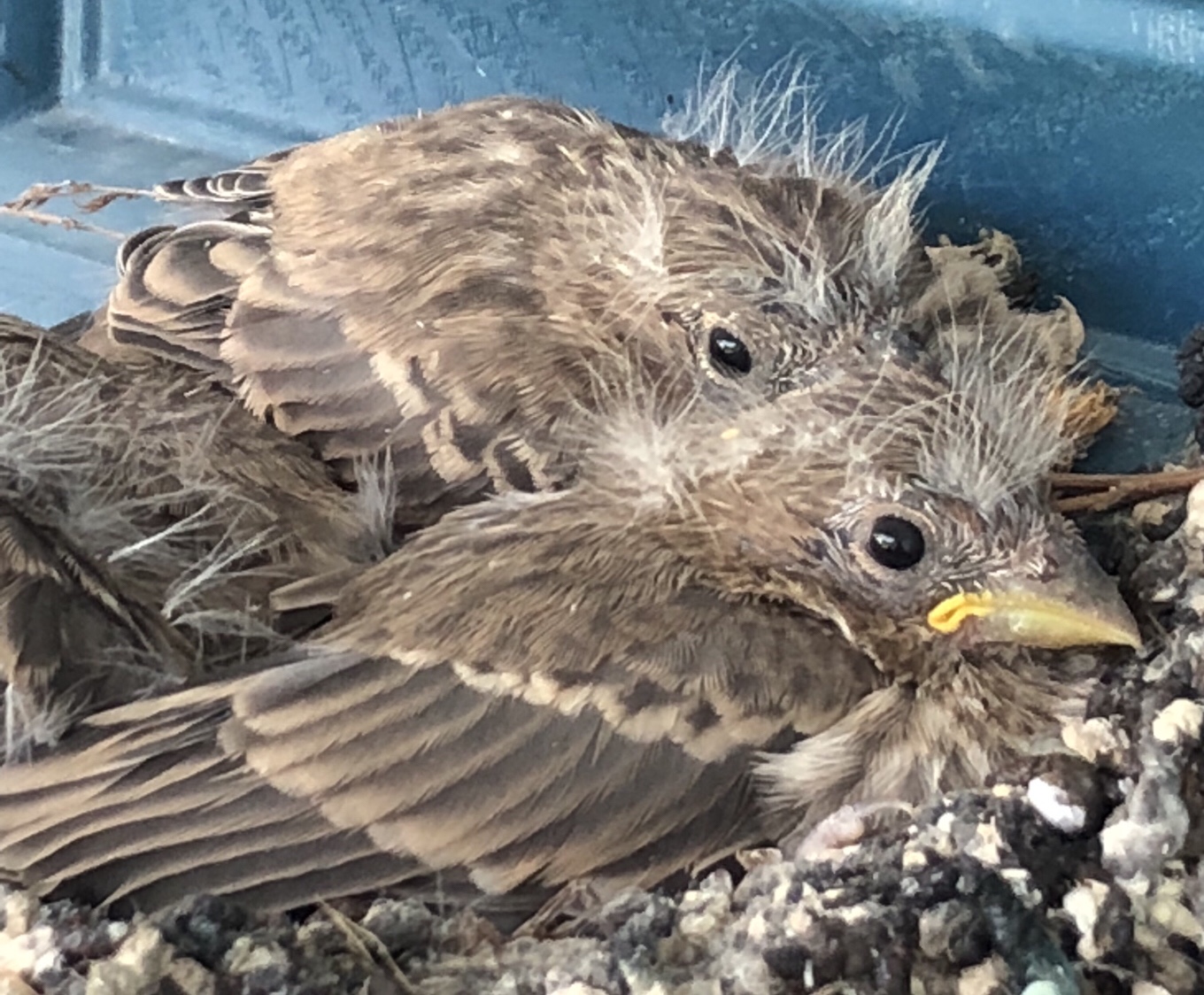
After being away on vacation all last week, my first order of business on returning home was to check on the four baby house finches that hatched in the wreath on my front door. I’d been chronicling their development daily, so I knew many changes would occur in my absence.

Here is what I discovered:

1) The babies are now well-feathered; their skin-head mohawks have become mere wisps upon their downy crowns.

2) Two of the babies can fly. They sailed out of the nest this morning as I approached. The other two stayed put, their bright little eyes regarding me with a mixture of curiosity and apprehension.

3) Their nest is one spectacular conglomeration of droppings.

To be fair, the droppings are only around the rim; the mother collects them there. What a job, building a wall of excrement. Worse than diapers. When I first wrote of the perfect, flower-graced nest, the pale blue eggs, the hatching of the tiny pink nestlings, I concentrated on the beauty and wonder of life. I pointed out that the collective noun for a group of finches is a charm.

And charmed I was.

There is nothing charming about that nest now.

The fledglings themselves, of course, are enchanting. They’ll soon be gone, the circle of life will go on, and all that will remain of these magical moments is a monumental mess.

But that’s the story of life. It’s messy. It can’t be comprised solely of breathtaking beauty and newness; if it were, we could not recognize these moments for what they are. They’d lose their value. Only when contrasted with ugliness, hardships, and pain can we see and cherish the beautiful when it comes. We inevitably deal with messes, some that occur naturally, some created by others, some of our own making. Therein lie all the stories . . .

Which makes me think of writing. This nest is a tangible (although I do not wish to touch it) reminder of these commonalities:

-Life is messy.

-Writing is messy.

-Thinking is messy.

-Teaching is messy.

To do any of these well, we have to be willing to accept and even embrace the messiness. We must certainly persevere through it to arrive at the beautiful. It takes courage, stamina, and a lot of hard work, to write well, to think well, to teach well, to live well.

The strength to do so, I believe, lies in believing that the beautiful will come. It’s all a matter of trust, of faith. And pressing on.

Although I was appalled by the quantity of accumulated—um, bird-doo—around the nest, I was also amazed that two of my four little finches could fly. Last night they couldn’t; today they can. Tomorrow the others might.

This is a message to me about readiness.

Everyone arrives as a writer, a thinker, a teacher, a good practitioner of life, in their own time. Lots of messes will be made along the way. Sorting this out is what grows us. One by one, as children, as adults, as long as we live, we are continually growing the necessary wings to fly beyond where we are. And it’s truly a collective, collaborative growth; we are to nudge each other when needed, but not too hard, too soon. We’re not to hold back, to hold one another back, simply because we cannot see all that lies ahead and for fear of navigating the unknown. Knowledge comes by trying. By experiencing. By taking risks. There’s an implicit difference between throwing caution to the wind and taking a leap of faith, that being potential self-destruction versus healthy maturation. These finches know. As the day wears on, I watch the two fledglings that can fly going back and forth from the eaves to the nest, coaching their other two siblings on how to do it. See see see, I hear them cheeping. A bit at a time, a bit at a time. At any moment, those last two are going to get up on that nasty, messy rim and let go.

In more ways than one . . . .

So you make a mess. So what? So you’re alive and growing.

Tomorrow you stretch your newest feathers and find you can move on.

To where the beautiful awaits.