“At a feeder, a hummingbird extrudes and withdraws its tongue thirteen times a second. Hummingbirds do not sip nectar; they lap it. The tongue is forked, like a snake’s, with absorbent fringes along the edge of each fork…The tongue is so long that, when retracted, it extends back to the rear of the skull and then curls around to lie on top of the skull.”
—Sy Montgomery, The Hummingbirds’ Gift: Wonder, Beauty, and Renewal on Wings
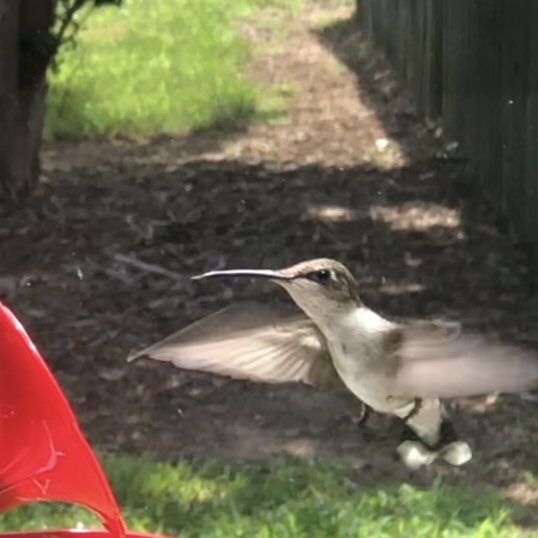
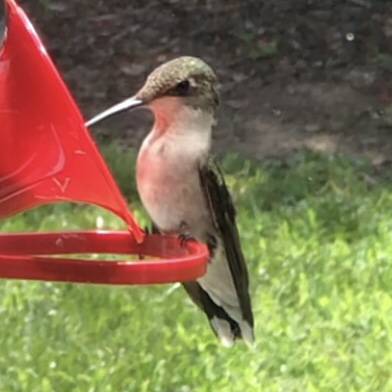
Tongue of hummingbird outside my window.
The only way I can get such a photo is by videoing and going back, frame by frame, to select a still shot.
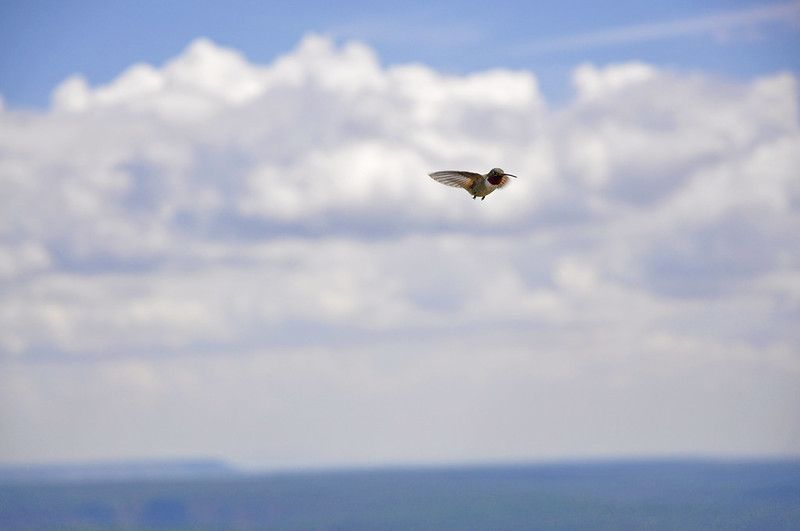
Utterly mesmerizing, these tiny creatures and the way they are designed. They have the largest brain and heart of any bird in relation to its size, plus a skullful of tongue.
Let’s not forget that the little emotions are the great captains of our lives and we obey them without realizing it. – Vincent van Gogh
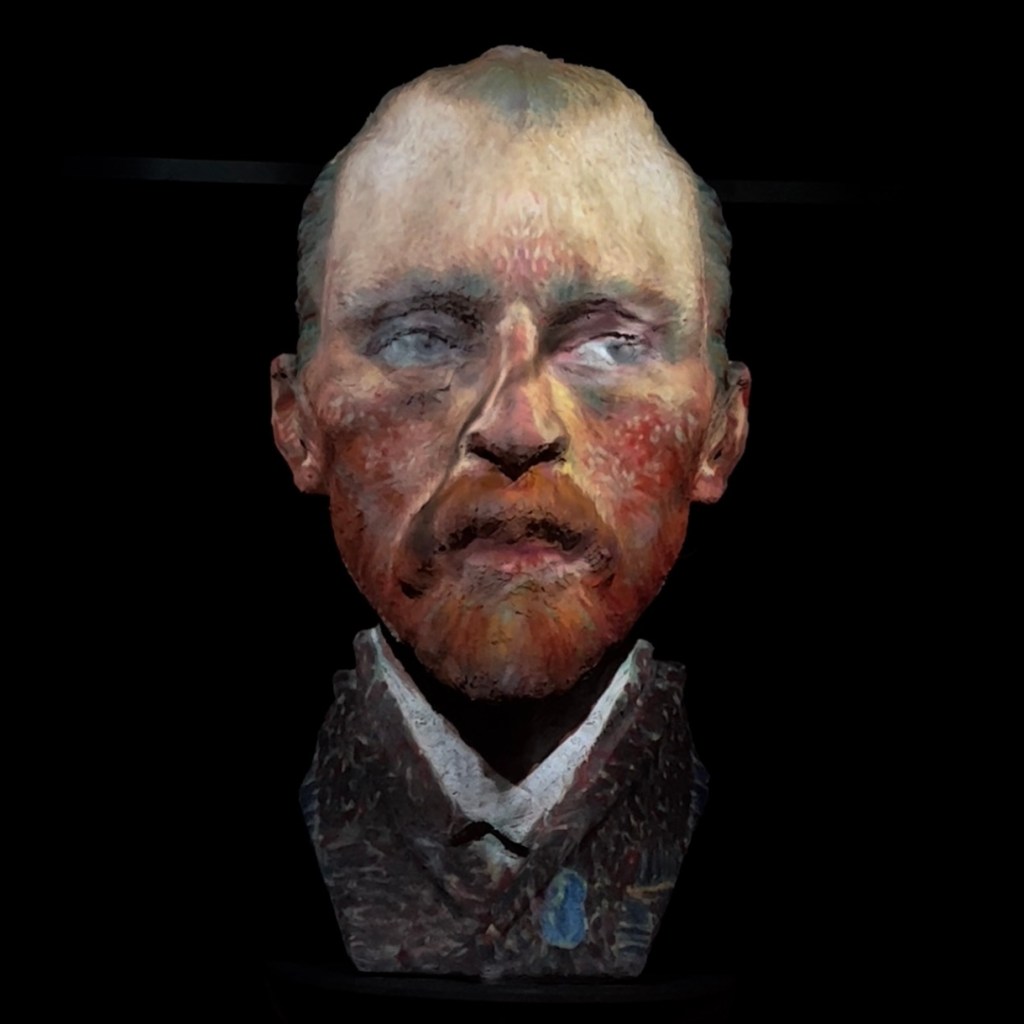
3D bust of the artist with light and shadows playing across his face
I spent a short while immersed in the world of Van Gogh (visiting Van Gogh: The Immersive Experience) and what I come away with is profound sense of contrasts…
-glories of nature against dark anguish of the human soul -wholesome serenity of pastoral life against psychosis and extreme loneliness -wonder at scientific evidence that a man who used so much color so brilliantly was likely color-blind
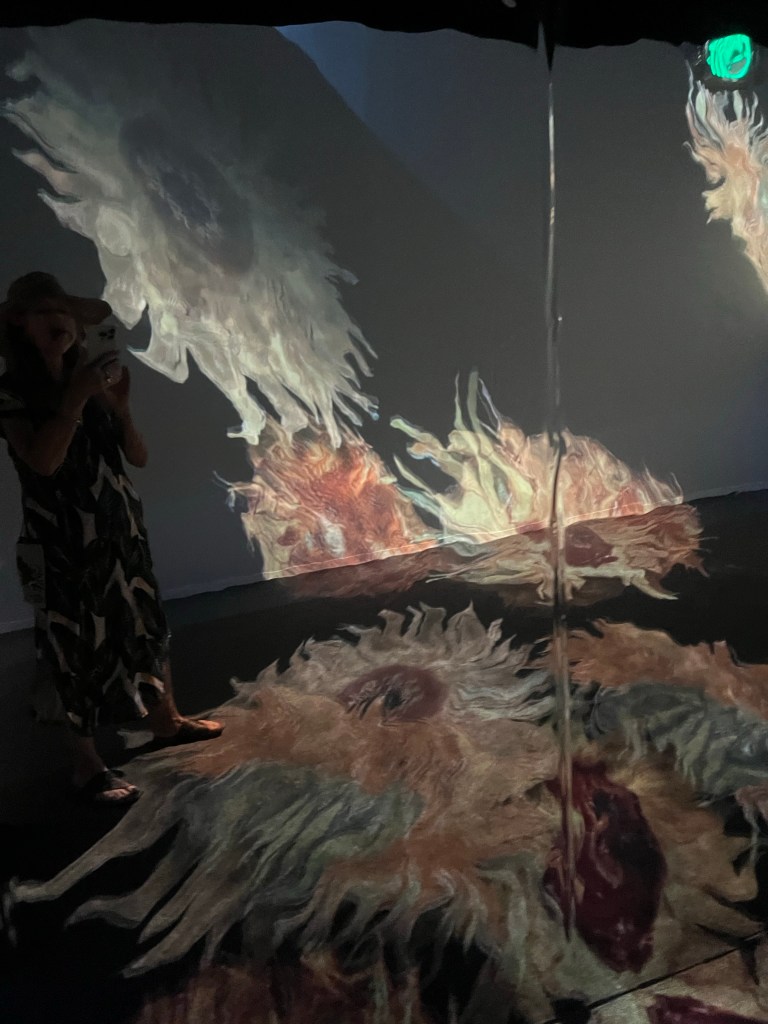
I stood in a dark room illuminated by his swirling sunflowers, floating bursts of fiery light. This is the flower most associated with happiness; the tortured artist loved them. His doctor-friend planted them on his grave.
I took a virtual journey from the bedroom at Arles past the bright wheatfields where crows lazily took flight, through the peaceful woods (Van Gogh loved long walks in the woods) into the village where fireflies danced around lampposts, to the riverside of the Rhone, where the stars gleamed above… the journey ended with rising into the stars and landing back in the bedroom at Arles where the floor, walls, bed, stand with pitcher and basin, straw hat, and strewn paint supplies materialized around me. I know Van Gogh’s famous quote about painting his dream but the quote that lingers is this: Let’s not forget that the little emotions are the great captains of our lives and we obey them without realizing it.
You are so right, Vincent. So right.
And so we paint our lives.
Immersed in swirling sunflowers
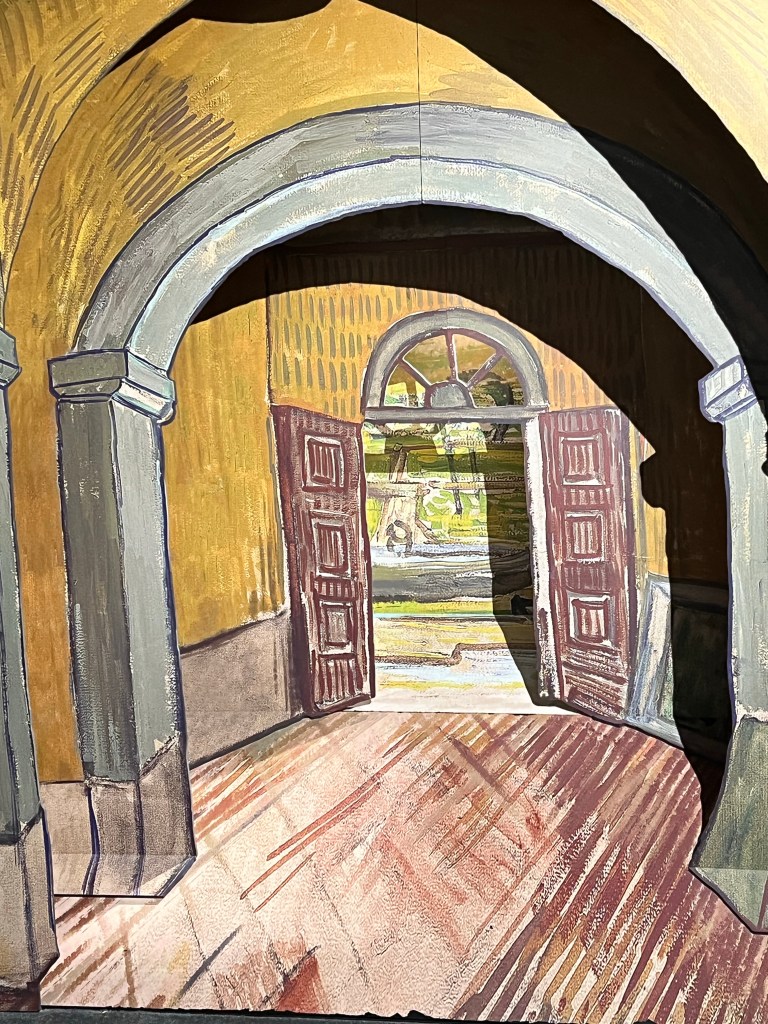
3D rendering of “The Vestibule,” in the Saint Paul De Mausole Asylum
Short clip: Scenes of Van Gogh’s self-portraits set to music
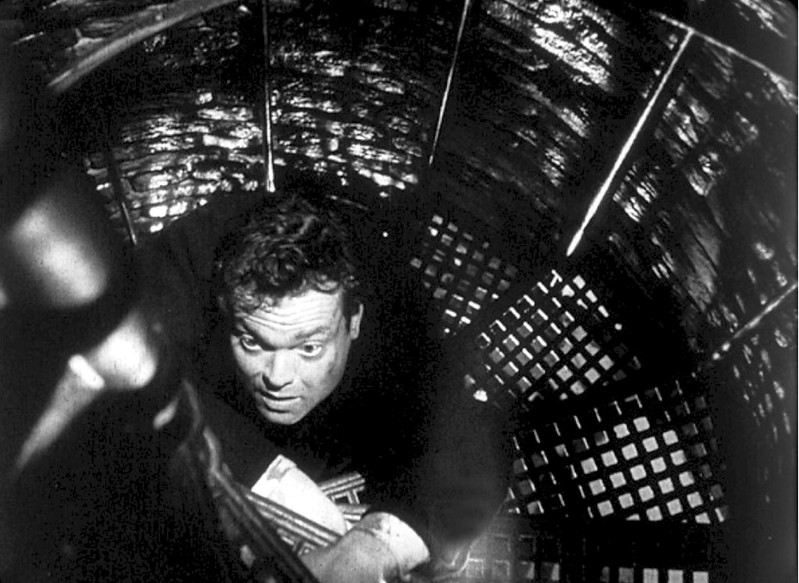
I’ve loved old movies since childhood but haven’t seen many of Orson Welles’ beyondCitizen KaneandThe Magnificent Ambersons. Got caught up in watching The Stranger, The Third Man, andThe Lady from Shanghai... I guess you could say I fell under Welles’ deep, dark spell. A magical respite from the sweltering, suffocating August day.
gogyoshi: a Japanese poem with a title and five lines
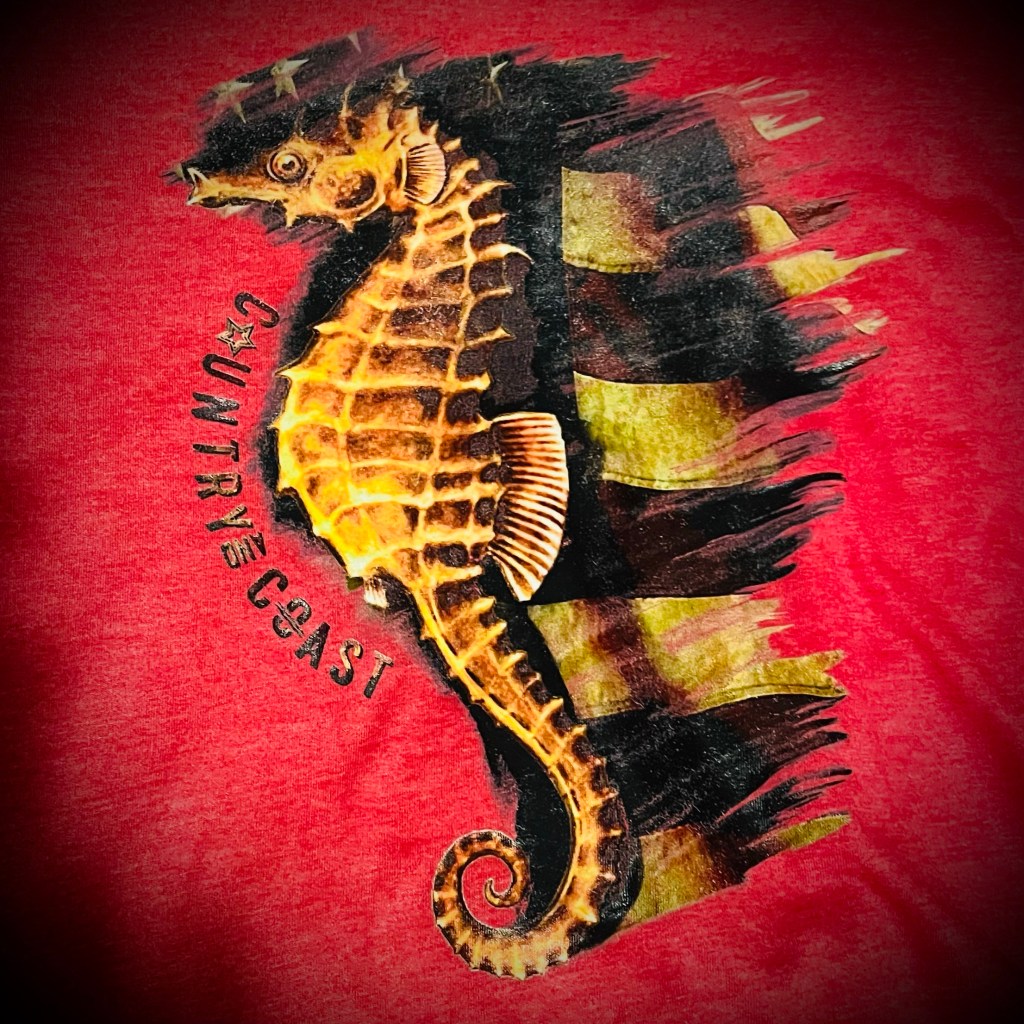
The Curious Connection of Seahorses and Hummingbirds (Two of My Favorite Creatures)
One is the slowest creature in the sea the other, the most agile in the air. One armor-plated, one gorgeously plumed; what could they possibly have in common? Fins and wings beating at the same speed.
Just a snippet of my current reading, if your weary heart needs a lift today:
“One autumn, a ruby-throat, on its lonely, five-hundred-mile migration—a journey across the gulf of Mexico, which can demand twenty-one hours of nonstops flight—landed, spent, on a drilling platform on the Mississippi coast. The oil company dispatched a helicopter to fly it to shore. The hummingbird spent the winter in a gardener’s greenhouse, then left, fat and healthy, on its spring migration.”
—Sy Montgomery, The Hummingbirds’ Gift: Wonder, Beauty, and Renewal on Wings
Cannot help thinking that sometimes we are the hummingbird at the end of our strength; sometimes we are the oil company with mighty means of helping another living creature…if we but see.
A friend who knows my affinity for the natural world gave me The Book of Hope: A Survival Guide for Trying Times. It’s written as a conversation between Jane Goodall and her interviewer, Douglas Abrams. When I say it’s part of my current “light reading” I don’t mean easy (although it is) or frivolous (for it is not).
I mean light as in candleglow dancing on the walls of a dark room.
I’ve not gotten far yet but here are some lines that draw me in the first couple of chapters—flickerings of my own credo:
Hope is a survival trait.
The naturalist looks for the wonder of nature – she listens to the voice of nature and learns from it as she tries to understand it.
Hope does not deny all the difficulty and all the danger that exists, but is not stopped by them. There’s a lot of darkness, but our actions create the light.
And this from an Inuit elder, on confronting and healing our grief, which can manifest itself in the body as physical pain: Make space for grief…find awe and joy in every day.
—these, I believe. They are often the very reason why I write.
Recipe for Survival
Hold onto hope, and it will hold you Open the ears, eyes, arms of your spirit Perceive the call of awe, all around Embrace it. Let the healing begin.
July morning before the dawn I step outside with the dog
night clings like a heavy curtain silhouetting trees against indigo sky
waning gibbous moon gleaming bright bathing the earth in silversoft light
that’s what draws me the ethereal glow and a strange star above the moon
the dog is here on practical business trotting out in the yard obediently —he is not mine but he loves me so he lived here not so long ago; he belongs to my son away on vacation—
the dog is like the morning velvet charcoal silent peaceable watchful I can barely glimpse the glow of his white breast out in the darkness
a whippoorwhill calls from the pines while I try to discern what star that is so bright above the moon
—Jupiter king of the planets and there in the east Mars, glittering red
the ancients could read their preordained ritual but I, in the silverdark Now, cannot
—a loud animal cry shatters the stillness
No! I know without knowing
—here comes the dog shy and humble creature who’s not really supposed to run on his congenitally malformed frail back legs
here he comes, running as hard as he can through the shadows charcoal in charcoal soft shape in his mouth
No! No!
how is it that this most benevolent creature who’s never done another harm, never should be ceremoniously dropping a rabbit at my feet
no, no, I cry horror and awe intermingled at the unnecessary death that he can even catch a rabbit
—incongruous, how Elvis starts singing in my brain as if this act is the sole measure of a dog’s worth
for here stands The Dog magically transformed from meek pet to mighty hunter bringing the solitary catch of his life to me
a blood offering under the waning gibbous moon beneath the winking planet-king
oh beautiful dog oh beautiful rabbit
I am sorry.
I could never be a god.
July morning. Jupiter above the waning gibbous moon.
This week I read that you can tell how long it’s been since a field has been reclaimed by forest. If the forest has a lot of pines, maybe twenty years. If there are more hardwoods than pines, maybe forty years.
We own a tiny of patch woods behind our house. Beyond that is a field (not ours). Once upon a time, this was all field, and long before that, all forest.
I cannot recall what these trees looked like when our house was new, twenty years ago. I can see we have quite a few hardwoods now in our tiny bit of forest.
This week one of our pines toppled in a wind gust preceding a thunderstorm. The trunk’s resting partly on the fence (which is holding up, surprisingly). On the other side, the treetop is a shattered, mangled mess. My plant identifier app tells me it’s a loblolly pine with Crown Gall caused by bacterial infection. It must have been slowly starving for water or nutrients. The extent of its brokenness there on the grass makes me wonder how much the tree suffered and if others of its species tried to help or not (trees do this for one another).
At any rate, it’s gone. A fat sand-colored dove lands on the fence to survey the damage also. Maybe it is simply paying respects.
There is nothing I can do. The fallen tree will have to be cleaned up. I imagine the confusion of rabbits, the next time they come out to nibble clover and find this mess. I turn to go back to the house, whereupon I discover a curiously bright and fresh plant quite to itself where the pinestraw ends and grass begins.
Sweetgum. A baby hardwood. Encroaching toward the middle of the yard.
I look at back at the grown sweetgums waving their starry leaves from among the cedars and pines. I imagine the mother tossing her seeds as far she could (not very far, only a few feet; maybe birds or animals helped but the wind apparently didn’t, not much).
Still. Cannot help thinking about that reading I’ve just been doing…as in, this cheery neon-green baby being a strategic move in the decades-long hardwood takeover and that sick pine, an occupational casualty.
I wonder what the trees tell one another, what old secrets live deep in the understory.
I wonder what the dove knows, and the wind, as it blows.
Something of belonging and primeval balance, surely.
with thanks to Chris Margocs for the “Be still” invitation and to Margaret Simon for the “Presence” offering on behalf of our Spiritual Journey writer’s group on this first Thursday in July
Back in March of 2020, four days into COVID-19 lockdown, I wrote a post entitled Be still. It was based on Psalm 46:10, a verse with special significance to me since I was about thirteen, when a youth group leader gave me a little decorative plaque bearing the first line: Be still and know that I am God. The plaque hung on the wall of my bedroom throughout my tumultuous teenage years until I married and left home at twenty. I had no inkling, then, that my young husband would go into the ministry two years later or that we would eventually have two sons, the older of whom would become a pastor and the younger, a music minister and worship leader.
Throughout the decades I’ve received numerous gifts which have borne those words: Be still and know that I am God. The verse keeps returning to me. A few weeks ago my Sunday School co-teacher brought a handful of cards printed with Bible verses, held them out to the class facedown, and had each of us draw one. I drew Psalm 46:10. Be still and know that I am God.
I could write a lot about those eight words, having to do with trusting God in times of trouble and God’s unfailing faithfulness. Overcoming fear and despair. Carving out time away from the demands, vitriol, and horrors of the world. Finding peace in the rhythms of nature surrounding my home in the countryside (I have written a lot about that, actually).
But those eight words are only the opening line.
“Be still and know that I am God. I will be exalted among the nations, I will be exalted in the earth!” —Psalm 46:10 (ESV)
The verse is a call to be in awe of the power of God, to be a people who carry forth the message of godly peace to the world, by which wars will cease (v. 9), and by which God will be exalted. It is a declarative, definitive statement. On the part of God: It shall be. On the part of humanity: Be awed.
Awe has been my guiding word for the past two years. It is likely to remain so as long as I live. In the context of inherent awe and Psalm 46:10, words of the song “Above All” by Michael J. Smith come to mind:
Above all powers, above all kings Above all nature and all created things Above all wisdom and all the ways of man You were here before the world began
Above all kingdoms, above all thrones Above all wonders the world has ever known Above all wealth and treasures of the Earth There’s no way to measure what You’re worth…
Be still and know…God is above all.
My theologian son is studying the work of Eugene Peterson (1932-2018), minister, author, poet, and Professor of Spiritual Theology, Regent College, Vancouver. We have recently been discussing The Message: The Bible in Contemporary Language, Peterson’s idiomatic paraphrase of Scriptures, apparently written out of frustration with people not reading their Bibles.
Here’s Peterson’s paraphrase of Psalm 46:10:
“Step out of the traffic! Take a long, loving look at me, your High God, above politics, above everything.”
I cannot think of a more timely message.
I return now to the original Be still post I wrote on March 17, 2020, during the early days of the pandemic. We thought school would be closed for two weeks. We had no idea of all that lay ahead. Extended isolation. Loss. Rampant fear. Exacerbated discord. Death, violence, rage, destruction. War. Rising inflation.
Consider the verses immediately preceding Psalm 46:10, from the ESV translation:
The nations rage, the kingdoms totter; he utters his voice, the earth melts. The Lord of Hosts is with us; the God of Jacob is our fortress. Selah (6-7).
And then we are told Be still and know that I am God.
Who is above all.
I thought about linking Smith’s song here. Psalm 46 is, after all, a hymn.
I am linking another song instead, one of my longtime favorites for its plaintive beauty and quiet, meditative message—a little rest stop for the soul on the arduous spiritual journey through life in this world that God, incomprehensibly, still loves.




 lit bits and pieces