Life’s a cupcake

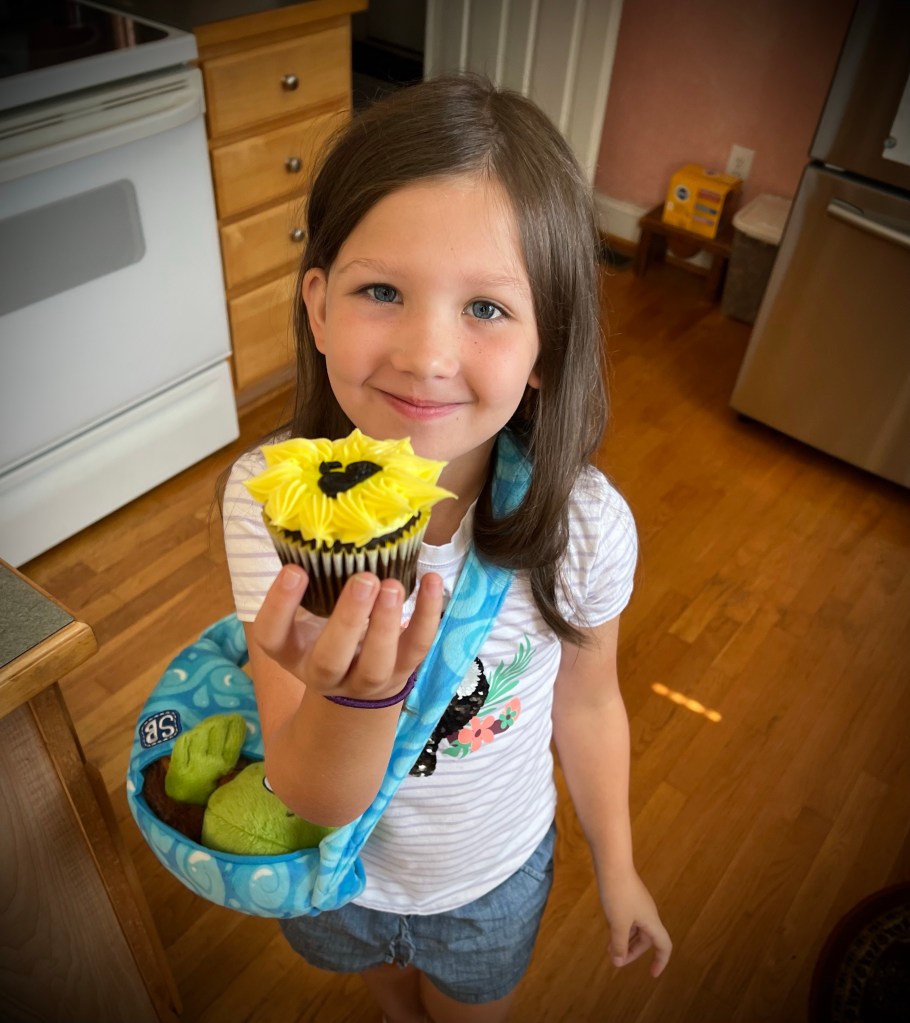
Some time ago, I had my nails polished in a pale color delightfully named “Life’s a Cupcake.”

I’ve been hanging onto that, in case I ever decided to write something out of it.

—Why not today?

If Life’s a cupcake
then use real sugar.

If Life’s a cupcake
then add your own flavor.

If Life’s a cupcake
then try not to burn it.

If Life’s a cupcake
then savor the filling.

If Life’s a cupcake
then frost it thick with love.

If Life’s a cupcake
then offer it to others.

If Life’s a cupcake
then eat every crumb.

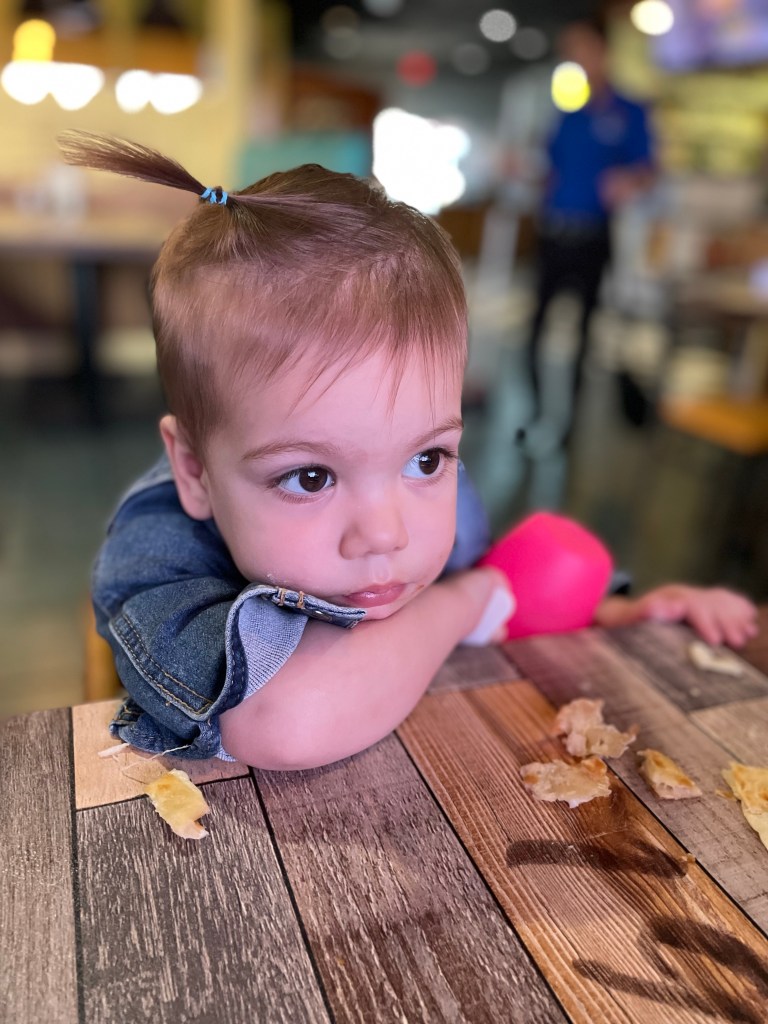
My sweet Scout, summer before last

*******
Composed for Day 15 of the Slice of Life Story Challenge with Two Writing Teachers

–oh, if you’re curious about the nail color, check it out: Life’s a Cupcake polish.
Note the brand name, “Creative Play”—how fitting!

Nature’s divine voice

Nature is the infrastructure of our communities…Nature enriches us economically and culturally and historically, but it also enriches us spiritually. God talks to human beings through many vectors: Through organized religions and the great books of those religions, through the prophets and wise people, and through art and literature and music and poetry, but nowhere with the same detail and texture and grace and joy as through Creation. And when we destroy nature, we impoverish our children. We diminish their capacity—and our own—to sense the Divine, to understand who God is, and to grasp what our own potential is as human beings.” —Robert F. Kennedy, Jr.

Confession

Before I started writing
in earnest
I didn’t know
how much
I love nature

I should have known
by the way
cicada summersong
stirs sacred memories

I should have known
by the certain slant
of light
on fiery autumn trees
there’s hope within
which never leaves

I should have known
from the brilliant beckoning
of silversharp stars
on a clear winter’s night
or by Venus,
glittering bright
over the ocean
as the sun rises
that the soul
must keep reaching
for what it cannot
grasp

I should have known
that once I start seeking
I will find
just as I discover hawks
perched high above me
every single time
I think to look up

I should have known
by the poignant scent
of fallen pines
and freshcut grass
that newness
returns
after the pain

I should have known
how much humans
have lost
by not living close
to the earth
as we were meant to
(as we did, in ages past)
or how this void
is behind
the longing
of every soul
crying out
for belonging
healing
restoration
and peace

I should have known
all things
are interconnected
and sustained

by the voice
speaking through
nature…

Before I started writing
in earnest
I didn’t know
how much
I love nature

but the important thing
is that I know it now

I will always know it, now

for, like finchsong
at my door,
untold glories
surround me

weaving their way
into my writings
so that I recognize
holy rhythms
of life

spoken into being
into my being

—let me listen
oh, let me listen.

One of last year’s baby bluebirds hanging out by its natal home, on my back deck

*******
Composed for Day 13 of the Slice of Life Story Challenge with Two Writing Teachers

Q: What to write now?

WordPress, the content management system for my blog, regularly offers prompts to writers. A way to get the creative juices flowing, you know… and to connect people through sharing their stories.

For, as my fellow Slicers of Life can tell you, stories knit our hearts together like nothing else. Stories are the fabric of our lives, the storehouse of our memories, and one of our most creative endeavors. They are the way we see and shape our world. They shape us. Stories are among humankind’s greatest tools and gifts.

To that end: It occurs to me that a little inspiration might be needed for the Slice of Life Story Challenge. After ten days of writing, some of us may be running low on fuel. Here are a few WordPress prompts, just in case anyone out there can can use them…

  1. How has a failure, or apparent failure, set you up for later success?
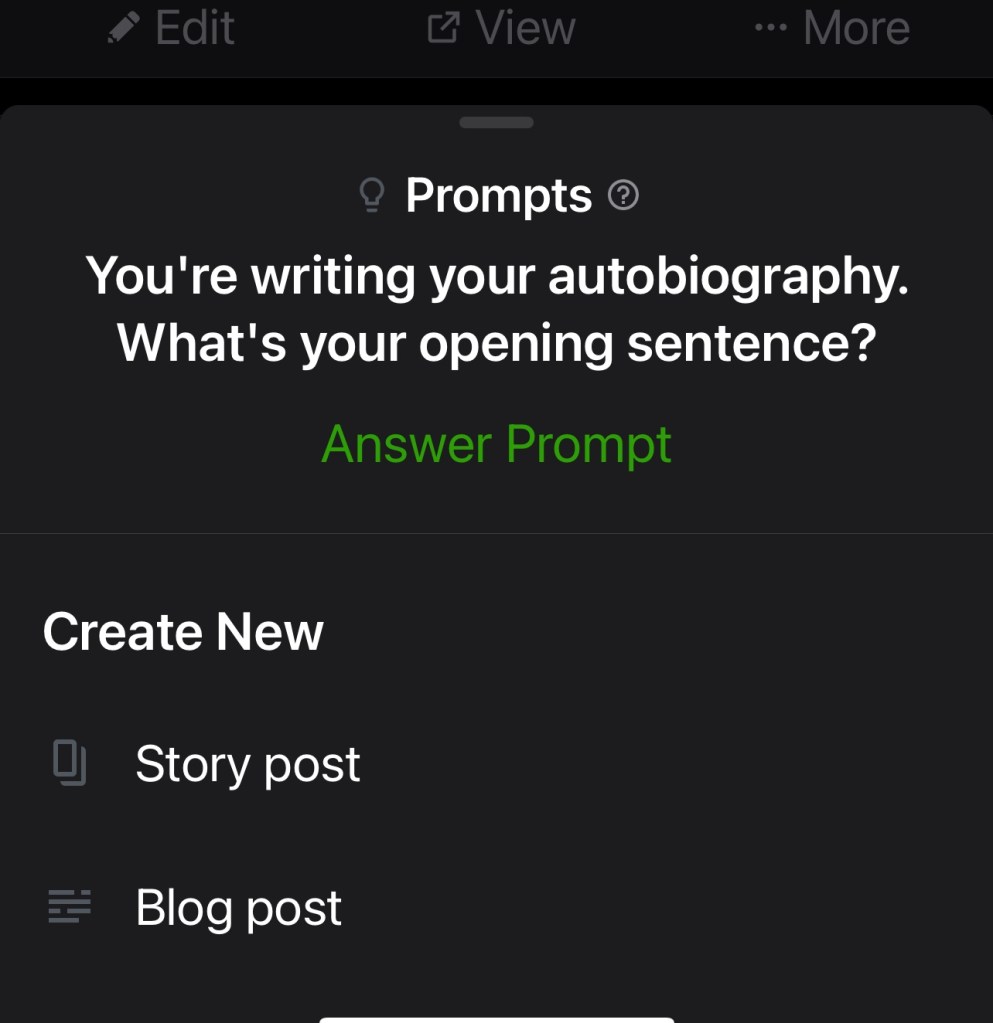
  2. You’re writing your autobiography. What’s your opening sentence?
  3. What’s one question you hate to be asked? Explain.
  4. Do you have a favorite place you have visited? Where is it?
  5. What big events have taken place in your life over the last year?

Confession: It would be soooo convenient to end this post here and make another to answer my favorite of these questions (i..e, stretching this post into two; one DOES have to be strategic during a challenge), but the teacher-writer in me says You know you have to show, not just tell.

All right, all right.

My favorite from this list is #2: You’re writing your autobiography. What’s your opening sentence?

A: I have no idea.

First of all, not sure writing my autobiography is a venture I desire to undertake. A memoir, perhaps…a memoir in verse, even more appealing, but…hmmm. You writers know what our greatest fear is, don’t you: Will anyone really read it? Or care?

Which brings me to the point that this is a secondary concern.

Because…write for you first. Capture the words emerging in your brain like new and fragile butterflies. Jot the images before the rains of time wash them away like chalk from a driveway. Relive your memories; spend time with the people you have loved and lost and will miss all your days…along with the lessons you picked up along the way. Answer the Muse who stands so patiently (exasperatedly?) over you, tugging at your creative human soul where beats your struggling writer-heart. Just because you don’t feel the tug doesn’t mean she’s gone. Oh, she’s there, all right, standing with her arms crossed, tapping her foot.

Enough avoiding the task at hand…how would I start my autobiography?? (I do wish the question was for “memoir,” alas…I’d find it more compelling, even if the world at a large uses the terms interchangeably).

Here I am, stalling, tempted to say Check back tomorrow for the reveal! Truth is, I need to think awhile…

ALL. RIGHT. Here goes…

—Can I please switch questions? Can I answer #3 instead? What’s one question you hate to be asked? Explain.

A: Right now I hate to be asked what the first sentence of my autobiography would be, because I. HAVE. NO. IDEA. Furthermore, I am now asking myself WHY I ever picked it (I suddenly feel like a student trying to write a short essay on an exam after having selected my topic most unwisely).

Sigh.

I set my own foot on this path… so, let me see where it leads (do you hear me, Muse? You gotta take it from here. Please…).

My father named me for his mother, and that was the beginning of everything.

Well… it’s a start.

*******

Composed for Day 10 of the Slice of Life Story Writing Challenge with Two Writing Teachers
(keep going, y’all!)

Verily

On Day Two of the Slice of Life Story Challenge, I had a lot of fun playing with backwards names (You, reversed).

Today I am thinking about family names and the legends or lore surrounding them.

My mother had a unique name. My Grannie named her after her sister, Verlee. When I was little, Mama explained her name to me: It’s from the Bible. From the word “verily.”

Verily is an archaic English translation of several different Hebrew and Greek words throughout the scriptures. It means truly or certainly.

Grannie had six children by the time she was twenty-two, during the Great Depression. My mother was the last. They had a hard, hard life. I only know bits and pieces of their story; most of those who lived it are gone now. They experienced a lot of loss. A baby boy, Thomas, coming a year before my mother, died when he was a few days old. Grannie spoke of him to me when I was a child: I felt so empty, coming home without him. She never forgot him.

Mama said that when she was born Grannie brought her home from the hospital in a basket.

These images have lived in my head for years and years.

Quite some time ago, I started crafting a story about a family…not my mother’s, but with a few borrowings. I have a long version (incomplete) and a short story version. Every once in a while I go back and tinker with the tale , to see what the characters are up to…

Since the word came to mind today, I’ll share a little excerpt.

From my short story entitled “Verily, Verily”

One afternoon, when we was playing school on Grandma’s porch, a long black car that looked like it ought to belong to the mill owners pulled up.

Out stepped Mama.

At first I hardly knowed her. She didn’t look much like herself. Pure skinny for one thing, her legs just little bitty bird’s legs beneath the dress that the ladies’ sewing circle made and carried to the hospital for her. Her face, all sharp edges. Her eyes had changed the most. Huge, wild, like some hunted creature was looking out of Mama’s eyes.

When she seen us up on the porch, she tried to smile, but them too-big eyes filled with tears. “Well, girls – ain’t you even going to come hug your Mama’s neck and see what I brung you?”

Me and Artie May flew down the steps to throw our arms around her. Mama felt like paper and twigs, like a good breeze would carry her rattling away. She couldn’t hug us back very much because of the basket over her arm. Whatever she had in there was covered up with blankets.

“What is it, Mama? What’d you bring us?” shouted Artie, jumping up and down, trying to see inside the basket.

“Goodness, Artie May,” said Mama, “you don’t mean you’re just happy to see me on account of the surprise, are you?”

I felt happy to see Mama but I wanted to know what was in that basket, too. Just then, I seen something move under the blanket.

“Mama, you got a puppy in there!” I hollered.

Mama smiled then but her eyes didn’t smile with her. “No, Ollie Fay, it ain’t a puppy. It’s better than that. Come see.”

She kneeled in the yard. Artie May and me crowded close. Mama didn’t even smell like herself no more; she smelled like the inside of medicine bottles and new cotton cloth. I wondered what on earth could be better than a puppy, except maybe two puppies, as Mama pulled back the blankets.

Artie went Ohhhhhh and I ain’t never been more shocked in my life, to see a baby asleep in that basket. It had a round pink head with a little bit of dark fuzz for hair.

Mama said, “Girls, this here’s your little sister.”

Me and Artie just stared and stared before Artie finally asked, “What’s her name, Mama?”

“Well, I wanted to name her something from the Bible. I thought on it a long time and decided to call her Verilee.

Now, I knowed something of Mary, Martha, Ruth, and Hannah, but I ain’t never heared of no Verilee in the Bible before. Artie must of been thinking the same thing, because she asked, “Who was Verilee in the Bible, Mama? What did she do?”

I guessed, on account of the basket: “She was Baby Moses’s sister.

Mama shook her head. “No, Ollie Fay. That was Miriam. There won’t nobody named Verilee in the Bible. I took it from something Jesus said: ‘Verily, verily, I say unto you, he that believeth on me hath everlasting life.’”

Then Mama’s mouth started wobbling.

Grandma spoke from the porch: “Rose.” We got so caught up with the baby none of us even knowed she’d come out. She stood there with her arms crossed over her bosom. “That’s it, Rose. He’s gone and you know there ain’t no suffering where he is. Call the child whatever you want, she’s a sign that life goes on. We can only pray it ain’t always going to be so everlasting hard. Get in the house, girls, your supper’s on the table.”

Hmmmmm.

Maybe it’s time to tinker some more? Hammer out the many kinks and let these characters get on with their lives?

Verily, I say to y’all… that might be a whole lot of story.

My Grannie holding my mother, 1941.

*******
Composed for Day 5 of the Slice of Life Story Challenge with Two Writing Teachers

A thought: Dialect is often discouraged in writing because it’s hard do to well and can be challenging for readers. But sometimes that’s how the story wants to tell itself.
For exponential growth: Write

I started this blog, Lit Bits and Pieces: Snippets of Learning and Life at the end of March 2016. At the time I was supporting elementary teachers with the implementation of writer’s workshop. In my own ongoing search for resources to share, I discovered the Two Writing Teachers site, a veritable treasure trove of ideas, recommendations, experiences, and, most of all, encouragement for teachers to first be writers themselves. This resonated deeply with me for several reasons, beginning with the logic of the thing: How can one teach writers without BEING a writer? Truth is, this been happening forever, so let me rephrase: How can one be an EFFECTIVE teacher of writers, without being a writer? Without walking the walk in real-writer shoes, wrestling with ideas, hammering out clunky sentences until these ideas shine, spawning new ideas even in the act (the wondrous alchemy of the true process)?

The answer’s pretty obvious.

Furthermore, most fellow teachers I encountered felt that they weren’t “good” at teaching writing (language matters; we would soon shift this concept to teaching writers) and that they weren’t “good” writers themselves. Dare I say this had more to do with the way we were/were not taught when we were in school, or how we were shaped by our educational experiences with writing, i.e., as an inescapable (odious?) chore, or the simple fact that no one ever modeled the real (vibrant and powerful) process for us?

Ok, I’ll say it: All of the above.

I will also say that teacher feedback can change the world, one child’s heart at a time.

I was nine, just starting the fifth grade. My class had created “All About Me” booklets. In that era, teachers still wrote in red ink on student work (!!!!) but in this instance, it wasn’t bloody slashes, deconstruction, destruction. I’d written about my struggle with asthma, how it kept me from fully participating in physical activities like running. I described the medication my parents gave me in those pre-inhaler days: liquid Benadryl, “clearish red, and it burns like fire when I swallow it.” Alongside this paragraph, my teacher wrote: “What wonderful detail! You’re a strong writer. Keep writing!”

It was the first time my writing had ever been praised…the first time I recall any praise given to me in my early school years (there are certainly stories to tell about the times I was shamed by teachers; perhaps I’ll dust off those memories and let them live again, or maybe I’ll just let those old bones lie where they are). My point here is that in the very moment I read my teacher’s response, my writer-soul quickened. Writing would be a Presence in my life ever after. Writing would always seem to pursue me, draw me, push me, pull me. It would grow me. It would deepen me, sharpen my senses…I would learn things about myself I did not know. I would realize my affinity with nature. Writing would lead me over and over to awe.

It would lead me, in a roundabout way, to becoming an educator after my children were born and in school. It would lead me to supporting other educators in unique ways. It would lead me to create a blog to “practice what I preach” and enable me to join online writing communities like Two Writing Teachers, where educators write a Slice of Life Story every Tuesday and commit to a monthlong writing challenge every day in March. For, again: How can one be an effective teacher of writing without first being a writer?

There’s so much more to say about sharing our writing in community without judgment, about our stories connecting us in ways greater than blood and sinew, about empathy knitting our heartstrings together not merely to survive but to live. To overcome. To celebrate, to rejoice. To grieve, to rage. There is more to say about students coming to realize the power of their own ideas and their own voices through writing, alongside teachers who are doing the same. There is more to say about the brokenness of systems—educational, governmental, societal, fill in the blank.

Here’s where I’ll stop this post, but not my writing…I may rest for a season or two, but I shall never stop writing, because it is, like prayer, the impetus of growth and change for the better.

Starting from within.

*******

with thanks and love to all at Two Writing Teachers, with the advent of the March Slice of Life Story Challenge this Friday. Join and prepare to share...find your writing, your teaching, your heart, your life, transformed.

ALL DONE

A Slice of Life tribute starring my granddaughter Micah, age 17 months.

First, a quick lesson in Micah-speak:

Hey Mama – standard greeting for anyone, female or male

Na na na na na na – a favorite song lyric

All done (usually accompanied by hand motions) – I’ve had enough

now, without further ado…

Hey Mama
Hey Mama

got my cup
can’t we get up
got no more water
betta change ya daughter

ALL DONE

Hey Mama
Hey Mama

tired of quesadilla
tired just to be ya
do grown-ups really see ya
countin’ one-two-three-yah

ALL DONE

Hey Mama
Hey Mama

books and toys galore
I just can’t, anymore
thinkin’ ’bout a snooze
but don’t you take my shoes

na na na na na na
na na na na na na

I’m ALL DONE

Girl, I am feeling it…

with thanks to Two Writing Teachers for the monthlong Slice of Life Story Challenge

and to so many fellow Slicers who kept me going
more than you ever knew


we’re all done
but only with the March challenge

not with writing
not with life


especially over here today

’cause my beautiful Micah
is coming over to play

Hey Mama
Hey Mama


we’ve only just begun

Blessing

noun

a favor or gift bestowed by God, thereby bringing happiness.

—Dictionary.com

*******

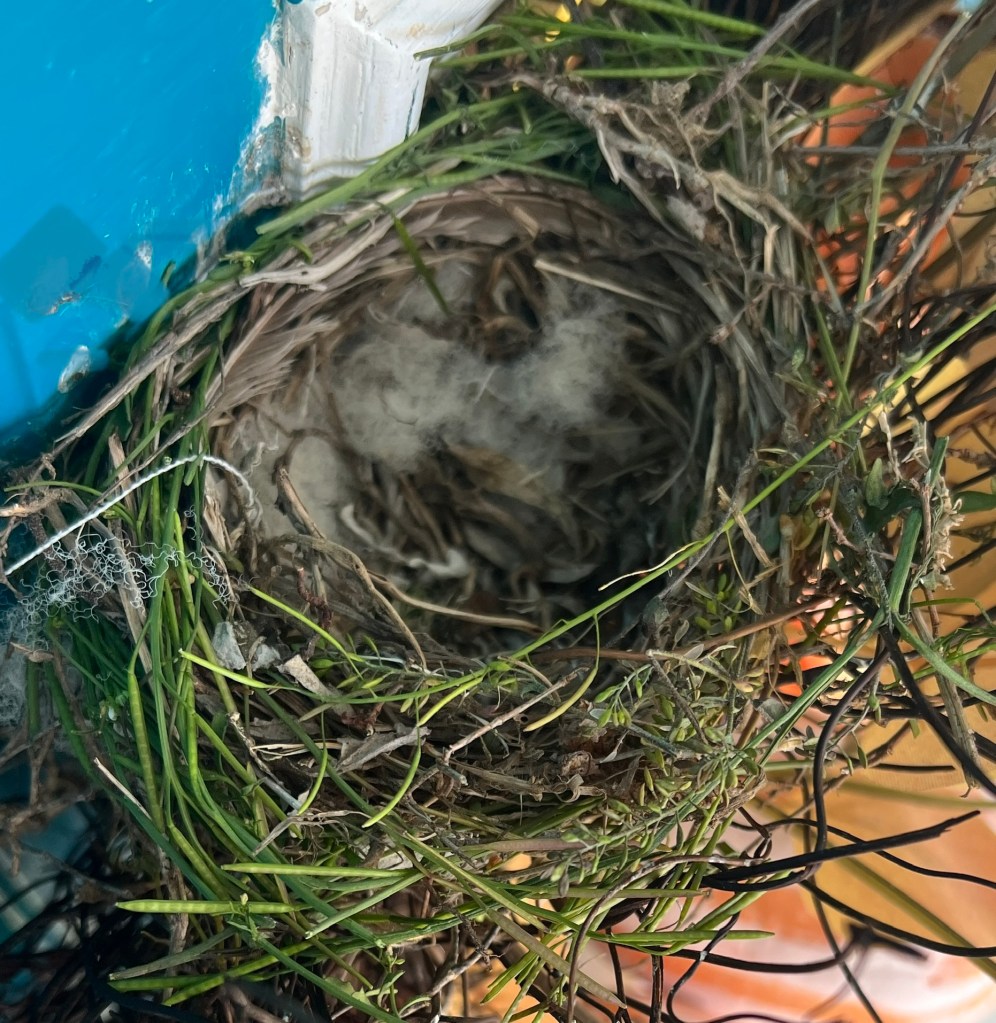
I could hardly wait to get home yesterday to check the progress of the new finch nest on my door wreath.

On Day Two, it now has the characteristic cup shape. It’s lined with white fuzz, a soft cushion for the precious eggs to come.

It is comprised almost exclusively of fresh green grass. The color of newness and life.

House finches are said to represent new beginnings.

Their nests always fill me with awe, and never more than now, watching the parents working together to rebuild immediately after two of their babies died in the previous nest, which I tore down. Confession: I wasn’t sure I was doing the right thing. Nature is mighty, ever-resilient, wise; it is imbued with regenerative power. Yet there are so many delicate balances within it. I didn’t want to upset any of these. I am a mere student of these birds. They are the experts.

So to see this nest being built in the exact spot as the ill-fated former one is a gift. It sends my spirits soaring, exponentially.

House finches are considered symbols of joy. If you ever hear one singing, you understand why.

In some parts of the world, they’re called the blessing bird.

They chose my door years ago as the place to bring new life into the world. I now share the wonder of it with my seven-year-old granddaughter, our “nurture scientist.” Together we have witnessed the miracle of tiny life coming into existence and eventually taking flight. In a couple more seasons, her baby sister will be able to enjoy it, too.

After I took this photo of the new nest, rejoicing and wondering when the first egg will appear, I went into the house to find a mysterious package my husband had retrieved from the mailbox.

Neither of us had ordered anything.

Curious.

I opened it…

A gift from a friend I met through writing, who reads about my finches each spring, who knows of the recent loss.

I am awed again.

A writing community is like a nest: a safe place especially created for growth, where we nurture one another and encourage each other to stretch our wings and fly.

It is here that we learn the true power of story and how it knits our hearts together. In the beginning, in the end, we are story.

To live it, write it, build it together, is a gift.

And the time for doing it is now. Today.

My love for the finches, like my love for writing, is inextricably woven through and through with gratitude for the blessings in my life. It’s all a song in my heart, greater than words.

Each day brings its own gifts. It’s up to us to see them, accept them, celebrate them.

And to give in return.

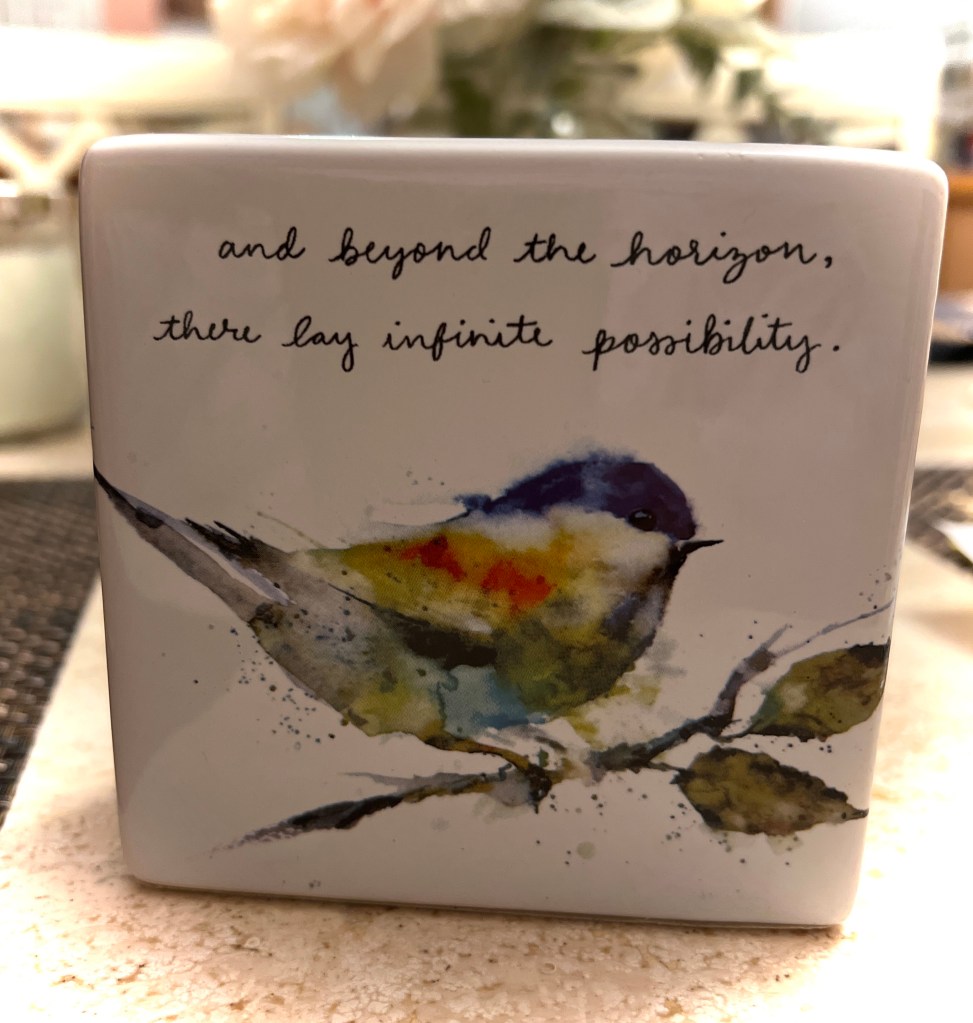
Beyond the horizon
Lies infinite possibility
Eyes cannot see.
Sky meeting sea
Sea meeting sky…
I fly ever onward
Nested and rested in the
Giver of every good and perfect gift.

Today, there might be an egg.

********
with thanks to Two Writing Teachers for the monthlong Slice of Life Story Challenge

and my dear gift-giver

Wall on the writing: a scrambled idiom poem

On the last day of Ethical ELA’s Open Write, host Denise Hill offered this invitation:

“Take a metaphor or idiom and reverse it or twist it up in any which way you choose – mumbo jumbo jam it!

Then write from the ‘sense’ the new phrase makes. It may be total nonsense. That’s perfectly fine! It may provide a ‘feeling’ or strike a memory chord or a fantasy chord with you in some way that inspires your poem today. Just go with it!”

Here is what came of my scrambling the writing on the wall

The Wall on the Writing

In prehistory
cave-dwellers
dipped their fingers
into animal fat
charcoal
their own earwax

then dirt and ash

to paint their stories
on the walls
by flickering torchlight

over time
many caves
collapsed

to be reabsorbed
by the earth

In the course 
of human migration
the region of the caves
became a fortified city
with iron gates
and great stone walls

one of which
was constructed
over the buried caves

It is said that at this wall
the great orators
gave their mighty speeches
humble petitioners
made their prayers
poets composed their epics
chroniclers penned histories
and storytellers
found their words

I do not know
if the wall 
or the legends
are real

but I do know
that when I
hit a writing block
that I cannot
go over
around
or through
if I dig
deep
deeper
deeper still
within

I will find
the words

just human DNA
finding its way
with story
waiting 
deep
deeper
deeper still
beneath the wall
on the writing

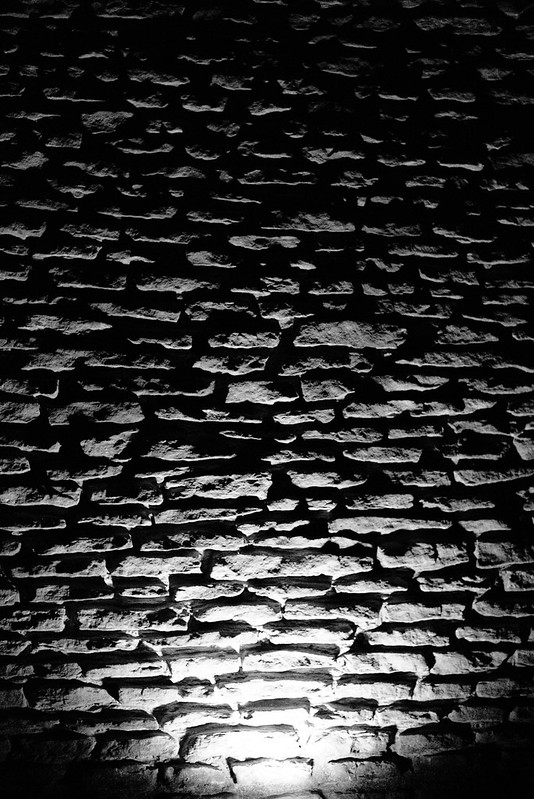
Stone Wall. jcubic. CC BY-SA 2.0.

with thanks to Denise Hill and the Ethical ELA Open Write community

and Two Writing Teachers for the monthlong Slice of Life Story Challenge

for story really is

in our DNA

Taking stock: my pile of good things

*******

With thanks to Stef Boutelier for the “pile-poem” form and Canva template on Day Two of Ethical ELA’s Open Write.

Thanks also to Two Writing Teachers for the monthlong Slice of Life Story Challenge.

Life IS a challenge. The greatest. For writing inspiration, Stef quotes author Rainbow Rowell:

So, what if, instead of thinking about solving our whole life, you just think about adding additional good things. One at a time. Just let your pile of good things grow. 

What might your “pile of good things” be?

Sleep experiment poem

This is not what you think.

The poem you’re about to read is not about a sleep experiment.

It is an experiment in writing a poem about sleep, using Artificial Intelligence (AI).

On Day One of Ethical ELA’s OpenWrite, host Stef Boutelier invited participants to try AI for creating or modifying a poem, stating that “AI is here to stay. We might as well learn alongside and make sure our humanity isn’t disposed of too quickly.”

She shared these sites with the directive to “explore ways you might use, learn, or negate AI within the lens of poetry”:

So, as a test of AI vs. human creativity, I used the poem generator to write a villanelle.

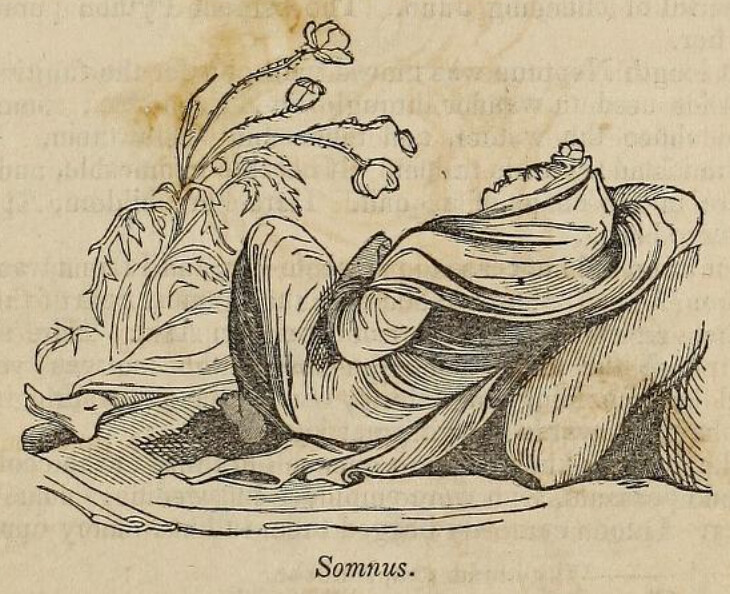
My topic was sleep (I am coveting it in the throes of getting over a lengthy cold, going into week three) and as I was prompted to choose two characters, who better than Somnus and his son Morpheus, gods of sleep?

Confession: I did alter a few of the rhyming words but that is all…

Without further ado, the experiment results:

Somnus’s Torment: The Villanelle of the Sleep

Somnus couldn’t stop thinking about the sleep
It was just so elusive and desired
But he could never forget the sheep

That morning, Somnus was shocked by the upkeep
He found himself feeling rather wired
Somnus couldn’t stop thinking about the sleep

Later, he realized that the sleep was deep
He thought the situation had become rather uninspired
But he could never forget the sheep

Morpheus tried to distract him with a leap.
Said his mind had become too misfired
Somnus couldn’t stop thinking about the sleep

Somnus took action like a veep
The sleep was becoming required
But he could never forget the sheep

Somnus’s demise was cheap
His mind became dangerously tired
Somnus couldn’t stop thinking about the sleep
But he could never forget the sheep

And there you have it.

Give me “Do not go gentle into that good night” any day.

This is not to say that AI can’t inspire or help with learning form and composition. In fact, its greatest offering might be a lesson in the power of revision.

And while it can actually generate some alarmingly wonderful things, I don’t think AI can ever out-poet the human mind.

I shall have to write my own villanelle now…but I won’t be using AI.

Has it ever seen or heard the birds? Has it ever smelled cut grass or felt the heartbeat of a living creature? Can it experience anything?

No.

Here’s to using the senses and the soul to capture the experience of being alive. Is this not the whole purpose of writing?

Meanwhile, sleep is still calling me…

*******

with thanks to Stef Boutelier on Ethical ELA
and to Two Writing Teachers for the monthlong Slice of Life Story Challenge