Behold the dragon

On Monday, Dave Wooley hosted the March Open Write at Ethical ELA. He invited participants to compose small ekphrastic poems inspired by art, “to capture essential moments that are reflected in, or alluded to, in the work of art. Or, perhaps, how in reflecting upon a work of art, that might become a spark for a related idea that could be explored in the burst of a short poem.”

The key, of course, is selecting the artwork. Dave chose statues.

I chose a work of art in progress…

Envisioners

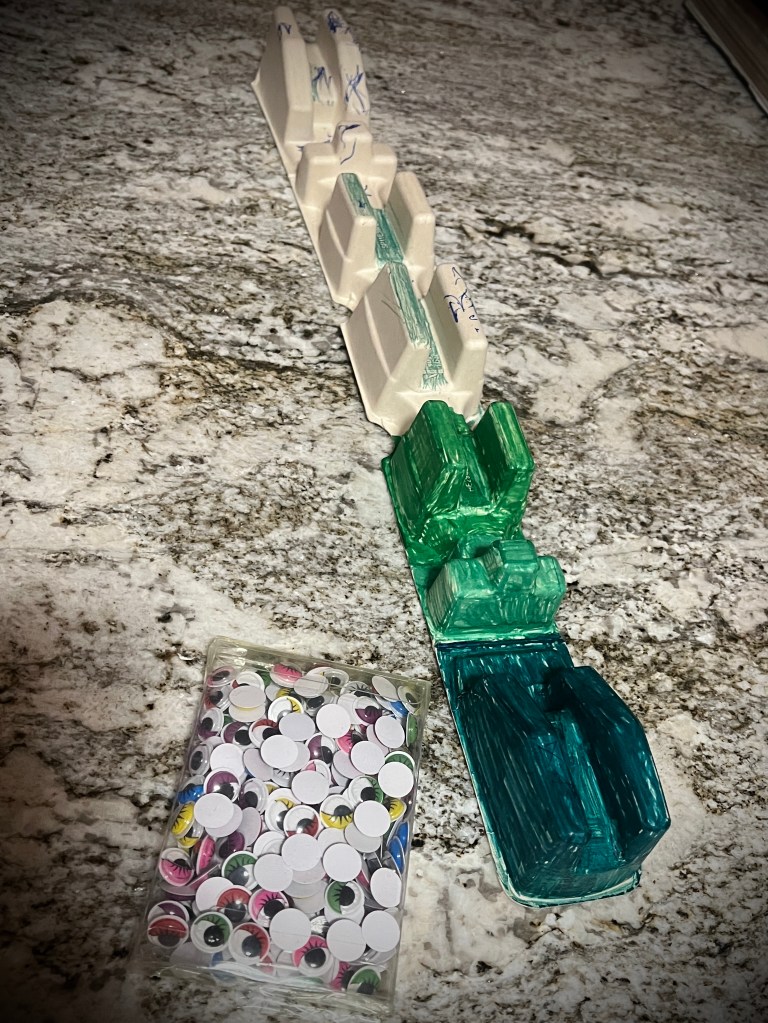
Segmented cardboard
pulled from a shipping package
is now repurposed

by the magicians
(known as my two granddaughters)
with markers in hand

a dragon rises
from their creative efforts—
Franna provides eyes.

The masterpiece in the making

*******
with thanks to Two Writing Teachers for the March Slice of Life Story Challenge

A place to breathe poem

On Sunday, Dr. Sarah Donovan, founder of Ethical ELA, hosted the March Open Write. She invited participants to write about a place you go to breathe and know that everything will be okay.

She offered these opening lines as a model, from poet Christine Hartman Derr in “A Place to Breathe”:

Off the path,
behind some trees,
a clearing sits
and waits for me.

Dr. Donovan asked two questions to prompt our thinking:

  • Where or what are the places that wait for you?
  • Where are the places and who are the people around which you can simply be?

I write of my “breathing place” all the time: my drive through the countryside, to work and home again.

Here’s my poem.

Breathing Place

Along the road
among the trees
the wild things live
and wait for me

They do not know
about things like grace
or that they are
my breathing place

When they appear
as I drive by
my spirit soars
eagle-high

My heart, it sings
oh, glory, glory
for their presence
in life’s story

Peace descends
and folds its wings
—I breathe the breath
of wild things

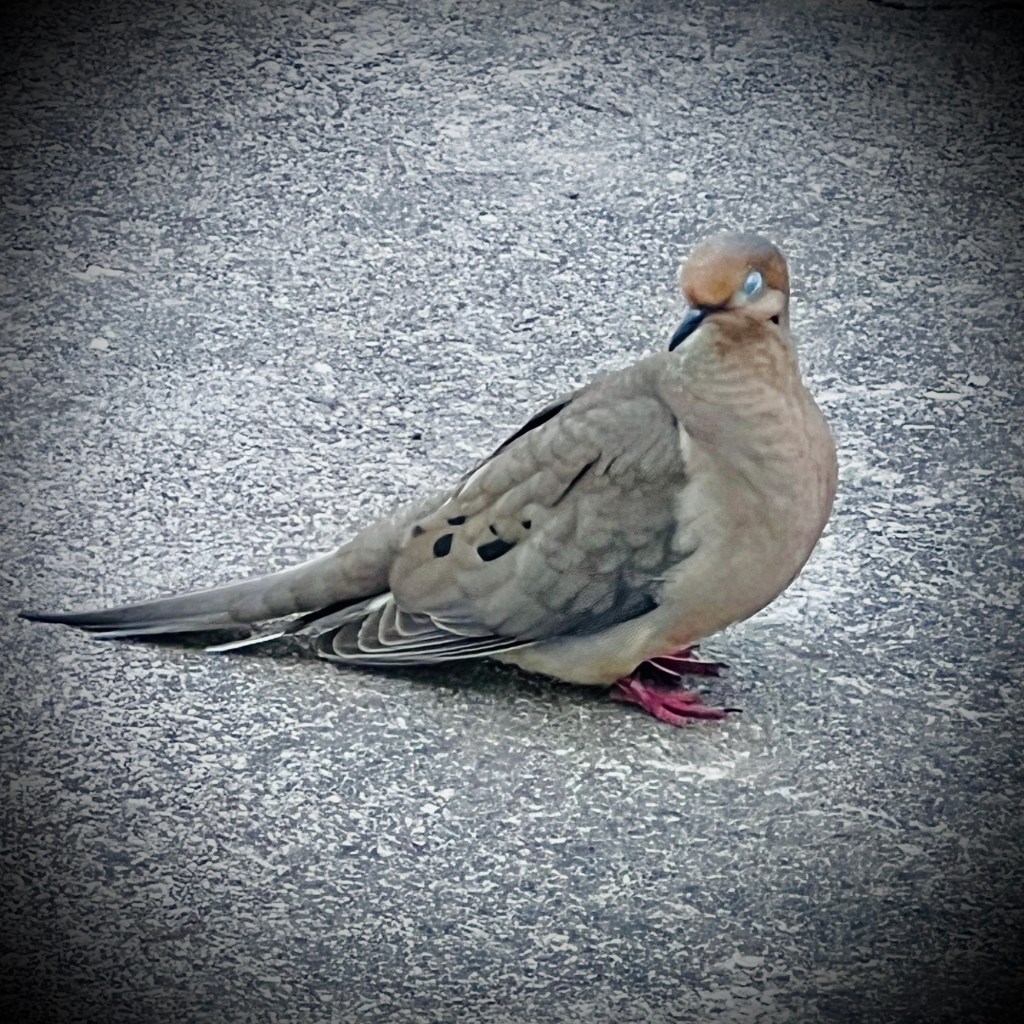
Mourning dove, resting in my driveway

*******

with thanks to Two Writing Teachers for the March Slice of Life Challenge

My own St. Patrick

In 1906, Theodore Roosevelt was president, Upton Sinclair published The Jungle, and the San Franciso earthquake killed around three thousand people. The Panama Canal was under construction and Cuba had its first president. Susan B. Anthony died that year. Lou Costello, Estée Lauder, and Anne Morrow Lindbergh were born.

In the far reaches of eastern North Carolina, a farm woman named Claudia Amanda Victoria delivered another of her ten children. A boy. She would have only two girls; one would die of diphtheria at age four.

But this baby boy would be hardy. He would outlive them all.

She named him Columbus St. Patrick.

Some folks called him Columbus. Those who knew him best called him Lump.

I called him Granddaddy.

As I grew up listening to the old stories, I tried to imagine living in his era. Seeing an early Ford Model T. Mail-ordering live chickens, delivered in wire cages by horse and buggy. Raising ducks that wandered off to the swamp on a regular basis, only to be herded back home again to eat bugs in the garden and to provide eggs for breakfast. Learning to plant and to harvest, to be in tune with the rhythms of the earth, following the steps of that ancient choreography, the seasons.

He was five when the Titanic sank, seven when World War I began. His older brother, Jimmy, served in the Great War and returned; I would know him and his wife Janie in their old age. They lived in a little tin-roofed house along one of the many dirt roads of my childhood summers. Jimmy and Columbus had a brother who drowned long before my time. Job Enoch. One brother accidentally shot and killed another on the porch of the family home. I knew their sister Amanda, who had a high-back pump organ adorned with brown-speckled mirrors in her house. The organ sounded and smelled of ages and ages past…but she could play it, and she could sing.

Columbus didn’t sing, but he loved country gospel songs and bluegrass to the end of his days.

And Columbus St. Patrick loved Sunday School. He had perfect attendance for years, garnering long strings of pins awarded to him. He did not enjoy regular school. He quit in the fourth grade to work on the farm. Later in life he had some regrets about this. But his father walked out on the family and Columbus rose to the role of provider.

He participated in community hog-killings, with the farm wives taking the backbone to flavor collard greens. The pork was preserved in barrels with salt brine. Some of the folks enjoyed scrambling hog brains into their breakfast eggs.

Columbus St. Patrick worked hard. He plowed fields with mules. He took part in the making of molasses, which required several people. Mules walked in a circle, harnessed to poles attached to large grinder where sugarcane was fed to extract the juice. The juice would be collected and heated in trays over a fire, skimmed numerous times until it became rich, blackstrap molasses. At the end of a meal, he sopped his biscuits in molasses, and poured his hot coffee in the saucer to cool it.

He competed with a scrappy little woman named Lula for the honor of being the community’s top cotton-picker. She often beat him.

Lula would be widowed when her husband Francis hung himself in the woods. One of their daughters would find his body.

Columbus St. Patrick’s youngest brother married another of those daughters.

Columbus made some time to hang out with the young people, attending taffy-making parties in their homes and driving groups of friends to the movies in town…all the while noticing Lula’s daughter with the wavy blonde hair and straight posture. There was a certain spark about her.

She considered him her mother’s friend. The “older” set. She was nine years younger and she had her eye on the preacher’s son, who would surely follow in his father’s footsteps: How wonderful, to be a preacher’s wife!

It didn’t happen. Desires of the heart sometimes come to unexpected fruition: I would be a preacher’s wife, a half-century later.

This daughter of Lula’s ended up marrying a farmer: Columbus St. Patrick. They planned to wed in September but he had the mumps. And so it came to pass in mid-December instead.

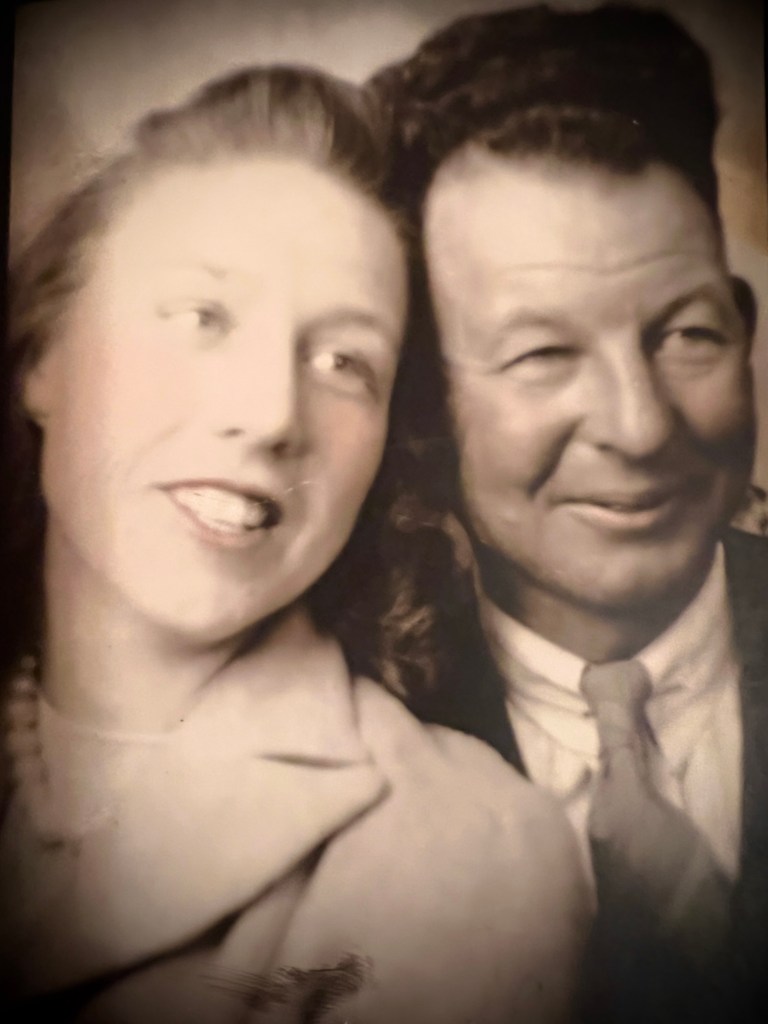
My grandparents.

Here’s a photo taken sometime early in their marriage:

Ruby Frances and Columbus St. Patrick, circa 19371938.
She would have been around 23. He would have been 31 or 32.
If this photo was taken prior to October 1937, my father was not yet born.

They would endure the Great Depression and the second World War with a small child. My father. When Columbus St. Patrick couldn’t make a go of tenant farming and sharecropping, he traveled to the shipyard nearly 200 miles away with a group of men from down home. He was working there, building cradles for ships, when Pearl Harbor was attacked. Suddenly U.S. ship production went into overdrive; the Yard turned out ships in three months versus the usual year.

He would try, after the war, to make a living farming, painting, and doing other handyman jobs. By that time there were three children to care for. Columbus opted to go back to the shipyard, staying in a boarding house during the workweek and coming home to see his wife and children on the weekends.

For ten years.

His son (my dad) became senior class president and entered the United States Air Force after graduation. The oldest daughter was a high school basketball star; Columbus St. Patrick nailed peach crates to posts out in the yard for her to practice. By the time his youngest daughter was ready for high school, he’d had enough of separations. He moved the family to an apartment near the shipyard.

Hilton Village, built between 1918 and 1921, is the first federal wartime housing project in the U.S. It was created for shipyard workers. These quaint, English-style rowhouses would be the setting of my first memories. I would awaken in the dim gray morning at my grandparents’ upstairs apartment and my grandmother soothed me back to sleep while my grandfather, having risen at four, made his own breakfast before going to work. On Sundays, his day off, he took me to the playgound behind the Methodist church.

I felt as safe as I ever have in life, walking hand-in-hand with him.

He retired after I started school and lived another twenty-nine years. He saw my children. He survived the removal of his bladder after a cancer diagnosis. My grandmother would empty the urostomy bag and dress his stoma (surgical opening) every day until his death.

They would lose their middle child, their basketball star, to multiple sclerosis in her fifties. She died on Good Friday; they buried her on Easter Sunday. Their son (my dad) was just recovering from bypass surgery after his first heart attack. He would not survive the second, but Columbus would not be here to suffer the loss of his son.

Granddaddy died of lung cancer under hospice care, at home his own bed, as he wanted, on a fine spring day. He refused morphine in favor of keeping his mind clear. And it was, to the very end.

St. Patrick’s Day rolls ’round again and stirs all the memories. They spring to life, as rich and sweet as molasses that Granddaddy and I sopped with our biscuits. He was always embarrassed by the oddity of his middle name. I am proud of it. I have loved it all my life, just as I’ve loved him. Fiercely. I have learned many a valuable lesson from Columbus St. Patrick: Treat people well. Help those in need. Money doesn’t buy happiness (back in the old days, he said, nobody had any money but everybody was happier). Love your family. Love your neighbor. Get a dog to love. Work hard. Persevere. There’s always a way. Tend the earth. Do your duty. Spend time with children, for they are precious. Go to church. Trust in the Lord. Return thanks.

One day, he said, we will meet again in a better place. I am looking forward to it.

Me, too, Columbus St. Patrick.

Me, too.

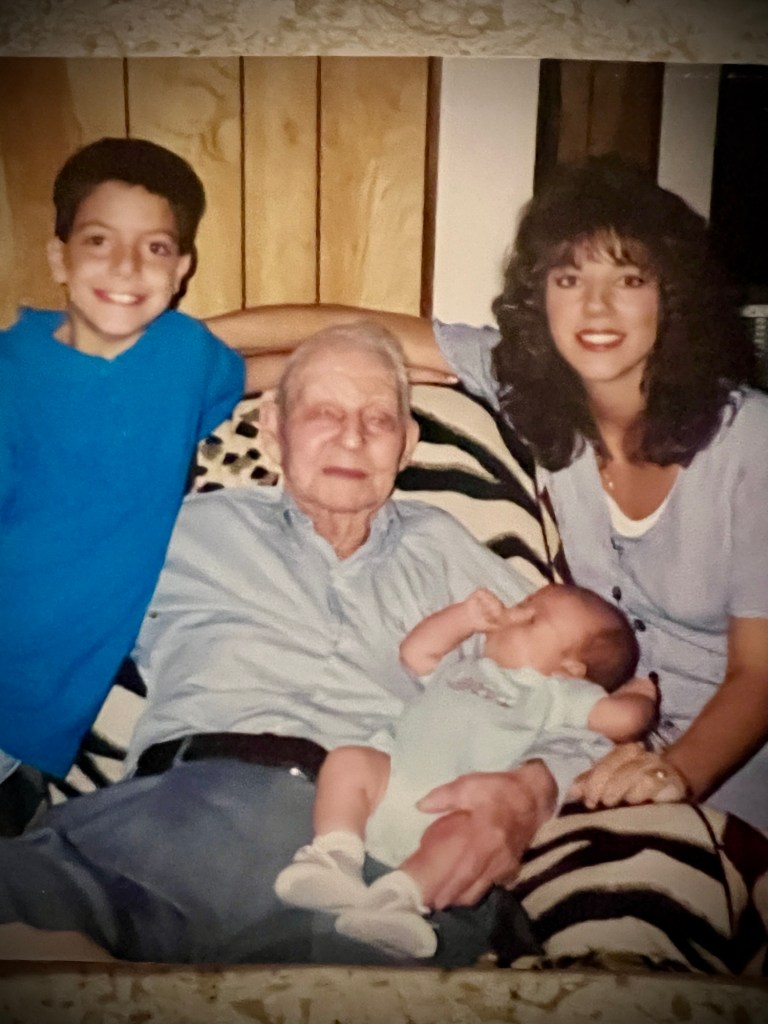
My boys and I visiting Granddaddy for his 91st birthday, 1997.
My youngest was six weeks old.

*******

with thanks to Two Writing Teachers for the March Slice of Life Story Challenge
Grace upon grace

Yesterday Leilya Pitre opened the March Open Write over at Ethical ELA with an invitation to compose poetry inspired by the Ides of March.

The Roman calendar confuses me, with all the backward counting. An “ide” is one day before the middle day of the month. For March, that’s the 15th – yesterday’s date. Leilya gave several poetic form suggestions: villanelle, free verse, limerick. She prompted participants with a choice: 1) Write with “an air of inevitability and doom…mirroring the idea of a foretold fate,” or 2) “Write a poem that celebrates a moment of change or transformation, akin to the original meaning of the Ides of March as a day of transition in Roman history.”

A day of transition…hmmm.

Change.

What needs to change more than the human heart?

I confess to wanting to run for my life at the idea of writing a villanelle (see how much the very word looks like “villain”?). The form is deadly! And there’s only one Dylan Thomas. Nobody else can rage, rage at the dying of the light quite like him. And so I opted for free verse, my default form.

Crickets. Nothing. No ideas on ides.

And so I returned to the villanelle – drat it all! – with “an air of inevitablity and doom,” for sure.

But then: Two repeating lines came to me. I started a rhyme search. A villanelle takes a pile o’ rhyming words. Not all of them will work. One of my favorite images re-materialized in my head: the “golden rim.” Yes. Let us drink from the golden rim of the goblet…no, chalice. Yes. What are we drinking, and why? What’s the point? What does it mean?

Have you ever heard that what you need is there, right within your reach, if you just look?

In this case, what I needed was literally right there within reach: the bracelet on my wrist. You’ll see.

Here’s the poem. Still tinkering with it.

Gratiam pro gratia

As evening descends in shadows dim
Let’s toast to ceasefire of life’s fight:
Drink, my love, from the golden rim.

The face of the morrow will be less grim
—See, our ashen embers retain the light
As evening descends in shadows dim.

Toss off your cloak with fraying trim.
Kneel by me, pray, well we might—
Drink, my love, from the golden rim.

There sparkles yet a priceless gem
Within the pocket, glittering bright
As evening descends in shadows dim.

Hold my hand — let’s sing a hymn
Before we take our earthly flight.
Drink, my, love, from the golden rim.

Sweet chalice of life, abrim,
Despite this darkest night…
As evening descends in shadows dim,
Drink, my love, from the golden rim.

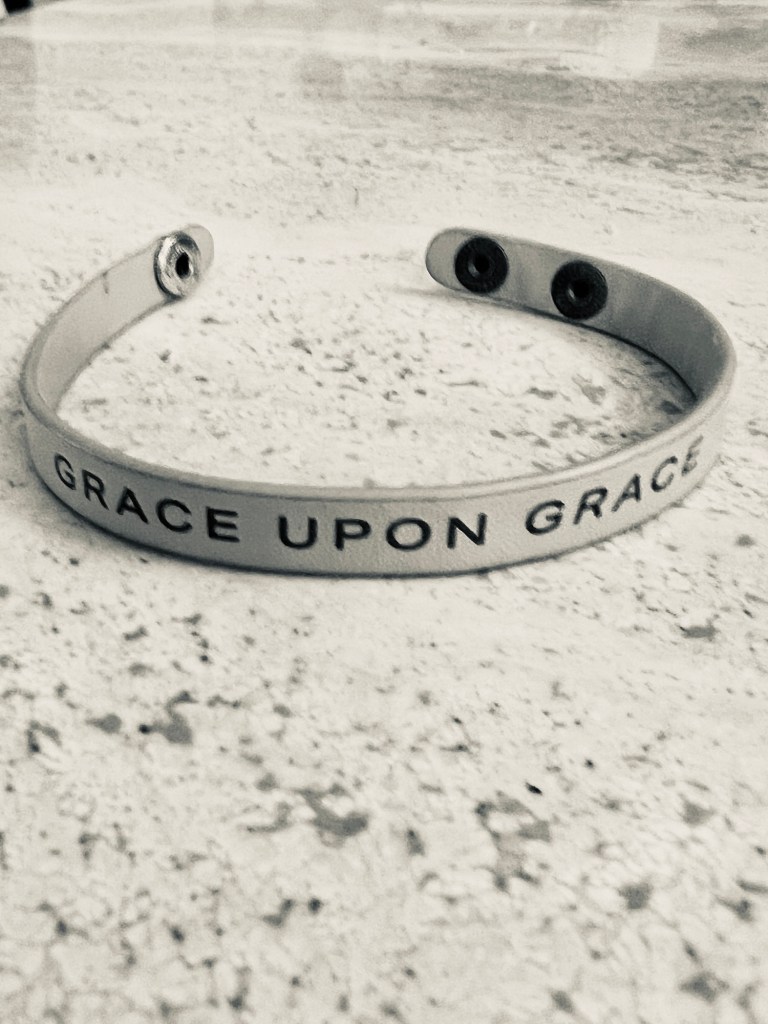
My poem’s title is Latin for the words on my bracelet. An excerpt of John 1:16: from the fullness of Christ, we have received “grace upon grace.” I wear it as a reminder to give grace, having received it in such abundance. I purchased the bracelet at a coffee shop called Charis (“Grace”) which has a wall plastered with customers’ prayers written on tiny slips. The owners donate a portion of proceeds to organizations that are working to make the world a better place. Our time here is short. Let us be about this work, in communion with one another, giving each other grace.

*******

with thanks to Two Writing Teachers for the March Slice of Life Story Challenge
Magical treats

My room at school is kind of magical.

It’s decorated with a Harry Potter theme. I have a Diagon Alley backdrop behind my desk. Whenever I sit there to catch up on email, I blend in; people entering the room don’t even realize I’m there. When I speak, I startle them – next best thing to a Cloak of Invisibility!

Children from all grade levels, kindergarten through fifth, love to come by to look at my books and memorabilia. They share what they know about the series. They ask questions. They tell me which Hogwarts house they belong to (Gryffindor, Hufflepuff, Ravenclaw, Slytherin) and which houses their moms belong to. Always the moms. Every once in a while, a child will bring me a gift, like a Harry Potter pencil or sticker: “When I saw this, I thought of you, Mrs. Haley!”

My colleagues have done the same. I have been given a Hedwig owl hairclip, a Hagrid birthday cake topper for my water tumbler straw, Harry, Hermione, and Ron Pez dispensers, assorted little figurines, and Harry Potter Hershey’s Kisses (yum!).

These are more than random acts of kindness. They are gestures of love, and they humble me.

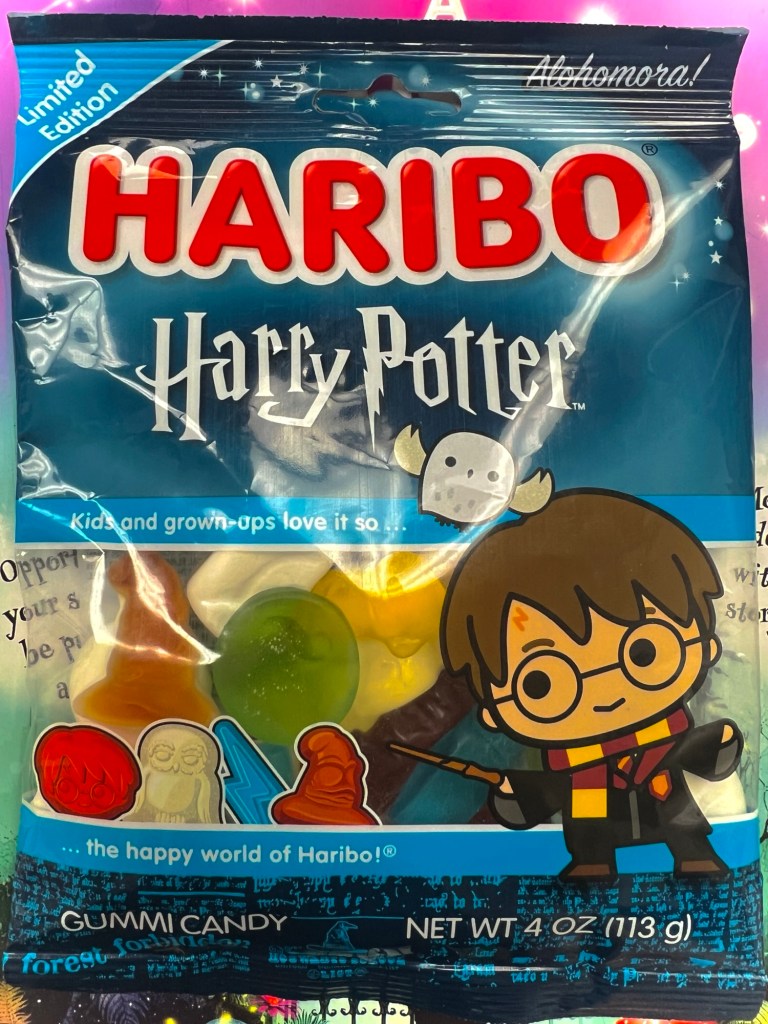
In the last couple of weeks, more magical treats materialized. A volunteer gave me Harry Potter gummies:

Note the word Alohomora! in the upper right corner: Open!

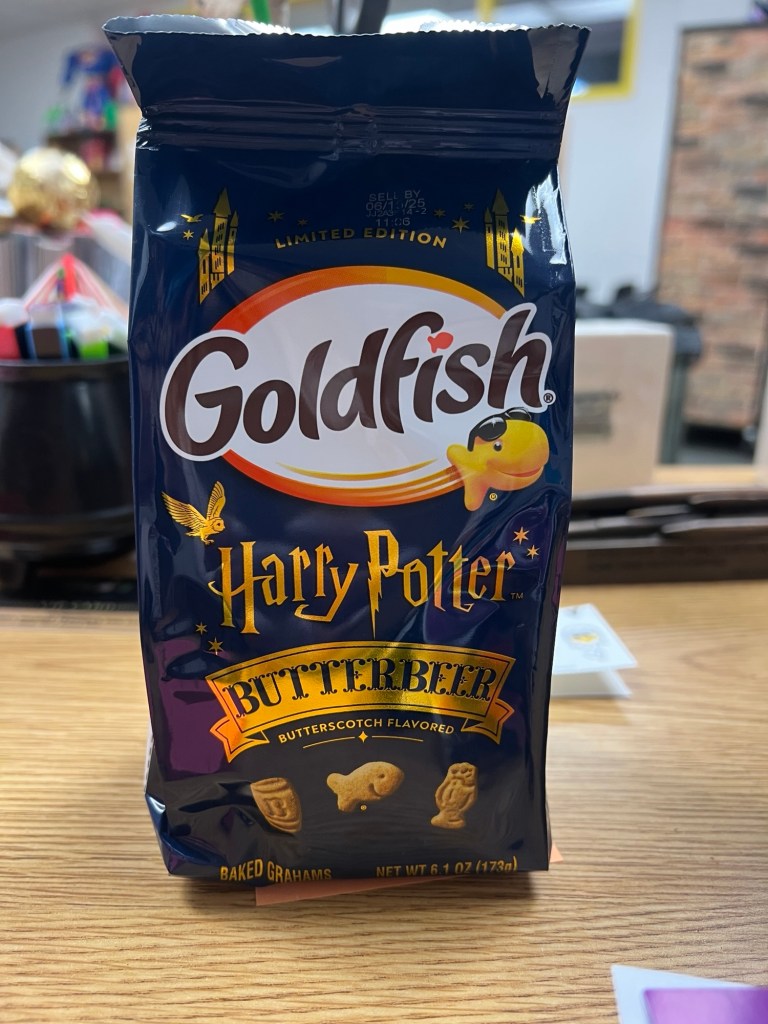
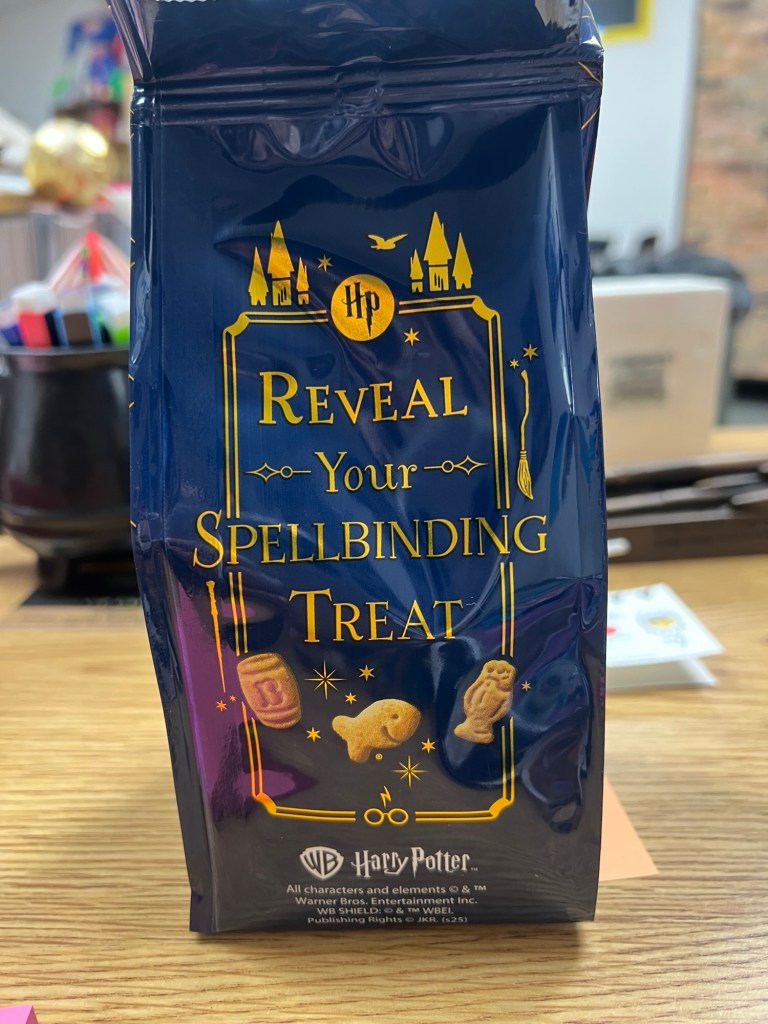
A colleague gave me a bag of Harry Potter Butterbeer Goldfish:

The moral of the story here is much like that of the series itself: It’s not really about magic, wizards, or witches. All that is just the backdrop. The real message is that sacrificial love and friendship – along with the courage to stand up for what is right – are more powerful than fear, hatred, and evil.

Thank you, precious gift-bearers, for the timely and delicious reminders.

*******

with thanks to Two Writing Teachers for the March Slice of Life Story Challenge
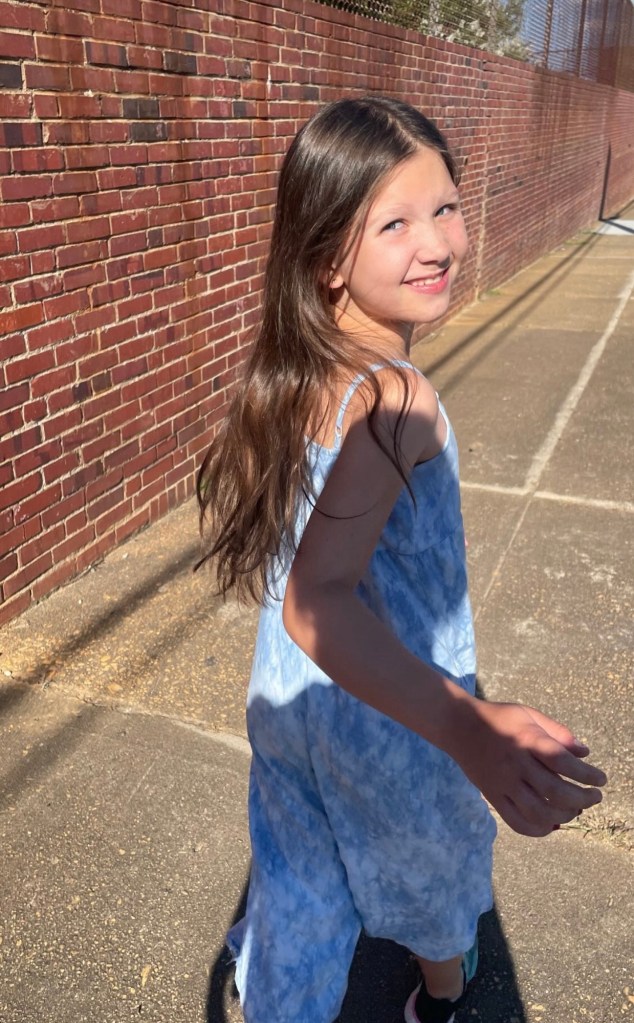
Portrait of the artist as a young girl

She is nine
granddaughter mine
drawing, day by day,
the world, her own way

The expression
of every impression
reveals the intensity
of her scrutiny

Details of the whole
spark her young soul
-young Artist, can you see
the world you are to me

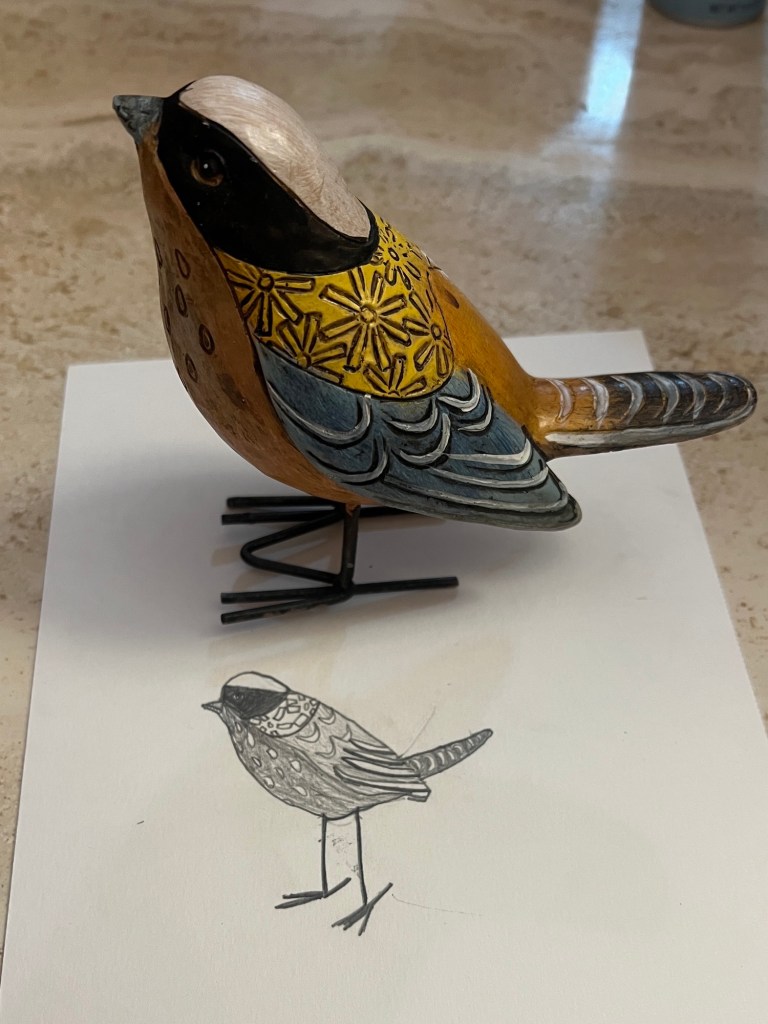
A sketch of my bird figurine by my granddaughter, Scout

My beautiful artist. One of my favorite photos.

*******

with thanks to Two Writing Teachers for the March Slice of Life Story Challenge
Absence

As many of you know, I write a lot about birds.

Every March, I write specifically about the house finches which build a nest in my front door wreath. They have done this for years, except for 2020 during COVID-19, strangely. They built a nest in the wreath that year but never laid eggs.

This year my husband put his foot down: Enough. We haven’t been able to open our front door or enjoy our porch every spring and summer since I don’t know when. Don’t let the birds build a nest in that wreath.

I knew a pair of little finches had been already been eyeing it, however. I have heard them “talking” out there on the porch in their singsong voices. They didn’t seem to like this wreath, really: it’s a winter one, still up from Christmastime.

I should have taken it down a while back. I knew better than to put out a spring wreath, for, against my husband’s wishes, it would become a finch nursery. I would be a frenzied Franna again, roping off the porch to keep the babies safe. I wasn’t always successful. Some babies died in the nest, and I grieved as I removed it. The parents carried on, rebuilding in no time, laying more eggs.

Naure is astoundingly resilient.

I’d also take the granddaughters out for an occasional up-close glimpse of tiny new life coming into the world. I would marvel at the parents’ unfailing care of their young. I would hear their songs, the most beautiful trills and warbles. It’s a pure, sweet, glorious song. The sound of joy.

Yesterday I noticed that the finches had started a nest in the wreath…they are so stealthy about it!

Today my husband took the wreath down (because I couldn’t).

I understand. I do. It’s a pain to keep the front of the house roped off for months – yes, months – at a time, for these prolific little songbirds.

Yet it always felt like a gift, to have them here and to provide shelter for them, so that more beauty could fly out into the world.

I am bracing myself for the finch’s discovery of the disappeared wreath. They planned on having their babies there. I do not think I can bear the sound of their sweet voices asking Why?

But as yet, there is no sound from the porch. The sun is very bright this morning, and I hear all sort of birds in the distance.

I expect my finches will rapidly find another place to build. I pray they do. The world needs more of these little creatures who were never supposed to have survived in the first place. House finches were released in the wild years ago by unscrupulous pet shop owners. The house finch didn’t die out; it proliferated.

It’s just that, in this moment, the silence, their absence, is an ache in my heart.

There’s no way to tell the finches that I am sorry. Or how much I love them. Not so they’d understand.

And so I write.

What I know is…no matter what, they go on, singing.

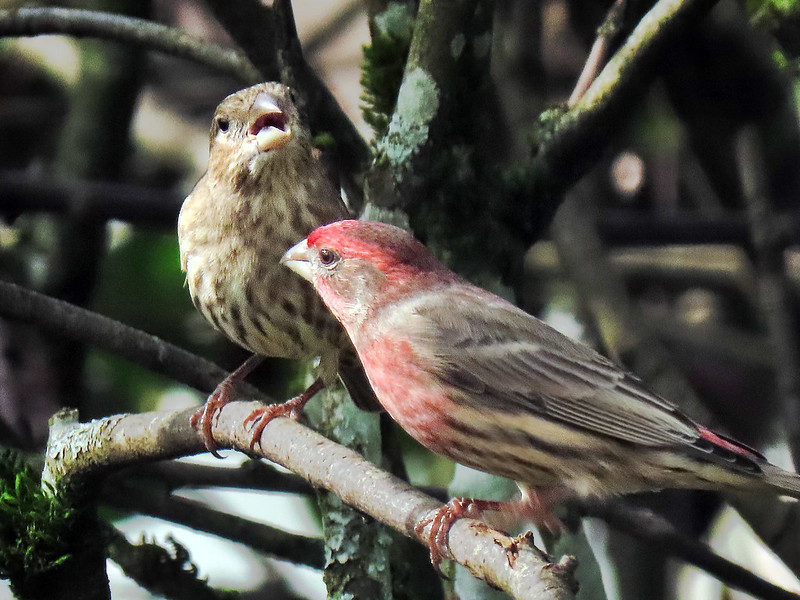
House finch pair. Birdman of Beaverton. CC BY-SA 2.0.

*******

with thanks to Two Writing Teachers for the March Slice of Life Story Challenge
Squirrel

Today’s WordPress prompt: Which animal would you compare yourself to and why?

Yikes. This could take awhile.

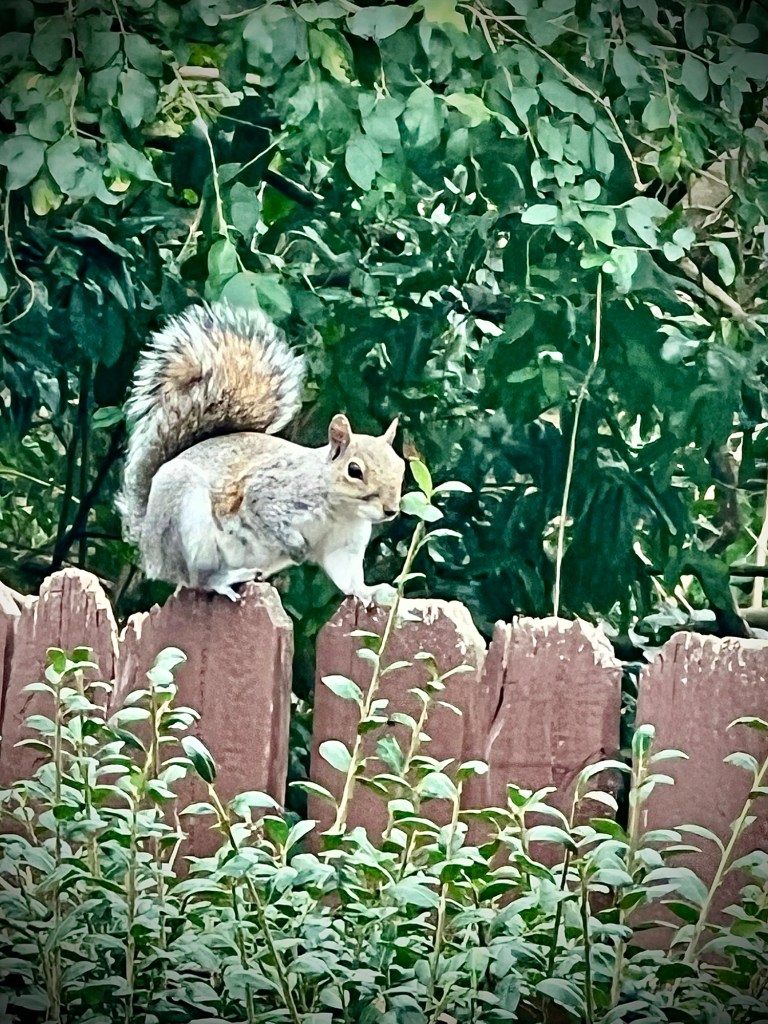
However…yesterday afternoon I had a dentist appointment, and this creature was sitting on the fence as as I pulled into the parking space:

“Well hello, Squirrel,” I say from the driver’s seat.

The squirrel does not move.

I take a picture of it with my phone.

The squirrel does not move.

The wind is kicking up, rain starts spattering…

The squirrel does not move.

It watches me as intently as I’m watching it.

I note the right paw raised, perhaps in readiness to flee…

Which is what the squirrel does, as soon as I look away to reach for my purse, for in that fraction of a second – poof! – it is gone.

So, back to the WordPress prompt: Which animal would you compare yourself to and why?

I wouldn’t have thought to compare myself to a squirrel, but since one came to me, and since I have no idea of what else to write about today in the March Slice of Life Challenge, I will consider how the squirrel and I are alike. Isn’t this a hallmark of the writerly life, using everything that comes your way?

Here’s what I found with a bit of research:

Squirrels are preparers.

Squirrels are resourceful.

Squirrels can symbolize that it’s okay to forget and move forward.

Squirrels can symbolize that life’s blessings can take root in unexpected ways.

I never expected to discover such a kinship with the squirrel.

I am also captivated by the etymology of “squirrel.” Derived from Ancient Greek, it means shadow-tailed.

Squirrels use their beautiful “shadow” tails for balance, a warm cover against the cold, a means of communication, and even in expression of emotions. They flick their tails when alarmed, happy, and frustrated.

Symbolically speaking, the squirrel’s tail can represent the past (as a “shadow” behind the squirrel, which is attached to it, and follows it).

Think on that awhile. The shadows of the past…ever with us.

Haunting? Not necessarily. As someone who likes dabbling with memoir, I find unexpected riches in writing about the past. A cache of courage. A hallowed hoard, even in the darkest places.

In those shadows, I find the first book I can remember being read to me… here I am, a toddler, sitting on my grandmother’s lap, listening to the playful rhyming lines in a book about…squirrels.

Thank you, Squirrel, for being here.

*******
with thanks to Two Writing Teachers for the March Slice of Life Story Challenge
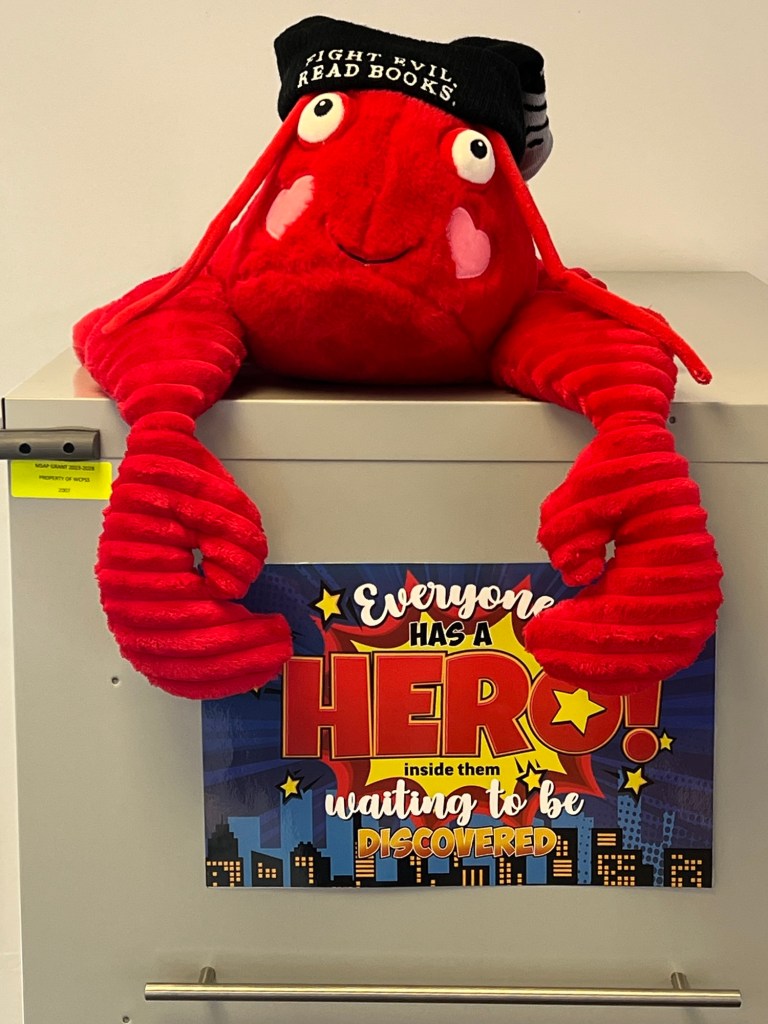
Lobster power

The children notice it right away:

The giant lobster on top of the cabinet in our Heroes’ Hangout reading space.

They are elated:

Look! A lobster! Why is it here? Where did it come from? Look! He has hearts on his cheeks! He’s so cool!

Truth is that a colleague gave the lobster to me when she learned that I sometimes let the smallest, wiggliest students hold onto a stuffie “friend” so they can focus on listening to their volunteer reading a book to them.

But this is what I tell these second graders:

He’s a reading lobster. He wanted to be here in the Heroes’ Hangout.

This sets them off again: What’s a reading lobster?

Well, Friends, you will have to decide that for yourselves… why would a lobster like reading?

More chatter. We may never get to the lesson.

A few days later I remember a hat I have at home. Perfect for the lobster!

I bring it to school and put it on his head.

The kids notice right away: Look! The lobster has a hat! It says ‘Fight Evil, Read Books!’

That’s right, Friends. Maybe he’s a Superhero Reading Lobster.

Maybe we will create a Superhero identity for him and a backstory and possibly write some adventures starring our Superhero Reading Lobster who fights evil by reading books…I mean, anything is possible after Dog Man…

But for now, when my group of second graders finishes their guided self-portrait lesson with me in the Heroes’ Hangout, I say: All right, time to put away your materials and line up at the lobster.

They form a quiet line.

I say, Bye, Friends. Lobster power all the way.

All eleven kids jump up to touch the lobster as they pass by. I watch them walk down the long hallway to their classrooms in a straight line, without a sound.

Not one student has ever asked what I mean by “lobster power all the way.”

That’s how powerful our lobster is.

*******

with thanks to Two Writing Teachers for the March Slice of Life Story Challenge
For more about the Heroes’ Hangout, click here.

Bird’s head

The morning of January 28. Almost seven o’clock. Driving to work in the lowest spirits I’ve had in a long time.

Several factors contribute to this. Usually I can find ways to redirect my thinking, but this morning I cannot. Tired, melancholy, self-worth ebbing…I don’t have strength to face the workday.

Driving past barren fields, icy ponds, old tobacco barns, and rural homes with white smoke rising from chimneys, I say aloud, “God, I could really use encouragement today.”

Rounding the next bend, I see a lone tree in the otherwise empty field. In the naked branches of the tree sits an enormous buzzard, its back to me.

I amost pay it no mind, except to think That’s a really big bird.

Just as I am passing, the bird turns its head in my direction…oh, what I’d have missed if I hadn’t been looking!

Stunned, I begin to cry.

Sometime later I capture the moment in a double etheree:

Bird’s Head

My
prayer
is for strength
as I drive round
the bend in the road
where a lone, lifeless tree
stands stripped in a barren field.
Perched there in those gnarled old branches
is a huge buzzard. It turns its head
just as I pass…a white head, shining like
fresh snow in sunlight, brilliant to blinding
…a bald eagle, enduring winter,
keeping watch high above the earth.
Jolted by this fierce response
I drive onward, sobbing
for the provision,
newfound courage
singing wild
in my
veins.

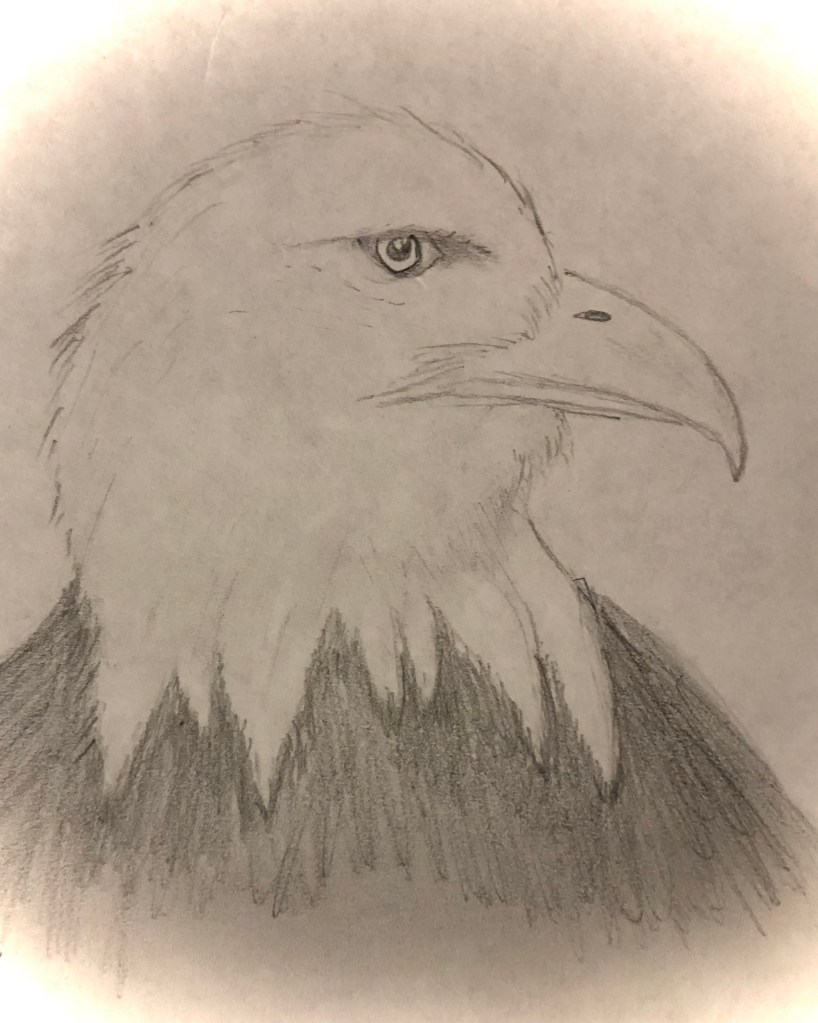
An old eagle sketch of mine

*******

with thanks to Two Writing Teachers for the March Slice of Life Story Challenge
Note: The eagle was still in the tree that afternoon and over the next couple of days. I’ve learned that eagles do this in winter, to conserve energy. Its presence was exactly the energizing spark I needed to rise above: “Courage, dear heart…”