Crossing the bay

cape-charles-beach

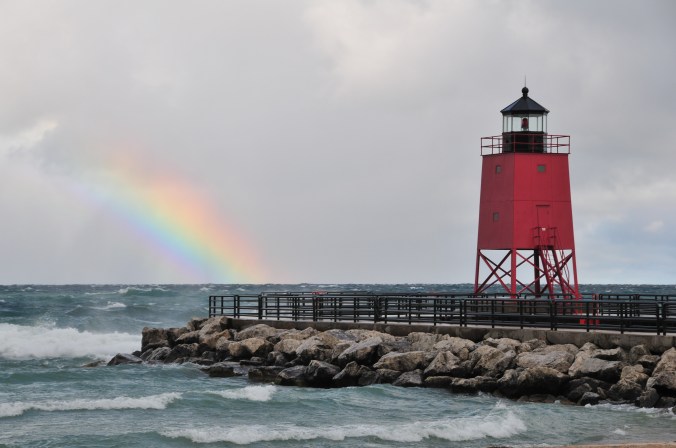
Chesapeake Bay, Eastern Shore, Virginia. Ken LundCC BY-SA

But such a tide as moving seems asleep,
   Too full for sound and foam,
When that which drew from out the boundless deep
   Turns again home.

-Alfred, Lord Tennyson, “Crossing the Bar”

I walked the little beach many times in the five years I lived in Cape Charles. With the ebb and flow of the tide, tiny periwinkle snails bury themselves in the sand. Gulls hovering overhead cry in their piercing, lonely voices. Storms churn the Chesapeake Bay, stirring its hidden contents so that afterward, treasures can be found on the shore – sand dollars, whole and unharmed, prizes to a beachcomber. I collected many.

I was alone on the beach the day I saw the old train coming to the end of the line at the harbor. I’d never seen it come through – Cape Charles is a tiny railroad town that almost didn’t survive the loss of the industry.

Where’s that train going? I wondered. Has it gotten on the wrong track? There’s nowhere to go – nothing but the bay ahead of it. Will it turn around, somehow? Or back up? 

Is it going over the edge, into the water? 

The train kept rolling forward, slowing to a stop at last.

I relaxed.

And the train began to float away from the land, as if by magic, as if it were Chitty Chitty Bang Bang, sprouting a flotation device.

It’s on a barge!

I watched, marveling, as the train sailed out into the bay, a majestic, most rare sight. I imagined visiting fishermen looking up from their bait and tackle to gawk as the train drifted by their boats.

There was something poetic about it, both grand and poignant, filled with awe and tasting of sadness. The gulls cried; a salt-tinged breeze caressed my face. I watched as the train grew smaller and smaller on the bay, until I could see it no more, and turned again home.

slice-of-life_individual


Titanic relic

pier-54-april-2012

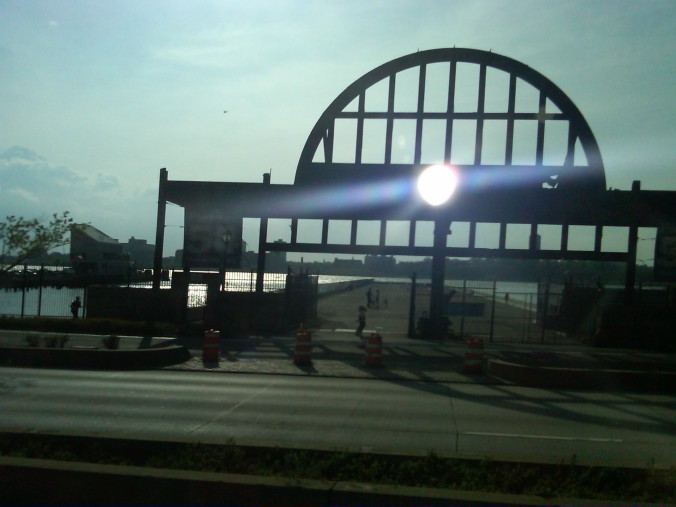
Pier 54,  April 21, 2012 – exactly one hundred years after the sinking of the Titanic.

Arriving by bus in New York City, the tour guide said, “This is Hudson River Park.”

Looking through the window, I saw a sign: Chelsea Piers.

Chelsea Piers – why does that sound so familiar?

The words buffered around my brain for a second or two, retrieving the information: Chelsea Piers is where the old old ocean liners docked. 

Pier 54 is where the Titanic survivors were delivered by the Carpathia – hey, that’s exactly a hundred years ago this week!

I scrambled for my phone and opened the camera.

I took the shot just as we passed.

There is no magnificent dock anymore, only a corroding steel arch standing like a neglected, tired sentinel as people go about their daily lives. It’s hard to imagine this unremarkable structure as a portal to luxury, to adventure, to the stuff dreams were made of over a century ago.

C.S. Lewis wrote in The Voyage of the Dawn Treader, in the chapter entitled “The Dark Island”:

“Do you hear what I say? This is where dreams  – dreams, do you understand – come to life, come real. Not daydreams: dreams.”

In other words, nightmares.

I tried to envision the crowd, the men in overcoats, the women in long dresses, everyone wearing hats, as the Titanic survivors disembarked on April 18, 1912. It was night. For a fleeting second, I could sense the darkness, the shattered dreams, the unspeakable horror of watching that massive, beautiful ship break apart in the icy sea, taking so many passengers with her to a deep, watery grave. The nightmare was real; it would never leave the survivors.

In an instant, the darkness vanished, my glimpse of long ago ended. I blinked in the broad daylight. As my bus sailed on, I studied the photo. A bright light shines in the very center of the arch, which once bore the words White Star. I cannot tell if my camera was poised just right to reflect a flash in the window, to be captured perfectly in the middle of that haunting remnant, or if it is a phenomenon of light from some other source; nevertheless it shines like the sun over this relic of ruin, like day following night, driving the nightmares, the ghosts, away, hallowing this entrance to another time.

slice-of-life_individual


Red rubber boots

red-rubber-boots

It is Sunday, the day my Granddaddy is off from work at the shipyard. It is the day we usually walk to the playgrounds behind the churches across the busy city street, my small hand clasped in his large one, as we wait for the traffic light to change. Today it is raining and we can’t go out. I sit by his recliner on the braided rug beside his feet – he wears black lace-up shoes every day – and sigh.

“What’s the matter, Duck?” he wants to know. Sometimes he calls me Duck, sometimes he calls me Pig. I do not know why. He just does.  It makes me feel warm inside.

“Granddaddy, the girls in kindergarten have red boots to wear when it rains. I don’t have boots.”

“Oh, I see. I guess you been wanting some of those boots?”

I nod my head and crawl up into his lap. “Yes, Granddaddy. For a long time.” His black leather cap is on the side table by the recliner. I pick it up and put it on my head. It smells like him. A little Vitalis and a lot of goodness.

He wraps his arms around me. “Tell me about these boots, what they look like.”

“You can pull them over your shoes … ” I begin.

He got them for me, of course, those red rubber boots that I proudly wore to school and stored on the bottom shelf in the cloakroom, beside the boots of the other girls.

At the time he got them, I did not know that his retirement was imminent, that within the year he’d move back home to the far reaches of eastern North Carolina, three hours away. I would only see him a couple of times a year from then on.

I grew up. I had children of my own. When I went to visit Granddaddy, I sat on the stool by his recliner, as close to him as I could get. He patted my arm. We sat this way for a long time, without any conversation, just being together.

“You remember them red rubber boots I got for you?” he asked eventually. His blue eyes twinkled at me. Every now and then, across the decades, he’d mention those boots.

“Oh, yes, Granddaddy. I remember. I loved them so much.”

He chuckled, patting my arm with his large, wrinkled hand.

He was retired for thirty years, living to be almost 93.

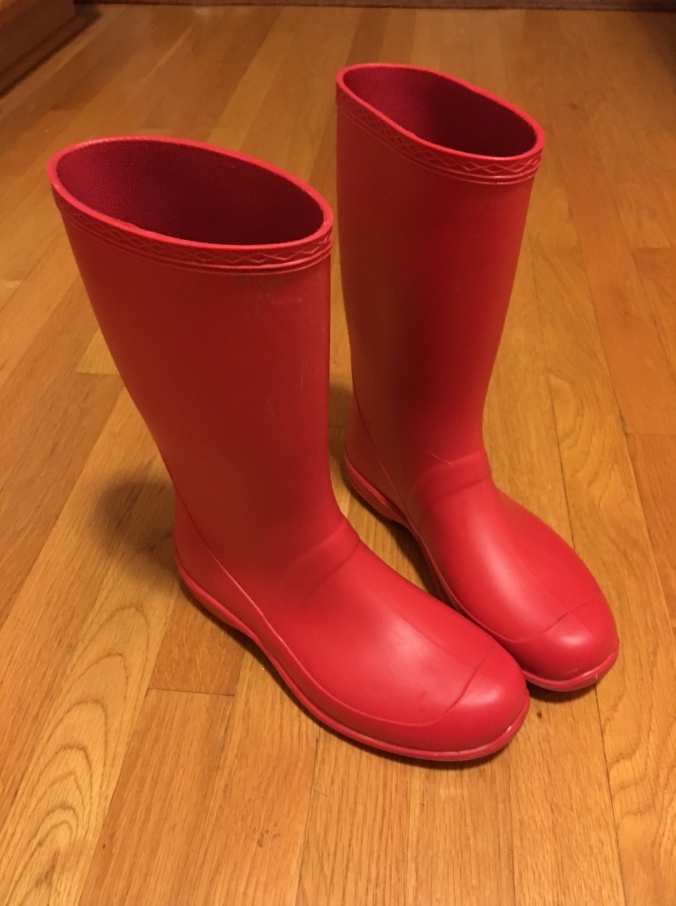
I had nearly forgotten the red rubber boots when I happened to see a pair at the store a year or so ago. They were so like the boots he gave me when I was five.

“Ah, Granddaddy,” I whispered. “You’re never far away.”

I bought them.

They protect me from the rain; they keep me grounded, connecting me to the earth that my grandfather loved, for he was a lifelong farmer even though he had to find better-paying work to provide for his family. The color brightens the gloomiest day. I wear my boots with deepest gratitude for a humble man who knew about sacrifices, great and little, fiercely proud that his blood flows in my veins.

I remember, Granddaddy. I always will.

slice-of-life_individual

Around the bend

white-peacock

Rezervatia de zimbrii Dragos Voda. Cristian Bortes. CC-BY 2.0 

I live in the country.

Long before daybreak, a rooster crows for all he’s worth, a passionate, guttural cry signifying that the dark night is ending.

My kitchen bay window faces east, catching the first glimmers of pink in the sky.

A short drive on the winding road by my home carries me past weathered stables and tobacco barns, abandoned unpainted houses from a bygone era, and fields where farmers still make their living.

There’s a horse or two in the pastures, innumerable goats, and the occasional delightful donkey, silvery-gray and calm. I have learned that donkeys keep coyotes away – how extraordinary.

One day, along a bend in the road, beside an old gate overgrown with brambles, a peacock strutted, the morning light electrifying the brilliant blue of his body. I slowed down, wishing I could see the long green train of his feathers fan out, but the peacock was skittish and went back through the gate via some hidden hole. Surely he should not have been out by the road, although the sight of him made me grateful to be alive. From then on, I looked for him.

Until the day I rounded that same curve and there, in the middle of the road, stood a white peacock.

I could not believe my eyes – I never knew such a thing existed.

But there he was, gleaming like some divine messenger, standing right on the double yellow lines. I slowed to a stop. He looked at me through the windshield; I hardly dared to breathe. He took his time heading back to the lush bank by the brambly gate, as if he owned this road, maybe this entire world, his long white tail feathers dragging behind him like a bridal train or a king’s ermine robe.

I watched him go, oblivious of everything around me except the sheer splendor of his presence.

I have learned, then, that every day is new, that there are unexpected wonders waiting just around the bend. In the middle of the familiar and mundane might be something rare, glorious, breathtaking.

Be watching.

slice-of-life_individual


Signals

signals

Untitled. abarndwellerCC-BY

The Scottish poet Robert Burns wrote, in “To A Louse: On seeing one on a Lady’s Bonnet at Church”:  O wad some Pow’r the giftie gie us/ To see oursels as others see us! It wad frae monie a blunder free us…

I have often pondered that idea, people needing to see themselves as others see them. To see myself as others see me. What a frightening prospect. Certainly the power to see ourselves as others see us would free us from many a blunder … one would hope.

The lines spark a question I pose to myself and teacher colleagues: What signals are we unwittingly sending to students?

Years ago, I wasn’t sure I wanted to teach. I thought I would try it, almost reluctantly, as I needed a job and my own children were still in school. I wasn’t thinking of teaching as a calling or whether or not I was cut out for it. I took a temporary position, fifth grade remediation in reading and math, with some trepidation.

“I am not sure what to do,” I confessed to the hiring principal. “I don’t know if I can really help the kids.”

She smiled. “Just love them. The rest will come.”

Here goes, I thought on Day One, as I stepped into a classroom where kids milled about, working collaboratively on math. It’s sink or swim.

From across the room, a boy saw me standing in the doorway. He didn’t know me, didn’t know why I was there, but he shot across the room through the throng of his classmates to throw his arms around me.

That was my induction to being a public educator.

A child, sinking fast, clung to me like I was a life preserver. Perhaps he perceived, instantly, that we were in – or out – of the same boat. It was sink or swim for both of us.

In this classroom, I watched the boy try his hardest to swim. He struggled academically. He struggled with controlling his impulses. He struggled socioeconomically – he wore the same heavy black ski jacket every day, even when the weather was hot. He was chastised by his teacher for every infraction, great or small. The teacher – widely respected by colleagues – was clearly suffering from burnout,  undoubtedly tired of swimming herself. Whether or not she intended it, she sent a signal: Do not approach me or question me.

Do we, as teachers, send a signal – with  or without words – that we are safe harbors or treacherous ground?

I remembered a teacher of my own. She stayed in a constant state of frustration with our geometry class, once giving me detention for leaving paper in my desk despite my impassioned protest that I hadn’t done it. Math wasn’t my strong suit and I sank to the point of dropping the course, as I had all the math credits I needed to graduate. Later that year I landed a role in the school play and this teacher came to watch it. As people congratulated me backstage after the performance, this teacher stepped forward:

“Well,” she said, “I never would have believed you had it in you.”

You decide: Would I have ever been successful in her class?

One last note on my little friend back in the fifth grade: He went on to graduate.

On his behalf, I thank all those teachers who were, along the way, safe harbors for him.

Reflect: What messages do you send to others, verbally and non-verbally, about their value? Think of the teachers you had: Were they repellents to the learning in their classrooms, or were they encouragers? Were they the treacherous ground or the safe harbors? Write. Find a viable preserver when you need to. Rest a for bit. Then keep on swimming, mindful of those who are swimming so hard, so close by. 

Open a book and dance

dance-metaphor

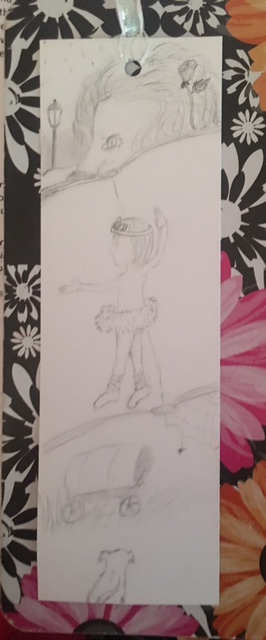
During a recent study of Who’s Doing the Work? How to Say Less So Readers Can Do More (Burkins and Yaris, 2016), the facilitator encouraged participants to jot notes or sketch on blank bookmarks as reflections of our learning.

Throughout the book, the authors use dance lessons as a metaphor for how learning to read works. As aspiring dancers watch proficient ones with a desire to emulate them, to navigating increasingly challenging choreography, so young readers develop skills along with a desire to read for the sake of it. My chapter was “Independent Reading: Learning to Love to Read,” in which independent reading is compared to a dance recital. Students have practiced and the teacher watches from the wings, not interfering when there are missteps, but “noting ways to fine-tune the their next performance.” The line that struck me most: “Most important, teachers let students read, allowing them the glorious luxury of falling in love with books.”

That got me thinking about my early reading life and the hand that teachers played in it.

In fourth grade, my teacher began the year by reading Charlotte’s Web to the class. Naturally we wept at the death of Charlotte (don’t we all, still?). I was so captivated by the story that I bought a copy at the book fair, to reread it to my heart’s content. This teacher knew what she was doing: she ended the year by reading Old Yeller aloud to outright sobbing from the class. I had to read the book again on my own, to grapple further with Travis’s extraordinary courage and the horror of the decision he had to make after that old yellow dog had saved his life. Old Yeller was outdone only by my own discovery of Where the Red Fern Grows in the school library – I cried every day for weeks after that one. I remain eternally grateful to Mrs. Cooley for hooking me with the power of story.

My fifth-grade teacher suggested that I read the Little House series. I loved Laura so much that I sometimes wore my long brown hair in braids and had my mother make sunbonnets for me (to wear at home, not to school). Laura was real. She wasn’t perfect and she knew it; I admired her backbone and the way she faced challenges. I also loved going back in time, reveling in Laura’s descriptions of the natural world and everyday life long ago. There’s such poignancy in the line “Now is now. It can never be a long time ago” (Little House in the Big Woods). As a child I pondered that line, knowing the story took place over a hundred years in the past – then realized that, in the pages of a book, time is preserved, all that happened is still unfolding, those who are gone still live. In the pages of an engrossing book, at least, now is now. How wise my teacher was, guiding me to books that would make reading part of my everyday life.

I was given lots of opportunity to explore books in the sixth grade. That year I was scouring the school library shelves for titles I hadn’t already read when I encountered an especially intriguing one: The Lion, the Witch and the Wardrobe.  “Sounds interesting,” I thought, taking it from the shelf, never suspecting what a defining life moment this would be. When I opened the cover, the magic poured out and pulled me in; I devoured every one of the Narnia Chronicles with an insatiable hunger. I loved them for the beauty of the setting, for their Britishness, for the author’s gift of turning a phrase and his humor, and most of all, for the hope they contain. I was encouraged to reenact scenes from the book for my classmates: I roped a friend into portraying Jadis while I dressed up as Aslan, complete with mane and tail. It’s the old good vs. evil theme, resurfacing many times throughout one’s academic and life experiences.

The influence and insight of my  of my teachers, along with the freedoms they gave me, had much to do with the reader I am, with person I am, today. They provided me the “glorious luxury of falling in love with books” – as you can see in the bookmark above, my tribute to them. I was never much of a real dancer, but metaphorically speaking – as a reader – I dance each day with wild abandon and absolute joy.

Reflect: Who helped you fall in love with reading? Write about this experience – and if these people are still living, write to thank them for their great gift to you. If you teach: How can you better provide “the glorious luxury of falling in love with books” for your students?

My Patronus

As a headmistress and co-founder of my school’s Harry Potter Club, I was recently admonished to take the Pottermore Patronus quiz, as all other Patronus quizzes are essentially heresy. I approached the task with a bit of trepidation, having heard of people attaining aardvarks and the like.

For the non-Potterite: The Patronus charm produces a silvery animal guardian, usually representative of the individual casting it.

Being a fantasy fan since childhood, and considering my headmistress role, it was necessary: I plunged into the virtual dark forest to seek my symbolic protector. On the site, ghostly words appear in groups of three amongst the trees; the seeker chooses one and is moved onto the next set. At one point in this quest, when I paused too long, the words evaporated with a reprimand: “You are too slow. This game requires quick reflexes.” Silently chiding myself for overthinking simple word choices, certain that this blunder would land me with an armadillo or caterpillar, I picked up my pace. At last, in the ominous forest, a silvery shape materialized.

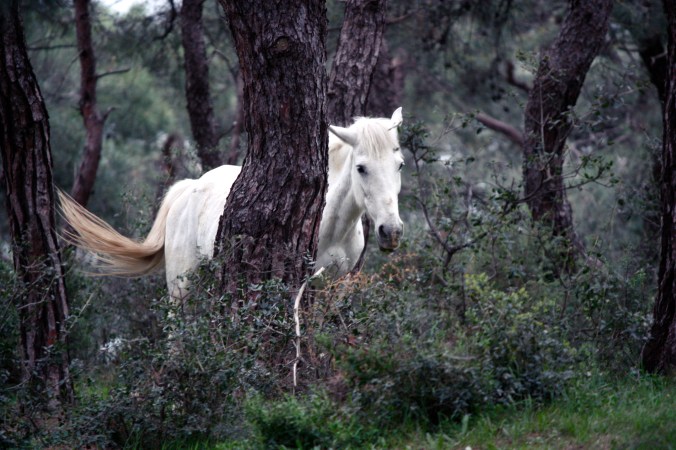
A white mare.

Beautiful and powerful, my white mare galloped through the forest, luminous against the darkness. Enchanting.

My next quest, naturally, was looking up the symbolism.

From various sites, the synthesis is that a white horse represents wisdom, power, loyalty, heroism, nobility, victory – encouraging, yes, but also inversely raising an intrinsic, lofty bar: am I worthy of the white mare? Do I deserve her? Never mind the fact that I gained her by playing a game with an end product based solely on word choices, not short answers or soul-searching responses. The writer in me delves deep into the metaphorical.

I already knew that white horses can symbolize death or the end of the world. They are considered psychopomps, creatures that guide human spirits on their journey from Earth to the afterlife.

As I pondered these connections, my Patronus suddenly conjured up road trips with my father and sister. Three hours is an eternity to young children cooped in a car, so to pass the time, Daddy taught us a game he played as a child:

“When we go by any horses, if they’re on your side of the street, you get a point for each horse. If you have a white horse on your side, it’s worth ten points, because you don’t see many of those.”

My sister and I instantly glued our faces to our respective windows, for we’d been by these random pastures before. We’d often seen horses grazing, strolling, sometimes galloping. I was sure – I just knew – I’d get a white horse. Maybe more than one!

“The thing is,” Daddy continued, “if we pass a graveyard, and it’s on your side of the street, you lose all your horses.”

So we played the game. My sister and I gained horses with glee, then lost them with loud groans, without realizing that one of us would win on the journey to the destination and the other would win on the return trip.

Daddy drove on in peace, smiling to himself.

How many horses I won and lost, I’m not sure, nor do I recall how many were white, only that they were there by the wayside on a long, tiresome journey. Those white horses are obscured by time now, very dim, but still real, ever more priceless, in my misty memory.

Enchanting, indeed, that one should reappear as my guardian after so many years, and that I should have gained it in a game venue that didn’t exist when I was a child.

Daddy, I think, would be pleased. Perhaps he is, from his place on the other side.

Reflect: What creature might symbolize you, and why? I’ve often played a game with students, challenging them to think of an animal that begins with the first letter of their first names (I’ve always chosen fawn in these scenarios – perhaps I should change it to foal?). No two can be the same, so each student ends up with a unique animal and has to think of ways the animal might represent them or their lives. Think – and write. 


Shine

born-to-shine


This is the cover of my mentor text notebook, housing the writing I’ve done with and for children across grade levels.

I believe that every child is a writer, because every child has a story. Every child has feelings and ideas. The writing teacher simply shows how to tap into these feelings and ideas, to give voice to them, to organize them, so that the mind and heart of the writer impacts readers.

Writing is about the human experience: We are all born to shine.

We shine through our fears, our losses.

We shine beyond the choices we make and the choices of others, beyond the things done to us and the things we have done.

We shine no less in our failures than in our successes; in fact, in learning and pressing on, we shine the brighter.

We shine in knowing what to hold onto and what to let go.

We shine when we harness anger before it burns away all that’s of value within us.

We shine by leaving footprints of hope for others to follow, for the human heart runs empty on despair.

We are ALL born to shine. Whether or not we do is up to us.

Reflect:  In the book The Forgotten Beasts of Eld by Patricia A. McKillip, 1974, a mysterious creature had the power to turn people’s eyes around to see inside their minds; they died from what they saw there. Writer, know thyself. Look deep within. You will be surprised by what you discover – the beautiful and the not. Write – and shine.


Born musician

piano-window

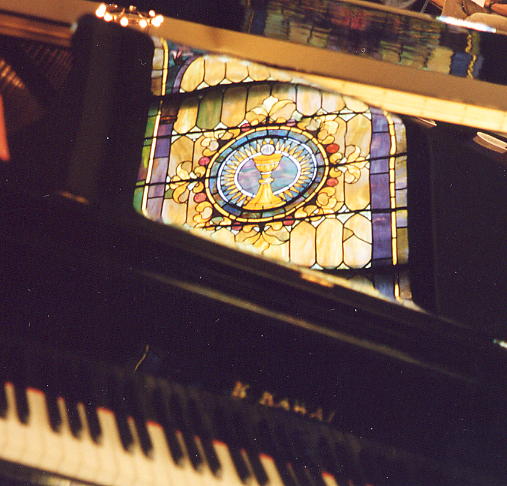
Piano & window. Alan Mayers. CC BY-SA

Years ago, a woman – tired, seven months pregnant – sat in the front row of a church. The morning sun shone through the stained glass windows, casting jewel-tone light on the baby grand piano, a soothing sight to the weary woman whose busy child was churning her insides. The pianist took a seat and began to play the prelude.

The baby stopped moving. He or she didn’t move again until the prelude ended. After the final notes, the child resumed the high activity.

The baby hears the music, thought the mother, marveling. It was the first of many times she would notice the unborn child’s response.

Around age three, the boy frequently hummed a tune to himself. His mother recognized it: “Amazing Grace.” When he was four, the child started playing cassette tapes of gospel music that had belonged to his great-grandfather. After his fifth birthday, his mother stood in the doorway of his bedroom, watching the boy making tally marks with a dry erase marker on a whiteboard easel.

“What are you doing?” she finally asked.

“I’m counting the syllables,” her boy replied, with a serious expression on his little face. He continued his business, listening to the tape, steadily making marks.

It’s the beats, the mother thought. He’s counting the beats.

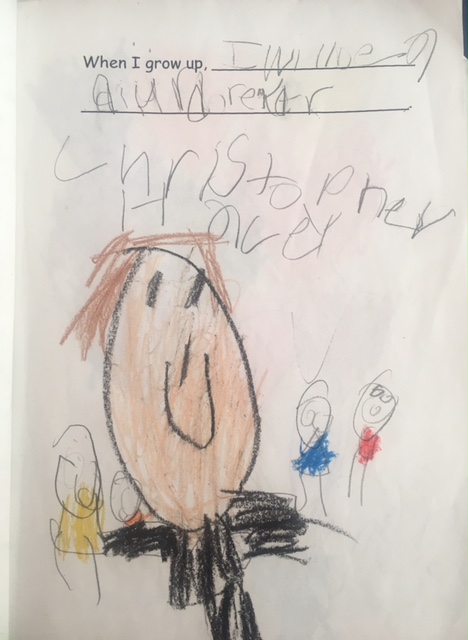
When he brought home his “All About Me” book on finishing kindergarten, his parents smiled at this page:

when-i-grow-up

“When I grow up, I will be a qiur drekctr (choir director).”

When he was seven, watching him tinker occasionally on his great-grandmother’s upright piano in the living room,  his mother said, “You love music so much – why don’t you take piano lessons?”

The boy shrugged, something of a disappointment to his mother, who expected he’d be excited. She took him to lessons anyway.

He wouldn’t practice. The lessons were abandoned before long.

His mother was sad.

In middle school, the boy decided to play alto sax in band. He began tinkering with the piano a little more. Then one day, when he was fourteen, he said, “Hey, Mom, listen to this.” And he played a medley of Christmas songs on the piano – both hands, all the parts – as if he’d been doing so all of his life.

His mother stood marveling, knowing, tears in her eyes.

The boy played the medley on the baby grand piano for the prelude at church on Christmas Day, to the astonishment of the congregation.

He played alto and bari sax for marching band throughout high school; he developed a love for jazz. Few of his friends knew he could play the piano as well. None knew he could sing. One of his teachers did, however. She sought him out when she couldn’t find sheet music for a song she planned to perform at Senior Awards Day.

“This is a version of ‘Perfect’ by Pink – do you think you can play it?” she asked the boy.

“I think so,” replied the boy.

He had two days to prepare.

The result:

One week after graduation, he was hired as the director of music programs at a church, fulfilling his childhood desire of being a choir director.

The rest of the story remains to be written, as it is still unfolding.

I am excited to see where the music takes you throughout your life, Son. Keep learning and reaching.

Much love –

Your infinitely proud mom.

Reflect: Few of us know what we are meant to do so early in life. It’s never too late to find out. What are your dreams, the things that bring you the most fulfillment? Pursue them! What are your gifts? Use them to benefit others. Encourage them to do the same.


Rise

rise

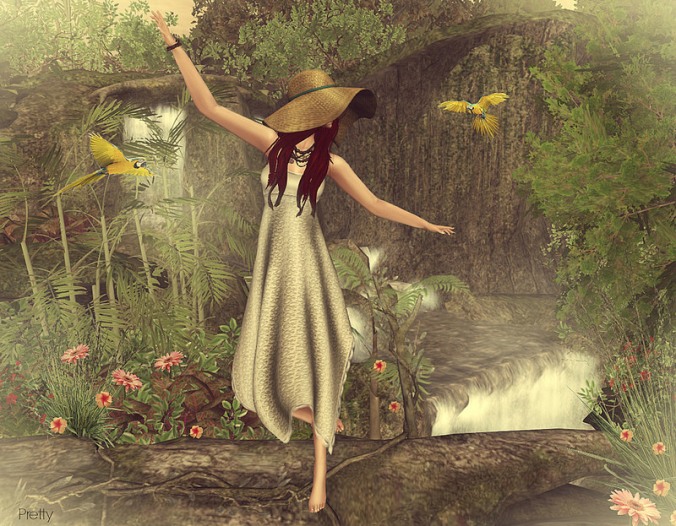
Flight Envy. Pretty ParkinCC BY-SA

Above the negativity, the naysayers, to make room for the wondrous

Above the noise, to a place of productive peace

Above the superficial, the shallow, to the real, the valuable

Above the fleeting, to the lasting

Above constraints, to the creative.

Every day is new. Rise. Reach.

Believe.

Realize.

Repeat: Rise.

Reflect: Rise is a verb. It’s an action, a choice. How might YOU rise and step forward in newness?