Grace

The kingdom of heaven belongs to such as these. – Matthew 19:14

For Spiritual Journey Thursday. A double etheree.

Now
I wake,
now I rise,
wiping the sleep
from my sleepy eyes.
Time to eat, time to pray.
Thank you, Lord, for this new day
to live, to learn, to love, to play.
In Your kingdom, where I have a place,
remember Your little child saying grace.


Remember all Your children, needing grace
when we’ve forgotten to seek Your face.
Draw us back to that holy place
in a child’s believing heart.
O Lord, in the morning
cast us not away—
help us, we pray—
You are great,
You are
good.

Create in me a clean heart, O God; and renew a right spirit within me. Cast me not away from thy presence; and take not thy holy spirit from me. Restore unto me the joy of thy salvation… Psalm 51: 10-12

Give ear to my words, O Lord, consider my meditation. Hearken unto the voice of my cry, my King, and my God: for unto thee will I pray. My voice shalt thou hear in the morning, O Lord; in the morning will I direct my prayer unto thee, and will look up.
-Psalm 5:1-3

*******
For more Spiritual Journey offerings, visit Reflections on the Teche – with gratitude to Margaret Simon for hosting.

Spiritual Journey Thursday: On golf and good-bye

An elegy.

Again I saw that under the sun the race is not to the swift, nor the battle to the strong, nor bread to the wise, nor riches to the intelligent, nor favor to those with knowledge, but time and chance happen to them all.

-Ecclesiastes 9:11

He was born nearly seventy years ago.

With cerebral palsy.

He would never be able to go up a flight of stairs, for both halves of his body wouldn’t work together.

He would partake of the Lord’s Supper at church with a special goblet reserved for him; the tiny communion cups required too much finesse.

His ever-present smile, however, set his entire face alight with a magnificent inner glow that never dimmed, his piercing blue eyes as bright as the unclouded summer sky.

Perhaps it began with his father, who chose to believe.

Who loved the game of golf and decided his son would, too.

And so he taught his boy.

As if there were no handicap.

Always make a total effort, even when the odds are against you.

-Arnold Palmer

It’s a game of precision, skill, and amazing grace.

The boy loved it.

He excelled at it.

He entered tournaments, won trophies.

A whole case full of them.

I have to believe in myself. I know what I can do, what I can achieve.

-Sergio Garcia

He liked people even though many could not understand his labored speech and, in their discomfiture, avoided him.

He could drive a car and on occasion came to visit the parsonage where my husband and I lived, when our children were small.

I learned he had a mischievous sense of humor, that his brain was, in fact, brilliant.

I wonder how many people understood this.

When I told him that I had to complete a required PE credit on my path to becoming a teacher, and that the only thing currently available was golf, and that I was already in danger of failing it due to my abysmal performance, he coached me.

Brought me pages of yellow legal paper covered with handwritten notes far clearer, finer, and consistent than my own, organized under this heading: The Fundamentals of Golf. Another heading: Form. Accompanied by his sketches of how to stand, how to hold the club, body position, dotted lines for movement…

I contemplated these golden pages with absolute awe.

He brought me newspaper clippings and magazine articles on women golfers. Hoping, perhaps, I’d love the sport. His sport. That I’d maybe rise, somehow, to the glimmering, glorious heights of it…

I never did. Never learned to love golf, not even a little.

The university instructor declared, in utter exasperation, that I looked like I was chopping wood.

But I got an A in the course.

Thanks to my coach.

Golf is the closest game to the game we call life. You get bad breaks from good shots; you get good breaks from bad shots—but you have to play it where it lies.

-Bobby Jones

He taught me much.

He wanted to be married, to have a family.

It didn’t happen.

“People don’t understand God,” he told me during one of his last parsonage visits. “But I understand God.”

I looked at his face, bright and earnest as ever, uncharacteristically serious, eyes fierce, blazing.

And I believed him.

As you walk down the fairway of life, you must smell the roses, for you only get to play one round.

-Ben Hogan

He lived with his mother, who cared for him until her illness and death, after which he went to an assisted living facility.

Parents gone, driving gone, golf gone. Seasons come and gone with slow decline, languish, only memories left of moments in the sun, walking the fairway, making your best shot.

With the arrival of COVID-19, even visitors were gone.

And now so is he.

He could be considered a victim. Of the cerebral palsy that marked an existence of suffering from birth to his death by a pathogen that, in electron-microscope images, looks like a golf ball with extruding dimples.

Some might say his life wasn’t fair… what if his father thought this?

I say he was a conqueror.

More than a conqueror, never separated from the love of God.

He understood.

Only a few will be allowed at the memorial today.

Just know that I remember, old Friend. Farewell. You were, you remain, always, a gift from our Father.

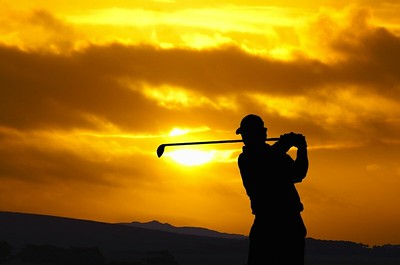
Photo: Chris Urbanowicz. CC BY

*******

Special thanks to Carol Varsalona for hosting Spiritual Journey Thursday today at Beyond Literacy Link.

On children and hope: Spiritual Journey Thursday

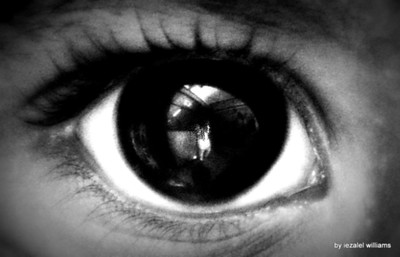
Photo: Child of Vision. Baby eye in black and white. Iezalel Williams. Public domain.

I’m a hopeful person. A hopeful writer. I created this blog in hopes that whomever encountered it would come away feeling uplifted. There’s already too much in the world pulling us down, every day. Burdens can pile until one hardly feels able to move. Grief is like this. Depression is like this. Oppression is like this.

Always, I am looking for a way, or writing my way, through to the better I believe is there. That, to me, is hope. Coming through. Knowing that possibility exists, sensing it, even when I cannot see exactly what it looks like. Eventually it reveals itself. And so I hope.

Yesterday I read that hope is not enough for one of humanity’s biggest burdens. Not COVID-19, which will eventually pass, although it will destroy many more of us before it is done. But we will be fighting diseases as long as we’re alive. No—hope is not enough, in itself, to remove the unbearable burden of racism.

As hopeful as I am, I know this is true.

Yesterday evening I watched a news segment featuring families talking to their children about racism. Black families, families with brown skin. A beautiful little girl—little girl—coached by her dad on how to respond if she should be singled out by those in law enforcement. Eyes wide, brow slightly knit in concentration, the child dutifully repeated everything her dad taught her on how to move, how to hold her hands … she covered it all. Dad paused in his feedback. He nodded. Then he said, quietly: “I did all that. And they still tased me.” The little girl’s face froze, then crumpled. Weeping, she climbed into her father’s lap, into his arms.

Another parent, a mother, said that as awful as it is to burden her children with this knowledge, it’s ultimately for their protection. They need to know.

A boy and another little girl from different families said they know it’s wrong for people to treat each other this way. “We are all human,” said the boy, a young teen. “It doesn’t matter what color skin anybody has,” said the girl (is she maybe six? seven?). “We should all be good to each other and love each other.”

Love one another.

The greatest spiritual journey we can ever take.

Loving means bearing each other’s burdens; it does not mean hoping the burdens go away. It means putting love into action, working to remove the burden, the systems, the structures that oppress others. The possibility is there; our hearts just have to be burdened enough, collectively, to usher it into reality.

For what’s the alternative? Hopelessness. The deadliest thing of all.

As I tried to sleep last night, so many images flooded my mind. Mostly children. Many I’ve known over the years. Black, brown, white faces, eyes full of light, little arms open wide, always ready to give away their love. How easily laughter, wonder, song, and joy come to them … my daughter-in-law texted that my granddaughter woke up singing yesterday morning, before she got out of bed: “Everyone is a star, and everyone has to see how strong and powerful, and everyone has to see how much I love you and how much I’ve grown.” She is four. The thought of anyone robbing the pureness of her heart is … inhuman. It should not happen to any child. Ever. But it does. It is the most terrible of dichotomies, that the big love we have for one another as children does not grow as we do. If it did, the world would be an entirely different place … and if we have any hope of it being better, it begins with acting now. Understanding now. Changing now. Breaking out of age-old racist, prejudiced molds that may have shaped us, now … or they remain intact, shaping those who follow.

I remembered a thing last night, as I finally fell asleep only to dream about children (babies, in fact, standing in a crib, laughing because they’d just learned to pull themselves up). Somewhere there is a photo of me in a crib with my doll, Suzy. So long ago. I saw her in the store while shopping with my grandmother. Beautiful doll. What was it about Suzy that I loved? Her dark eyes, like my own? Black hair and skin, not like mine? I don’t even remember the shopping trip; my Grannie told me years later how I asked for that doll. So she, a white woman from the rural South, bought it for me—in the late 1960s.

Every day, every action, great and small, every word … colors the picture of society that the children see.

That’s us, reflected in their eyes.

In kindergarten I drew a family picture that made my mother angry: “Why did you have to draw me with a cigarette?”

I blinked, and couldn’t respond: Because I always see you smoking.

Children.

On my mind when I go to bed.
On my mind when I wake.
Not just my own
or ones I’ve known.

Children.

So full of love.
So full of song.
So free with their giving
in everyday living.

Children.

We hand them the crayons.
Blank sheets of paper.

And set little hearts so earnestly
to coloring the world they see.

Children.

Is there a crayon called Hope?
To color Tomorrow?

And what will that picture be
if they copy you and me?

My little granddaughter once explained sadness this way: “I was crying with my blue eyes.”

I know, Baby. Same as I cry with my brown ones.

Everyone is a star, and everyone has to see how strong and powerful … let us all keep loving. And growing. And working together to help and heal. Daily finding the way.

That, I’d say, is what hope really looks like.

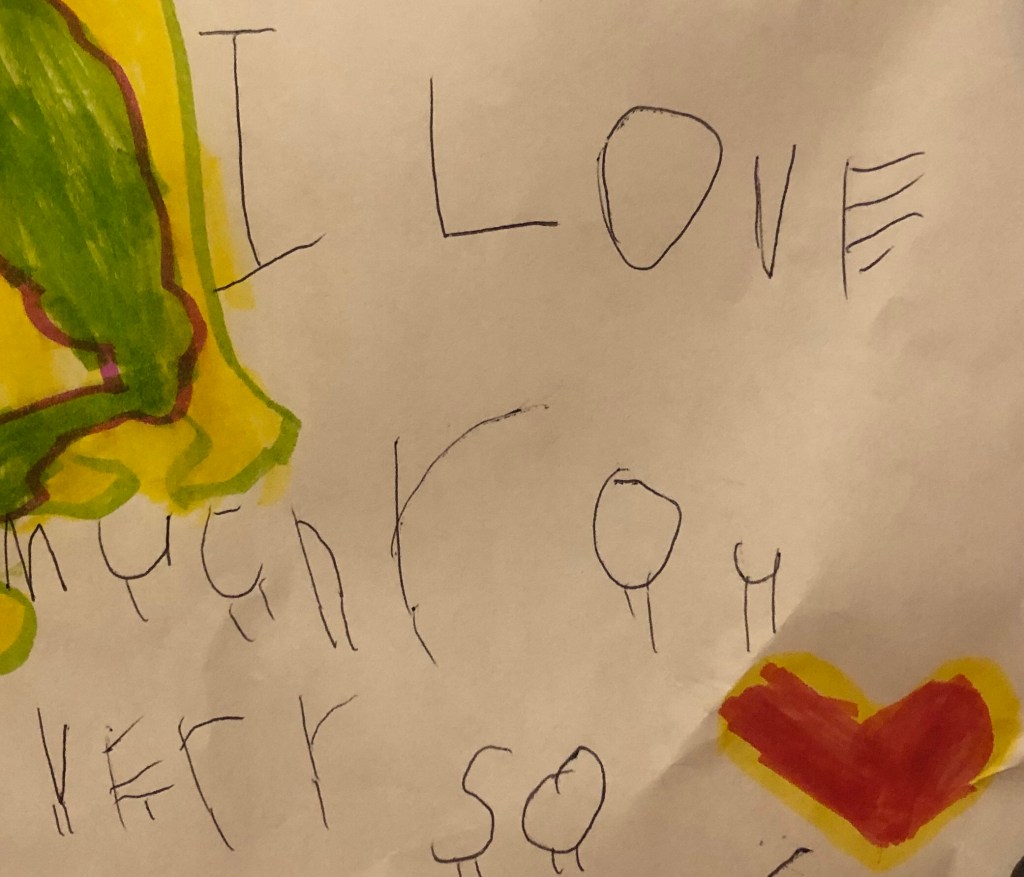
From my granddaughter’s heart: I love you so very much.

Special thanks to Ruth Hersey for hosting Spiritual Journey Thursday, and to all my friends and sojourners. You are welcome to continue the journey by reading their thoughts on the theme of Hope here.

Still waters

Today I write with a group of friends for Spiritual Journey Thursday.

The word restore has been on my mind these days. More or less as a question: When will society, the economy, the country, the health of the globe be restored to pre-COVID-19 conditions? And what will that restoration look like? How changed or different will everything be?

I think on this a lot, as is there is a lot of time to think.

Naturally a well-known line from the Psalms also comes to mind: He restores my soul. It speaks of peace and confidence, of a daily trust. I watch the news, the frenzy of those in the medical profession, pleading on behalf of us all; the government having to count the cost of a shut-down economy as weighed against the life and well-being of its citizens; and everyone worried about having enough resources for coping. They’re all waging a mighty battle against an insatiable, tenacious, invisible pathogen.

While the rest of us watch from a distance, sheltered. Protected. Trusting that the decisions made for us will preserve us, restore us.

We wait in the stillness.

It brings the preceding line of Psalm 23 to mind: He leads me beside still waters.

I could make an analogy of a stormy, violent sea for the government, the medical field, and the stock market, in contrast to the majority of us waiting at home, by the still waters … but a story resurfaced in my memory instead.

Long ago, when I was about seven, I attended a church service where an older girl was baptized. She was perhaps twelve or so, a sweet and affectionate girl well-known and loved by the congregation. It was an exciting morning for the church … except that as this girl entered the baptistry, she was sobbing.

“I can’t do it,” she bawled. ” I can’t …”

Abject terror.

Even as a seven-year-old, I knew she’d chosen to be baptized. She’d walked the aisle some weeks before and professed her faith. I knew the pastor made new members, including children, attend a series of classes to understand the tenets of the faith and the ordnance of baptism. I didn’t understand it all myself, not yet, but I knew this girl, garbed in a white robe, hovering at the steps leading down into the water, crying, wanted to act on her faith. I’d never seen anyone react this way to being baptized: Why’s she so scared?

I look back now and wonder: Was she simply afraid of water? Had she never gone swimming in a pool, as I had?

The water wasn’t deep. It wasn’t cold; it was heated to be comfortably warm. It wasn’t waves crashing on the shore, no dangerous undertow, just clear, still water.

Our pastor, a humble, middle-aged man, a former Navy pilot in WWII and a Bible scholar, stood in his own robe of white at the center of the baptistry. He reached out his hand: “It’s all right, Dear Heart. See, I’m here. It’s safe. You know I’m going to hold onto you.” When she stayed rooted to the steps, clinging to the hidden rail, our pastor waded over, put his arm around her, and led her into the pool.

He held her for a moment. We heard him whisper: “Are you ready?”

Loud sobs, but a nod of her little head.

He raised his hand heavenward:

“I baptize you, little sister, in the name of the Father, the Son, and the Holy Spirit …”

Whoosh.

She went under and just as quickly, he raised her back up.

“I DID IT!” she shouted, hair plastered to her head, wet face shining. “I DID IT!”

If ever there was a vision of radiant joy, that’s it.

The entire congregation wept, even seven-year-old me.

The tears return even now, remembering.

He leads me beside still waters. Sometimes through still waters. When we cannot see the bottom. When we’d really rather not descend into them, when we don’t want to get wet at all, when we fear not so much immersion but submersion: How long will we be under? Can we last?

He restores my soul. It is a matter of trust that, somehow, all will be well, that we will be raised back up, we will be led safely through.

For now, we wait in the stillness like water lilies … which, in the Tamil poetic tradition, happens to symbolize the grief of separation.

On the placid surface

rest the blooms

in waters still.

Their unseen roots

anchor them

to the earth

far below.

And so we float

suspended

separate

waiting

enduring

this strange baptism

yet anchored

to one another

by unseen roots

while time stands still.

Today, in my mind, in my heart, the word restore echoes over and over and over like a prayer.

Photo: Water lilies on a pond at Powhatan State Park. Virginia State Parks. CC BY

*******

Thank you, Donna for hosting April’s Spiritual Journey Thursday.

Equinox

Today’s post serves a dual purpose: My daily Slice of Life Story Challenge and Spiritual Journey Thursday, organized by my friend Margaret Simon on the first Thursday of the month. Thank you, Margaret, for the invitation to host.

I chose to write around the theme of “balance.”

Not necessarily what you may think…

*******

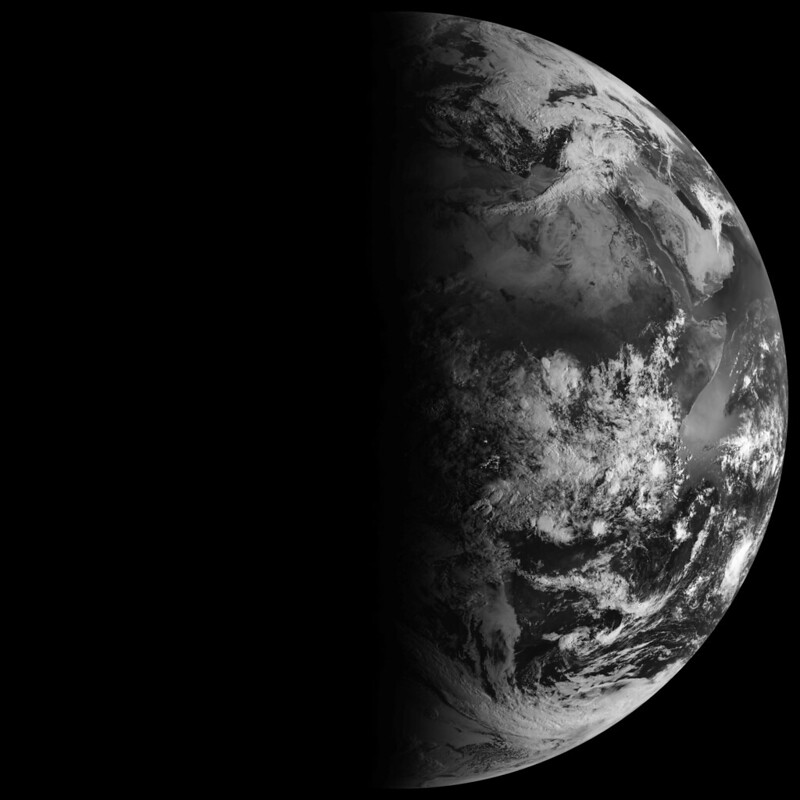
It’s almost here.

Spring. The equinox.

A balance of light and dark in the world, or “equal night.”

My thinking radiates in a number of metaphorical directions here but I’ll begin with the moment I was at school grappling with a new data reporting system that I have to teach to colleagues. I logged in and discovered this message: Alternate Data Entry for Dark Period.

Dark Period?

It has the sound of a span in history, like it belongs in the Holocene Epoch of the Quaternary Period, the current one in which we live, geologically speaking (“current” meaning over 11, 000 years old, for the record). As if it can be marked in time like the Ice Age or at least the Dark Ages.

Dark Period.

All it means, apparently, is the time when the data reporting system is shut down to be updated. It’s tech housecleaning. During the Dark Period, no additional data entry can occur, until everything is verified and balanced.

The words stuck with me, though.

Many would say we are living in a Dark Period now. It’s an era of strife, vitriol, backlash. An age of ever-increasing concerns over mental health. Over health in general—the coronavirus.

And at the heart of the darkness is fear.

A. Roger Ekirch writes in At Day’s Close: Night in Times Past: “Night was man’s first necessary evil, our oldest and most haunting terror. Amid the gathering darkness and cold, our prehistoric forebears must have felt profound fear … that one morning the sun might fail to return.” He goes on to say that many psychologists believe that our early ancestors feared not the dark itself but harm befalling them in the dark (for it was an unlit world at night) and over time night became synonymous with danger.

Fear leads to anger and anxiety. In the dark, things don’t look as they should; they’re distorted.

What’s the balance?

Now we’re back to the equinox, metaphorically.

Light. Day. The assurance that there’s still good working in the world, undoing harm. Think of the destruction of Australia and the human involvement in deliberately setting bushfires. Then think of soldiers in the Australian army, lined up in rows, cuddling and nursing koalas when off duty. Then apply it to people suffering around our globe …

We are our own greatest enemy and helpmeet. We all hang in the balance of these: despair and hope, destruction and edification, hurt and healing.

In The Forgotten Beasts of Eld, Patricia A. McKillip describes a monstrous creature like “a dark mist” who embodies “the fear men die of.” The novel is about learning how to live and love in a different world.

That would mean overcoming the dark, the fear.

Incidentally, in a strange balance, the current virus causing so much alarm shares its name with the crown of the sun.

And, speaking of the sun, here’s the secret of the equinox, why it’s not really equal: There’s actually more day than night.

More light. Literally.

And figuratively, it has nothing to do with moving around the sun and everything to do with moving the human heart.

Photo: NASA Goddard Space Flight Center. CC BY

*******

Dear fellow Spiritual Journey Thursday sojourners: Please click the link to add your post to the “party”:

https://fresh.inlinkz.com/party/f941589ea3ed4e83be8dd519044d3bfd