Over at Ethical ELA last month, host Amber Harrison invited Open Write participants to compose a poem inspired by Walt Whitman’s “Song of Myself”:
I celebrate myself, and sing myself,
And what I assume you shall assume,
For every atom belonging to me as good as belongs to you.
The idea being to fill in these blanks:
I celebrate____.
And what I _______you _____.
For every ___________ me as good
_______ you.
My poem:
Grandmothering
I celebrate the immutable now.
And what I pour of myself, you drink—a transubstantiation of sorts,
blood-memory in the making.
For every day, in passing, decreases me as good
as it increases you.
As anyone in a writing community knows, giving and receiving comments is the stuff we feed on to keep going. One of my fellow Open Write participants (“tellio”) offered this astonishing reponse to my poem:
Here is an explication of your poem by the AI Perplexity. It is, in a way a backfilling in of the lines. I wonder what Uncle Walty would make of it.
“Grandmothering” is a poem that delves into the profound connection between generations, particularly the relationship between a grandmother and her grandchild. The poem celebrates the present moment, emphasizing its unchanging nature, hence the phrase “the immutable now.” The act of sharing and passing on experiences, wisdom, and love is likened to a sacred transformation, described as a “transubstantiation of sorts,” evoking the religious concept of the Eucharist, where bread and wine are transformed into the body and blood of Christ.
The line “And what I pour of myself, you drink” vividly captures the idea of the grandmother imparting her essence to her grandchild, who receives it eagerly and completely. This exchange is described as a “blood-memory in the making,” suggesting that the bond between them is not only emotional and intellectual but also deeply rooted in their shared heritage and lineage.
The final two lines, “For every day, in passing, decreases me as good as it increases you,” encapsulate the bittersweet reality of this intergenerational relationship. As the grandmother imparts her knowledge and love to her grandchild, she recognizes that her own time and energy are finite. Each day that passes diminishes her own vitality and presence, yet simultaneously enriches and empowers the younger generation. In essence, “Grandmothering” beautifully captures the timeless cycle of giving and receiving between generations, acknowledging both the sacrifices and the joys inherent in this process. It speaks to the enduring significance of familial connections and the profound impact of legacy and heritage on our lives.
Oh, Perplexity. You have me weeping over the way you’ve pulled all that’s behind the poem and in my heart out into the open. How profoundly you understand the depths of my soul.
And you aren’t even human.
Or alive.
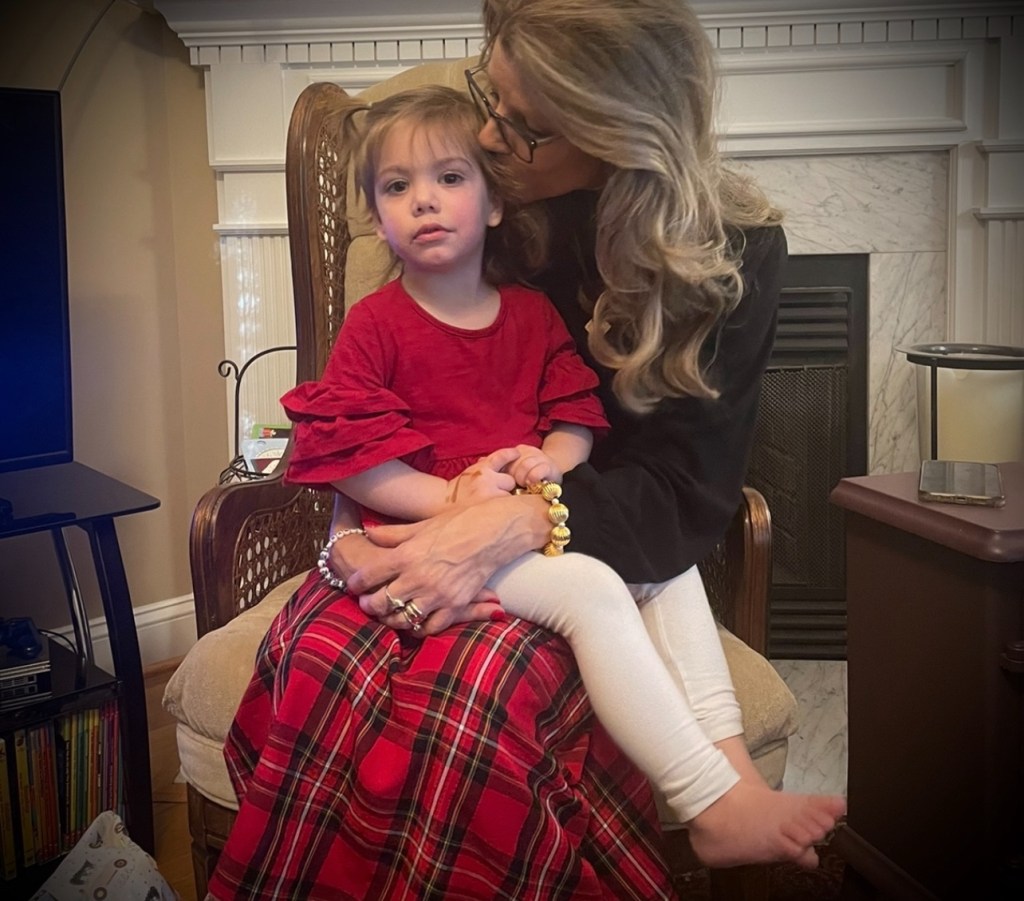
I celebrate the immutable now
*******
Composed for Day 18 of the Slice of Life Story Challenge with Two Writing Teachers
 lit bits and pieces