My three-year-old granddaughter, Micah, has finally experienced enough snow to make a snowman.
Two snowmen, in fact. Five weeks apart.
The first snow really wouldn’t pack, so we ended up with a little heap of snowdwarf. It was cute and we loved it anyway (see the photo on To Life and Lafo).
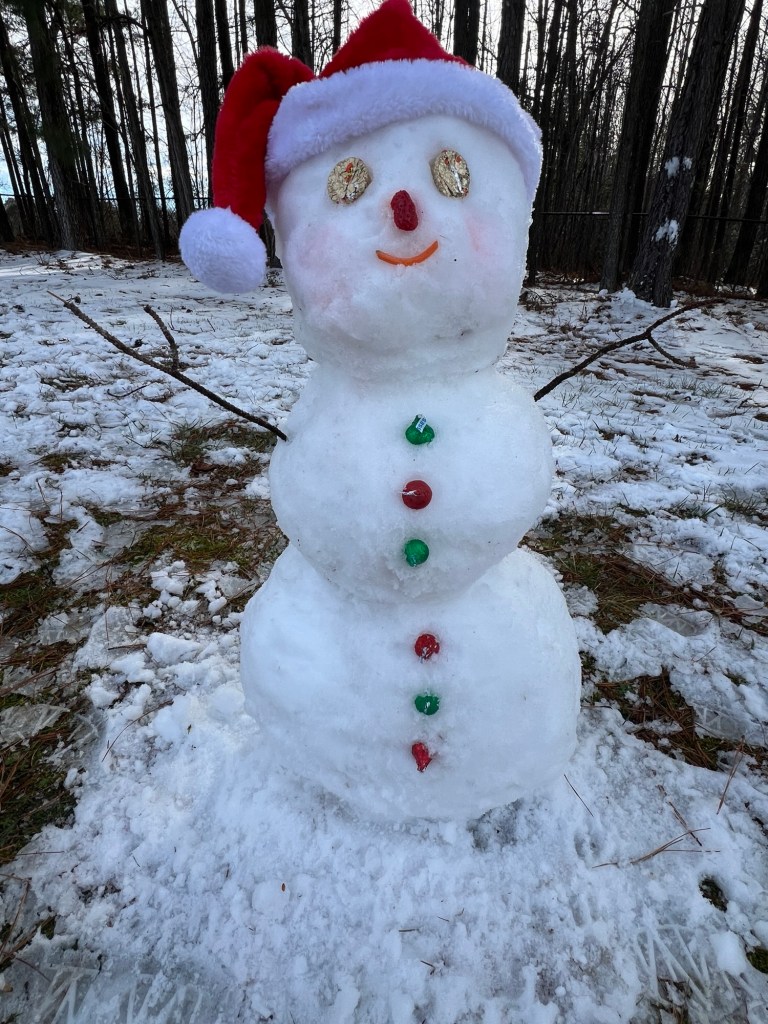
The second snow packed beautifully. Micah’s artistic big sister, Scout, took over as snowman engineer and designer, rounding the body and deciding what to use for facial features.
Micah said, “The snowman needs a hat!” She chose the Santa hat from the toybox I keep for the girls. In her words, the “Ho-Ho hat.”
And here you have it. Our merry friend:
That night, as I put our exhausted Micah to bed, she kept stalling.
She fights going to sleep, has always been a restless sleeper. She asks for songs: Frère Jacques. Twinkle, Twinkle, Little Star. She chats about a boy at daycare and calls him “my brother.” She says he’s going to the beach and she wishes she could go, too.
“All right, Micahroni,” I say at last. “It is time to sleep now.”
She twists around, lies still, and is silent for a moment. She looks at the ceiling, the wall. Her eyes are heavy.
Then those big eyes are on me. “We forgot the Ho-Ho hat! It’s outside!”
“Yes, but it’s okay. The snowman can wear the hat tonight. We can get it tomorrow.”
That seems a sufficient response, for she’s quiet again.
Then: “Franna.”
“What, Micah?”
“I don’t want the snowman to melt.”
“He won’t melt tonight, honey. It’s very cold outside. He’ll still be there tomorrow.”
She looks at me earnestly. Deep brown eyes, rosy cheeks.
“I don’t want his face to melt,” she says.
I murmur something soothing, I think, but my mind isn’t on my words.
It’s on the workings of her little mind, already understanding the temporary nature of things, fearing loss…yes, it’s just a snowman. But its face reflects humanity. She cares about it and knows, at three, it cannot last.
I stay with her until she drifts off to sleep and her breathing grows loud.
And then I go to bed myself, praying, I confess, for the snowman not to melt the next day while she’s staying with me… because childhood and life itself are so short. They melt away so soon.
When she goes home, the snowman is still in the backyard, joyful as ever, twig-hands raised in praise, undiminished.
I remember to rescue the Ho-Ho hat. She will remember asking. She remembers everything.
I hope she always will.
*******
with thanks to two Writing Teachers for the March Slice of Life Story Challenge
constructed in Franna’s Spare Oom during Christmas
Never mind the season
for in the hands of the creator everything is made new
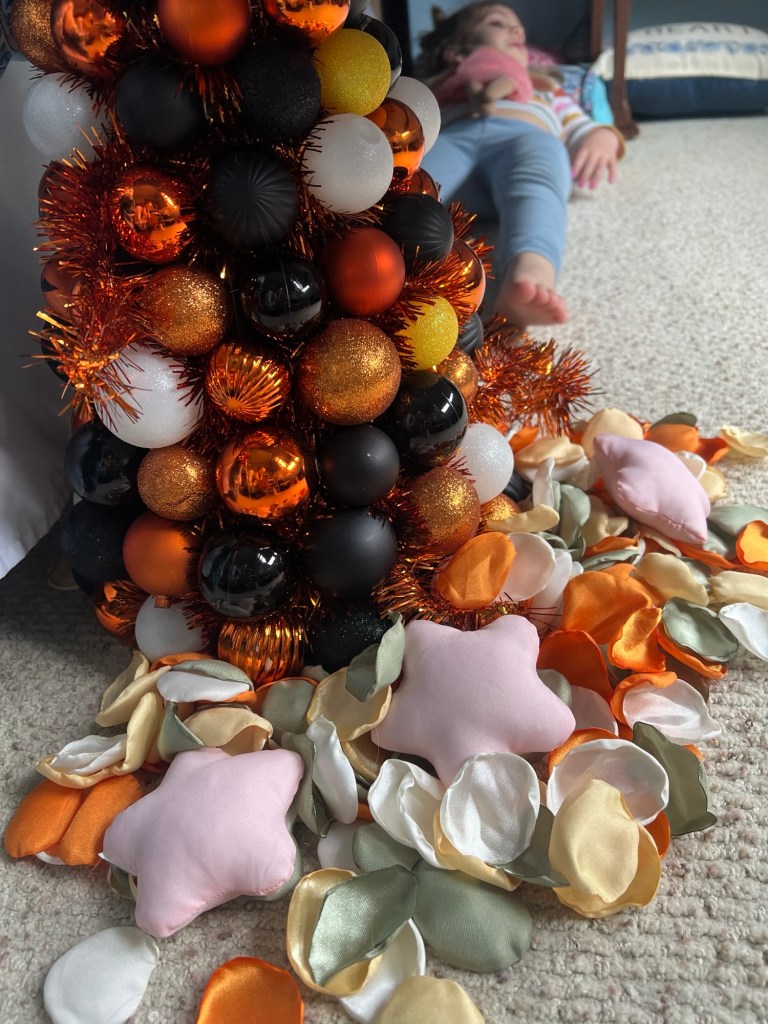
like the Halloween tree guarding the inner tent entrance
a cone adorned with black and orange ornaments has become a pillar of ember and ash cascading into firepetals (left over from a wedding) where chunks of stars (harvested from an old crib mobile) have come to rest
much like the creator herself savoring the fruits of her labors (having been aided by Franna and Big Sister, definitely magical)
now stretching out on her back little bare feet to the firepetals
cozy and content
clutching her baby while gazing up through the window at the wintersky
for, as any fantasy writer knows,
worldbuilding is hard work
not to mention most gratifying
The worldbuilder, age 3, resting in her fort with her doll “Jape” on her chest
And so it comes to pass, at long last, that I return to the site of my sun-kissed childhood summers.
My ancestral homeplace in eastern North Carolina. Literally the land of my fathers: My dad, my grandparents, my great-parents, my great-greats were all born within a small radius of a tiny town and crossroads that were old long before my appearance on this Earth.
Thus began my fascination with Time.
In the bend of a dirt road stood my grandparents’ home, where my father grew up. My youngest aunt was born here in the same room where her father, my Granddaddy, would die fifty-three years later at 92. He wanted to die at home. He did, peacefully and “full of days,” as the Scriptures say of Abraham, Isaac, and Job: After this lived Job an hundred and forty years, and saw his sons, and his sons’ sons, even four generations. So Job died, being old and full of days (Job 42:16-17).
Likewise, my grandparents saw four generations. They lived to see my children. Incidentally, Granddaddy had a brother named Job who died in the 1920s (he drowned, if I recall correctly; this is a coastal area).
So it was that I grew up on stories of the old days and ways, a little city girl mesmerized by my deep country roots. In my time the once-thriving community was already history; nature was reclaiming the unpainted houses, one by one. Some were still visible through the woods (an early memory: a cypress shingle roof in the treetops, if you looked just right) and others were in various stages of falling down with yards still mowed by descendants.
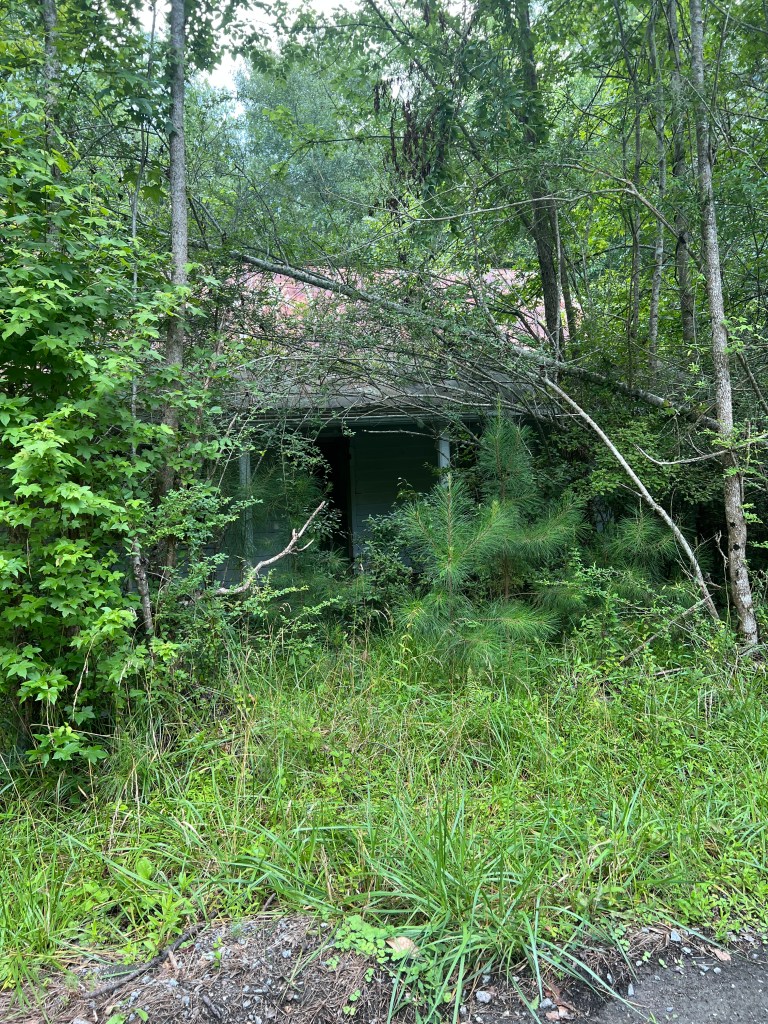
On this return journey a few weeks ago, I discovered that my grandmother’s homeplace from the early 1900s is being swallowed by the forest:
A terrible jolt, as I can remember it having a hedge, a lawn, a porch swing, a screen door. I remember the layout inside and my great-uncle living there, tending to a patch of sunflowers.
And I knew, prior to this journey, that my grandparents’ house, which stood on the corner a little farther on, is gone.
This story is a little different, however. Instead of the forest reaching its veiny green fingers to reclaim its own, a young couple has built a home right in the middle of what was once my grandfather’s garden. I can’t help thinking how Grandma would marvel at the beauty of this new house and its lovely landscaping.
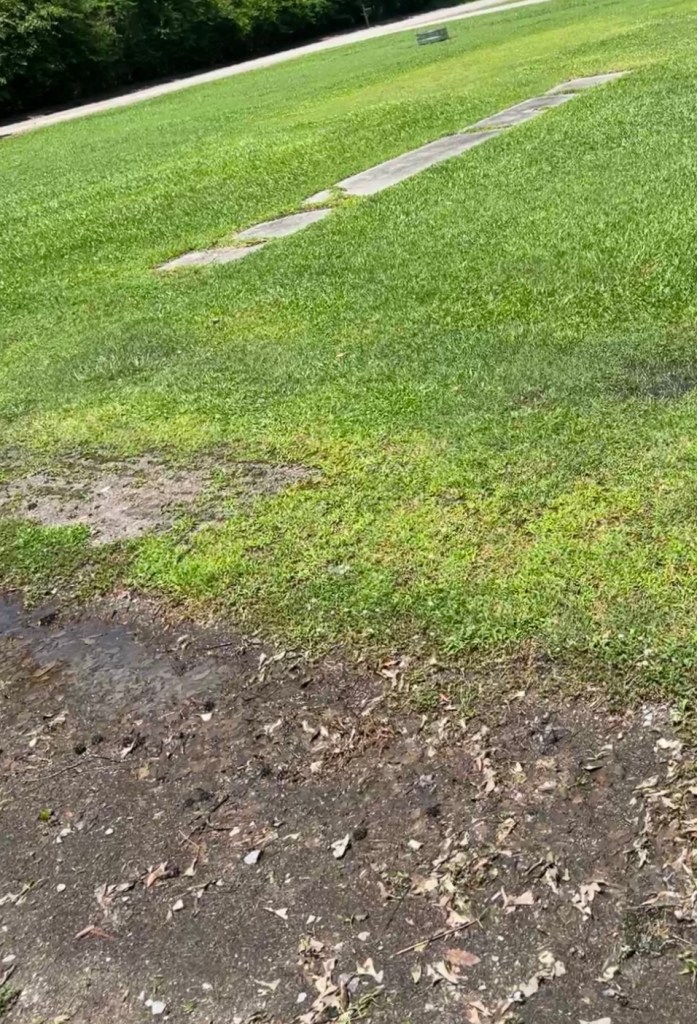
All that remains here from the enchanted summers of my childhood half a century ago (and from time before me) is the pumphouse, one of Grandma’s crepe myrtles (now wistfully draped in Spanish moss, which never used to be in these parts), and the sidewalk that once led to the front porch of Granddaddy and Grandma’s home:
As a teenager I wrote a song about a sidewalk. Haven’t thought about it in ages:
Where does this lonely sidewalk lead? You think by now I’d know Footsteps into yesterday That’s where I want to go…
I had no idea, then, that only the sidewalk would remain in this place I loved so well, where I used to play outside in the sweltering bug-infested heat, where Grandma would sit at her piano in the evenings to have me sing old hymns with her as Granddaddy listened from his recliner, where I felt loved and wanted and sheltered and that I belonged…
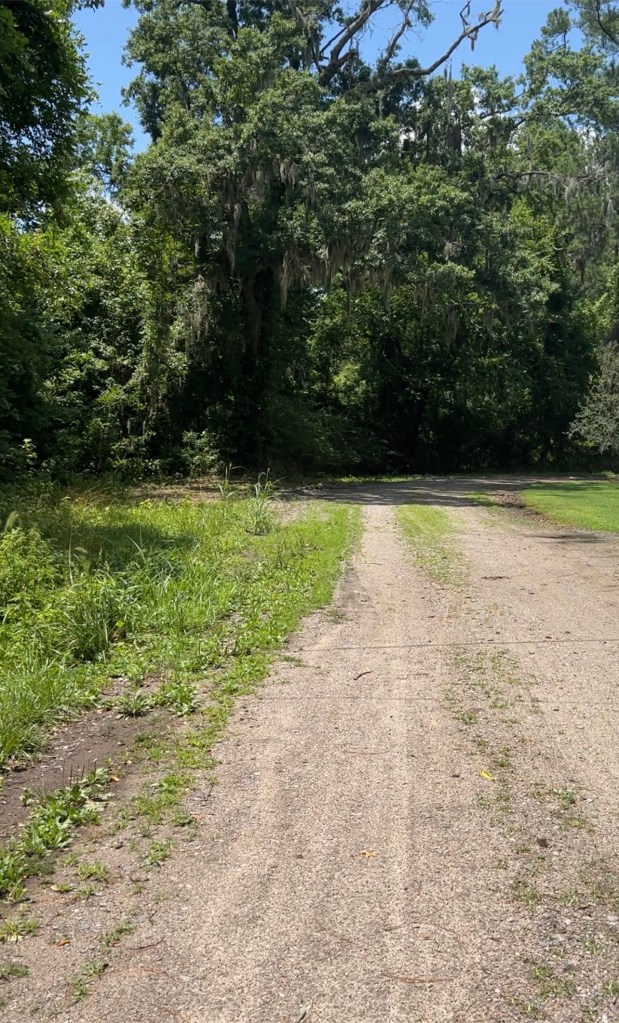
The old dirt road remains, too, of course.
There was another dirt road branching off of it here in the shadows to the left; it once led, Grandma said, to a two-story antebellum house with a double balcony. I could hear admiration for that house in her voice. In my childhood the road was just two tracks through grass and thickets. The path faded more and more with every passing summer. Now you would never know it had ever been anything but woods.
From this vantage point, my grandparents’ yard is on the right, and to the immediate left is an old family cemetery. Not my family’s, although I walked it often with Grandma over the years. When I was a child, I was afraid ghosts would come out here at night. Grandma assured me they would not. She offered this dubious comfort: No need to fear the dead. Fear the living.
When I wondered at the graves of so many babies, she said people just didn’t know what to do for them when they were sick.
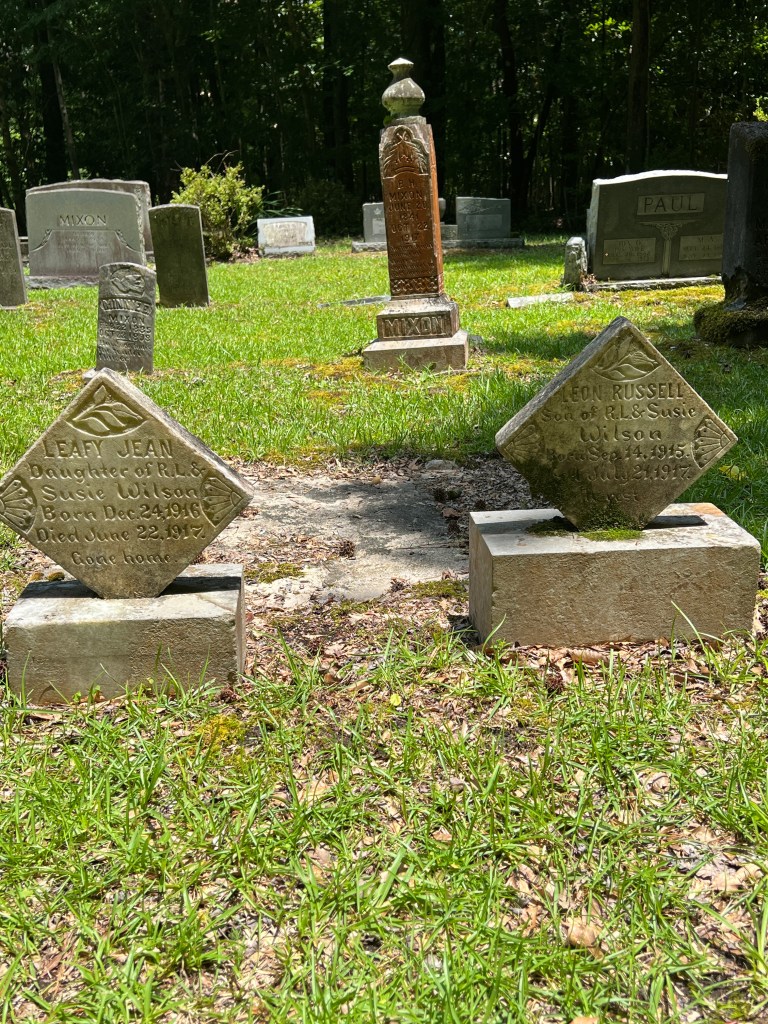
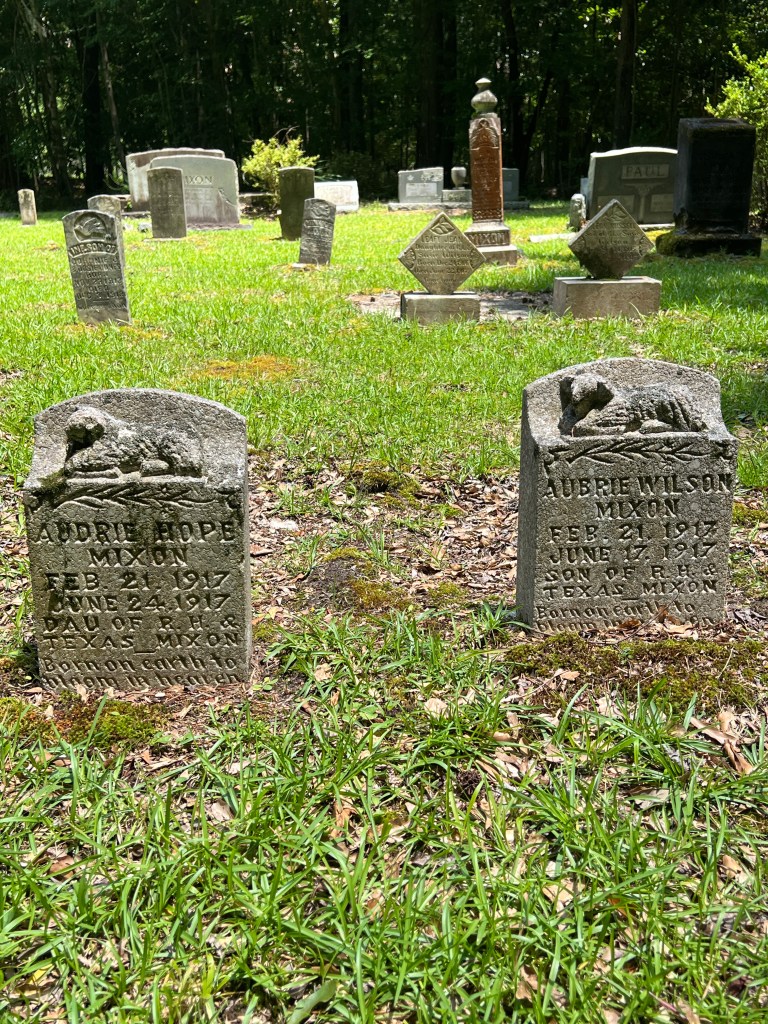
It’s clear how much the children were loved and mourned. This tiny cemetery remains painstakingly tended and strangely outside of time:
Hello again, baby Leafy Jean and big brother Leon Russell.
These siblings died a month apart in 1917. Grandma was born three months after Leon, almost a year to the day before Leafy, in the soon-to-be obscured homeplace just around the bend of the road.
Four-month-old twins Audrie and Aubrie died a week apart during that same summer.
The greater wonder, in its way, are the children who survived disease and mothers who died giving birth to them, which almost happened to Grandma: her mother delivered a stillborn baby three months before she was born. My grandmother was a twin. Grandma journaled this because I asked her to; in her writings, she says several women in the community who recently had babies helped nurse her while my great-grandmother was so ill that she “almost didn’t make it.”
—Why am I just now realizing that Grandma’s lost twin would have come around the same time as Leon Russell? Could his mother have been one of the women who preserved my newborn grandmother’s hungry life? if so …imagine saving someone else’s child and losing your own…
So many mysteries in this place. I’ve always felt the pull.
Over fifty years after I first walked this cemetery with my grandmother, I’m awed by the good condition of the headstones. I halfway expected them to be eroding into illegibility — after all, these people’s earthly homes have long since crumbled. No greater mystery than Time…
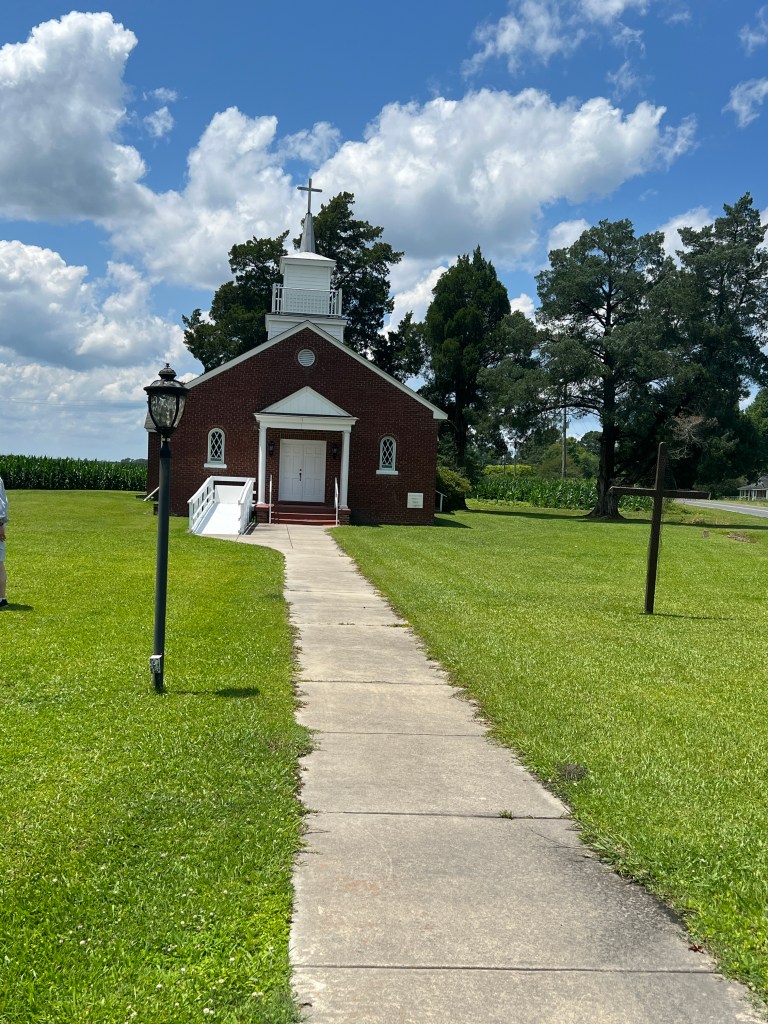
I cannot linger here, ruminating, for there’s another place to visit. Really just a good walk “around the horn” to the church, a journey I’ve made many times.
This was once the heart of the bustling farm community. The church was built on land given by my grandmother’s predecessors. Her father, mother, brothers, and other family are buried to the right of this crossroads.
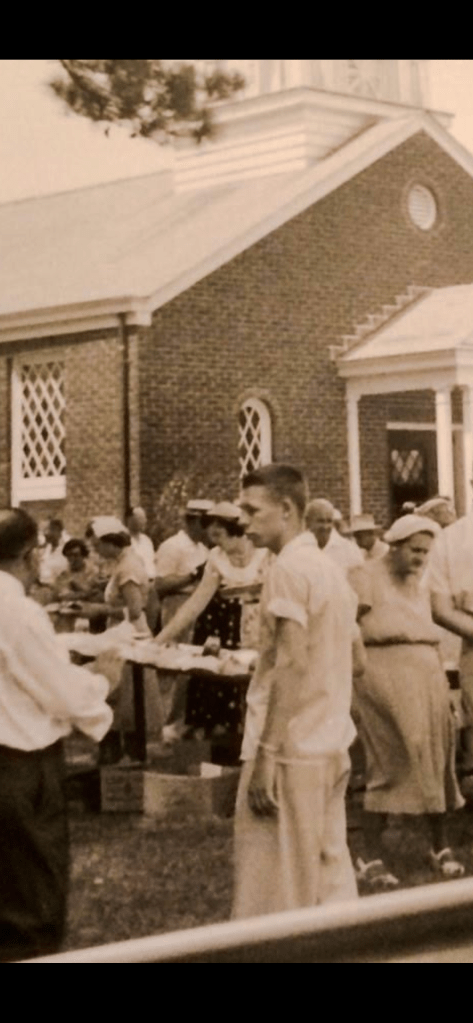
Granddaddy and Grandma are buried in the churchyard, to the left.
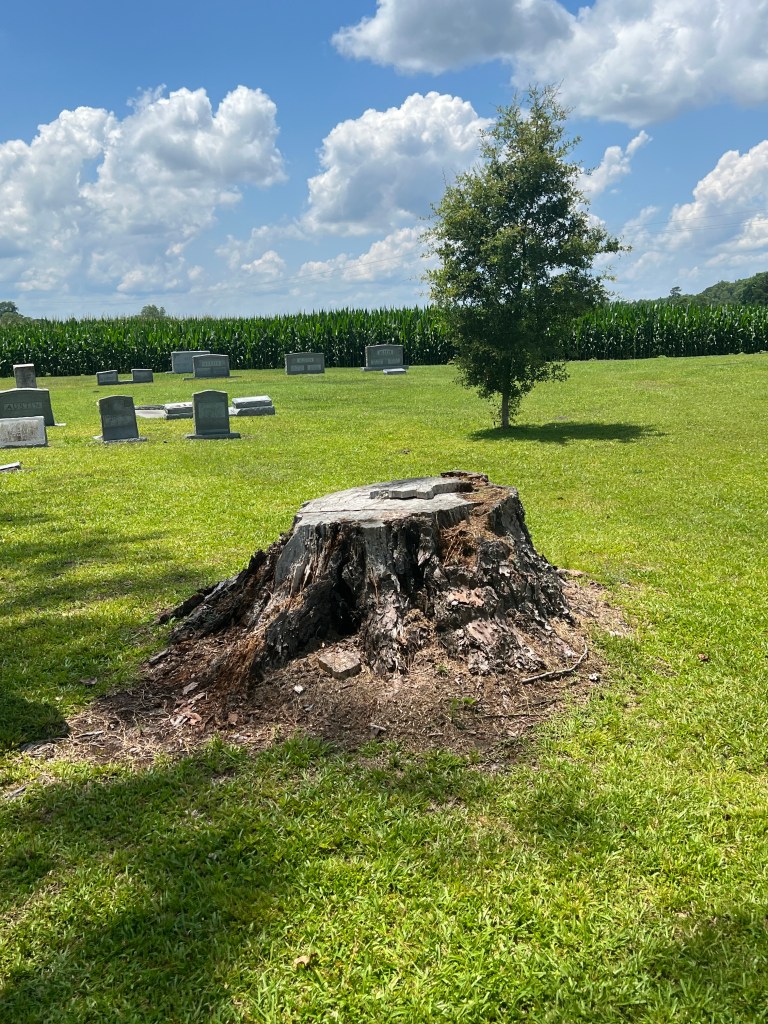
Such a beautiful little resting place, presently bordered by a lush cornfield. An old live oak felled by a hurricane in recent years has been replaced by a new one nearby.
Grandma would be so pleased to see how well-tended everything is.
There’s even a new footbridge over the ditch at the churchyard, for easy access to the little community center across the road. This building stands where Grandma’s three-room grade school used to, she said in her journal.
Here’s where old and new converge most for me, where Time is most relevant and paradoxically elusive. The spirit of this place is old; my own memories are growing old.
My father as a teenager, in the churchyard
I am the keeper of memories older than mine.
But I came for the new.
I brought my granddaughter, you see.
All along the journey, I told her stories. Of the old days, the old ways.
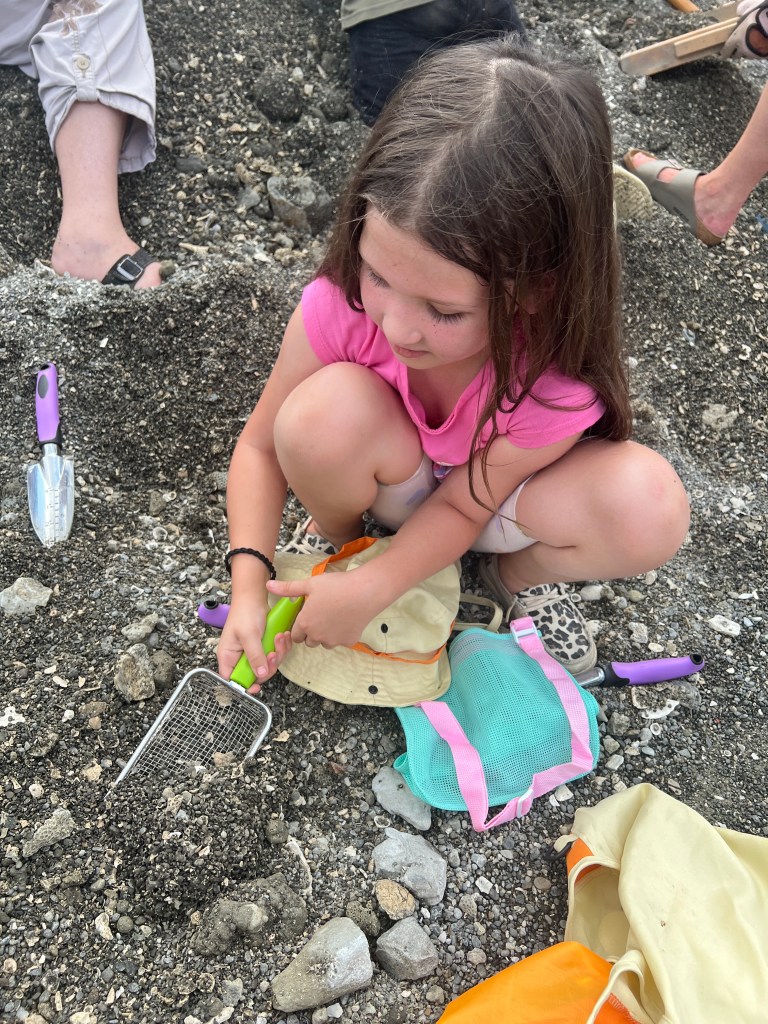
I brought her to dig for fossils at the Museum in town (which is where the phosphate mining company sends its rejects now, instead of scattering treasures on the old dirt roads).
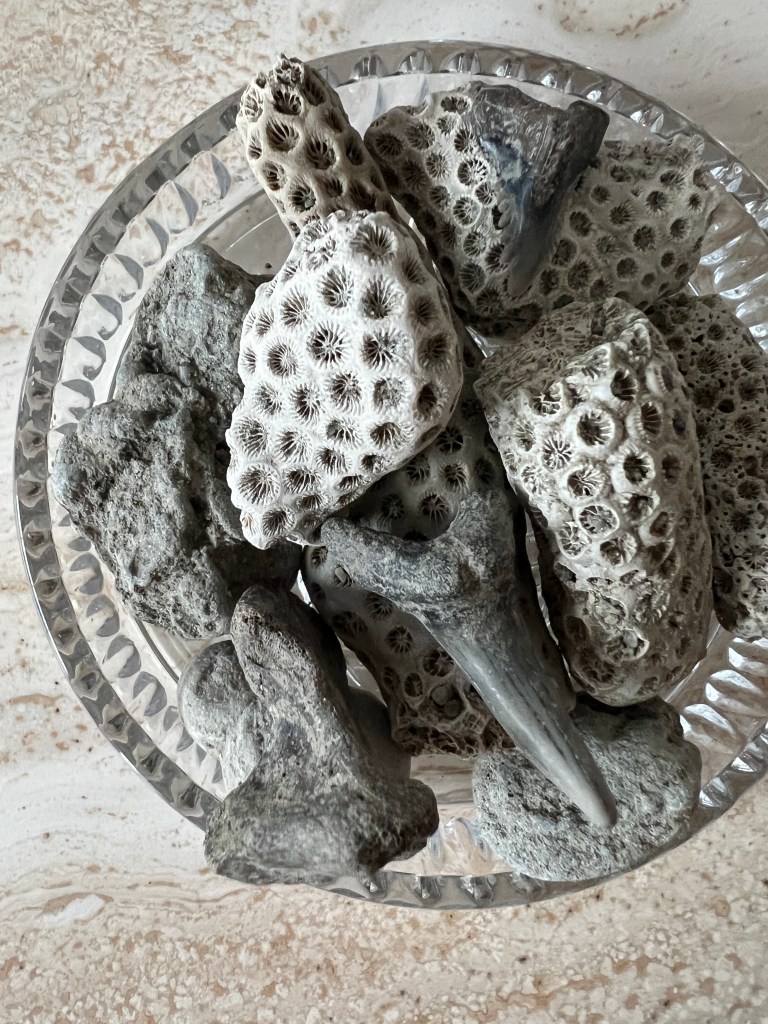
We found a bit of coral skeleton, shark’s teeth, and some bony things I’ve yet to identify:
Making new memories from the old… even from the ancient, from time before recorded time.
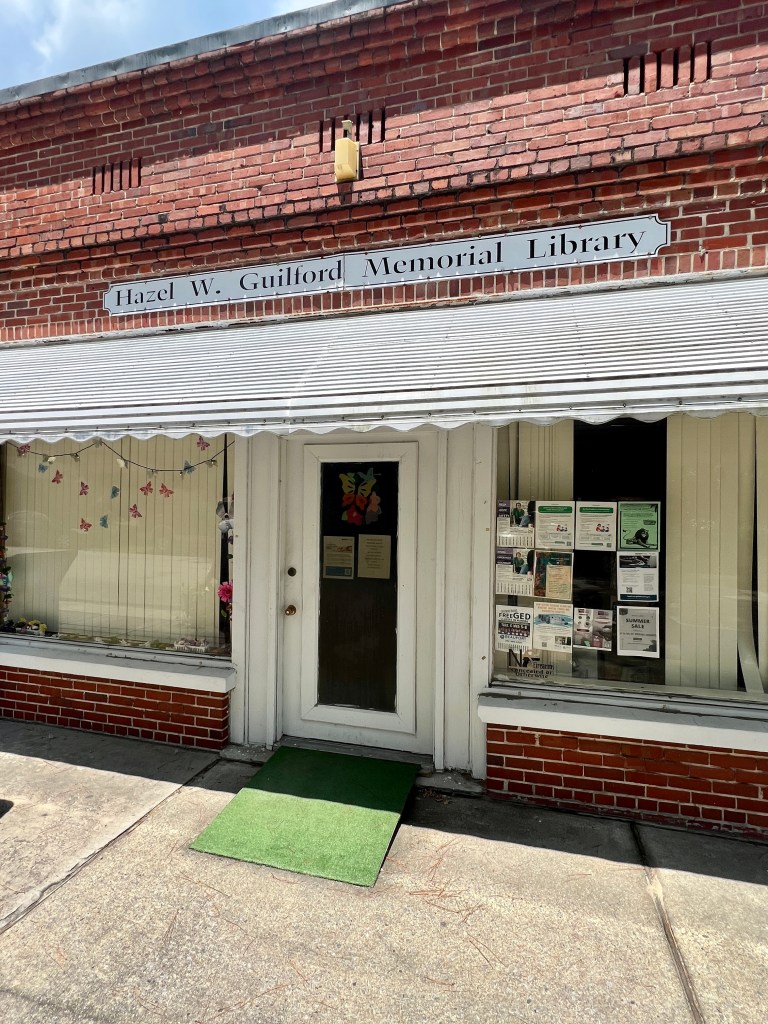
As we were leaving, I discovered that the old library in this old, old town looks the same as it did five decades ago when Grandma drove me to pick out books to read at her house in the summer. I halfway expected to see her coming out with the armful she had to help me carry…
And I think this is used to be, or is at least near, the butcher shop where Daddy worked as a teenager.
There’s so much more to be said about memory, legacy, endurance, overcoming, and family… about the whole spiritual journey of life. The greatest gift my grandparents gave me, beyond their unconditional love and their stories, is that of faith lived out. I learned long ago that eventually there comes a homecoming so bright, so glorious, that all the former shadows are forgotten.
I expect I’ll recognize my little corner of Heaven, having had such a foretaste here.
Until that time, I carry on in the footsteps before me, praying I walk even half as well.
My now, my tomorrows ❤
From Everlasting to Everlasting: A Prayer of Moses
Lord, you have been our dwelling place in all generations. Before the mountains were brought forth, or ever you had formed the earth and the world, from everlasting to everlasting you are God.
You return man to dust and say, “Return, O children of man!” For a thousand years in your sight are but as yesterday when it is past, or as a watch in the night…
Let your work be shown to your servants, and your glorious power to their children. Let the favor of the Lord our God be upon us, and establish the work of our hands upon us; yes, establish the work of our hands! Psalm 90: 1-4;16-17
*******
with thanks to my Spiritual Journey friends who write on the first Thursday of each month and to host Carol Varsalona who posted this reflection and question for July:
Pause and praise God for His wondrous gifts! What are you rejoicing over this summer?
Remember these days write them on your hearts always little beloveds
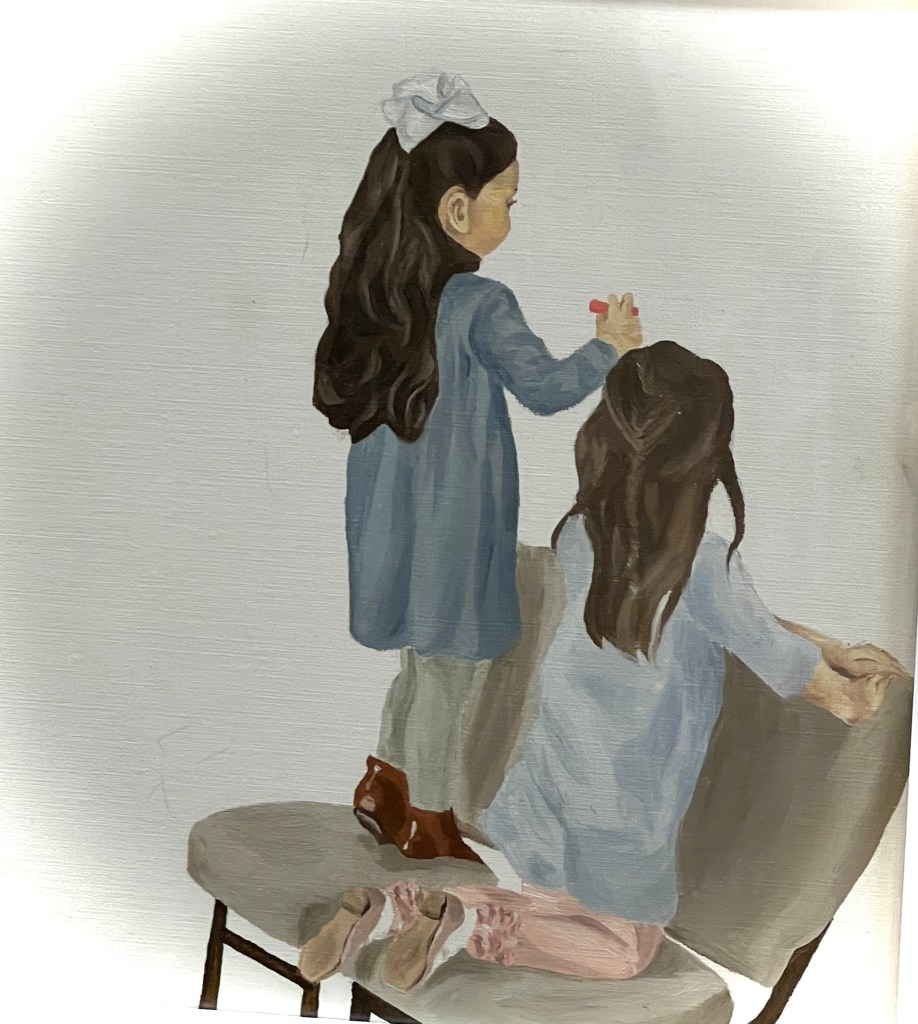
Sunday Friends, painted by my daughter-in-law, on display at the local art gallery. My husband purchased it for his study at church. Our granddaughter is on the right.
******
with thanks to Two Writing Teachers for the monthlong Slice of Life Writing Challenge
with thanks to Allison Berryhill for this inspiration on today’s Open Write at Ethical ELA: Look around the room. Let your eyes rest on an object. Let that be your first word. List a word associated with it, then another…keep going until you’re ready to stop and “poetically connect the brain’s chain of associations.”
My word list:
pitcher pour tea sweetness childhood sugar
Drinking Deep
I remember the pitcher in my grandmother’s hand, mid-pour tea flowing like memory me drinking deep of the sweetness a childhood steeped in dinner-stories Daddy saying Slide up to the table, Sugar.
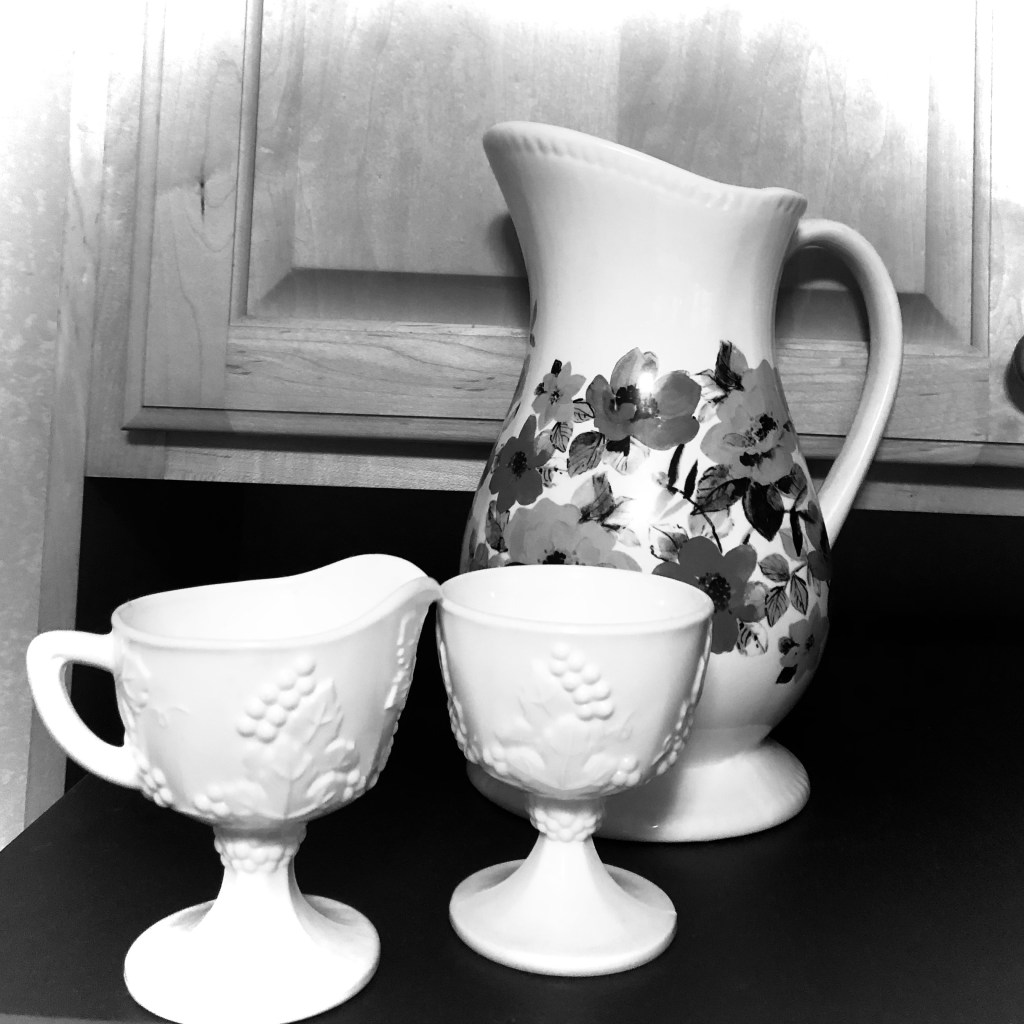
The pitcher that sparked the associations. It’s just decor; didn’t consciously think, in the moment, about the milk glass creamer and sugar bowl being my grandmother’s.
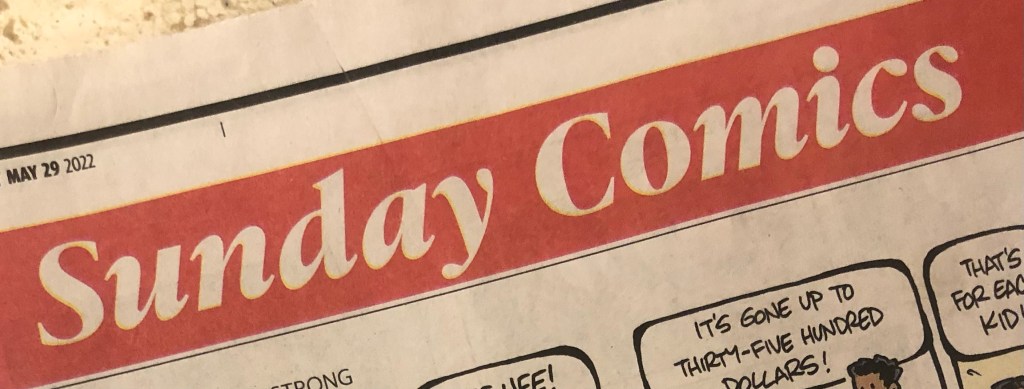
I bought Sunday’s paper, first time in years. As in an actual paper paper. Saw it on the rack while checking out groceries, a giant headline about the state’s plans for moving forward with education in light of pandemic setbacks. As educators themselves (particularly those in the trenches in actual schools) are often the last to know, I thought perhaps I should read it…
Opened it up in the car only to have my attention captured by the comics.
How could I have forgotten?
All those childhood Sundays of sifting through the heftiness of sections and fliers to pull them out, that colorful layer beckoning amid the grayness of the world’s ponderous deeds and opinions.
The poring over every one, the laughter, the ink-smell… a preschool recollection of my grandmother showing me how to flatten Silly Putty over a panel to peel it up and find the image lifted, then stretching poor Charlie Brown’s round head every which way…understanding later, in school, what “newsprint” paper really was when blank sheets were distributed for drawing… often sketching pretty good replications of Snoopy and especially Woodstock in margins of random notebook pages… a fleeting recollection of two strips I cut out and taped to my bedroom door (one, I think, was Shoe and the other eludes me now; I can only remember loving it for its hilarious rhyme).
All this in one nostalgic flash, just finding the funnies in my hands again after so long.
For just that moment, I am child again, and everything is all right.
*Update: Finally remembered the other strip taped to my bedroom door: The Briny Deep.
On Day Two of National Poetry Month, Emily Yamasaki offers this invitation for VerseLove at Ethical ELA: “There are some details that we hold in our hearts and minds, never to be forgotten. Whether it was carved into our memory in joy or distress, they are always there. Join me in giving those core memories a space to live openly today.”
This is the kind of thing that can keep me writing for hours, days, years… I kept it simple, using the first things that rose to the surface, sticking somewhat close to Emily’s models.
random core memories
the cadence of my grandmother’s voice, reading fat pencils in kindergarten the smell of struck kitchen matches bacon grease kept in a canister by the stove having to throw myself against the stubborn front door of my childhood home, to get it open ironing my father’s uniforms the smell of his shoe polish the vaporizer sputtering in my room at night the rattling crescendo, decrescendo of cicadas saying it’s going to be all right without knowing how finding sharks’ teeth in the new gravel of an old country road lines from dialogues in my 7th grade French textbook soft-petal satin of new baby skin that one wonky piano key (is it D or E?) the mustiness of my grandparents’ tiny old church the weight of the study Bible in my hands seeing you for the first time, across the crowded room the cadence of our granddaughter’s voice, reading
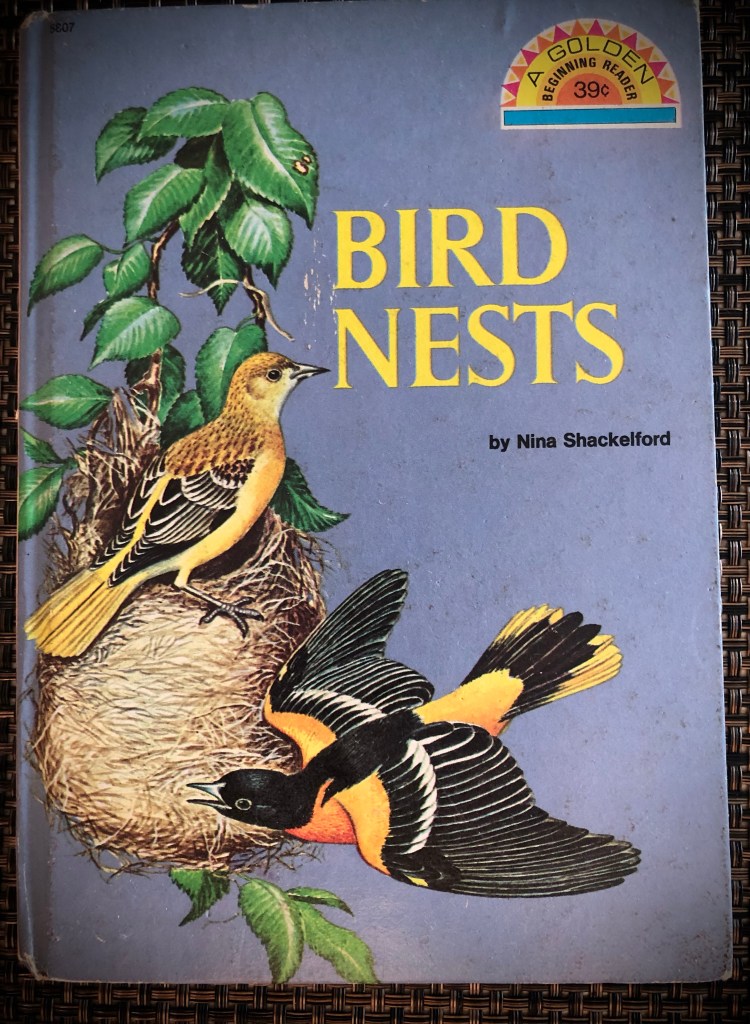
A book my grandmother read to me, that I read with my granddaughter now. Is it any wonder that I find birds and nests so alluring? Early memories hold such latent power.
with thanks to Abigail, Betsy, and Soshi for the invitation to write on this topic for #verselove at Ethical ELA today (who’s not longing for summer right now?!).
Here’s why summer has such a special pull for me.
For Day Nineteen of National Poetry Month
Summer Second
Sunny afternoon blue sky bit of breeze faint sound of a radio from a neighbor’s yard I can’t discern the song it just sends me into reverie for a second conjuring hot sand under my bare feet Coppertone in my nose salt on my tongue If everybody had an ocean across the USA then everybody’d be surfin’ like Californ-i-ay… snatches of conversation cresting and dipping on the breeze mighty waves of memory crashing on the shore my father’s big black sandals flip-flopping to the old navy-blue Ford the battered brown Samsonite suitcase in his hand the ride is so long so long the city gives way to pastures, meadows horses fields that go on and on, forever plowed furrows running like long crazy legs to keep up with the Ford as we zoom past until at last the lonesome highway comes to a fork on the left, the tiny church where my ancestors sleep under stones we veer to the right turning onto the dirt road my heart beats faster Daddy drives slower stirring clouds of dust and I am already grabbing the door handle as Granddaddy’s lush garden comes into view with just a glimpse of Grandma’s white angel birdbath circled by orange marigolds through the laundry lazily flapping on the clothesline and there they are, walking across the green, green grass and I am out of the Ford before it’s hardly stopped and in their arms in the blinding sun as the forest stands tall all around with its cool dark mysteries where the rattling cicadas crescendo vibrating on and on and on through my soul I can’t discern the song it just carries me through eternity in this one bright second




 lit bits and pieces