Compassion: a spiritual journey

My friend Kim Johnson chose the Spiritual Journey Thursday theme for October.

Kim is in the process of grieving her father. As she puts it: “I’m in the anger stage of grief, and along with everything else going on the world, I’m feeling the word COMPASSION calling to me as this month’s topic. I need to have more of it as I work my way toward acceptance.”

Compassion literally means to suffer together. The distress of another person sparks within us an intense desire to alleviate it. It is one of the purest facets of our humanity. Not mere emotion. Compassion is complex: I see your suffering. I am wiling to enter it, to help you.

There’s also a thing called compassion fatigue. It comes from prolonged exposure to traumatic events or being overwhelmed by the suffering of others, ultimately leading to physical, mental, and spiritual depletion. Our wellspring of compassion dries up. We find ourselves numb, in a desert devoid of hope, crushed beneath a boulder of distrust, breathing an atmosphere deprived of positivity. What is the point of it all, anymore?

The point is that we all need help. We want to get rid of the pain and anxiety eating us alive. We would heal ourselves, were it in our own power—even as our souls rage and wage war. Our fiery reaction, our fierce retaliation, is a temporary outlet that cannot bring true satisfaction, because it can never bring the peace we crave. How can we find peace when we are so unable to live peaceably? The fight is a wounded animal’s, a defense mechanism when existence is threatened. For…being alive… the innermost part of us is crying out against the knowledge that we will die.

I will speak now of the snake.

A week ago my granddaughter, almost four years old, asked: “Franna, do you like snakes?” She is asking all sorts of intriguing questions: Why is this your house? Why are you my Dad’s mother? She is forming her understanding of the world and affirming her place in it.

I answered as honestly I could. I do not want her to be afraid, like I was, for most of my life: “Do I like snakes? Not especially. But they can be helpful.”

Someday I will tell her how my Granddaddy taught me never to kill black snakes because they eat rats and mice. I may never tell her how he hacked copperheads to death with his hoe, or that when he became too elderly to manage the hoe, he shot them with his shotgun. It wasn’t that he didn’t like snakes. He was protecting his grandchildren and great-grandchildren from potential harm. Out of his love for us.

Note here how the spiritual journey employs foreshadowing. A thing is encountered; give it time. It is soon to reappear with greater significance. A portent.

The week after the snake question, I was at school, walking students down the sidewalk at dismissal, when I saw it, there on the cement by the edge of the grass: A little gray snake. Dead. Its body twisted, white belly frozen in an upward arch.

My first thought: It died painfully, in the act of writhing.

Second thought: Why aren’t the kids flipping out?

Not a one of them noticed the snake lying there.

Not that day, nor the next, or the next.

But I saw it, and it flooded me with…compassion.

For a snake, a creature I recently confessed to not especially liking.

It was alone. Abandoned. Not seen.

It was little. Not venomous (an earth snake). Not harmful.

And it was dead, with no one to acknowledge its existence or to mourn its passing.

I actually mourned it. I am sorry that it suffered, spiraling on itself in great pain as it died.

I am sorry we all have to suffer and die.

Every time I passed the snake the words mortal coil came to mind. Hamlet: When we have shuffled off this mortal coil…

I suppose that is the whole of the spiritual journey, is it not? Shuffling off this mortal coil. Someday shedding this battered body, being freed of the suffering.

Freedom from suffering is the very meaning behind the caduceus, symbol of the medical field. Snakes coiled around a staff. Odd. It just so happens if you research “symbols of compassion,” the caduecus appears. We do not think of it as representing compassion, but healing.

It is also linked to peace.

Many myths are behind the symbol, notably one in which the Greek messenger god, Hermes (Mercury in Roman mythology) saw two snakes fighting and cast his wand between them. The snakes gave up the battle and entertwined themselves peacefully around the wand.

In the Bible, God tells Moses to cast a bronze serpent and place it on a wooden pole as a cure for poisonous snakebite, a direct consequence of the people’s continued rebellion. God, out of his great compassion, provided a cure: Anyone bitten by a snake was healed of its venom by looking at the serpent on the staff, “high and lifted up.”

Herein lies THE point. Is there an antidote to the suffering we experience from the beginning of our existence, all the physical pain, mental anguish, and the thing we fear most—loss? Is it fighting venom with venom, or is it the active decision to stop battling each another, to cease provoking, retaliating, mocking, belittling, degrading, and causing more harm, until we seal our own destruction in utter carnage? Or is it a matter of realizing we’re all snakebit, and in the act of trying to alleviate another’s suffering, we ease our own? Can desperately-needed relief come in the very midst of our pain by desiring to help another….in compassion, “suffering together?” Not pulling others into our pain, but pulling ourselves into theirs?

Is this not THE point of Christ’s ministry and mission? He saw the suffering of people around him, out of compassion. He healed out of compassion. He wept at death for the ugly, unnatural thing it is, out of compassion. He was tortured and gave up his own life for broken humanity, out of compassion.

Compassion is born of love. Selfless love. Sacrifical love. As long as we have such love…we have hope.

Lest I sound too idealistic…today is my father’s birthday. A week ago today marked the twenty-third anniversary of his sudden death and the implosion of our family. It might as well have been dismemberment. Pain sliced us apart like a mighty warrior’s well-honed sword.

It isn’t supposed to be this way.

Someday, someday, we will shuffle off our heavy mortal coil and discover how great God’s compassion truly is…as well as his power to reverse and restore.

Until then, let us keep trusting. Let us wrap our wounds and our arms around each other. The pain will not disappear, not yet; but we can help each other through it.

That’s what the journey is for.

with special thanks to Kim — I hold you in my heart and prayers each day —
and to the SJT band of writers, for so often inspiring me to rise above.

For my finch followers: hatching

When death
is all around
be still, listen
to the sound
of birds

to hopes lost
and found

here in the song
life and grace
abound


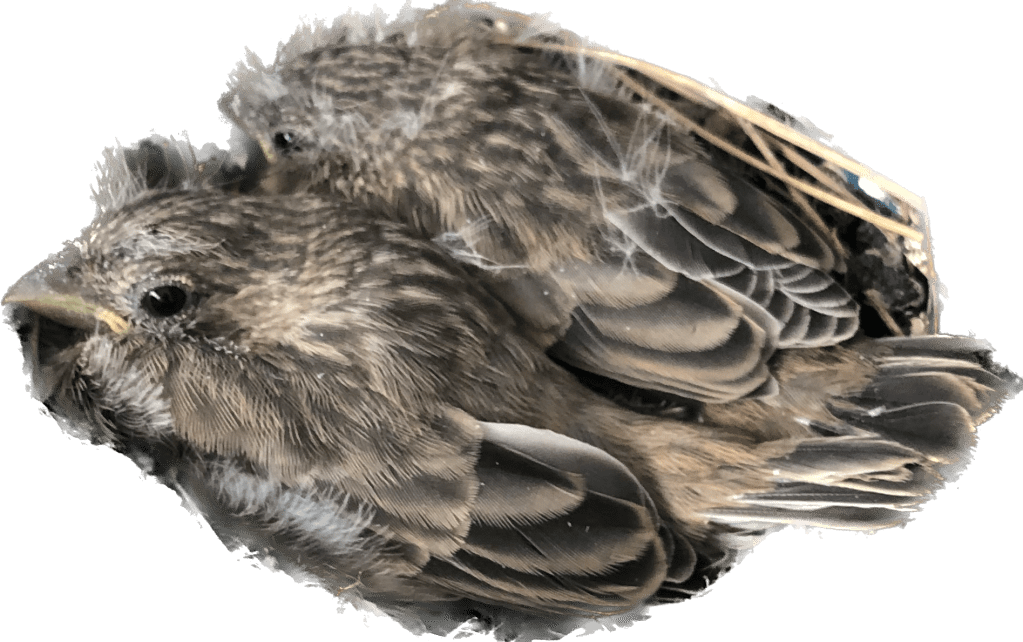
Backstory: House finches return year after year to build nests on my front door wreath. Every spring and summer, my porch becomes a bird sanctuary and nursery; I, a present but uninvolved custodian, watch it all unfolding from the periphery. This winter the little finch pair actually roosted in the wreath at night. That is a first. I imagined them nestled together in the grapevine, keeping each other warm, dreaming dreams of life to come. They started awfully early this season, building their nest in the wreath and laying at least four eggs before the last week of February. It was still cold. March arrived with gusting winds and sustained freezing temperatures; I worried about the tiny life on my door. During winter’s only snow this year, well before before spring officially arrived, the baby finches hatched. Because of the cold, I stayed away; I didn’t want to startle Mama Finch, who needed to be on the nest keeping her babies warm. I saw the hatchlings when they were a day or two old and didn’t check again for about three weeks…expecting they had fledged and possibly gone, as the happy singing and trilling bird-talk at my door had ceased. When I came around to check the nest, I found one fledgling dead, its little head drooped over the front of the nest, and another beautiful fledgling, so tiny, with such perfect little wings, enmeshed with the nest at the back—almost becoming part of the nest. This is another first: in all these generations of finches I’ve not known any babies to die. In fact, they usually stay in the nest after they can fly, seemingly unwilling to leave. I marvel at how they can still stuff themselves into it. Home sweet home…until now. Not wanting to leave the dead baby finches and fearing there were parasites or some disease in the nest, I removed the babies, placed them deep in a bed of leaves by the woods out back, and destroyed the old nest.

It broke my heart.

The parents must have been watching me…I read that birds mourn for their little lost ones.

They began rebuilding immediately. With urgency, Soon there was a perfect green nest artistically adorned with a long gray feather from some other bird, lined with layers of the softest, whitest fluff —wherever do they find this? And a week before Easter there were five—five!—new eggs.

They began hatching yesterday. I’ve been keeping close watch…and this is the first time I’ve caught a glimpse (just the very quickest glimpse) of a finch actually hatching.

The poem at the opening was inspired by one shared for VerseLove on Ethical ELA yesterday, coinciding with the hatching of these finch eggs: Why Do You Write Poems When Death is All Around Us?

The answer, for me, is a matter of awe: Life is all around, somehow overcoming, even singing at the door.

*******

with thanks to Andy Schoenborn for sharing Kyle “Guante” Tran Myhre’s poem yesterday
and Two Writing Teachers for the weekly Slice of Life story sharing-place


and to the finches
for infusing my days

with so much awe
hope
and notes
of joy


Finch elegy

I forbore
checking the finch nest
in the wreath
on the door

after three
maybe four
little finches hatched

in the cold

I knew that February
seemed too early
for laying

that sustained
freezing in March
could take a toll

but I heard Mama
and Papa House Finch
chattering all along
with babies’ bright voices

until a day or so ago

they’ve fledged and gone
already
, so
I told myself

when it is warm,
I will check the nest

(don’t disturb them
in this cold)…

Today, it is warm
like spring should be

with the earth bathed
in watercolor pastels
a blossom-spattered mosaic
after soft rainfall

and so I came to see
if the fledglings had gone
at last

not prepared
for what I found

one
hanging backward
over the front
of the nest
open mouth and closed eyes
pointing to the sky

another
wedged in back
against the door
essentially fused
into the nest itself

they are
too tiny
and new
and perfect
to be dead

but they are
they are

seems
a sibling or two
must have made it
to the skies

but these
sweetest little wings
I’ve ever seen
shall never rise

so now I lay
these lost ones
down for keeps

rip away the
beautiful nest
and sweep
and sweep

in silence
where there was
so recently
such happy song

not knowing what
went wrong

(and never will)

it is just
The Way of Things

nevertheless
my heart wrings
in two

and cries


A couple of my hardy finch fledglings in a previous year

*******

with thanks to Two Writing Teachers for the monthlong Slice of Life Story Challenge

A president, a poem

Today on Ethical ELA’s Open Write, Stacey Joy invites participants to lift a line of poetry and use it in creating a Golden Shovel poem.

I was thinking about it being President’s Day, so I went in search of poems written by our presidents. This led me to Jimmy Carter, the first U.S. President to publish a book of poetry in his lifetime. He is our longest-living president; at age 98, he has just entered hospice care. I have lifted a line from his verse.

“To hear the same whale’s song” – Jimmy Carter, “Life on a Killer Submarine,” Always a Reckoning and Other Poems

Homeward Hymn

when my life draws to
its close I imagine the last thing I hear
will be cicadas rattling high in the
green oaks as I pass, fervently calling, calling the way, same
lost and found returning sound of whale’s 
pulsating destination song

If Whales Could Fly. Christopher.MichelCC BY 2.0.

The cicada

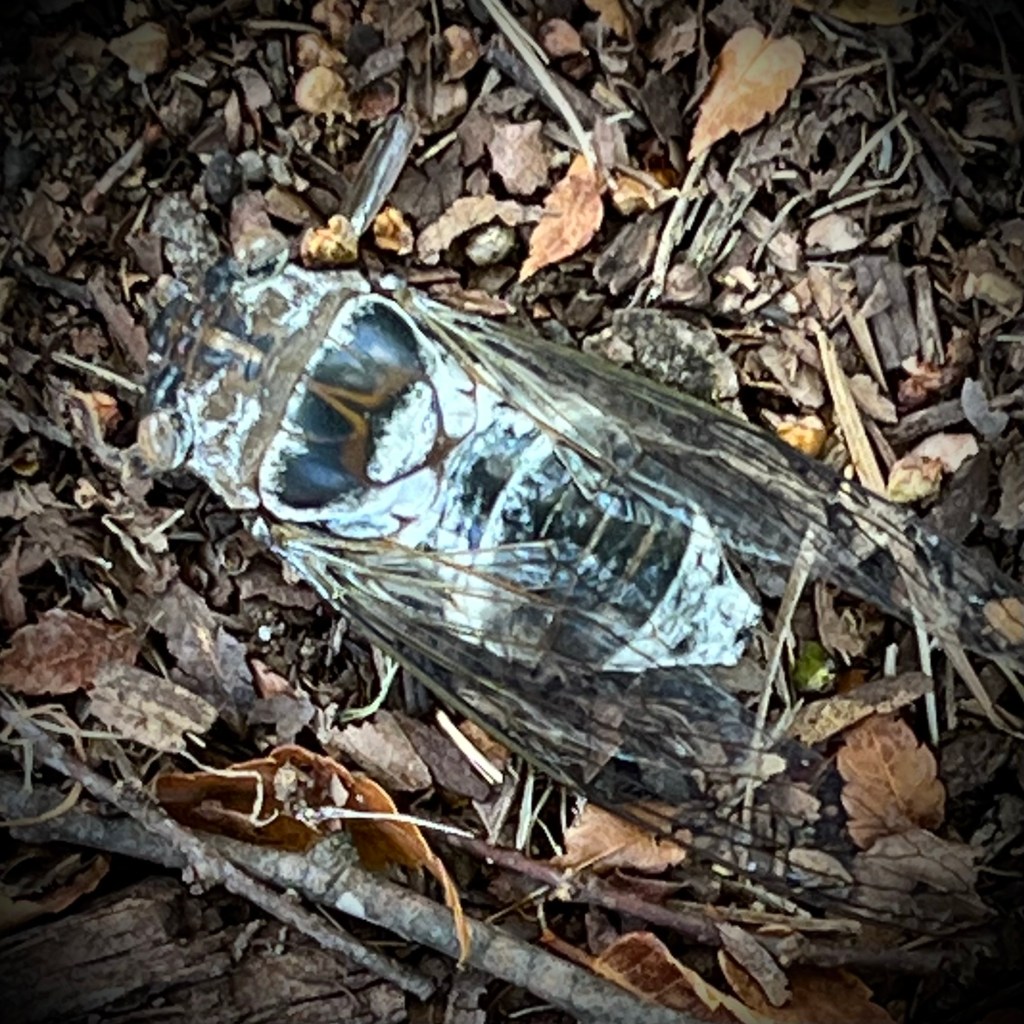
Yesterday I tried to rescue a cicada that had fallen on the pavement in the bus loop at school.

I didn’t see it fall. I only saw it on its back, wildly fluttering its wings, unable to right itself.

As cicadas are huge insects, many of my colleagues preferred not to get near it.

But I have loved cicadas all my life. Their summer song, that choral buzzing swelling from the treetops, sends my spirit spiraling skyward. I find it among the most comforting of Earth’s songs.

And so I went and picked it up.

The cicada beat its wings in a frenzy, for a second clinging to my dress with its hook-legs.

I placed it, right side up, in the mulch at the roots of a crape myrtle.

It flipped over on its back again.

This is what cicadas do, what most insects do, when they are dying. Their legs can’t support them anymore.

I figured the creature would be gone by the time school dismissal was over. All I could do was provide a dignified passing for it in the mulch under the tree versus being flattened by the wheel of a bus.

But it was still alive, moving its legs a little, when time came for me to leave.

So I put it in a cup and brought it home.

It was still and silent for most of the ride, except for one episode of weak wing-beating against the cup.

I placed it, right side up, under some ivy in a planter on the back deck.

A couple of hours later, it was on its back again, still feebly moving a leg or two.

I don’t know how long it takes cicadas to die. I don’t know if they feel pain, anxiety, or fear. I know they live the greater part of their lives underground (up to 17 years, some of them) and their time above is short (a few weeks). I start listening for their song at the end of May, the month of my birth, and I hear the last strains sometime in September. Cyclical, symbolic creatures, cicadas. Across cultures and legends, they’re most often associated with immortality and resurrection.

Yet this one was dying. I couldn’t help it or save it. I couldn’t tell it how grateful I am for its kind, and it couldn’t care. I couldn’t give it peace.

In the end, it gave me peace to let it play out here at home with honor in the ivy-sheltered planter. As night drew near, dozens of other cicadas called from the trees…a fitting requiem for a fellow northern dusk-singing cicada.

Maybe it could hear. Maybe the song was a comfort, a blessing, a benediction.

It was for me.

My northern dusk-singing cicada

The swallows

In a corner
of a window
sheltered by
the carport
at my son’s home

a pair of swallows
built a nest

not well

as my son realized
one morning
when he found
a hatchling
naked, new
and dead
on the concrete
floor

the others
seemed safe
in the faulty nest

until the next day
when my boy
found all
the swallow babies
naked, new
so tiny
so dinosauresque
splayed across
the concrete
floor

some still living

and their mother
fluttering over by
the recycling bin
in the corner
crying
trying
to gather
her broken babies

they couldn’t be saved
my boy told me
with a breaking
in his voice

so I buried them
around
the oak
tree

I cannot think
about the ring
of baby birds
there in the ground
among the roots
of the old live oak

instead I stand
under the carport
noting the stillness
of the air

the silence
naked, new
in the absence
of swallows

somewhere out there
a mama
knows how much
she’s lost

like a child
I wonder
if she grieves

I grieve
for her


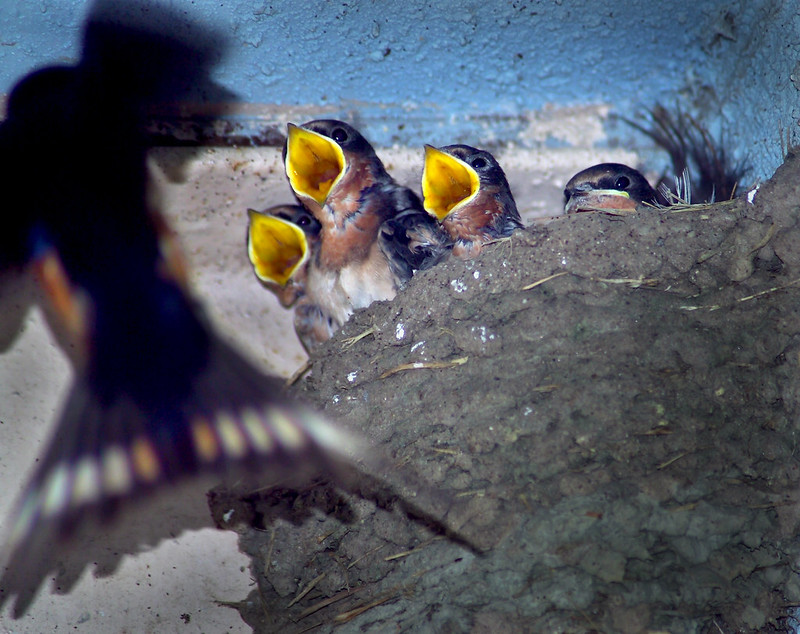
Baby swallows singing to their mother. Brookhaven National LaboratoryCC BY-NC-ND 2.0.


A curious balance

There’s a curious balance in life. Maybe the same can be said of death.

Once upon a time I watched a day-old kitten die in my mother’s hands. I wept that it didn’t have a chance to bloom and grow. I named it Edelweiss (who among you will catch that musical allusion?).

Not so many years ago I watched a sixteen-year-old dachshund draw his last breath after two needles from the vet. I wept. Profusely. So did my boy, standing by my side. He’s the one who said it had to be done. This was his beloved childhood pet from the age of four to twenty. When we left the vet’s office, my boy carried the little limp body in his arms. The lights had been dimmed and a candle had been lit. Tears rolled down the receptionist’s face.

The boy now makes his living in the death industry. After having obtained a worship ministry degree, he’s returned to school for mortuary science. A funeral director’s apprentice. His hours are long. He gets called out in the middle of the night, in the wee hours of the morning, to pick up a body.

He’s carried the old, the young, the sudden, the long-suffering.

Even a baby.

I worried, at first, about the toll it might take.

But he’s a born comforter, stalwart, as solid as mountain, as placid as a morning pond in the countryside, smooth as glass. In taking care of others, he is taking care of himself.

He is as happy as I’ve ever known him to be.

He meets people. He connects with them. He learns from them. He hears their stories, knows about their lives.

Not just the families of the deceased.

A couple of times a week, he picks up the funeral home groundskeeper and drives him to work. This man tends a farm, among other things. Occasionally he puts something in the back of my son’s car. At some point along the way he has my boy stop so he can get the thing out of the back. A cage, of sorts. The groundskeeper will set it by the woods and release whatever’s inside… a big ol’ possum, a raccoon… creatures he traps on the farm to keep them away from his chickens and eggs (I suspect he’s trying to catch a fox. Maybe he has. Maybe my boy just hasn’t said).

What strikes me is the preservation of life. That of the wild creatures as well as the domestic ones. It’s especially fascinating to me in light of the context, occurring en route to work at the funeral home. A curious balance…

Earlier this week, when the boy dropped the groundskeeper off at the farm at the end of the day, the man pointed to the goat pen:

Looka new baby goat. It’s maybe thirty minutes old.

He pointed again:

That one, maybe fifteen minutes old.

My son marveled. I could hear it in his voice when he told me the story: Fifteen minutes old, Mom. So tiny. I could see the afterbirth still hanging from the mother.

He sees death every single day. How fitting that his work should also lead him to witness life preserved and the miracle of its fresh arrival.

Such a curious balance.

Baby Goatkendrick. CC BY-NC-SA 2.0

*******

with thanks to Two Writing Teachers for the Slice of Life Story Challenge every day in the month of March

Death calls

Subtitled The morgue, part 2. A slice of memoir.

And so it was that the house for the dead became a house for the living. If there were any ghosts of soldiers or prisoners lingering in it for over twenty years, perhaps a three-month-old baby’s cries and the acrid odor of diapers drove them on.

Even I wouldn’t be there long. The shadow of death falls like a blanket; the living must keep moving out from under it.

My memories of the house are fragmented, all in black and white. A living room with plain white walls. A window with pale curtains likely made by my mother. The black slats of my crib. Years later my mother said there were little black footprints on the wall from where I pressed my feet through the crib slats. She didn’t have the heart to wash them off. My grandmother wanted to know why I’d been put to bed with dirty feet.

I had a white blanket with satin trim. I sucked my thumb and rubbed the satin against my nose with my forefinger; eventually the satin pulled away from the blanket. I’d rub it between my left thumb and fingers while sucking my right thumb. A soothing rustle, rustle, rustle. I called it my Silky String.

That is almost all I can remember for myself of the old house that was once an Army hospital morgue.

Pa-Pa was the reason we came to live here; he was the reason we had to go. He owned the house. When he died suddenly from a heart attack, his children took over his property. We were the stepfamily. Grannie had to leave the big house next door. My father, mother, baby sister and I had to leave this first house of my remembering. It was March. I was not yet three, when the long shadow sent us searching for a place to be.

When death calls, the living must answer.

*******

All these years later, I watch the news. Tanks, warships, airstrikes, destruction. A hundred and nine empty baby strollers placed in Lviv’s central square today, commemorating the children killed in the invasion of Ukraine.

I think of morgues.

And of the mothers. And little footprints left behind.

And people being driven from home. That is what wars do. That is what death does.

My son, in his mid-twenties, comes in as night falls. Dressed in suit and tie. I know he’s tired.

“Long day, wasn’t it?” I ask.

“It was,” he answers. “Maybe I won’t get called out tonight.”

For a minute I see him at age five, pulling out the church directory every time a member passed away. He’d grab a pen, cross out the person’s photo, and write the word Died.

Funny how these things come back to you. Memories are ghosts.

And life is circular; all things are connected.

My boy eats supper, collects Dennis the dachshund, goes upstairs to rest and, I hope, to sleep. Unless his phone should ring in the night. If it does, he’ll be back in suit and tie, leaving home to pick up someone. He’ll transport them to the house waiting to receive them, where he’ll begin the preparations for their burial or cremation. Got a death call, he’ll say, if his dad and I are still up. If not, he just goes quietly into the night, a mortuary emissary.

For when death calls, the living must answer.

Window in the living room of the house that was originally an Army hospital morgue.
I lived here from about age three months to almost three years.

*******

with thanks to Two Writing Teachers for the Slice of Life Story Challenge every day in the month of March.

Failure to thrive

I think about these words often, failure to thrive.

They’re an official cause of death. As on my mother-in-law’s certificate.

But I wonder: How can living to ninety-one be considered ‘failure to thrive’?

A coal-miner’s daughter who survived the Great Depression, widowed twice with young children each time, who maintained a beautiful home and a bountiful table frequently laden and ready for the arrival of her family. A voracious reader with a passion and ear for music, a grandmother generous with her love, time, and grace, a woman of great faith in God … her decline was slow and in the last days, she called out to deceased siblings and sang the hymns of her childhood.

—It doesn’t seem like failure to thrive to me. If anybody ever thrived, she did.

Oh, I understand it’s medical terminology for geriatric deterioration, encompassing decreased appetite leading to poor nutrition, muscle weakness, dementia; the human body can only take us so far.

But failure to thrive doesn’t happen only to the elderly. Most often it’s applied to babies who don’t gain weight, who don’t grow as they should, due to a host of contributing factors.

Both ends of the spectrum, then, isn’t it, failure to thrive. Its potential can frame the beginning of one’s life, and, even if that life should be long, the end.

Which for me begs the question of all that’s in between.

In how many ways do we fail to thrive? In the course of being alive, what are the “nutrients” each individual needs to live well? Thriving in this sense goes beyond the physical to the psychological, mental, emotional, spiritual… can there be holistic balance if one part is suffering, starving? Because I’m an educator, this line of thinking brings me to “the whole child”: What is impeding growth? What “learning diet” does this individual child need? In the academic realm, nourishment for flourishment can vary widely… but at the core of being human, one non-negotiable need is each other.

Relationships fail to thrive, do they not. Suffering ensues. A point of pain ripples outward, troubling the waters, sometimes over a great expanse… being alive, successfully, involves an array of coping mechanisms, the ability to adapt. The Venus flytrap comes to mind. Stuck in nutrient-poor soil, it compensates by eating meat, the unwary flies which land in its toothy leaf-blades. The businesslike science of staying alive. Gulp.

In terms of the human, the matter of thriving—growing, growing up, growing old—involves willing interdependence. Based on… love? Conscience? Overcoming fear? When my oldest son was in his early teens, he sighed: “I do not want to grow up.” (Of course he did; he’s now a husband, a father, and his daughter is the joy of his days).

But I understood his words and shivered.

Point being that of the baby, the child, the adult, the aged and infirm, which stands most able to impact the thriving of the human ecosystem… for better, for worse… with the power to discern, decide, desire, and do for one and all?

Yeah.

That’s us.

I think about these words often, failure to thrive.

They’re an official cause of death…

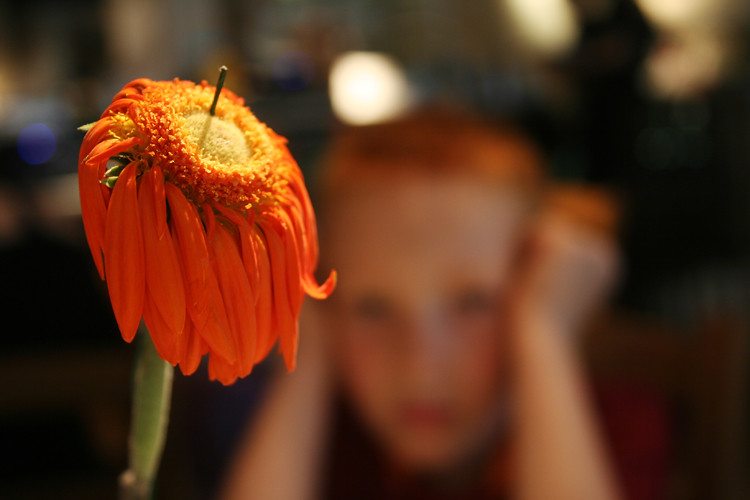
Photo: Wilted. Fotologic. CC BY

******

With thanks to Two Writing Teachers for the weekly Slice of Life invitation to write and to this writing community for unfailing encouragement.

A passing prayer

Heard today that a friend and former colleague passed away.

We worked together for a few short years as paraprofessionals, until I switched schools to complete student teaching, the final step in my university degree. It was an unexpected door that opened later in life for me.

My colleague encouraged me. She was an interesting, eclectic person who celebrated individuality and embraced life even as she absorbed some of its severest blows. I remember one sunny conversation we had about the word “eviscerated” — the gleam in her steely blue eyes never dimmed, whether burning with impassioned convictions or shining with compassionate discernment. She loved to laugh, to comfort, to speak of spiritual things.

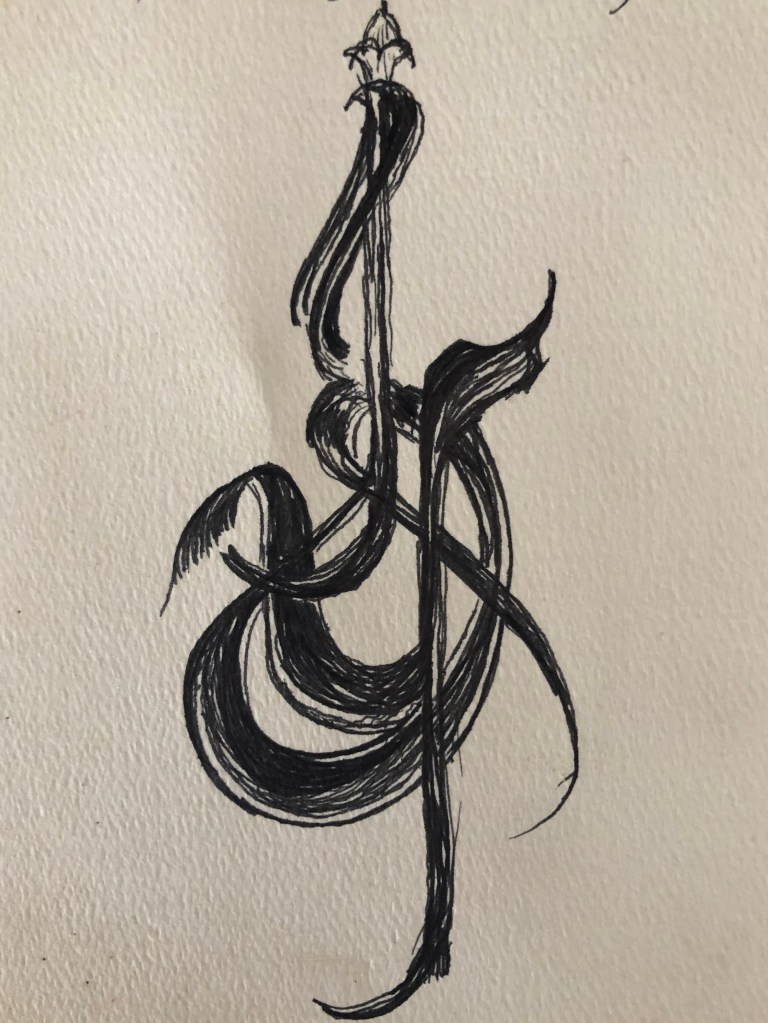
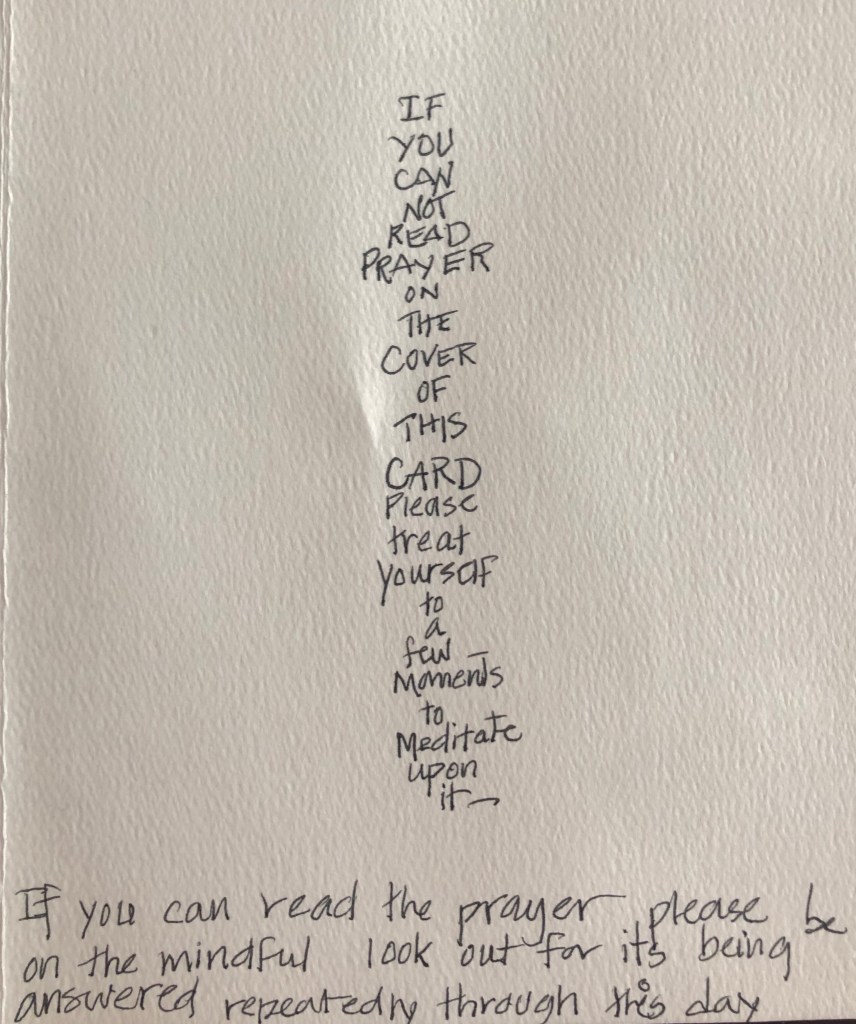
One day she surprised me with a handmade card bearing a mysterious drawing on the front: “This is my prayer for you,” she said with a smile and those unwavering, bright eyes.

I kept it all these years, long after we lost touch. Long after I heard that her compromised, declining health rendered her unable to work.

I found the card again this week during my incessant pandemic purge. With the TV in the background broadcasting the rise of coronavirus deaths at a local nursing home, I reread the card, marveled anew at its artistry and sentiment, thought of her, wondered what became of her.

Today I learned she’s numbered among those dead.

—How many messages do we miss in life, because we aren’t “still” enough to receive them. How many moments do we miss because we don’t make time. How many gifts go unacknowledged because we can’t see them while looking through the lens of unfairness.

My friend didn’t miss. She understood. Far better than most.

She reminded me once, long ago.

She reminds me, still.

It’s a choice.

Just now, seize the day
Offer your own gifts in return
You’ll find joy for the taking

Seize Heaven now, joyful old friend.

Rest in sweet peace.