First, do no harm

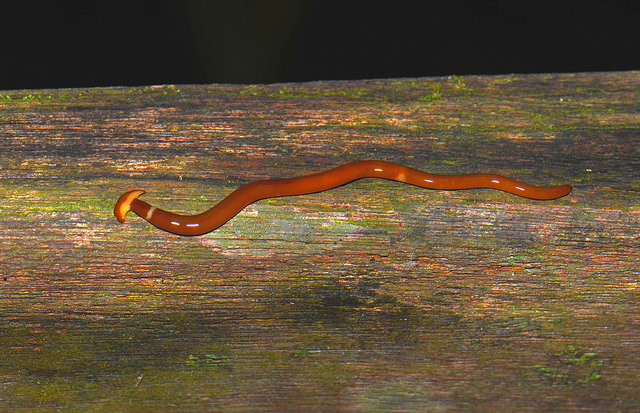
land planarian

Land planarian. Pavel KirillovCC BY-SA

Granddaddy and I are walking around “the horn.” I am puzzling over why he calls this path “the horn.” When he says it, I know he means the journey from his house down the gravel road past the formidable, fairy-tale-dark woods with a tiny cemetery in the clearing, past unpainted houses in various stages of falling down, to the narrow paved highway and on around to the other side of this gravel road where, in a tiny screened-porch house, an old widow woman dips snuff, on past Grandma’s homeplace where her disabled brother lives alone and grows sunflowers that loom over my head, always turning their faces toward the sun, which is now obscured. It rained earlier in the day, breaking the blazing summer heat. The thirsty ground drank its fill; the rest of the blessed rain hangs invisible in the air, as heavy and warm as bathwater, and drips amongst the trees, where the birds are chattering against a background of crickets who think it’s night again, along with cicadas buzzing in such numbers that the earth vibrates with the sound. Granddaddy and I are on the last leg of “the horn,” passing his garden, a steaming, lush, leafy paradise that looks to me like an artist painted it with watercolors. We walk by the ditch bank where his scuppernong vines drape the trellis he built, past the line of pink crape myrtles curving along the edge of the yard, back to the sidewalk in front of the house where we started.

Granddaddy stops to get the newspaper from the box and I go on ahead— 

“Granddaddy!” I shout, for he’s hard of hearing, although Grandma says he hears what he wants to. “What is this?”

There on the damp sidewalk, headed toward the house, are three long worms, side by side. They are tan like earthworms, but many times longer than any earthworm I’ve ever seen. Maybe a foot long. Their skinny bodies undulate like snakes; they glide over the cement holding up their big, almost-triangular heads. 

Granddaddy comes near, leans down. 

I don’t know,” he says after a moment. “I ain’t never seen anything like them before.”

I’m stunned. Granddaddy has farmed all of his life, except for the years he worked at the shipyard. He knows everything about the outdoor world, has told many stories of the things he’s seen, like a fully-formed tree growing underground when he had to dig a well once. If he doesn’t know what these worms are, they are strange indeed.

I look up at his pleasant, wrinkled face, shielded by his ever-present cap. His crinkly blue eyes are thoughtful. I wonder if he’ll kill these alien creatures, chop them up with the hoe like he does the copperhead who dares enter his realm.

But he pats my back: “Let’s get on in the house, hear.” 

And so we do. I don’t see where these three hammer-headed worms go, and I never see them or anything like them again.

The worms resurfaced in my memory recently; I’d almost forgotten them. If the Internet had been around at the time, Granddaddy and I could have learned within seconds that these were land planarians—toxic predatory monsters that destroy the ecology of a garden by feeding solely on earthworms, the great garden benefactors that aerate the soil and add rich nutrients. Planarians aren’t native to the United States; they hail from Asia, so a remaining part of the puzzle is how they ended up in the far reaches of rural, coastal North Carolina.

This story isn’t really about the planarians, however. It’s about my grandfather, infinitely wise despite having quit school in the third grade to work on the family farm. A man who used the phrase “the horn” which I have just now learned is a mathematical synonym for a cornicular angle, which, yes, describes the country path we walked (new question: How did he know?).  My grandfather saw something he’d never seen before, these three worms. He analyzed them carefully. He let them live, not knowing they could do harm to his garden. Which ended up being the best choice, for if he’d smashed them or chopped them up, every piece would have grown into a new planarian. He would have thereby ensured the destruction of his garden and its bounty, which benefited his whole family. He would have, essentially, spread the poison.

The lesson I take away from this long-ago surreal encounter is First, do no harm. In pretty much any situation. Analyze. Evaluate. Proceed with caution and discernment. Consider long-range ramifications; if they cannot be known at the moment, forbear. Poison is often invisible; be wary of tapping into it, spreading it.

Point to ponder: What are the planarians of your own life and work? What threatens to destroy what’s valuable? To answer that, you must define the garden, the earthworm, and their relationship. I speak as an educator. As a wise old farmer’s granddaughter. For me, metaphorically, the garden is not humanity itself, but something which springs forth from the human spirit—organic, beautiful, beneficial. In a sense, teaching (or writing, as I clearly do that also; think about your own work and how it applies here) is about being the earthworm, aerating the growing ground, devoting yourself to developing the richness and nutrients needed for the collective good of those who follow, that they might also produce that which is beautiful and beneficial. Harm comes in the form of anything that would limit, stunt, or destroy this exploratory, creative, thriving growth process. Planarians attack and destroy their own kind for their own benefit. We don’t always know them when we first see them, for they resemble that which is good.  Not everything has a noticeably triangular head. Watch, analyze, evaluate, discern over time. Avoid blindly buying into the toxicity, the very thing that counteracts and defeats all your best efforts, and multiplying it.

First, do no harm.
Reformation

SONY DSC

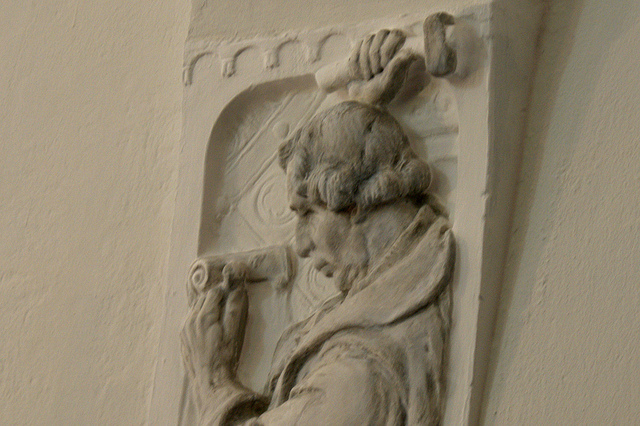
Martin-Luther. Awaya LegendsCC BY-SA

On this day, 500 years ago, Martin Luther hung his list of protests against corrupt practices on the door of the Wittenburg Castle church, igniting the Reformation that would change the course of human history.

Reform. The idea is like a diamond glittering in the dirt. Not change for the sake of change, but for the sake of those who are suffering, oppressed, under excessive pressure.

I can’t help but think of public education today – the pressure on teachers, on students. The need for large-scale reform is too widely known to be a point of dispute. The trouble with attacking any huge, knotty problem is figuring out where to begin, then where to go next, without re-tangling what’s just been untangled.

What are the oppressive practices that need to go for true education reformation? It varies, depending on who’s asked and what personal or professional interests are at stake. Luther wrote ninety-five theses; I’ll spare readers and list my top five, although they’re not anything new:

  1. Standardized testing. Everyone knows – don’t they? – that scores do not accurately reflect a person or that person’s potential. It’s a data point at a fixed moment in time, not for all time. How many students come through the system believing they are failures because they didn’t measure up? How many teachers and schools work hard, only to be considered the same? In a country historically admired the world over for creativity and innovation, giving and living the test is the best we can do?
  2. Teaching reading and writing as separate entities – often sacrificing writing for the sake of reading. It’s a dichotomy that sends the subliminal, counterproductive message that understanding others is more important than understanding self, which is what authentic writing does for people. If we want the world to be a better place, it begins with understanding why we think and feel the way we do. Empathy and compassion are born from this. Write.
  3. Cutting the arts. The test alone proves that people are diverse learners, and the great emphasis on improving reading scores already limits student self-expression. Students who have trouble focusing are often extraordinary actors and dancers; they bring powerful interpretations to scenes, can read and create brilliant choreography. Some students, considered struggling learners, are constantly composing songs in their heads and can sing with startling expression, emphasizing all the right phrases. My son, who showed an affinity for music early in life, asks: “Why aren’t kids given a chance to experiment and explore in ways they really enjoy? Why aren’t their talents or their strengths maximized?” He endured his education. Today he has a job in the music field.
  4. Teacher education and professional development as we know it. Sigh. That’s what we typically do, isn’t it? Better, deeper preparation for the diverse learners and the demands of the field is critical. Ongoing professional learning needs to be practical, designed specifically for the needs of the children AND the teachers. If we speak of deficits and gaps – how about creativity deficits and vision gaps? If the hallmark of a great teacher is getting students to love learning, shouldn’t we first love ours? How about some inspiration? It’s a pretty big motivator (wouldn’t you say, Martin Luther?).
  5. Whatever the expectations, the requirements, the new layers of things that come along as purported magic bullets that will save everything, hold these two things utterly sacred every single day: The read-aloud and time for students to generate writing that means something to them. These are proven to lift the level of thinking – authentically, organically – which will never come through compliance alone.

What are your theses for true education reform? Today, in the spirit of Martin Luther, be bold. Speak your mind through the power of the written word.

And if you teach, teach on.


Parodial school

School

School. vazovskyCC BY-SA

Our people made that choice, the choice to go to Sameness. Before my time, before the previous time, back and back and back. We relinquished color when we relinquished sunshine and did away with difference. We gained control of many things. But we had to let go of others.

– Lois Lowry, The Giver


They come to us just as they are.

That’s a good thing. Educators are to value student diversity, to see it as a gift in the classroom community – in fact, a teacher can be evaluated on this.

For children, we know, are not standardized.

They are living portfolios of experiences, abilities, thoughts, feelings, perspectives. They are unfinished stories, works in progress, masterpieces in the making.

Some know several languages. That’s diversity – a gift.

This doesn’t always show on a fluency assessment.

Some are born storytellers, song composers on the fly, wordsmiths extraordinaire, but only when speaking – not always when reading or writing.

Data points can’t capture innate artistry.

Some are engaged in tough battles, have greater mountains to climb – these kids aren’t from houses covered with vines who will go everywhere in two straight lines – yet there’s a nobility within them, born of courage, of gaining hard-won ground, more so than any knight of legendary lore.

Many of these are innovators. Because they have to be. The bulk of their energy goes not into conforming, but into coping.

Their diversity might blow the top off the charts while their test scores might lie at the other end of the spectrum. Growth is difficult to measure in a constant state of change.

So, one cannot, in the same breath, value diversity and mandate standardization. To celebrate Not-Sameness, yet to penalize schools and teachers for not attaining Sameness – what words are there for this dichotomy?

Paradox? Oxymoron? Mixed messages?

Bizarro World?

Parodial school.

That students have a right to a quality education is an unequivocal point. That the absence of order and structure invites chaos is understood. Conformity, however, doesn’t beget excellence; inspiration does.

This is the hinge on which the entire portal hangs.

For what is true for students is also true for teachers.

As a non-traditional age undergraduate, I encountered The Giver for the first time as assigned reading in a course. I subsequently wrote an essay on its imagery that the professor believed could be entered in the university’s research and creative achievement competition. At this event, I walked hallways lined with exhibitions from the medical and engineering fields, until a university official greeted me: “Ah yes, you’re representing the Humanities Department.”

“No sir,” I replied, shaking his proffered hand. “I’m representing Education.”

His expression was clearly perplexed. “We hardly ever get anyone from Education here.”

This, at a celebration of research and creative achievement.

My question remains: Why, in the unlimited universe, not?

The answer, I suspect, is that teachers don’t realize they have that power.

We must, in turn, keep a wise perspective of the things over which we’re gaining control and those we are relinquishing – squelching – in the process.

In the hearts of students as well as in their teachers’. 


Anchored

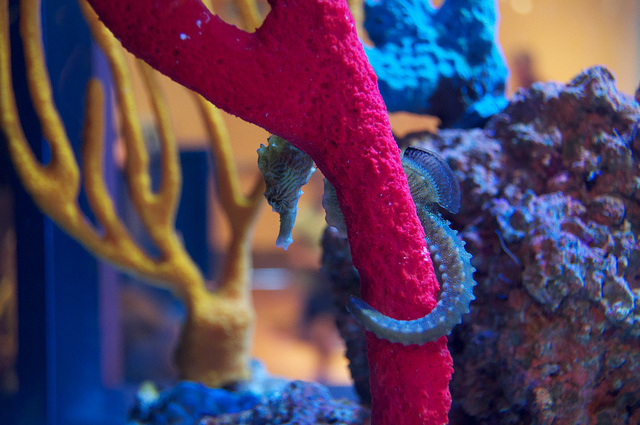
Seahorse

Seahorse. Brandon LeonCC BY-SA

The seahorse was the motif of my summer.

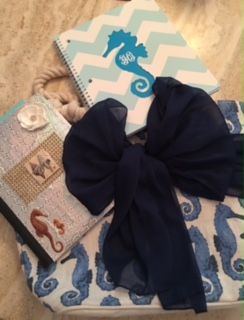
He turned up everywhere – on my new beach bags, on a bracelet from a friend, on a spiral notebook given to me, in a pile of decorations for writing journals at a summer institute.

Seahorses galore.

This sudden proliferation was odd, too odd to be random. Loving symbolism, interpretation, and looking things up in general, I researched seahorses, curious about what mysterious meaning or significant message they portend for my life at the moment.

I already knew, of course, that the males bear the young, which is the reason I am mostly using the pronoun he, in honor of the seahorse dads.  I really couldn’t make much of a connection to this appealing characteristic, however. I am the only female in a household of males (including three dogs and two guinea pigs), none of whom are about to become a gestational vehicle.

In the metaphorical realm, seahorses apparently represent a great number of things: patience, persistence, inventiveness, creativity, whimsy – all enchanting. I celebrate and welcome all of these things.

I learned that the scientific name for the seahorse, hippocampus, is the same word for the part of the human brain thought to be the center of emotion and memory.

Speaking as a writer – utterly fascinating.

Seahorses can also symbolize stubbornness (my father’s word was “hardheaded”). Speaking as a human – ouch. Ahem.  I prefer to call it “determination” or “perseverance,” but we’ll keep moving along here.

The thing that strikes me most about the seahorse is that it’s a poor swimmer – one species being the slowest-recorded swimmer in the animal kingdom – and that its tail is invaluable to its survival. National Geographic puts it this way: Seahorses are rather inept swimmers and can easily die of exhaustion when caught in storm-roiled seas . . . they anchor themselves with their prehensile tails to sea grasses and corals.

Ah. A ray of light shines here in the murky depths of symbolism.

The seahorse began appearing, and appeared most often, in things connected with my work as an educator – on a tote bag with a book order, on my notebook and journal.

Education today – might that be the storm-roiled sea, full of conflicting ideologies and solutions that sometimes beget more problems, just for starters? It’s not that educators are inept (“poor swimmers”) but that the ever-changing currents in our ecosystem are vast and powerful, so to shrink one’s spirit and drain one’s energy just trying to keep up, to stay afloat.

Seahorses can die of exhaustion if they aren’t anchored.

I think about how often the word anchor appears in the educational realm – anchor text, anchor standard – signifying the foundation of something upon which other things will be built, or that subsequent learning will connect back to.

But I don’t think that’s why the little seahorse loomed so large of late. In my mind I see him, small and shadowy against a backdrop of coral and waving sea grass, anchored by his tail, swaying peacefully despite the surging sea. I think of teachers and the demands they face. I think of students, who, above all, are too easily caught in a virtual riptide.

What’s the anchor here?

We are.

We anchor one another. Teacher to teacher. Whatever’s raging around us, we support each other, we help each other along. Ultimately, we form the solid thing, the reef, where students can anchor themselves, where their best interests are tantamount to our own, where they are sheltered, nurtured, and given outlets for inventiveness, creativity, whimsy, even in the most uncertain, troublous times.

Hang on, hang together, and believe.

Says the seahorse not just to the educational world – but to humanity.

Seahorse motif

Turtle meditation

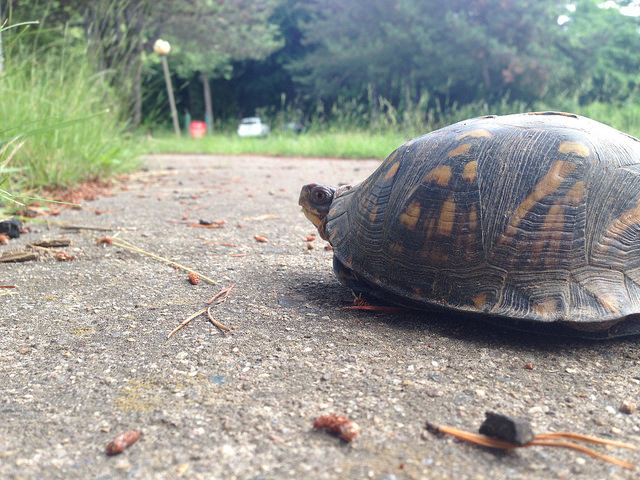
It’s almost summer here in rural North Carolina, which means two things: tobacco is lush in the fields, and turtles are busily crossing the roads.

Which also means that turtles are frequently run over by inattentive drivers.

There by the roadside, these wounded creatures die. Sometimes they leave a trail of blood on the pavement where they dragged themselves to the other side. Any roadkill is disturbing to see, but something about the inner pinkness of the turtle showing through the broken shell pieces troubles me immensely.

Maybe it’s because the shell, perfectly designed to protect the turtle, failed to do so.

But turtle shells are not meant to withstand the weight of a vehicle.

The pinkness represents vulnerability to me; I automatically begin thinking of other vulnerabilities due to failures of structures meant to protect or to edify.

Brokenness occurs on many levels in societies. Governments fail to protect the people, businesses fail to protect employees, family members fail to protect one another.

As an educator, an instructional coach, I see how expectations grow greater all the time and how the weight rests heaviest on teachers. I worry about the cracks, the brokenness, the damage – for, you see, the children are the most vulnerable part, the part we cannot afford to lose.

Any alleviation of this weight, any solution to such brokenness, lies first with the drivers.

Whomever and wherever you are.

Pay attention.

Reflect: Lucy Maud Montgomery wrote: “All things great are wound up with all things little.” Consider the brokenness around you. Repairs and healing will not be complete in a day. Where’s a small place you can begin, in a small but positive way? Positive results only come from positive words, ideas, and actions – and awareness. 

slice-of-life_individual

A time to break down, a time to build

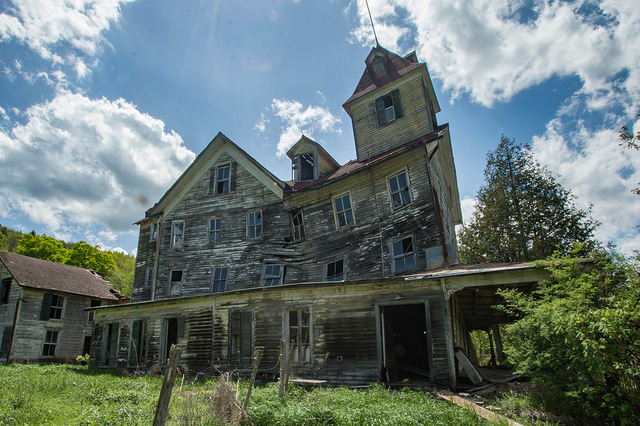
Old hotel

Old hotel. PhillipCC BY-SA

To every thing there is a season, and a time to every purpose under the heaven . . . a time to break down, and a time to build up . . . . 

Ecclesiastes 3:1, 3b

Along the country byways where I live, there are lots of old houses and barns in various stages of falling down. There’s an odd elegance to the sway of a gray weatherboard structure still holding its own, somehow, after decades, maybe even a century, of standing. Eventually, the wood returns to the earth, and the earth, in time, takes it back into itself.

I don’t know why I love dilapidated houses and barns so much, beyond their elegiac grace. I do not know why I find pictures of abandoned structures like schools and churches so compelling. Eerie and haunting, too, but mostly intriguing. Perhaps it’s due to my love of story, my wanting to know who was there, when, and why the places were abandoned – where did all the people go? Is there no one left who cares any more?

I only know that there’s a time to break or tear down, just as there is a time to build.

This doesn’t just apply to old, unsafe buildings.

It might apply to us, as we age. With time our bodies break down, albeit slowly, as they are not meant to keep going forever. Sorry, I do not have a build parallel for this.

It might apply to systems, procedures, approaches that once worked and don’t anymore – a time to examine, evaluate, break down and build anew.

Which begs the question: When is it time to break down? To build?

When the structure is dangerous, apt to cause harm, can no longer be used for the purpose it was originally intended, needs far too many reinforcements, has limited or no more effect, the time has come to break it down.

It’s the inevitable, really.

If a purpose remains, and a structure is needed, it can be built fresh. Stronger, more durable, more appropriate, more effective, more creatively, sometimes even simpler than what was there before.

Take stock around you. What’s falling down? What needs to go? What needs to stay, be scrapped, be rebuilt altogether from the ground up? If it’s not working, why, and where should you begin?

And do you mean for what you build to last for a day, a year, or a lifetime? The planning and the vision make all the difference. The foundation is the most essential part.

Consider who you’re building for, and why.

You’ll find the way.

It may be time.

The value of value

Rose & shadow

Rose and shadow. ankakayCC BY

We have a new principal at our school.

On his office wall is a certificate presented to him by his previous school: “Most likely to make you feel appreciated and valued.”

That word, valued, set my thoughts firing like electrical arcs in a dozen directions.

The first thing that came to mind, strangely, was an image of light and shadow. From an artist’s perspective, in artist terminology, value is the shading that gives depth to a two-dimensional object, almost magically transforming it visually to three dimensions. Values make an image pop, bring it to life.

A fascinating concept for a leader of a school, or any leader, isn’t it – to be an artist of sorts, to harness the light and the shadows of the given entity, to have a vision, to go beyond the surface and bring depth, meaning, and make it work. Artistically speaking, that’s the value of value.

Another image was immediately conjured – the vast machinery of systems. Have you ever had the sensation of being a tiny cog rotating in a mind-boggling conglomeration of structures that do not fit well or operate properly together, with old, vintage pieces welded precariously to shiny new ones, like something out of steampunk? As the cogs we cannot even see the full extent of the machinery looming far beyond us; we can only feel the unwieldy vibrations as it lumbers on. That’s often how education feels today. In truth, it’s not the structures that hold things together and keep everything running – it’s the cogs, the teachers. Teachers are the most crucial pieces – and the end product isn’t the perfectly standardized student. The students aren’t end products at all – don’t we want them to keep growing, learning, discovering, contributing, as long as they live? That’s something no machinery can produce.

Which gets back to value.

To value something means to hold it in high regard, to recognize its worth and usefulness. We value things that are important and beneficial to us.

My thoughts branch out into a hierarchy of what-ifs:

What if systems valued schools more than data? What if they scaled back and simplified rather than adding on?

What if principals communicated their value of teachers through their actions instead of words?

What if teachers made all students feel valued – and valued their differences? And taught students to do the same?

What if everyone realized that these are matters of the human heart and spirit?

I can see the light and shadows separating already, magically transforming things, creating a depth that’s been needed for so long.

slice-of-life_individual

The coaching tree

Coaching Tree Lg

Early in the school year, my instructional coaching colleagues and I attended district training where participants were tasked with creating an image to explain the coaching process.

My group thought for a moment.

“You know, coaching is an organic thing,” I said. “Or at least it should be. We all know it takes time to develop relationships and trust. It’s about honing practices, sure, but this is a growth process for us as well as for our teachers. We grow together to reach goals.”

A colleague said, “Yes! I’m seeing a tree, branching out . . . .”

In a few minutes we’d sketched the tree. We began to label it, recognizing coaching elements that correlated to parts of the tree. The more we worked, the faster the ideas came.

Relationships are key in coaching, the foundation, but certain things must feed the relationships before the process can begin. These roots are trust, the human connection, listening, collegiality, safety, empathy, and support. Coaches must meet teachers where they are and be willing to plug in with what teachers want to accomplish – it’s not as much about seeing the work as it is seeing a fellow human being. The vision develops from there, and needs to be a shared one.

The trunk of the tree symbolizes this togetherness with inspiration from Shel Silverstein’s The Giving Tree. Near the bottom of our tree, we placed a little heart: Coach + You. The heart of coaching is just that – having a heart for each other.

A solid, thriving coaching relationship branches out into nearly endless possibilities, aspirations, and directions, such as goals, the 4 Cs (communication, creativity, critical thinking, collaboration), encouragement, self-modifying learners, reflection, growth mindset and learner agency.

My coaching colleagues and I stood looking at our work, feeling pretty happy with our Coaching Tree.

“We need to put the sun in,” said a colleague. “The sun is the climate, of course – a warm climate conducive to coaching is necessary for the process to work. That’s where administration comes in.”

We put the sun in.

At this point, something struck me – “Trees bear fruit! What is the ultimate goal of coaching, the payoff? What’s the fruit of our labor?”

We created a basket then, and labeled it The fruit of our combined efforts. It holds apples: Love of learning, data, increased student achievement, teacher fulfillment, students graduating college or career ready. 

As teachers are fulfilled and productive, we desire to branch out into new areas. The growth continues. As students achieve, as they go on with their lives, some will go into the teaching field and the cycle begins anew.

At the close of the training, small groups presented their work to the whole assembly of coaches. The other groups had designed diagrams, cycles, or flow charts, all of which artistically, appropriately encapsulated the continuous reflective coaching cycle of support.

My group was the only one to present the coaching process as a living thing, something organic.

We were startled by the enthusiastic applause from our fellow coaches.

Upon returning to school, my colleagues and I recreated the Coaching Tree in the teachers’ lounge. It stands there to encourage, invite, celebrate, and maybe inspire or spark hope when we all need it, a visual reminder that our work is not in vain, that we’re in this together, to help each other along, and the sky is the limit.

slice-of-life_individualEarly Morning Slicer

A rising tide lifts all boats

Boats

Fishing boats. karol m. CC BY

At a recent team meeting of K-12 cross-curricular educators dedicated to improving writing instruction, we discussed the Calkins and Ehrenworth article entitled “Growing Extraordinary Writers: Leadership Decisions to Raise the Level of Writing Across a School and a District” (The Reading Teacher, Vol. 70, No. 1, July/August 2016). While takeaways included the need for a shared vision of good writing and good writing instruction, as well as a need for shared expectations and ways to track growth – the reason for the formation of this team – what struck me most was this line on the transformative power of professional development: “It should be focused on strengthening teachers’ methods and spirits.”

Yes. Spirits must rise, I thought. Before we can raise the level of writing, before we can raise the students at all,  we must first raise each others’ spirits. 

The truth is that professional development is so seldom inspirational. For the last year, when I planned professional development in writing for teachers, my driving question was, How can I inspire them? How can they tap into the wellspring of their own power, their own voices, all that matters to them?

When I spoke on this at the meeting, a colleague chimed in: “We have to be the rising tide. If we rise, we’ll raise others with us.”

“Yes – a rising tide lifts all boats,” I responded, recalling those words associated with John F. Kennedy.

I grew up in the Tidewater region of Virginia. I have been on the Chesapeake Bay-Bridge Tunnel when the tide was high, in a storm; as I descended into the tunnel, waves crashed above the entrance and spilled over the car. A layer of salt remained on the windshield when it dried. I’ve seen boats grounded when the tide was low, making the would-be sailors push and pull that much harder to get them afloat. I’ve walked floating docks of marinas on sunny days, feeling the sway of the boards under my feet as boats rocked with the incoming tide, the metal of their moorings and buoys clanking softly, rhythmically, as if coming to life with with the rising flow.

When the tide rises, it lifts everything with it – everything rises.

When our spirits rise, we lift others around us – everyone rises.

That’s so needed in education today.

It’s so needed everywhere.

The power lies within you. Tap into that inner wellspring; let it flow.

And rise.

Note: The one word I chose for for myself at the beginning of this year is Rise. If you’re interested, here’s my little poem: Rise.

slice-of-life_individual

Signals

signals

Untitled. abarndwellerCC-BY

The Scottish poet Robert Burns wrote, in “To A Louse: On seeing one on a Lady’s Bonnet at Church”:  O wad some Pow’r the giftie gie us/ To see oursels as others see us! It wad frae monie a blunder free us…

I have often pondered that idea, people needing to see themselves as others see them. To see myself as others see me. What a frightening prospect. Certainly the power to see ourselves as others see us would free us from many a blunder … one would hope.

The lines spark a question I pose to myself and teacher colleagues: What signals are we unwittingly sending to students?

Years ago, I wasn’t sure I wanted to teach. I thought I would try it, almost reluctantly, as I needed a job and my own children were still in school. I wasn’t thinking of teaching as a calling or whether or not I was cut out for it. I took a temporary position, fifth grade remediation in reading and math, with some trepidation.

“I am not sure what to do,” I confessed to the hiring principal. “I don’t know if I can really help the kids.”

She smiled. “Just love them. The rest will come.”

Here goes, I thought on Day One, as I stepped into a classroom where kids milled about, working collaboratively on math. It’s sink or swim.

From across the room, a boy saw me standing in the doorway. He didn’t know me, didn’t know why I was there, but he shot across the room through the throng of his classmates to throw his arms around me.

That was my induction to being a public educator.

A child, sinking fast, clung to me like I was a life preserver. Perhaps he perceived, instantly, that we were in – or out – of the same boat. It was sink or swim for both of us.

In this classroom, I watched the boy try his hardest to swim. He struggled academically. He struggled with controlling his impulses. He struggled socioeconomically – he wore the same heavy black ski jacket every day, even when the weather was hot. He was chastised by his teacher for every infraction, great or small. The teacher – widely respected by colleagues – was clearly suffering from burnout,  undoubtedly tired of swimming herself. Whether or not she intended it, she sent a signal: Do not approach me or question me.

Do we, as teachers, send a signal – with  or without words – that we are safe harbors or treacherous ground?

I remembered a teacher of my own. She stayed in a constant state of frustration with our geometry class, once giving me detention for leaving paper in my desk despite my impassioned protest that I hadn’t done it. Math wasn’t my strong suit and I sank to the point of dropping the course, as I had all the math credits I needed to graduate. Later that year I landed a role in the school play and this teacher came to watch it. As people congratulated me backstage after the performance, this teacher stepped forward:

“Well,” she said, “I never would have believed you had it in you.”

You decide: Would I have ever been successful in her class?

One last note on my little friend back in the fifth grade: He went on to graduate.

On his behalf, I thank all those teachers who were, along the way, safe harbors for him.

Reflect: What messages do you send to others, verbally and non-verbally, about their value? Think of the teachers you had: Were they repellents to the learning in their classrooms, or were they encouragers? Were they the treacherous ground or the safe harbors? Write. Find a viable preserver when you need to. Rest a for bit. Then keep on swimming, mindful of those who are swimming so hard, so close by.