Equinox

Today’s post serves a dual purpose: My daily Slice of Life Story Challenge and Spiritual Journey Thursday, organized by my friend Margaret Simon on the first Thursday of the month. Thank you, Margaret, for the invitation to host.

I chose to write around the theme of “balance.”

Not necessarily what you may think…

*******

It’s almost here.

Spring. The equinox.

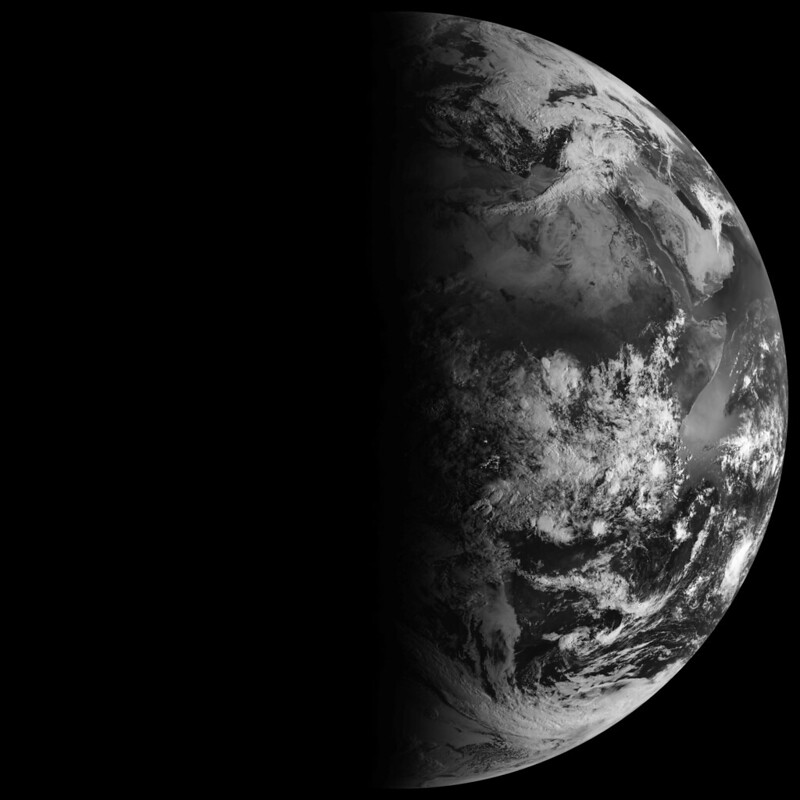
A balance of light and dark in the world, or “equal night.”

My thinking radiates in a number of metaphorical directions here but I’ll begin with the moment I was at school grappling with a new data reporting system that I have to teach to colleagues. I logged in and discovered this message: Alternate Data Entry for Dark Period.

Dark Period?

It has the sound of a span in history, like it belongs in the Holocene Epoch of the Quaternary Period, the current one in which we live, geologically speaking (“current” meaning over 11, 000 years old, for the record). As if it can be marked in time like the Ice Age or at least the Dark Ages.

Dark Period.

All it means, apparently, is the time when the data reporting system is shut down to be updated. It’s tech housecleaning. During the Dark Period, no additional data entry can occur, until everything is verified and balanced.

The words stuck with me, though.

Many would say we are living in a Dark Period now. It’s an era of strife, vitriol, backlash. An age of ever-increasing concerns over mental health. Over health in general—the coronavirus.

And at the heart of the darkness is fear.

A. Roger Ekirch writes in At Day’s Close: Night in Times Past: “Night was man’s first necessary evil, our oldest and most haunting terror. Amid the gathering darkness and cold, our prehistoric forebears must have felt profound fear … that one morning the sun might fail to return.” He goes on to say that many psychologists believe that our early ancestors feared not the dark itself but harm befalling them in the dark (for it was an unlit world at night) and over time night became synonymous with danger.

Fear leads to anger and anxiety. In the dark, things don’t look as they should; they’re distorted.

What’s the balance?

Now we’re back to the equinox, metaphorically.

Light. Day. The assurance that there’s still good working in the world, undoing harm. Think of the destruction of Australia and the human involvement in deliberately setting bushfires. Then think of soldiers in the Australian army, lined up in rows, cuddling and nursing koalas when off duty. Then apply it to people suffering around our globe …

We are our own greatest enemy and helpmeet. We all hang in the balance of these: despair and hope, destruction and edification, hurt and healing.

In The Forgotten Beasts of Eld, Patricia A. McKillip describes a monstrous creature like “a dark mist” who embodies “the fear men die of.” The novel is about learning how to live and love in a different world.

That would mean overcoming the dark, the fear.

Incidentally, in a strange balance, the current virus causing so much alarm shares its name with the crown of the sun.

And, speaking of the sun, here’s the secret of the equinox, why it’s not really equal: There’s actually more day than night.

More light. Literally.

And figuratively, it has nothing to do with moving around the sun and everything to do with moving the human heart.

Photo: NASA Goddard Space Flight Center. CC BY

*******

Dear fellow Spiritual Journey Thursday sojourners: Please click the link to add your post to the “party”:

https://fresh.inlinkz.com/party/f941589ea3ed4e83be8dd519044d3bfd

Spittin’ image

Memoir is probably my favorite kind of writing.

It’s like small moments on steroids. When I write myself back into childhood, scenes, conversations, little forgotten details are pumped full of meaning, for I have the advantage of understanding so much more than I did then . . .

This event occurred when I was seven or eight. As I write, I think of how we don’t know all that children are experiencing or how they’re trying to navigate life. Families don’t make perfect portraits. There are so many reasons why.

We are our stories.

With that in mind I’ve opted to change family names here. It gives me the final shot of courage needed to share “Spittin’ Image.”

*******

We are going to visit my grandfather.

Not my Daddy’s daddy, my Sunday-afternoons-in-the park Granddaddy who bought me red rubber boots when I started school because all my kindergarten friends had them and I wanted them, too.  We are going to see my Mama’s daddy.  I don’t know him very well. He came to visit us once, sat in our living room chair with his hand stuck out so that when I ran by, not paying attention, not being careful, his cigarette burned me.

Mama says he lives in a hospital.

I don’t know why anyone would live in a hospital. I don’t want to go see him, don’t know why we have to go.

My mother gets snappy: “He’s your granddaddy—you’re going!”

My aunts are taking us because Mama doesn’t drive. She doesn’t know how.

“Last time I seen Daddy, he was looking better,” says Aunt Bobbie, who’s driving us in her maroon Ford LTD, a Marlboro sticking out from the first two fingers of her right hand on the steering wheel. I see her mouth in the rear-view mirror. There are little pucker lines around her lips. “I believe he’s eating good. Acted happy to see me, too.”

Aunt Imogene—Genie, I call her—is riding shotgun in front of me. She takes a long drag on her own cigarette. I slide over so I can see the thick white smoke pouring out of her mouth and how it all goes right up her nose, like a waterfall in reverse. It’s neat to watch. About ten minutes pass before she speaks; Genie never does anything fast.

“Waaaay-yelllll…” says Genie, stretching the word well into four or five syllables, “at least we know he’s taken care of at the Home.”

Beside me in the backseat, Mama puts a Salem Menthol in her mouth and flicks her lighter, inhales. She doesn’t do fancy stuff with her smoke. She is quiet.

She is often quiet.

The ride takes forever. Finally Aunt Bobbie says, “We’re here,” and we pull into a parking place bordered by pine trees.

Mama drops the butt to the ground and grinds it into the gravelly dirt with her sandal. This is my grandfather’s Home, I guess, but Mama told me it was a hospital, so I’m confused. When we go in there are many small rooms but no bright lights, no doctors in lab coats, no nurses wearing white dresses and little caps. There’s a lot of wood paneling. The Home makes me think of a really big cabin but the people here don’t look like campers. Some are in wheelchairs, some are standing. Some are in pajamas. Not all of them are old. They stare at us as we go by and I don’t like the feel of their eyes.

Aunt Bobbie leads the way, down a hall, around a corner. I peek in one room and see a man with long white hair lying in bed with his mouth open, but he’s not asleep.

I want to run out of here.

Genie says, “Waaaay-yelll, hey, Daddy.”

He’s sitting in an armchair in a little living room area, holding a lit cigarette in the first two fingers of his right hand. All of his fingers have yellow stains. His nails are brown and long, and the ashes on that cigarette are the longest I’ve ever seen; why don’t they fall?      

Genie hugs him. Aunt Bobbie hugs him. He says “Hey” to them in a high, raspy voice. He doesn’t have much hair. His face is long, kind of yellowish, kind of gray, with brown spots. His clothes have spots, too, except that they’re actually small holes. From dropping cigarettes. Or ashes.

Mama is hanging back but Aunt Bobbie pulls her over.

“Daddy, look who come to see you. Beverly Ann.”

“Hey Daddy,” says my mother, bending to hug him, then stepping back. “How are you doing?”

My grandfather looks at her, his daughter, my mother, and I can tell he doesn’t know her.

Next thing I know, she’s yanking on my arm.

“I brought your granddaughter to visit.” She tugs. “Come on, give your granddaddy a hug.”

I do not want to.  I don’t move. I just look at him.

Genie pokes me from behind.

“Go and see him,” say my aunts. “He’s your granddaddy.”

I already see him and he sees me. For a minute I look into his eyes—they are big, green like moss—and the emptiness there makes me think of a hole in the ground that has no bottom. Or the time Daddy was holding me when he opened the medicine cabinet and its mirror reflected into the mirror over the sink. Mirror, mirror, on the wall . . . it became a mirror, mirror, mirror hall, reflected mirrors going on and on and on, growing tinier and tinier, like a never-ending nothingness. I’m frightened of my grandfather’s eyes, frightened that he’s looking at me with them, that something about them makes me think of my mother.

Then they light up. He knows me! He holds out his hand—not the one with the cigarette, I have my eye on that one—and calls to me:

“Beverly Aaaannn…” he says, drawling like Genie does.

“No, Daddy,” says Aunt Bobbie, “this is Beverly Ann’s daughter. That,” she points to Mama, “is Beverly Ann.”

He keeps right on staring at me.

He doesn’t get it. He thinks I am my mother. When she was little.

I hug him because I have to, because the sisters, his daughters, are making me. His skin is cool and frog-like. When I pull away, he’s still looking at me.

 Am I supposed to love him? I don’t know him. And he doesn’t know me.

We don’t stay long. As soon as we’re outside, Genie bums a light off Mama, who’s shakily firing up another Salem. Genie sucks deep, does her dragon-smoke thing, nods at me.

“I’ve said it a thousand tiiiiiimes, you are your Mama’s child, that’s for sure. Spittin’ image.”

“Ain’t she though?” agrees Aunt Bobbie.

I walk beside Mama. The aunts move ahead of us. Hoping they won’t hear, I whisper: “Why did he think I’m you, Mama?”

“His mind’s not right. Never has been,” she says, taking a drag, looking off in the distance at nothing in particular. “I really wasn’t around him much. I was a little girl when he left home.”

“Why did he leave?”

She turns her eyes on me. Dark brown eyes, like mine, and for a second they have that bottomless look. She’s slow to answer but not in the way that Genie is slow to do things. She takes another long drag.

“Grannie sent him away because he tried to hurt her.”

“Were you sad?”

“No.” Then, softly: “I was scared of him.”

Aunt Bobbie cranks the maroon LTD; Genie is getting in the front passenger side. Mama looks back at the Home and I wonder what she’s thinking. As I reach for the door, I catch my reflection in the backseat window. I glimpse the pines and the cloudless blue sky behind me. Crows fly overhead, cawing loudly. Yes, I do look a lot like my Mama. Even I can see that.

I feel shaky, too. I lean in to look closely at my own eyes, hoping to God I never find them so empty.
The bullet


Bullet

“Dodged” a bullet. John Spade

I don’t often get reader requests for posts here on my blog, but after sharing an exercise on writing about your past —”When you look back at your life, what do you see?”— a phrase about my childhood home stirred some curiosity and I promised to tell the story behind it.

So if you read Dust motes and asked about “Bullet in the living room rug, in the floor, if you know where to look,” today’s post is officially dedicated to you.

To recollect these details, I had to submerge a good while in Long Ago. When this event occurred I was around eight years old. That part’s blurry.

The rest, however, is all too vivid . . .

Mom lifts the curtain again but there’s only blackness beyond the picture window. I know by her sigh that the street is empty. No sign of Deb. She has never been this late before. She’s usually here before supper but tonight we had to go ahead and eat, hours ago. Baby Aimee—Deb’s baby—is fussy because she’s ready to go to bed and can’t settle. Mom holds her on one hip, says “Shhh, shhh, you’ll be going home to sleep soon.” Something icy glitters in my mother’s black eyes as she looks out of the window into the night.

Aimee’s eyes are almost as black as my mother’s. Big and round. They make me think of Looney Tunes characters when they’re sad, how their eyes go all huge and dark. Baby Aimee’s eyes always look like this, huge and dark, even when she’s standing in the playpen staring up at me in the daytime when I get home from school. She can stand without holding on now but isn’t really walking yet because she’s only one year old. She hangs onto my mother, her cheeks pink and watery, her big eyes shiny.

Mama,” she cries over and over. “Mama.” And she buries her face in my mother’s shoulder.

I am sorry for Aimee because she’s little and doesn’t understand things yet. I am starting to feel sorry for Mom because it’s not easy to take care of someone else’s baby while they work all day and then don’t show up and you don’t know why . . . 

“Mom! What if something has happened to  . . . “

She turns on me, her mouth a tight line under those icy-hot eyes. “Shh!” she nearly spits.

And I know, I know why.

Mom’s afraid.

Just then headlights shine through the window. Mom snatches back the curtain. Her body softens like a flower in a glass of water. 

“Thank God.” 

She squeezes past the playpen—it takes up the most of our living room floor spaceand goes to open the front door.

I hear Deb’s laughter before I see her.

Someone is with her.

They come in.

Deb is short with shoulder-length reddish hair and glasses. She dresses in what teachers at my school call “mod.” Sometimes short skirts and boots or chunky shoes, sometimes vests and bell-bottoms. Deb smiles a lot but tonight she can’t stop laughing about something. Even when she says to Mom, “I am sorry it’s so late, had some car trouble…this is Ab. My boyfriend.”

Ab, standing partly behind  Deb, is very tall. His face is thin and white, his hair black, curly, reaching past his shoulders. He’s wearing a long fur coat. I’ve never seen a man in a fur coat before. He nods to my mother when Deb introduces them but he says nothing. 

Mom looks at me, hard. “Go to bed now.”

I know this really means “I’ve got things to say that you don’t need to hear” and so I head down the hall without a word—

—BANG—

—a flash of light, the loudest sound, thunder in the house, like a car hitting it, shaking it, rattling the windows—

a scream, not sure whose, my mother’s or Deb’s—

baby screams—

I run the few steps back to the living room.

There’s a funny smell, something smoky.

Pieces of brown fur, hundreds of pieces, floating through the air. 

Deb’s crying now, her screaming baby in her arms. Ab’s face is whiter than before. I stand, frozen, as my mother demands the gun he has in his pocket, or the pocket he had a minute ago, before he blew it to smithereens.

HOW DARE YOU bring a gun into this house, around other people, around children! To stand here with your finger on the trigger…Give. It. To. Me. NOW.”

And Ab places the handgun in my mother’s open palm.

As her hand closes around it he hurries out of the door, away from her, back into the night.

*******

After Deb and Ab were gone—and after she vacuumed up all the fur—Mom ran her fingers over the rug. She found the hole and the bullet lodged in the hardwood floor beneath. For as long as we lived in that house, I could find the bullet, too.

The house still stands, so as far as I know, the bullet remains there to this day.

I can’t recall what became of Deb and her beautiful baby, Aimee, or how quickly after the bullet they quit coming to our house. I changed their names in case they’re still alive out there, somewhere. I wonder if they are. And what their stories are. And if I could stand knowing.

I really wonder about Ab.

All I know is that my mother kept his gun a long time. I’m not sure she ever gave it back. Or where in the house she hid it. Somewhere far away from children…

I think a lot about the darkness of that night, of a baby’s big, frightened eyes, of being completely at the mercy of others and their choices, not just sweet baby Aimee, long, long ago when I was still a child…but my mother, who didn’t drive, who babysat for many years to make ends meet, who accommodated other people’s schedules and whims, who was dependent on others to go anywhere or get anything she needed. Some might say powerless.

But they didn’t see her take a gun away from a strange man who towered over her, a man who, as far as I know, never darkened our door again.

I did.

The moment reverberates in my mind still. Lodged deep, so deep in my memory, lying there all this time, covered by layers and layers of stuff …

The power remains, if you know where to look.


Walk with me

“Jerusalem” donkeys live in a pasture near my home. They are so named for the cross formed by black stripes across their shoulders and down their backs. The donkey is a symbol of peace, for they are peaceable creatures, although farmers know they will protect livestock by driving away coyotes.

The donkey currently plays a significant role around the world with the observance of Palm Sunday and Holy Week. The Gospels of Matthew and John both proclaim the fulfilling of Zechariah’s prophecy that the Messiah would come to Jerusalem humbly, riding the foal, or colt, of a donkey. In Mark and Luke, Jesus directs his disciples to a colt “on which no one has yet sat.” Only Matthew records that the unbroken colt doesn’t come on this mission alone: Its mother walks alongside as it carries Jesus through the shouting crowds in the streets of Jerusalem.

It is the image of the mother walking beside her colt—her child—as a calming presence amid chaos, as a needed coach in fulfilling the sacred duty, that suddenly pierced my heart and inspired today’s post.


Walk with Me

My world is confined

to the home that I know

until strangers come

to lead me away

—please, will you come with me,

walk with me?

I know not the destination

only that it’s far

beyond what I can see

and I can’t go it alone

I need you by me,

to walk with me.

The crowds, the fervor,

what can it all mean

 but that I’m not safe

in this place of screams

don’t leave me now!

Just walk with me.

Such heavy burdens in this

untamed human world

some worthy, some not.

What’s the difference?

—Show me, I am watching you

walk with me.

A step and a step and a step

at a time,

I find I can carry on

as long as you are here

—because you don’t fear

to walk with me.

It is new to me, 

my burden; but it is light

despite the shadows

you are at peace

—and so am I

for you walk with me.

I know, somehow,

you’ll see me home

when this day, these cries,

this purpose, are done

—so walk with me

walk with me

keep me ever close 

and

walk with me.

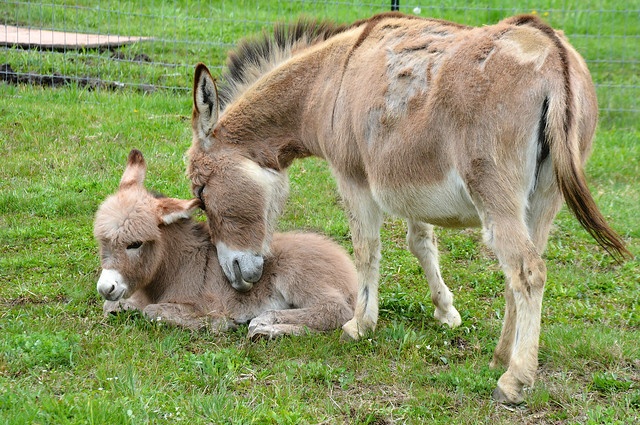
Jerusalem donkeys

Mother & baby Jerusalem donkeys. Barbara BresnahanCC BY-SA