“It is a dimension as vast as space and as timeless as infinity. It is the middle ground between light and shadow, between science and superstition, and it lies between the pit of man’s fears and the summit of his knowledge. This is the dimension of imagination. It is an area which we call the Twilight Zone.”
– Season One opening narration, The Twilight Zone television series (1959-1964)
What’s your Fourth of July tradition, fellow Americans?
For my family, it’s watching The Twilight Zone marathon on Syfy.
I have to ask myself: Why do I love this series? Why is it so addictive? After all, special effects have advanced light-years since these shows were filmed; some of the outer space/alien/futuristic costumes and settings are primitive, even laughable. Rod Serling, garbed in dress jacket and skinny tie, strolls out of inconspicuous places – other rooms in houses, offices, or even the woods – to comment on the rising action and the characters, occasionally smoking a cigarette in true ’60s vogue.
Part of the fun is seeing famous people when they were heartrendingly young, when their stars were still on the rise: Carol Burnett, Telly Savalas, Elizabeth Montgomery, William Shatner (THE Captain Kirk, before the inception of Star Trek). There’s Burgess Meredith, the best of the best character actors, Mickey Rooney beautifully playing an angry drunk. The furniture and props in many episodes, some fashionably chic, some commonplace, are now vintage, nostalgic slices of a bygone era. Something must also be said for the show’s camera work, the strategic zooms, the compelling close-ups. In truth, between some captivating characterizations and the cinematography, there’s a great bit of artistry in The Twlight Zone.
But all that’s just part of it. What really draws the viewer, ultimately, is the story.
The Twilight Zone breaks the dimensions of time and space, to be sure – it takes us away from Earth, brings us to an Earth we don’t recognize, allows us to step into the past and sometimes into a future that isn’t future anymore (I just saw a calendar on the wall of a restaurant in one futuristic episode: 1974. Geez.). Statues come to life; a warm, vibrant grandmother is really a custom robot; dolls talk, wreaking havoc and destruction. People down on their luck find good fortune; people lose fortunes; people are at the mercy of forces greater than themselves; people possess supernatural powers that are often abused or taken advantage of by others.
The most haunting thing about The Twilight Zone isn’t the supernatural, however. It’s the journey within, the recognition of the worst parts of ourselves. Selfishness and greed are common themes, with catastrophic consequences – not that the Zone is didactic. In the spirit of the best short stories, with O. Henry-esque twists at the end, The Twilight Zone follows the dark convolutions of the human psyche. Endings are intriguing, but not always happy.
My favorite episode is “A Stop at Willoughby.” A man is locked into a job he hates by a demanding, socialite wife; a hardcore boss berates him for his ineptitude and lack of drive. He’s miserable; he can’t please anyone, least of all himself. On the train commute between home and work, he falls asleep and dreams of a stop that isn’t on the line – a back-in-time place, where women carry parasols and children go fishing and men ride penny-farthing bicycles (the ones with the huge front wheel). The vision of this place, Willoughby, is so real and inviting that the man thinks about getting off there in his dream. He wakes to the ongoing pressures of his life, but yearns more and more for the slower, contented pace of Willoughby. His wife mocks him for wanting to be Huckleberry Finn, then turns her back on him just as he caves from the pressures at work. On the train, he dreams of Willoughby once more, and this time he gets off, where the townspeople greet him cheerfully by name, as if they’ve always known him, as if he belongs there.
The story doesn’t quite end here; there’s a final scene with a big final twist, but I would be the ultimate spoiler if I told it here. The episode – all the episodes – are meant to be experiences for the viewer. Here’s part of the closing narration: “Willoughby? Whatever it is, it comes with sunlight and serenity and is part of The Twilight Zone.”
Perhaps that’s the pull of the Zone – that beyond the darkness, horror, oppression, bad choices, fears, the worst of humanity, there lies something better, that’s worth the pain of overcoming. Where morbid fascinations, bystander mentalities, selfish desires and regrets melt away. A place of healing, of peace, of freedom – where the best of humanity thrives, has a voice that’s heard. It’s not a place to be merely maintained, but is always being actively created.
What does that sound like to you? What would a Magic 8-Ball say?
Utopia? Very doubtful.
America? Most likely.
The Twilight Zone? Yes definitely.
So celebrate.
Cherish. Savor. Digest. Mull.
Not just food, but your tradition, your story. Yours as well as others’.
And see beyond.

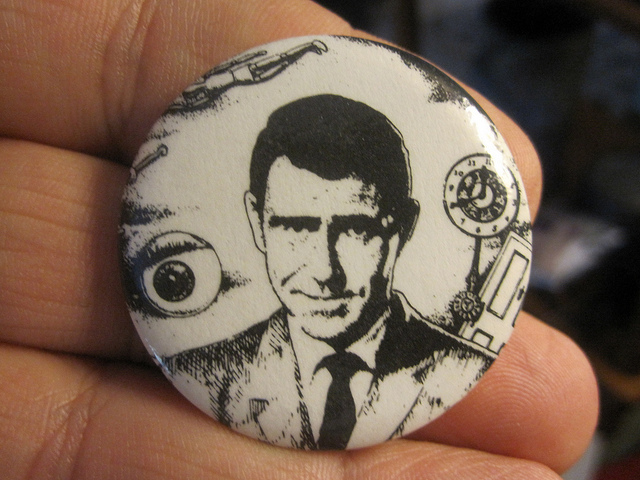
 lit bits and pieces