Sparkles in the shards

If ever I were to write a spiritual journey memoir, I might begin with this, one of my earliest memories…

She tells me to sit here on the braided rug. She places a wheel of colors on the floor in front of the silver tree, decorated with red and blue glass ornaments.

Watch, she says. Watch. She plugs in the color wheel’s cord and switches off the overhead light.

We are plunged into darkness. I shiver. There’s a small click and suddenly the room is ablaze with amber light. The tree before me is no longer silver but gold, glittering as if lit with thousands of tiny candles. The color wheel hums. Gold gives way to green, red, blue. The tree deepens to shimmering emerald, glows like redhot fireplace embers, descends into sapphire glimmers bluer than flames of the gas stove burners.

Everything is transformed by the light. The ornaments on the tree go dark, throwing sparks in the colors that touch them. Over by Granddaddy’s black recliner, the ashtray on its thin pole makes a long, flickering shadow. Its curved brass handle, a little leaping ram, gleams like pure gold. The moving colors make the ram seem a living thing. The knotty pine walls watch it all with a hundred unblinking eyes. The polished wood organ, with legs curved like a deer’s, reflects the whole scene…and nothing is as radiant as my grandmother’s smiling face, bending down to mine

I can’t remember what she said, exactly, but her expression was one of joy. I would see it many times over in my life, most often connected with stories of my birth or upon seeing spotted fawns by the roadside or when receiving a gift from someone in the family. And always with snow and Christmas. She came into the world the day after Christmas of 1915 and left it the day before Christmas Eve, 2006. She never lost her childlike joy of the season.

This memory of her aluminum Christmas tree and color wheel is from the late 1960s, when my grandparents lived in an apartment near mine. Probably the Christmas I was three.

I did not know about separations then. Or loss. I did not know all that my grandmother had already suffered in her life, from deprivation to death. Neither of us could know the shatterings that lay ahead of us.

But in these shards of memory I see great love reflected. Something pure and bright despite the brokenness. My grandmother believed in Jesus and heaven. She tried to live it. She prayed, and even when her prayers seemed unanswered, even when she grappled with not understanding, her faith held fast. Try as it might, darkness could not overcome her bright spirit. It could not extinguish the flame of her inner joy. She sang hymns. She spoke of angels. She never would have thought of herself as a warrior angel, but she served as mine as long as she lived. She loved me fiercely.

God loves us fiercely. That is the story of Christmas. That is the song of the stars. That is the light I find reflecting in the sharpest shards of life. It is the holiness that remains in the unholy fragments. We catch glimmers of it. We desire this light, but then we want to bend it. We would color it our own way and to our own purposes. That’s the story of humankind. We want to be our own authority, not to submit, and then to play victim. Our vision of truth and justice is skewed. We want to judge without being judged. We don’t want to love everybody; we nurture our hatred of one another. We fail to see our self-worship and idolatry (except for when we deliberately choose it). We fall farther and farther away. We have lost direction and think we can find it on our own, despite the darkness of our hearts.

Yet…

I loved you at your darkest is my favorite paraphrase of Romans 5:8.

Thoughout life, iridescent sparks are sent to guide us beyond the brokenness. Like my grandmother and countless others who are imperfect but real conduits of God’s love, ever drawing us back to the awe and worship we were meant for.

Therein lies the real spiritual journey.

******

with thanks to my fellow Spiritual Journey Thursday witers and Jone Rush MacCulloch for hosting us in December.

Light and joy to you all on your journey.

Compassion: a spiritual journey

My friend Kim Johnson chose the Spiritual Journey Thursday theme for October.

Kim is in the process of grieving her father. As she puts it: “I’m in the anger stage of grief, and along with everything else going on the world, I’m feeling the word COMPASSION calling to me as this month’s topic. I need to have more of it as I work my way toward acceptance.”

Compassion literally means to suffer together. The distress of another person sparks within us an intense desire to alleviate it. It is one of the purest facets of our humanity. Not mere emotion. Compassion is complex: I see your suffering. I am wiling to enter it, to help you.

There’s also a thing called compassion fatigue. It comes from prolonged exposure to traumatic events or being overwhelmed by the suffering of others, ultimately leading to physical, mental, and spiritual depletion. Our wellspring of compassion dries up. We find ourselves numb, in a desert devoid of hope, crushed beneath a boulder of distrust, breathing an atmosphere deprived of positivity. What is the point of it all, anymore?

The point is that we all need help. We want to get rid of the pain and anxiety eating us alive. We would heal ourselves, were it in our own power—even as our souls rage and wage war. Our fiery reaction, our fierce retaliation, is a temporary outlet that cannot bring true satisfaction, because it can never bring the peace we crave. How can we find peace when we are so unable to live peaceably? The fight is a wounded animal’s, a defense mechanism when existence is threatened. For…being alive… the innermost part of us is crying out against the knowledge that we will die.

I will speak now of the snake.

A week ago my granddaughter, almost four years old, asked: “Franna, do you like snakes?” She is asking all sorts of intriguing questions: Why is this your house? Why are you my Dad’s mother? She is forming her understanding of the world and affirming her place in it.

I answered as honestly I could. I do not want her to be afraid, like I was, for most of my life: “Do I like snakes? Not especially. But they can be helpful.”

Someday I will tell her how my Granddaddy taught me never to kill black snakes because they eat rats and mice. I may never tell her how he hacked copperheads to death with his hoe, or that when he became too elderly to manage the hoe, he shot them with his shotgun. It wasn’t that he didn’t like snakes. He was protecting his grandchildren and great-grandchildren from potential harm. Out of his love for us.

Note here how the spiritual journey employs foreshadowing. A thing is encountered; give it time. It is soon to reappear with greater significance. A portent.

The week after the snake question, I was at school, walking students down the sidewalk at dismissal, when I saw it, there on the cement by the edge of the grass: A little gray snake. Dead. Its body twisted, white belly frozen in an upward arch.

My first thought: It died painfully, in the act of writhing.

Second thought: Why aren’t the kids flipping out?

Not a one of them noticed the snake lying there.

Not that day, nor the next, or the next.

But I saw it, and it flooded me with…compassion.

For a snake, a creature I recently confessed to not especially liking.

It was alone. Abandoned. Not seen.

It was little. Not venomous (an earth snake). Not harmful.

And it was dead, with no one to acknowledge its existence or to mourn its passing.

I actually mourned it. I am sorry that it suffered, spiraling on itself in great pain as it died.

I am sorry we all have to suffer and die.

Every time I passed the snake the words mortal coil came to mind. Hamlet: When we have shuffled off this mortal coil…

I suppose that is the whole of the spiritual journey, is it not? Shuffling off this mortal coil. Someday shedding this battered body, being freed of the suffering.

Freedom from suffering is the very meaning behind the caduceus, symbol of the medical field. Snakes coiled around a staff. Odd. It just so happens if you research “symbols of compassion,” the caduecus appears. We do not think of it as representing compassion, but healing.

It is also linked to peace.

Many myths are behind the symbol, notably one in which the Greek messenger god, Hermes (Mercury in Roman mythology) saw two snakes fighting and cast his wand between them. The snakes gave up the battle and entertwined themselves peacefully around the wand.

In the Bible, God tells Moses to cast a bronze serpent and place it on a wooden pole as a cure for poisonous snakebite, a direct consequence of the people’s continued rebellion. God, out of his great compassion, provided a cure: Anyone bitten by a snake was healed of its venom by looking at the serpent on the staff, “high and lifted up.”

Herein lies THE point. Is there an antidote to the suffering we experience from the beginning of our existence, all the physical pain, mental anguish, and the thing we fear most—loss? Is it fighting venom with venom, or is it the active decision to stop battling each another, to cease provoking, retaliating, mocking, belittling, degrading, and causing more harm, until we seal our own destruction in utter carnage? Or is it a matter of realizing we’re all snakebit, and in the act of trying to alleviate another’s suffering, we ease our own? Can desperately-needed relief come in the very midst of our pain by desiring to help another….in compassion, “suffering together?” Not pulling others into our pain, but pulling ourselves into theirs?

Is this not THE point of Christ’s ministry and mission? He saw the suffering of people around him, out of compassion. He healed out of compassion. He wept at death for the ugly, unnatural thing it is, out of compassion. He was tortured and gave up his own life for broken humanity, out of compassion.

Compassion is born of love. Selfless love. Sacrifical love. As long as we have such love…we have hope.

Lest I sound too idealistic…today is my father’s birthday. A week ago today marked the twenty-third anniversary of his sudden death and the implosion of our family. It might as well have been dismemberment. Pain sliced us apart like a mighty warrior’s well-honed sword.

It isn’t supposed to be this way.

Someday, someday, we will shuffle off our heavy mortal coil and discover how great God’s compassion truly is…as well as his power to reverse and restore.

Until then, let us keep trusting. Let us wrap our wounds and our arms around each other. The pain will not disappear, not yet; but we can help each other through it.

That’s what the journey is for.

with special thanks to Kim — I hold you in my heart and prayers each day —
and to the SJT band of writers, for so often inspiring me to rise above.

Barefoot: a spiritual journey

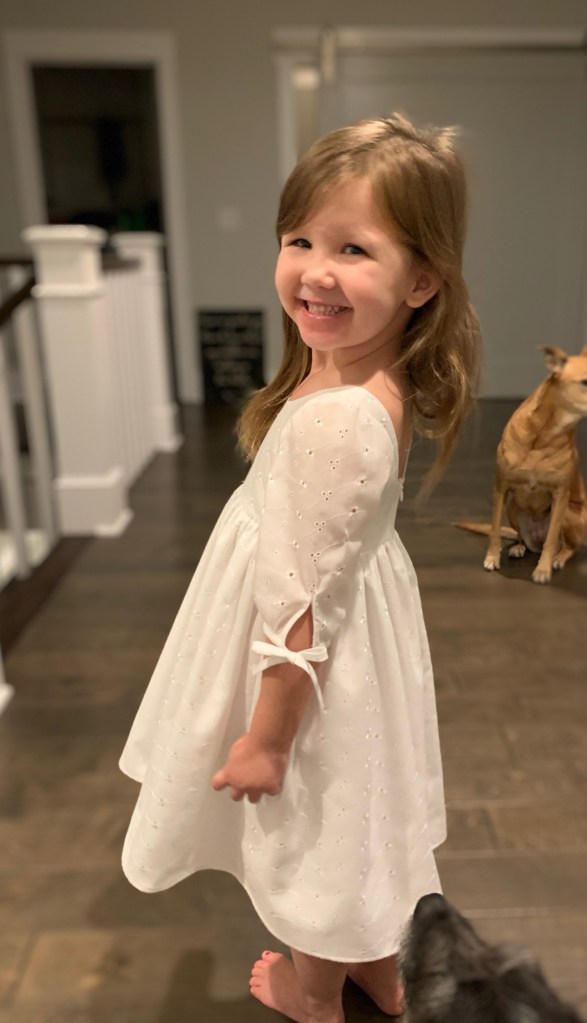
In my favorite photo of her, she is barefoot.

Smiling from ear to ear, wearing her handmade “wedding dress.”

She is three years old.

She came into our lives like a little angel of light in dark times descending.

My oldest son, like the prodigal, had returned home to find new direction for his life. He enrolled in seminary but resisted the call to preach. He met a young woman seeking the Lord’s guidance in rebuilding her own life…and her little girl’s.

Said my son to me, one starkly memorable morning: “I have been seeing someone.”

“Wonderful!” I replied. Noting his expression: “She must be special.”

“She is. I have something to tell you…”

Long pause. Entire lifetimes hang in the balance of such.

I braced myself.

“She has a little girl.”

I breathed. Didn’t even know I was holding my breath.

Things happen in everybody’s life. The whole of our stories is the overcoming.

I asked only one question: “Is this what you want?”

He nodded. A moment too great for words.

Finally he managed: “You always wanted a little girl.”

Lifelong desire of my heart, now granted.

In the ensuing months we nearly lost his father. My husband battled his way back from heart attacks, cardiac arrests, surgeries. A gray day-to-day existence, clinging to the Lord and the wisdom of the medical team…to this day, medical professionals read his reports and look at him with awe, the unspoken message in their eyes: How are you still here?

My husband survived to officiate our son’s wedding, for which the little “wedding dress” was made. Our girl stood by her Mama and new stepfather during the ceremony. Our boy made vows to them both: to be a loving husband and father, forever.

He also became a pastor. Like his dad.

The COVID pandemic came and went. A new little granddaughter was born. My husband suffered additional health setbacks. Every time he overcame to continue his life and his ministry. When despair threatened me, I wrote my way through it. When I was too weary to pray, I rested in the knowledge that the Spirit prayed on my behalf. When I felt alone, too weighted to move, and that I could go no further, a voiceless voice stirred my heart: You have little girls. You affect their now and their future.

It always, always pulled me through.

I think a lot about loss. How we humans fear it more than anything. How it feels like the end of the story.

It is not.

It is out of loss, out of human frailty and failings, that God does his mightiest work…we will not know all the answers in this life, but he is a seekable and findable God, if we are earnest. He is present with us; we must trust. At any given time we can see only the littlest fraction of his great picture, unless he allows us to see a bit more…

Back to my barefoot girl.

More than anything, we fear losing those we love. From the start she wrapped herself in and around my son’s heart…he so wanted to adopt her. He belonged to her and she to him, but not legally.

Until recently.

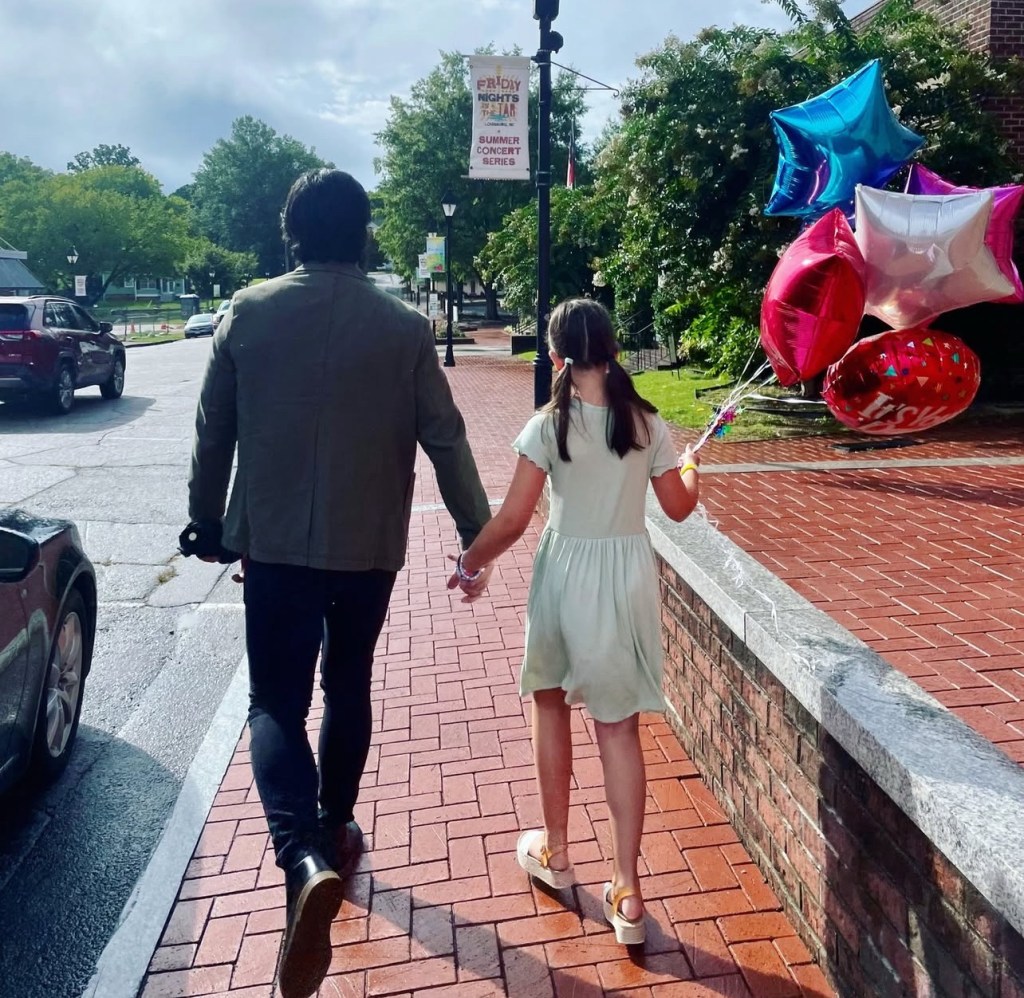
This summer our family celebrated the official adoption of our beautiful barefoot girl, now growing tall. On that day at the courthouse, she was a radiant as she was when she was three and so excited about the wedding.

I could quote Scriptures about being adopted children of God, about love triumphing over all and never ending, about the Lord telling his prophets to stand barefoot on holy ground. The verses swirl together in my mind.

What I know is that faith and love are holy ground, exemplified in face of my precious barefoot girl. The spiritual journey is lived moment by moment, knowing the sovereign Lord can bring—so often brings— holiness out of unholiness. Wholeness out of brokenness. That is the whole message of Christ and salvation; it is something we cannot do for ourselves. He is the God of redemption and restoration beyond our greatest imaginings.

My heart has learned to sing with the psalmist: Wait on the Lord; be of good courage, and He shall strengthen your heart; Wait, I say, on the Lord!

He will deliver.

So gloriously.

Ready for the wedding day

Adoption day, at last

*******

with special thanks to my fellow Spiritual Journey band of writers, and to Linda Mitchell for choosing the theme of “barefoot.” Linda: I’d been wanting to commemorate my granddaughter’s adoption. “Barefoot” gave me the perfect beginning place.

Taking back

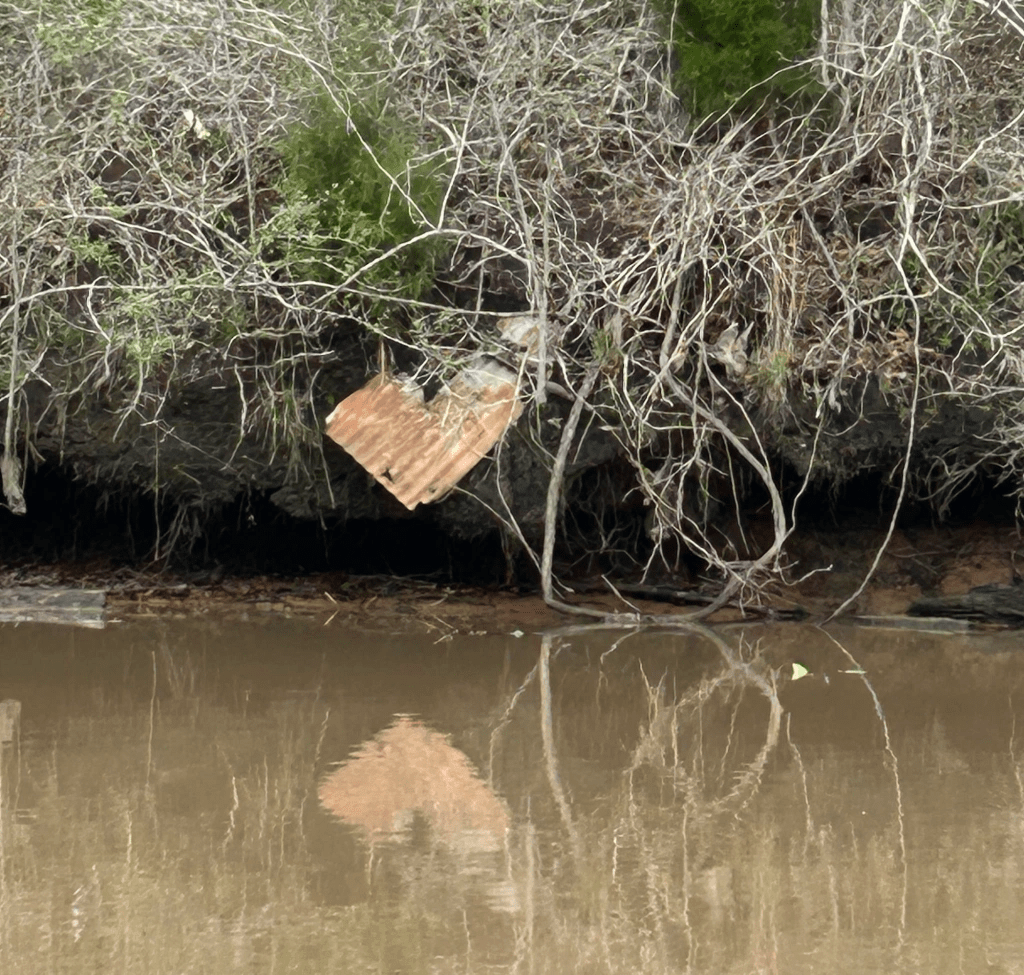
For Ethical ELA’s Open Write today, fellow teacher-poet Margaret Simon invites participants to write to a photo. “This Photo Wants to Be a Poem” is a regular feature of her blog, Reflections on the Teche.

Margaret is also an artist, always viewing the world with artist eyes. She saw this scene on a canoe ride with her husband and knew she needed a photo… found art, shall we say, for a found poem (of sorts):

Here is my poem.

Earth gives
metal

Man makes
barns

Time rusts
mettle

Storms bring
harm

Swamp doesn’t
meddle

only opens its
arms

to heart-pinned
medal

recalling Earth’s
charms.

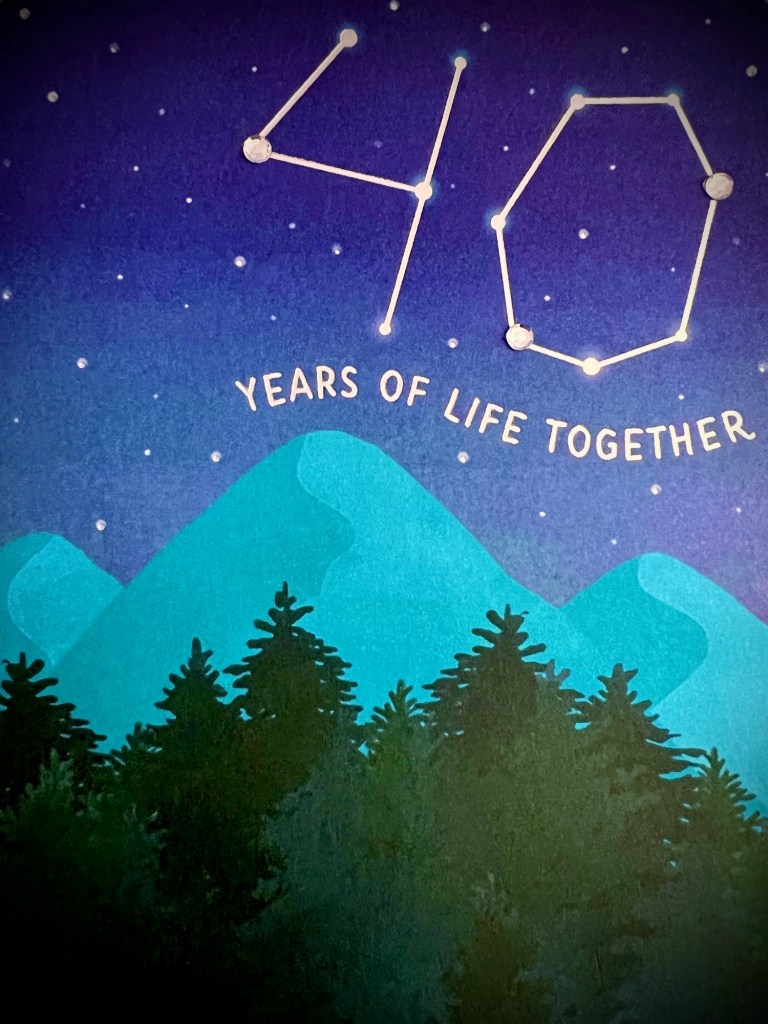
Anniversary (a spiritual journey)

Today I dug deep in the trunk and pulled out the album.

The cover is age-blemished. Pages yellowing. The cards are fragile, antiquated. The inked signatures, along with the love and best wishes, are fading.

On this day, forty years ago, my dress was ready and hanging on the closet door. My mother paid $130 for it and repaired the uneven hem. We’d found a cathedral bridal cap on the clearance rack, the price reduced because the pearl beading was coming off—she bought that, too, and restitched the tiny beads.

When Grandma offered to pay for the wedding cake, my mother wept.

My mother-in-law had new carpet installed in her home just prior to hosting the rehearsal dinner. She made spaghetti. A widow of eleven years, she’d given her engagement ring to her boy, to give to me. She cried on the morning of our wedding because it was raining, but the sun broke through the clouds in all its summer glory before the ceremony. The following spring, she would remarry.

My father asked a coworker, an amateur photographer, to take pictures. Our next-door neighbor, whose three kids my mother babysat for years, hosted my shower and provided the refreshments for the reception.

My grandmother asked her sister to stay with my grandfather, who was ailing and not up to traveling three hours in a car (cancer would make itself known and his bladder would be removed; he would live another fourteen years). Grandma was determined to be there. One of my most treasured photos from that day is of her seated on a pew alongside my Grannie and my mother, all of them smiling, wearing matching white carnation corsages.

My mother made the four ocean-blue bridesmaid’s dresses; my sister and new sister-in-law were radiant in them. Mom also made my sky blue going-away outfit and, at the last minute, removed her white beads and put them around my neck. The final photos in my wedding album are of her in her handmade pink dress, minus the beads, watching me leave, and my father standing in his black tails and striped ascot, grinning from ear to ear, a big cigar clenched in his teeth (congrats, Daddy; your eldest is safely handed off, not your responsibility anymore).

I was twenty years old.

I loved them all. I knew they loved me.

My family.

Forty years later, I remember them, despite the unraveling. The irreparable rifts. Death, loss, mental illness, addiction, estrangement, falling away… the story is surreal. Nightmarish. Like something from Picasso’s blue period with Van Gogh’s cypresses lurking in the foreground.

But on that bright day, we were together, celebrating. I read every faded, fragile card and my own handwritten record of the events. So much hope and joy, all there, preserved. For a few moments I linger in the vibrance, the whole wide circle of family love, everything that culminated in this new beginning. I remember my mother’s sacrifices especially.

And so the prologue ended. There are pangs, yes. Shatterings and shards in the heart. But the love is there. Still there. Despite all.

I poured my life into chapters that wrote themselves across the four subsequent decades, into the husband, the ministry, the children and now grandchildren, that God has granted me. As my husband said in the CICU to our oldest son, after regaining conscious from induced hypothermia, recovering from his first heart attack, cardiac arrest, and surgery: I have poured everything I have into you.

Duty. Sacrifice. For better, for worse, for richer, for poorer, in sickness and in health, to love and to cherish, until death do us part.

And so I made my vow, not only to a once-young man but to God, who loves with a steadfast love, from everlasting to everlasting.

Today my dress is ready and hanging on the closet door. Ivory with lace sleeves. Not new, but it’ll work. Tomorrow our family—our sons, daughters-in-law, granddaughters—will gather to celebrate this milestone with us.

I shall tell them, as best I can, that they’re infinitely more than what I dreamed of when I first set my satin-slippered foot on this path, forty years ago. Gifts beyond compare. Love multiplied, exponentially.

Straight from the hand of my Lord, who makes all things new.

I close my album.

with special thanks to the insightful band of Spiritual Journey writers and to this month’s host, Leigh Anne Eck, who chose the topic of “family.”

Provision

Provision is the title of the prose poem I share here, originally written to a nature prompt on Ethical ELA’s Open Write. A poet-friend suggested turning it into haibun by adding haiku at the endVoilà.

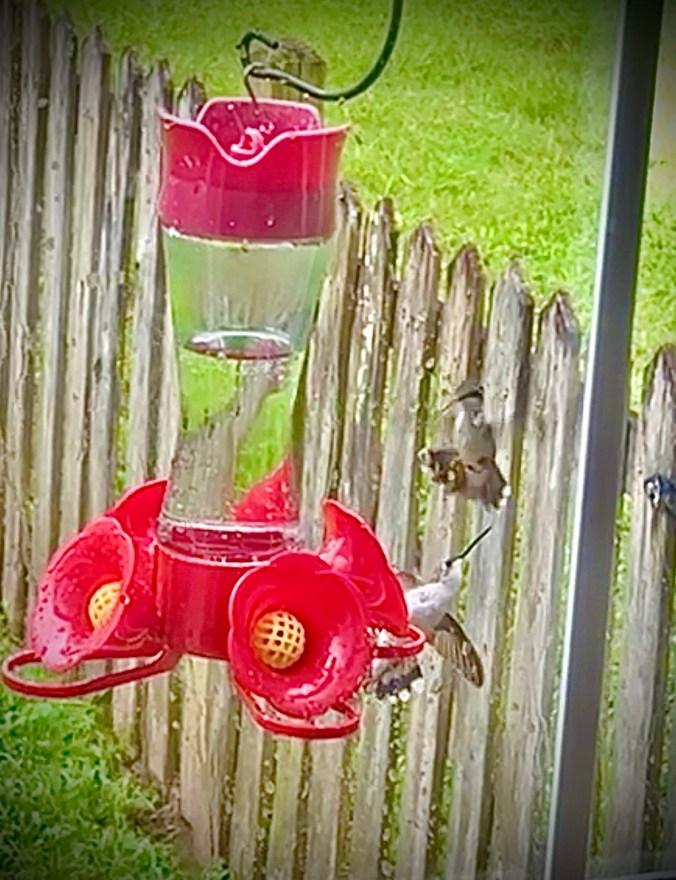
It is July. The hummingbirds are drinking a whole feeder of sugar water a day. My friends say they have no hummingbirds this year and I joke that they are all coming to me. My granddaughters try to help me count, but, in all the frenetic zoomings from window to crape myrtle and every which way, we lose track: Is it seven? Ten? We cannot be sure, even though every bird has different markings. Most are female. One silvery girl has a red dot at her throat. This is somewhat rare, research reveals. I have taken to calling her The Princess. She was here last year. She has come home again to her own realm and it is my great pleasure to serve her.  A documentary tells me that every day of life is a combat zone for hummingbirds. I already know this; I am eyewitness to their fierce competition for food. I am occasionally startled by the sound of a tiny body slamming against the window—THUNK! — where the feeder hangs. How is it so loud? How does the body-slammed bird not die? The hummingbird’s awareness and aerial acrobatics are astonishing. Once in a while, a male finds his way to the feeder, his brilliant ruby-throat like nothing else in nature, as long as the light is right. His jewel-fire turns black in shadows. The women soon drive him away. They rule the feeder. I see females sometimes picking near-invisible insects off of its red plastic flowers, likely to carry to their young. I am thinking some of these birds hatched here in our trees last year. We have never had this many before. It is not hummingbird nature to “bring your friends.” They do not have friends. They are individuals. Loners. Warriors. As fierce and resilient as anything in the animal kingdom. They are, in their way, mightier than eagles. And they know me. I step outside to a helicopteresque whirrrr accompanied by loud chips and chitterings…food’s gone! they say, so hurry up, hurry UP. A bird hovers nearby as I rehang the feeder full of fresh, cool sugar-water, condensation already running down the glass, gleaming in the light. They are back at it before I can open the door to go inside. I do not expect their gratitude. Their love. Their allegiance. None of that is possible in this life. Their beauty and perseverance, their very presence, is enough. They perch on the twig-branches of the pines out back whenever I am on the deck, nearly indistinguisable from the pinecones. They are watching me, these tiny winged wonders of sublime iridescence and supreme intelligence. They know me. It is more than enough. 

The battle is Yours
—I trust Your sweet provision,
grace in every drop.

Silky string: a memory

For Ethical ELA’s Open Write today, host Jennifer Guyor Jowett states this purpose: “We are going to tug at your memories, perhaps even look for a way to express that which is hidden.”

Jennifer goes on to share how Emma Parker, a textile and mixed-media artist from the UK, inspired her own poem: Emma Parker’s themes are “often around the broken, the abandoned, and the forgotten.” She explains that thread and cloth hold the metaphors of mending, repairing, and connecting and becomes interested in the stories the materials hold and who has touched them before.

Before I could even finish reading the rest of Jennifer’s intro and prompt, my mind was spiraling in countless directions. First, writing about memories. My favorite kind of writing. Second, themes of “the broken, abandoned, forgotten.” So much to say about that. Then the whole bit about fabric and cloth, mending and repairing… my mother was a seamstress. An image from my earliest days immediately came to mind for a poem, but the ideas do not stop there, no, not at all.

To be honest, I’ve spent much time thinking on the broken parts of life and generations of brokenness. Some people overcome while others are never able. So many stories in my own family and in my husband’s. I keep picking up the pieces in my mind, marveling at the incredible beauty of some, mourning over the ones beyond repair. Someday, someday…I will see what written mosaic I can make of these. Perhaps.

But for now, a poem with the first image that came to mind:

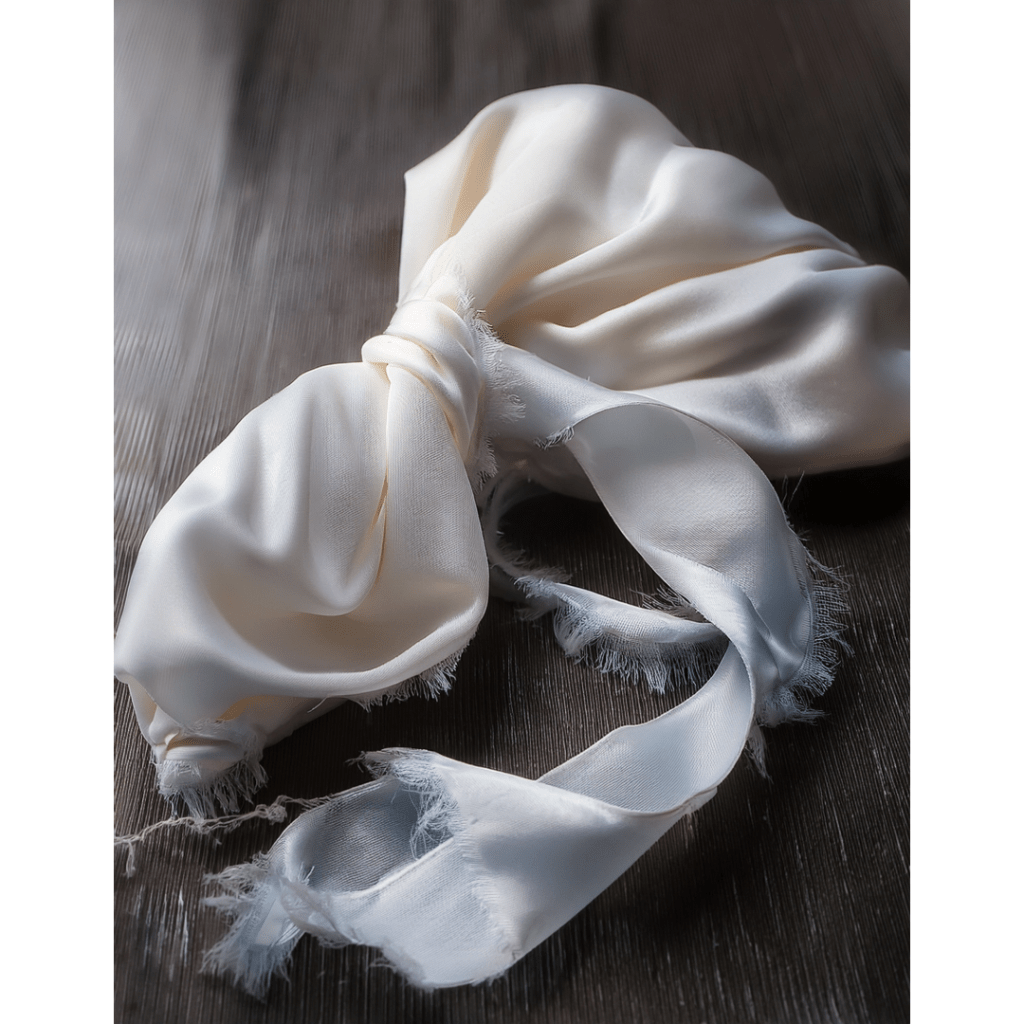
Silky String

Who
gave me
the blanket
trimmed with satin?
Someone receiving
a new baby to hold.
Did this someone ever know
that my sweet blanket, white as snow,
would become my babyhood lifeline
even as it all disintegrated?

-the blanket, that is, from too much loving.
Over time the satin pulled away
and someone (who?) tied it in knots
to keep it from being lost.
Priceless, my silky string,
for rubbing across
my nose, thumb in
mouth…soothing
me to
sleep.

Note: I didn’t plan to write a double (or reverse) etheree. After the first two lines, the form took charge. Jennifer, the Open Write host, called it “an in and out etheree,” like a blanket unfolding and fading away.

AI-generated image. Took a few tries to get this. Some of the results were haunting. But so is reality, sometimes.

Still waters

It’s been a while since I wrote a post, dear Reader and Writer Friends. Life keeps happening. The spiritual journey presses on, across craggy, unforgiving mountains with paths cut too near the edge; down through the valleys steeped in shadows and heavy rainfall; alongside the sea, where sun and salt pull at the wings of the soul longing to be free; and by the shady garden path where one can sometimes find an unoccupied bench to sit awhile, inhaling dewy flower-fragrances. —What is the spiritual journey, if not metaphor?

The beach is always the first summer getaway for my husband and me. Now that the children are grown and married, it’s just us…except for the new puppy, Jesse, now five months old (could this be a reason I haven’t written much of late? Indeed.). And so we headed east with our Jesse in tow.

We needed the break. There are a thousand reasons why. You have the same, yourselves. It so happens that this particular destination is in the quietest community we have ever experienced. New, colorful beach homes with impeccably manicured lawns, rustling palms, rippling birdsong on the ever-present stiff breeze —the ocean, making its nearby presence known. Human voices are almost entirely absent here. We marvel at it. Almost eerie but for the incredible sense of peace and intense sunlight that lasts longer than a summer day ought. Outside with Jesse, soaking up the radiant light, the silence, the rejuventating breeze, the word paradise comes to mind over and over. As does a longing for it to never end.

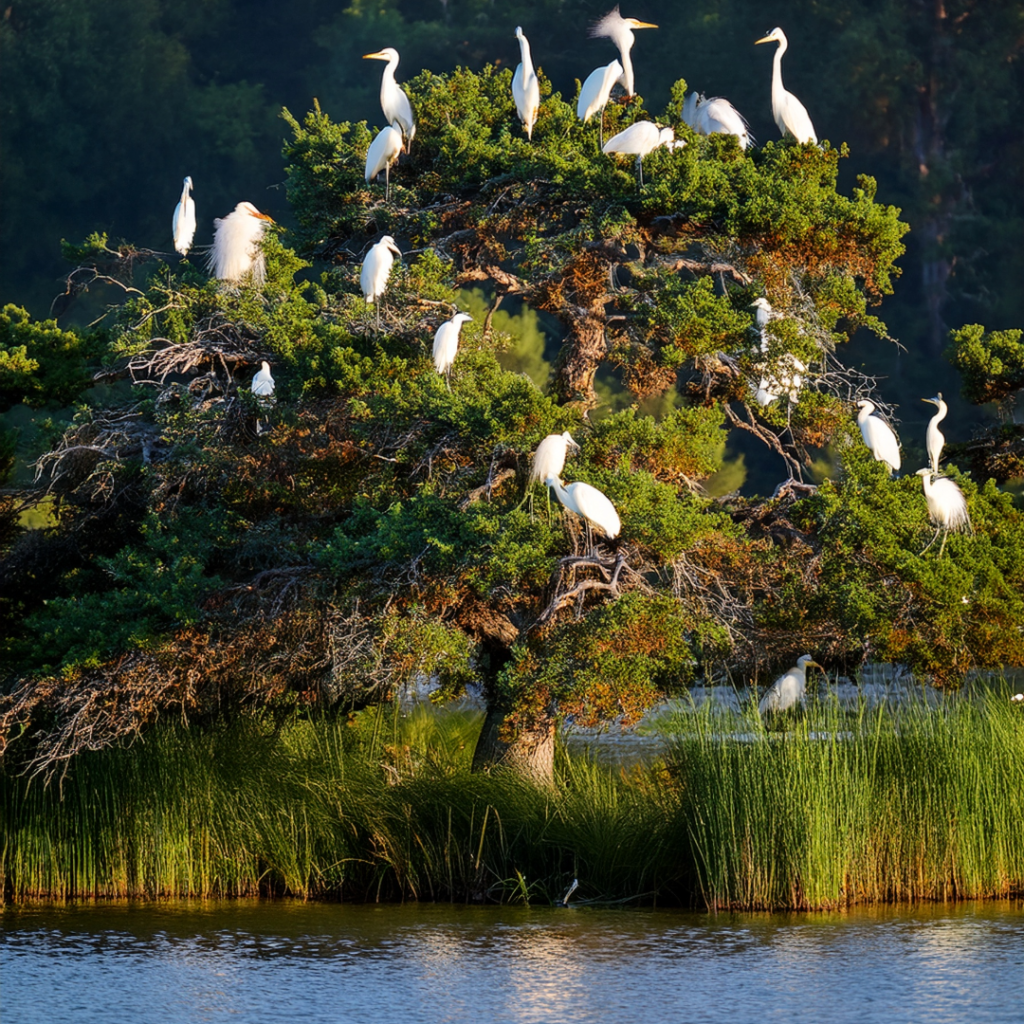
After dinner one evening my husband and I take a drive. I am the driver now; the loss of his eye and his heart condition make him nervous about driving the new car. This is how it is, now. This is how it will be, as long as our journey continues. On this particular evening, we travel to a beach our children enjoyed when they were small. The road meanders through marsh and lakes. As I am the driver, I can’t look at everything. I catch glimpses of big white birds sailing over the water. Egrets. Elegant. White as snow, poetry come to life. We round a bend and I see a whole colony of them, roosting in a tree by at the waterside.

I could not get a picture…even if I had, it would not do justice to the reality, the breathtaking beauty of that colony of big white birds in the deep, dark green tree by the still waters. Again, the word paradise returns to mind, with a fleeting recollection of being a little child in a bathtub singing a song I made up for myself: Bird of paradise, bird of paradise, you’re so pretty and nice…I don’t know what inspired me. Maybe I’d just learned the term “bird of paradise” and loved it for its lyrical feel.

How quickly time passes. One day a child splashing in a tub singing made-up songs, to—poof!—forty years married, splashing in the sunset chapters of life…still savoring the beautiful, all along the journey.

For it is there, it is there, if we but take time to see.

Thank God for the moments of awe and rest that only He can provide.

AI-generated image of egrets roosting in a tree by the water…does not do justice to the real sight.

*******

With thanks to Karen Eastlund for July’s Spiritual Journey “still waters” theme, and to my fellow SJT writers, who are such good company.

Spiritual Journey: Blossoming

On the first day of May, Carol Varsalona offered the theme of “blossoming” to our group of Spiritual Journey Thursday writers. Carol’s husband passed away at the beginning of April. She writes in her post: “When I signed up to host the Spiritual Journey, I felt blossoming would be an appropriate theme for May since it connotes a renewal, a new beginning, and personal growth. I did not think that I would face the sudden death of my husband and go through a period of grief.” She dedicates this month’s post to his memory, along with a beautiful poem about him; you can read about her spiritual journey here.

Carol is one of the people who aways inspires me to see and savor the beauty of nature. Whenever I read her blog, it’s like taking a rest stop in a flower-filled garden, where one can breathe the fragrance deep and be strengthened for the journey. In her present loss, she writes of May flowers coming along to remind us of renewal and resilience.

To me the blossoming flowers are a metaphor for faith itself. The beauty of the earth pointing us back to the Creator, in a world that buffets us with fear, uncertainty, sadness, brokenness, rage, and loss. The peace and healing our human hearts desperately long for will never be found on this path. “All the world’s a rage,” to put a twist on a Shakespearean line. An ever-maturing faith is able to cut a path through anxiety, blame, and fear with which the world deliberately keeps distracting and demeaning us, where some of the worst pain is inflicted by those we care about most. As the saying goes: Hurt people hurt people. Faith does not retaliate. It withstands. It endures. It continues to bloom, and its fragrance beckons others to carve a better path through the the world’s dense, thorn-filled forest, to the inner garden. It is there, in our hearts. It has always been there…if we choose to see it.

In her poem, Carol wrote of her husband collecting a bouquet for her. I am reminded that one day, our faith will be made sight. We will BE the bouquet, the Lord’s very own, gathered unto him not as cut flowers but ones that shall bloom eternally in his presence, in that promised place where there will be no more tears, no more death, or sorrow, or crying, or pain (Revelation 21:4).

When I am still, I can feel the warmth of the sun on those flowers of peace; they open up, releasing their perfume in the soft breeze that infuses my soul.

Beyond this world’s brambles
Lies a garden of faith-flowers—
Opening, ever-opening to
Sunlight—yes, the
Son’s light.
Our hearts are filled there
Mind-rambles stilled there
In the hush of His garden
Nurtured by the Gardener’s
Grace.

Finding a safe harbor poem

National Poetry Month continues, and while I have been writing a poem each day in April, I have not posted them all here on the blog.

Today I return to post about “safe harbors.”

Yesterday for VerseLove at Ethical ELA, poet Padma Venkatraman offered this prompt along with her own beautiful work as an example: “Think about a place that feels like a safe harbor to you – and bring that space alive in a poem.”

Ah. I knew exactly what to write about…

Haven

I should convert
one of the boys’
old bedrooms
to a study
where I can write
with fewer
interruptions

but here
at the kitchen table
is my place

here
there are windows
all around

I open the blinds
while it is yet dark

inviting the light
before its return

bringing with it, birds
rippling with song
praise for the morning
and the new day

these colorful
feathered visitors
peer in my windows
from time to time
like curious, bright-eyed
Muses

—yes, I am here
—yes, I see you, too

and sometimes
when my husband
turns on the TV
in the living room
I grow weary
of the news
and sports

but when
he goes away
he leaves music playing
for the puppy

playing under my chair
little ball of golden fluff
having dragged every toy
he owns
to my feet

where he whimpers
just now
to be held

and so I pick him up

he curls in my lap
while I write
to the background song
a’rippling:

If my words did glow
with the gold of sunshine…

yeah, the Grateful Dead…

here in my place
my beloved space

I write

ever grateful, alive.

******

Lyrics: “Ripple,” Robert Hunter/Jerome Garcia, 1970.

My Jesse

with thanks also to Two Writing Teachers for the Tuesday Slice of Life Story Challenge