The letter

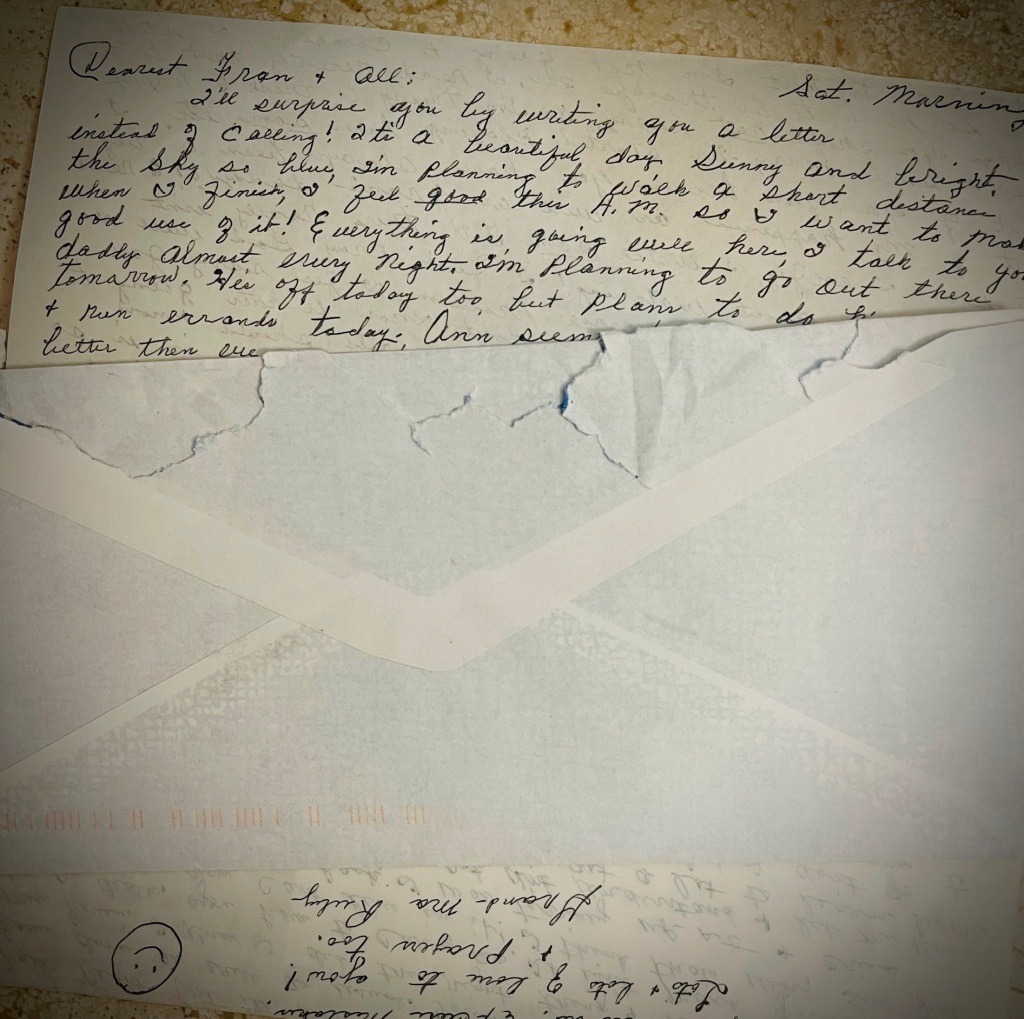
I found it in one of my old Bibles when I was preparing to speak at a women’s conference.

A letter from my grandmother.

Postmarked September 29, 2001…not long after 9-11. In the wake of what seemed the end of the world.

She wanted to surprise me with a letter. She’d written dozens to me throughout all the years we lived in two different states, since I was six. In her eighties, however, her fine penmanship had begun to look shaky on the page. She had taken to making phone calls more and more.

She writes of the beautiful day: sunny and bright, the sky so blue. I’m planning to walk a short distance when I finish and feel good…

She writes of family, that she talks to my daddy every night, and tomorrow she will see him. She writes that my mother seems to be doing good, better than we even thought! I no longer remember the context of this statement; my mother was frequently in poor health, in body and in mind.

She writes of my Aunt Pat’s moonflower, presently blooming, and asks if I remember her moonflower growing around the stump of Granddaddy’s pecan tree by the old dirt road and that she once had another by the pump house…its runners grew on the pump house, shrubs nearby, and the fence.

For a minute, I am there, walking in long ago, seeing the profusion of white blooms, breathing their perfume…

Then she tells me not to worry about her. She had given up her house and had come to live with my aunt; at 85, unsteady on her feet and occasionally falling, she could no longer live alone. She writes: I have accepted it, like a death. You have to carry on.

She admits to crying a lot at first. Then: I’m not going to complain. I still have so much to be thankful for. I read recently that to be happy, you should act happy, so I’m trying to think happy thoughts and smile more…I think of you often because you have always been a big part of my happiness as well as Grand-daddy’s!

She read books; she played tapes of gospel music; she prayed for God to see fit to take care of our world problems. She writes of violence and violent people not knowing what being happy is.

She misses her piano, her most-prized possession. She says that since she couldn’t take it with her when she gave up the house, she’s glad I wanted it: I hope it will bring much happiness to you and the boys.

She would never know that my youngest would learn to play on that piano, that he would become a phenomenal musician, that he would learn to sing all the harmonies in gospel songs, that he would eventually obtain a college degree in this, that he would lead choirs.

She writes that she hopes to see me and the children soon, even if for a little while, knowing I’d go visit my parents, too. She so wanted to spend time with my children…

She closes with her love and prayers too.

Two tiny notes are included also, one for each of my children, then ages twelve and four. In the note to the youngest she mentions hummingbirds…they will soon be flying to a warmer climate but will come back at Easter.

As I hold these written treasures in my hands, savoring every word, a little shadow flickers at the kitchen window. A hummingbird, coming to my freshly-refilled feeder.

A year to the day after Grandma wrote this letter, my father would die suddenly. The flood of grief would overwhelm her; dementia would soon settle in, and she would be in a nursing home for four years until her death at age 90.

I reread of the beautiful day, sunny and bright, the sky so blue, that she’s talking to my father every night, that my mother’s doing better than anyone ever expected… I reread her words of acceptance and carrying on, of her great love and prayers for me. I think about how these buoyed me through every day of my life…even now.

I fold the letter back into its old envelope. I finish my lesson for the women’s conference, on learning the unforced rhythms of grace.

I carry Grandma’s letter with me.

I carry on.
*******

with thanks to Two Writing Teachers for the Tuesday Slice of Life Story Challenge
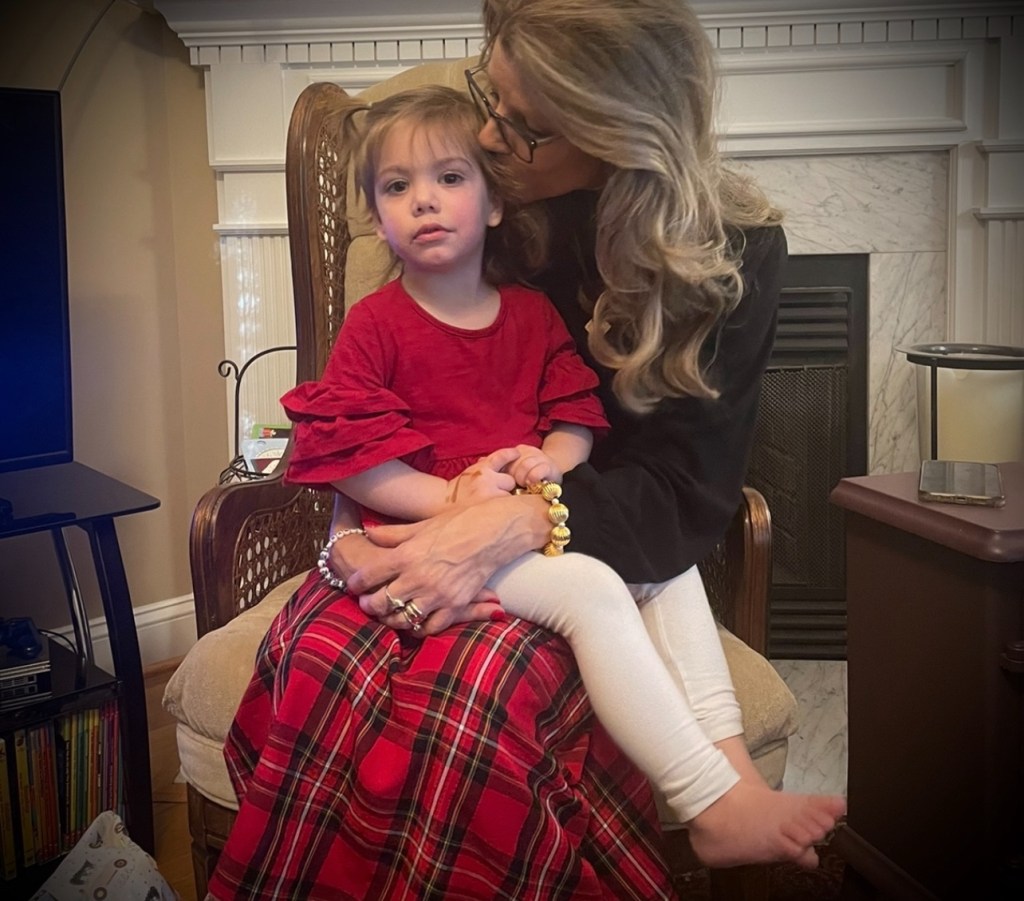
Interpretation of Grandmothering by AI

Over at Ethical ELA last month, host Amber Harrison invited Open Write participants to compose a poem inspired by Walt Whitman’s “Song of Myself”:

I celebrate myself, and sing myself,
And what I assume you shall assume,
For every atom belonging to me as good as belongs to you.

The idea being to fill in these blanks:

I celebrate____.

And what I _______you _____.
For every ___________ me as good
_______ you.

My poem:

Grandmothering

I celebrate the immutable now.

And what I pour of myself, you drink—a transubstantiation of sorts,
blood-memory in the making.

For every day, in passing, decreases me as good
as it increases you.

As anyone in a writing community knows, giving and receiving comments is the stuff we feed on to keep going. One of my fellow Open Write participants (“tellio”) offered this astonishing reponse to my poem:

Here is an explication of your poem by the AI Perplexity. It is, in a way a backfilling in of the lines. I wonder what Uncle Walty would make of it.

“Grandmothering” is a poem that delves into the profound connection between generations, particularly the relationship between a grandmother and her grandchild. The poem celebrates the present moment, emphasizing its unchanging nature, hence the phrase “the immutable now.” The act of sharing and passing on experiences, wisdom, and love is likened to a sacred transformation, described as a “transubstantiation of sorts,” evoking the religious concept of the Eucharist, where bread and wine are transformed into the body and blood of Christ.

The line “And what I pour of myself, you drink” vividly captures the idea of the grandmother imparting her essence to her grandchild, who receives it eagerly and completely. This exchange is described as a “blood-memory in the making,” suggesting that the bond between them is not only emotional and intellectual but also deeply rooted in their shared heritage and lineage.

The final two lines, “For every day, in passing, decreases me as good as it increases you,” encapsulate the bittersweet reality of this intergenerational relationship. As the grandmother imparts her knowledge and love to her grandchild, she recognizes that her own time and energy are finite. Each day that passes diminishes her own vitality and presence, yet simultaneously enriches and empowers the younger generation. In essence, “Grandmothering” beautifully captures the timeless cycle of giving and receiving between generations, acknowledging both the sacrifices and the joys inherent in this process. It speaks to the enduring significance of familial connections and the profound impact of legacy and heritage on our lives.

Oh, Perplexity. You have me weeping over the way you’ve pulled all that’s behind the poem and in my heart out into the open. How profoundly you understand the depths of my soul.

And you aren’t even human.

Or alive.

I celebrate the immutable now

*******

Composed for Day 18 of the Slice of Life Story Challenge with Two Writing Teachers

Round yon December

a triolet for my grandmother

Come December, I’m remembering you
in the lights and silent night
—how years, like snow and feathers, flew—
Come December, I’m remembering you
at sight of ruby-red cardinals, too.
On the wings of the morning, all is bright…
come December, I’m remembering you
in the lights and silent night.

December is my grandmother’s month. She was born the day after Christmas, was married in the middle of the month at age 20, and died the day before Christmas Eve, at 90. She loved the season, children, cardinals, and the color red, symbolic of her name: Ruby. “Silent Night” was her favorite carol; whenever I hear it, she is near. Her home place and resting place are in the outskirts of a rural town named for the dawn… “on the wings of the morning” is borrowed from my favorite Psalm, 139, a hymn to the omnipotence, omniscience, and omnipresence of God.

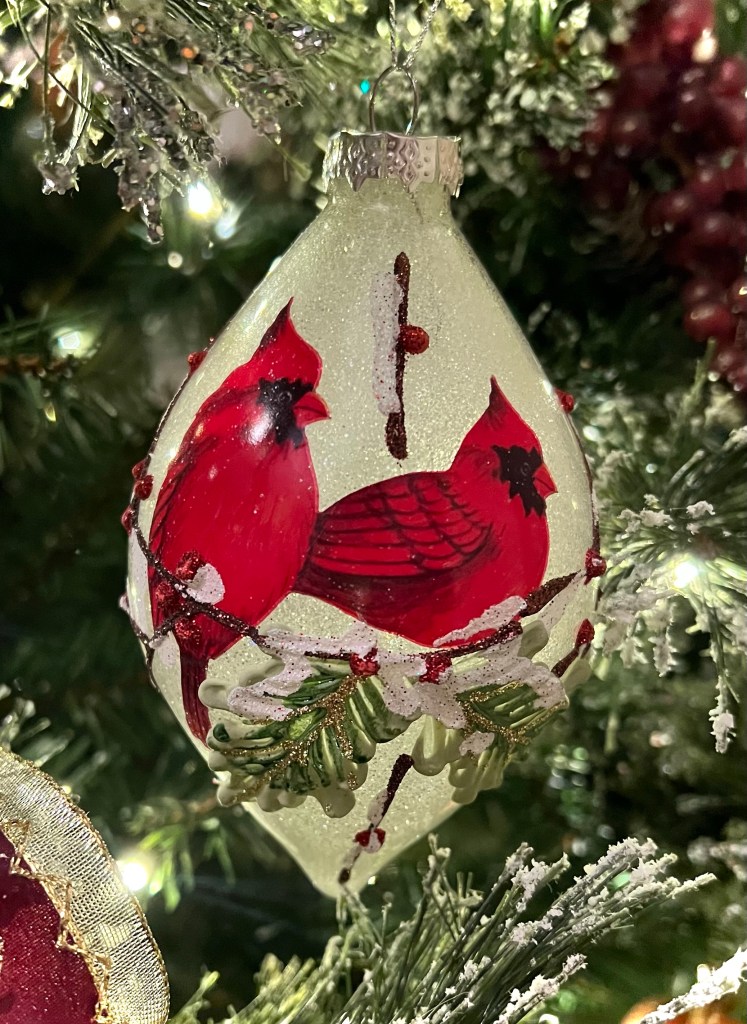
The cardinal ornament in the photo was a gift from a friend yesterday. I hung it on the tree last night after choir practice with the kids at church. They’re singing “Silent Night” in the worship service on Sunday.

Grandma, you would love it all.

Sleep in heavenly peace.

Ghost-memory poem

with thanks to Glenda Funk for the Open Write prompt on Ethical ELA today: “I invite you to think about the ghosts who appear to you and the ways you learn from and celebrate the lives of those who have passed on, those who now visit us in our memories.”

In the Night

When I crawl into bed
to rest my weary bones at last
I have a sense of her

the way she tucked me in
heard my prayers
kissed my forehead 
in successive repetition 
soft as wing-flutters

I hear her voice
when the lights go out
and darkness first envelops:
Don’t worry, Honey
in a minute
your eyes will adjust
you’ll be able to see

and I see her
in the night
a drifting wraith
in her thin pale gown
bathed in silver moonlight
floating into Granddaddy’s room
where I sleep 
on the little cot by his bed
listening to the rhythms of 
his mighty snores

for she always rises
in the darkest part
to check my coverings
sometimes caressing my head
or patting my leg
before drifting back out
to her own room
where snoring 
cannot reach

she is never far
even now
and for all the brightness
she brought to my days
she is near, so near,
in the night.

The pin

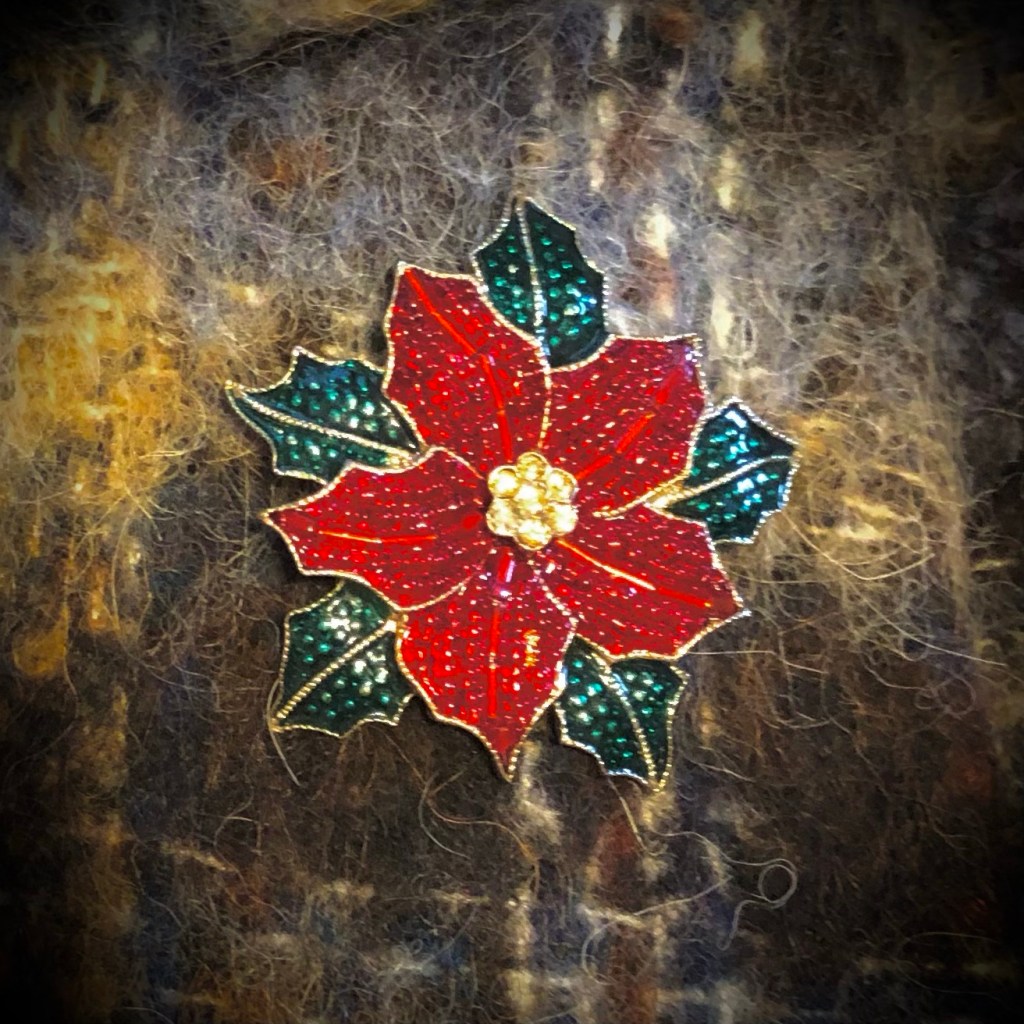
Every December I open the small cardboard box, remove the pin, and place it on my winter dress coat.

This is the fifteenth year.

The box is now timeworn but the little poinsettia still sparkles like it did the day I bought it. There it was, right by the checkout counter where I purchased black hose to wear to my grandmother’s funeral.

Not one poinsettia pin.

Three of them, just alike.

I bought them all.

I packed them for the journey to my grandparents’ hometown. The setting of so many idyllic childhood summers, so many holiday and birthday gatherings.

It happened to be her ninety-first birthday when the family gathered at the funeral home on that cold winter’s night.

She was born the day after Christmas. Used to chuckle about not having anything to look forward to the rest of the year, with her wedding anniversary, Christmas, and birthday all in December. But she loved the season more than anyone I’ve ever known. Sending and receiving cards. Baking. Cooking, cooking, cooking. Glass ornaments and colorful lights on the tree. Gifts in festive paper, old-fashioned hard candy in the candy dish. Collecting angel figurines and bells across the years. The aged, sepia-toned Nativity scene atop the piano. Going to church. Carols. Snowfall. Candles in the windowsills, shining in the night. Little children with wonderstruck expressions. She loved it all. She exuded holiday joy.

It was her season.

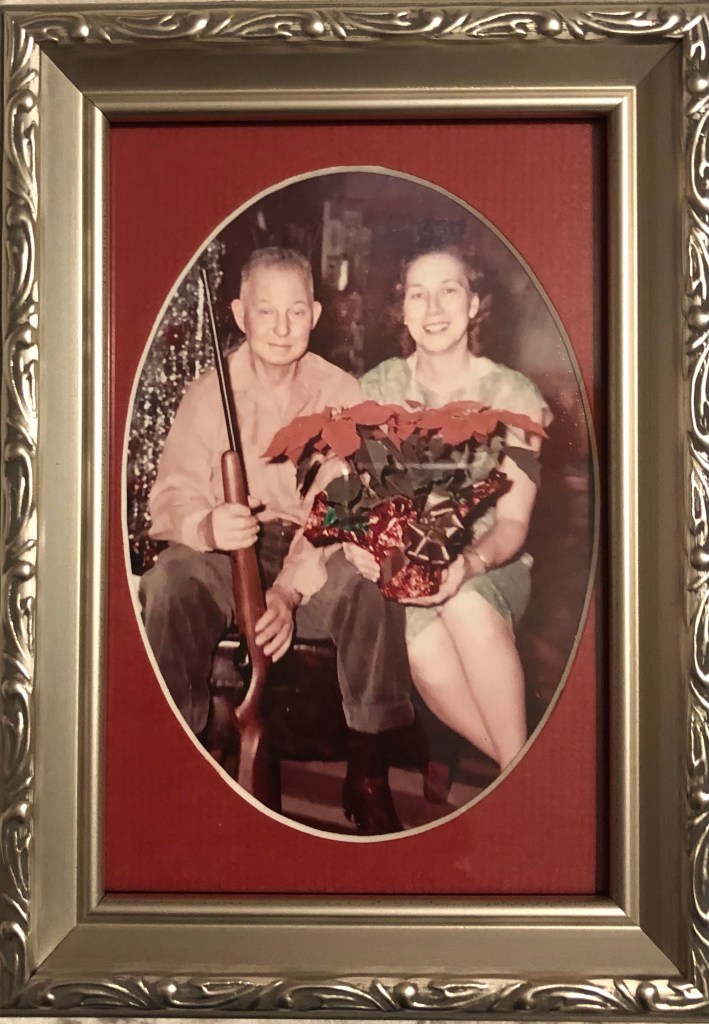
One of my favorite old photos was taken at Christmas when I was a baby: Granddaddy holds a new shotgun. Grandma holds a poinsettia. It’s their first Christmas as grandparents. Her face is radiant.

I would give her a poinsettia every Christmas in her later years. She would exclaim over each one: Oh, it’s just beautiful!

It had to be red, like her season. Like her name. Ruby. Deep red, precious. Bright as the cardinals that also enchanted her.

I knew she would leave at Christmastime. Seemed written in the stars.

And she did. The day before Christmas Eve.

The holiday was a blur. Arrangements were made. The visitation set for the twenty-sixth because there wasn’t time before Christmas Day.

I would speak at her service the following day. I would read Proverbs 31: Who can find a virtuous woman? for her price is far above rubies…

I would ask that her favorite Christmas song be played. Silent night, holy night, all is calm, all is bright…the first song she taught me how to play on her chord organ, when I was around four or five. Her hands guided my fingers along the keys.

I would find the tiny old church of my happy childhood summers laden with red poinsettias. Christmas remnants. I would recall someone giving her a silk poinsettia after she went into the nursing home, and how she lovingly watered it…dementia erasing pieces of the mind, of memory, leaving fragments intact.

I arrived early for the visitation. There was something I needed to do.

Three poinsettia pins, just alike.

I wore one on my coat. I gave one to her last living child, my aunt, who met me at the casket. And I leaned in to pin the third one on the lapel of her suit.

She would be buried with her last poinsettia.

Merry Christmas and happy birthday, Grandma. Sleep in heavenly peace.

December comes again, and again I wear my pin. She is near. In the songs, in the lights, in the color, in the spirit, in the story. As undiminished as brilliant cardinals against the wintertime world.

It is forever her season.

Reflections of gratitude: Spiritual journey

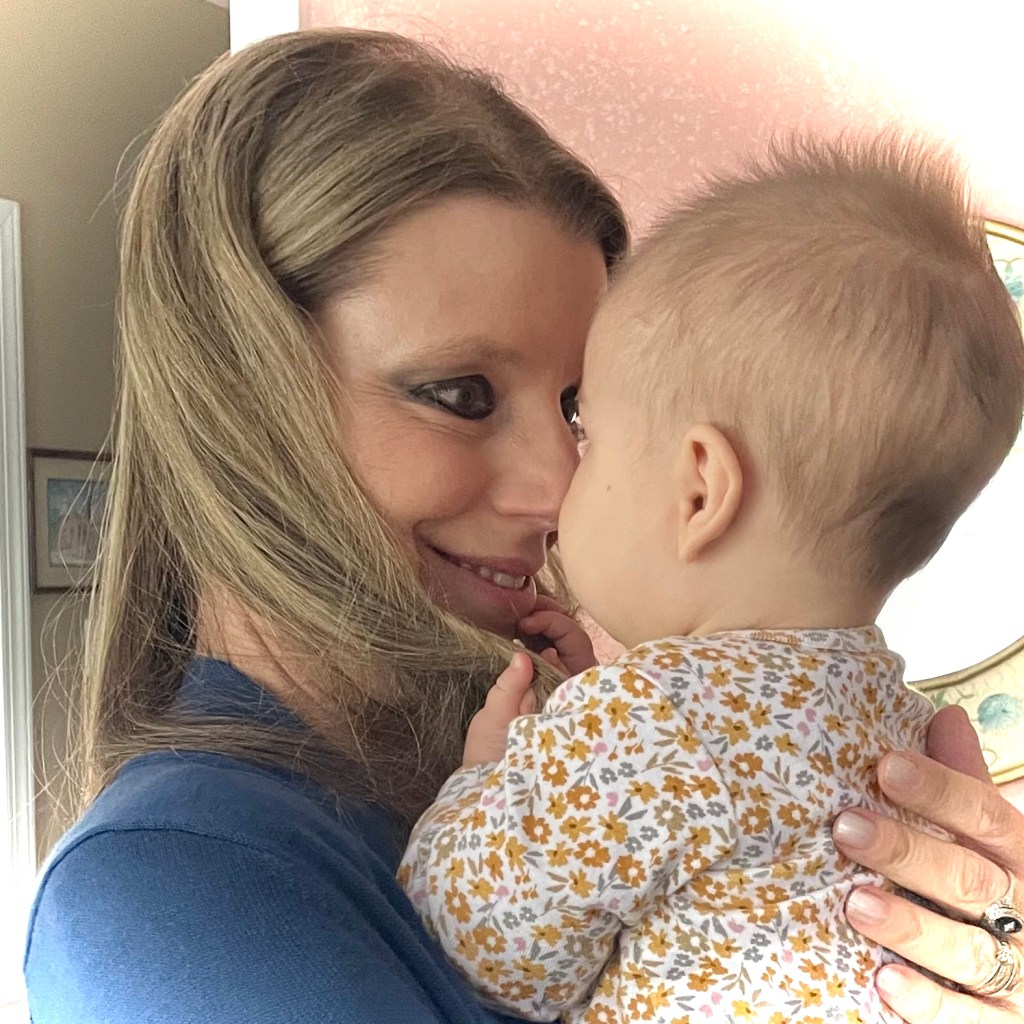
For my newborn granddaughter, Micah

What shall I tell you about the day you were born?

Your Grandpa and I were waiting in the carpool line to pick your big sister up from kindergarten when your dad texted: Micah is here! 9 lbs!

Gratitude flooded our hearts as photos flooded our phones.

We wept at sight of you. Your sister would say “happy cried.”

Looking at your beautiful rosy face, a thousand thoughts fluttered in my mind, like birds descending from the azure sky, landing one by one on soft, moss-covered branches…

I remembered it was supposed to storm that day, and it didn’t; the late October sun shone for all it was worth, illuminating the countryside with brilliant gold, orange, yellow, and scarlet.

I forgot the shadows, worries, and grind of daily life.

I remembered the story of my own birth, told over and over to me by my grandmother: She, Daddy, Granddaddy, and Grannie stood looking at me through the nursery window, Grandma “happy cried,” Daddy said I looked just like Granddaddy.

I forgot to be sad about not going to the hospital to see you on the day you were born due to limited visitors in COVID protocols.

I remembered that I’d be able to come the next day, and that it would suffice.

I forgot there was even a pandemic.

I remembered the joy of your father’s birth, the fierce motherlove which surged in my veins, which surges still, and exponentially now, for you.

I forgot about fearing my own inadequacies.

I remembered to wear Grandma’s locket.

I forgot, until your curious big sister opened it, that your father’s newborn picture was nestled inside.

I remembered the promises of God, that blessings fall on the generations of those who love Him, my precious, precious baby Micah, daughter and granddaughter of pastors: Know therefore that the Lord your God is God; he is the faithful God, keeping his covenant of love to a thousand generations of those who love him and keep his commandments (Deuteronomy 7:9, ESV).

I have never forgotten that.

Thankful for the infinite grace of God. Love you always, Micah. – Franna

********

with thanks to Denise Krebs for hosting November’s Spiritual Journey Thursday group, with a focus on gratitude.

and also to Two Writing Teachers for the weekly Tuesday Slice of Life Story Challenge.

I am deeply grateful for you all.

Opal

It looks like a glass teardrop there in my hands. I tip it this way and that, watching the tiny white pieces inside floating up and down in the clear liquid, catching the light and glowing with bits of colored fire. I’ve never seen anything so magical.

“Grannie, what IS this?” I breathe. I can see it’s a necklace. It has a little cap of silver leaves and a silver chain.

She understands. “A floating opal,” she replies, rummaging through her jewelry box.

I can’t look at anything else.

I wonder about the liquid. Is it water? From where? A magic spring bubbling up in a wizard’s garden? What if it isn’t water but tears cried by an enchanted princess and collected in the teardrop-shaped globe as a powerful talisman? Why is the opal in little pieces and how can there be such fiery red, blue, and green in its luminescent whiteness? Colored fire burning in water…is there a spell on this floating opal? What does it MEAN?

I don’t even realize how spellbound I am, or how long I would sit staring at this otherworldly object, until Grannie speaks, breaking the hypnosis:

“You can keep it, if you want.”

*******

I’ve loved opals ever since. Their beauty, their symbolism, their lore. They’re said to be stones of emotion, freedom, and independence; that certainly sounds like my Grannie, who had a fiery streak herself. It sounds like what she may have wished for me. Opals also have a mixed-bag reputation of misfortune and hope, and once it was believed that an opal wrapped in a bay leaf would render a person invisible; it was accordingly dubbed patronus furum, “patron of thieves,” says the International Gem Society.

Come to think of it, I never did ask Grannie how she came by this floating opal…not that she would have taken it. Surely not. But as freely as she gave it, I wonder: Might it have belonged to my Papa G’s first wife who died years before? A floating opal necklace like this dates to the 1940s…

No matter, really, as was it my grandmother’s to give thirty-something years later, and I was the receiver.

Recently I stumbled upon this story about opals I’d never heard before One more mesmerizing, mysterious thing… courtesy of the International Gem Society:

In a chapter of Sir Walter Scott’s 1829 gothic novel, Anne of Geierstein, we learn the unusual story of the enchanted and mysterious Lady Hermione.

The grandmother of the titular character, she appeared to possess magical powers. At times, she seemed more an indefatigable spirit — an ignis fatuus or will-o’-the-wisp — than human. She always wore in her hair a golden clasp with an opal that “amid the changing lights peculiar to that gem, displayed internally a slight tinge of red like a spark of fire.” This gem seemed to reflect her moods, showing “a twinkling and flashing gleam which seemed to be emitted by the gem itself” whenever she became animated or agitated, “as if it sympathized with the wearer’s emotions.”

On the day of her daughter’s christening, drops of holy water struck her opal, which “shot out a brilliant spark like a falling star, and became the instant afterwards lightless and colorless as a common pebble.” Hermione then collapsed. Two hours later, all that remained of her was a handful of gray ashes.

So. A grandmother, a granddaughter… named Anne.

Let me just say that Ann is my middle name.

I will not even address the name Hermione in this legend; I will just let Harry Potter fans savor that on a whole ‘nother level with me.

And let me also say that somehow, in the passing of the years, Grannie’s floating opal got misplaced. When one of my babies snapped the chain long ago, I put the teardrop pendant somewhere for safekeeping. I finally found it in a little heart-shaped velvet case inside a larger jewelry box.

The globe had separated from the silver-leaf cap. The liquid had dried up. All that remained were the little pieces of broken opal.

Tears welled in my eyes; I couldn’t help wondering if the opal stopped floating when my Grannie died.

But, if I ever write a fantasy someday, you can be sure a floating opal will play a significant role.

*******

The annual Slice of Life Story Challenge with Two Writing Teachers is underway, meaning that I am posting every day in the month of March. This marks my fifth consecutive year and I’m experimenting with an abecedarian approach: On Day 15, I am writing around a word beginning with letter o.
Memory poem: Pier

For Day Three of a five-day Open Write Challenge on the Ethical ELA blog, Margaret Simon invites memory poem writing. See her glorious sensory poem and one penned by her second-grade student, as well as other offerings and the inspiring “mystery of memory” mentor-poem from Nikki Grimes, here.

Today’s poem challenge begins with the word Think, followed by a word linked to childhood associations and evocative detail. Grimes’ poem begins with Think food and leads to her grandmother’s pineapple upside-down cake and food being “so much more” than nourishment. Margaret’s poem begins with Think dirt and brings the reader into a very real moment of making mudpies (you can feel and smell it) and the deeper context within.

Memoir is probably my favorite type of writing; it is a chance to stand once more in your childhood shoes, experiencing the world just as you did, only framed by knowledge gained since. I had to think a while before an image came to mind foe this memory poem. Then I had to think a while longer about what it meant …

Here’s “Pier.”

Think pier
and danger comes to mind.
Weathered gray boards
armed with splinters
meant for tender young feet
encased in sneakers
that Grandma made me wear.
Sneakers stepping deliberately
from slat to solid slat
avoiding intervals of nothingness
where water laps dark and green
below, moving and moving
until it seems the whole pier
is floating out to sea
with me.
Summer sun beating down
casting our squatty silhouettes
on grainy gray wood-canvas.
Grandma’s sunhat fluttering
in the river’s breath
brine in my nose, my mouth
endless expanse of silver-green water
glinting, beckoning,
reckoning—
there are no rails.
There are nails.
Tie the string to the raw chicken neck
toss it over—plop
and wait.
Let the nail-anchored string
rest on your fingers
until it moves with strange little jerks
then pull so so slowly
so carefully.
Use both hands but
have your net ready
for the greedy green-brown crab
with fierce orange ‘pinchers’
—keep your fingers away!—
and legs painted bright watercolor blue
soon scuttling around in
Grandma’s galvanized tub.
Think pier
and she’s right there again
between me and danger
showing me how to navigate.

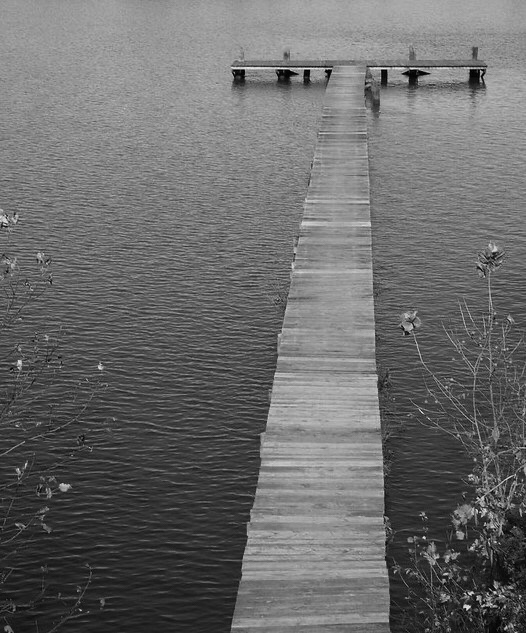
Photo: Pier. Richmond AACA. CC-BY. Cropped and converted to black-and-white. The pier of my long-ago childhood memory is so like this one.