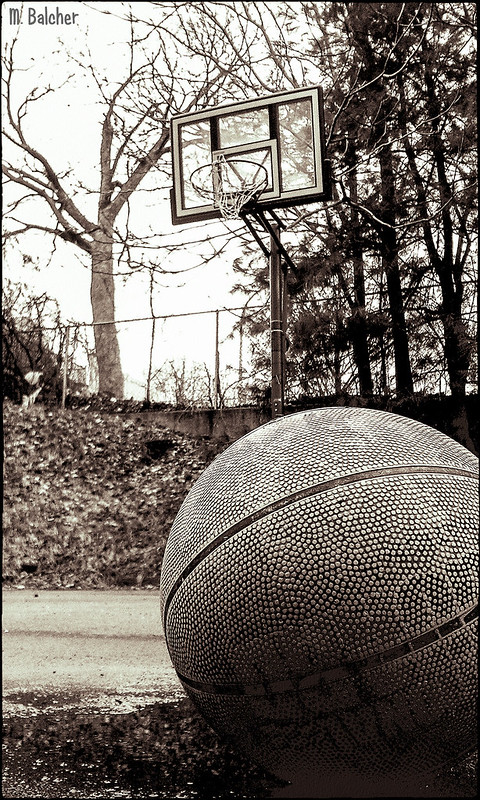
The passing

This week I’m participating in a five-day poetry Open Write at Ethical ELA. Day One’s writing invitation, “Bodies in Motion,” was sparked by the importance of sports to so many student athletes who haven’t been able to participate—when it may be the only reason they come to school. Many feel most at home with a team, on a field, writes host Sarah J. Donovan, needing to “move their bodies to feel joy, to feel normal, to feel self.” Instead they’re confined to screens and “plexiglass cubicles.” For the Open Write we crafted poems about our own athletic experiences, or those of family members, or even about what we used to be able to do but can’t anymore.

I’ve never been athletic, not ever, in the whole of my life.

My husband, however, was.

Through him I know the vital and abiding value of sports for a young person…

Here’s a scene I witnessed recently at home.

The Passing

She comes out of his study carrying it
in her four-year-old arms
and his face is transformed, glowing
as if a passing cloud has uncovered the sun.
He leans forward in the recliner as she
drops it, kicks it, sets it spinning
—Oh, no, he says, this one’s not for kicking,
it’s for dribbling, just as the ball stops
at his feet. He reaches down, lifts it
with the easy grace of the boy on the court,
hands perfectly placed on the worn brown surface
in split-second calculation of the shot
so many times to the roar of the school crowd
so many hours with friends, his own and then
his son’s, still outscoring them all, red-faced,
heart pounding, dripping with sweat, radiant
—and at twelve, all alone on the pavement
facing the hoop his mother installed
 in the backyard of the new house
after his father died, every thump echoing
Daddy, Daddy, Daddy.
The game in the blood, the same DNA
that just last year left him with a heart full
of metal and grafts, too winded to walk
more than short distances, having to stop
to catch his breath, deflated
—it needs some air. Do you have a pump,
he asks his son, sitting there on the sofa,
eyes riveted to the screen emitting
continuous squeaks of rubber soles
against hardwood.
—Yeah, Dad. I’ve got one and the needle, too.
His father leans in to the little girl at his knee,
his battered heart in his hands:
—Would you like to have it?
She nods, grinning, reaching, her arms, her hands
almost too small to manage the old brown sphere
rolling from one to the other like a whole world
passing.

*******

with thanks to Ethical ELA for the monthly poetry Open Writes and Two Writing Teachers for fostering a vital and abiding love of writing in students— and teachers.
Revise on.

Photo: Marcus Balcher. CC BY-SA

Fresh-cut grass

Grass

Grass. montillon.aCC BY

As daylight hours grow longer, spring stretching toward summer, the hum of a lawnmower is ever-present in my little neighborhood.

Yesterday my younger son mowed our lawn. When I arrived home after work, there stood Banjo, our yellow Lab, with his front paws on the wooden gate leading to the backyard, barking his welcome. As I walked from the car to pet him, the clean, green fragrance of fresh-cut grass also rose to meet me.

It’s the smell of home, of childhood, of long ago.

I closed my eyes against the waning afternoon light. In the cool of the day, for a second, I was there, in another neighborhood, another yard.

My father was so proud of the corner lot he bought in the summer before I started school. This was our first house. Up until then our family had lived in apartments. At the time, having two bathrooms (really a bath and a half – my sister and I dubbed them The Big Bathroom and The Little Bathroom) seemed a great luxury.

By the front steps to the left of the sidewalk stood the black lamppost. Beyond this, the yard sloped toward a chestnut tree and the ditch, which entered our yard from under the street and joined the backyards of all the houses on the block. When I wanted to visit my friends, I took the shortcut, running alongside the ditch. (This ditch sometimes caused flooding, which is  another story starring my dad: The secret gates.)

A maple tree stood on the right side of the front yard. My mother’s gardenia bushes and forsythia comprised a small hedge near the front steps, and at the right corner my father eventually planted a camellia bush, brought from his own childhood home.

My father kept our lawn immaculate.

He did it for years with a push mower. I wonder now if he ever rued having that corner lot with so much grass to cut, especially in the summer when his fair face grew florid from the sun and heat. He wore a towel around the back of his neck to wipe away the sweat.

I played outside a lot as a child; the scent of grass wafted through many games and adventures with my sister, the neighborhood kids, the dogs.

I can’t remember the first time the fragrance brought a pang. It just hit me one day: I stopped, inhaled.

Fresh-cut grass.

Daddy. 

For a split second, I was a child again, standing in the front yard in the cool of the day, glimpsing the streets, feeling the hum of everyday life, lazy afternoons, leaves on the maple tree stirring.

The sense of order, continuity, stability behind it all is my father.

All present and real in that clean, green smell.

Our last phone conversation was about his cutting the grass. He had a riding lawnmower by then:

“My chest is sore. I think it’s from turning the wheel on the mower. I probably shouldn’t have gone over the yard twice.”

“Why do you need to do it twice, Daddy?”

“Well, I don’t need to do it twice. I like to cut it in one direction and then the other. It makes a pattern. Looks so nice.”

“Has that made you sore like this before?” 

“Not really. I overdid it this time.”

“When do you go back to your heart doctor?”

“I don’t go to him any more. Once you’re healed they see you for a while but then they release you. I only see a regular doctor when it’s time for check-ups.”

I don’t like the sound of this. He’s been mowing his lawn forever and hasn’t been sore. It could be overexerted muscles, but . . . 

“Daddy, you should go back to the cardiologist. Just in case.”

He didn’t make the appointment. His mind was on getting through his last week of work and retiring after nearly forty-one years as a security guard at the shipyard.

Four days later, on a bright, early-fall morning, he walked across his prized lawn for the last time. He was in uniform, going to work. He had three more working days to go.

The neighbor across the street happened to look through her window and saw him lying beside his car.

It was his heart, of course. It just blew, six years after his first attack and bypass surgery.

He died there by the green, green grass of home.

That’s a damned sad song, he once told me, shaking his head. “The Green, Green Grass of Home.” That and “Danny Boy.” When I was stationed in Las Vegas, at the nightclubs somebody always asked for “Danny Boy.” Why do people like songs about dying? Why not ask for something cheerful, for God’s sake?

Something cheerful.

It’s not a song, Daddy, just a blog post about fresh-cut grass, but there’s cheer in it, because the grass, though cut, always heals itself and grows again, and you are always present in that sweet scent, and I am a child without a care in the world, only I don’t realize it yet.

I do now.

Thank you for everything. I owe you much.

Love you.

* * * * *

Daddy - USAF

Daddy served in the United States Air Force before I was born. Memorial Day seems to be a fitting time to honor him. Although his service to his country was long past, he was nevertheless in uniform and on his way to perform his duty when he died – one of the most dutiful men I’ve ever known. He was also a storyteller. With Daddy, stories occasionally became epics, as he liked to talk and frequently got in trouble for that in school, according to my grandmother. I owe my love of story in large part to them. Here are two favorite stories of mine derived from theirs, featuring all of us:  Born and Baby’s breath.