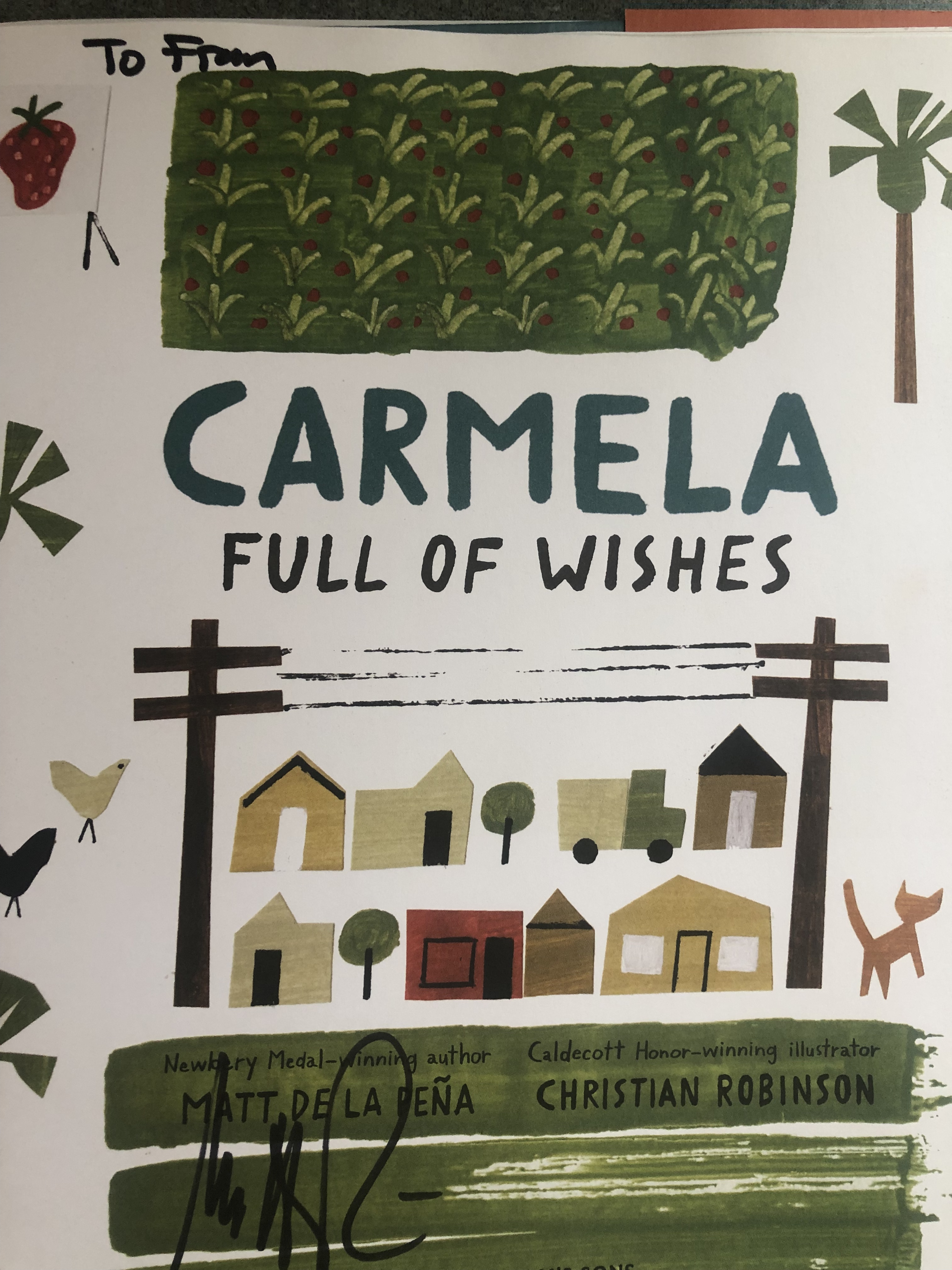
Author Matt de la Peña led the first day of my district’s Teacher Summer Writing Institute and graciously offered to sign books during our break.
Here’s the conversation I had with him as he autographed Carmela Full of Wishes for me:
“I noticed the recurrence of Carmela jingling her bracelets throughout the story. I wondered if it symbolized something in particular, in connection with her imaginings.”
“There’s no hidden meaning,” replies de la Peña. “Carmela jingles the bracelets to irritate her brother.”
I laugh. “Because that is what siblings do.”
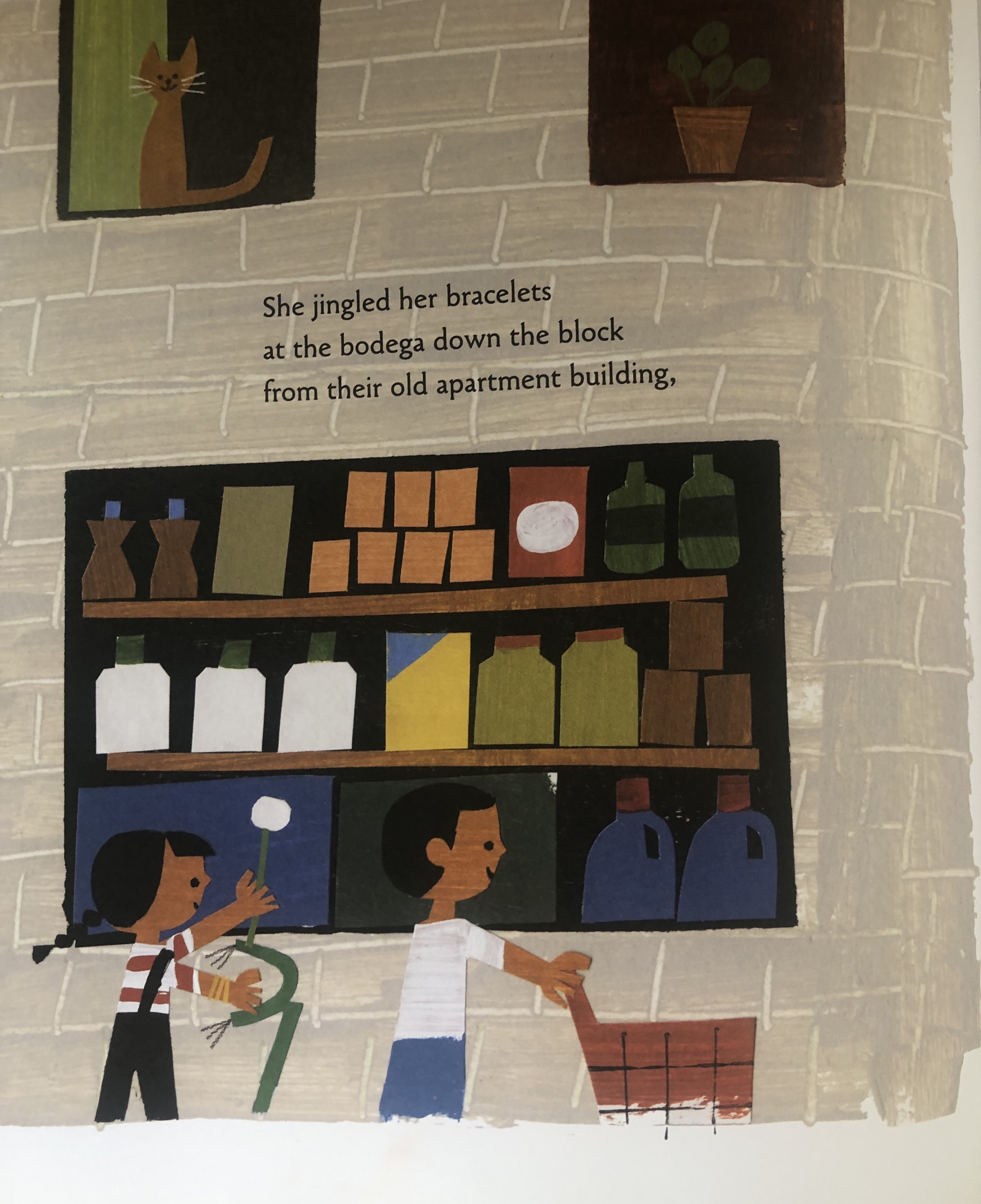
He nods. “She removes the bracelets at the end as an act of kindness to him. Here—let me show you my favorite page in the book.”
He turns the book around for me, displaying Christian Robinson’s intricate artwork: a papel picado (cut tissue paper) rendering of a father kneeling, a little girl in his arms.
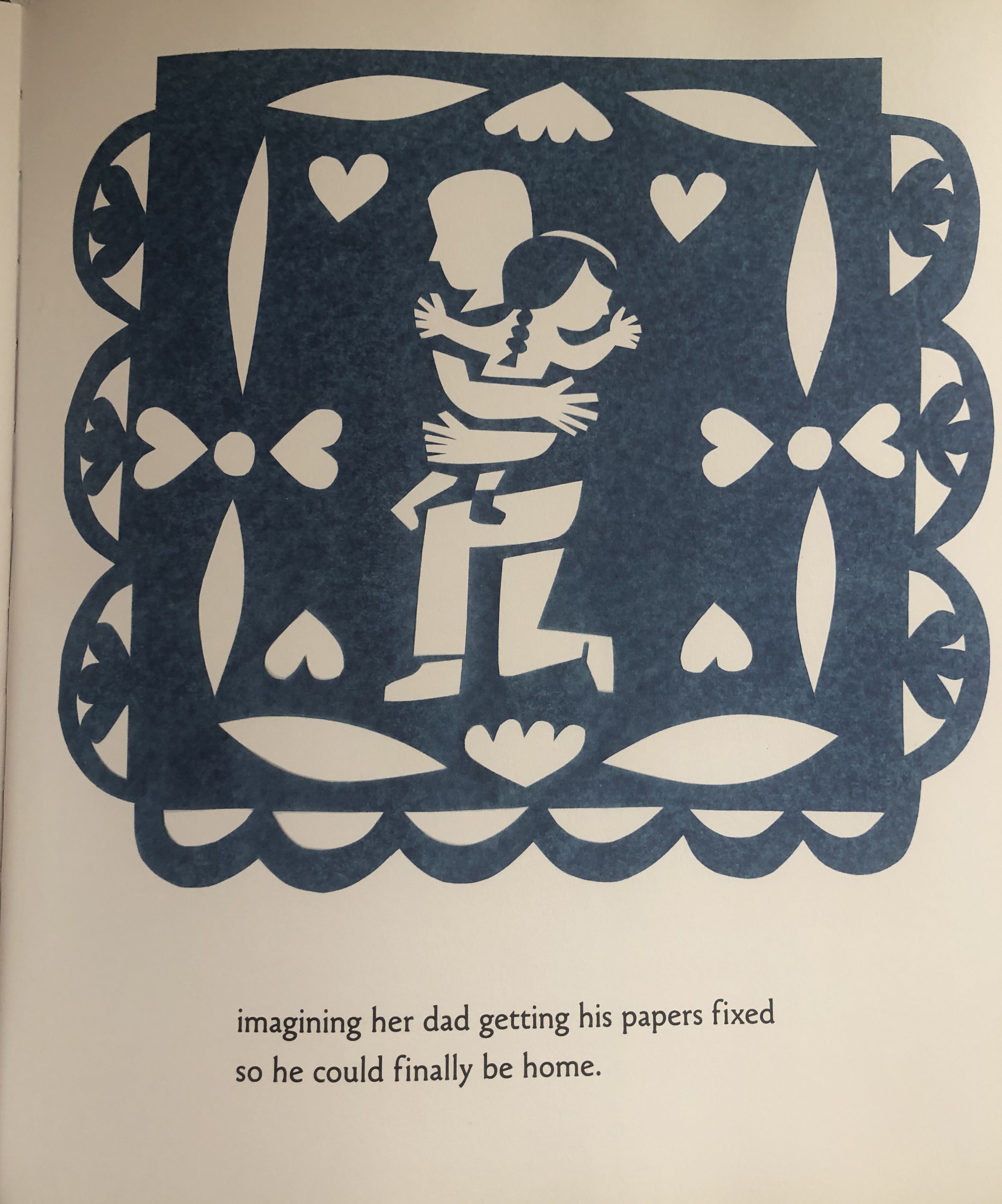
“The book is really about the importance of family being together.” De la Peña’s face is solemn.
I run my fingers over the words. “Home . . . I am reminded of history, how slave marriages weren’t considered legal. Families were split apart and people didn’t care.” I look back to de la Peña. “But family is the foundation of everything.”
“Yes,” he says, his dark eyes sparking. “It is.”
This week in America, we observe Independence Day. We celebrate freedom.
It is a sanguine word. Bloodstained. By wars waged to win it, but also by the lifeblood of the people who call a nation “home.” In this freedom is also a consanguine word – for home is where the family is.
As de la Peña so poignantly conveys with Carmela’s mixed-status family. She’s a U.S. citizen, born in this country, wishing, waiting – dreaming – of the day her father will “finally be home.”
At the book’s close, as I look at the dandelion fluff in the wind, Carmela’s sky full of wishes, my mind sees white stars waving on a field of blue, fireworks showering a night sky. I recall that a hallmark celebration on the Fourth of July is family reunions.
And I don’t know why an old line of Kris Kristofferson’s insists on accompanying this vision: Freedom’s just another word for nothin’ left to lose…
With artistic apologies, I can’t say that’s true in the context of nations and families and home … our hope and our humanity are still left to lose.
 lit bits and pieces