Believe

img_4350

A writer is first a receiver, open to messages all the time, always watching and listening. A message or image can come at any moment; the writer’s job then becomes How do I interpret this? What meaning shall I attach? How will I shape this notion, this idea, this sense of something, into words to relay it?

The greatest challenge is capturing that first fleeting message before it’s lost; I heard an author say once that “a new idea is fragile thing.”

Sometimes a writer recognizes that an idea is hovering close and just hasn’t landed yet. Some ideas flutter and dart about like hummingbirds for a while. For me this is like Yeah, I know you’re there, Idea, whatever you are. I feel you darting in and out. One of these days I’m going to get ahold of you but right now I am tired of the chase.

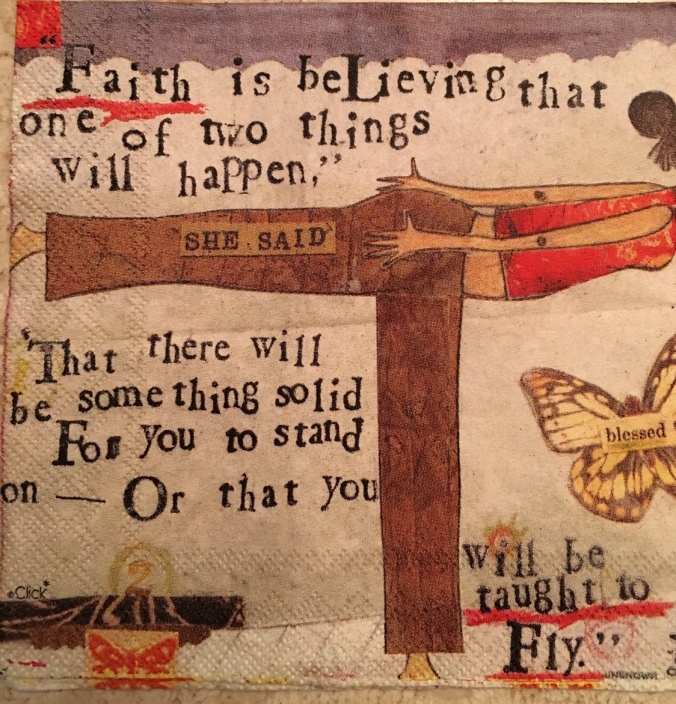
So it was on a day that I visited the hair salon. One of my favorite things there is the complimentary coffee bar for clients. As the iCoffee machine whirred and glowed with blue light, illuminating the cup (so mesmerizing), I reached for a napkin.

The napkins here are always pretty, often seasonal. A lot of thought on someone’s part clearly goes into the napkin choices, no detail being too small or insignificant in creating a pleasant experience.

This napkin was a message.

You saw it yourself, at the top of this post—that’s a picture of the napkin.

Coffee momentarily forgotten, I stood there thinking, I’ll write about this. Somehow . . . 

Yesterday I told someone: “When an image comes to you, Writer, use it!”

Today I return to the napkin, thinking. I finally decide to Google the phrase printed on it, suspecting that it’s connected to an author out there somewhere.

Aha. The quote seems to have come from Patrick Overton’s book of poems entitled The leaning tree: 

“When you come to the edge of all of the light you’ve known, and are about to step off into the darkness of the unknown; faith is knowing one of two things will happen. You’ll have something solid to stand on, or you’ll be taught how to fly.”

The idea is so near now that I can feel its wings beating against my soul

Believe. Believe. Believe.

Like the beating of a heart.

I wonder what word would remain if the napkin were tossed outside, trampled on, battered by wind and rain. What the last surviving word would be.

Maybe faith.

Maybe believing.

Maybe fly.

For the napkin in my hand is ephemeral, meant to be thrown away.

Faith, believing, and fly — hear the wings, feel the breeze stirred by their rustling? — are eternal.

Oh, wait—there’s one tiny word there on the napkin, there on the butterfly—how could I have almost missed it?

Blessed.

Thank You, I whisper at last.

And I write.

Celebrating Young Authors

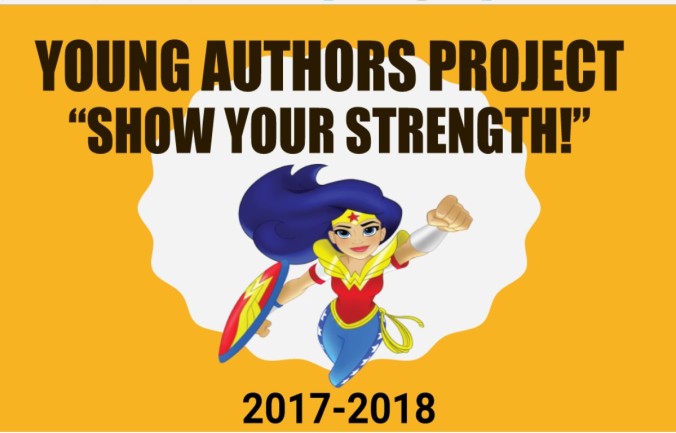
Show Your Strength

Raleigh-Wake Reading Council 

This afternoon, I am celebrating young writers from kindergarten through high school. Our local reading council, affiliated with the International Literacy Association, sponsors the Young Authors Project annually. Students write on a given theme and council members submit their work. A committee then scores the pieces for quality of content and structure. This competition is about encouraging young writers to work hard at the craft, to tell their stories well. The stories are published in a local book. Some stories have gone on to the state level, to be recognized and published later this month by the North Carolina Reading Association.

This year’s theme is “Show Your Strength!” The students could write about their personal experiences of perseverance, how they’ve overcome obstacles, how they found strength in a time of weakness, and who or what inspired them to rise above a particular challenge.

It’s my honor today to be the speaker at the awards ceremony.

Here’s my tribute to these courageous writers:

Thank you, members of the Young Authors Committee and the Raleigh-Wake Council for encouraging students of all ages to write. Thank you, families and teachers, for being the wind beneath the wings of these young writers; because of your support, because of your belief in these writers, many of them have now flown higher than they ever thought they could before.

And thank you, Writers, for your stories. I’ve read your work and it’s breathtaking. I stand in awe of what you’ve experienced and how you captured it on paper.  It’s an honor and a joy to celebrate your courage, your beautiful work, and your personal victories today.

So you know that I am a writer, too. I remember being six years old and sitting at the coffee table in my living room with some notebook paper and a pencil, trying to write a story, not because a teacher told me to, but just because I wanted to. Something inside me needed to get out and even at age six, all by myself, I understood that I needed to write it. I’ve been writing all my life and I’ve written a lot of different things for different reasons, but I do it mostly because I love it. Why do I love it? I think it’s because writing helps me see things in different ways, sometimes in deeper ways than I would have if I didn’t write.

Here’s an example from last summer: I noticed that seahorses had started showing up in my life. Yes, seahorses! When I ordered some books, they came with a tote bag that had a seahorse on it. A friend gave me a notebook that happened to have a seahorse on it. I took my seahorse tote bag and my seahorse notebook to a teachers’ writing workshop at the beach, where I was given a journal to decorate . . . guess what was in the decorations? Seahorses! This, Ladies and Gentlemen, is what we a call a motif, a symbol that keeps recurring, or showing up. I started wondering if there was a reason for all these seahorses suddenly appearing —what could they mean? I do what writers always do: research. I looked up seahorses and I learned a few pretty cool things: The scientific name of the seahorse is hippocampus, the same word for the part of the human brain that’s the center of emotion and memory. As a writer, this connection between the seahorse and the human brain fascinates me. I also learned that seahorses are a species recorded as the slowest swimmers in the animal kingdom. They swim so slowly that they can die of exhaustion when storms come and churn the seas, so seahorses use their tails to anchor them to long grasses and corals. They survive by being anchored.

And that’s another big thing that writing does for me; it anchors me, it helps me survive whatever comes.

Seahorses, Writers, are a symbol of perseverance, the very theme that you wrote on for our Young Authors Project. You’re here today because you persevered in writing your stories.

Your stories show your strength as writers and your strength as human beings. Stories, in the end, are gifts that we give to others. We give these pieces of ourselves away to make other people think and feel; writing is an almost magical connection between the heart and mind of the writer and the hearts and minds of readers. There’s power in it. Think about it. We can use our words, our power, to hurt others or to strengthen them. Be mindful that you always use your power for good.

It is my hope, as a teacher of writing, that you will keep writing. Today is just the beginning of what you can accomplish, and you’ve started off so strong! Good writing is hard work. Sometimes it comes so, so slowly. Don’t give up. Always remember there’s power in writing and the effort is always worth it. The more you work on your writing, the more your writing will work on you; it will give you more and more strength to share with the world, and the world needs you.

Thank you all.

New

New

The new year sparks contemplation of the word new.  

So the year is new, but what else? Monday still follows Sunday, January still follows December. The days roll into each other without any notable variance. Today looks almost exactly like yesterday; it’s still winter, still below freezing, and my dogs still do not want to stay outside more than the necessary few minutes. The holidays are ending and work is resuming, as they always do. None of this is new.

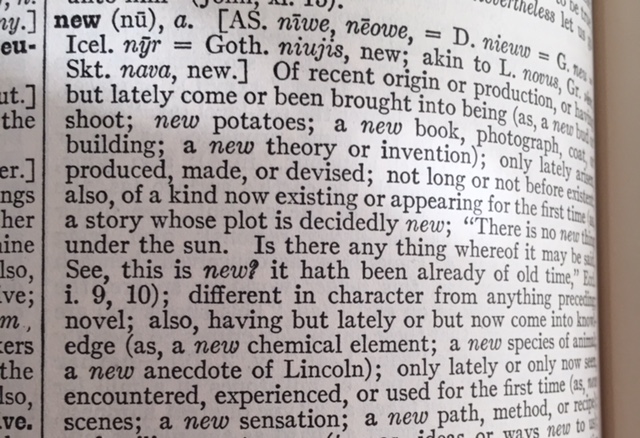
As I sought to apply new to something today—since the usual and very regular passing of time really should not count—I got the mental image of the word new on a dictionary page. This led me to do something paradoxical: I moved a chair over to one of my bookcases, pulled down a heavy volume, blew off the dust (alas!), and snapped the above photo of the definition in The New Century Dictionary. 

I say paradoxical because that dictionary, despite its title, is hardly new. It was published in 1952. The original copyright is 1927.

The dictionary and the definition are old indeed. I know there are better, far more concise definitions of new in online dictionaries now.

Why, then, turn to something so old to examine the meaning of new?

Well, first of all, I needed an image for this post and that’s the one that came to mind.

And I love old books, old things in general. Any vintage artifact holds great appeal to me, mostly because of the invisible layers of story wrapped around it. I never tire of stories of long ago. I am endlessly fascinated by how people survived and how resourceful they were, often with so little.

In fact, resourceful was nearly my chosen word for 2018, because of this definition on Dictionary.com:

able to deal skillfully and promptly with new situations, difficulties, etc.

And this one, at LearnersDictionary.com:

able to deal well with new or difficult situations and to find solutions to problems.

Resourceful seemed well-suited to my role as educator, instructional coach, and for life as a whole, really.

Then I realized that the thing that stood out to me in both of these definitions of the worthy word resourceful, aside from its emphasis on excellent problem-solving, is that one word, new. Coping with new and difficult situations.

Suddenly resourceful, for all its allure, was overshadowed. Do you remember the scene in The Wizard of Oz when Dorothy explained the demise of the Wicked Witch of the West? “Please sir, we’ve done what you told us. We brought you the broomstick of the Wicked Witch of the West. We melted her!” To which the Wizard replies (one of my favorite lines): “Oh, you liquidated her, eh? Very resourceful!” But remember Dorothy’s intent: When she threw that bucket of water on the Witch she was saving the Scarecrow, who was on fire. She didn’t mean to melt the Witch, or even think Hmmm, what would happen if I doused the Witch with water?

Resourceful, yes—in saving the Scarecrow. Dorothy’s use of the water was intentional. It implies thinking and quick action to solve a problem. Resourceful in her mission of getting rid of the Witch? No. That was a stroke of amazing luck.

I really wanted to write this post about being resourceful for my fellow educators who often work with so little, in adverse situations, to encourage all of us to be more mindful, intentional, and creative with what we have to reach intended outcomes, when it occurred to me that something else is needed before any of this can happen.

Something different from anything preceding, something only lately or now seen,  encountered, experienced, or used for the first time . . .

Something new, in the face of the same old same old.

If you look back at the photo for this post, you’ll see the morning light spilling across the old dictionary page, illuminating the word new.

And that’s exactly what is needed. Not new things or resources themselves, but light. Seeing things, situations, people in a new light.

My wish for students is that they see their learning in a new light, with excitement, with inspiration. For that to occur, their teachers, my colleagues and I, must see our work with new excitement and inspiration, pushing past layers of compliance, of going through the motions, of saying We can’t, because . . . .

Think of variations of new: renew, anew. Newness is generated. It is created. It starts with really seeing, then taking a step, even just one, out of the comfort zone, to see what will happen, what might actually change. For the better.

Whoever you are, whatever you do, new starts within you and moves outward. One ray of light, one spark at a time . . . keep it up, and there’s no telling how far the light will travel, and how much more will become new. We can’t change people (ever tried?). We can’t always change situations. Some old things will remain, and sometimes that’s good, for every new thing that comes along isn’t. But we can have new perspective, new vision, new vigor, new approaches. All of these are within our own power. A true and valuable new is both possible and attainable, if we aspire to it. If we dare.

That is my prayer for this new year, that we make it truly new.

Making the magic

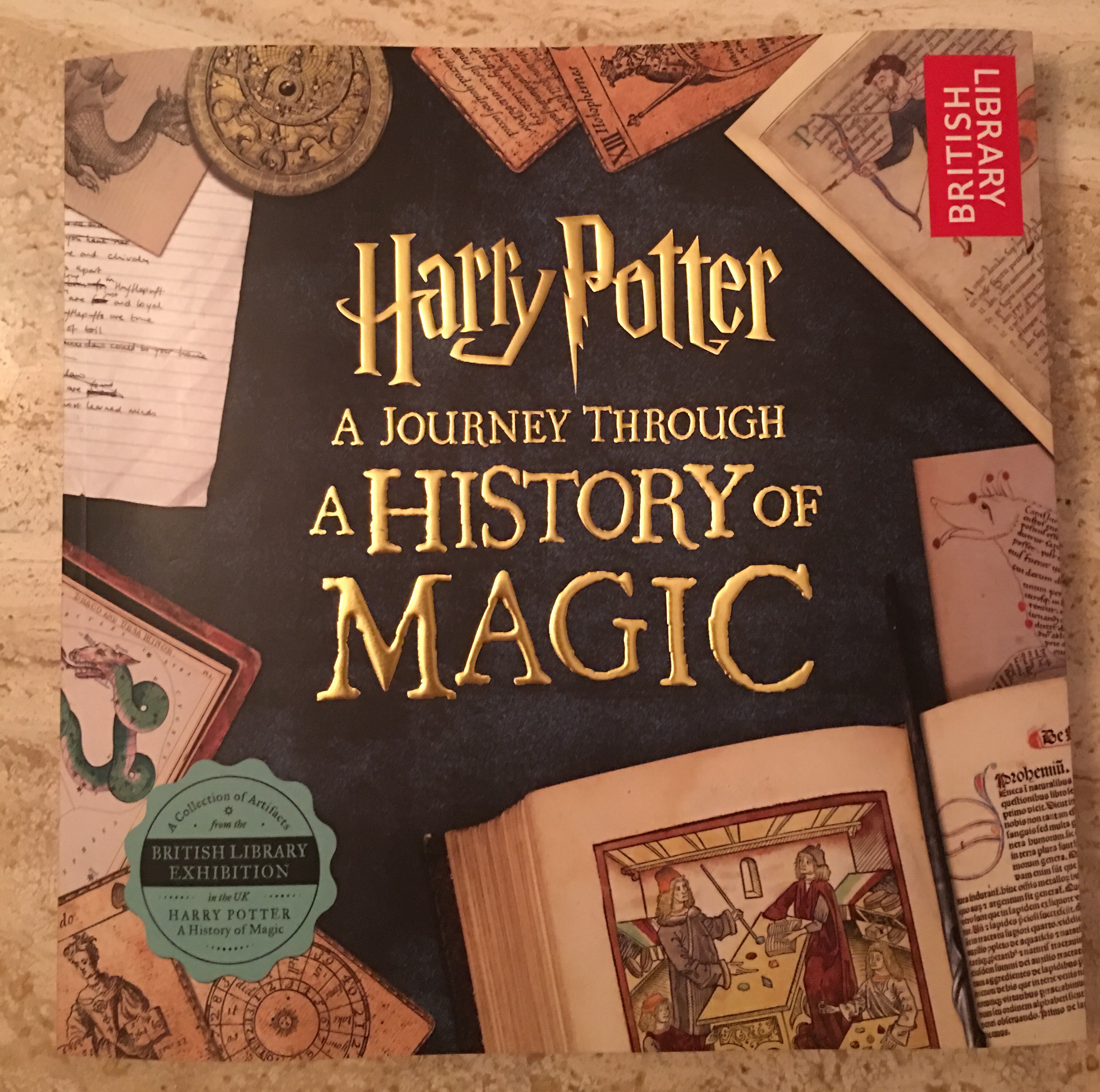
The thing I love most about the newly-released Harry Potter: A Journey Through a History of Magic isn’t the astonishing wealth of research, the fascinating museum artifacts, or the breathtaking artistry of Jim Kay.  It’s not the topic of magic, explored through the ages.

It’s the writing process documented throughout the book.

From handwritten drafts in composition notebooks to typed manuscripts marked with ongoing revisions, this photographic journey of J.K. Rowling’s creation of the series is a treasure trove for writers and teachers of writing. The message is clear: Making the magic is a lot of hard work.


Rowling’s draft of Harry Potter and the Deathly Hallows in Harry Potter: A Journey Through a History of Magic.

Rowling shares how her ideas began, how they grew, and how immersion in the process caused more ideas to develop:

When I’m planning I often have multiple ideas popping up at the same time, so I’m attempting to catch the best ones as they fly by and preserve them on paper. My notebooks are full of arrows and triple asterisks instructing me to move forward four pages, past the ideas I jotted down 20 minutes ago, to continue the thread of the story (113).

Catching ideas “as they fly by.” I am reminded of Elizabeth Gilbert’s words in Big Magic: Creative Living Beyond Fear, recounting what poet Ruth Stone shared with her:

When she was a child growing up on  a farm in rural Virginia, she would be out working in the fields when she would sometimes hear a poem coming toward her—hear it rushing across the landscape at her, like a galloping horse. . . she would “run like hell” toward the house, hoping to get to a piece of paper and a pencil fast enough to catch it. That way, when the poem reached her and passed through her, she would be able to grab it and take dictation, letting the words pour forth onto the page. Sometimes, however, she was too slow, and she couldn’t get to the pencil and paper in time. At those instances, she could feel the poem rushing right through her body and out the other side. It would be in her for a moment, seeking a response, and then it would be gone before she could grasp it . . . But sometimes, she would nearly miss the poem, but not quite. She would just barely catch it, she explained, “by the tail.” Like grabbing a tiger. Then she would almost physically pull the poem back into her with one hand, even as she was taking dictation with the other. In these instances, the poem would appear on the page from the last word to the first—backward, but otherwise intact (65).

It’s one of the reasons why I say writing is the closest thing to magic that there is.

Note that Rowling and Stone were both working as the ideas flew. Physical activity stimulates thought, gets the creative juices flowing, sets the welcome mat out for the ideas, opens oneself as the conduit. The ideas don’t come if you merely sit and wait for them. Get busy. Start writing or walking (the preferred activity of E.B. White and C.S. Lewis).  Just do.

And have those notebooks nearby—be ready to capture the ideas as soon as they start flying.

The real alchemy begins as soon as the ideas are on the page. There’s an art and a science to transforming raw, base material into something of value, in purifying and perfecting the work. We know these as revision and editing. Rowling’s drafts are priceless examples of the writing process to share with would-be writers. Even Ron, Hermione, and Harry would attest to the fact that making magic does not come easy—it’s the result of continuous practice, of constantly honing the craft.

Speaking of which: It just so happens that I was in a bookstore cafe on a Saturday afternoon, collaborating with colleagues on a district presentation about the writing process and growing writers, when guest services announced:

“Listen up, Harry Potter fans! You’ll want to come by and get a copy of A Journey Through a History of Magic, released just yesterday. . .”

My colleagues looked at me knowingly. Of course I went straight for the counter, never suspecting that a powerful tool was about to land in my hands.

Just another illustration of being immersed in work when the magic comes seeking.

This too shall pass

This Too Shall Pass

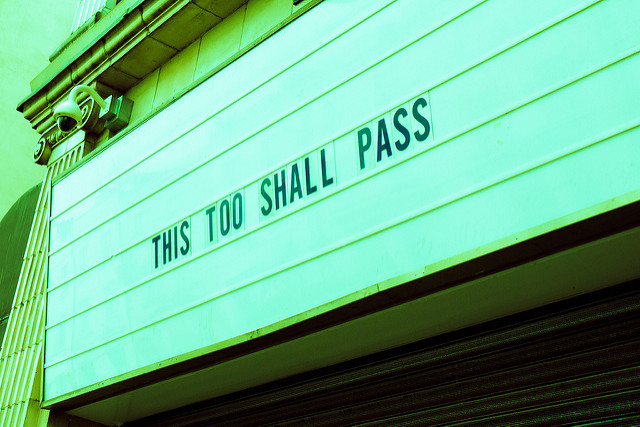
This too shall pass – Notting Hill. Florencia LewisCC BY

Once upon a time, long ago, I drove to work in tears. I couldn’t see a way out of a certain situation. Worry had consumed my thoughts for days. Like a moth desperately fluttering at a light but never landing, so it circled round and round my brain. Like the Grinch, I’d puzzled until my puzzler was sore, arriving at no logical resolution. The weight just grew heavier and heavier.

A sudden movement on my right startled me – a white pickup truck zipping by. That’s not the passing lane. I scowled at it, then nearly ran off the road in astonishment.

The bed of the truck had a tall, wooden rack on top, and on the slats was a white sign meticulously painted with black, Old English letters:

This Too Shall Pass.

I blinked, looked again. Yes, it was real. And it was literally passing me.

I looked around, half afraid I’d see these same words on barns and road signs like something out of The Twilight Zone, in which case I’d have to consider getting help with my state of mind.

But no – This Too Shall Pass was only on that white sign, on that white pickup, passing in the wrong lane to my right.

It was there for a few seconds, then on it went, out of sight.

As did the weight I carried. It melted away in the wake of that truck. I couldn’t see the future, but I understood this momentary trouble was just that, momentary. It would pass.

And so it did.

Whatever it was.

I said it was long ago.

I cannot even remember what I was so worried about.

At all.

But that truck is vivid in my memory. I can see those Old English letters, still.

I like to think that the driver painted them because he had a great sense of humor about his edgy driving. It’s too good, really . . . .

Except that I never saw the driver, nor have I seen that truck since. I hoped that I would – I watched for it on the roads for a long time after, but it’s the kind of thing that happens only once.

Once being enough to get the message.

This Too Shall Pass.

It always does.


Trust

Child jumping

Едно, две, триии…(One, two, three…). Vladimir Petkov. CC BY-SA

I am eleven years old, standing at the end of a pier beside my uncle. He’s holding both of my toddler cousin’s hands as she jumps from the pier’s edge toward the murky green depths of the Piankatank River. She squeals with delight. Just as she dips, her father swings her back. She lands safely on the wooden slats, laughing. Over and over she jumps. Her feet never touch the water. 

I know the water is over her head. The biggest jellyfish I’ve ever seen are floating all around. We can’t even go swimming because of these ghostly orbs, larger than my head and so heavy that when I catch one in the crab net, it fills the net and I can barely lift it from the water. Hunks of the jellyfish ooze through the net, too, plopping back into the water.

I shudder.

I’ve composed a song in my head:

The Piankatank River 

Ain’t the place to swim

Because it’s full of jellyfish

And other things within.

I don’t even know what other things are within but I sense that they’re utterly treacherous. My toddler cousin’s reflection zooms out again over the shimmering, placid surface. Back she swings to safety.

“Why isn’t she scared?” I ask my uncle.

He smiles, holding tight to his daughter’s small hands. “She knows I won’t let her fall. She has no fear because she trusts me completely.”

My little cousin jumps once more, with wild abandon. Her face turns toward the sky as she swings backward, dangling from her father’s hands.

Her expression is one of absolute joy.

That image, that moment, has never left me.

He was enjoying her joy. Allowing her freedom to dare, to be a risk-taker, yet keeping her safe at the same time. Had he been less attentive, less vigilant . . . she might have gotten wet, or worse. I knew what dangers awaited, the harm that could come, and also that my uncle wouldn’t be doing this if he weren’t confident in his own strength. I marveled at his easy assurance and peace of mind. He wasn’t afraid, either.

Of myriad connections I can make out of this moment, the one that rises to the surface of my mind first is teaching. Creating the conditions for good learning to occur means letting children explore, dare, make choices, take risks, all stemming from a foundation of safety, an environment of trust. Children have to know they can take leaps and that their teachers will not let them fall, that they have nothing to fear.

For that to occur, we as teachers must  recognize our own strength and continuously strive on behalf of those entrusted to us. Teachers must be risk-takers, too. We must believe that we can get students safely from where they are to where they need to be, even beyond. Not just for now, this quarter, this year, this test – but by inspiring students to actively pursue learning for the rest of their lives.

It’s no small feat, when our own piers stand in the murkiest of depths. But we’re standing in the singular position that affects outcomes. What lies within us is greater than external forces. By far. We make the leap when we move from belief to action, from self-esteem to self-efficacy. Trusting others, trusting self, trusting in the safety of shared trust, strengthening one another, propelling each other forward. Professional trust isn’t holding on loosely; it’s everyone holding on tight, not letting go. When done with confidence, responsibility, and mindfulness, we develop a dynamic of grace, a synergy of poetry in motion – swinging out over the depths with our faces turned skyward.

The safe environment of will not let you fall. 

A paradox, really, that it takes a collective grasping of hands to experience the freedom, the joy.

slice-of-life_individual

Parodial school

School

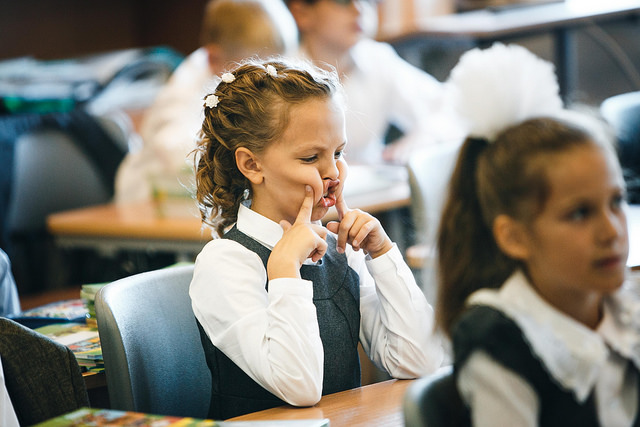
School. vazovskyCC BY-SA

Our people made that choice, the choice to go to Sameness. Before my time, before the previous time, back and back and back. We relinquished color when we relinquished sunshine and did away with difference. We gained control of many things. But we had to let go of others.

– Lois Lowry, The Giver


They come to us just as they are.

That’s a good thing. Educators are to value student diversity, to see it as a gift in the classroom community – in fact, a teacher can be evaluated on this.

For children, we know, are not standardized.

They are living portfolios of experiences, abilities, thoughts, feelings, perspectives. They are unfinished stories, works in progress, masterpieces in the making.

Some know several languages. That’s diversity – a gift.

This doesn’t always show on a fluency assessment.

Some are born storytellers, song composers on the fly, wordsmiths extraordinaire, but only when speaking – not always when reading or writing.

Data points can’t capture innate artistry.

Some are engaged in tough battles, have greater mountains to climb – these kids aren’t from houses covered with vines who will go everywhere in two straight lines – yet there’s a nobility within them, born of courage, of gaining hard-won ground, more so than any knight of legendary lore.

Many of these are innovators. Because they have to be. The bulk of their energy goes not into conforming, but into coping.

Their diversity might blow the top off the charts while their test scores might lie at the other end of the spectrum. Growth is difficult to measure in a constant state of change.

So, one cannot, in the same breath, value diversity and mandate standardization. To celebrate Not-Sameness, yet to penalize schools and teachers for not attaining Sameness – what words are there for this dichotomy?

Paradox? Oxymoron? Mixed messages?

Bizarro World?

Parodial school.

That students have a right to a quality education is an unequivocal point. That the absence of order and structure invites chaos is understood. Conformity, however, doesn’t beget excellence; inspiration does.

This is the hinge on which the entire portal hangs.

For what is true for students is also true for teachers.

As a non-traditional age undergraduate, I encountered The Giver for the first time as assigned reading in a course. I subsequently wrote an essay on its imagery that the professor believed could be entered in the university’s research and creative achievement competition. At this event, I walked hallways lined with exhibitions from the medical and engineering fields, until a university official greeted me: “Ah yes, you’re representing the Humanities Department.”

“No sir,” I replied, shaking his proffered hand. “I’m representing Education.”

His expression was clearly perplexed. “We hardly ever get anyone from Education here.”

This, at a celebration of research and creative achievement.

My question remains: Why, in the unlimited universe, not?

The answer, I suspect, is that teachers don’t realize they have that power.

We must, in turn, keep a wise perspective of the things over which we’re gaining control and those we are relinquishing – squelching – in the process.

In the hearts of students as well as in their teachers’. 


Beacon

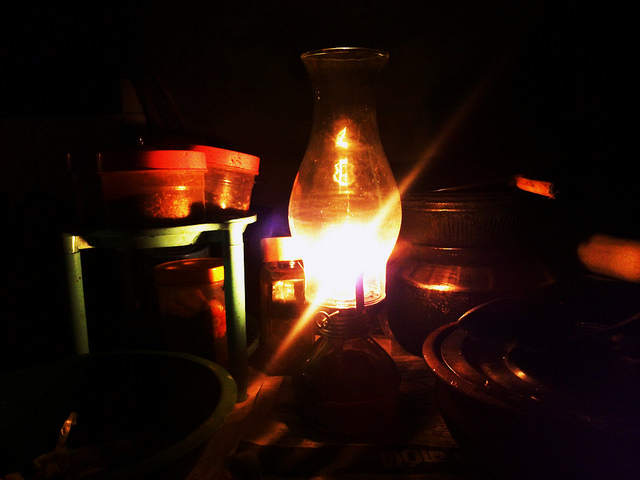
Kerosene lantern

Kerosene lantern. hare 🙂CC BY-SA

In reflecting on my reading and writing life, I am most thankful that my tastes cover a pretty wide spectrum. As a child I devoured everything from Dr. Seuss to Highlights, from cereal boxes to Funk and Wagnalls Medical Encyclopedias (yes, really), from fiction series to biographies, from Reader’s Digest to dictionaries, as I marveled over the many meanings a single word can have. 

None of these were required reading in school.

All of this is what I chose to read, was compelled to read, from an insatiable hunger for the experiences, the ideas, the information, the emotions, the beautiful and the stark way of stringing words together, long before I thought about how hard authors work on hammering those words and phrases into something with just the right impact on readers.

Now, as a writer, my tastes run the gamut as well.

With Lit Bits and Pieces, I am usually reflecting on or exploring meanings of every-day experiences. Creative nonfiction, mostly.

Today I am sharing a short piece of fiction – for, truthfully, fiction is forever beckoning me with a capricious and winsome smile.

This was inspired by a personal challenge, a house I once lived in, and being told a long time ago that when she was a little girl, my maternal grandmother sometimes assisted her midwife mother.

-Enjoy.

Beacon

The captain’s wife was going to die.

Lily and her mother couldn’t save her.

They tried.

Vestal administered tinctures she’d made from leaves and bark as six-year-old Lily rubbed Miss Rebekah’s swollen belly, repeating over and over in her mind like a mantra: Little baby, please get borned . . . your Mama’s trying so hard.

Lily’s arms ached. The odors of sweat, blood, and tincture hung heavy in the close room. Miss Rebekah had chosen the highest, hottest point in the house and she couldn’t be moved now. Lily breathed through her mouth instead of her nose to avoid the metallic taste of blood and salt on her tongue. She kept kneading: Little baby, please, PLEASE get borned . . . .

The hours wore on; the sky darkened and thunder rolled in from the Atlantic.

Storms frightened Lily. Vestal said she mustn’t let it show. “When you live by the ocean, Lily dear, storms are always violent. Become accustomed to it. This is where thunderstorms are born, child.”

The wind moaned like a ghost under the eaves; rain slapped against the windowpanes. Lightning burst and sizzled a split second before the thunderclap shook the house. Lily jumped but she didn’t cry out. She sat trembling while Vestal calmly lit the kerosene lamp on the dresser.

Rebekah, sinking deeper in the feather bed, whispered, “Miss Vestal, would you move that lamp over to the window, please, so Captain Turner can find his way home.”

Captain Turner was at sea. Lily knew he wasn’t due back any time soon. Even if he was, he’d never see this lamp through the storm.

Vestal hesitated.

“Please.” Miss Rebekah’s whisper was barely audible, more air than voice.

Vestal carried the lamp to the sill of the window overlooking the widow’s walk. Beyond her mother’s silhouette, Lily could see the surf illuminated by lightning, billowing, foaming, crashing. Lily thought about the women at the marketplace who dressed only in black, murmuring to one another that this Carolina coast was treacherous even without storms.

Women who had watched for ships that never returned.

Rebekah groaned. Vestal flew back to her. The groan was so deep and prolonged that Lily’s courage finally collapsed. She cowered with her hands over her ears while Rebekah, just nineteen, married less than a year, made one last, valiant push before her life ebbed away. Lily knew it was all over when Miss Rebekah lay silent, her pinched face turned slightly toward the window where the lamplight flickered, then stood still.

Vestal gasped: “Lily!”

Lily scrambled to the foot of the bed. There in her mother’s hands was a tiny, motionless body. In all the births she’d witnessed, Lily had never seen anything like this.

The baby had no face.

“Oh, Mama, what’s wrong with it?”

“She’s a caulbearer! All my life I’ve heard of this! Cauls bring good luck, Lily, and healing powers. Whoever owns one will never drown. We must save it for her Papa.”

Lily watched as Vestal gently peeled the membrane, intact, from the baby’s face. Sweet-smelling fluid trickled from beneath the caul. When the veil lifted and she faced the world at last, the baby shuddered, reddened, flailed at the air; she drew a rasping, croup-like breath, then gave a mighty squall, startling Lily.

Vestal beamed.

Almost instantly, there was another sound: heavy boots pounding up the wooden stairs. Captain Turner burst into the chamber, rivulets of rain and seawater running from his hat and cloak, so out of breath he couldn’t speak. He simply sank to his knees on the floor in the circle of light cast by Rebekah’s lamp.

Lily was little, but she believed in miracles, believed that she was witnessing how many, right now? She eyed that lamp, glowing so serenely through the gloom. She knelt by the struggling captain. With a tentative hand, she dared to pat his arm:

“Welcome home, Captain. Everyone’s made safe harbor now. I think maybe you should call this baby Stormy, sir.”

As if in agreement, the flame in the lamp flared and danced.

******

Note: My original version of “Beacon” ended up placing in a flash fiction competition sponsored by Women on Writing – just one of the ways I’ve tried to push and challenge myself as a writer. Here’s their pretty fun response: The Muffin/Women on Writing Interview.
Almost

It’s always there,

the ghost of Almost.

What might have been

but was not.

What should be

and isn’t.

Almost – ever how illusory, how ethereal

all but ephemeral –

is a penumbra bleeding from yesterday

into today,

a pulsing presence,

a ponderous weight,

despite its nonexistence.

A walking shadow,

the thief of Now

and its fullness,

the vacuum of Tomorrow

and all its possibility.

Inversion,

implosion.

Just images

without substance,

yet the mass of the universe

compacted

into one knot of aching.

That is the price

of living

with the pretty picture, 

the insatiably hungry, ever-gnawing

all-consuming 

ghost of Almost.

When the notion of Almost first came to me recently, it was about romantic relationships that didn’t work out.  Witnessing the death of the dream, how it takes its toll on the ones who wanted, and tried, to make it work. Broken promises, shattered hopes. It’s easy to cling to the idea of What Might Have Been, when it has been yanked away, leaving a gaping hole in a painful reality.

Then Almost beckoned me with its wispy finger: “Come in — come in, and get to know me better!”

(Before I go any further: Yes, I am borrowing that quote – thank you, Charles Dickens and the Ghost of Christmas Present, and yes, I borrowed “walking shadow.” Honestly, Mr. Shakespeare, it walked in of its own accord).

The ghost of Almost encompasses dysfunction, too. It’s the emissary of unraveling families, friendships. Within Almost are many shades of loss, of varying depths and proportions, all of which can overshadow daily life.

The game almost won.

The job almost attained.

The money almost saved.

The addict almost cured.

The temper almost controlled.

Almosts can go on and on.

Inevitably followed by “I should have … I should have …”

We have some choice, some power in some of those Almosts; in others, none at all. We cannot think for others,  cannot control their actions, decisions, feelings – only our own. Whether the ghost of Almost materializes because we throw the door wide open for it, or it arrives, unbidden, unwelcome, unwanted, through the choices of others, it wants to destroy What Can Still Be.

If we let it.

The only exorcism: See your Almost for what it really is. And release it, for it stays only if you keep hanging on to it. Decide that it will not devour your now, or your tomorrow, any longer. Seek the healing path over the haunted one.

A priceless quote from a friend of mine: “Don’t should on yourself.” No more dwelling on on what you should have done or what should have been. Move forward, one deliberate step at a time, one moment at a time, in wisdom  – for beyond Almost’s shadow, the sun still shines.

Be ready to walk in it.


The inner reaches


It’s the stuff of dreams, a trip around the world. From the frenetic cities and marketplaces throbbing with conversations in myriad languages to snow-capped mountains where there need be no words at all. From mysterious man-made structures and their lost meanings to the astonishing buildings of recent eras – mankind has always been a prolific builder of things. From ice palaces to tropical islands,  from the platypus to the father emperor penguin incubating the egg he fertilized – the wonders are endless.

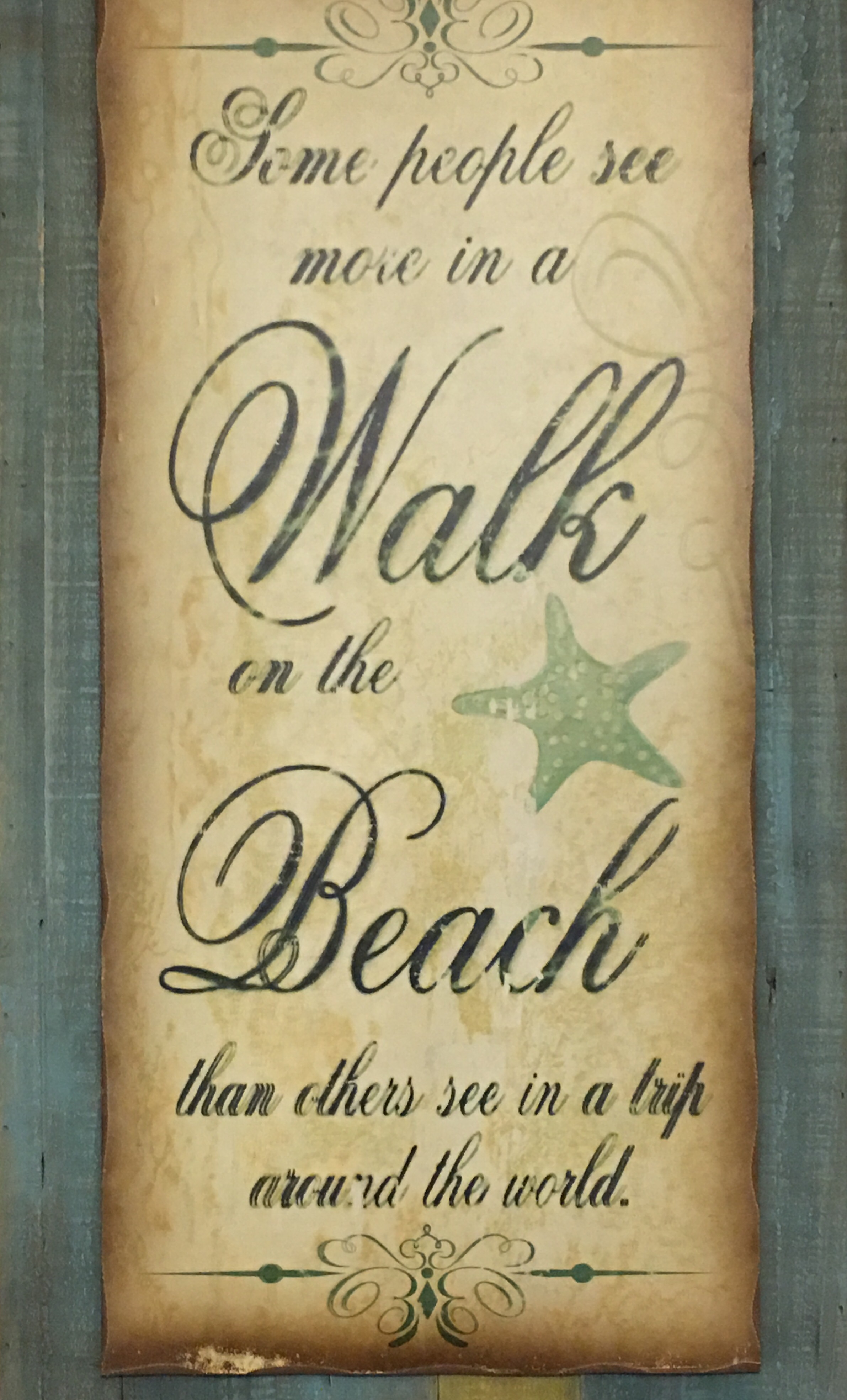
How, then, is there more to see in a walk on the beach?

The wonders are truly no less. The ocean speaks not with words but with overtones of infinity, encompassing all of time. All that was, all that will be.  Continuity. It has always been here. The sun rises and sets as it has always done, painting the sky and waves with its fire. On a clear night at the beach, the moon and stars are silver sentinels of  vast outer reaches beyond the human grasp. Order; everything in its place. Reliability. The seafarers of old navigated by the stars.

Salt air, salt water – the beach is a place of healing. Body, heart, mind and spirit.

It is hard to stay worried at the beach – I have tried. Whatever is knotted in the heart or tangled in mind is slowly unraveled here. Peace, often so elusive, abounds with the splashing of waves on the shore; the breeze caresses, comforts, clears away. Restores.

The outer reaches of the world, the little pieces of the universe that we can see, impact us from the outside in. Wonder, awe, inspiration, curiosity.

The beach invites us to work from the inside out. To think. To contemplate ourselves, our place, our paths. Our existence. To know the inner reaches of our own minds, our own hearts.

The inner reaches are as vast as the outer.

Maybe more so.

​​​

​