Follow the light

Hermit crab

Hermit crab. Jessica DiamondCC BY-SA

Daddy has a story to tell this morning:

“Last night, a sound woke me up.  I got out of bed and listened.  A steady clinking was coming from the bathroom. I thought: What in the devil could be making that noise in the bathroom? I went and looked around – didn’t see anything. I bent down to look at the pipe under the sink. Nothing. The noise was much closer, though, almost right in my ear . . . I turned my head and there on the sink leg was that hermit crab, crawling up. His shell was hitting against the metal leg – that was the clinking.”

I look in the glass bowl where my pet crab Shermie lives. He’s completely inside his black-and-white shell now, obviously sleeping off his late-night adventure. 

“He got out of his bowl and went that far? Why would he do that, Daddy?”

 “I guess he was following the light.”

The bowl is in the living room. I look at the hallway. The bathroom is at the end, around the corner on the right. That’s an awfully long way for a little crab. I imagine him crawling along the hardwood floor past the bedrooms in the dark. It’s a good thing none of us got up and stepped on him. 

Shermie’s stalk eyes peek out of his shell and I wish I could ask him: Why were you trying so hard to get to the light?

Maybe it wasn’t the light. A quick skim of the Internet reveals that hermit crabs are nocturnal creatures which often climb out of cages at night, when they would normally be in search of food and water; in the wild, they do this in droves, traveling for miles. When a pet hermit crab escapes – apparently quite a few do – the experts say to check the bathroom, as the crab might be seeking the humidity of its natural habitat.

In the days before the Internet, however, we didn’t know all of this.

For years I thought of that tiny creature and the Herculean task of climbing out of a wide, smooth glass bowl – how, I do not know to this day – to make his way, alone, through the dark toward the only light in the house.

And I would think: If Shermie could figure out where the light is, then so can I. There’s a light to follow out of this darkness, somewhere. I’ll find it. I’ll climb out.

slice-of-life_individual Early Morning Slicer


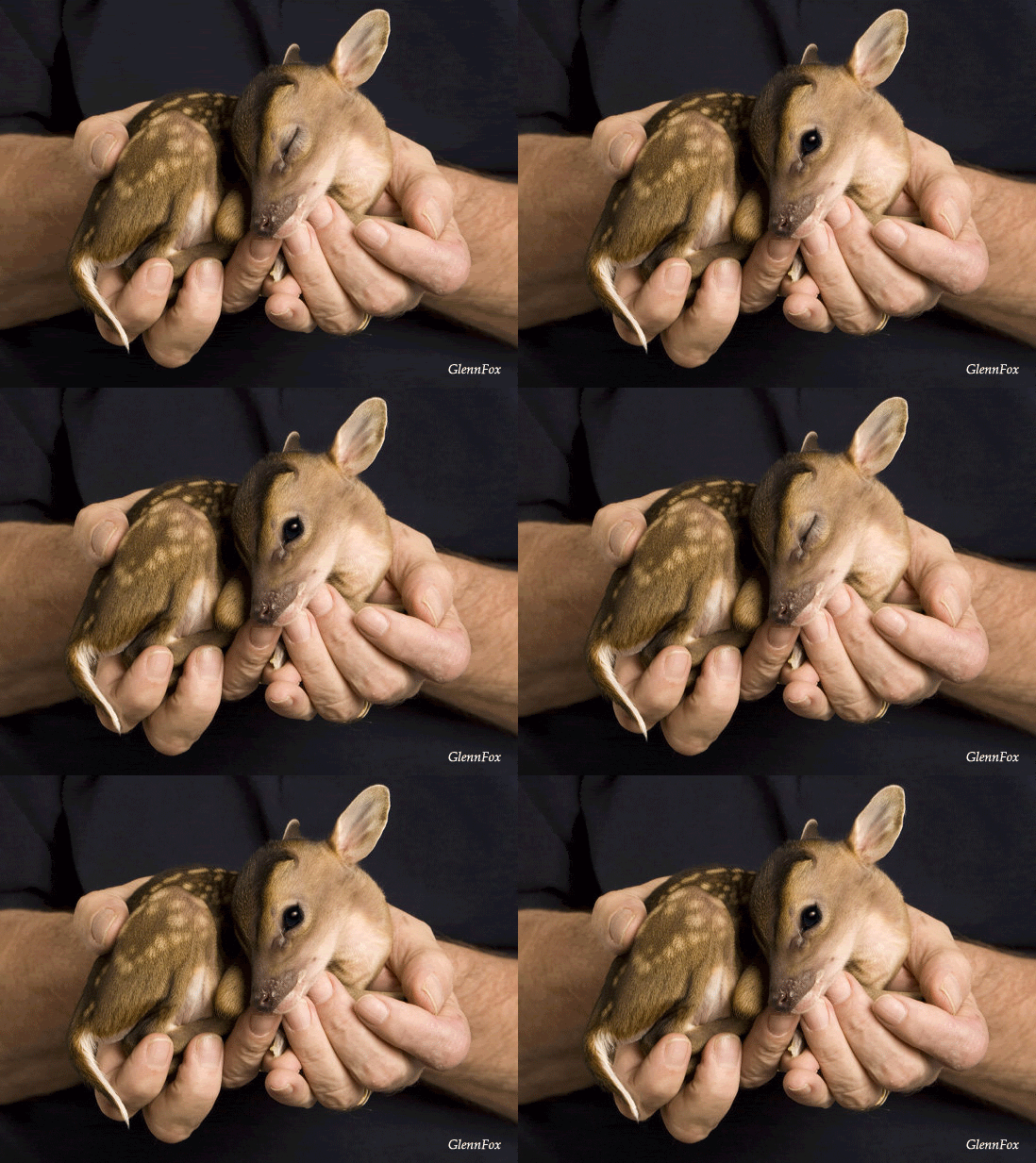
All that you hold dear

Fawn in hands

A new idea is fragile, fleeting

capture it as soon as you can.

Find the meaning

what it makes you think

how it makes you feel.

Nurture it

as you nurture the artist within you

so the idea and the artist will grow.

Play with the words

the images will come.

Play with the images

the words will come.

Trust your inner writer

to find a way

of conveying that idea, that image

so that others think and see

and feel.

There’s power in that fledgling thought

in every feeling connected to

 all that you hold dear.

More power in sharing it

than in holding it tight, unspoken.

Let it breathe

let it live.

It wants to.

It is precious.

Even

priceless.

Inspired by my writing workshop with teachers yesterday on “creating the magic”  – first as a writer, then for your writers.

slice-of-life_individualEarly Morning Slicer

Six-word memoir

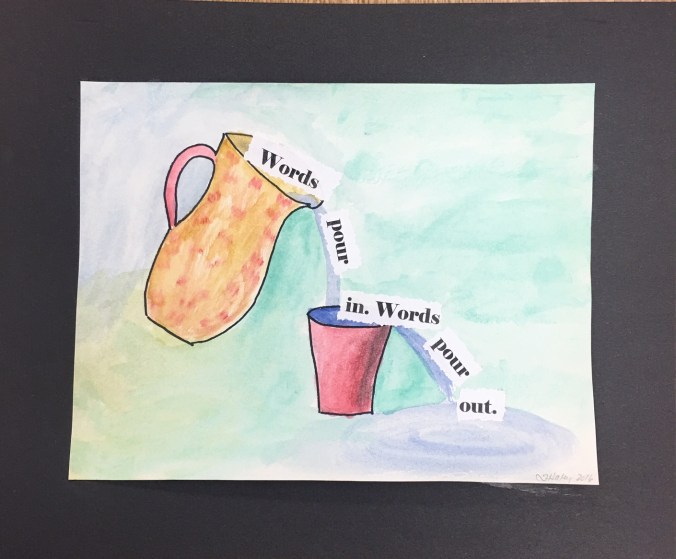
Words pour in

“What do you love best? How can you use the things you love to represent you, to describe who you are, in just six words?”

I pause to let the fifth graders think.

“One thing that I love,” I continue, “is the sound of cicadas. Have you heard that sound?”

Hands shoot up. I nod to a girl who replies: “Those bugs that buzz really loud.”

“Yes. Every spring I look forward to hearing the cicadas again – they will buzz all summer long. They remind me of summers spent with my grandparents. The sound was deafening in the thick woods around their home. Hearing cicadas now makes me feel happy and safe, no matter what else is going on. It’s one of the things I love best. So I might try to write my six-word memoir about the sound of cicadas.”

With pencil on paper, using the document camera, I write:

Nature sings to me. I listen.

I see heads nodding.

“I might keep working these six words to see if I can make them represent me better. I might decide to work on another idea. Today you will make a list of things that you love – maybe things you love to do, or favorite objects, or even dreams you have of things you want to do or be – and think about how each thing represents you. Then we will work on capturing and hammering out those descriptions in just six words.”

Off they go around the room, to brainstorm.

I brainstorm, too. What else can I write? What’s another example I can give them?

Well, as far back as I can remember, I loved reading and writing – it’s who I am. It’s what I do. It’s why I’m in this very room this very minute, teaching it.

I think about it all night, and am ready for the next lesson.

“So, ladies and gentlemen, yesterday we brainstormed ideas for writing our six-word memoirs. We thought of things we love and how they might represent us. I thought of something else to represent me. Let me ask you: What do you think represents me? Think about what I do and what you know about me.”

A boy waves his hand: “I know! Harry Potter!”

The class giggles and a few say, “Yessss!”

I laugh. “Excellent. But think bigger than Harry Potter, if possible! Think about who I am and what I do.”

A quiet girl’s hand sneaks up. “You teach reading and writing.”

“There you go. I’ve loved reading and writing all my life. I think this idea might be a great choice for a six-word memoir. It really describes who I am. I have to think now about how to capture this idea in six words.”

With pencil, paper, and the document camera, I write:

I read, I write, I am.

Heads nod – and an image materializes in my mind just then.

A pitcher, a glass, water pouring . . . .

“I just got an idea of how to make this better!”

I write:

Words pour in. Words pour out.

The children study these words.

“What do you think this means, ladies and gentlemen?”

A boy says, “First you wrote I read, I write, I am and you said you could make it better so I think you mean that if words pour in, you’re reading, and if words pour out, you’re writing.”

Across the room, faces light up.

I smile. “Well done. For a few minutes, share your ideas with your partner and talk about possible ways to begin writing your six-word memoir. Then we’ll all write.”

I listen as the ideas flow in and out, with a hum as vibrant as that of cicadas.

(If you’re interested in reading an earlier Slice on the sound of cicadas: Cicada rhythm)

slice-of-life_individualEarly Morning Slicer

Lighting the way

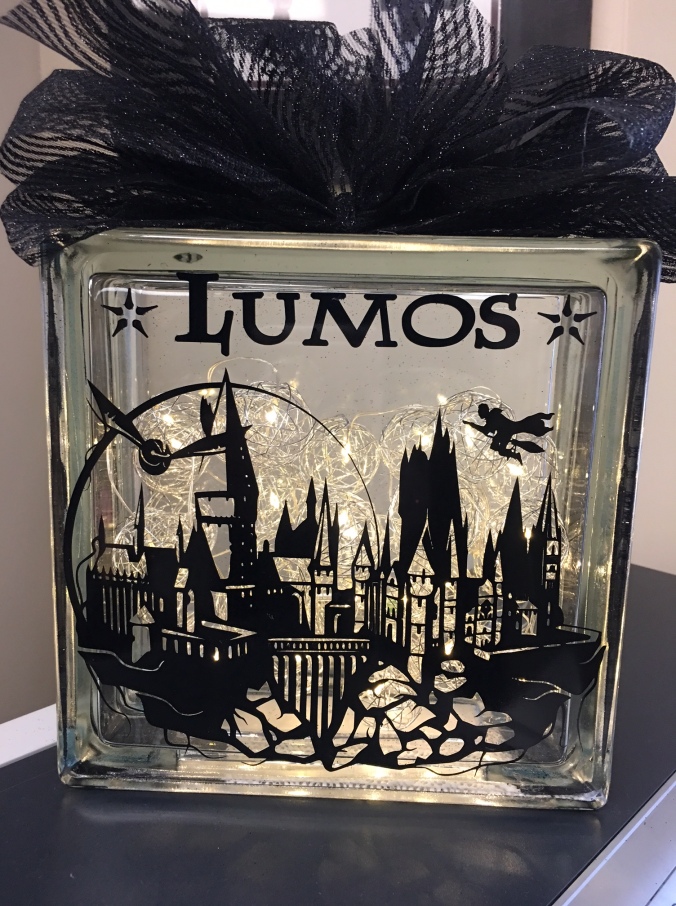
Lumos

Yesterday a fifth-grader caught me in the hallway:

“Mrs. Haley, do you have a copy of Harry Potter and the Chamber of Secrets in your room?”

 “I have two copies. Ask your teacher if you can walk with me to get one.”

He did. As we walked, I said, “The Chamber of Secrets is a great book. I enjoyed it more than The Sorcerer’s Stone.”

“Yeah, I haven’t read Chamber of Secrets. I saw the movie and my favorite part is when Harry gets the cloak of invisibility and finds that mirror where he sees his family.”

“Ah, the Mirror of Erised … I just read that aloud to two classes at another school last week while they were studying fantasy.”

In that chapter, Harry receives the cloak of invisibility at Christmas with an anonymous note explaining that it had belonged to his father; he is admonished to “use it well.” He sneaks around Hogwarts, hidden by the cloak, and ends up in a remote, off-limits part of the building in what appears to be a storage room. He finds a large, ornate mirror. Erised backwards is desire – looking in the Mirror of Erised shows a person the deepest desires of his or her heart. Harry’s family is dead; he desperately wishes he could have known them. He is transfixed by their images in the mirror – they wave at him, and his mother wipes away her tears as she smiles at Harry.

I think, as I rummage through my basket of Potter books, Fascinating how it’s the humanity that draws us, more than the magic. 

“Here you, go,” I say to the student. “The Chamber of Secrets.”

His face lights up when I place it in his hands. “Thanks, Mrs. Haley!”

“Read it well,” I call after him, as he walks away, flipping pages.

I look around my room, my own chamber decorated with Potter memorabilia that draws children from across grade levels. They love to drop by to show me their owl collections, to ask if I’ve read The Cursed Child, to share anything Harry Potter that they’ve recently acquired. The Harry Potter club meets here twice a month, students from third through fifth grades, and we talk so much more about what motivates the characters than the magic they employ.

My Lumos glass box gleams in the corner by the doorway. I think of all the times that teachers might wish we had magic wands to show us everything the kids need, to fix all that needs fixing. I recall J.K. Rowling’s quote from her 2008 Harvard speech, now connected to her Lumos charity on behalf of children:

“We do not need magic to transform the world. We carry all the power we need inside ourselves already.”

It’s apparent whenever I read with the kids, whenever the Potter club meets and someone has an epiphany about a character, whenever I walk into a classroom to write with students and teachers. The essence of teaching, of reading, of writing more than anything else, is the connection of human minds and hearts. It’s all part of same story, the triumph of the human spirit. Teach it, read it, write it well – tap into all you’ve known, all you’ve loved, all you’re wrestling with, and watch their faces.

It’s all inside you. Light the way.

slice-of-life_individualEarly Morning Slicer


Service

The restaurant was packed with the after-church crowd on Sunday. The boy halfway wondered if he should have chosen a different place for lunch, but he had a hankering for a steak today. 

The waitress took a long time getting to him for his order; he suspected it might take forever before his food actually arrived. Well, I’m really in no hurry, he told himself. That steak better be good, though.

The noise got to him a bit. Clinking glass at tables where busboys hurried, a screaming toddler, the hum of conversations, bursts of laughter, too-loud music. Why do restaurants continually raise the volume of the music above the volume of conversation? thought the boy. People are just about shouting to each other! 

The host passed his table, followed by an elderly woman with a walker who gingerly navigated the tables and chairs to be seated a short distance away from the boy. He sipped his sweet tea, wondering if he should make it last, as a refill any time soon did not seem like a remote possibility. The restaurant must be short-staffed today, or something.

The woman with the walker was alone. I wonder why? mused the boy. Is she a widow? Maybe she doesn’t have children. Maybe her husband is in the hospital. Or maybe a nursing home. It’s Sunday; maybe she’s been to see him, or maybe she’s going to see him after lunch.

It bothered him that this woman was alone.

It did not bother him that he was alone. Sometimes he ate with friends after church and sometimes he just enjoyed solitude. I am young, though, he thought. She is old. She should be with someone.

Maybe someone is meeting her here.

No one did.

The woman’s long wait jangled his nerves. He forgot that he, too, was receiving terrible service today; this old woman deserved better treatment. 

His steak eventually arrived. It was good. He savored every bite. When the bill came, he asked the waitress:

“Do you see that woman over there,  by herself?”

“The one with the walker?”

“Yes. Bring me her bill, too, please. I am buying her lunch today.”

And so he did. He left the restaurant feeling peaceful inside, before the woman knew her lunch was paid for.

His story brought tears to my eyes. The boy is just nineteen, a college student, working his first steady part-time job.

“You have one of the best hearts of anyone I’ve ever known,” I told him. “You truly do.”

He half-smiled like my father used to, sometimes.

“It was the only thing I could do for her, Mom.”

And, sated with steak, he went upstairs to the quiet sanctuary of his room, humming his favorite tune, the first one he ever learned.

Amazing Grace.

slice-of-life_individual

Signals

signals

Untitled. abarndwellerCC-BY

The Scottish poet Robert Burns wrote, in “To A Louse: On seeing one on a Lady’s Bonnet at Church”:  O wad some Pow’r the giftie gie us/ To see oursels as others see us! It wad frae monie a blunder free us…

I have often pondered that idea, people needing to see themselves as others see them. To see myself as others see me. What a frightening prospect. Certainly the power to see ourselves as others see us would free us from many a blunder … one would hope.

The lines spark a question I pose to myself and teacher colleagues: What signals are we unwittingly sending to students?

Years ago, I wasn’t sure I wanted to teach. I thought I would try it, almost reluctantly, as I needed a job and my own children were still in school. I wasn’t thinking of teaching as a calling or whether or not I was cut out for it. I took a temporary position, fifth grade remediation in reading and math, with some trepidation.

“I am not sure what to do,” I confessed to the hiring principal. “I don’t know if I can really help the kids.”

She smiled. “Just love them. The rest will come.”

Here goes, I thought on Day One, as I stepped into a classroom where kids milled about, working collaboratively on math. It’s sink or swim.

From across the room, a boy saw me standing in the doorway. He didn’t know me, didn’t know why I was there, but he shot across the room through the throng of his classmates to throw his arms around me.

That was my induction to being a public educator.

A child, sinking fast, clung to me like I was a life preserver. Perhaps he perceived, instantly, that we were in – or out – of the same boat. It was sink or swim for both of us.

In this classroom, I watched the boy try his hardest to swim. He struggled academically. He struggled with controlling his impulses. He struggled socioeconomically – he wore the same heavy black ski jacket every day, even when the weather was hot. He was chastised by his teacher for every infraction, great or small. The teacher – widely respected by colleagues – was clearly suffering from burnout,  undoubtedly tired of swimming herself. Whether or not she intended it, she sent a signal: Do not approach me or question me.

Do we, as teachers, send a signal – with  or without words – that we are safe harbors or treacherous ground?

I remembered a teacher of my own. She stayed in a constant state of frustration with our geometry class, once giving me detention for leaving paper in my desk despite my impassioned protest that I hadn’t done it. Math wasn’t my strong suit and I sank to the point of dropping the course, as I had all the math credits I needed to graduate. Later that year I landed a role in the school play and this teacher came to watch it. As people congratulated me backstage after the performance, this teacher stepped forward:

“Well,” she said, “I never would have believed you had it in you.”

You decide: Would I have ever been successful in her class?

One last note on my little friend back in the fifth grade: He went on to graduate.

On his behalf, I thank all those teachers who were, along the way, safe harbors for him.

Reflect: What messages do you send to others, verbally and non-verbally, about their value? Think of the teachers you had: Were they repellents to the learning in their classrooms, or were they encouragers? Were they the treacherous ground or the safe harbors? Write. Find a viable preserver when you need to. Rest a for bit. Then keep on swimming, mindful of those who are swimming so hard, so close by. 

Shine

born-to-shine


This is the cover of my mentor text notebook, housing the writing I’ve done with and for children across grade levels.

I believe that every child is a writer, because every child has a story. Every child has feelings and ideas. The writing teacher simply shows how to tap into these feelings and ideas, to give voice to them, to organize them, so that the mind and heart of the writer impacts readers.

Writing is about the human experience: We are all born to shine.

We shine through our fears, our losses.

We shine beyond the choices we make and the choices of others, beyond the things done to us and the things we have done.

We shine no less in our failures than in our successes; in fact, in learning and pressing on, we shine the brighter.

We shine in knowing what to hold onto and what to let go.

We shine when we harness anger before it burns away all that’s of value within us.

We shine by leaving footprints of hope for others to follow, for the human heart runs empty on despair.

We are ALL born to shine. Whether or not we do is up to us.

Reflect:  In the book The Forgotten Beasts of Eld by Patricia A. McKillip, 1974, a mysterious creature had the power to turn people’s eyes around to see inside their minds; they died from what they saw there. Writer, know thyself. Look deep within. You will be surprised by what you discover – the beautiful and the not. Write – and shine.


Born musician

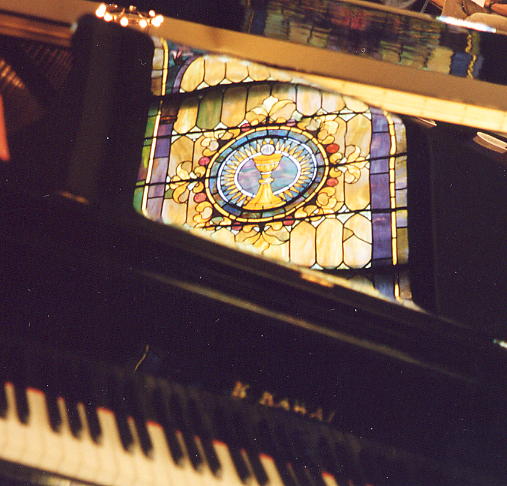
piano-window

Piano & window. Alan Mayers. CC BY-SA

Years ago, a woman – tired, seven months pregnant – sat in the front row of a church. The morning sun shone through the stained glass windows, casting jewel-tone light on the baby grand piano, a soothing sight to the weary woman whose busy child was churning her insides. The pianist took a seat and began to play the prelude.

The baby stopped moving. He or she didn’t move again until the prelude ended. After the final notes, the child resumed the high activity.

The baby hears the music, thought the mother, marveling. It was the first of many times she would notice the unborn child’s response.

Around age three, the boy frequently hummed a tune to himself. His mother recognized it: “Amazing Grace.” When he was four, the child started playing cassette tapes of gospel music that had belonged to his great-grandfather. After his fifth birthday, his mother stood in the doorway of his bedroom, watching the boy making tally marks with a dry erase marker on a whiteboard easel.

“What are you doing?” she finally asked.

“I’m counting the syllables,” her boy replied, with a serious expression on his little face. He continued his business, listening to the tape, steadily making marks.

It’s the beats, the mother thought. He’s counting the beats.

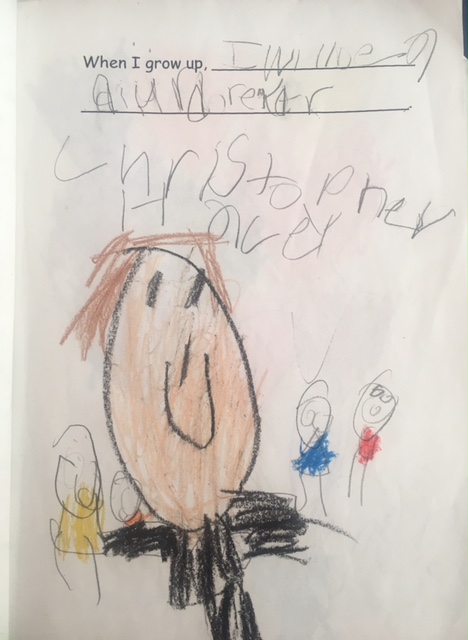
When he brought home his “All About Me” book on finishing kindergarten, his parents smiled at this page:

when-i-grow-up

“When I grow up, I will be a qiur drekctr (choir director).”

When he was seven, watching him tinker occasionally on his great-grandmother’s upright piano in the living room,  his mother said, “You love music so much – why don’t you take piano lessons?”

The boy shrugged, something of a disappointment to his mother, who expected he’d be excited. She took him to lessons anyway.

He wouldn’t practice. The lessons were abandoned before long.

His mother was sad.

In middle school, the boy decided to play alto sax in band. He began tinkering with the piano a little more. Then one day, when he was fourteen, he said, “Hey, Mom, listen to this.” And he played a medley of Christmas songs on the piano – both hands, all the parts – as if he’d been doing so all of his life.

His mother stood marveling, knowing, tears in her eyes.

The boy played the medley on the baby grand piano for the prelude at church on Christmas Day, to the astonishment of the congregation.

He played alto and bari sax for marching band throughout high school; he developed a love for jazz. Few of his friends knew he could play the piano as well. None knew he could sing. One of his teachers did, however. She sought him out when she couldn’t find sheet music for a song she planned to perform at Senior Awards Day.

“This is a version of ‘Perfect’ by Pink – do you think you can play it?” she asked the boy.

“I think so,” replied the boy.

He had two days to prepare.

The result:

One week after graduation, he was hired as the director of music programs at a church, fulfilling his childhood desire of being a choir director.

The rest of the story remains to be written, as it is still unfolding.

I am excited to see where the music takes you throughout your life, Son. Keep learning and reaching.

Much love –

Your infinitely proud mom.

Reflect: Few of us know what we are meant to do so early in life. It’s never too late to find out. What are your dreams, the things that bring you the most fulfillment? Pursue them! What are your gifts? Use them to benefit others. Encourage them to do the same.


Rise

rise

Flight Envy. Pretty ParkinCC BY-SA

Above the negativity, the naysayers, to make room for the wondrous

Above the noise, to a place of productive peace

Above the superficial, the shallow, to the real, the valuable

Above the fleeting, to the lasting

Above constraints, to the creative.

Every day is new. Rise. Reach.

Believe.

Realize.

Repeat: Rise.

Reflect: Rise is a verb. It’s an action, a choice. How might YOU rise and step forward in newness?

Dogged determination

nikolaus

Nikolaus


What comes to mind when you hear the word perseverance? Perhaps it’s The Little Engine That Could. Or Jim Valvano.

I think of Nikolaus.

He’s a dachshund, and if you’ve ever owned one or read E.B. White, you know that the breed tends to be stubborn—as my eastern North Carolinian father would say, “hard-headed.”

Nik came to us when he was three months old. My boys, ages twelve and four, had been begging for a miniature dachshund after they puppy-sat one for friends on vacation. They knew exactly what they wanted: A little chocolate female. So when another friend called to say that her elderly mother had this very creature but could not take care of it, and if we wanted this puppy, we could have it, my boys were elated.

On the much-anticipated day of arrival, we opened the crate door and out strutted Nik. He was tiny, weighing maybe five pounds.

Within sixty seconds, these things developed:

“Mom, she’s not chocolate,” the older son observed. The puppy’s glossy coat was deep red, nearly crimson.

“Mom, she’s peeing on the carpet!” squealed the younger son. A remarkably large puddle, I might add, for a bladder so small.

“And she’s a boy,” I noted, running for the paper towels.

Just sixty seconds to an inkling that This Might Not Be What We Imagined.

Nik looked at us lovingly, wagging his tail.

He was, I decided in the weeks and months that followed, completely untrainable. He could not control his bladder. He wet the carpet, sofa, beds, everything. He would not “go” when we took him outside. Crate training did not work at all; he eliminated in the crate immediately upon entering. Exasperated, I asked the vet: “Why isn’t this working? I read that dogs don’t like to mess up their dens.”

The vet shrugged. “With some dogs, it’s just a behavioral issue.”

Great, I thought. We have a disturbed dog. It did not occur to me until much later that he’d been crated a lot as a puppy because his elderly owner could not keep up with the demands of caring for him. He cried loudly the whole time he was in the crate. Nik, I learned, never wanted to be confined.

The futile attempt to housebreak him reached its zenith a year after we moved into a new house.

“Boys, I don’t know what else to do. I’ve tried everything. I can’t housebreak Nik. He hates his crate, I’m going to work full-time, and he can’t just mess up everything. Maybe it’s time for him to go to a new home.”

The younger son began to sob. “No! We can’t give him away. He’s ours. We’re his family.”

My husband, not Nik’s biggest fan by a long shot, melted: “Shh, don’t cry, son. We won’t give Nik away.”

I glared at him.

“Nik can stay in my room when we’re all out,” offered the older son. “I’ll clean up if he has an accident.”

I thought of the new carpet and sighed. “All right, then. This means everyone is going to have to look after him. EVERYONE.”

The strange thing is that Nik seemed to know about this, because, from that time forward, he was instantly, miraculously housebroken. Whenever he needed to go, he went to the back door and waited to be let out. Just like that. After two years of abject failure.

The boys taught this untrainable dog to “sit pretty” for a treat, which meant that at every meal Nik was by one of our chairs, holding his pose like a groundhog in hopes that we’d give him a bite to eat. I taught him to roll over, so if sitting pretty didn’t work, he’d roll over to get his treat. That’s his entire repertoire: Two tricks.

Nik follows me everywhere in utter devotion, and when he was younger he’d jump into my chair to wedge himself between me and the chair back when I was writing. He is wary of my husband—they are competitors for my attention—but as soon as my husband leaves the room, Nik flies over to curl up in my lap, as if claiming me.

The boys say, “He loves you the best.”

Nik’s intense gaze seems to say the very same thing. He watches my every move.

A couple of years ago, we thought we were about to lose him.

My husband and I heard him fall on the landing of the stairs leading to the upstairs bedroom, dubbed “Nik’s lair,” as Nik was long accustomed to staying there during the day when the family was out. He’d also go up whenever he was tired or ready to go to bed for the night. By this time the older son was grown and gone, and the room belonged to the younger one, who was not home at the moment. On hearing Nik fall, my husband and I rushed to find him crumpled but conscious on the landing.

My husband began to cry.

“Stop it! You, of all people, crying about Nik! Don’t tell me you’re attached to him after all!”

“It’s the boys,” sobbed my husband. “Having to tell them that Nik . . . that he might . . .”

I picked Nik up as carefully as I would a newborn baby. “Let me wrap him in a blanket. You’re driving us to the vet. Stop crying.”

The trouble was two kinked-up vertebrae; the vet pointed them out. He dispensed medication and sent us home.

I made a pallet for Nik in the living room and covered him with the blanket. For two days, Nik didn’t walk. The younger son slept  on the couch to be near him at night. Nik didn’t eat or “go” when we took him outside. He just looked at us with big eyes and never made a sound. When he’s not crated, Nik hardly ever makes any noise.

In the wee hours of the third morning, I woke up and decided to check on Nik. My son was sound asleep on the couch. Nik’s blanket was still tucked on his pallet, but he was nowhere to be seen. He wasn’t on the couch with my son. I started searching, increasingly alarmed as minutes passed with no sign of Nik. He’s crawled off away from us to die. That’s what animals do. He wasn’t in the kitchen, under the chair where he likes to take his treats.

I woke my son: “Where’s Nik?”

“He’s not on his pallet?” asked my groggy teenager.

“No! I can’t find him anywhere!”

I woke my husband: “Nik has disappeared!”

“How is that possible?” He and my son looked again in all the places I’d just looked.

Then I thought, No—surely not—I don’t know how he could . . . 

The upstairs bedroom. That’s where he’d want to be, if . . . .

My heart pounding, dread deepening with every step, I climbed the stairs and opened the bedroom door.

I turned on the light.

No Nik. Normally he’d have jumped on my son’s bed and gone to sleep.

But he couldn’t jump now, not with his back . . . very carefully, I lifted the dust ruffle.

A tail thumped in greeting, and two eyes looked out at me as if to say, I just came up to bed like I always do. 

I cannot envision how he did it, how he dragged himself from his pallet all the way up the stairs to his favorite, safe place. After three days of not being able to walk at all. Knowing he could not jump, he contented himself with sleeping under the bed instead of on top of it.

I do not cry easily, but I did then.

He recuperated, and it happened again a month ago. This time Nik could not walk for a week and a half. The vet—a different one now—called to see how he was faring.

“He’s not any better,” I said into the phone. “No change. He wags his tail at us, but he can’t move.”

“It may be time to think about the quality of life,” the vet said, gently.

We tried to talk about it, the boys, their dad, and I.

“But he knows us still,” I said. “He doesn’t seem to be suffering, except for not being able to walk.”

“Yeah, it’s not like he’s in a coma,” said the younger son.

“If you make that decision, I want to be there,” said the older son, who’d come by on his way home from work. He rubbed Nik’s head.

Nik looked at us lovingly.

Another day passed, and another. He still did not walk.

My younger son and I took turns bringing Nik’s food and water to him. Nik ate and drank. Good signs. I carried him out several times a day; he obediently did what he needed to do, lying in the grass. I carried him back inside, put him in his beloved new dog bed, and covered him with a blanket.

More days passed.

Then one day when I carried him out, I felt his back legs press against my side. When I put him down, he stood. By himself, for a few seconds, on his old white paws, looking at me lovingly from his little white face, before his legs gave out and he flopped down.

Each day after he could stand for a bit longer at a time.

He is fifteen now, turning sixteen in January.  He runs from room to room again like he did when he was a puppy, still begging for treats although he can’t sit pretty anymore or even see his treats as well as he once did, but he gobbles them just like always.

And every night, one of us carries him upstairs to his favorite, safe place to sleep.

Reflect: Who—or what—represents perseverance to you?  Why? What have you learned from this person or situation, and what have you learned about yourself?