Spiritual Journey: Lament

For Spiritual Journey Thursday (the first Thursday of each month), a fellow writer offers a topic for our group to reflect on individually. Then we write and share.

Today Ruth Hersey offers this: The topic I chose today, given that we’re in the second half of Lent, is Lament. The world has plenty to lament right now, and I suggest writing a Psalm of Lament…Aaron Niequist say[s] that a third of the Psalms in the Bible are about lament, whereas zero percent of modern worship songs are. 

I’m not sure I’ve ever written a lament.

Biblically speaking, they follow a general pattern:

  1. An address to God
  2. A complaint
  3. A request for help
  4. Expressing trust in God

And so I started with the following. I almost deleted it, but am choosing to leave it as a record of my thinking and my heart:

Oh Lord, my God
Creator of all
you have always been there

before the beginning
and never-ending

you have aways been there

in my joy
in my pain
in my sorrow
in my rage

you were there

before I knew You
when I forgot You
when I ran from you

and when I ran to you

you were there…

I know these things to be true; however, I am losing the point of a lament, which is to be an expression of deep sorrow or grief, yet not without hope, and not without seeking the Lord and ultimately trusting. I think I struggle with laments because their anguished cries to God can sound somewhat accusatory. That is not the tone I want. It feels like misplaced blame.

And so I turned to Psalm 13. It is the model for my second lament attempt, here…

How long, Lord, will I forget that You are here in the midst?
    How long will I try to carry my burdens alone?
How long will I grieve the ways of the world
     with human judgment clouding my heart?
 How long will my own flawed perspective blind me?

Look on me with mercy, oh Lord my God.
    Give me Your light, that I might see
Your ways, Your workings, unaffected by humanity
    which makes of itself an enemy.

Only in You do I wholly trust
    for only holy You never fail.
Grant me wisdom, strength, and grace all my days
    to live each one remembering and honoring You.

…it is still a work in progress, as are we all, thanks be to God, whose mercies endure forever.

Psalm 139 is my favorite of the psalms; I close here with its final verses as part of my daily prayer.

Search me, O God, and know my heart: try me, and know my thoughts:
And see if there be any wicked way in me, and lead me in the way everlasting.

Finch elegy

I forbore
checking the finch nest
in the wreath
on the door

after three
maybe four
little finches hatched

in the cold

I knew that February
seemed too early
for laying

that sustained
freezing in March
could take a toll

but I heard Mama
and Papa House Finch
chattering all along
with babies’ bright voices

until a day or so ago

they’ve fledged and gone
already
, so
I told myself

when it is warm,
I will check the nest

(don’t disturb them
in this cold)…

Today, it is warm
like spring should be

with the earth bathed
in watercolor pastels
a blossom-spattered mosaic
after soft rainfall

and so I came to see
if the fledglings had gone
at last

not prepared
for what I found

one
hanging backward
over the front
of the nest
open mouth and closed eyes
pointing to the sky

another
wedged in back
against the door
essentially fused
into the nest itself

they are
too tiny
and new
and perfect
to be dead

but they are
they are

seems
a sibling or two
must have made it
to the skies

but these
sweetest little wings
I’ve ever seen
shall never rise

so now I lay
these lost ones
down for keeps

rip away the
beautiful nest
and sweep
and sweep

in silence
where there was
so recently
such happy song

not knowing what
went wrong

(and never will)

it is just
The Way of Things

nevertheless
my heart wrings
in two

and cries


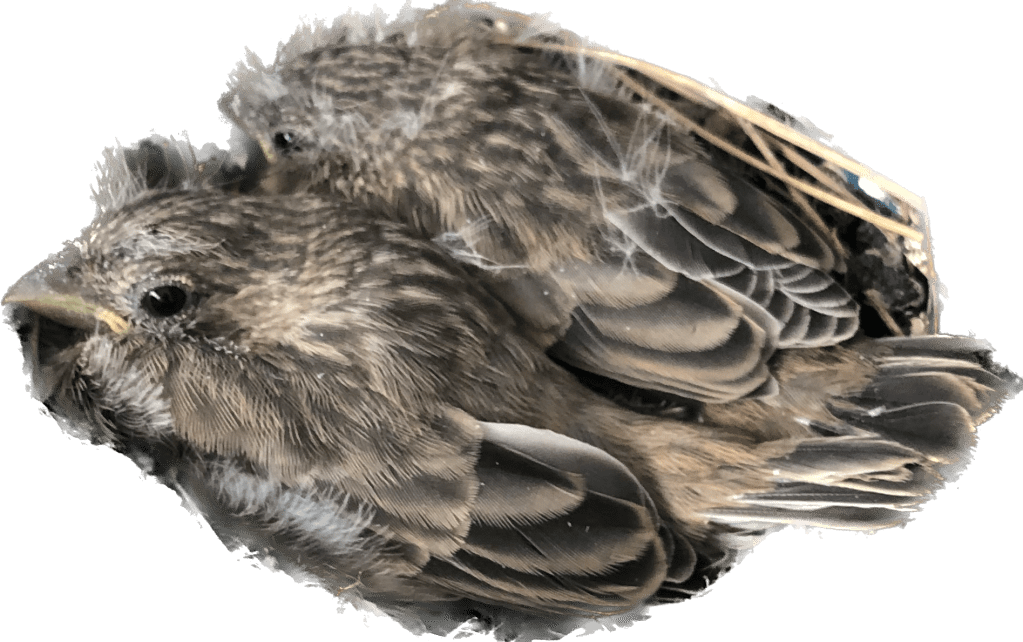
A couple of my hardy finch fledglings in a previous year

*******

with thanks to Two Writing Teachers for the monthlong Slice of Life Story Challenge

Scientific method poem

For Day 25 of VerseLove on Ethical ELA, Linda Mitchell inspires teacher-poets with the scientific method. Linda says: “The scientific process reminds me of poetry. For me, poetry is about observing, questioning and predicting–which are vital, although not the total, of the scientific process.” She challenges poets to incorporate part of the scientific method in a poem: Make an observation; ask a question; form a hypothesis or testable explanation; make a prediction based on the hypothesis; test the prediction; and iterate: use the results to make new hypotheses or predictions.

My poem is dedicated to students, with a question I find myself asking too often. I left the area of referral out on purpose; could be behavior, academics…

Graphic Failure

Dear Student, I see you’ve been referred.

Why have you been referred?

Maybe it’s because your teacher
is afraid.

Not of you. Not really. 

You see, in the scheme of things, 
you should be the tip of 
a hypothetical pyramid,
with all the systemic structures
supporting you—in other words,
your needs should drive
everything else

your teacher, see, 
is the next closest layer
to you

and when this pyramid is
upside down
with the ponderous weight
of systems all at the top,
by the time it reaches
your teacher, 
the pressure
is immense
(research tells me this used to be
a form of execution in ancient times,
crushing, i.e., the adding of more
and more stones)

which means that if
this colossal pyramid
is inverted
there you are
the tip at the bottom
the whole system’s 
supposed
raison d’etre
bearing it all
like Atlas

no wonder
you have been referred

it is all too much

Climb (France through my eyes) docoverachieverCC BY 2.0

Lament and celebration poem

with thanks to Andrew Moore, host of Sunday’s Open Write on Ethical ELA. Andrew challenged teacher-poets to compose around lament plus celebration (these don’t have to be related; this is meant to be exercise in writing freely, in any form). He writes: “My inspiration comes from a distinct lack of good sadness, grief, and lament beside a healthy laugh and looking forward to the changes the future may bring.” The poem can be as light-hearted, silly, or serious as the poet desires.

Here’s where I am today:

Remains

Today, I mourn 
the destruction of trees along my rural byways
the displacement of wildlife
the destruction of Ukraine
the displacement of her people
the systemic demoralization of teachers
the systemic misplacement of trust

Today, I celebrate
the remnants
of trees
wildlife
Ukraine
her people
teachers
trust

Today, I hope
for restoration
in revelation 
and reverence

before all
become revenants

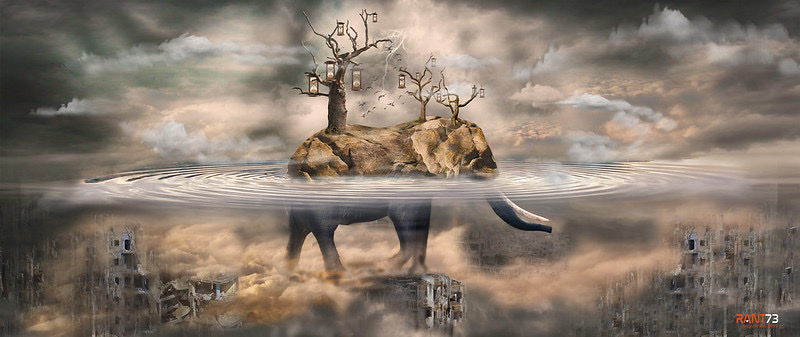
“The Elephant – great destruction.” Public domain. Note the trees, the cities, the elephant all in stages of disappearing … elephants, by the way, symbolize wisdom, memory, prosperity

******

with thanks also to Two Writing Teachers for the Slice of Life Story Challenge every day in the month of March.

The field

The field at the end of my street
where cotton used to grow
where morning glories of purple and pink
bloomed in tangled profusion
where the autumn sun
burnished the treetops
where myriad insects would chorus
all summer long

is cleared
is being bulldozed
for houses

I will never again see the cotton
stretching out like snow
or the morning glories
rioting in the grass

the trees will be obscured
if they are allowed to remain

and the great insect choir
of quivering magic-sounds
is forever silenced

I cannot imagine how the field
is feeling

but I
am forlorn

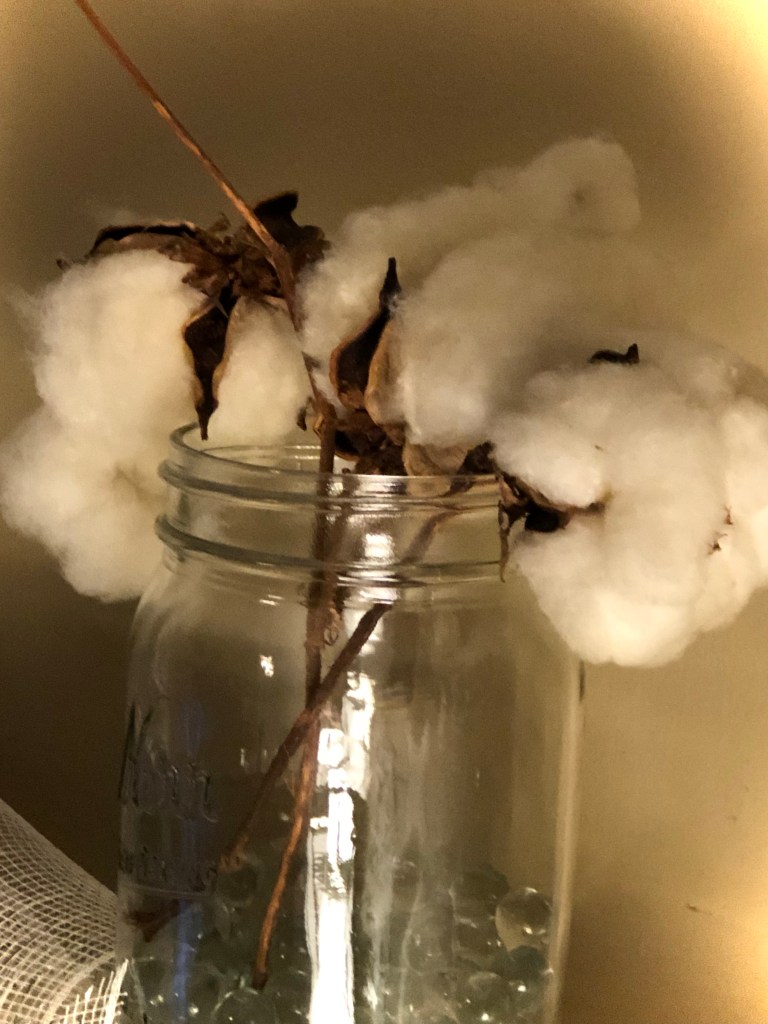
Cotton from my lost field

Collaborative Spirit

I will call it
as I see it
from the ever-shifting sands
at the shoreline
looking out
over the vast and raging sea
called School
nowadays

so much debris
in those rolling waves
flotsam and jetsam
of curriculum
of standards
a wreckage of data
certainly broken systems
and even “learning decay”
-phew-
how’s that
for positivity

it is not
that I don’t have faith

I do

I believe in kids

I believe in teachers

I believe in overcoming

I also believe
everyone doesn’t believe

and I know
as I hear the crashing waves
and the gnashing teeth
that the current
will drown us all
if we pull
apart

if only
if only
I could build a sturdy ship
I’d name it
Collaborative Spirit

and
if I could just get everyone
on board

we’d sail
over
and through
and beyond
what we can even
imagine

together

it’s just that
one person
can’t build a ship
(or relation-ship)
alone

no

building the
Collaborative Spirit
takes all hands
on deck

that’s how I call it
that’s how I see it
from the ever-shifting sands
at the shoreline
looking out
over the vast and raging sea
called School
nowadays

Wooden ship on the Rupsa River (Bangladesh). joiseyshowaa. CC BY-SA 2.0

Take heart

Written while waiting for word from the governor about schools re-opening.

Suspended animation

upended education

sense of desolation

facing the fall.

What school should be

we cannot see.

Ill winds still blowing

so much not-knowing.

Separate, there’s a cost.

So much is lost.

But not all

in one fall.

Until the surging tide

should subside

virtuality

may be reality.

Enduring

assuring

we will outlast

passing shadows cast

in empty halls

on empty walls.

By decrees

or degrees

a calling

for not falling

is conversely

full of mercy.

Choosing heartache

over heartbreak

choosing to be stronger

being a little longer

apart.

By whatever decrees

by whatever degrees

however they fall

however we start

dear ones, above all

—take heart.

Photo: Heart. Glenn Lascuna. CC BY

Mourning dove blues

Mourning doves are said to symbolize providence, grace, peace, safety, renewal, and moving forward. Their low-pitched song sounds sad or comforting, depending on the listener. I dedicate this lament to the dove outside my kitchen window, whose plaintive murmur I hear in the dark, just before sunrise.

grim gray morning

grim gray news

grim gray outlook

grim gray blues

time to shelter

time to snooze

time to waken

time to muse

dream to endure

dream to choose

dream to escape

dream . . . a ruse

morning to ponder

morning to lose

morning pours out in

mourning dove coos

*******

Photo: Nesting mourning dove. Katy Tegtmeyer. CC BY

Dichotomies

Dichotomy
Dichotomy #3 by Abdulaziz al Loghani. Brett JordanCC BY

Our greatest national resource is the minds of our children.

—Walt Disney

When they are hungry

who would give them rocks

When they cry for a spark

who would spew water

When they strive to see

who would deploy smoke and mirrors

When they would fly

who would clip their wings

When they desire to go further up, further in

who would confine, constrain

When they crave autonomy

who would demand automatons

When their differences resemble a separate peace

who would distill a disparate piece

When the lengths they must travel are not equidistant

who would mistake equality for equity 

When they carry fragile fragments of hope within

who would build a diehard dystopia without

When they begin to perceive diversity as a gift

who would wrap it in sameness

When they aren’t the same

who would construct uniform boxes

When they would breathe

who would affix a lid

When the scraping of the adze and the hammering cease

who will hear the sound of fingernails

from inside

the casket of our dichotomies? 


Note: If you read “they” as children, try reading with “they” as teachers.

*******

Literary allusions: Matthew 7:9-10 and Luke 11:11-12; The Last Battle, C.S. Lewis; A Separate Peace, John Knowles; Animal Farm and Nineteen Eighty-Four, George Orwell; The Giver, Lois Lowry; To Kill a Mockingbird, Harper Lee; As I Lay Dying, William Faulkner.

What child is this

African Angel Boy. bixentroCC BY 

What child is this, who, laid to rest . . . .

Snow is falling. Huge flakes like white feathers shaken from the sky, a rare thing in the North Carolina Piedmont at the beginning of December.

Another rare thing: Today a former student is buried.

He was eleven years old.

I stand at the kitchen window, watching the snowflakes fall. Eleven years. That is all he had.

An only child. A latched seat belt—I can envision his mother reminding him—wasn’t enough.

I begin wondering about enough.

Did we do enough?

Nearly the whole of his short life was spent at elementary school. How much of our focus was data and test scores? Did he feel successful?

College and career ready doesn’t matter at all when you die at eleven.

Should it matter so much when you don’t die at eleven?

Were we enough? Did he enjoy coming to school, or did he endure it? 

I can hardly endure the heaviness of that thought.

The bleakness of the gray December day, but for the snow, matches the bleakness in my soul. On the television in the living room, Christmas music softly plays:

What child is this . . . .

He is Everychild now. Mine, yours, ours, all children, coming to school, day after day.

Do they have the chance to get out of the box, before they’re put in a box?

Do they have the opportunity to develop a hunger for knowledge? Do their teachers create dynamic experiences that empower the children to own their own learning? Or are the children starved for authenticity, their minds and days numbed by worksheets, by sameness, by constant assessment, by irrelevance, by teachers in survival mode, by hierarchical machinery?

Underneath all those wheels in motion lies the child. Motionless. Powerless.

Haunting that such a beautiful snow should pour on such an ugly day, for snow can mean many things beyond ice crystals. It represents death, yes, but also wisdom, purity, innocence, blessing.

Wisdom, blessing, and strength to you, Everyteacher, for Everychild in your hands. Strive for more than enough. For joy, for awe, for love-of-learning-for-life ready. There’s no way of knowing whether this child will live a hundred years, or just eleven.

What child is this, who, laid to rest . . . whom angels greet, with anthems sweet . . . .

Every minute matters.