Signals

signals

Untitled. abarndwellerCC-BY

The Scottish poet Robert Burns wrote, in “To A Louse: On seeing one on a Lady’s Bonnet at Church”:  O wad some Pow’r the giftie gie us/ To see oursels as others see us! It wad frae monie a blunder free us…

I have often pondered that idea, people needing to see themselves as others see them. To see myself as others see me. What a frightening prospect. Certainly the power to see ourselves as others see us would free us from many a blunder … one would hope.

The lines spark a question I pose to myself and teacher colleagues: What signals are we unwittingly sending to students?

Years ago, I wasn’t sure I wanted to teach. I thought I would try it, almost reluctantly, as I needed a job and my own children were still in school. I wasn’t thinking of teaching as a calling or whether or not I was cut out for it. I took a temporary position, fifth grade remediation in reading and math, with some trepidation.

“I am not sure what to do,” I confessed to the hiring principal. “I don’t know if I can really help the kids.”

She smiled. “Just love them. The rest will come.”

Here goes, I thought on Day One, as I stepped into a classroom where kids milled about, working collaboratively on math. It’s sink or swim.

From across the room, a boy saw me standing in the doorway. He didn’t know me, didn’t know why I was there, but he shot across the room through the throng of his classmates to throw his arms around me.

That was my induction to being a public educator.

A child, sinking fast, clung to me like I was a life preserver. Perhaps he perceived, instantly, that we were in – or out – of the same boat. It was sink or swim for both of us.

In this classroom, I watched the boy try his hardest to swim. He struggled academically. He struggled with controlling his impulses. He struggled socioeconomically – he wore the same heavy black ski jacket every day, even when the weather was hot. He was chastised by his teacher for every infraction, great or small. The teacher – widely respected by colleagues – was clearly suffering from burnout,  undoubtedly tired of swimming herself. Whether or not she intended it, she sent a signal: Do not approach me or question me.

Do we, as teachers, send a signal – with  or without words – that we are safe harbors or treacherous ground?

I remembered a teacher of my own. She stayed in a constant state of frustration with our geometry class, once giving me detention for leaving paper in my desk despite my impassioned protest that I hadn’t done it. Math wasn’t my strong suit and I sank to the point of dropping the course, as I had all the math credits I needed to graduate. Later that year I landed a role in the school play and this teacher came to watch it. As people congratulated me backstage after the performance, this teacher stepped forward:

“Well,” she said, “I never would have believed you had it in you.”

You decide: Would I have ever been successful in her class?

One last note on my little friend back in the fifth grade: He went on to graduate.

On his behalf, I thank all those teachers who were, along the way, safe harbors for him.

Reflect: What messages do you send to others, verbally and non-verbally, about their value? Think of the teachers you had: Were they repellents to the learning in their classrooms, or were they encouragers? Were they the treacherous ground or the safe harbors? Write. Find a viable preserver when you need to. Rest a for bit. Then keep on swimming, mindful of those who are swimming so hard, so close by. 

Shine

born-to-shine


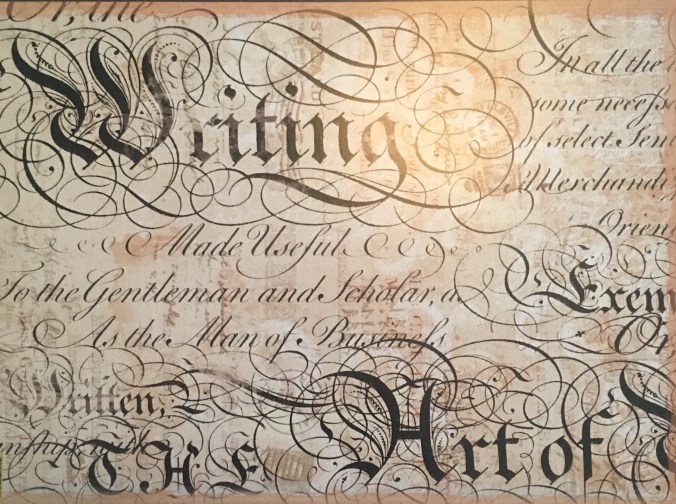
This is the cover of my mentor text notebook, housing the writing I’ve done with and for children across grade levels.

I believe that every child is a writer, because every child has a story. Every child has feelings and ideas. The writing teacher simply shows how to tap into these feelings and ideas, to give voice to them, to organize them, so that the mind and heart of the writer impacts readers.

Writing is about the human experience: We are all born to shine.

We shine through our fears, our losses.

We shine beyond the choices we make and the choices of others, beyond the things done to us and the things we have done.

We shine no less in our failures than in our successes; in fact, in learning and pressing on, we shine the brighter.

We shine in knowing what to hold onto and what to let go.

We shine when we harness anger before it burns away all that’s of value within us.

We shine by leaving footprints of hope for others to follow, for the human heart runs empty on despair.

We are ALL born to shine. Whether or not we do is up to us.

Reflect:  In the book The Forgotten Beasts of Eld by Patricia A. McKillip, 1974, a mysterious creature had the power to turn people’s eyes around to see inside their minds; they died from what they saw there. Writer, know thyself. Look deep within. You will be surprised by what you discover – the beautiful and the not. Write – and shine.


Born musician

piano-window

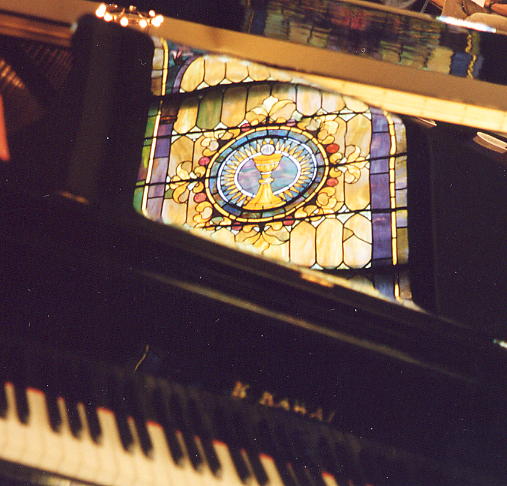
Piano & window. Alan Mayers. CC BY-SA

Years ago, a woman – tired, seven months pregnant – sat in the front row of a church. The morning sun shone through the stained glass windows, casting jewel-tone light on the baby grand piano, a soothing sight to the weary woman whose busy child was churning her insides. The pianist took a seat and began to play the prelude.

The baby stopped moving. He or she didn’t move again until the prelude ended. After the final notes, the child resumed the high activity.

The baby hears the music, thought the mother, marveling. It was the first of many times she would notice the unborn child’s response.

Around age three, the boy frequently hummed a tune to himself. His mother recognized it: “Amazing Grace.” When he was four, the child started playing cassette tapes of gospel music that had belonged to his great-grandfather. After his fifth birthday, his mother stood in the doorway of his bedroom, watching the boy making tally marks with a dry erase marker on a whiteboard easel.

“What are you doing?” she finally asked.

“I’m counting the syllables,” her boy replied, with a serious expression on his little face. He continued his business, listening to the tape, steadily making marks.

It’s the beats, the mother thought. He’s counting the beats.

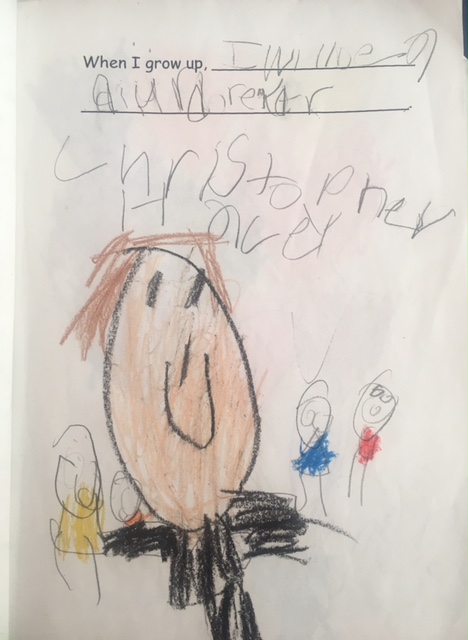
When he brought home his “All About Me” book on finishing kindergarten, his parents smiled at this page:

when-i-grow-up

“When I grow up, I will be a qiur drekctr (choir director).”

When he was seven, watching him tinker occasionally on his great-grandmother’s upright piano in the living room,  his mother said, “You love music so much – why don’t you take piano lessons?”

The boy shrugged, something of a disappointment to his mother, who expected he’d be excited. She took him to lessons anyway.

He wouldn’t practice. The lessons were abandoned before long.

His mother was sad.

In middle school, the boy decided to play alto sax in band. He began tinkering with the piano a little more. Then one day, when he was fourteen, he said, “Hey, Mom, listen to this.” And he played a medley of Christmas songs on the piano – both hands, all the parts – as if he’d been doing so all of his life.

His mother stood marveling, knowing, tears in her eyes.

The boy played the medley on the baby grand piano for the prelude at church on Christmas Day, to the astonishment of the congregation.

He played alto and bari sax for marching band throughout high school; he developed a love for jazz. Few of his friends knew he could play the piano as well. None knew he could sing. One of his teachers did, however. She sought him out when she couldn’t find sheet music for a song she planned to perform at Senior Awards Day.

“This is a version of ‘Perfect’ by Pink – do you think you can play it?” she asked the boy.

“I think so,” replied the boy.

He had two days to prepare.

The result:

One week after graduation, he was hired as the director of music programs at a church, fulfilling his childhood desire of being a choir director.

The rest of the story remains to be written, as it is still unfolding.

I am excited to see where the music takes you throughout your life, Son. Keep learning and reaching.

Much love –

Your infinitely proud mom.

Reflect: Few of us know what we are meant to do so early in life. It’s never too late to find out. What are your dreams, the things that bring you the most fulfillment? Pursue them! What are your gifts? Use them to benefit others. Encourage them to do the same.


Why I write 2016

writing

I write because it’s the closest thing there is to magic.

From words spring worlds.

Worlds of understanding, perception, knowledge – of humanity and of myself. I write to explore the world without and within, the real and the fantastic, the important and the insignificant, the extraordinary and most certainly the ordinary. Where there are ideas and images, there are words – lanterns for encircling thoughts, illuminating objects and scenes, mystically shining from one mind to another.

I write because the narrative voice in my head is continuously composing, often drowning out other important things.

The power of story compelled me to write when I was six years old, sitting at the living room coffee table with a pack of wide ruled paper and a fat pencil. A few years later, a teacher said, “What vivid descriptions! Keep writing.” Every year thereafter, a teacher strategically appeared to give a refining bit of feedback: “Wonderful writing. Here’s a way you can make it even better … and keep writing!”

I kept writing, even when my dad grumbled, “Why are you wasting so much notebook paper?”

Today, I write with children. I witness their discovery of their own voices, their courage in putting pieces of their souls on a page. I share in the excitement of their creations, in every little triumph over challenge. I work to empower teachers as writers, for the empowerment of student writers, that all might tap into the magic.

And I keep writing.

I write to wrap a cloak of immortality around everything I have loved – what was, what is, what will be.

I write to scatter the ashes of all my yesterdays, to walk in the light of all my tomorrows.

I write to celebrate having lived.

In honor of National Day on Writing, October 20.

Reflect: Why do you write? What have you wanted to write, but haven’t yet? Carve out a pocket of time today and begin. Tomorrow, repeat.