Abide

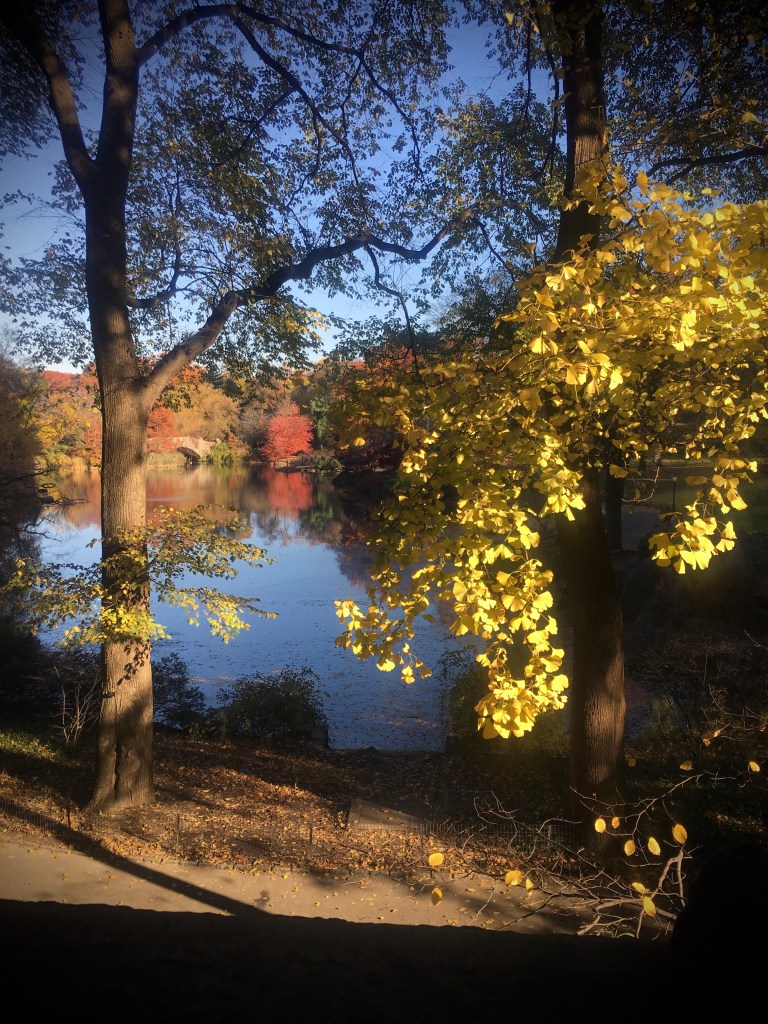
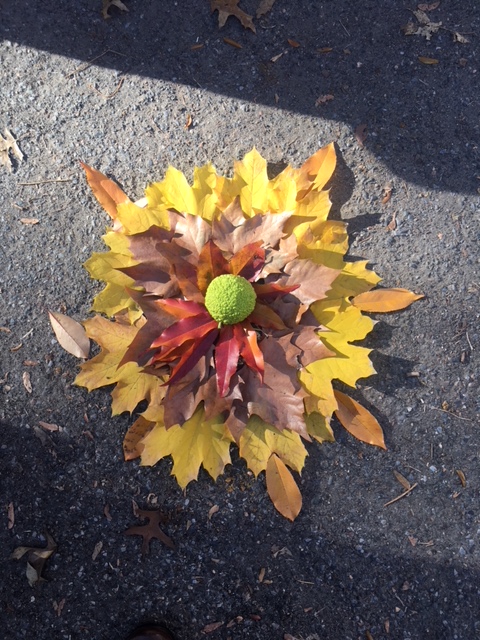
Autumn. Hallowed season, full of color and oblique light, slanted and golden. Echoes from distant places wafting in chilly air, laced with spice and earthy riches, tasting like promise. Leaves falling like pages of a book turning, ending another chapter, moving to the next…

A time for contemplating life.

And trees.

And what they have to say, about being alive.

I am drawn by research on ways that trees communicate with one another. Their intricate root system (scientists call it the “wood-wide web”), their pheromones, their electrical pulses… so much more is going on than what we humans can see or hear. Trees can warn each other of danger; they can nourish and heal each other.

I stumbled across a book I am going to need, The Hidden Life of Trees: What They Feel, How They Communicate—Discoveries From a Secret World, by forester Peter Wohlleben. Journalist Richard Grant writes of Wohlleben’s observations on the topic in “Do Trees Talk to Each Other?” (Smithsonian Magazine, March 2018):

Wise old mother trees feed their saplings with liquid sugar and warn the neighbors when danger approaches. Reckless youngsters take foolhardy risks with leaf-shedding, light-chasing and excessive drinking, and usually pay with their lives. Crown princes wait for the old monarchs to fall, so they can take their place in the full glory of sunlight. It’s all happening in the ultra-slow motion that is tree time, so that what we see is a freeze-frame of the action.

Wohlleben also discovered chlorophyll in a huge beech stump from a tree felled four to five centuries ago—meaning it is still alive. Grant writes: There was only one explanation. The surrounding beeches were keeping it alive, by pumping sugar to it through the network. “When beeches do this, they remind me of elephants,” he [Wohlleben] says. “They are reluctant to abandon their dead, especially when it’s a big, old, revered matriarch.”

I contemplate these words, considering the trees undergoing their autumnal change. Communicating with each other, communal to the end…

For some reason, lines of the old hymn, “Abide with Me,” come to mind: The darkness deepens…change and decay in all around I see…

What might the trees say?

Let us reserve
our resources
pool our energy
by the still waters.
By this reservoir
we drink our fill
after the darkness
we shall be here, still.

They shed their fragile, light-capturing organs because it would require too much energy, would be too costly, to try to keep one’s leaves alive in winter’s dark, icy blasts. They cannot live if they don’t let go.

Is there an inherent message? Resharing from a previous post, “Don’t Should on Yourself”:

Shed your shoulds
like leaves in woods
Trees shorn of fragility
preserve their ability
to survive.

Hear should rustling: ‘Don’t forget’
like leaves curling with regret
Spiraling, sigh by sigh
piling inside, dead and dry
cluttering today.

Beware should’s false measure
robbing Now of its pleasure
Shed those shoulds
like autumn woods
composting for tomorrow.

For me, in the autumn of my own existence, everything is bathed in oblique light, slanted and golden…I walk my wooded path, here and there scattering extensions of myself, posts and poems and words, stopping to gathering those of others, a communal communication that never ceases to amaze and which has everything to do with survival. Perhaps writing stems from a deep-seated need to renew, to live life anew, to make something new and beautiful from the jumbled pattern of our days, while they last.

In the great scheme of things, it’s a collective glory-story.

Can’t you hear each leaf whispering, as it falls:

Abide.
*******

with thanks to the nourishing, beauty-scattering Poetry Friday community and to Robyn Hood Black for hosting today’s Roundup.

A cup of light

In his poem “Tuesday, June 4th, 1991,” poet Billy Collins writes of an ordinary day that would be forgotten if not for sitting “empty-headed at the typewriter with a cup of coffee, light and sweet.”

He begins to record his feelings, his thoughts, his surroundings. His mind travels through history. He captures images, real and imagined, in his stanzas “as unalterably as they are seated in their chairs in the ontological rooms of the world.”

Ontology. The study of being. Certainly this is what writers, what poets, do. I’ve said I write to know that I have lived… recording people, places, images, emotions, ideas, pulling back layers of meaning, discovering connecting threads. Attempting to capture or recreate bits of my existence, whether it is or once was tangible, or just a fleeting, ethereal breath of a thing in the mind… yet still being.

Collins ends his poem with an image of the goddess Eos, or Aurora, slipping out of bed (as his own wife had, prior to his waking and sitting down to write this poem):

But tomorrow, dawn will come the way I picture her,

barefoot and disheveled, standing outside my window
in one of the fragile cotton dresses of the poor.
She will look in at me with her thin arms extended,
offering a handful of birdsong and a small cup of light.

As I sit here, now, at dawn, empty-headed at my laptop with a cup of coffee, feeling that I have nothing to offer today, Collins’ final lines whisper in my mind. They do not demand, or bang on the door, or tug. They do not pierce; they just stand, waiting, whispering. Aurora rises from the sound, from the mist, and I see her looking in at me, too. In the grayness there’s a flutter of her plain gown, of her long hair. I see those thin arms, one hand holding the birdsong and releasing it. I hear it, airy and new and alive again, as it is every morning.

And that small cup of light she’s offering.

I can almost see her earnest face, her pleading gray eyes: I brought it for you. It is yours. Please take it.

And I think, the day is new. What gifts will it bring? Unexpected little treasures that I don’t want to miss, just waiting… and what cup of light might I offer the day in return?

There’s only one thing to do. I know it as sure as I am sitting here.

I hold out my hand.

Aurora smiles.

Photo: “Cupping the Light.”  CaitlinatorCC BY 2.0

Failure to thrive

I think about these words often, failure to thrive.

They’re an official cause of death. As on my mother-in-law’s certificate.

But I wonder: How can living to ninety-one be considered ‘failure to thrive’?

A coal-miner’s daughter who survived the Great Depression, widowed twice with young children each time, who maintained a beautiful home and a bountiful table frequently laden and ready for the arrival of her family. A voracious reader with a passion and ear for music, a grandmother generous with her love, time, and grace, a woman of great faith in God … her decline was slow and in the last days, she called out to deceased siblings and sang the hymns of her childhood.

—It doesn’t seem like failure to thrive to me. If anybody ever thrived, she did.

Oh, I understand it’s medical terminology for geriatric deterioration, encompassing decreased appetite leading to poor nutrition, muscle weakness, dementia; the human body can only take us so far.

But failure to thrive doesn’t happen only to the elderly. Most often it’s applied to babies who don’t gain weight, who don’t grow as they should, due to a host of contributing factors.

Both ends of the spectrum, then, isn’t it, failure to thrive. Its potential can frame the beginning of one’s life, and, even if that life should be long, the end.

Which for me begs the question of all that’s in between.

In how many ways do we fail to thrive? In the course of being alive, what are the “nutrients” each individual needs to live well? Thriving in this sense goes beyond the physical to the psychological, mental, emotional, spiritual… can there be holistic balance if one part is suffering, starving? Because I’m an educator, this line of thinking brings me to “the whole child”: What is impeding growth? What “learning diet” does this individual child need? In the academic realm, nourishment for flourishment can vary widely… but at the core of being human, one non-negotiable need is each other.

Relationships fail to thrive, do they not. Suffering ensues. A point of pain ripples outward, troubling the waters, sometimes over a great expanse… being alive, successfully, involves an array of coping mechanisms, the ability to adapt. The Venus flytrap comes to mind. Stuck in nutrient-poor soil, it compensates by eating meat, the unwary flies which land in its toothy leaf-blades. The businesslike science of staying alive. Gulp.

In terms of the human, the matter of thriving—growing, growing up, growing old—involves willing interdependence. Based on… love? Conscience? Overcoming fear? When my oldest son was in his early teens, he sighed: “I do not want to grow up.” (Of course he did; he’s now a husband, a father, and his daughter is the joy of his days).

But I understood his words and shivered.

Point being that of the baby, the child, the adult, the aged and infirm, which stands most able to impact the thriving of the human ecosystem… for better, for worse… with the power to discern, decide, desire, and do for one and all?

Yeah.

That’s us.

I think about these words often, failure to thrive.

They’re an official cause of death…

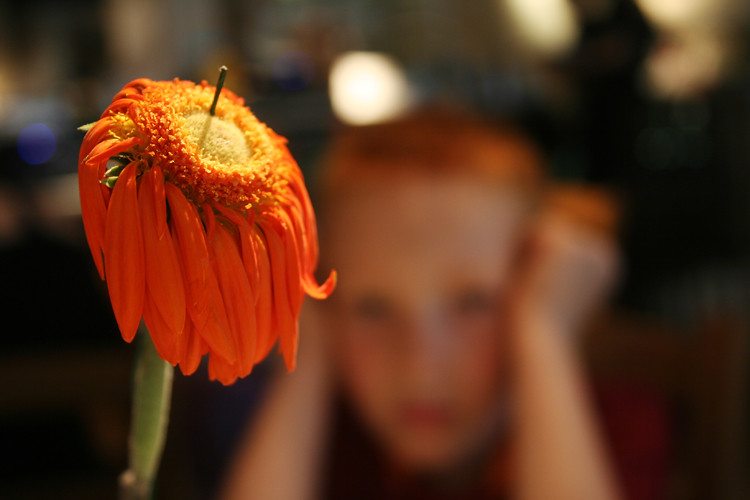
Photo: Wilted. Fotologic. CC BY

******

With thanks to Two Writing Teachers for the weekly Slice of Life invitation to write and to this writing community for unfailing encouragement.

Lines on a path in the woods

September
whispers
the first hint
of autumn
with a cool breath
caressing our faces
our bare arms
and legs
in the still-warm sun.
Whispers an invitation
to walk
woodsy trails
under trees communicating
in rustling green tongues.
One leaf
already fallen
crispy and brown
cartwheels across the path.
It is longer than we realized.
One of us would push

for a more vigorous pace
but the other of us
is tired.
A restful respite
in the almost-chilly
tree-proffered shade
just short of the bridge
we didn’t know was here.
Cicadas chorus high above
a big black ant hurries past
and somewhere a bird sings
as if it is the very heart
of all things.
We’ve come this far.
We walk a few more steps
one a little ahead
one leaning on a cane

one breath at a time.
Not until
we reach the bridge
can we hear the water
talking to itself below
in a wordless trickling flow
going on and on and on.
And so we do
even though we can’t see
how much path
is left to travel
nor what lies ahead
around the bowery bend.
The bridge cannot whisper

invitation.
It only stands
offering
silent invocation.
It is enough.
We cross over.

We go on.

*******

Thanks to Two Writing Teachers for the Tuesday invitation to write a Slice of Life and to my Spiritual Journey Thursday friends for the writing fellowship along the way. For more spiritual offerings see Karen Eastlund’s collated posts under “Finding Direction” at Karen’s Got a Blog! (Thank you, Karen, for hosting).

Hold on loosely

Grab hold

Grab hold! Jannes PockeleCC BY

Just hold on loosely,
but don’t let go
If you cling too tightly
you’re gonna lose control. 

—38 Special/D. Barnes, J. Carlisi, J. Peterik

The draft of this post has been sitting here a long time, gathering cobwebs, while I considered how to write it. The idea began with seeing connections between teaching, instructional coaching, parenting…with those cautionary lyrics, above, coming to mind: “If you cling too tightly, you’re gonna lose control.”

That’s the problem with many relationships, isn’t it. Control. As in, who‘s trying to assert it? By holding too tightly? By force? What are the consequences? Why do I think of Aesop’s fable of the North Wind and the Sun trying to prove who was stronger by making the Traveler remove his cloak? What does this imply about human nature?

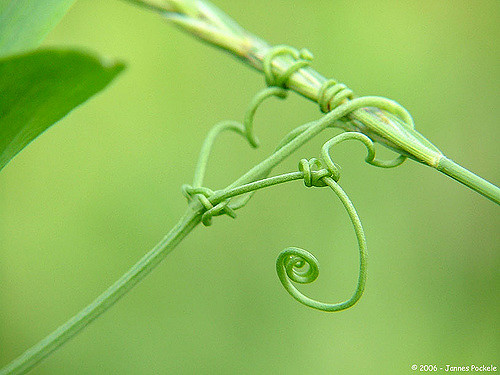
And not just human nature…that little green vine in the photo, above…it has goals, doesn’t it? To keep growing, climbing, gaining strength daily…soon the difference between “holding on loosely” and “clinging too tightly” will be evident in the absolute destruction it will wreak. It cannot know the cost to whatever tree, gate, house, other plants, anything it overtakes.

How did I land here, when I began with thinking on connective threads of teaching, coaching, parenting? Where will my metaphorical thinking take me next? What philosophical point am I trying to make?

Is this out of control now? How DO I write this persistent…thing?

When at a loss to say what can hardly be said, there’s always poetry. Maybe that’s what this idea wants to be…

Each poem is a metaphor, a philosophy, a journey of its own. This one, like life, goes fast. The form is designed for that. Sylvia Plath said that once a poem is written, interpretation belongs to the reader. Read it just to read, then maybe reread to decide for yourself if you see threads of teaching, coaching, parenting…and more. With poetry, there’s always more.

So here’s where the poem took me. I landed in a blitz: “Hold On Loosely.”

Have only today
Have and to hold
Hold my hand
Hold it dear
Dear one
Dear children
Children laughing
Children leaving home
Home is wherever YOU are
Home place
Place of remembering
Place in the sun
Sun rising in the east
Sun dappling the grass
Grass rippling in the breeze
Grass withering, fading
Fading light
Fading fast
Fast go the hours
Fast and furious
Furious argument
Furious storms
Storms wreaking havoc
Storms passing
Passing over
Passing by
By the way
By getting to work
Work it out
Work hard
Hard to handle
Hard to reach
Reach anyway
Reach out
Out of time
Out of breath
Breath of fresh air
Breath of life
Life is short
Life is precious
Precious moments
Precious faces
Faces in photographs
Faces tugging at heartstrings
Heartstrings reverberating at final words
Heartstrings tied loosely
Loosely hold on
Loosely, not letting go.
go…
on…

What threads did you see?

Oh, and writer-friends…maybe reread one last time to see how the blitz might describe a relationship with writing.

Having shaken off the cobwebs, I go on…

The steering wheel

This is not the post I might have written today.

Woke in the wee hours to total darkness, power loss, Hurricane Isaias smacking the house, tearing at the roof. Isaias is purely physical. He has no voice, unlike the ghost-wind that moaned and mourned for weeks under our eaves with the advent of spring and COVID-19.

Yet somewhere in the darkness, despite the raging gusts, little frogs kept up a cheery chorus.

Not much to do but stay in bed and wait it out.

And fall back asleep. And dream…

I am driving a car that belongs to my father, I think. Except that it doesn’t look like any car he ever owned. Nice little SUV, dark gray. I am coming home from visiting my grandparents in the country. I reach the quaint part of the city where they lived when I was little, before my grandfather retired. I’ve always loved this place… but I realize just now that I can’t turn the car. The steering wheel is gone. How have I managed to come so far without it? The car begins to spin and slide; I’ve lost control of it, I fear it’s going to be hit, but somehow I get it to a safe parking spot by a curb. I will have to backtrack and find that missing steering wheel—how could I have lost it? How is that even possible?

I go (on foot? in the same steerless car?) all the way back to my grandparents’ home. They’re out in the yard, very busy loading and unloading big objects (equipment? furniture?) on some kind of truck. Grandma’s face is serious. She doesn’t have time to talk to me [should have been a major clue that I was dreaming, as this never happened in reality]. When I tell her why I’m back she just says the steering wheel is over there (she points) in the road. Seems I lost it on the very start of my journey home…

I go to reclaim the steering wheel only discover two things: This is a rather large steering mechanism but the actual wheel isn’t there… and the little old road is freshly-tarred and paved. It’s never been paved. It’s supposed to be gravel. Sure, it looks nice, stretching out smooth and black, but why would anyone pave these tiny, meandering back roads where so few people live? This is a lot of work and expense that isn’t really ‘better’, I say to myself. With mounting sadness, I run a short dash on this new pavement to see that my grandmother’s home placea small, white house with a porch and a tin roof, where Grandma and her seven siblings were born over a hundred years ago—is gone. An expanse of green grass is all there is to see…

And then I wake.

Loving symbolism as I do, I know the dream connects to having little or no control in life. We’re living through a pandemic. A hurricane rages. I work in a school and the return next week will be drastically different. Life plows on despite the loss of the familiar. Nothing looks or feels or works quite like it used to. We travel a strange road interspersed with shadows of the real and surreal. The world, and our existence, have been altered in myriad ways. But… to be without power is not the same as being powerless…

As I write, Isaias has moved on. There is no damage here, no trace of him whatsoever now. I could revel in this glorious day, the azure sky with occasional cottony clouds drifting by, the unidentifiable bird with long wings soaring high, cicadas resuming their buzzing in the still-standing trees from which they were not shaken…that sound being one that connects me more than anything to safety and my grandparents’ home in the eastern North Carolina countryside. I could employ here my one word for the year, reclamation… reclaiming the day, reclaiming life, even my strange dream-attempt at reclaiming that lost steering wheel in a vehicle that wasn’t mine…

But the power came back on and the TV is full of destruction in the northeastern regions of my state. Homes destroyed by tornadoes spawned by Isaias. People dead and missing (some were children, who’ve since been accounted for).

And I think instead that the road to reclamation is so hard, so strange, so littered with precious, scattered fragments of life, obstructed by such mountains to move. We can control so little.

When we find we are unable to steer, perhaps that is when we are being driven most toward one another. Reclamation, then, lies in our responsiveness. In our willingness.

So does, perhaps, our redemption.

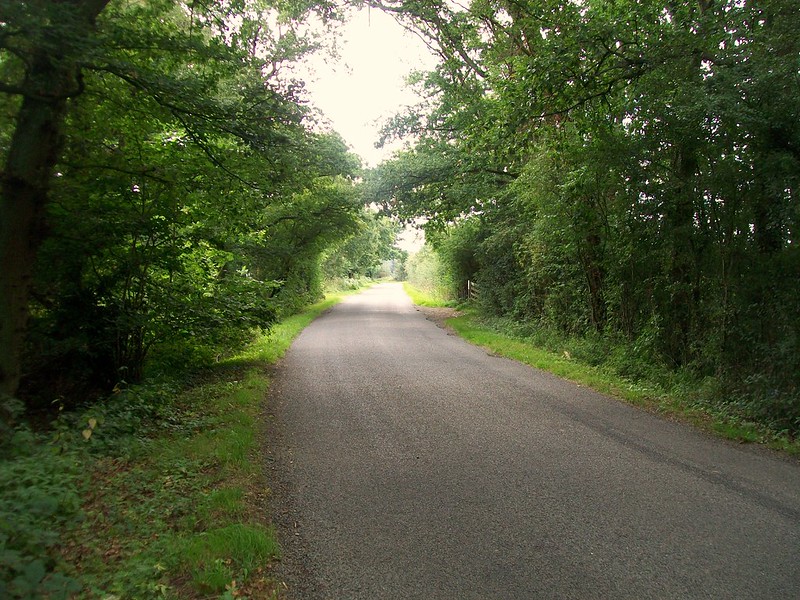
Photo: The road back to Stevenage. Peter O’Connor. CC BY-SA

To today and the tortoise

In an instant, life changes. Without warning, parameters close in. Existence is not what it was or ever will be again, for one can only endure each moment in the moment, with no sense of what lies beyond the shell, the shadowy vignette of Now, the eternity of it, the temporality of it. There is no turning of Earth, no movement of Time, no tortoise-crawl into tomorrow where Now could ever be snared in the net of memory…

Until all of a sudden, it is.

For five months Life As We Know It has been suspended by COVID-19. We’ve yet to crawl beyond its grasp.

For my family, however, today makes a year since the borders of our being were reduced, abruptly, to a sand-like speck floating in minutes as vast and endless as the sea.

One year since the Sunday afternoon that my youngest and I took our last routine walk around the church, talking about life and the future as he prepared for his final year of college.

One year since we came back home, hot and tired, and the dog went crazy barking at the patrol car pulling into our driveway. One year since the officer asked if this is where my husband lived, because he’s been in an accident, ma’am, and do you have a way to the hospital…

One year since my husband, coming home from the gym, suffered cardiac arrest while driving and his truck veered off the road, into the woods, stopping just short of a ravine.

One year since not knowing what our boys and I would learn when we walked into the ER entrance, where we were met by a nurse waiting for us, who took us into a side room…

One year since the attending physician told the boys and me it was a “big” heart attack, that their dad was alive because the EMTs were heroes, because he was not when they found him.

One year since we learned that EMS in this county happens to have the second-highest resuscitation rate in the nation.

One year since the night spent sleeping on chairs in the cardiac ICU waiting room as hypothermia was induced to give my husband’s brain time to recover.

One year of not knowing how much could be, or would be, recovered.

Time slowed to a crawl so infinitesimal that it could never really pass.

But it did, and it has, and it is.

Today makes one year, somehow. A compromised year, one in which I didn’t start or end the school year normally, a year of resuming life only to hit another prolonged pause, a year of no traveling beyond the necessary, first because of my husband’s mending heart and then the pandemic. A year of time outside of time, or time folding in on itself… I am not sure which. A year of near-implosion, of living and dying strangely, epically. A year of not knowing, globally or nationally, how much recovery there can be, or will be…

My husband has recovered remarkably well, in all ways except for a span of memory for the month or two prior to his cardiac arrest. The brain seeks to protect itself from trauma; it’s a survival mechanism. All my husband’s long-term memory, all his beloved sports trivia and history lore, remains intact for instant recall. But for a vague recollection of leaving the gym on that fateful day one year ago, my husband’s brain erased last July. He has no memory of our last family vacation to the beach, of long walks on the shore, of plunging into the bracing, beckoning ocean, of trying new restaurants, of the little Guatemalan shop he loved and visited several times, where he encouraged the rest of us to buy whatever handmade items we wanted because a portion of proceeds supports the native artisans. We ask him: Do you remember the putt-putt game? How you got beat by one point? How you demanded a rematch? Do you remember the storm blowing in on the 4th, when we ate at that new place in the enclosed deck by the marina and you said it was the best fish you ever had? Do you remember the music and dancing in the square? Don’t you remember buying this tapestry bookbag and the belt?

He looks as if we are speaking a different language, one we have created, one he has never heard and can’t grasp. No. No. Really? That happened?

One night last week he and I were watching a nature TV program. The camera zoomed in on a tortoise. Instantaneously, my husband said: ” I remember that.”

“What?”

“The tortoise. We saw one like it on the beach trip last year.”

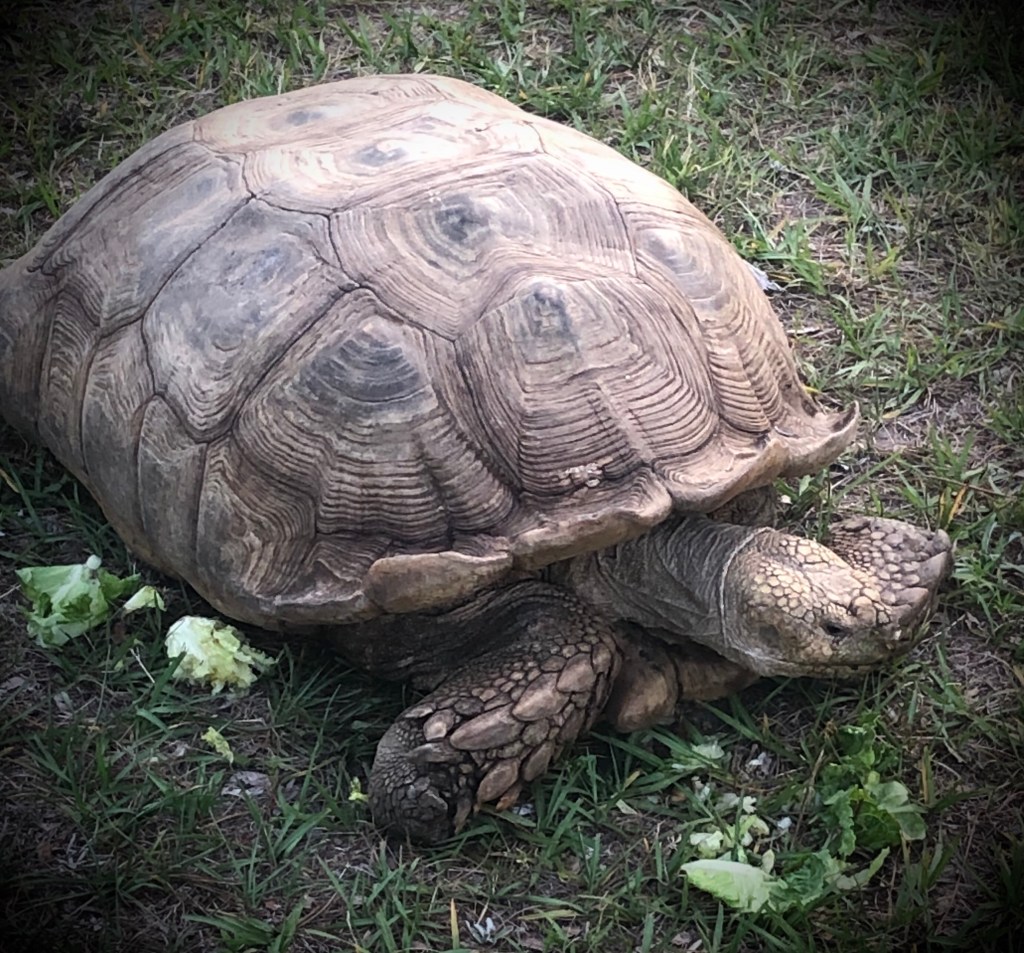
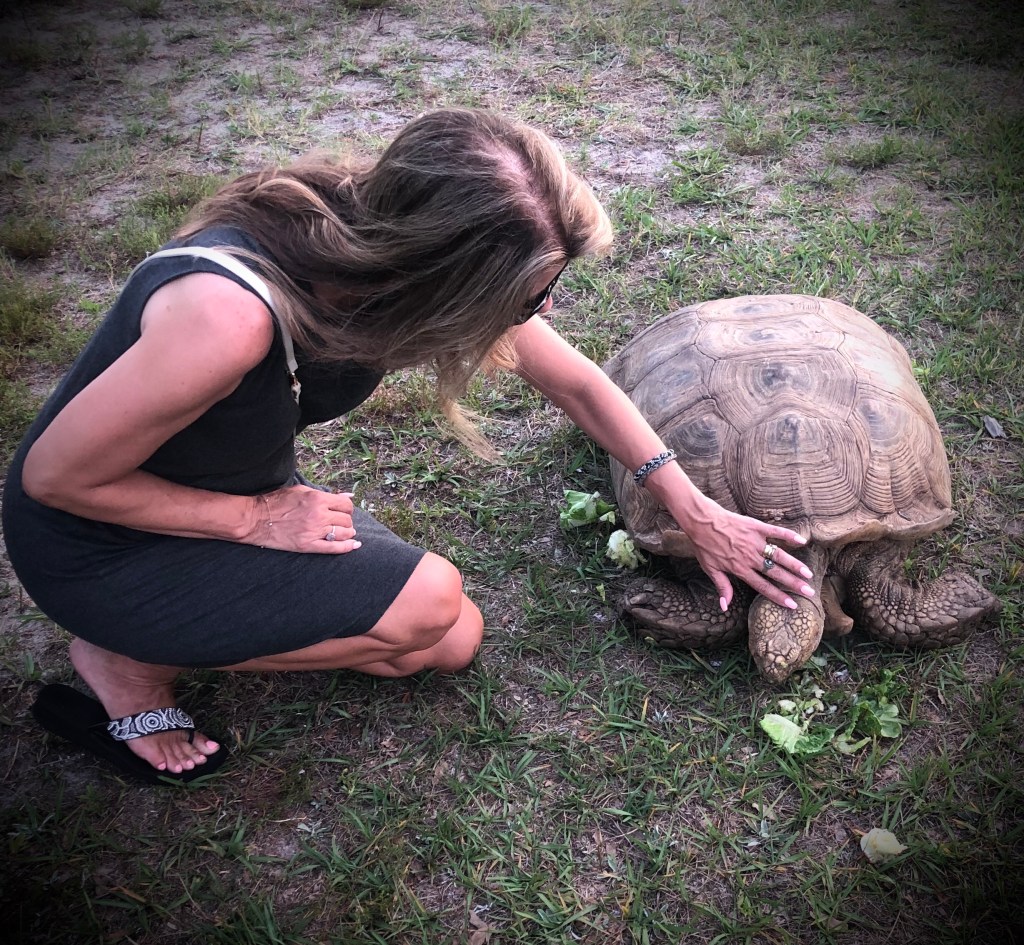
He is right. We did. We saw a giant tortoise on the side of the road while driving. We pulled off to encounter several tortoises owned by a man who had them out for visitors that day. Tortoises, we discovered, enjoy having their heads petted; they’ll stretch their necks out to you for more.

And I know, looking away from the tortoise on the screen to the intent expression on my husband’s face as he watches it, that the return of the tortoise in his memory means that what is good remains, even if hidden. It is never just gone. Despite the extent of trauma, pain, and suffering, endurance is possible, and healing more than possible.

Here’s to today. And the tortoise.

Last July. I could not have imagined the significance of this moment, one year later.

Life is what you bake it

“‎All the art of living lies in a fine mingling of letting go and holding on.”

-Henry Havelock Ellis

Today I share my golden shovel poem inspired by the Ellis quote, posted this week on Two Writing Teachers‘ Slice of Life Story Challenge along with these questions: What are the moments you’re holding onto? What are you letting go of today?

Here’s to the art of living, to holding on while letting go, to savoring moments spent with children, making every one count.

I hold to all
moments spent with children in the
holy art
of seeing the world with fresh eyes, of
spontaneous embracing, of living
each day in newness. I hold to freedom that lies
in forgiving, that paradoxical self-rising power in
letting go. I hold to a
continuous, necessary cobbling of fine
crystal moments, their pure sanguinity mingling
with, dulcifying, the blood-tart of
a sliced heart. Letting
go of despair, of my shortcomings, letting go
of yesterday, yet believing in tomorrow, letting go and
savoring today in a bluesy canton of confidence, holding
onto the children, always the children, just holding on.

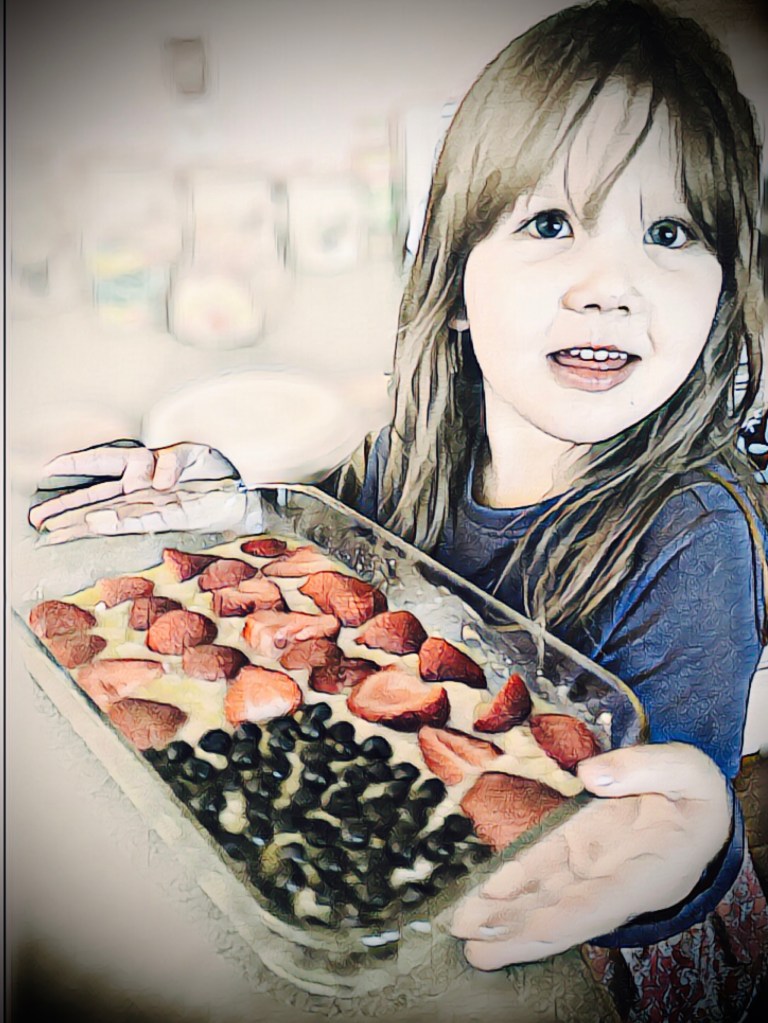
My granddaughter loves to bake. I love symbolism. Here’s our flag cobbler. “Canton” in the poem is the term for the flag’s blue square. Strawberries, heart-shaped, represent love; blueberries, youthfulness and confidence in the future. Bake it well.

The future is calling. I’m listening.

*******

Thanks also to Margaret Simon for hosting Poetry Friday. Visit her blog, Reflections on the Teche, for more poems and magnificent quotes in response to “What is poetry?”

Spiritual Journey Thursday: On golf and good-bye

An elegy.

Again I saw that under the sun the race is not to the swift, nor the battle to the strong, nor bread to the wise, nor riches to the intelligent, nor favor to those with knowledge, but time and chance happen to them all.

-Ecclesiastes 9:11

He was born nearly seventy years ago.

With cerebral palsy.

He would never be able to go up a flight of stairs, for both halves of his body wouldn’t work together.

He would partake of the Lord’s Supper at church with a special goblet reserved for him; the tiny communion cups required too much finesse.

His ever-present smile, however, set his entire face alight with a magnificent inner glow that never dimmed, his piercing blue eyes as bright as the unclouded summer sky.

Perhaps it began with his father, who chose to believe.

Who loved the game of golf and decided his son would, too.

And so he taught his boy.

As if there were no handicap.

Always make a total effort, even when the odds are against you.

-Arnold Palmer

It’s a game of precision, skill, and amazing grace.

The boy loved it.

He excelled at it.

He entered tournaments, won trophies.

A whole case full of them.

I have to believe in myself. I know what I can do, what I can achieve.

-Sergio Garcia

He liked people even though many could not understand his labored speech and, in their discomfiture, avoided him.

He could drive a car and on occasion came to visit the parsonage where my husband and I lived, when our children were small.

I learned he had a mischievous sense of humor, that his brain was, in fact, brilliant.

I wonder how many people understood this.

When I told him that I had to complete a required PE credit on my path to becoming a teacher, and that the only thing currently available was golf, and that I was already in danger of failing it due to my abysmal performance, he coached me.

Brought me pages of yellow legal paper covered with handwritten notes far clearer, finer, and consistent than my own, organized under this heading: The Fundamentals of Golf. Another heading: Form. Accompanied by his sketches of how to stand, how to hold the club, body position, dotted lines for movement…

I contemplated these golden pages with absolute awe.

He brought me newspaper clippings and magazine articles on women golfers. Hoping, perhaps, I’d love the sport. His sport. That I’d maybe rise, somehow, to the glimmering, glorious heights of it…

I never did. Never learned to love golf, not even a little.

The university instructor declared, in utter exasperation, that I looked like I was chopping wood.

But I got an A in the course.

Thanks to my coach.

Golf is the closest game to the game we call life. You get bad breaks from good shots; you get good breaks from bad shots—but you have to play it where it lies.

-Bobby Jones

He taught me much.

He wanted to be married, to have a family.

It didn’t happen.

“People don’t understand God,” he told me during one of his last parsonage visits. “But I understand God.”

I looked at his face, bright and earnest as ever, uncharacteristically serious, eyes fierce, blazing.

And I believed him.

As you walk down the fairway of life, you must smell the roses, for you only get to play one round.

-Ben Hogan

He lived with his mother, who cared for him until her illness and death, after which he went to an assisted living facility.

Parents gone, driving gone, golf gone. Seasons come and gone with slow decline, languish, only memories left of moments in the sun, walking the fairway, making your best shot.

With the arrival of COVID-19, even visitors were gone.

And now so is he.

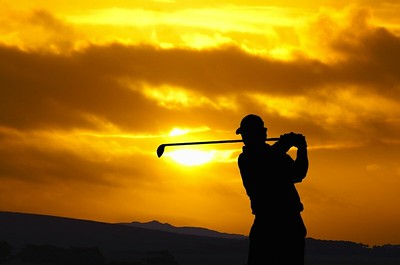
He could be considered a victim. Of the cerebral palsy that marked an existence of suffering from birth to his death by a pathogen that, in electron-microscope images, looks like a golf ball with extruding dimples.

Some might say his life wasn’t fair… what if his father thought this?

I say he was a conqueror.

More than a conqueror, never separated from the love of God.

He understood.

Only a few will be allowed at the memorial today.

Just know that I remember, old Friend. Farewell. You were, you remain, always, a gift from our Father.

Photo: Chris Urbanowicz. CC BY

*******

Special thanks to Carol Varsalona for hosting Spiritual Journey Thursday today at Beyond Literacy Link.

Dragonfly

New day. Opening window blinds to a flood of sunlight. Glimpse of pines, grass grown tall overnight (how??), weathered wooden deck railing, old white rocking chair, large cement pots draped in long ivy vines, new tendrils waving, geraniums blazing green and red, interspersed with spiky brown starbursts—oh, time to deadhead.

Within moments, scissors in hand, reaching for exposed bones of skeletal blooms, crisping, decaying, red petals shriveled, let loose, bled away, spent…

—Oh! Hello. Didn’t know you were here, Dragonfly.

Swapping the scissors for the phone-camera…

How close will you let me get?

—Surprisingly.

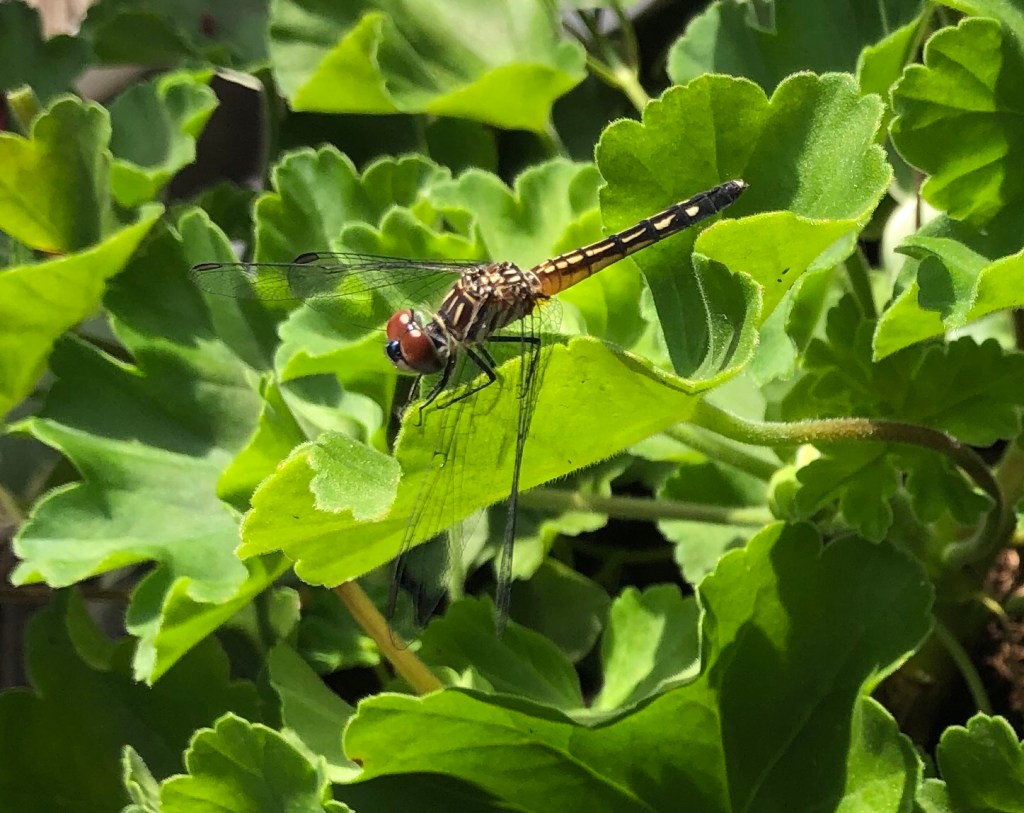
You’re small. Maybe two-and-a-half inches. Not like the first dragonflies I ever encountered in my grandmother’s yard when I was a child. Enormous things, terrifying… “They won’t hurt you! They eat mosquitoes”… good thing I didn’t know the old Scandinavian folktales then, how dragonflies come to weigh people’s souls, doling punishment on the bad, stitching children’s eyes closed for telling lies. Instead I learned to see the beautiful in the strange. Living sticks of metallic blue, iridescent gleams against the sunlit grass, darting any which way, impossibly. Air acrobats. —You’re very still. Not blue but yellow with bold black stripes. Clinging to a deadhead. Wonder why. Can’t cut the dying bloom away, not while you’re on it, Dragonfly. Won’t disturb you.

Returning later: You’re still present, resting on a green leaf.

Why should this feel so reassuring?

Maybe because the symbolism of a dragonfly is usually positive. You’re said to be bringers of light, restoring joy when it’s waning. Just as those bright geranium blooms are waning. Many new buds are already evident. Growth from within. The ability to change, transform, adapt—that is what we humans say about you dragonflies, as you begin life submerged in water (most of your lives being lived there) yet you eventually take to the air and learn to fly. By then the time remaining to you is short. Seems you make the most of it. Maybe you are harbingers of the soul. Not in judgment, but in self-realization, mental and emotional maturity, acceptance. A call to wisdom. A recurring word for me, of late.

Whatever motif lies written in iridescent ink on dragonfly wings, my grandmother knew it was good: You eat mosquitoes. You will not hurt me. You’re helpers. Protectors.

Sitting so still, amid decay juxtaposed with new growth… an inexplicable stab of delight, vibrant little messenger from nature, oblivious of your mission, perhaps, of nudging, not judging, human souls toward our own betterment … oh, and do you know? Could you know? In human lore… geraniums represent unexpected meetings.