On children and hope: Spiritual Journey Thursday

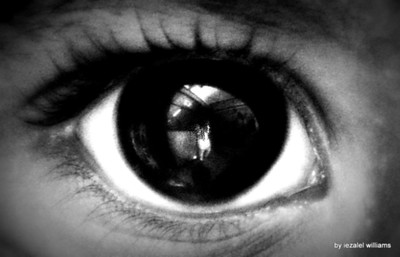
Photo: Child of Vision. Baby eye in black and white. Iezalel Williams. Public domain.

I’m a hopeful person. A hopeful writer. I created this blog in hopes that whomever encountered it would come away feeling uplifted. There’s already too much in the world pulling us down, every day. Burdens can pile until one hardly feels able to move. Grief is like this. Depression is like this. Oppression is like this.

Always, I am looking for a way, or writing my way, through to the better I believe is there. That, to me, is hope. Coming through. Knowing that possibility exists, sensing it, even when I cannot see exactly what it looks like. Eventually it reveals itself. And so I hope.

Yesterday I read that hope is not enough for one of humanity’s biggest burdens. Not COVID-19, which will eventually pass, although it will destroy many more of us before it is done. But we will be fighting diseases as long as we’re alive. No—hope is not enough, in itself, to remove the unbearable burden of racism.

As hopeful as I am, I know this is true.

Yesterday evening I watched a news segment featuring families talking to their children about racism. Black families, families with brown skin. A beautiful little girl—little girl—coached by her dad on how to respond if she should be singled out by those in law enforcement. Eyes wide, brow slightly knit in concentration, the child dutifully repeated everything her dad taught her on how to move, how to hold her hands … she covered it all. Dad paused in his feedback. He nodded. Then he said, quietly: “I did all that. And they still tased me.” The little girl’s face froze, then crumpled. Weeping, she climbed into her father’s lap, into his arms.

Another parent, a mother, said that as awful as it is to burden her children with this knowledge, it’s ultimately for their protection. They need to know.

A boy and another little girl from different families said they know it’s wrong for people to treat each other this way. “We are all human,” said the boy, a young teen. “It doesn’t matter what color skin anybody has,” said the girl (is she maybe six? seven?). “We should all be good to each other and love each other.”

Love one another.

The greatest spiritual journey we can ever take.

Loving means bearing each other’s burdens; it does not mean hoping the burdens go away. It means putting love into action, working to remove the burden, the systems, the structures that oppress others. The possibility is there; our hearts just have to be burdened enough, collectively, to usher it into reality.

For what’s the alternative? Hopelessness. The deadliest thing of all.

As I tried to sleep last night, so many images flooded my mind. Mostly children. Many I’ve known over the years. Black, brown, white faces, eyes full of light, little arms open wide, always ready to give away their love. How easily laughter, wonder, song, and joy come to them … my daughter-in-law texted that my granddaughter woke up singing yesterday morning, before she got out of bed: “Everyone is a star, and everyone has to see how strong and powerful, and everyone has to see how much I love you and how much I’ve grown.” She is four. The thought of anyone robbing the pureness of her heart is … inhuman. It should not happen to any child. Ever. But it does. It is the most terrible of dichotomies, that the big love we have for one another as children does not grow as we do. If it did, the world would be an entirely different place … and if we have any hope of it being better, it begins with acting now. Understanding now. Changing now. Breaking out of age-old racist, prejudiced molds that may have shaped us, now … or they remain intact, shaping those who follow.

I remembered a thing last night, as I finally fell asleep only to dream about children (babies, in fact, standing in a crib, laughing because they’d just learned to pull themselves up). Somewhere there is a photo of me in a crib with my doll, Suzy. So long ago. I saw her in the store while shopping with my grandmother. Beautiful doll. What was it about Suzy that I loved? Her dark eyes, like my own? Black hair and skin, not like mine? I don’t even remember the shopping trip; my Grannie told me years later how I asked for that doll. So she, a white woman from the rural South, bought it for me—in the late 1960s.

Every day, every action, great and small, every word … colors the picture of society that the children see.

That’s us, reflected in their eyes.

In kindergarten I drew a family picture that made my mother angry: “Why did you have to draw me with a cigarette?”

I blinked, and couldn’t respond: Because I always see you smoking.

Children.

On my mind when I go to bed.
On my mind when I wake.
Not just my own
or ones I’ve known.

Children.

So full of love.
So full of song.
So free with their giving
in everyday living.

Children.

We hand them the crayons.
Blank sheets of paper.

And set little hearts so earnestly
to coloring the world they see.

Children.

Is there a crayon called Hope?
To color Tomorrow?

And what will that picture be
if they copy you and me?

My little granddaughter once explained sadness this way: “I was crying with my blue eyes.”

I know, Baby. Same as I cry with my brown ones.

Everyone is a star, and everyone has to see how strong and powerful … let us all keep loving. And growing. And working together to help and heal. Daily finding the way.

That, I’d say, is what hope really looks like.
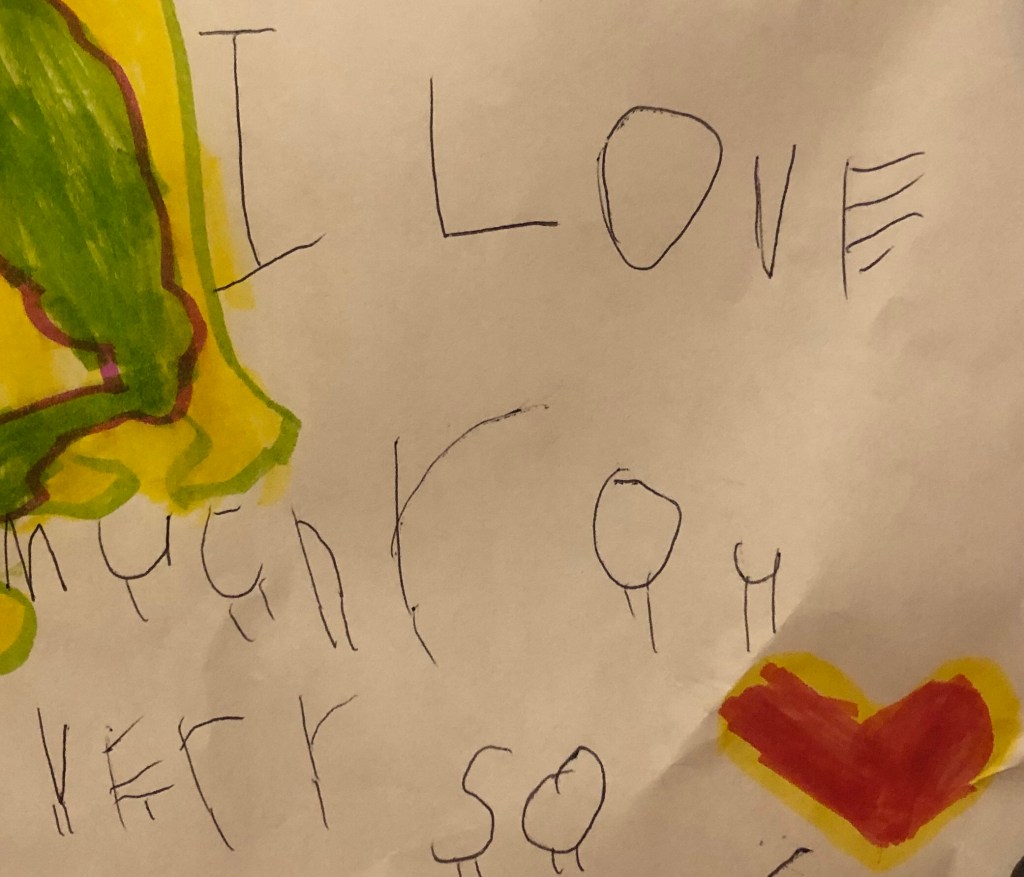
From my granddaughter’s heart: I love you so very much.

Special thanks to Ruth Hersey for hosting Spiritual Journey Thursday, and to all my friends and sojourners. You are welcome to continue the journey by reading their thoughts on the theme of Hope here.
Repurposed

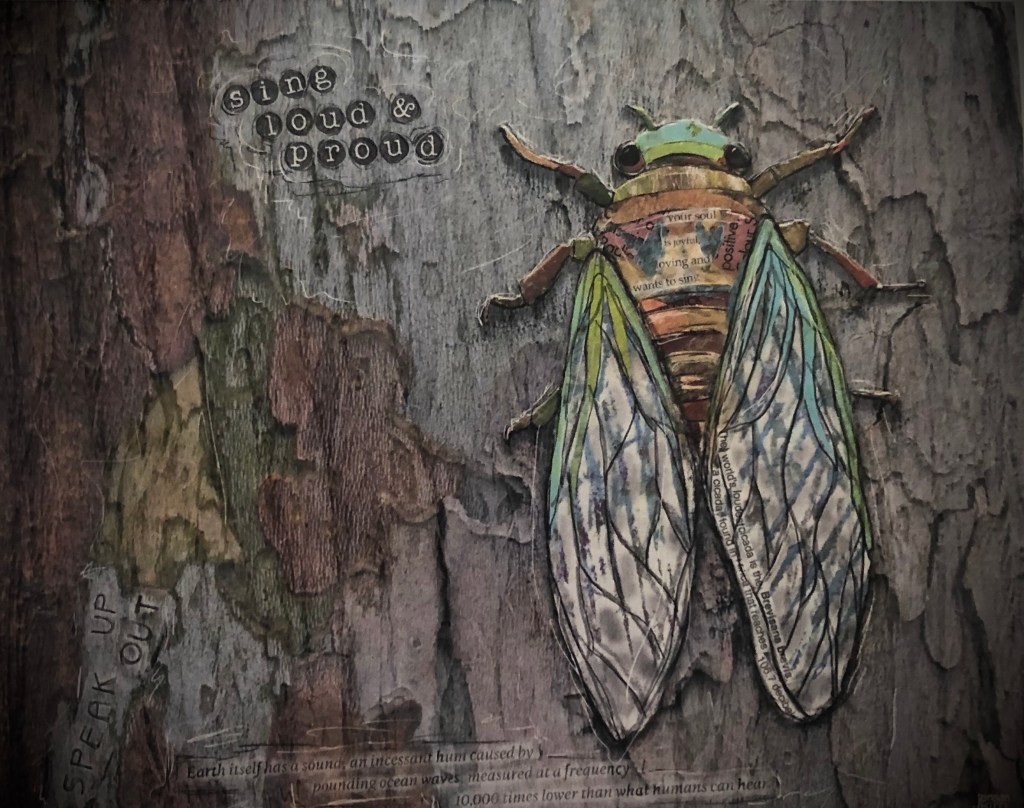
“Speak Up” mixed media collage. Jordan Kim, 2019.

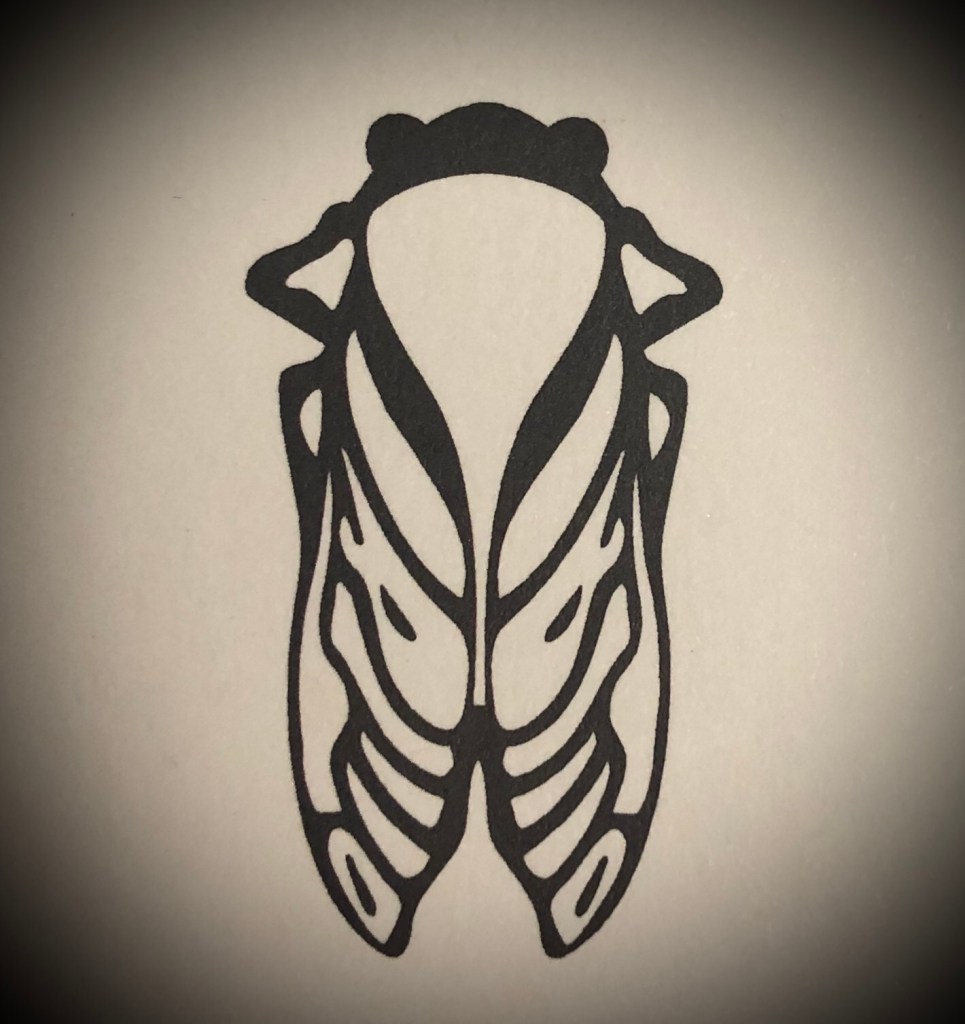
A friend who knows of my strange love for the loud, jarring buzz of cicadas presented me with this card for my birthday. Fashioned from repurposed material, these snippets, chosen with artistic precision and care, strike deep…

Sing loud & proud

your soul
is joyful
loving and
wants to sing

positive

The world’s loudest cicada is the Brevisana brevis,
a cicada found in Africa that reaches 106.7 decibels

Earth itself has a sound, an incessant hum
caused by pounding ocean waves
measured at a frequency 10,000 times lower
than what humans can hear

Speak up
out

For now is the time of cicadas; some of them, sleeping underground for seventeen years, are due to rise.

And sing.

Yesterday, when the sun was brightest, I walked and walked the path around the graveyard of a country church, listening for the first strains.

—Silence.

No cicadas.

Seems they are late. I wonder why.

I thought about their wings, how the sectional lines running through the lower portion of these long, diaphanous structures form the letter W or P. It is said that these are omens for War or Peace.

—Folklore.

Unless Nature is a prophet.

Whatever pattern lies in the veins of their wings, or however it’s perceived, the cicada’s song is always one of life. Of survival. It is individual. It is collective. It is precious.

Most people call it cacophony, a harsh, deafening, discordant noise … not hearing the song for what it is. Not recognizing it the way cicadas do. We are not cicadas.

Yet there’s something of us, of all living things, in the sound. A song not heard with ears but with the heart, that ceaseless hum of our own brief journey from the womb to the ground. A song of earth, ocean, dust of the stars, for we are repurposed atoms of these; we carry them all, and each other, within us. Can we even hear our own song, any more than we can know our own heart, for what it really is? How can we even think we know someone else’s?

Until it becomes a collective cry of the heart.

In words

Speak up
out

in musicality

your soul
is joyful
loving and
wants to sing

even in sorrow, loss, grief, despair

even in fear, rage, hurt

especially in overcoming, healing,

rising, at long last

to greet the season of change.

Today, Two Writing Teachers shared words from Toni Morrison: This is precisely the time when artists go to work. There is no time for despair, no place for self-pity, no need for silence, no room for fear. We speak, we write, we do language. That is how civilizations heal. I know the world is bruised and bleeding, and though it is important not to ignore the pain, it is also critical to refuse to succumb to its malevolence. Like failure, chaos contains information that can lead to knowledgeeven wisdom. Like art.

Like that of Jordan Kim, who created this cicada collage. Her mission: To inspire others to honor our connection to the natural world and to each other.

Let it be our repurposed song, fashioned from the fragments of our hearts. Let it be positive. Let the Earth ring with it.

Sing loud & proud.

Sidewalk surprise

Sunny May afternoon. Warm, lazy. Neighborhood moderately quiet but for the occasional baby-like cry of young goats from a pen hidden in a snatch of mixed-woods across the street. They sound like little kids … which is exactly what they ARE …

Absolutely nothing is happening.

I will check the mail.

Again.

Patches of thick, furry moss nestled in the wide brick steps of the porch. Clean fragrance of mulch from the empty beds along the house. Sudden coolness on rounding the corner, where the sun casts the shadow of the house across the sidewalk—

Snake.

Right in front of me, in my immediate path. If I hadn’t been looking down …

Two steps backward.

I am not a fan of snakes.

It’s little. The second of its kind I’ve seen. The first one appeared on this sidewalk months ago, belly-up, dead, when the old boxwoods were pulled out. I needed to know what kind of snake it was, so I researched it: Smooth earth snake. Lives in woodsy debris, usually underground (technical term: “fossorial”). Nonpoisonous. Very shy.

—This one isn’t moving at all. Is it dead, too?

—Do I really want to know?

I do.

Two steps forward, leaning over as far as I dare.

Almost imperceptibly, its sides rhythmically expand and contract.

It is breathing.

I have never seen a snake breathing.

But I don’t usually get close enough to determine such.

I wonder if it is scared of me.

I won’t harm it. This is a living thing, lying here on my sidewalk, breathing rather hard for a snake, I think.

It won’t harm me.

We’re just occupying the same shadow, breathing the same air.

I can see a dark lump through its translucent beige-gray skin, about halfway through its body. Is that part of the snake? Or something it ate?

Then …

I don’t expect anyone to believe this. I’m not completely sure that I do.

I hesitate to say. It sounds crazy.

But…

A little light flickers inside the snake.

Just for a second or two.

A fluid-like glimmering, mid-snake, very near that dark lump.

—Am I dreaming?

I stare, unblinking, not sure I trust my eyes or my brain. Have I ever even heard of such a thing?

And then, one more glimmering of light, faint, in the tail region.

I did see it.

Twice.

Is it just a reflective shimmer of sunlight?

But this snake lies wholly in the shadow of the house; the sun’s not shining on anything close by.

A reflection of something I am wearing, then?

But I am wearing no rings, no glittery flip flops. Only one fine, rose-gold chain on my right arm that I never remove (my son gave it to me), and it’s wholly in the shadow, too. Not catching the sunlight. Not casting it.

Furthermore, the glimmer came from inside the snake. It radiated only within the confines of its motionless body. Not on the sidewalk. Nowhere else.

—A trick of my eyes, then.

But my optometrist has never seen anything amiss with my eyes. Got a fabulous report at my last checkup in December: “No change in your vision. Everything looks great. See you next year!”

A migraine for me begins as a spot of light in my eyes; it grows until I can only see the outer edges of things.

But I don’t get migraines often, and am not getting one now.

Nor, to my knowledge, have I ever had a hallucination.

—I shall need proof, then. A picture.

My phone is in the house.

Stepping backward, I ease to the corner of the house, out of sight of the snake (well, at least until it’s out of my sight. Snakes don’t see well). I make a run for the porch steps, the front door, the bedroom where my phone is charging.

The snake has not moved by the time I return.

I wait for the longest time, phone poised, cued to video, but the glimmering doesn’t come again. I record a few seconds of the snake breathing. Zoomed, of course, from a comfortable distance.

Absolutely nothing is happening.

So I walk way around in the grass, giving the snake a wide berth. Short jaunt down the driveway to the mailbox, retrieving uninteresting, unimportant ephemera.

Back up the driveway to the sidewalk …

—The snake is gone.

Where?

—There in the mulch, just ahead of where it had been.

I try for several minutes more to capture some glowing, any glowing, on video, but the phenomenon is over. Whatever caused it has apparently conspired not to do so again, certainly not for one wishful human.

I do, however, get a bit of video of the snake’s tiny black tongue flickering — from a safe and comfortable distance.

I wonder if any neighbors have spotted me, if they’re wondering what in the heck I am doing, hunched over for so long here in my yard. But there’s nothing really stirring outside except those goats in their secluded pen, a meandering bee, birds in the distance, a random, rusty cock-a-doodle-doo from the rooster who lives up the street, as, in his mind, anything with ears to hear needs reminding he’s king of all times of day, not just the morning.

I have troubled this shy little snake enough. Time to let it be. Live and let live.

Trudging up the steps to my porch, wonder and hesitation stir my soul: I will write about this. I think. Or should I? How can one explain the inexplicable? How can one know what is really real? When “I saw it with my own eyes” isn’t exactly enough to drive away doubt? What about logic: Have earth snakes ever been known to glow? Is there a plausible scientific explanation? Bioluminescence is a real thing. In some eels, for example. Fireflies. Glow worms. Perhaps my snake ate one of these larvae—? Might that be the dark lump in its midsection? Perhaps some released phosphorescence traveled through its body, which is just transparent enough to reveal it. Or maybe this is a defense mechanism? A means of survival for a thing that usually lives underground? Did it ingest some compound in the soil that might give off a glow? Or did this snake simply, literally absorb some sunlight?

All I know is that I saw a light glimmering inside a rather translucent little earth snake. Twice. And that I am unaccustomed to seeing random light running along anything in shadows.

Not physically, anyway. Metaphorically I see light in the shadows all the time.

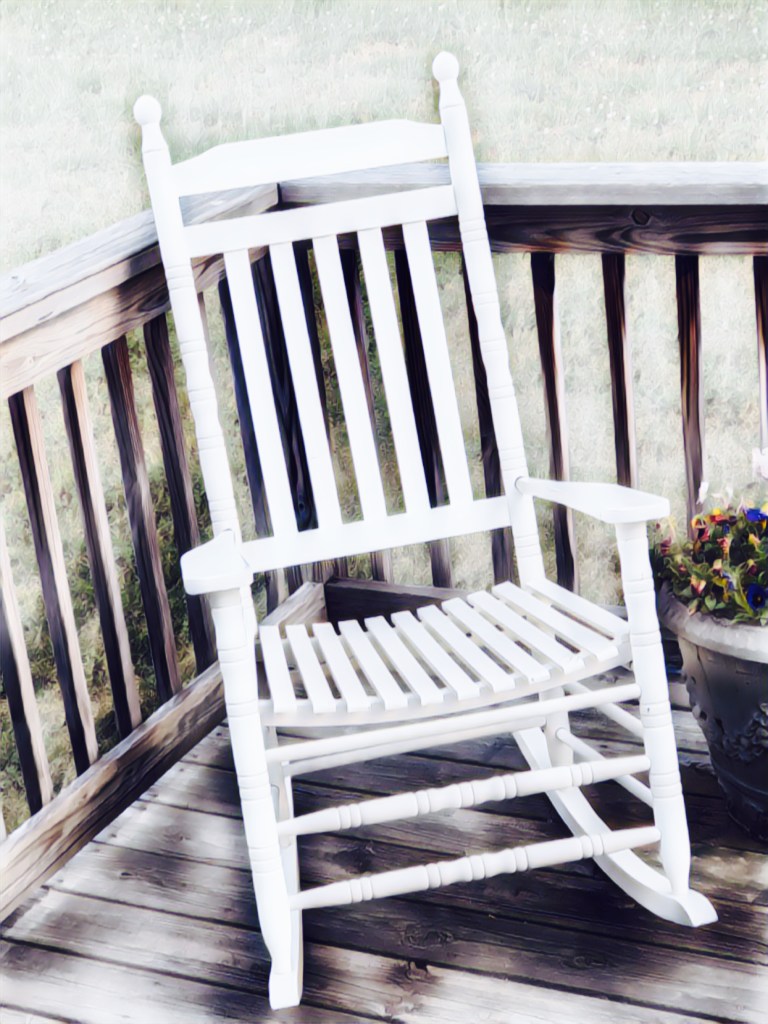
I sit rocking in my new porch chair. My thoughts sway back and forth, rolling over and over and over like paper in the wind … and I realize that my questioning awe is tinged, the tiniest bit, with something like sadness: I am not likely to ever see this again, let alone prove that I saw it. Some things are once-in-a-lifetime occurrences, one-shot-only golden glimpses, like the eagle I saw last spring, sitting huge and majestic by the side of the road. Not that I want to encounter another snake (any more, I am sure, than one wants to encounter me). No. Still not a fan. Not aiming to be a herpetologist. Although I could contact one and ask if earth snakes ever glow … what’s the risk, other than skepticism and dismissiveness?

I just want to know why. That is all. And am having to accept that I likely never will.

That glimmering … if nothing else, it means Aliveness. The little snake is alive. I am alive. For one moment, maybe, the life force acknowledged and honored itself …

For all I know, the snake saw the same glimmer in me.

Maybe.

The rocker

First, the light.

More of it each day. Driving the darkness away with its gentle appearing, rousing bright-eyed birds earlier and earlier, which respond in uninhibited chirps, songs, chatter. New day new day new day day day …

It’s a beautiful time to be alive. To be reborn. To mark having been born.

“What do you want for your birthday?” asked my husband.

“New rocking chairs.”

I’d been thinking on it.

The old chairs on the front porch are cracked, broken, portions held in place with wood glue. Time for them to go. Time for new ones. I want to sit outside in the light, in the breeze, even though it remains oddly chilly, to hear the birds, to see Papa Finch alight on the roof. I hear him before I see him; I wonder what his loud twitter means but I always answer, “Hi Finch!” Then there he is, tiny brown creature with his chest faintly dusted red, sitting high above the garage against the cloudless blue sky, looking directly at me. The porch is part of his domain. Sometimes from inside the house I hear his loud chirp; looking through the window, I find him sitting on the white porch rail. I suspect he’s eyeing the front door wreath for his bride’s nest. Although I took the wreath down for the winter, I’d left the old nest from last year attached. With the coming of March, and with great care, I put the faded, bird-loved wreath back in hopes that the nest would be reused. It hasn’t. So I removed it to make way for new.

Like my rocking chairs.

When my granddaughter visits now, it’s only on the front steps for a while, until the coronavirus social distancing expires. She comes with eyes full of spring light, as blue as the sky above my finch, who never fails to join our gathering and to add his voice to the conversation.

“That’s a loud bird!” says my granddaughter, age four.

“He is. Look, there he is, on the roof. Hi, Finch!”

And in these bright little moments, I revel in the poetry of life, that this bird (I wonder if he was one of the previous hatchlings from my wreath? ) should be a mainstay. Especially as my granddaughter’s name is Scout. Yes, from To Kill a Mockingbird. Whose last name was … Finch.

I want sturdy chairs on the porch, for resting. As a place to quiet my mind with the greenness of the grass in the yard and over where the path leads round the pond through greener trees. He maketh me to lie down in green pastures: he leadeth me beside the still waters. He restoreth my soul … To share with my granddaughter as she grows, to have coffee with my husband who almost didn’t live to see another spring. To celebrate living, being, enduring. To converse with generations of finches who’ve chosen to make my home theirs. To know, as evening falls, and I must go in, that I savored the gifts of that day to their fullest, their deepest.

My husband bought the chairs.

“We’ll put the old ones on the back deck,” he told me.

I wanted to say Why, they’re held together with glue, they’ll last maybe three days out there with no shelter, let’s just throw them away. But I didn’t. He wants to keep them, for some reason …

Truth is, the old chairs look kind of nice on the back deck by the flowerpots. For ever how long they last out there.

It was the rocker nearest the kitchen that made me realize.

Thump thump. Thump thump.

Dennis the dachshund woke from his sleep in a patch of sun-stripes at the back door. Ears perked.

“What is that?” I asked him from my chair at the kitchen table, where I was typing on the laptop.

Rising, looking through the window.

The rocker, rocking all by itself.

Thump thump. Thump thump.

The other rocker opposite sat motionless.

The wind, I thought.

Second thought: Why this rocker and not the other?

Third thought: Is the windor something — IN that chair?

It reminded me that I’ve always wanted to write a collection of ghost stories. An incongruous thought on such a bright, gold-green day.

Then.

How have I missed it?

For all the weeks—months—of the wind’s extended gusting and moaning under the eaves, unlike I’ve ever heard it before, I failed to notice it had stopped. All through the COVID crisis it’s been a grieved entity, swirling around my house in desperation, haunting my spirit with its voice, agitating the tall pines.

It’s still here, as my rocking chair can attest. But subdued.

Perhaps the wind has decided to sit a spell and rest. Perhaps the rocker was an invitation.

I am not sure we are friendly, yet, the wind and I, but I will offer it hospitality as long as it’s a benevolent guest. Is it taking up residence here, like the finches?

Perhaps I will take my coffee out there one afternoon and ask—begging the wind’s pardon, of course—why it cried so long and so hard.

But as I have no wish to stir anything up, maybe I’ll just let the wind rock to its heart’s content, in peace.

Earth song of life: cicadas

My love for the sound of cicadas is a recurring motif in my writing.

It stems from childhood summers spent with my grandparents in the country, the most idyllic days of my existence.

In thinking of Earth Day, my first inclination is to write on In the sweat of thy face shalt thou eat bread, till thou return unto the ground; for out of it wast thou taken: for dust thou art, and unto dust shalt thou return.

That verse, Genesis 3:19 in the King James, conjures images from At Home: A Short History of Private Life. Here’s Bill Bryson’s observations of country churchyards in England where churches seem to be sinking into the ground: Think about it. A country parish like this has an average of 250 people in it, which translates into roughly a thousand adults deaths per century, plus a few thousand more poor souls who didn’t make it to maturity. Multiply that by the number of centuries that the church has been here and you can see that what you have here is not eighty or a hundred burials but probably something more on the order of, say, twenty thousand … that’s a lot of mass, needless to say. It’s why the ground has risen three feet.

In other words … we are the earth.

Times being the pandemic they are, death surrounds us. April 22 also marks the anniversary of the sudden passing of my husband’s father at the age of fifty-four. My husband was just twelve.

But I do not wish to turn Earth Day into a death knell.

I write about cicadas today because they lie in the earth and emerge—some after seventeen years—to sing their song of life.

In the thick woods and byways of North Carolina, from May through September, it’s a deafening cacophony; but as beauty is in the eye of the beholder, so there is beauty in the ear of the listener.

In honor of Earth Day, a “found poem,” of sorts, from a former blog post I wrote, entitled Cicada Rhythms:

The song of cicadas
calls to me
from long ago
from sultry summers
in the country
where narrow dirt roads
keep an ominous forest
from encroaching
on rustic homeplaces
from tiny cemeteries
where baby after baby
is buried
under white monuments
adorned with lambs
at the old church
just around the bend.
The song is of the ages
of the rising and falling
of generations
all of us coming and going
in our time
a song reverberating
from oaks, pines,
cypresses
across canals
teeming with frogs
and turtles
to white-tailed deer
standing along the fields
at dusk.
It is the bright song
of the sun
of hope
of continuity.
It is the dark song
of the night
oddly comforting—
something out in the blackness
is vibrant, alive
maybe keeping watch
while children
drift off to sleep.
It is the sound
of safety
of stability
of belonging.
Calling, calling
the crescendo mirrors
the rhythm of life
brimming with promise
echoing eternity.
When I hear it
I am a child again
no matter
how many summers
have come and gone.
Every spring as I mark
another year of existence
I listen
for the first rattle.
You’re back! my heart sings.
Ah, but we were here all along
they might say
if cicadas had words.
There’s a lot of living
and loving
yet to do.
You have today.
Carry on.

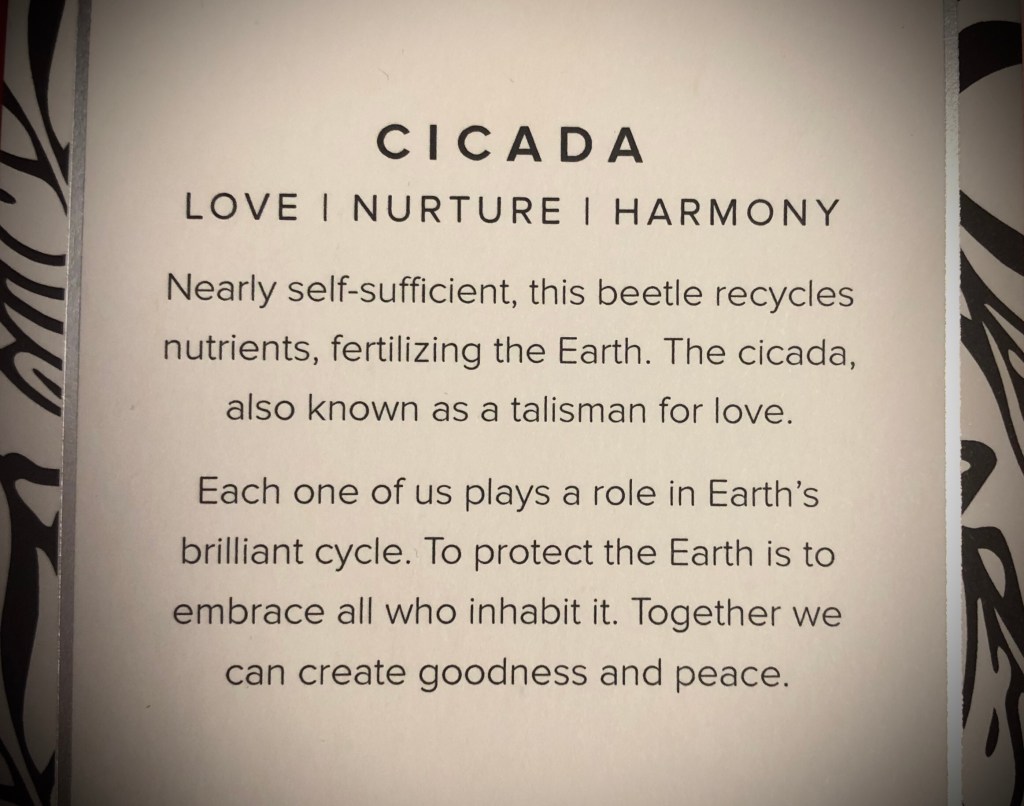
The cicada isn’t exactly a beetle, but a “true bug.”
They symbolize renewal, rebirth, transformation, change.
They can disappear for many years to return en masse.
Their buzzing call is made by the males, who begin singing soon after emergence.

Of the earth

Midway through lunch, the din in the cafeteria is too much. The new boy brings his tray to where I’m standing:

Can I sit here at this table?”

It’s an empty table, save for my phone, closed laptop, electronic entry key, all the things I carried with me because I didn’t have time to put them in my room before this daily duty.

I consider his brown eyes, looking up at me. Pleading.

I consider his boisterous classmates and the seat he left behind.

“Are you moving yourself here because you feel it’s a safer place for you to be right now?” I ask.

He nods.

“All right. That seems like a good choice.”

His face breaks into a grin. He sits.

And the questions start: What kind of phone is that? Do you have a dog? Do you like Doritos? What kind do you like best? What’s your favorite color? Where are you from? How old are you, twenty-nine? Forty? Older?

How old are YOU? Eight? Did you move over just here to ask me all these questions?

He just smiles and takes a swig of his strawberry milk.

Then:

“Mrs. Haley, what’s your favorite snake?”

“What? My favorite SNAKE, did you say? Yikes—I don’t …”

Of course I am about to say I don’t like any snake whatsoever, but something in his expression stops me. “Um, do you like snakes?”

He nods. “I like pythons.”

Heavens. I refrain from telling him about a man I saw on the news this week. He happened to find a boa constrictor in his couch and had no idea how it got there or from whence it came.

He’s watching my face. A keen observer, this child. He’s waiting for my response.

I could say I like green snakes, but I don’t. I could say I like black snakes because my granddaddy said they eat rats and mice, so don’t ever kill a black snake. I think about the copperheads Granddaddy killed on the dirt road where his barefoot grandchildren ran in the summertime. I think about the coiled baby water moccasin I found in front of the kitchen cabinets when my first son was just three, and I how I was about to pick it up, thinking it was an odd piece of rope . . . until I almost touched it. And saw its eyes. Or that time I was cleaning the attic and discovered a complete shed snakeskin; I nearly knocked a whole new exit in my ceiling, trying to scramble out of there . . .

I DO NOT LIKE SNAKES.

But this boy with the strawberry mustache is waiting. His eyes are shining.

And then I recall a little creature lying across my sidewalk a couple of weeks ago. So little that I thought it to be a large worm at first; it was the same pale tan. I noted a faint pattern of scales on it. Could it be a snake? I looked it up. It was. “Smooth earth snake.” They are shy; they live mostly in the dirt around trees and bushes. I’d just had all the old bushes around my house pulled up. Apparently this little fossorial serpent was disturbed, or even damaged, as the equipment pulled away deep, tangled roots. For whatever reason, it crawled out in the open only to die there on the sidewalk. Who knows, maybe it was just trying to get to safety.

—Poor little snake. The only one I’ve ever mourned.

I look at the boy. He’s new here. He’s been uprooted.

Perhaps he did come to this table for safety, after all.

Even as I begin to speak, I think of earth and geosmin, the organic element in soil that humans can smell to something like the trillionth degree (we can detect one tablespoon in three Olympic-size swimming pools) and why that should be, unless it’s because we were meant to live close to the earth, that we came from the earth, and to the earth we will return. A curious kinship with that little snake. With all living things.

“My favorite snake is the earth snake. It’s very small. Have you heard of it?”

He wants to see a picture, so I do a search on my phone just as it’s time for classes to clean up and go outside for recess. To run, to play, to breathe the fresh air, to enjoy being children . . . how well I remember.

The silence in the cafeteria now is too much.

Photo: Smooth Earthsnake. Cygnus921. CC-BY

Reclamation

I love the stillness of the morning, before the dawn, which is presently hours away. I love the silence, the holy hush preceding the coming of the sun. My family, even the new puppy, slumbers on. If I have a word for these moments, it’s expectancy. If I were to step outside now I might hear footsteps in the pine straw beneath trees that border my back fence; I will not yet be able to see which creature is moving there in the dark. A white-tailed deer, perhaps, or a squirrel, which makes an astonishing amount of noise in the straw, much more more than larger creatures. Two mornings ago, in the first light, I glimpsed a huge gray rabbit running to and fro just beyond the fence. And if I wait long enough, I’ll hear my neighbor’s rooster crow. Any time now. He doesn’t wait for actual light that I can see. He’ll proclaim the new day, the continuum of daily living, before it’s set in motion. He’ll stir the goats in various pens throughout the neighborhood (not to be expected in a little subdivision—whatever happened to restrictive covenants?) and their loud chorus of wild baas will back up the rooster’s solo.

It’s life waking up again, claiming the day for its own.

On this new day, of this new year, this new decade, I think about life. The trouble with life, I once read, is that it’s so daily. Not merely being alive but trying to accomplish all that must be (or that we think must be) accomplished in this day, this week, this month … last year I learned a lesson about life on hiatus. When the life of someone you love hangs in the balance, all your best-laid plans disintegrate. Poof.

Moving forward becomes an act of will, a revised determination to do what you can, what’s most important, for that given day. Recovering ground, inch by precious inch.

Reclamation.

Whether life is suspended, or stagnant, or spinning out of control, we still have choices. Maybe it’s resting more. Writing more. Reading more, singing more. Praying more. Maybe it’s seeking help. Maybe it’s restoring relationships, or releasing them. Or creating something beautiful, meaningful. What we want to do and what we’re actually able to do in a day, a week, a month, a year, may be vastly different, but reclamation doesn’t happen all at once. It happens in determined, consistent bits by bits. It is deliberate and intentional.

Once I wished for something like parallel lives, a cloning of sorts, with one of me staying home to write all day, one of me getting everything done in the house the way I want it, and another me going to work. I am exacting of myself; I do a thing, I want to do it well, and so I am easily paralyzed by my own standards.

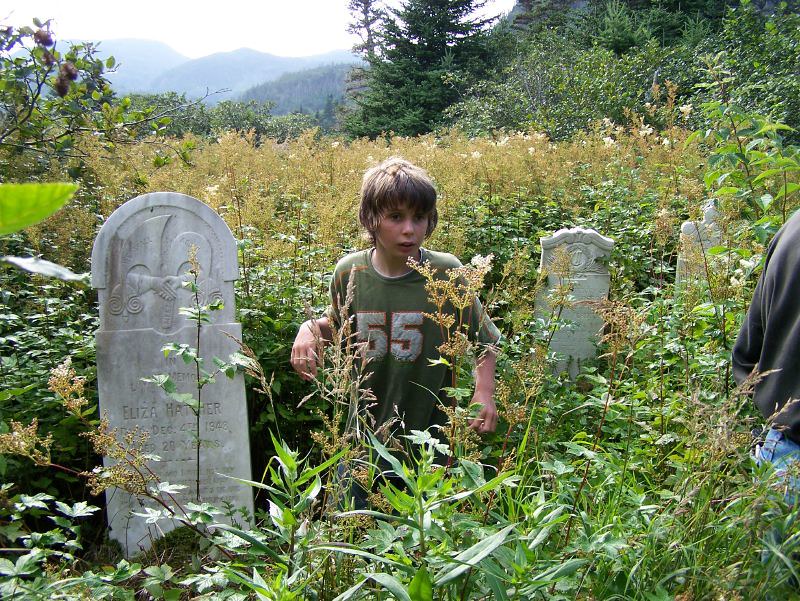
I think of the sea, rolling on and on, its billows and rhythms, its continuity, its fluidity. I contemplate its healing properties, how it is designed to cleanse itself. I look at the photo I included at the top of this post, how, writes the photographer, the cemetery “is being reclaimed by the forest as alders, birch, spruce, fir and a couple apple trees crowd out the dozen or so headstones that stand here.” It’s in Newfoundland and that symbolism strikes right at my writer-heart, new found land.

That’s what reclamation is. Taking back solid ground, or creating new land, from what would submerge it, overtake it. Inch by precious inch, bit by bit. Yesterday I heard a sportscaster speak of Ron Rivera’s move from the Carolina Panthers to the Washington Redskins: “Coach Rivera has been part of a reclamation project before.” It took him four years to take the failing Panthers to the Super Bowl. He’s already begun the work for the Redskins, before he ever gets there … like my rooster here, calling to the dawn before it appears.

It’s hard daily work, reclamation. Progress is slow to see for a time.

But I’ve started.

I pulled the weeds out of the planters on my back deck and planted pansies, a bright bit of welcome on these cold mornings when I take the new puppy out. The puppy is himself an act of reclamation, an affirmation of love my family has always had for dogs (which, I’ve said before, have souls; purer than my own, there in those eyes). He marks a moving forward.

One step at a time, I’ll reclaim the house by many little needed repairs and coats of paint. Patience, endurance …

My writing, my writing. How many stories lay unfinished? Not begun? If I can learn to live nonlinear, to live as fluid as the sea, then anywhere is an entry point. Whenever, wherever, just plunge. The time necessary for writing will come if I just begin the reclamation.

Work. I write this paragraph not only for myself, but for other educators and instructional coaches struggling for clarity and a foothold in an ever-changing, shifting field: Beware the great chasm between theory and application, between programs that are packaged as “the magic bullet” and cost a pretty penny but fail to deliver. Be aware of the great gulf between data that’s visible and the stories of human children, not so visible. Push back all that encroaches on growing the children, that which would inhibit their love of learning. Reclaim that for them. Know them and their families and their stories. Know your colleagues and their stories. Write together, all of you; in this day of restorative practices and social-emotional wellness, why are people not writing more in such settings? We reclaim the very heart of our humanity when we share our stories.

—It is light now. A new day is here; I hear life stirring all around. Forget those restrictive covenants.

Let the reclamation begin.

Photo: Reclamation. Derrick Mercer. CC BY-SA

Joy

Yesterday I noted this reflection on social media: “All I did in 2019 was survive it.”

Why did I think of the pool of Bethesda and the legend of the angel “troubling the waters“? Was it the sense of just enduring? The lack of hope?

The words stirred my soul on multiple levels.

I can relate to surviving. In 2019, my husband almost didn’t. There is no control in the valley of the shadow of death, only submission. Each long, dark day must be endured; my boys and I waited for the ray of hope.

And the healing came.

It was a year of survival, of change, of pain and loss, of life being altered. But then, joy: On the heels of his father’s recovery, our oldest married, went into the ministry, became a father. This Christmas, our family is bigger. This Christmas, we have so much more life to celebrate. This Christmas, inside the typical clamor, is a deep pocket of stillness. It is like the branches of our tree, frosted silver, catching the light, glimmering with tiny iridescent fire.

We survived, but more importantly, we live. We love. There’s always more love to give, another ray of light just ahead in the darkness, another healing after the troubling of the waters.

Life and hope renewed. Is that not the message of Christmas?

On that note . . . those of you who know this blog will know that 2019 was the first year we were “dogless” for a while.

That aching void is now filled.

I shall leave you with wishes for a holiday in your heart every day that you live and three pounds of sheer joy.

Merry Christmas, loves.

Welcome home, Dennis

So this is Christmas

My boy Cadillac Man and his Dennis nestled all snug in their bed

Sick Ada, part II


About a month ago I shared this idea for a story about a little girl who loves cicadas and who’s having a hard time dealing with her parents’ separation. The girl’s name is Ada and she becomes seriously ill . . . hence the title, “Sick Ada,” cicada . . .

The story’s been gestating for a while as there were so many things to flesh out: How old is Ada? Why are her parents separated? Who left, Mom or Dad? Why? What’s the deal with her cicada fascination? How does she get sick? Most of all: Where should the story begin?

I considered writing this scene first: Near the end of the story, Ada goes into the hospital, sick enough that her recovery hangs in the balance. It is winter, when cicadas don’t sing, but she hears the heater rattling in her hospital room and believes it to be cicadas. She decides she doesn’t mind dying as long she can hear them . . .

But I am not starting there, and Ada will not die because my friend Kathleen interceded, pleading for the little girl’s life.

Amid much encouragement and a few thinly-veiled threats (thanks, Friends!), here’s the first draft opening scene.

*******

The darkness began to change.

Strips of light glimmered between the blinds until a thin finger of sunshine pushed through, reaching across Ada’s rumpled bed to caress her cheek.

At its warm touch, she opened her eyes.

Morning.

Oh!

Ada sat straight up in bed.

It’s my birthday! I am nine.

She felt strangely old.

Sitting there in the grayness, Ada knew two certainties. Today the cicadas would start singing. They always started singing on her birthday; Daddy said it was their song of celebration for her coming into the world. He would sing to her, too, only this time it would be over the phone. He promised to call today. Next week when school was finally out, Mama would drive Ada to the airport, put her on a plane, and Daddy would be there to meet her when the plane landed. It would be her first flight.

Ada wondered if cicadas sang on the other side of the country.

The other certainty was that she wouldn’t get her biggest birthday wish of all, that Daddy would come home to stay.

*******

So, Friends, that’s how Ada’s story begins for now, rough as it is.

For the record: The cicada is an ancient symbol of change or transformation and the name “Ada” just so happens to mean “noble.”

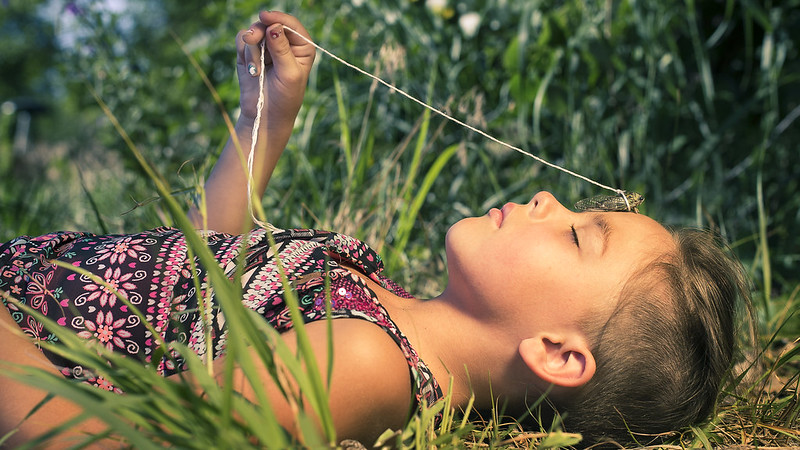
Photo: Girl with cicada bug. Jose HernandezCC BY-SA

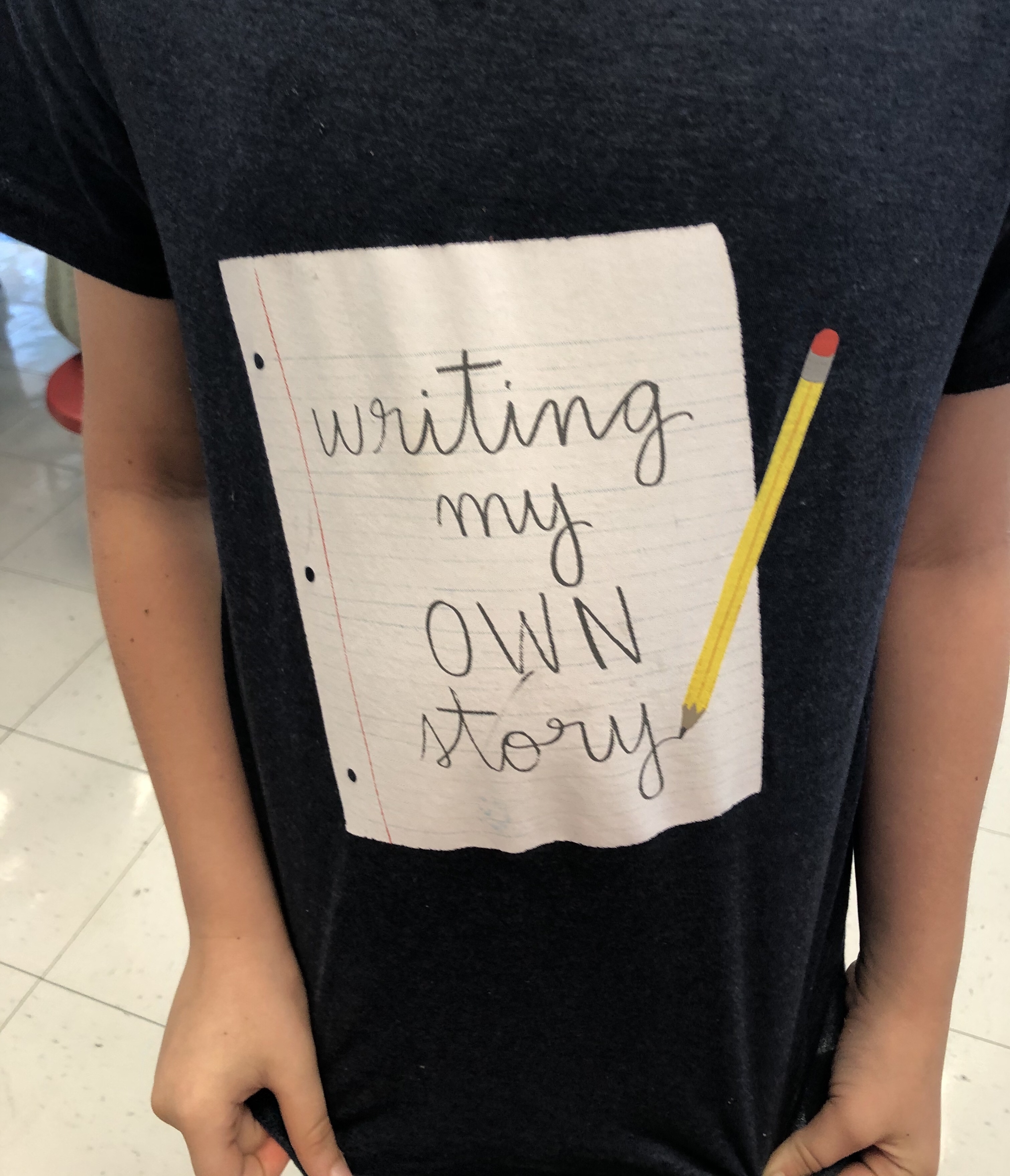
Writing your own story

I saw his shirt from across the crowded cafeteria:

Writing my OWN story.

I hadn’t seen him before, didn’t know him, but I had to go over and say: “That’s the most awesome shirt! Do you like to write?”

He smiled and nodded, eyes bright and cheerful: “Yes!”

We had a short conversation about reading and writing. He was new to our school. After this initial encounter he was quick to come ask questions if he wasn’t sure about how we do things here, always greeting me with an earnest face and slightly self-conscious smile.

He wasn’t with us long. On his last days, he asked if he could stay after lunch and clean all of the tables as his grade level headed to recess. He wiped every table meticulously, then straightened all of the cardboard trays in the serving line for the classes to follow.

I understood.

It was something he could control. A positive and productive outlet.

I never got to write with him.

I thought about students over the years and what I learned about their lives from their writing. A girl whose family slept in their car on the journey north to visit relatives for the holidays; how she woke in the morning, shivering, to find frost coating the windows. A teenager whose vivid third-person narrative about a child born in another country, who survives abuse to find a new life and family in America . . . it switches to first person at the end as he rejoices and reveals he was that child. A first-grader who wanted to write about her dog, how the police shot and killed it. Unnerved, I told her teacher, in hopes that this was just a disturbing fabrication. It wasn’t. The child saw it happen.

For all the story-loving writer that I am, I know writing is not a magic cure for the pain and scars of life. It is, however, a real coping mechanism, a positive and productive outlet, a way of seeing and dealing with and finding hope to overcome. Even in the youngest of us, many of whom already know that life doesn’t follow a neat formula, that it seldom follows a clear and sensible series of steps. I often think about what passes for “writing” in schools; it can’t always be a neat response to a text or a prompt. If we are truly to equip children with tools for life, it begins with a real response to their lives in this world. We owe them, for as long as we have them, a place to feel safe, to be loved, a way of having some control in the face of change, to find their own power despite their powerlessness.To write their own lives, even as life is unfolding.

To have hope on the journey as it takes so many twists and turns.

Time is of the essence; we don’t know for how long or short a time they’ll be in our sphere of influence. Good-byes can come without warning.

And so I quickly gathered the best tools I had at my disposal: pencils, notebooks, a couple of favorite books from my shelf. It was my way of saying Godspeed, child. Write your OWN story. Believe. Attend to your heart. Here’s a piece of mine to carry with you.

Edward knew what it was like to say over and over again the names of those you had left behind. He knew what it was like to miss someone. And so he listened. And in his listening, his heart opened wide and then wider still.

You must be filled with expectancy. You must be awash in hope. You must wonder who will love you, whom you will love next.

—excerpts, Kate DiCamillo, The Miraculous Journey of Edward Tulane