Spiritual Journey: Blossoming

On the first day of May, Carol Varsalona offered the theme of “blossoming” to our group of Spiritual Journey Thursday writers. Carol’s husband passed away at the beginning of April. She writes in her post: “When I signed up to host the Spiritual Journey, I felt blossoming would be an appropriate theme for May since it connotes a renewal, a new beginning, and personal growth. I did not think that I would face the sudden death of my husband and go through a period of grief.” She dedicates this month’s post to his memory, along with a beautiful poem about him; you can read about her spiritual journey here.

Carol is one of the people who aways inspires me to see and savor the beauty of nature. Whenever I read her blog, it’s like taking a rest stop in a flower-filled garden, where one can breathe the fragrance deep and be strengthened for the journey. In her present loss, she writes of May flowers coming along to remind us of renewal and resilience.

To me the blossoming flowers are a metaphor for faith itself. The beauty of the earth pointing us back to the Creator, in a world that buffets us with fear, uncertainty, sadness, brokenness, rage, and loss. The peace and healing our human hearts desperately long for will never be found on this path. “All the world’s a rage,” to put a twist on a Shakespearean line. An ever-maturing faith is able to cut a path through anxiety, blame, and fear with which the world deliberately keeps distracting and demeaning us, where some of the worst pain is inflicted by those we care about most. As the saying goes: Hurt people hurt people. Faith does not retaliate. It withstands. It endures. It continues to bloom, and its fragrance beckons others to carve a better path through the the world’s dense, thorn-filled forest, to the inner garden. It is there, in our hearts. It has always been there…if we choose to see it.

In her poem, Carol wrote of her husband collecting a bouquet for her. I am reminded that one day, our faith will be made sight. We will BE the bouquet, the Lord’s very own, gathered unto him not as cut flowers but ones that shall bloom eternally in his presence, in that promised place where there will be no more tears, no more death, or sorrow, or crying, or pain (Revelation 21:4).

When I am still, I can feel the warmth of the sun on those flowers of peace; they open up, releasing their perfume in the soft breeze that infuses my soul.

Beyond this world’s brambles
Lies a garden of faith-flowers—
Opening, ever-opening to
Sunlight—yes, the
Son’s light.
Our hearts are filled there
Mind-rambles stilled there
In the hush of His garden
Nurtured by the Gardener’s
Grace.

The wound in the wood

A little slice of memoir

*******

I was five when my dad bought the house where I grew up.

There were good things about the house. A Big Bathroom and a Little Bathroom. Having two seemed luxurious to me, a child accustomed to apartments. Cloud-like swirls on the ceiling that my mother said were made by twisting a broom in the plaster while it was wet. A huge picture window in the living room, through which I could see a very tall tree behind the neighbors’ house. To me, the tiptop of the trunk appeared to be a lady sitting and gazing across the earth like some kind of woodland princess. Day in and day out, she sat there atop of her tall tree-throne, a regal silhouette, never moving.

There were things I didn’t like about the house. The red switch plate on the utility room wall that my father said to never ever touch. I believed that if anyone touched this switch, the furnace would explode and blow us all to smithereens. Even after I outgrew my terror, I steered well clear of that red plate. I didn’t like the thick gray accordion doors on the bedroom and hall closets. Bulky, cumbersome, and stiff, they didn’t really fold. They came off their tracks easily. These hateful doors eventually disappeared; one by one, they were discarded. Our closets were just open places.

The linen closet stood directly across from my bedroom door in the narrow hall leading to the Big Bathroom.

It wasn’t a true closet, just a recessed place with wooden shelves. I don’t remember an accordion door ever being there.

What I do remember is that one of those linen closet shelves had a terrible gash along its edge.

It looked like a raw wound that might start oozing at any moment. A gaping slit. When I pored over pictures of how to do an appendectomy in my parents’ set of medical encyclopedias (and why did we have these—? An exceptionally persuasive door-to-door salesman—?) the pulled-back human flesh and tissue made me think of the wound in the linen closet shelf.

This shiny-pink raw place bothered me. It was ugly. Almost…embarrassing. Something that shouldn’t be seen, shouldn’t be exposed…why had the builders done this? Couldn’t they have turned the shelf around so the wound wouldn’t show? It was an affront to me as a child, before I knew what taking affront meant.

I know now that the flaw is a bark-encased scar. The shelf came from a tree (maple?) that was injured, somehow. Maybe by a cut or fire. An online search produces this AI-generated explanation:

The tree’s cambium layer, which is responsible for producing new bark and wood, starts to grow new cells around the wound, forming a protective layer of tissue called callus. 

As the tree continues to grow, the callus tissue can expand and eventually cover the original wound, creating a scar that is encased within the new bark.

In short: The scar is evidence that the tree worked to prevent inner decay and heal itself after being wounded, and that it went on living for a good while before it ended up as the shelf holding our towels and washcloths beside the Big Bathroom.

I never touched that raw-looking wound in the wood. I averted my eyes from it, even hated it for existing.

Now, when I return in my mind to the rooms and halls of my childhood home, they are always empty, and that old scar in the shelf is the thing I want most to see.

How strange.

Maybe I am drawn to it out of kinship. I do not know the story of the tree’s life, only that this remnant is testimony to its suffering and ability to overcome. I could liken the scar to the ways adults damage children, having been damaged as children. I could see it as a symbol for my mother, whose early wounds festered long, the extent of which would eventually be revealed in addiction.

That’s the real red switch, for it blew us all apart.

Maybe I just want to place my fingers on the old raw place at last, tenderly, in benediction. I would say that I understand now about layers of callus tissue expanding, covering, and absorbing the deepest of cuts over a long, long time…it is always there, but it hurts no more, and I am no longer ashamed to see it or to let it be seen.

In the shelf or in myself.

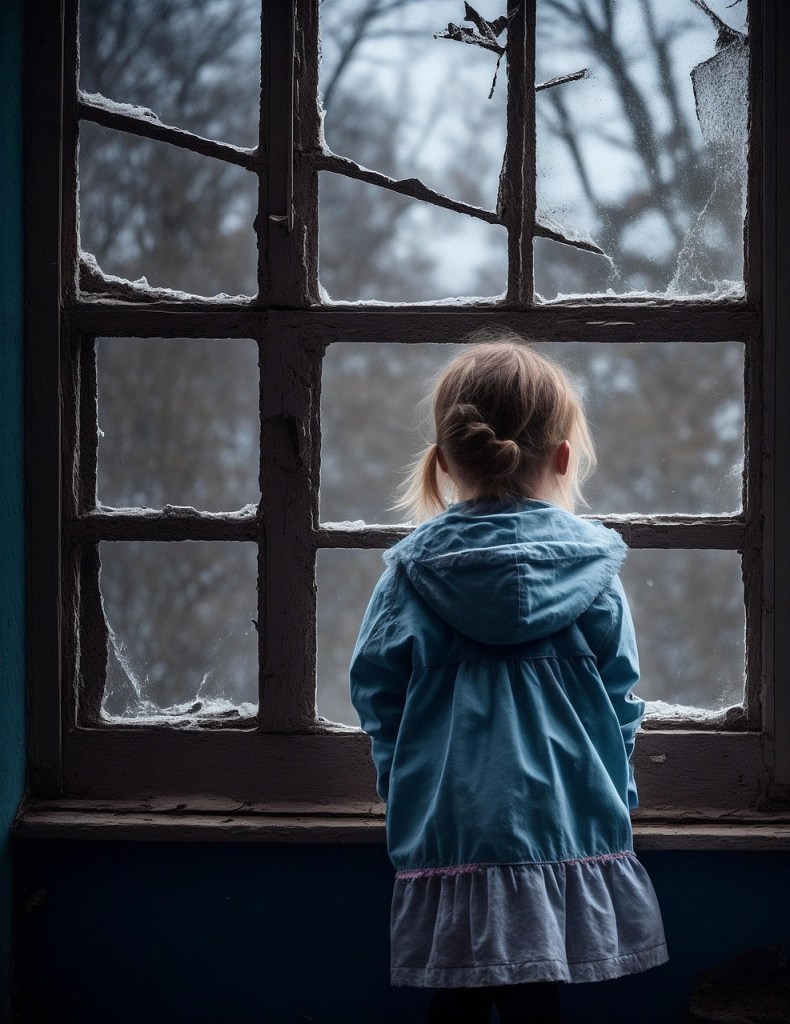
Image by Wolfgang Eckert from Pixabay

*******
with thanks to Two Writing Teachers for the March Slice of Life Story Challenge

Absence

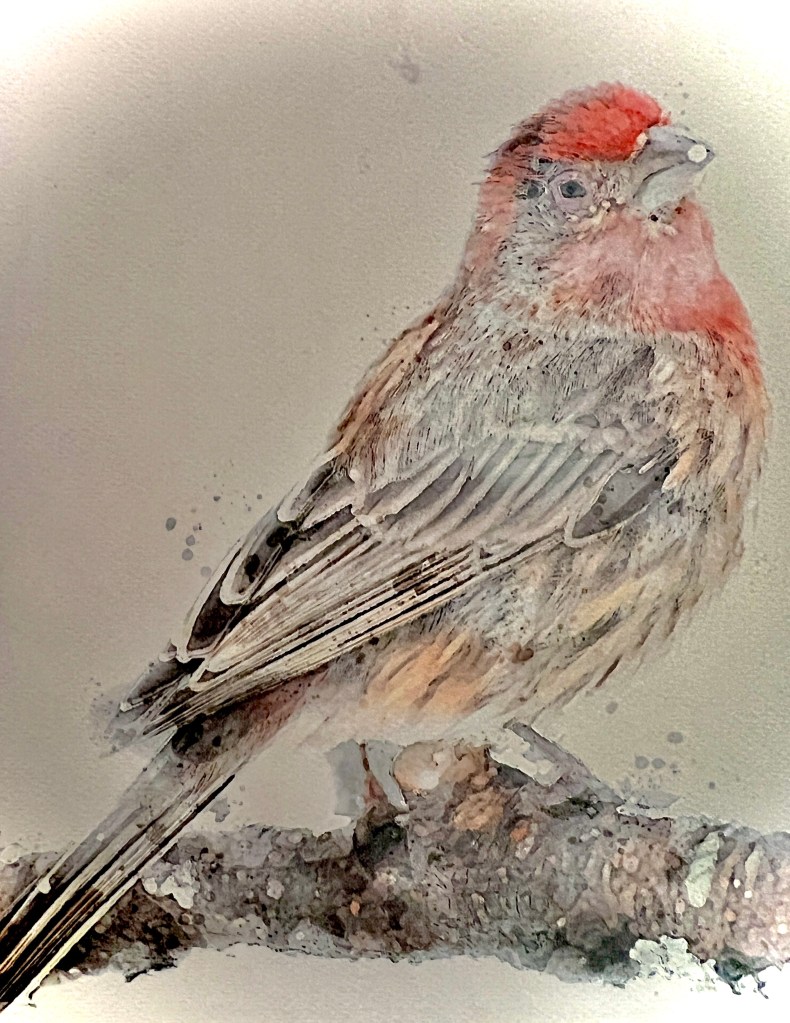
As many of you know, I write a lot about birds.

Every March, I write specifically about the house finches which build a nest in my front door wreath. They have done this for years, except for 2020 during COVID-19, strangely. They built a nest in the wreath that year but never laid eggs.

This year my husband put his foot down: Enough. We haven’t been able to open our front door or enjoy our porch every spring and summer since I don’t know when. Don’t let the birds build a nest in that wreath.

I knew a pair of little finches had been already been eyeing it, however. I have heard them “talking” out there on the porch in their singsong voices. They didn’t seem to like this wreath, really: it’s a winter one, still up from Christmastime.

I should have taken it down a while back. I knew better than to put out a spring wreath, for, against my husband’s wishes, it would become a finch nursery. I would be a frenzied Franna again, roping off the porch to keep the babies safe. I wasn’t always successful. Some babies died in the nest, and I grieved as I removed it. The parents carried on, rebuilding in no time, laying more eggs.

Naure is astoundingly resilient.

I’d also take the granddaughters out for an occasional up-close glimpse of tiny new life coming into the world. I would marvel at the parents’ unfailing care of their young. I would hear their songs, the most beautiful trills and warbles. It’s a pure, sweet, glorious song. The sound of joy.

Yesterday I noticed that the finches had started a nest in the wreath…they are so stealthy about it!

Today my husband took the wreath down (because I couldn’t).

I understand. I do. It’s a pain to keep the front of the house roped off for months – yes, months – at a time, for these prolific little songbirds.

Yet it always felt like a gift, to have them here and to provide shelter for them, so that more beauty could fly out into the world.

I am bracing myself for the finch’s discovery of the disappeared wreath. They planned on having their babies there. I do not think I can bear the sound of their sweet voices asking Why?

But as yet, there is no sound from the porch. The sun is very bright this morning, and I hear all sort of birds in the distance.

I expect my finches will rapidly find another place to build. I pray they do. The world needs more of these little creatures who were never supposed to have survived in the first place. House finches were released in the wild years ago by unscrupulous pet shop owners. The house finch didn’t die out; it proliferated.

It’s just that, in this moment, the silence, their absence, is an ache in my heart.

There’s no way to tell the finches that I am sorry. Or how much I love them. Not so they’d understand.

And so I write.

What I know is…no matter what, they go on, singing.

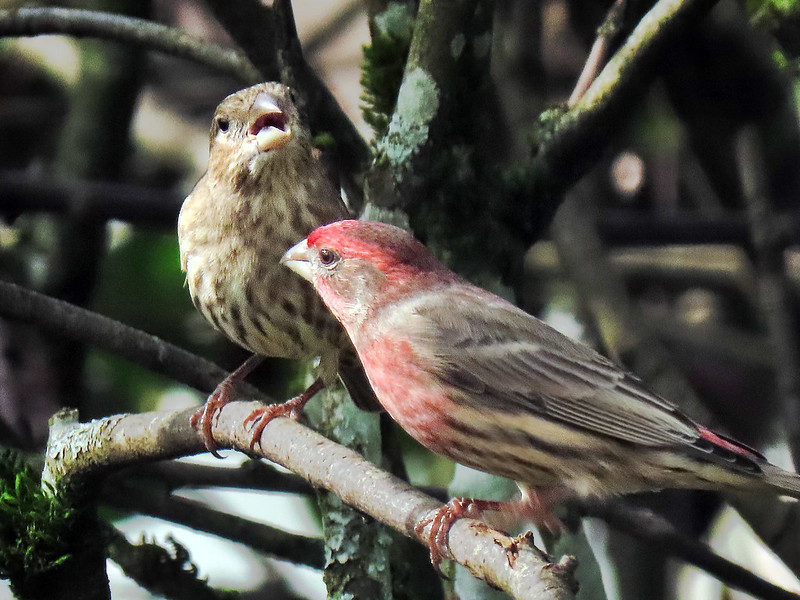
House finch pair. Birdman of Beaverton. CC BY-SA 2.0.

*******

with thanks to Two Writing Teachers for the March Slice of Life Story Challenge

Face value

My three-year-old granddaughter, Micah, has finally experienced enough snow to make a snowman.

Two snowmen, in fact. Five weeks apart.

The first snow really wouldn’t pack, so we ended up with a little heap of snowdwarf. It was cute and we loved it anyway (see the photo on To Life and Lafo).

The second snow packed beautifully. Micah’s artistic big sister, Scout, took over as snowman engineer and designer, rounding the body and deciding what to use for facial features.

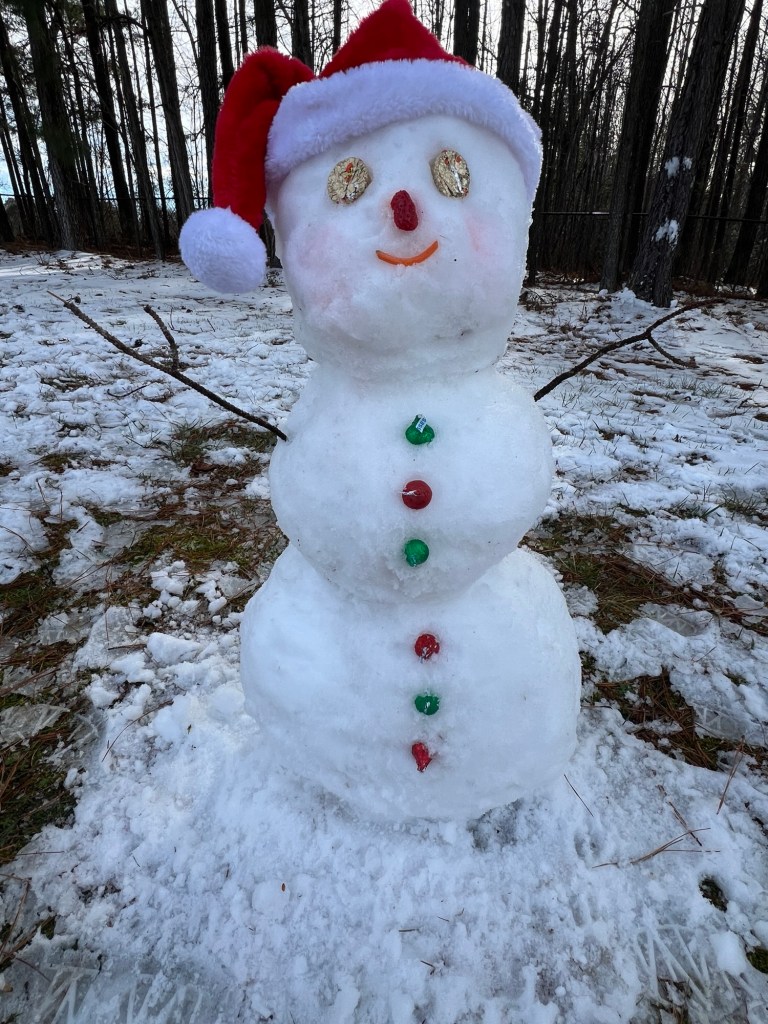
Micah said, “The snowman needs a hat!” She chose the Santa hat from the toybox I keep for the girls. In her words, the “Ho-Ho hat.”

And here you have it. Our merry friend:

That night, as I put our exhausted Micah to bed, she kept stalling.

She fights going to sleep, has always been a restless sleeper. She asks for songs: Frère Jacques. Twinkle, Twinkle, Little Star. She chats about a boy at daycare and calls him “my brother.” She says he’s going to the beach and she wishes she could go, too.

“All right, Micahroni,” I say at last. “It is time to sleep now.”

She twists around, lies still, and is silent for a moment. She looks at the ceiling, the wall. Her eyes are heavy.

Then those big eyes are on me. “We forgot the Ho-Ho hat! It’s outside!”

“Yes, but it’s okay. The snowman can wear the hat tonight. We can get it tomorrow.”

That seems a sufficient response, for she’s quiet again.

Then: “Franna.”

“What, Micah?”

“I don’t want the snowman to melt.”

“He won’t melt tonight, honey. It’s very cold outside. He’ll still be there tomorrow.”

She looks at me earnestly. Deep brown eyes, rosy cheeks.

“I don’t want his face to melt,” she says.

I murmur something soothing, I think, but my mind isn’t on my words.

It’s on the workings of her little mind, already understanding the temporary nature of things, fearing loss…yes, it’s just a snowman. But its face reflects humanity. She cares about it and knows, at three, it cannot last.

I stay with her until she drifts off to sleep and her breathing grows loud.

And then I go to bed myself, praying, I confess, for the snowman not to melt the next day while she’s staying with me… because childhood and life itself are so short. They melt away so soon.

When she goes home, the snowman is still in the backyard, joyful as ever, twig-hands raised in praise, undiminished.

I remember to rescue the Ho-Ho hat. She will remember asking. She remembers everything.

I hope she always will.

*******

with thanks to two Writing Teachers for the March Slice of Life Story Challenge

Strewn with loss

Yesterday I wrote to the WordPress daily prompt on fate/destiny.

Today’s prompt:

What experiences in life helped you grow the most?

Loaded question.

My title today comes from a line I wrote in yesterday’s post. Will this be my pattern every day I take on the Slice of Life Story Challenge? Don’t know. We shall see.

As to this prompt about experiences…

Doesn’t most growth come from a place of pain?

*******

Dear Mom:

Someday I will do a better job of writing about this than what I am about to do now, but here goes.

I understand you have died. About a year ago.

I’ve not been able to find your obituary anywhere, nor your grave. Your plate on the headstone beside Daddy’s remains blank. My guess is that things were kept private, simple, as inexpensive as possible.

After twenty-three years without any contact, I have a few questions, but not much to say.

I have to say it, even though you’ll never know.

I got over my anger long ago. I had to, or it would have consumed me. I had young children of my own to care for; they were my priority. I now have two beautiful granddaughters. Your great-granddaughters, who will ask for the story, someday.

I got over my fear of your destructive behavior, which marked Daddy’s last years, and which shattered our family. I know it continued because, every so often in the ensuing decades, debt collectors would call my house looking for you. I would tell them the truth: I had no contact with you.

The pattern would not be broken, but people would. There could be no going back. Only forward.

I am past the point of blaming. We make our own choices. We paint our narratives in the colors of our liking, to our own purposes. To keep living with ourselves, I suppose, instead of changing. I chose the filter of Fact. Grannie once told me that she didn’t believe in divorce but she had to do it to survive your violent father. I didn’t believe in cutting ties with my own mother, either, but I had to do it, to survive. In the better part of you – for it was surely still there, somewhere – you would have understood this.

But I am not writing to justify or to judge. It’s not my place. It doesn’t matter now, anyway.

What I want to say is thank you.

Thank you for every sacrifice you made throughout my childhood. You did so much with so little.

Thank you for the sewing machine running late in the night, making our beautiful clothes.

Thank you for playing gospel records that I listened to when I was supposed to be asleep, and for the way you could paint and repair most anything.

Thank you for your humor and your unbridled cackling, contagious laughter; no one else laughed like you.

Thank you for being a safe haven for kids of troubled families in the neighborhood as well as for our neighbor who suffered a nervous breakdown. I see her frantic blue eyes, even now. Thank you for inviting the meanest bully of all to my birthday party without telling me, because you saw a child who was hurting inside, who needed to be part of something happy.

Thank you for advocating (surely, as I can’t imagine it was Daddy’s idea), to get my pet parakeet, and later for the puppies (which he forbade, to no avail; you won out).

Thank you trying to save my sick kitten, Edelweiss, which died in your hands while you tried to feed her with an eyedropper.

Thank you for your incredible creativity, the way you could whip up a costume like magic, and for coming so proudly to my school plays, your sisters in tow.

Thank you for pulling my wedding together, for mending the gown and veil from the discount racks so they’d be presentable, for weeping with sheer relief when Grandma offered to pay for the cake, and for making my all my bridesmaid dresses and my sky-blue going-away outfit. I recall you saying you were married in a blue dress; you didn’t have a wedding gown. And thank you for removing the iridescent white beads you wore to my wedding, pulling them off your neck to put around mine at the last minute, to set off that sky-blue dress as I was leaving.

I bet you thought I’d forgotten, all these long years since.

I have not. I remember it all.

As I said, one day I’ll write about it better than I can right now.

Just one more thing, as I sit by the window on this bright day, with winter fading and spring stirring in a wild dance of golden light and flickering shadows across my kitchen walls and floors: Thank you for taking me to church when I was a child. When I lost you to the darker part of yourself, I still had the church. The faith. The Lord. This has been my life. This has been the life of my family.

You might have forgotten many things. I might be one of them. I will never know.

But it’s okay. I choose to remember the good bits of you reflected in every shard I salvage from this story strewn with loss, set in motion long before I was ever in the world.

Some will say how sad, that no one ever never reached across the abyss to make amends.

I do not say this. I say it is over. The abyss is closed. Filled in. Time takes us all. The hurt is gone, although the healing will never be complete in this life.

I carry the shards.

Peace to you at long last, Mom.

P.S. I dreamed of you awhile back. Small and white-haired, but you looked well. You held your arms out to me in welcome.

“My baby has come home,” you said.

And I hugged you.

Because it was finally safe to love you again.

*******

with thanks to Two Writing Teachers for the annual March Slice of Life Story Challenge.
This is my ninth year participating alongside fellow teacher-writers,
as a means of continually honing the craft.

To those of you out there dealing with loss, death or otherwise:
Writing brings clarity.
Writing in community builds courage.

Write your story and trust.

Changed and transformed

This week, my friends from across the country have reached out to see if my family and I are okay in the wake of Hurricane Helene.

We are. Here in central North Carolina we did not suffer damage like the western part of the state, where many people are dead and many more are still missing. East of us, a tornado flattened buildings in a city where my youngest son once served as a church worship leader.

Speaking of my son: He was in the North Carolina mountains when the storm struck. He and his bride spent the last day of their honeymoon without power, food, and water, trapped by downed trees on the only path to the main road. After someone eventually arrived with a chainsaw, my new daughter-in-law navigated their journey out by using her phone to pull up road closings.

They were fortunate to even have cell service. Thoughout the region, service failed just when it was needed most. It has yet to be restored in many places, meaning that families and friends still cannot communicate with loved ones.

Travel remains precarious. 300 roads are still closed, many of which are shattered with portions and bridges washed away. Mudslides added to the havoc of catastrophic flooding. The picturesque little village of Chimney Rock has been wiped out; “there’s nothing there,” says one eyewitness, except muddy brown water and debris choking swollen Lake Lure. A clogged sea of splintered wood and trash. A friend of mine was in Boone like my son during the deluge and saw a house carried off by the river; it floated away before her eyes. Asheville, a favorite destination and home to the famous Biltmore, is devastated. My husband and I watched the news unfolding and saw this beautiful city submerged. It looks wartorn. We no longer recognize the familiar streets where we love to walk. Recovery will extend well into next year, meaning that the major tourist season and local income is also destroyed.

We North Carolinians know that bodies are still being recovered (some from trees) and that the extent of the damage is not fully depicted in the news.

Words that keep recurring in the reports are transformed and changed. The mountain communities have been “utterly transformed and cut off from the outside world.” An artist with the River Arts District of Asheville, a hub of warehouses converted to thriving studios, galleries, music venues, and businesses, spoke to its ruination: “This changes everything.”

Loss does change everything. Life is forever categorized into before and after. Overcoming is a long, arduous journey, moment by moment, like breathing. Even though restoration may eventually diminish the pain of loss, soul-scars remain with us as long as we live. We are changed.

For those of you who pray, please do so for the victims of Helene. For those of you with means, please offer any help you can to organizations taking donations for those who have lost all. My school, my church, my community are doing so.

I think of the process of refining gold. I will not apply it to suffering and loss but to the effort of alleviating them. In this act, I believe, we are most transformed… in responding to the alchemy of the Spirit working in us to love our neighbors as ourselves.

It changes everything.

with thanks to all of you reached out to check on my family this week
and to my fellow Spiritual Journey writers

‘Bad things are going to happen’ poem

On the last day of the March Open Write at Ethical ELA, host Shelly Martin-Young invited participants to write a poem modeled after “Relax” by Ellen Bass. Shelley said: “Think about all of the things that are happening in your life right now, good or bad. Make a list and write your ‘relax’ poem. When my students write their Relax poems, I have them start with Ellen’s first line: Bad things are going to happen. So start there and just write. Maybe by the end of the poem, you will be able to relax, let it go, and taste the sweet fruit.”

So I took the first line, and wrote…

Carrying On

Bad things are going to happen.
Your husband will break the handle
off your favorite coffee mug
(the one with Shakespeare’s signature,
that you’ve had since your freshman year
of college). Your young son will lose
the basketball pendant that belonged
to his grandfather in the 1930s. 
It will never be found. Your car dashboard
will burst into flames midway through
a long trip in the mountains and you will discover 
there’s not enough Dr. Pepper 
in that bottle you’re holding 
to douse them. People will disappoint you
and confuse you with their chameleon loyalties
—“fickle,” your mother will tell you, 
while you are still a child.
And the time will come when you no longer
have a relationship with your mother.
You’ll learn, to your astonishment, that your
father is the family glue and everything will
fall apart when he dies. The baby finches
in the nest on your front door wreath
—so perfect, so wondrous—will also die
without warning. You’ll find all five
with their yellow beaks frozen open to the sky,
their tiny bodies quivering with maggots.
Your husband will be diagnosed with
the beginning of ocular melanoma.
He will sacrifice his left eye in order to stay alive. 
Then, one Sunday afternoon,
he’ll go into cardiac arrest
while driving home from the gym.
He’ll be resuscitated. He’ll endure two surgeries.
When he’s over all that, it will be time for 
his spinal fusion. He will depend on you
more and more…you’ll break your left foot twice
and still keep pace with the days as they unfold…
for the days become years 
and the years will bring you 
two little granddaughters.
This, this will be the richest time
of your entire existence,
as rich as the red on the breast of 
the reddest male finch you’ve ever seen,
singing so beautifully there on your porch
that your heart will be filled to bursting with the sound
of life, carrying on.  

*******

Composed for Day 25 of the Slice of Life Story Challenge with Two Writing Teachers

To build or not to build

Those of you who’ve followed my blog for a while will know that I chronicle the return of house finches to my front door wreath every March. These little songbirds typically build a nest before I know it; they’re incredibly surreptitious. This has been happening for several years. A little pair actually slept in the wreath at night all winter before last, as if staking their homestead claim.

Last April, a tragedy struck and the finches have been scarce ever since. One day, five tiny, beautiful fledglings were thriving in the nest; a week later, all five died without warning. I found them with their yellow beaks opened wide to the sky, quivering; took me a minute to realize they were dead and full of maggots. This was the second seasonal brood for these parents. They’d built the nest and laid the first set of eggs before the end of February (“seems awfully early,” I wrote in my notes). Two of those fledglings died. The very day I removed the nest with the two dead fledglings in it, the parents rebuilt. They worked feverishly, laid five new blue eggs, hatched them, and lost every baby within a couple of weeks.

Seven dead babies in a season…too much for me, maybe for the parents. They vanished. There was no rescuing the wreath; it had to go, nest, dead babies, and all.

For the remainder of the summer my front porch was silent. No melodious trills of finch song. My granddaughters and I watched the bluebirds out back raise two broods (bluebirds are amazingly tenacious, territorial, and extremely loyal to their breeding grounds; they watch us as much as we watch them, almost as if to say Hello, what are you people doing in our yard?).

But the finches are shy. Nervous, even. They nest near people as a defense against predators, but they don’t want to be near people.

Ever since I took down my Christmas wreath and hung an old grapevine wreath with silk magnolias, I’ve been watching and wondering: Will the finches return this year? If they do, will the eggs hatch and will the babies be okay? If not…I don’t think I can handle the grief. I always protect the porch and door for them and yet this thing happened. As much as I love these birds, as precious as they are, I’d rather they nested elsewhere than endure it again.

I realize this is my own defense mechanism. An attempt to protect my heart.

Then, at the very end of January, I thought I heard a familiar Cheep! at my door.

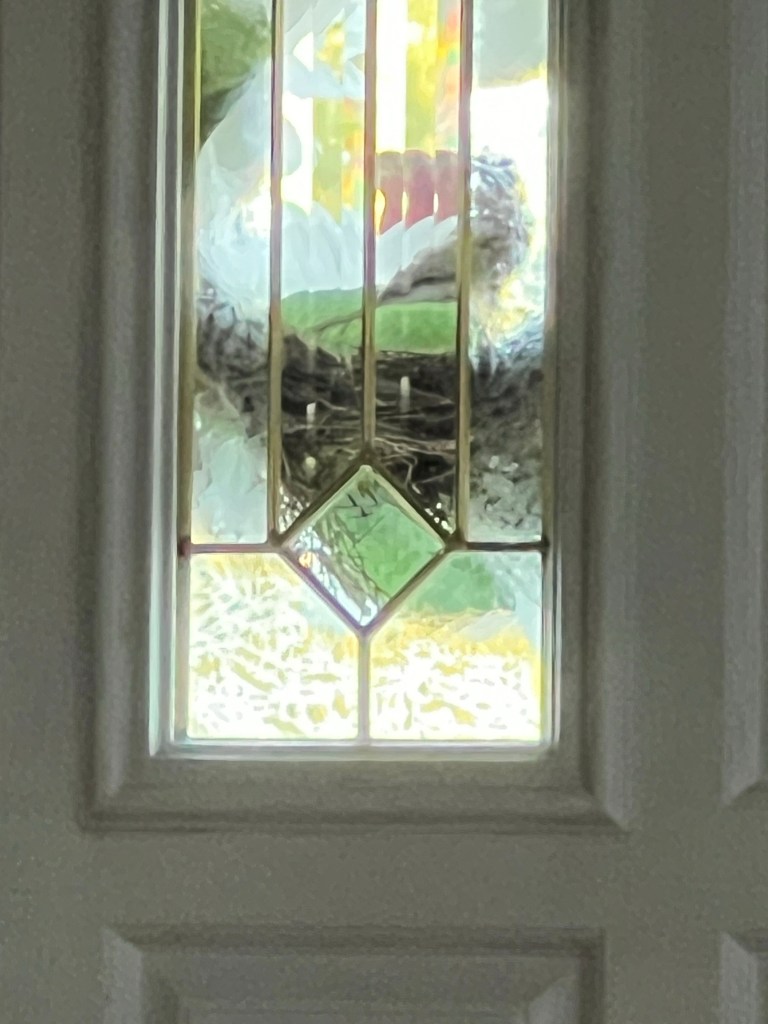
Through the beveled window, I saw a shadow moving in the wreath…

Could it be?

It was.

A male house finch.

He was there and gone.

I know he was scouting the nest site.

I’ve seen him a time or two since. He comes punctually between 4:44 and 4:54 in the evening.

Three weeks later, on February 20th, he brought his mate:

The female is in silhouette; the male’s head is facing the camera—his chest is extraordinarily red (looks like there’s three of him, but that’s just the beveled glass).

I suspect they’re having ongoing discussion about nesting in this wreath:

What do you think, honey? Prime location…

Hmmm. I don’t know. I definitely don’t like this glass. Too cool to the touch with way too much movement on the other side. I must have absolute privacy for incubating my eggs.

Right, right, right. Well, you know we don’t usually build here in the curve anyway. We build on top! Lots of privacy up there!

Weellll… it just feels a little too narrow. A little more space, a little more cover, that’d be nice...

This past Tuesday, March 5th, I saw a little bird tail busily moving at the upper right side of the wreath… same spot where last year’s ill-fated nest was built.

Yet no nesting material has been laid.

And so I wonder. Will they actually build here? They clearly want to. If so…when will it start in earnest? Will they decide this wreath just won’t do, after all? Is it not quite time yet? There’s nothing random about birds, their actions, or their inner clocks; their precision is astonishing.

Dare I, dare I even hope, that they are still in the planning phase? Maybe with a week or so to go, and that there will be eggs, possibly hatching at Easter?

Time will tell. I daren’t make predictions…I’ll just keep watching and waiting…

I should just take the wreath down and let them go. It would be easier.

Oh, but love isn’t easy, is it, little finches.

*******
Composed for Day 7 of the Slice of Life Story Challenge with Two Writing Teachers

Finch elegy

I forbore
checking the finch nest
in the wreath
on the door

after three
maybe four
little finches hatched

in the cold

I knew that February
seemed too early
for laying

that sustained
freezing in March
could take a toll

but I heard Mama
and Papa House Finch
chattering all along
with babies’ bright voices

until a day or so ago

they’ve fledged and gone
already
, so
I told myself

when it is warm,
I will check the nest

(don’t disturb them
in this cold)…

Today, it is warm
like spring should be

with the earth bathed
in watercolor pastels
a blossom-spattered mosaic
after soft rainfall

and so I came to see
if the fledglings had gone
at last

not prepared
for what I found

one
hanging backward
over the front
of the nest
open mouth and closed eyes
pointing to the sky

another
wedged in back
against the door
essentially fused
into the nest itself

they are
too tiny
and new
and perfect
to be dead

but they are
they are

seems
a sibling or two
must have made it
to the skies

but these
sweetest little wings
I’ve ever seen
shall never rise

so now I lay
these lost ones
down for keeps

rip away the
beautiful nest
and sweep
and sweep

in silence
where there was
so recently
such happy song

not knowing what
went wrong

(and never will)

it is just
The Way of Things

nevertheless
my heart wrings
in two

and cries


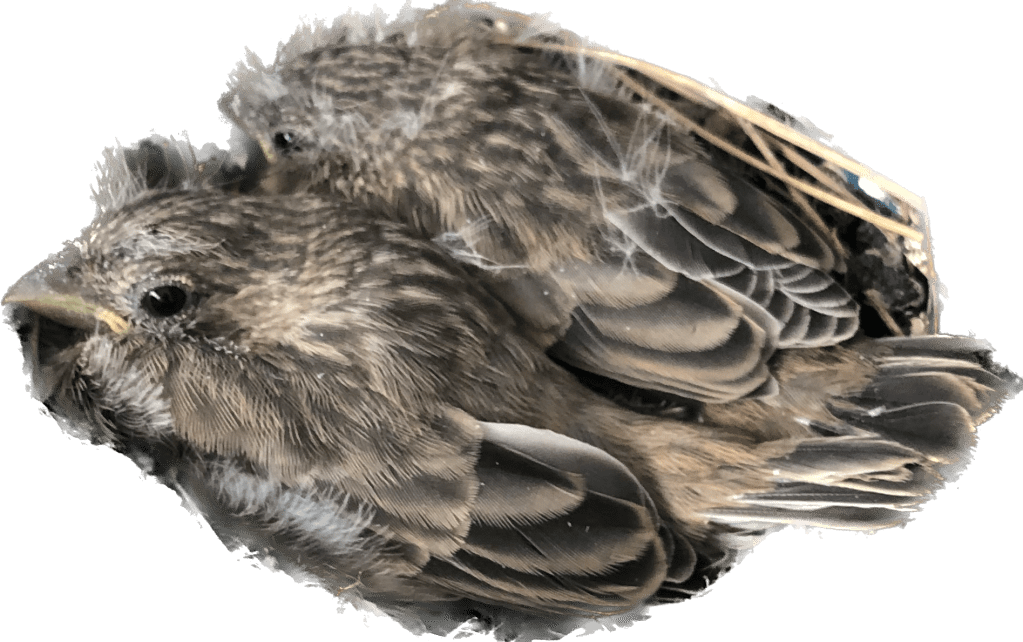
A couple of my hardy finch fledglings in a previous year

*******

with thanks to Two Writing Teachers for the monthlong Slice of Life Story Challenge

Tale-based poem: The Legend of Water Rabbit

Today on the Ethical ELA Open Write, poet Stacey Joy invited participants to read a few short folktales, fables, fairytales, myths, or legends to inspire a poem: “Your poem might be a response to, a retelling of, or a new version of the original piece.”

I wanted to work with a fable but the children’s tale that came to mind first was… well, maybe you will recognize itmy poem is meant to be something of a mythological sequeltribute.

The Legend of Water Rabbit

In the forest deep
upon a cushion of emerald moss
Water Rabbit sleeps

and dreams

of the Child.

In his dream
he cannot tell the Child
how much
he loves him

for to the Child,
the Rabbit isn’t real

and there is no language
for conjuring a bridge
across the chasm
of unbelief.

Water Rabbit twitches,
remembering

the nursery
the toys
the Wise Horse
who spoke of love

and longsuffering.

It was Fate that placed
the Rabbit in the arms
of the Child that night
when a favorite toy
was lost.

It was only for a season
that the Child embraced him
and carried stuffed Rabbit
everywhere he went…

Water Rabbit’s whiskers tremble
with dream-reliving.

He sighs.

Other rabbits nearby
cock their heads
and perk their long ears

for in a moment,
Water Rabbit begins
to whimper
and weep
and wail
in his sleep

—the dream
is all too real:
the Child’s fever,
the separation,
the command that
Rabbit and all the other toys
be burned.

It isn’t fire or fears
that brings Rabbit’s tears

but the thought
of never being
with the Child again.

Wake up! Wake up!
The colony surrounds
Water Rabbit,
dozens of their small front feet
against his shimmery fur,
shaking, shaking him

into reality.

Water Rabbit gazes at them
through his tears
from his emerald-moss bed

and asks…Is it time?
 
The colony nods in unison.

Water Rabbit rises
wiping tear tracks
from his velvety face.

The colony parts
Water Rabbit
makes his way through…

he hops and hops with 
boundless energy until
he reaches the clearing 

where the Child
bigger now
(for he’s bigger every Spring)

sits on the blanket
spread over the grass
with a picnic feast 
made ready.

Into the Child’s arms
leaps the Rabbit. 

There are no words
for there is no language
that can capture
love so great
and eternal
and real

as real as the solitary tear
of a toy Rabbit
about to be burned
for the sake of the Child.

For it was that teardrop
the inevitable price
of love
and sacrifice
that brought life,
transformation,
salvation.

That is how
Water Rabbit
came to be.

*******
-with thanks and apologies to Margery Williams and The Velveteen Rabbit.

2023 is the Chinese Year of the Rabbit.

More specifically, the Year of the Water Rabbit.

You make vita cry!jpockele. CC BY 2.0.