The field

The field at the end of my street
where cotton used to grow
where morning glories of purple and pink
bloomed in tangled profusion
where the autumn sun
burnished the treetops
where myriad insects would chorus
all summer long

is cleared
is being bulldozed
for houses

I will never again see the cotton
stretching out like snow
or the morning glories
rioting in the grass

the trees will be obscured
if they are allowed to remain

and the great insect choir
of quivering magic-sounds
is forever silenced

I cannot imagine how the field
is feeling

but I
am forlorn

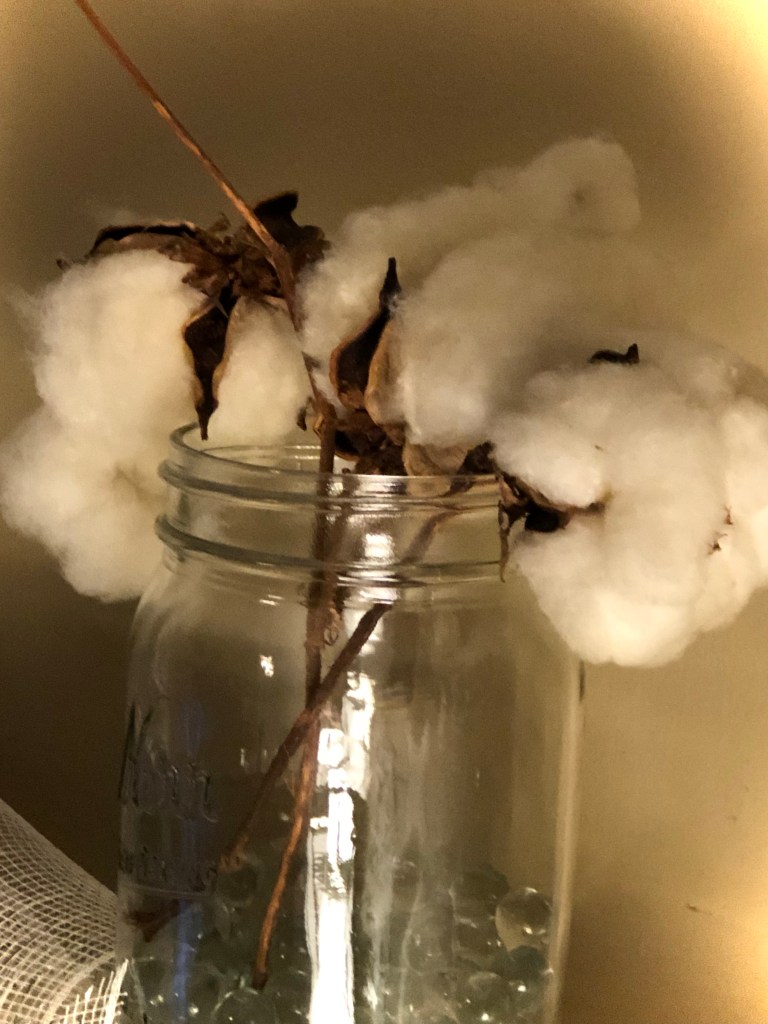
Cotton from my lost field

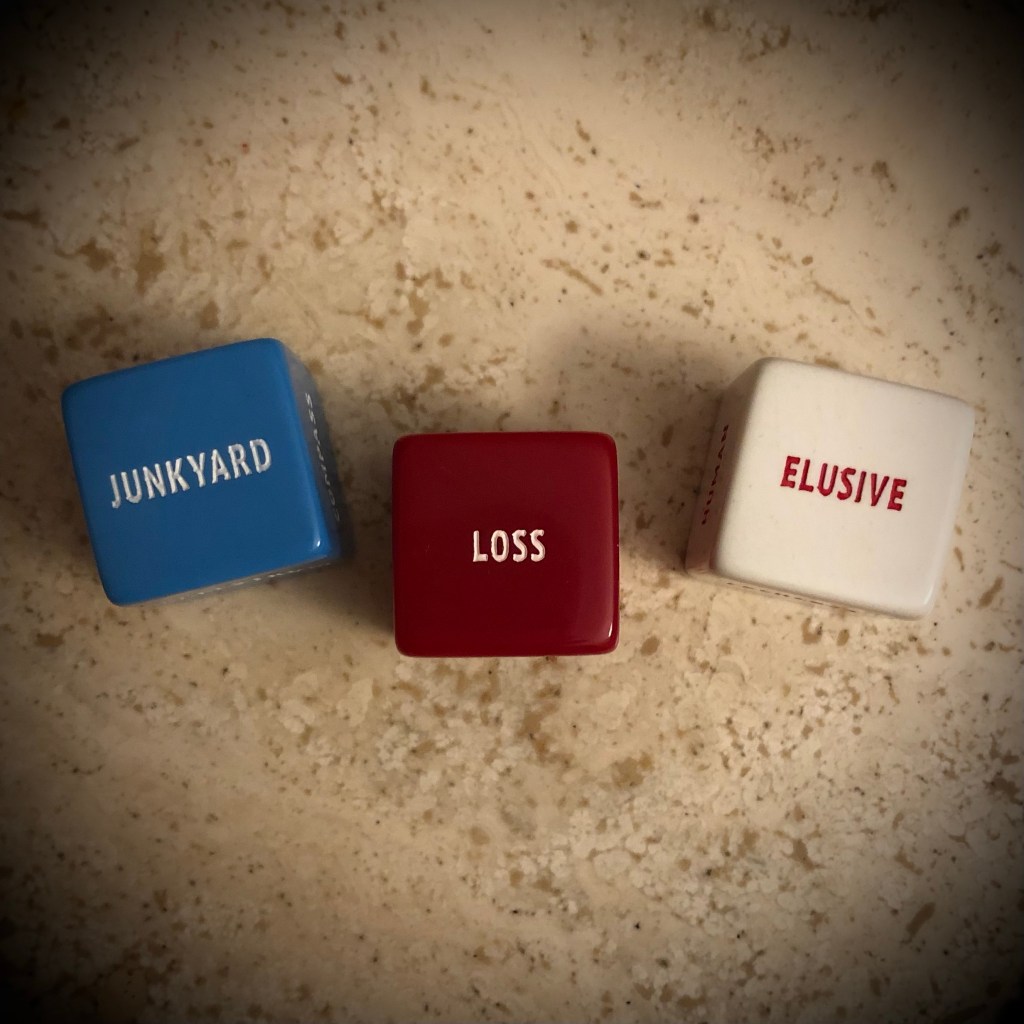
More metaphor dice

My son challenged me to make something with this roll of my metaphor dice: loss, elusive, junkyard.

This is what I have, so far…

Junkyard Loss is Not Elusive 

It is said that imagination
is the junkyard of the brain
where used things lie in limbo
until they are destroyed
taken back by the grass
or called into service again

which is to say
no experience is wasted
only catalogued and stored
in the deep recesses of memory
until the need for it
should arise
in solving a problem
in creating a new thing
in connecting patterns
in different ways of seeing
relating
expressing
understanding

which is to say
that beloved childhood doll
with the cracked face
or the scent of
your father’s shaving cream
or that dog, that dog
that chewed up your best shoes
but slept every night by your side
long ago, so long ago
comes bounding back
for a specific purpose

for there is unseen order
in a junkyard
where used things lie in limbo
until they are called into service again
or destroyed
or taken back
by the grass.


Memory, like morning (on the day of a friend’s funeral)

with thanks to Denise Krebs who shared the hay(na)ku form on Ethical ELA today.

First draft:

On waking before dawn on the morning of a beloved friend’s funeral

Memory
Like morning
Shimmers with light

Gathering
For Christmas
Across the years

You
Playing Santa
Giver of gifts

Laughter
Colorful, bright
Exquisite as snow

Stories
Like wine
Better over time

Dinners
Savored moments
Ending too soon

Envisioning
Your eyes
Always Christmas-bright

Awe
At love 
Given so freely

Embracing
Many others 
Ever-widening circle

Gathering
Together today
In your memory

Celebrating
Your life
Colorful, bright, exquisite

Testimony
To faith
In Lord Jesus

Returning
your body
to your homeplace

Earth
Where our
Young selves walked

Gathering
For Christmas
Across the years

Now
In springtime
Oceans of flowers

Bloom
Like promises
Around your grave

Friend
No good-byes
Only more homecomings

Rising
From darkness
In heaven’s embrace

Memory
Like morning
Shimmers with light

The call

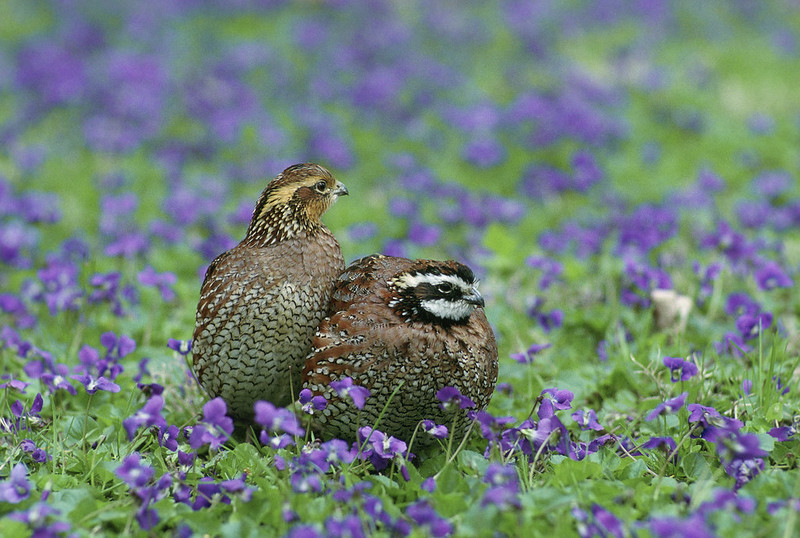
In a poetry class with Highlights Foundation, I recently wrote an Edenic or Fall of Man/Woman poem in which I touched on the idea that animals once had free communication with humans. Maybe we once understood all the lyrics in birdsong. Maybe that’s why I have such a pang when the Carolina wren on my back deck sings, with its whole being, with what sounds like unbridled joy; it fills me with unspeakable longing for something I cannot name. Maybe this lost dialogue is why dogs’ loving eyes so pierce the human soul…begging the question of who’s the purer creature…

One morning this week I heard a sound that I haven’t heard in years. I hadn’t even realized it was missing: the distinctive call of Bobwhite quail. A quick online search told me that their numbers have diminished in my area. Surely some of this is due to habitat loss as more subdivisions are being built. As is often the case with one simple search, I now have more research to do…

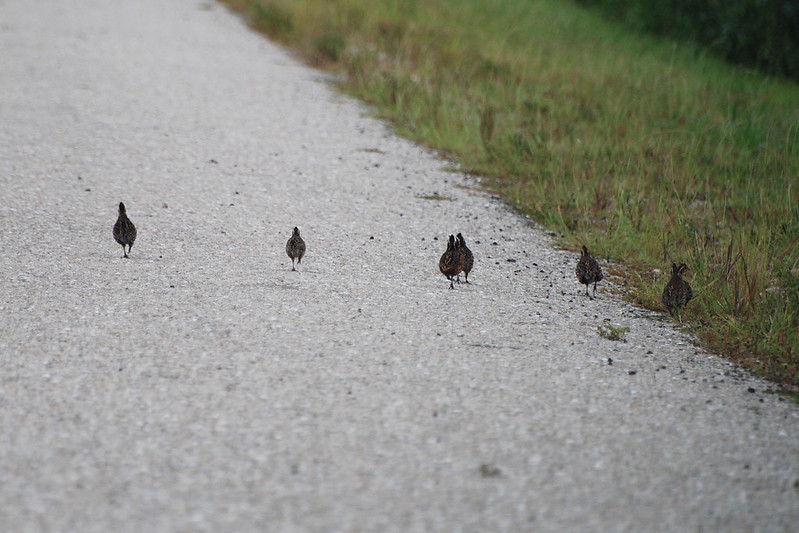
And then one afternoon, pulling into my driveway, I saw four tiny brown birds running from the roadside to safety in the grass. A new covey of these quail, forging their life together. Got me thinking about how challenging it is to survive, being a ground bird, considering the neighbor’s prowling cat and any number of things in the snatches of surrounding woods… it is a line of thinking I can’t let myself follow very far. Leads me back to the poem, the idea of Eden, the true unity of all living things, before the loss of it all. Before the first bloodshed.

But today, I will simply savor the sound. And the living. And the message, as much as I can understand it.

Bob-white, bob-bob-white
onomatopoeic call
of little ground birds
skittering through the grasses
looking out for each other

Lead photo: Northern Bobwhite quail. Steve Maslowski/USFWS. CC BY

End photo: Northern Bobwhite. Don Faulkner. CC BY-SA

Unexpected poem

with thanks to Araceli, Deanna, and Michelle at #verselove on Ethical ELA today, for the invitation to write about someone who’s influenced your life, incorporating sensory details. My first inclination is to write of my grandparents – as I often do – but today, my aunt came to mind. I expect she’d be so surprised.

I am.

This one’s for her.

On Day Twenty-Two of National Poetry Month

A Poem for Earnie 

I didn’t expect to write of you today
but here I am, remembering
of all things, the tape recorder
your ready, set, go!
the click of your finger pressing play
and singing for all we were worth,
you, my little sister and me:
Wherever you go,
wherever you may wander in your life
Surely you know
I always want to be there…

one of us flubbing the words
all of us cracking up
you saying, I’ll rewind
let’s try it again

I think of your laughter
wild, free, contagious
your raucous humor
trailing you like an ermine robe
rich, resplendent, priceless
cloaking loneliness
I may not have perceived

The only one of my mother’s sisters
never to marry or have children
which didn’t keep you from giving advice
pressing Mama’s buttons
like no one else on Earth
yet she went and named her youngest daughter
after you

Then there were the wigs on
the featureless disembodied heads
sitting on your dresser
you could pick whatever 1970s hair you wanted
each day
how cool was that?

I can’t recall a thing you ever cooked
only that you loved eating
Mama said you were picky
you didn’t look it
Mama said that’s why you weren’t married
so picky that you didn’t get got

I wondered why you never really left home
living with Grannie most of your life
you’d break away for an apartment once or twice
but would always go back
like you needed to be
within the borders
of her shadow

Perhaps it will surprise you
that I recall the ceramics class you took
and the Pepto Bismol pink statuette
of Hotei, the Laughing Buddha
god of happiness and contentment
that you made for me
his hands thrown high to the heavens
Rub his big belly for good luck
each day,
you said
and I could hear the pleasure in your voice
only much later did I flip him over
to find your inscription of love
on the bottom of his pedestal

Funny how the dress you wore to my wedding
was Pepto Bismol pink
I am glad I asked you to be my wedding director
at Mama’s prodding
I remember the books you ran out to buy
to do the job well
for me

Of course there’s Jenny…
a love of your life
Siamese as picky as yourself
who’d curl in my lap
purring
That’s rare,
you’d say

Jenny who lived twelve years
who died in the fire
when you woke in the middle of the night
choking on the smoke
phone in your bedroom
hot to the touch
calling 9-1-1 for the first time
because it was
a brand-new thing
I don’t know how you roused
Grannie and Papa G in the other room
nor how any of you climbed out of the windows
onto the roof
into the freezing midnight air
and safety
as the firemen arrived
but you did it

in my mind, Mama’s voice:
It took three firemen to hold her
from going back in
for Jenny.
They found her
the next day
under Earnie’s window.

I hear your anguished sobs
even now
in those wee hours when you
arrived at our house to stay
reeking of smoke
so that the fur coat you wore
would have to be destroyed

I remember the clothes
you bought for my first baby
in bright, beautiful colors,
expensive
so lovingly chosen

You didn’t live to see my youngest
never knew of his gift for music
how you’d have loved it
I can see you right now,
tape recorder in hand

As the disease took your lungs
and reached its insidious fingers
into your brain
I recall the peculiar shine in your hollowed eyes
against the yellowing of your face

when you asked:
Are you still writing?
Have you published anything yet?

Yes and no, Earnie.
I am still writing, yes.
Long, long after we laid you to rest
in your pink dress
(Grannie had your nails painted to match)
and this isn’t really published
but it’s for you
I didn’t expect to be writing of you today
or singing Olivia Newton-John all of a sudden
after all these years,
but here I am
and here you are,
wherever I may wander
in my life
snatches of song, rolling laughter
here in my morning
here in my night.

Xenophobia

It was a glorious fall afternoon when I took my youngest son, then four, on a quick trip to the hardware store. I was preparing to paint some baseboards in the house.

He was playing his favorite video game: Banjo Kazooie.

“You’ll have to pause that,” I told him. “We have to go buy some paint supplies. You can play it when we get back.”

“Okay,” he replied with good humor, “I’ll put it on the Eyes.”

The Eyes meant the pause screen where these colorful creatures called Jinjos just sit, blinking their big eyes.

My boy loved the Eyes. Would often pause the game just to watch them.

I could not see why the Eyes were so enthralling, but… moms are busy people, and I had things to do.

He paused his game with a last loving look at the Eyes, and off we went.

The round trip took about fifty minutes.

Upon arriving home, I thought it odd that a random piece of wood was lying on the back deck. It wasn’t there when we left…

Odder still: the back door standing ajar.

And that the bottom of it had been split wide open… hence that random piece of wood, and more pieces, in the doorway.

I couldn’t quite make sense of it.

I stepped into the house.

The comforter from my little boy’s bed lay in a heap in the middle of the living room. The soft blues, green, yellows, and oranges so out of place, there…

The TV was gone.

And the Nintendo.

In those split seconds, you don’t think I am currently messing up a crime scene, here in my house.

You think, What am I seeing? What has happened here? How much more…?

You go running room to room to find out.

It took only seconds to ascertain. All the TVs, gone. Older son’s gaming system, gone. Husband’s desktop computer, too. One pillowcase from my bed gone; bedclothes rumpled and mattress shifted where…where someone must have run hands underneath (do people really hide cash under their mattresses nowadays?).

My wedding rings still lying on the dresser in plain sight (I was planning to paint, remember) but the closet door open and my husband’s jewelry box, containing some of his deceased father’s cufflinks along with the shells from the twenty-one gun salute at the military funeral…gone.

“Mama! Mama!” My son’s voice, in the living room.

I race back down the hall.

He’s standing, facing the spot where the TV used to be. He looks up at me, confused:

“Where are the Eyes?”

That’s when it all snapped into focus:

“I have to call the police, honey. Bad strangers came and took the Eyes…”

*******

Shortly after that is when the nightmares started. They lasted long beyond the years of child night terrors. Waking up believing someone was in the room, when no one was.

He couldn’t understand it, why bad strangers would come and take the Eyes. He asked over and over: “Why?”

We eventually replaced the Nintendo, eventually got another Banjo Kazooie game.

But a young, tender psyche paid a price. It was violated, just as our home was violated.

Bad strangers haunted his dreams for years.

One might expect that he’d grow up hardened, possibly angry, understandably mistrustful.

He is none of those things. The nighttime xenophobia never diminished the brightness of his being.

In his twenties now, my son is a gentle spirit. Kind, quiet and deliberate, with a quick, razor-sharp wit. He’s our musician, listening over and over to rhythms and patterns and chords that he can replicate on a number of instruments. A singer, a natural harmonizer; I know he hears things many of us do not, or maybe it’s just that he hears them differently and more beautifully. At seventeen, he achieved a childhood dream: He got a position as a church music director.

He’s recently left it for another calling. A full-time job, see.

Part of it involves going into people’s homes to take away something precious.

I don’t imagine many young people dream of going into the funeral home business but that is what my youngest has chosen. He refers to it as “a ministry.” He now encounters strangers in their time of greatest need, speaks words of comfort to them, enters their homes, and helps to carry their loved ones away for final arrangements. On these “death calls” he leaves our house wearing a tie, dressed in his best, out of respect for the strangers he will encounter and their dead.

He is at peace with himself and with others. A calming presence.

It occurs to me that the opposite of xenophobia is philoxenia, “friend to strangers.” It is the basis of the Biblical word translated as hospitality.

A good stranger, then, to the people he encounters. Once he saw an elderly lady with a walker eating alone in a restaurant; he paid for her meal along with his own, and left without telling her.

My precious boy, overcoming the darkness, being a light in so many ways… has it ever occurred to you that you are the Eyes.

To this day, the boy loves “the Eyes” – he even has a stuffed collection of Jinjos.
In the video game Banjo Kazooie, the player must find where the witch has hidden the Jinjos, and rescue them.

*******

The annual Slice of Life Story Challenge with Two Writing Teachers is underway, meaning that I am posting every day in the month of March. This marks my fifth consecutive year and I’m experimenting with an abecedarian approach: On Day 24, I am writing around a word beginning with letter x. 
Threads

While National Mental Health Awareness Month (May) is still weeks away, the COVID-19 pandemic has called greater attention to the need for support. Youth.gov explains the purpose of the national focus: “Mental Health Month raises awareness of trauma and the impact it can have on the physical, emotional, and mental well-being of children, families, and communities.” 

I note that children are mentioned first. They are at the mercy of the grown-ups, and when the grown-ups in their lives are suffering, children suffer. They often don’t understand or have a framework for understanding, not for years to come, or maybe ever. To a child, your norm is your norm. You have little to no power of your own. Think of how long the Turpin children suffered, before one managed to escape and get help.

Last month, in the neighborhood of the school where I work, a little girl was found dead with her mother in an apparent murder-suicide. I didn’t know this child; she wasn’t one of our students. But I have mourned her, mourned for whatever she suffered in her short life, mourned that a mother, unable to cope with whatever lies in her untold story, would resort to taking the life of an estranged partner and then her child.

People speak of unbreakable bonds, of the ties that bind. Sometimes those threads are very, very fragile.

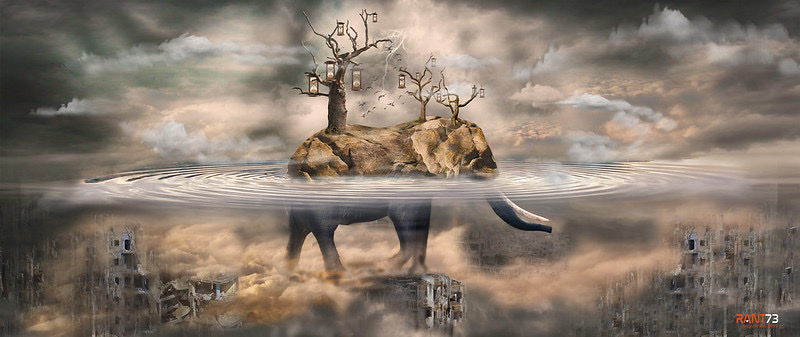
Some of the threads running through the background are beautiful and bright, even as the family portrait bleeds away from the canvas. 

Sometimes destruction doesn’t come all at once, but by a long, slow unraveling.

Threads 

This morning I trimmed the threads off of my patchwork writing journal.

As I balled them up to throw them away

I realized the tangle of color in my hand.

They spoke to me: Remember?

Oh yes, I used to see you all over the floor when I was a child.

Rolling lazily across the hardwoods when we walked by

or nestled in the frayed carpet of the living room.

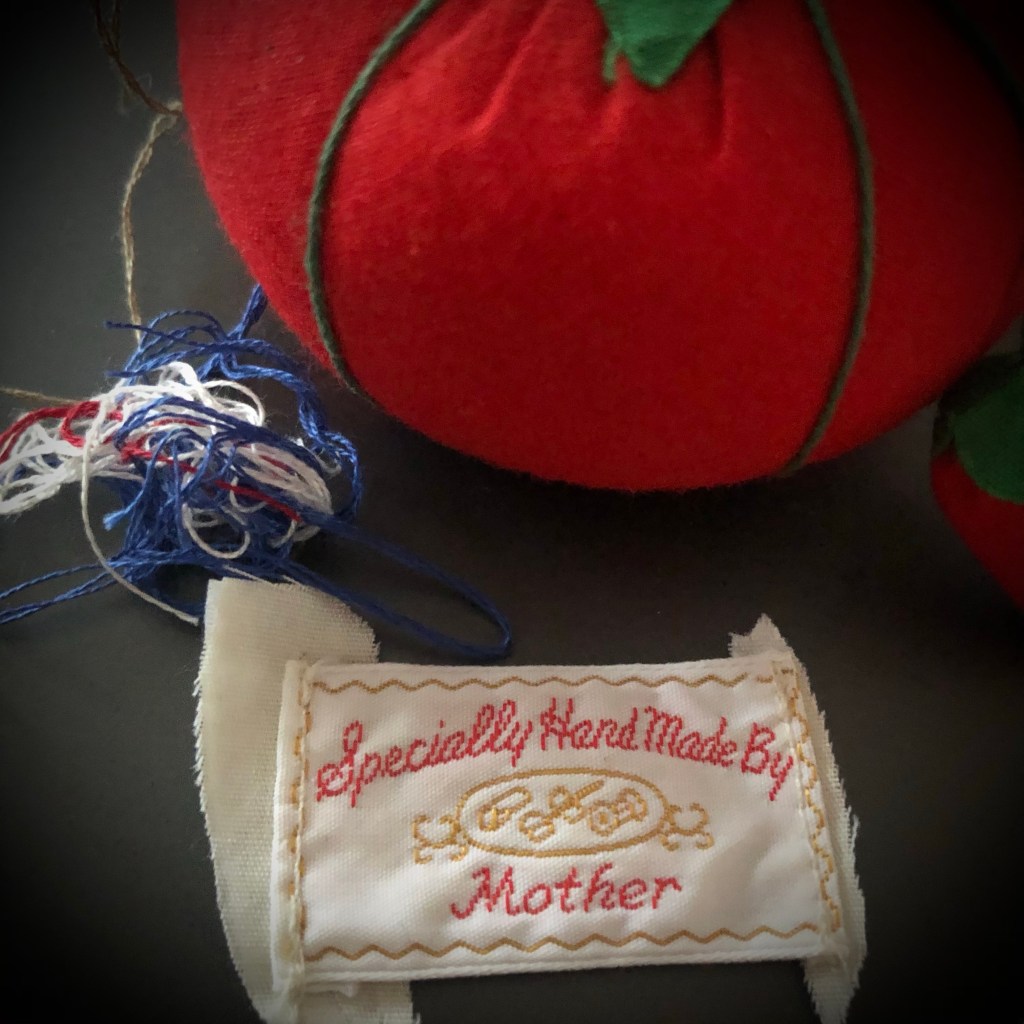
Fragments of my mother’s handiwork

vestiges of the artist she was

crafter of clothes we wore

tailor for many more.

Who’d have believed that such a creator

could destroy so completely?

A family of threads, each one its own vibrant color

in seams ripped apart

scattered far and wide

drifting on

and on

and on.

*******

The annual Slice of Life Story Challenge with Two Writing Teachers is underway, meaning that I am posting every day in the month of March. This marks my fifth consecutive year and I’m experimenting with an abecedarian approach: On Day 20, I am writing around a word beginning with letter t.

The poem has been sitting as a draft for exactly two years today while I pondered publishing. I wrote the original draft as a participant in professional development for literacy coaches, of all things. I can’t remember the prompt now, only that we were to share our poems with a colleague.

My colleague wept.

I share it for the children.

Snowball

Is there a childhood toy that stands out in your memory? For me, that’s Snowball.

He’s one of my first experiences with loss.

*******

Kindergarten. Show-and-Tell. It is my favorite part of the day and today I am especially excited: I’ve brought Snowball, my toy dog. He sleeps with me every night, he eats with me, he does everything with me except take a bath, because Mama says that will ruin him.

This is Snowball, I tell my friends, sitting in a circle on the rug for Show-and-Tell.

I hold him up.

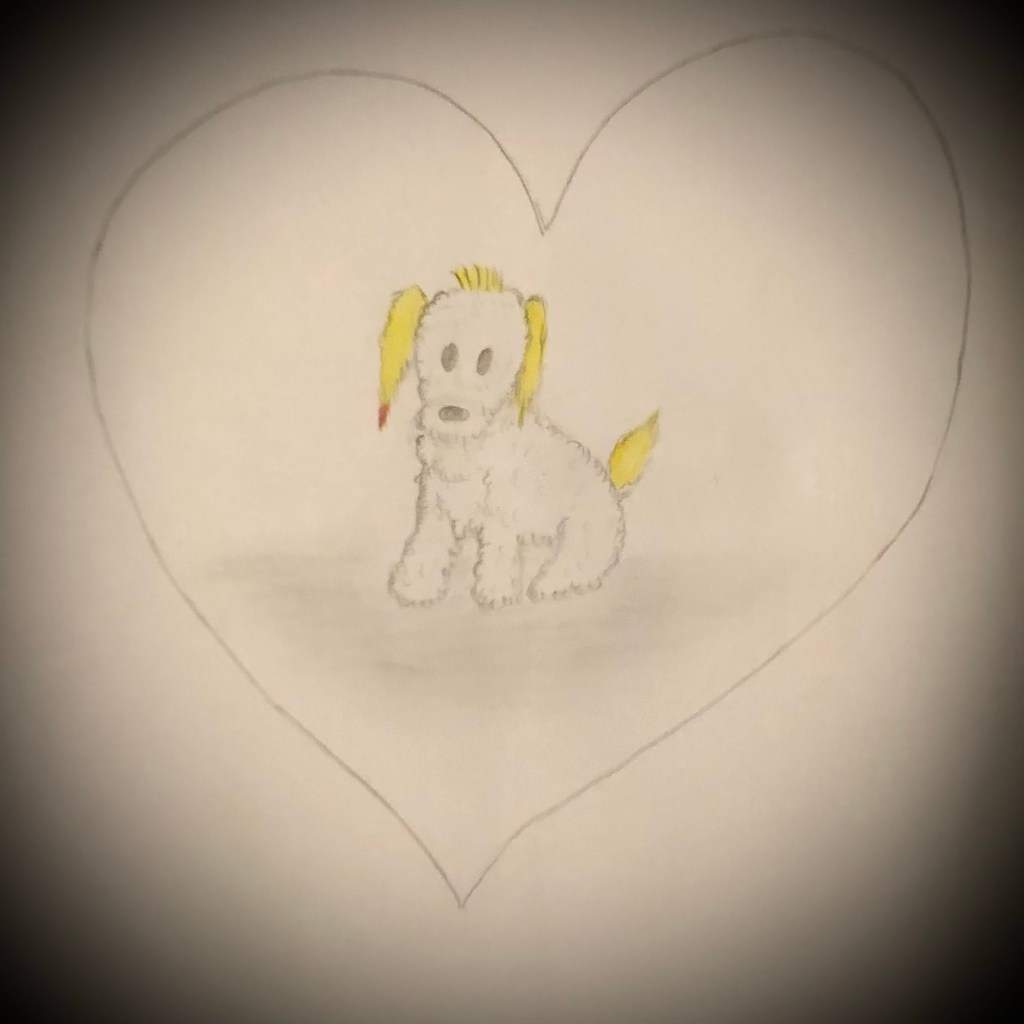
Oooooos and aaaahhhhs, because Snowball is so beautiful. His yellow ears and tail are made of ‘real’ fur. One ear has a little bit of ketchup on it from falling into my plate while I was eating fries. His stuffed body is woolly white, which is why I’ve named him Snowball.

I tell my friends: I saw him on a shelf at the store and Grandma bought him.

They all want to hold him and stroke his silky ears.

When recess comes, I decide to take Snowball out to the playground.

We have a really tall sliding board on our playground. It’s red and silver, not so shiny.

We take turns. I hand Snowball to a friend and climb, climb, climb to the top of the slide. Whoosh! It’s almost too fast, but SO fun. I make sure to hold my feet high for sailing over the mud puddle at the bottom, that worn-out place made by many, many feet landing there.

An idea: Snowball should have a turn.

Hey, Snowball wants to slide! I say.

My friends hop up and down. Let him slide! Let him slide!

Susan E. is standing beside me. When I climb up and I let him go, you catch him for me, I tell her.

I will! says Susan E. She moves toward the bottom of the slide.

I walk around to the tall, tall ladder. You will LOVE this! I tell Snowball. I give him a squeeze.

I climb, climb, climb, hanging onto the rail with one hand, onto Snowball with the other.

At the landing, I call down to Susan E.:

Are you ready?

Yes! She leans over the puddle with her hands held out.

I’m gonna count to three and let him go!

Okay! Susan E. shouts up.

One

two

three…

here he comes!

I release him.

Snowball slides so fast, so much faster than me…bumpity-bump…

Susan! calls a friend from the sandbox.

Susan E. turns her head.

—Susan! I cry from the top of the slide.

But it’s too late.

NOOOOOO!

With a soft splash, Snowball lands in the mud puddle.

—SNOWBALL! I slide down like a crazy person, scrambling, clawing…

Susan E. stands there, frozen. Then I’m sorry! I’m sorry!

I lift Snowball out of the puddle. He’s soaked through. His woolly white body is gray-brown; dirty water drips from his beautiful silky ears. They’re flat against his head, silky no more.

Sobbing, I carry him back to the classroom. I wrap and wrap him in paper towels. I cry the whole walk home after school.

Mama, I think. Mama will fix him.

When I get home, I pull the wet paper towels off to show her Snowball’s mushy, muddy body.

Honey, I can’t fix him, she says. He is ruined.

ruined

ruined

ruined

—Can’t you just put him in the washer and dryer? I am crying so hard that I can hardly speak.

It is my fault.

my fault

my fault

She shakes her head. He’s not meant to be washed that way. He’d probably come apart.

She says we have to throw him away.

I beg, I cry, but Mama says there isn’t any choice. It has to be done.

I wrap Snowball back in the muddy paper towels. I hold him close one last time, shaking with terribleness. I am sorry, Snowball. I am so sorry. I will always love you.

I lay him in the trashcan.

I cry in my bed all night long. Snowball is not there, will never be there again, to comfort me.

*******

Is it childish that, five decades later, writing the memory, I still cry...

I once drew him for students during writing workshop, when they asked if I had a picture. Even the ketchup on his ear.

*******

The annual Slice of Life Story Challenge with Two Writing Teachers is underway, meaning that I am posting every day in the month of March. This marks my fifth consecutive year and I’m experimenting with an abecedarian approach: On Day 19, I am writing around a word beginning with letter s.

A passing prayer

Heard today that a friend and former colleague passed away.

We worked together for a few short years as paraprofessionals, until I switched schools to complete student teaching, the final step in my university degree. It was an unexpected door that opened later in life for me.

My colleague encouraged me. She was an interesting, eclectic person who celebrated individuality and embraced life even as she absorbed some of its severest blows. I remember one sunny conversation we had about the word “eviscerated” — the gleam in her steely blue eyes never dimmed, whether burning with impassioned convictions or shining with compassionate discernment. She loved to laugh, to comfort, to speak of spiritual things.

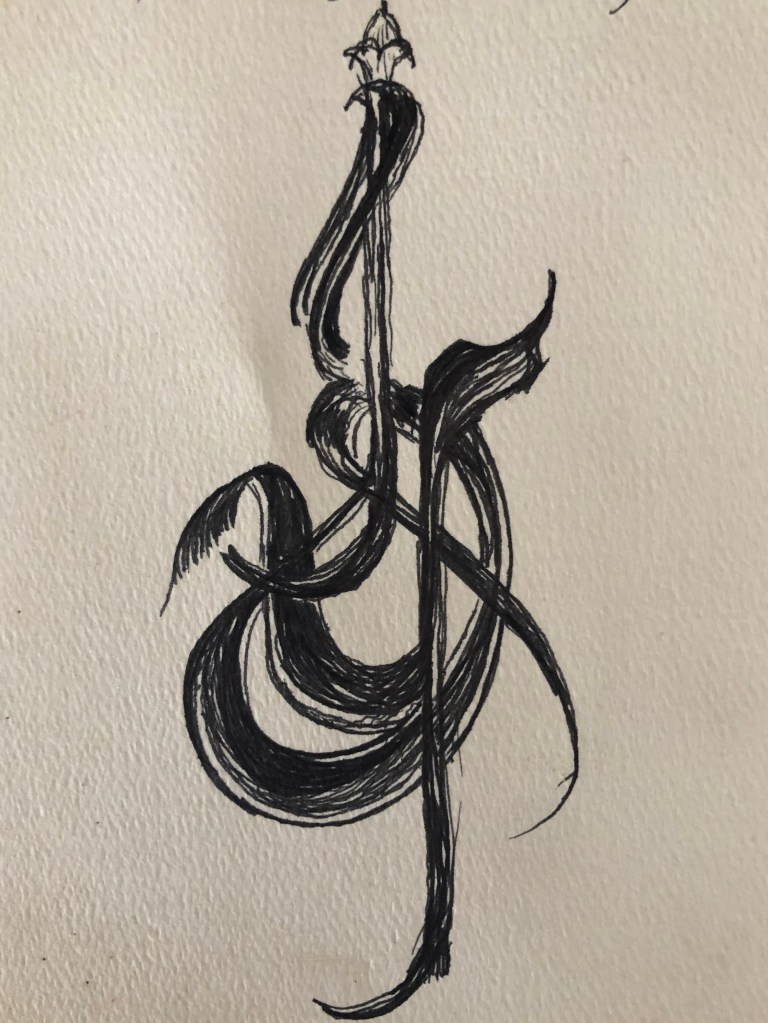
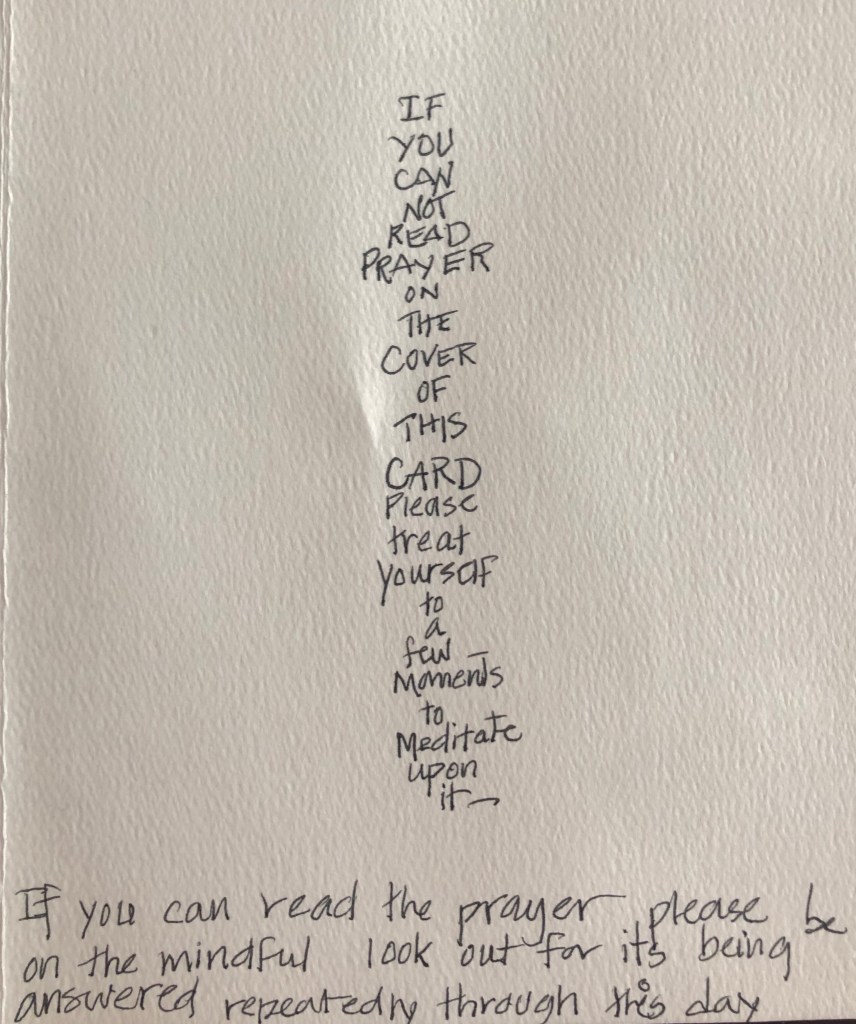
One day she surprised me with a handmade card bearing a mysterious drawing on the front: “This is my prayer for you,” she said with a smile and those unwavering, bright eyes.

I kept it all these years, long after we lost touch. Long after I heard that her compromised, declining health rendered her unable to work.

I found the card again this week during my incessant pandemic purge. With the TV in the background broadcasting the rise of coronavirus deaths at a local nursing home, I reread the card, marveled anew at its artistry and sentiment, thought of her, wondered what became of her.

Today I learned she’s numbered among those dead.

—How many messages do we miss in life, because we aren’t “still” enough to receive them. How many moments do we miss because we don’t make time. How many gifts go unacknowledged because we can’t see them while looking through the lens of unfairness.

My friend didn’t miss. She understood. Far better than most.

She reminded me once, long ago.

She reminds me, still.

It’s a choice.

Just now, seize the day
Offer your own gifts in return
You’ll find joy for the taking

Seize Heaven now, joyful old friend.

Rest in sweet peace.

The kitten’s song

My favorite teaching moments are those when classroom teachers have invited me in to model the writing process. This occurs a lot less than it used to, as writing workshop in my district has been replaced by a curriculum with embedded writing. I’ve been remembering those moments lately. I miss walking in with a list of ideas for students to choose from. I miss drafting and revising in front of them while they ask questions and make suggestions regarding artistic or stylistic choices. I miss hearing the flood of their own ideas, their own experiences … and sharing mine with them through writing. Perhaps that’s what led me to go back and reread those mentor texts.

The writing of this one was, to me, the most memorable. I wrote it over several days for a fifth-grade class studying memoir. I explained that one way to make memoir come alive is to pick a moment of strong emotion and pull the readers in so that they feel it, too. I asked if they wanted me to write about a moment from my life when I was happy, sad, embarrassed, angry, or afraid.

They were tough. They said: “A time when you were sad. Make us cry.”

Okay …

They chose, from the topics I gave them, ‘the sick kitten.’

And so I walked back into my memory, and wrote.

Here’s “The Kitten’s Song,” with a bit more polish at every writing (for revision is never really over, is it).

*******

Free kittens – take one.

I saw the sign propped on a chair at the entrance of my college cafeteria. A disheveled guy—another student, I guessed—stood there holding a cardboard box. I hurried over to look inside:

One dark little ball of fur.

“Is that the last kitten you have?”

“Yeah,” he replied. “No one wants her because of her tail.”

“What’s wrong with her tail?”

The guy scooped up the kitten and showed me her backside. She didn’t really have a tail. Just a stump.

“What happened to her?”

“She was born this way. The only one in the litter like this.”

The tiny black creature sat looking up at me with big yellow eyes. She meowed.

Poor little unwanted baby.

There was, of course, only one thing to do:

“I’ll take her!”

I named her Moriah after a magical black cat in a wizard story, The Forgotten Beasts of Eld.

When she was nine months old, Moriah had seven kittens. Some were solid black, like her; the others had gray and white stripes. The three boys had long tails but the four girls had stumps like their mother.

All of the kittens were beautiful to me. The day after they were born, my mother and I were admiring them when we realized something was wrong.

In the bed I’d made out of a low box lined with a soft blanket, Moriah lay nursing her babies. The smallest kitten, the runt, had been pushed away by her bigger brothers and sisters. This tiny ball of gray and white fuzz rested at the side of the box by herself. When I picked her up, I saw a big open sore where her tail was supposed to be.

“Mom!” I cried, showing her the raw place. “Look at this! What happened?” A horrible thought entered my mind. “Do you think something did this to her? Did Moriah —would Moriah — bite her kitten’s tail off?”

Mom shook her head. “Gracious, no. I think the kitten was just born like this and we didn’t notice until now. Looks like her tail never finished forming. Could be spina bifida. It happens to human babies sometimes, when their spines don’t seal all the way. It’s probably because of Moriah’s tail defect, as she’s passed on to her daughters.”

“Will it it heal?”

“It might. We’ll have to keep an eye on it.”

“Poor little thing,” I mourned, stroking the kitten’s head with one finger.

I tried to help. I put the kitten in the pile of her brothers and sisters so she could get to the milk. They still pushed her away. I moved the biggest kitten, who loudly complained, and put the runt kitten in his place, but she didn’t try to nurse.

“What are we going to do, Mom? If she doesn’t get any milk, she’ll die.”

Mom said, “Bring her to the kitchen. I’ll get a medicine dropper.”

I came to the kitchen and sat at the table, holding the kitten. She weighed no more than an egg, just a soft warm spot in my hand. Her day-old eyes were still closed. Mom washed the medicine dropper we used when we had earaches, then she took some milk from the refrigerator and warmed it in a pan on the stove.

The kitten purred in my hand, a pleasant little vibration, and I suddenly felt that she needed a name.

If I name her, maybe she’ll get well and strong.

I was trying to think of a name when Mom handed me the dropper filled with milk.

“Feed your baby,” she said.

The dropper seemed too big for the kitten. When she opened her pink mouth, my heart leaped with hope, but she only made a cry, the tiniest cry I have ever heard in my life, so small that it was hardly a sound at all.

“Mom, I can’t do it.” By now my hands were shaking.

“Give her to me,” said Mom.

My mom could fix anything. Once she rewired our oven all by herself. She made a lot of our clothes and took in sewing for other people. She could mark patterns on fabric, cut it to precision, and every piece turned out exactly right. As I watched that tiny gray-and-white kitten in my mother’s capable hand, I was sure Mom could get her to take the milk.

I remembered a song then, from a movie I watched with Mom when I was little. The movie was her favorite, The Sound of Music, and this the song I loved best:

 Edelweiss, edelweiss,

every morning you greet me.

Small and white, clean and bright

You look happy to me.

Blossom of snow, may you bloom and grow,

bloom and grow forever …

It’s about a little flower that grows on the Alps of Austria where the movie is set, but for me, in that moment, the kitten became Edelweiss. It was a perfect fit. As Mom tried to get the kitten to drink from the dropper, I sang the song over and over in my mind like a prayer:

Blossom of snow, may you bloom and grow,

bloom and grow forever …

The milk only ran down the sides of the kitten’s face. When I looked at Mom, her mouth was set in a straight line. A tear rolled down her cheeks like the beads of milk on the kitten’s.

After a minute, my mother said, “She’s already gone.”

“NOOOOO!” I wailed. “Keep trying!”

“It wasn’t meant to be, honey. She was too sick.”

We held her for a moment and cried.

I wrapped Edelweiss in one of Daddy’s white handkerchiefs and buried her in the backyard. I found a nice rock in the yard with a flat surface and painted a little white flower on it. I put it on the grave and cried there a long time, for Edelweiss, for everything that has to die. Moriah came to sit on the ground beside me, a warmth at my side, purring deep and strong. She looked up at me with winking yellow eyes and all I can imagine is that she was saying Thank you.


Many years later, I wonder about that rock, if still sits in its special place, if the sun and rain have erased my painted flower. In my memory, the kitten named Edelweiss hasn’t faded. She stirs whenever I start thinking life’s not fair. I remember how she purred. You look happy to me … I don’t know if that is strange or not. I just know that Edelweiss, who only lived a day, is somehow part of me, always.

Whenever I hear her song, I remember.

*******

Photo: Kittens 001. Bryan Price. CC BY-SA