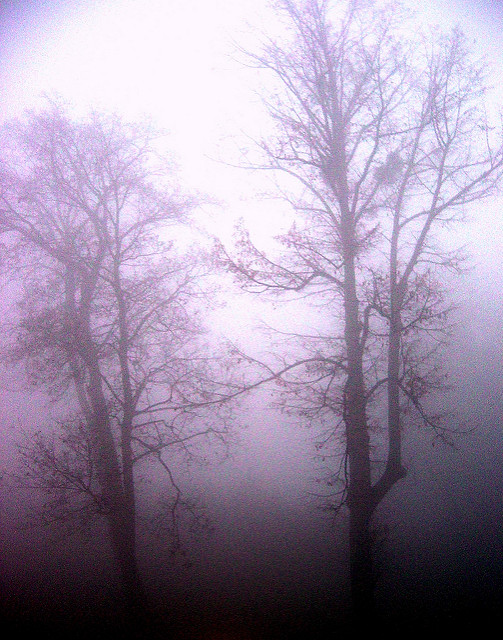
Dreams. Flo’s shots 4 me. CC BY
I sit straight up in bed. “Oh dear.”
My husband jumps: “What’s wrong?”
My brain can’t form thoughts yet. I was dreaming about . . . something. Whatever it was has already melted away.
He repeats: “What’s wrong?”
“I don’t know. I am – startled.”
My husband sighs, turns over, goes back to sleep.
I can’t. I lie there with my heart pounding.
I’ll write for a while, I decide.
The predawn house is dark but for a nightlight in the hallway. I creep around, wraith-like, to avoid waking the three sleeping dogs. Heading toward the kitchen, I hear it, loud and clear, as if it’s on the front porch, trying to find a way in:
Whip-poor-will, whip-poor-will, whip-poor-will . . . .
My favorite onomatopoetic sound in all the world. I’ve not heard a whippoorwill that close to the house before.
Is that what woke me?
And then I start thinking about symbolism, so while my coffee brews, I look up whippoorwills on the laptop. Chilling stuff. Harbingers of death, disasters, impending trouble. Being visited by a talking Raven might be more desirable.
Whip-poor-will, whip-poor-will, whip-poor-will . . . .
Okay, it’s a captivating sound, more enchanting than haunting, I think, pouring cream in my coffee. I’ve loved the call of the whippoorwill since I first heard it, the summer after I moved to rural North Carolina. It dominates a warm country night, an energetic, compelling song rather than a plaintive one. It makes me want to stand still and listen for a long, long time. I continue my online reading, how the whippoorwill is referenced over and over in story, song, and poetry. Folks, it’s really a mating call. That bird isn’t going to be lonely for long.
And then I read: A group of whip-poor-wills are called a “seek” or “invisibility” of whip-poor-wills.
My imagination takes flight. Those are magical words.
“Seek” implies “seeker,” someone on a quest, not to mention Quidditch. Few words have greater magical connections than “invisibility” – it’s a coveted power. Granted, in this context invisibility and seek define a homely, nocturnal bird that is rarely seen and which is simply seeking a mate with its fervent night song, but still . . . could there be something more?
I’d awakened with a sense of imminent danger, bolting upright in bed. Oh dear, I’d said, just as I crossed the line between sleeping and waking (this a hypnopompic state; I looked it up just now). While I cannot remember a dream-creature – or any shadow-people, for the true paranormal enthusiasts out there – attempting to do me harm, I do wake sometimes because of a dry, rubby cough, thanks to the flu earlier this year and my latent asthma. I wonder if irregular breathing is the root of this.
What an unromantic notion.
Whatever the reason: Suppose the whippoorwill arrived at my house not as a portent of doom but as a protector, a preventive force. What if it knew to sing its song – because, let’s face it, that song is all about life and reproduction, not death – to wake me at the very moment before disaster struck? Exactly what, then, did it seek to drive away or undo – and why? What did my evaporated dream have to do with it?
Whip-poor-will, whip-poor-will, whip-poor-will . . . .
Ah, here are better words to describe the call: Ethereal. Otherworldly.
A little bit of magic in the still of the night from the seek, the invisibility – although I always hear only one.
I sip my coffee, smiling at my flight of fancy.
Although it could be something more . . . .



 lit bits and pieces