Yahtzee

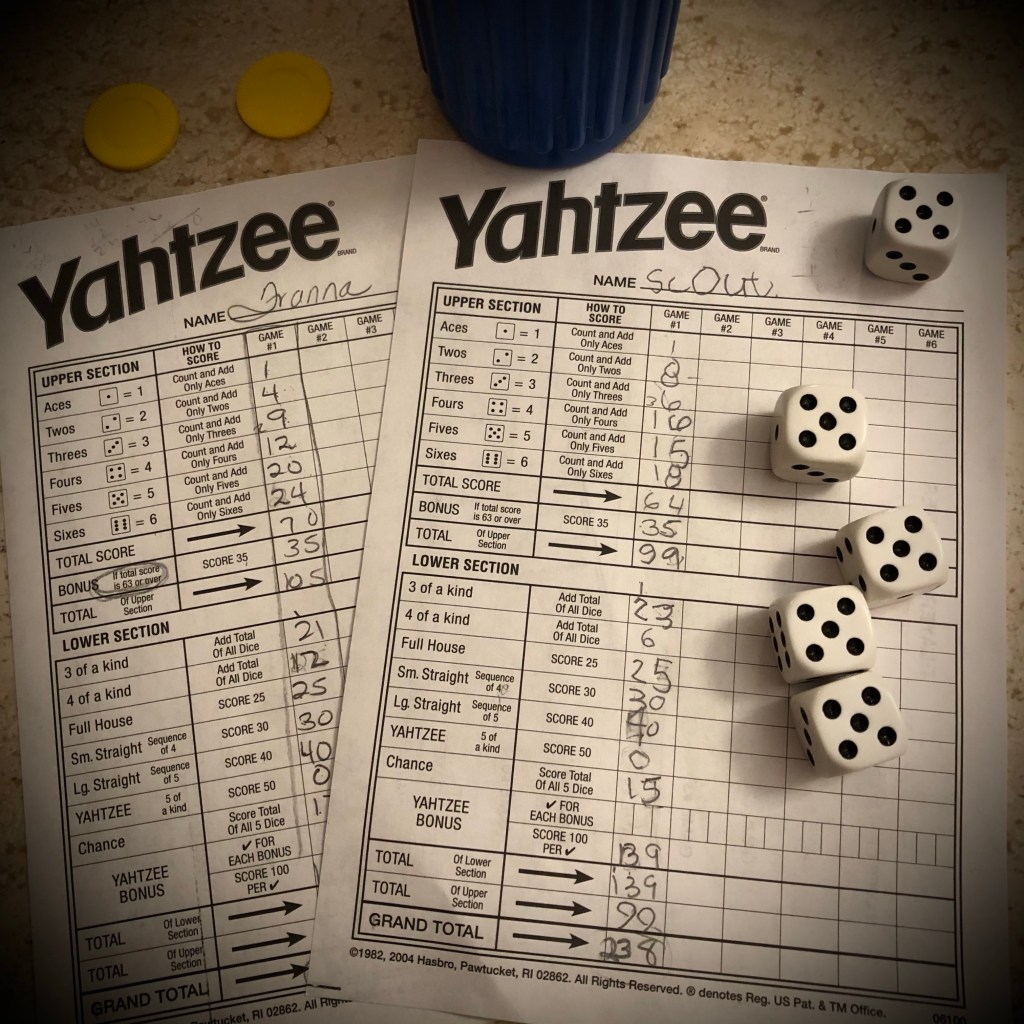
She spies the box on the top of the shelf in “her” room (I call it the “Spare Oom,” kindred Narnians):

“What’s that game, Franna?”

“Oh, that’s Yahtzee. I used to play it all the time when I was growing up.”

“How do you play?”

Sounds like an invitation to me.

I reach past Spy Alley, Catchphrase, Trivial Pursuit, the chess set, and Twister (that game floored her. Really. Not just trying to be punny).

Dear old Yahtzee.

The dice rattle inside the box…and I remember…

Whole afternoons elapsing on the worn living room rug, sunlight waning behind the lace curtains, sometimes distant thunder beyond the rain-slapped windows, none of it mattering in the wide circle of lamplight where my sister and I hunched over the scorecards. The exultant cry or groan of despair, depending on whose throw landed all five dice on the same number. Yahtzee!

Evenings in my aunt’s spotless, light-dimmed, vanilla-scented den, legs criss-crossed, drinking Dr. Pepper in glasses with curiously-cylindrical ice cubes clinking (ice-makers were uncommon, then). The lovingly-fierce competition between my young aunt and uncle, their laughter, their encouragement: Good choice, Hon. Sometimes you just have to take it on Chance

The look of perplexity on kids’ faces at math camp when I bought out the box after a lesson on probability; their brows furrowing as they learned the terminology: three of a kind, four of a kind, full house, small straight, large straight; their faces soon glowing with new zeal; shouts of YESSSS! accompanying fist punches in the air…

Hours at the kitchen table, the warmth of butter-yellow walls, my mother blowing on the dice, sending my sister and me into giggles; we start blowing on our dice, too. Come on, sixes, come on, sixes…years later, as I leave the house for a date: my mother at the kitchen table with a friend from across the street, whose story I never fully knew, only that she’d suffered a mental breakdown and had been taken in by relatives. Her hands shake as she lights one of my mom’s Salems, blue eyes wide and a little too bright, a nervous smile flickering across her face as the dice roll in her favor. Swirls of white smoke heavy in the air, floating after me on the sound of my mother’s cackling laughter, hilarious in itself, uniquely uninhibited, ever-gleeful…

So much depends on the rolling of the dice, on the way you choose to take what comes.

I lay out the pencils and scorecards, scoop up the dice, place them in my granddaughter’s little cupped hands.

“All right, Baby. Let me show you how to play.”

*******

The annual Slice of Life Story Challenge with Two Writing Teachers is underway, meaning that I am posting every day in the month of March. This marks my fifth consecutive year and I’m experimenting with an abecedarian approach: On Day 25, I am writing around a word beginning with letter y. 

Voices

On the last Sunday in July, 2019, my husband went to the gym after church. He had a great workout on the stationary bike (always proud of accomplishing five miles in fifteen minutes).

He got in his truck to come home.

That is the last thing he remembered for a long time.

At the house, our dog went crazy, barking. Someone in the driveway. Police officer: Your husband’s had an accident. Do you have a way to the hospital… truck ran off the road into the woods…appears to have been a medical event…sorry, I don’t know how bad it is. EMS was working on him when I left…

Both of our grown boys happened to be home that afternoon. We rode together to the ER, not knowing what we’d find.

My reeling mind wondered if their black suits were clean…in case…

At the hospital, a nurse was waiting for us. She ushered us into a side room.

Massive heart attack, said the ER doctor, but he’s alive. He wasn’t when EMS got to him. He was in cardiac arrest. They did CPR, defib…they are heroes…heroes…

Heart attacks killed his father and grandfather in their fifties.

After emergency surgery, he underwent induced hypothermia to allow his brain time to rest from the trauma. No one knew how long he’d gone without oxygen. EMS had arrived on the scene quickly, as the station is just up the street from where the truck ran off. My boys and I learned that their dad endured forty-five minutes of CPR and ten – TEN – shocks from the paddles. We would learn that his sternum was broken. Attending CICU physicians warned: After hypothermia, we’ll do a waking test. There’s no guarantee he’ll wake, or how extensive the damage will be to his brain…

As we endured those long hours, we learned that his truck was barely dented as it ran off the road, that it stopped just short of a deep ravine in the woods. We were told that he swerved into oncoming traffic and back into his lane before running off on the right. He never struck another vehicle. People behind him called 911. One thing different, and all would be different…

As one doctor said: Everything aligned for him. Everything.

He did awaken. He knew us. He was soon able to ask, in a raspy voice after coming off the ventilator: What happened?

It would be a long recovery involving another hospital stay and more surgery…but he recovered.

He could remember leaving the gym, but he could not recall anything from earlier that month, or from many months before. All of his long-term memory remained intact; all his stories, all his sports trivia and stats. There was just a period completely erased, leading up to the heart attack. He could not recall a thing from our family vacation to the beach earlier in July, the glorious time we had.

The brain’s way of protecting itself from pain, our oldest son said. I had a professor who told us about this in class. It’s not good to try to make a person remember…

He didn’t recognize the scenery on the way home from the hospital: Why are we turning here? Everything looks so new…have I seen this before?

The doctors said, Some memories may return as he heals. Some may not. It’s hard to say; everyone is different.

After a couple of months, he returned to his work at the church. He’s a minister. The number one question people had after he began regaining strength: Did he see anything? when he was… you know… ‘gone’? I mean, he IS a pastor… such curiosity tinged with hope, in that questioning.

All he could remember, much to people’s disappointment: It was just like going to sleep. No pain, just fading into sleep. So peaceful.

Then one day he saw pictures of our family vacation and recognized the giant tortoise we chanced upon at a roadside display: I remember that!

Random bits returned to his mind, here and there.

Then on another day, much later, he told me: I heard voices.

What do you mean, you ‘heard voices’?

When my truck ran off the road. When everything was going dark.

What did they say?

They said, “He’s in trouble. We have to get him off the road.”

Did you…did you recognize the voices? Do you think that maybewell, it could have been just the EMTs…

He shook his head. All I know is, I heard them when I was driving and I thought, if I can just get over there to the grass, to that little hill… where that sunset is…everything will be okay.

He left me staring after him as he headed out to the park for the eight-mile hike he makes now, several times a week.

He’s in trouble. We have to get him off the road…

Everything aligned for him. Everything.

I ponder the mystery of memory, and the miraculous…in ceaseless awe that he is returned to us, restored, rejuvenated, whole.

In his own words, with his characteristic wit and big, contagious laughter, as “a member of the Lazarus Club.”

*******

Photo is entitled “The Day Black with Night” and is in the public domain on Creative Commons with this verse: “Go for help to Him who makes Orion and the Pleiades, by whom the deep dark is turned into morning, who makes the day black with night; whose voice goes out to the waters of the sea, sending them out over the face of the earth: the Lord is His name.” —Amos 5:8.

The annual Slice of Life Story Challenge with Two Writing Teachers is underway, meaning that I am posting every day in the month of March. This marks my fifth consecutive year and I’m experimenting with an abecedarian approach: On Day 22, I am writing around a word beginning with letter v.

Needles

At the end of February, the COVID-19 vaccine was made available to teachers in my state.

My district went to work immediately, setting up sites and online registration.

The quickest appointment I could get was at a high school gym.

Upon entering, seeing the tables set all around the perimeter, I was struck with a sense of déjà vu, sort of.

Flashback to another school gym. For just a second, I was there in a long line of people. Standing with my mother, my little sister.

To be vaccinated against swine flu.

I’d nearly forgotten.

This COVID rollout was so different. For one thing, masks. Another, no long lines; still not safe. I stood six feet behind one person for a just few seconds in the hallway outside the gym before he was directed to enter. Slight pause, and I was permitted. Someone pointed me to a table across the room. After giving my name and getting my official paper, I was told to sit in one of the six or so well-spaced chairs in the center of the gym. I didn’t think to count how many immunization stations were set up around the walls, mostly because I didn’t have time; I sat for less than a minute before someone came over to point me to one of them. Quick review of my info, protocol of a few questions, and the deed was done. Barely felt it before the administrator tossed the syringe into the biohazard container and congratulated me. She gave me a little CDC card. Moderna. A jolt of cheer in the knowledge that this is the vaccine Dolly Parton funded; she got her shot that same day. A layer of comfort, somehow. I’d just written of Dolly and one of her songs two days before. It’s like being blood-sisters now. Kind of.

From the time I arrived to the time I left: less than ten minutes.

Couldn’t help remembering, as I walked out into the warm sunshine of an imminent spring, all the hours spent waiting in doctor’s offices as a child, getting an allergy shot in each arm every week, then every other week, then at home when my mother was eventually allowed to give them. How my mother’s health issues involved so many hospital stays and doctor’s visits that her friends dubbed her “Pins and Needles,” a double entendre on her vocation as a seamstress.

I walked on, considering my own shadow as it glided along the parking lot pavement, mulling how needles prick the arm only for an instant in the aim of protection and preservation and then are gone, whereas needles in the memory can provoke reactions and pain for a lifetime. I feel the swelling of many stories, there.

But just as I did when I was small, I waited the allotted time to be sure there was no reaction to the injection. Once upon a time, my dad waited with me; now it’s my husband driving my inoculated self home. He wants to drive me back for the last one.

In the end, it’s just a matter of doing what must be done, and going on.

*******

The annual Slice of Life Story Challenge with Two Writing Teachers is underway, meaning that I am posting every day in the month of March. This marks my fifth consecutive year and I’m experimenting with an abecedarian approach: On Day 14, I am writing around a word beginning with letter n. Amazing, the number of associations and memories threading through one simple, sharp word.

A bowl of snow

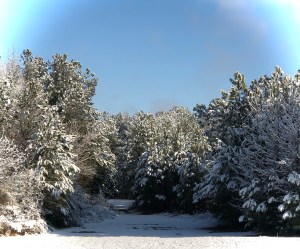
Deep in the night, it came.

I wake to the sound of it falling.

A faint, feathery swishing against the bedroom windowpanes. A silvery glow at the blinds, beckoning. I crawl out from under the warm covers to peer through.

It’s a different world. Softer. Purer. At peace in its perfect winter-white blanket, illuminated by the full moon. Big flakes descend to the ethereal stirring of wind chimes.

I imagine animals curled in their cozy dark burrows.

In the spirit of affinity, I return to mine.

I waited well into the morning before texting my son: Is she so excited?

His daughter, age five, has been longing for snow. Some winters pass without it here in central North Carolina.

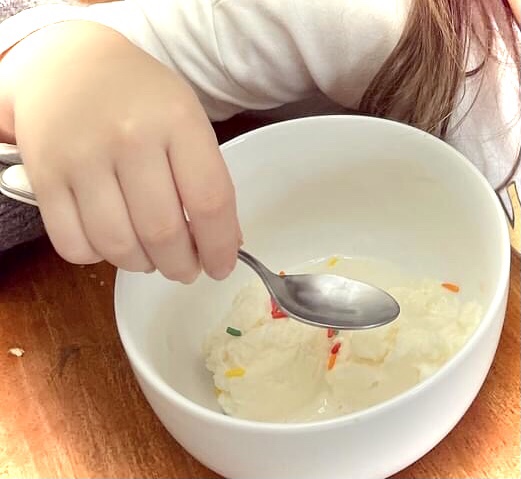
He texted right back: She’s so wound up. We have already been out to play. We made snow cream. Put sprinkles on it and ate it for breakfast.

How awesome is that, I thought. She will remember it all of her life, this snow, getting to eat it for breakfast.

Magical moments. They will be stored away, deep in the hallowed halls of her mind.

I was just rereading The Power of Moments: Why Certain Experiences Have Extraordinary Impact by Chip Heath and Dan Heath. They explore moments we remember and revere the most. Some are tied to great emotion or to shared meaningful experiences. Others transcend “the normal course of events; they are literally extraordinary.”

The authors write: “The most precious moments are often the ones that cost the least.” They relate the story of a three-year-old who succumbed to a severe E. coli infection. They describe (brace yourself) her kidney failure, horrible pain, portions of her colon being removed twice, her heart failure and resuscitation; she desperately needed a kidney transplant and a compatible donor could not be found. At Halloween, her costume had to be laid on top of her because of all the tubes. She was still in the hospital as Christmas neared, and it began to snow:

For a child from Vermont, it was cruel, having to watch the snow through the windows. Wendy loved to make snowmen, to go sleigh riding. She hadn’t been outside for two months. Her lead nurse, Cori Fogarty, and and patient care associate Jessica Marsh hatched a plan. If Wendy couldn’t play in the snow, they would bring the snow to her. But it was more complicated than that. Because of Wendy’s heart condition, the staff was monitoring every milliliter of water that she consumed. So Jessica went and filled an emesis bucket with snow, weighed it, let it melt, and poured it into a graduated cylinder. Now they knew how to translate the weight of snow into its volume of water. So they went and filled the bucket with exactly the right amount of snow so that if Wendy ate it all — as three-year-olds are prone to do — she’d be just fine.

Can you see them, bringing the bowl of snow into the hospital room? Can you see that little girl’s expression when she saw it? Jessica Marsh said: “I have never seen such joy and pure innocence on a child’s face.” Wendy’s mother: “It was bliss, it was joy.” Many years later she would write: “It’s easy to forget the monotony of the endless days that stretched together during her recovery. But that one moment of brightness, that is one moment we will never forget.”*

Perhaps that is just the image we need right now, as COVID-19 drags on. A bowl of snow for a child…a bit of magic to escape the moment, maybe to carry us through.

As parents, as teachers, as writers, compassionate human beings, we have this power within us to imagine such moments, to make them happen. The most precious moments are the ones that cost the least…

Just so happens that as I write these words on this new, dark morning, flurries have started falling again.

Let us go and seek our bowl of snow. And where we might share it.

Maybe even for breakfast, with sprinkles.

*******

*Wendy’s story is from the chapter “Making Moments Matter” in The Power of Moments by Chip Heath and Dan Heath (Simon & Schuster, New York, 2017, 263-265). You might like to know that she did receive a transplant and went on to be an athlete.

Thanks to all at Two Writing Teachers for the power of your shared stories. Where there’s writing, there’s a way.

Capitol recollections

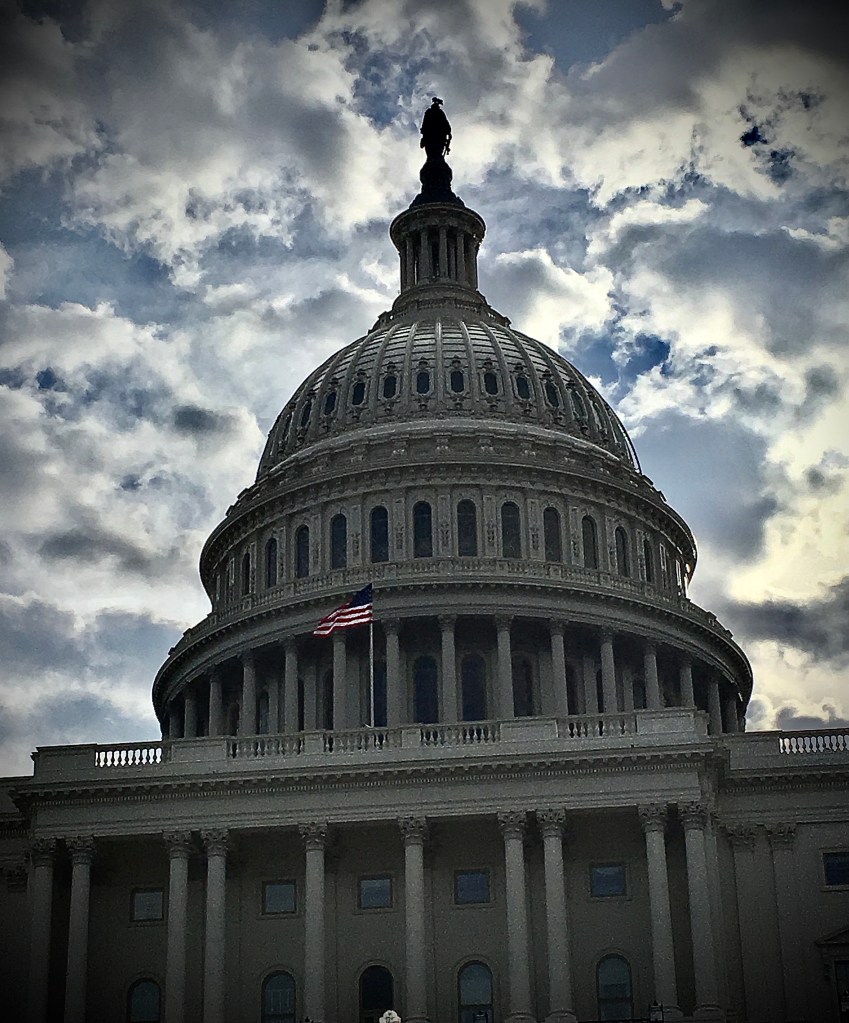
Morning breaks over the Capitol. March 2018.

I was eleven the first time I saw it with my own eyes. 6th grade field trip. In those days, parents could ride on the bus with the children; they didn’t have to follow behind in a car. That is how my mother got to go. She volunteered to chaperone. She didn’t have a driver’s license. I think it was the first time she’d ever been to D.C.

All along the mall, teachers strategically organized students for photos with the best view of the Capitol behind them. Everywhere you looked were rows and rows of children, many carrying small flags. Not all were American, but all seemed excited. I walked, listening to the musicality of many languages I couldn’t understand.

I cannot remember if it rained, or what we ate, but I recall the beauty of my country’s capital enchanting me. In some gift shop I bought a crinkly parchment reproduction of the Declaration of Independence. We hold these truths to be self-evident, that all men are created equal, that they are endowed by their Creator with certain unalienable Rights, that among these are Life, Liberty and the pursuit of Happiness…I was happy that day. The Declaration came with a feather pen, to my delight. Then I spied a horse ornament on a glass shelf behind the register. Dark, stormy gray mingled with cream, frozen in the act of rearing up, forelegs arcing in the air, powerful muscles so realistically rendered, mane flowing in an imaginary breeze.

I did not know, at age eleven, that a horse symbolizes courage. That it can also represent overcoming adversity and caring for one’s emotional, mental, and spiritual well-being.

I only knew this twelve-inch plastic horse was beautiful and mighty. Captivated, I handed my last dollars to the clerk who wrapped my horse in layers of paper. I cradled it close all the long bus ride home.

It remained on the shelf in my bedroom until I married and moved out.

I’d return to D.C. again via Amtrak at nineteen, to meet my cousin who lived there. He would accompany me to an audition for acting school in New York City (that is another story). It was winter, icy-cold. Bundled and laughing, we roamed the windswept streets, past the lofty steps of the Capitol, talking of life, of the future, of being mavericks of the family.

Life takes many an unforeseen turn. He died young. I never went to acting school.

I had a family of my own instead.

Over the course of years, my husband and I made several visits to D.C. He’s a history-lover, an original poli sci major turned pastor. We took our children when they were small. Our last visit was early spring, 2018, with friends. What I noticed most on approaching the Capitol in early morning: the deep silence. Few people were out. The brooding sky made a compelling backdrop for the ornate dome, topped by Freedom. I took a picture. I tried to remember my first visit as a child, how enchanted I felt…long before I understood that relationships can disintegrate in unimaginable ways. In families, communities, countries.

The day after the attack last week, as I turned on my computer screen to meet with young elementary students, I felt numb, unfocused, ill-prepared. One by one at the appointed times, the children popped in, their faces aglow because…it might snow! A pandemic, ten months of reinvented school and life, volumes of ongoing, unfolding horrors in the news…yet they greet me with when is the snow is supposed to start?

It set a little part of my hippocampus jingling. Snow, as a literary symbol, means innocence, purity, tranquility. Even blessing.

Suddenly that old storm-gray horse souvenir resurfaced, vivid, nearly tangible, in my memory.

Strange.

I can’t say it’s symbolic of the American spirit. What does it mean to be American?

Maybe it’s symbolic of a child’s spirit. What makes it so mighty?

All I am sure of is this: a longing for overcoming and well-being.

For all.

*******

My previous post is a poem on the power of words to wound and heal: When.

Here are words inscribed in the U.S. Capitol:

On the Rostrum of the House Chamber – “Union, Justice, Tolerance, Liberty, Peace”

Behind the vice president’s chair in the Senate Chamber – “E pluribus unum” (“Out of many, one”)

On the stained glass window of the Congressional prayer room – “Preserve me, O God: for in thee do I put my trust.” Psalm 16:1

*******

with thanks to Two Writing Teachers for the Slice of Life Challenge, in itself a testimony to the power of stories and community.

Flavor of fall

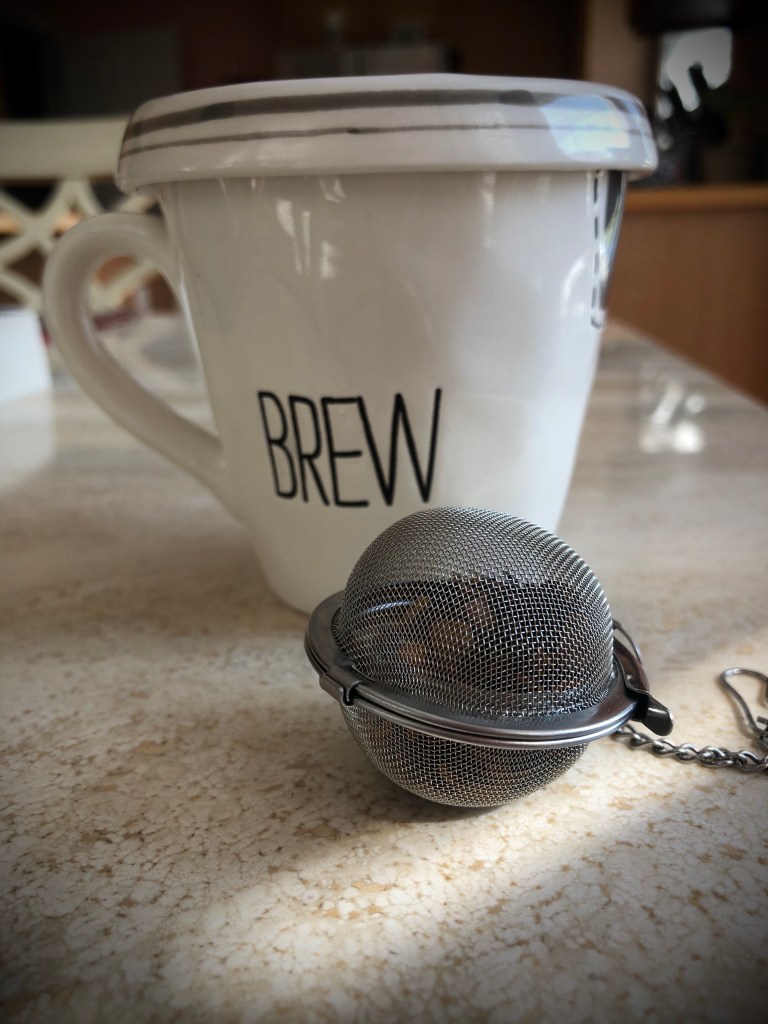
Someone I love just gave me this “Brew” cup and infuser ball along with loose black tea leaves mingled with cinnamon, ginger, turmeric, milk chocolate curls, and calendula petals what’s not to love?
I am sipping liquid Autumn.

In my online writing voyage, I’ve just come to a new port of call—Sharing Our Stories: Magic in a Blog.

Those words, stories and magic, are all the passport I need to disembark and discover…

Today’s open invitation is writing about a favorite fall food, or one loved as a child.

My mind goes immediately to the breakfast cereal Count Chocula. I look for it at the beginning of every autumn now, but, if I recall correctly, it used to be available all year round when I was a child. I could be wrong. At any rate, I hadn’t seen it in decades when, maybe three years ago, it reappeared on grocery shelves as if by magic—poof! Voilà! —catapulting me, wide-eyed, open-jawed, straight back into childhood, to age 8? 9? 10?, hunkered over the cereal bowl, immersed in a book (for one cannot eat a bowl of cereal without a book, right? Isn’t it some unwritten law?). I wouldn’t stop at one bowl, see. Usually it was two. Maybe even three… suddenly my father is walking through the kitchen again, scowling: “First ketchup! You use way more than you should. Now this. Nobody needs to eat this much cereal…I’m buying three gallons of milk a week! For only two kids!”

What would he say if he could see how many boxes of Count Chocula I have, at this very moment, squirreled away my cabinet? Yikes!

Once this prompt got me walking around in Long Ago, savoring my Count Chocula, I began tasting other things… my mother’s peanut butter cookies with Hershey’s kisses on top, slightly melted from the fresh-baked warmth. She made them when neighborhood kids gathered at our house to watch the annual airing of The Wizard of Oz on TV, in those pre-cable days. I think this was in fall… there was a chill outside. The grainy-crunch cookies with their soft-bottom chocolate caps, Dorothy, her comrades, her red ruby slippers (which I later went to see numerous times in the Smithsonian), dear Toto, Glinda in her iridescent bubble, the Emerald City, the music… all magic, all warmth… there’s no place like home in the living room with friends and family, taking a trip down the yellow brick road once a year.

I do not know why memory leads from that scene to school carnivals, the caramel apples and Crackerjacks that I did NOT like, the scent of hot buttery popcorn in the air, the delicious excitement of reaching my arm into a giant clown face with a cut-out mouth for a grab-bag full of little treasures…and onto Halloween, the shivery joy of putting on a costume and going out into the cold dark night with friends who looked funny, creepy, and spooky but never really scary, in a time and place where it was safe to go trick-or-treating from house to house to house…oh, and I never did like candy corn, although it’s pretty and fun to use as decorations, like for turkey beaks or tail feathers on tabletop arrangements at Thanksgiving.

—Thanksgiving.

My mother’s carrot cake.

Locally famous, the only carrot cake I’ve ever really liked. Everyone loved it. I have her recipe. I make it every Thanksgiving and again at Christmas. Her secret: carrots finely-grated to pulp and extra cinnamon.

—And there it is.

My favorite flavor of fall.

Cinnamon isn’t exactly a food in itself, but to me, it’s the essence of celebration in my mother’s cake, the aromatic allure of my new autumn spice latte tea, the crowning glory of hot apple cider, the thing behind my longing for pumpkin spice coffee at the first hint of coolness in the air, just as reds and golds begin tinging the leaves… interesting, isn’t it, this tree-connection. Cinnamon is, after all, bark. The dying of the leaves, the dying of the year, going out in a blaze of glory, cinnamon their royal embalming spice, rich, fragrant, preserving like memory, like immortality, like being a child at home, face pressed again the window soon to reflect candlelight, the holiness in holidays, flickering bright with hope and promise when the days grow short and dark…

My best-loved taste of fall.

Well, and Count Chocula.

—Yum.

*******

I’m joining an open community of writers over at Sharing Our Stories: Magic in a Blog. If you write (or want to write) just for the magic of it, consider this your invitation to join us. #sosmagic

Lines of remembering

Fatherhood

I would write this as a letter but there is no point
as you would not receive it, would not read it, would not respond,
so I write it as verse instead because I want to talk to you

and because poetry, like love, transcends.

It’s dark and gloomy today, steady rain
tossing itself against the windows, not at all
the crisp, bright day it was, that fall
eighteen years ago.


The weather’s playing havoc with my Internet connection
but then, so few things are connecting anymore
as they should, in these dark and gloomy times

you can’t imagine, even though you lived your own.

One of my favorite stories about you: Little boy,
running hard as you could down the old dirt road,
bursting into the house, “Mother! Mother! I just heard on
Grandma’s radio—President Roosevelt is dead!”

She couldn’t believe it, could she, but soon enough,
everyone was wondering: What will happen to
our country now? Who will lead us out of war?
Is it ever going to end?
Is there life beyond?

If you were here, would you recognize our country now?
Eighteen years have come and gone (I think you’d love a GPS
and texting, so much better than e-mail you’d just learned to use)
in the interim of our lifetimes, this last one, an accordion of implosion.

Did I ever tell you I once had a dream
that you and I were standing on a ridge looking out
over a barren land, as if an apocalypse had occurred,
leaving us as the only living things
?

You tried to explain but I couldn’t make out the words,
couldn’t understand, but I knew that you knew why and I wasn’t

afraid, mostly just surprised and curious, looking over that desert wasteland
—I ponder now: Is now what I was seeing then?

Although you aren’t here anymore to say, to lead by example
of unfailing duty, to give insight and wisdom, and perhaps courage

I do wonder if you ever thought of yourself as courageous, despite
your saying that a smart man would have gotten further in life.

No one is smart all the time and how I long to hear
what you have to say, now more than ever, never mind that
I am grown and my children are grown, for I find myself yearning,
returning, to the arrow of the compass that you were.


If I could write the letter, I’d say I miss you, you’ve missed so much,
the boys are well, you’d be so proud. I’d say I took
a corner of your protective cloak and wrapped it
over them for as long as I could, the way you did for me.


If I was granted a wish for changing one thing
in the past, it would be for more carefree times
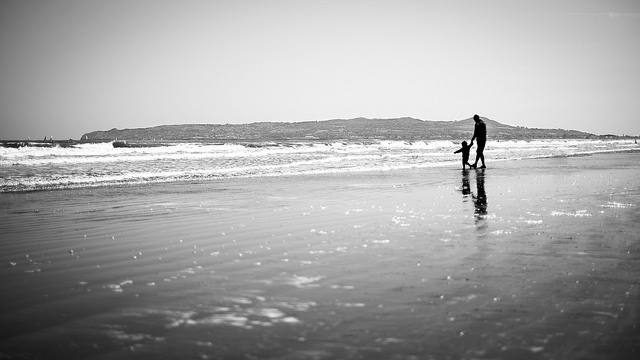
like the day you raced me on the beach when I was little
and I knew you let me win.


We only did it that once, you running between me and the tide,
your shadow hopping over shells and disintegrating sand castles,
dipping in small hollows, until you swept me up into your young arms,
laughing there with blue eyes, blue sea, in the sunlight.


Yes, that’s what I’d wish, the freedom, the light, the salt, the joy,
the time to play, for it was rare and I doubt if you’d even recall
these moments that stay with me like an old photograph,
fading, becoming fragile, curling up at the edges.

But I still hold on, gently, feeling the pulse of memory
while seeking silences where I can sort
the images and collate them in some semblance of order

when I need it most, and when you seem most near.

These lines won’t bring you back and I don’t wish it, I just trust that
my words, beating like memory, like the waves on the shore,
will ripple on into infinity to the place where our circles coincide,
where you still guide, running between me and the tide.

*******

Just a draft, on the anniversary of Daddy’s passing, September 25th.
Shared for Poetry Friday with thanks to Jone Rush MacCulloch for the invitation to “bring poetry goodness to the world today.”

Photo: Fatherhood. Giuseppe MiloCC-BY

To today and the tortoise

In an instant, life changes. Without warning, parameters close in. Existence is not what it was or ever will be again, for one can only endure each moment in the moment, with no sense of what lies beyond the shell, the shadowy vignette of Now, the eternity of it, the temporality of it. There is no turning of Earth, no movement of Time, no tortoise-crawl into tomorrow where Now could ever be snared in the net of memory…

Until all of a sudden, it is.

For five months Life As We Know It has been suspended by COVID-19. We’ve yet to crawl beyond its grasp.

For my family, however, today makes a year since the borders of our being were reduced, abruptly, to a sand-like speck floating in minutes as vast and endless as the sea.

One year since the Sunday afternoon that my youngest and I took our last routine walk around the church, talking about life and the future as he prepared for his final year of college.

One year since we came back home, hot and tired, and the dog went crazy barking at the patrol car pulling into our driveway. One year since the officer asked if this is where my husband lived, because he’s been in an accident, ma’am, and do you have a way to the hospital…

One year since my husband, coming home from the gym, suffered cardiac arrest while driving and his truck veered off the road, into the woods, stopping just short of a ravine.

One year since not knowing what our boys and I would learn when we walked into the ER entrance, where we were met by a nurse waiting for us, who took us into a side room…

One year since the attending physician told the boys and me it was a “big” heart attack, that their dad was alive because the EMTs were heroes, because he was not when they found him.

One year since we learned that EMS in this county happens to have the second-highest resuscitation rate in the nation.

One year since the night spent sleeping on chairs in the cardiac ICU waiting room as hypothermia was induced to give my husband’s brain time to recover.

One year of not knowing how much could be, or would be, recovered.

Time slowed to a crawl so infinitesimal that it could never really pass.

But it did, and it has, and it is.

Today makes one year, somehow. A compromised year, one in which I didn’t start or end the school year normally, a year of resuming life only to hit another prolonged pause, a year of no traveling beyond the necessary, first because of my husband’s mending heart and then the pandemic. A year of time outside of time, or time folding in on itself… I am not sure which. A year of near-implosion, of living and dying strangely, epically. A year of not knowing, globally or nationally, how much recovery there can be, or will be…

My husband has recovered remarkably well, in all ways except for a span of memory for the month or two prior to his cardiac arrest. The brain seeks to protect itself from trauma; it’s a survival mechanism. All my husband’s long-term memory, all his beloved sports trivia and history lore, remains intact for instant recall. But for a vague recollection of leaving the gym on that fateful day one year ago, my husband’s brain erased last July. He has no memory of our last family vacation to the beach, of long walks on the shore, of plunging into the bracing, beckoning ocean, of trying new restaurants, of the little Guatemalan shop he loved and visited several times, where he encouraged the rest of us to buy whatever handmade items we wanted because a portion of proceeds supports the native artisans. We ask him: Do you remember the putt-putt game? How you got beat by one point? How you demanded a rematch? Do you remember the storm blowing in on the 4th, when we ate at that new place in the enclosed deck by the marina and you said it was the best fish you ever had? Do you remember the music and dancing in the square? Don’t you remember buying this tapestry bookbag and the belt?

He looks as if we are speaking a different language, one we have created, one he has never heard and can’t grasp. No. No. Really? That happened?

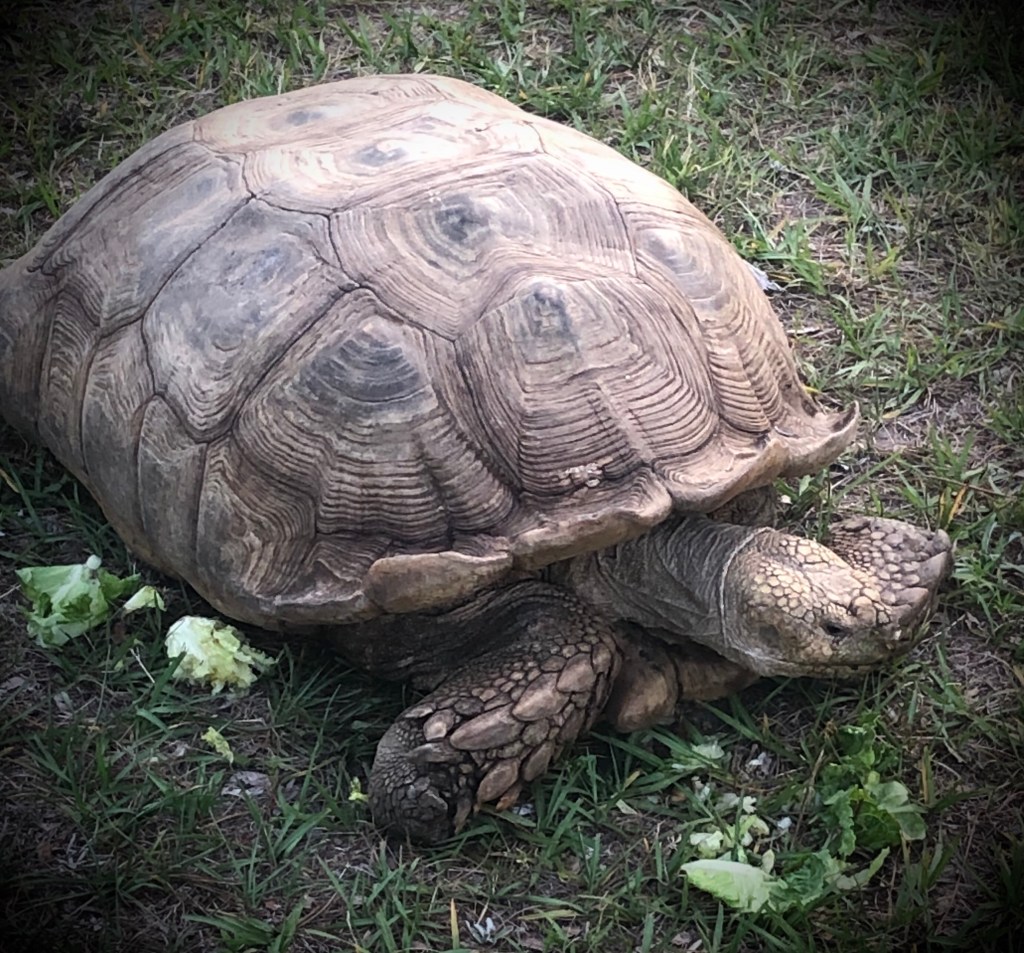
One night last week he and I were watching a nature TV program. The camera zoomed in on a tortoise. Instantaneously, my husband said: ” I remember that.”

“What?”

“The tortoise. We saw one like it on the beach trip last year.”

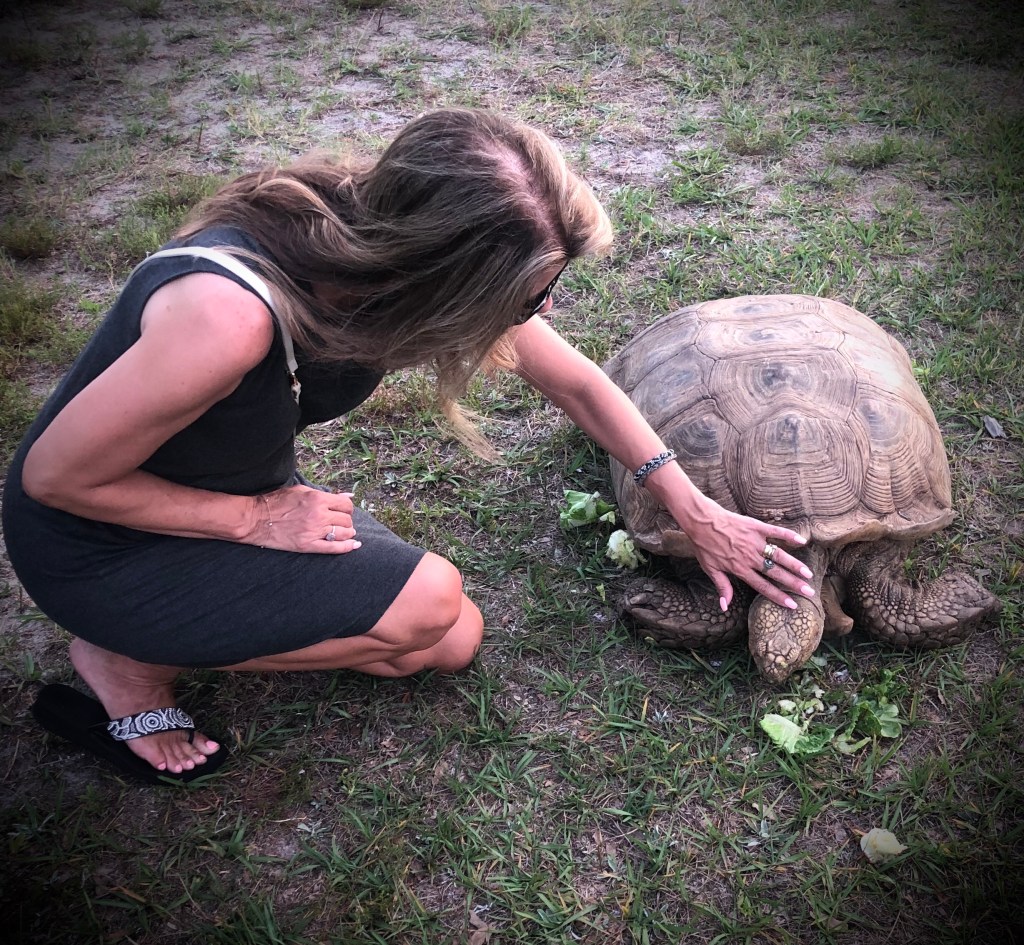
He is right. We did. We saw a giant tortoise on the side of the road while driving. We pulled off to encounter several tortoises owned by a man who had them out for visitors that day. Tortoises, we discovered, enjoy having their heads petted; they’ll stretch their necks out to you for more.

And I know, looking away from the tortoise on the screen to the intent expression on my husband’s face as he watches it, that the return of the tortoise in his memory means that what is good remains, even if hidden. It is never just gone. Despite the extent of trauma, pain, and suffering, endurance is possible, and healing more than possible.

Here’s to today. And the tortoise.

Last July. I could not have imagined the significance of this moment, one year later.

Scattered light

When I was a child, I looked forward to seeing the dentist.

His name was Dr. Job. Like Job in the Bible, long o, not as in “teaching is a hard job.” I could not understand this when I saw his name on the office door: Why do we say ‘Jobe?’ It says Job! J-o-b. That’s not right. It should have an ‘e’ on the end. J-o-b-e …

It irritated my father: That’s how his name is pronounced. He knows how to spell it. Now stop.

Dr. Job had white hair and a white coat and to be honest I wasn’t happy to see him.

No.

I wanted his rings.

After each visit—usually for a filling—Dr. Job reached into some magical cabinet and brought out a box. With a big smile, he opened it before me like a hawker on the city streets selling watches out of a car trunk.

The box was full of rings, set in foam rubber, as if on display at a fine jewelry counter.

“Which one would you like, hmmm? You’ve been a good little patient!”

Of course I was good … there were rings for the taking! How they glittered. All different colors, sizes, shapes. It didn’t matter which one I chose as they were adjustable; their metal bands were split to be widened or narrowed to fit.

One day I looked and looked it—had to be the best ring—until Dr. Job finally cleared his throat: “Ahem. You need to pick one, all right?”

I settled on a ring with a pale purple stone cut in facets like a diamond. I put it on the ring finger of my right hand (not my left, that was for getting married someday). Feeling like a princess, I said: “This is alexandrite, right?” (so … as a child I was fascinated by birthstones and pored over them in mail-order catalogs. My own is emerald. To me, at the time, this pale purple was prettier. June’s birthstone. Point to ponder: How many kids today know about birthstones? ).

Dr. Job looked at me and blinked. He closed the case and returned me to my father.

The main reason I remember that ring is because of a scene in a different office. Plagued by allergies, I had to get weekly injections in both arms. Sometimes I had reactions, rashes or big knots that burned. While I sat waiting, waiting, waiting at the doctor’s office, before and after the shots, I read all the children’s books and magazines—I loved Highlights. Then I read the grown-up stuff, like Reader’s Digest. One afternoon I was too tired to read. I sat sideways in the waiting room chair, leaning against the wall in the late-afternoon shadows. I reached up to rub my sore left arm when waning light from the window caught my “alexandrite” ring. A dozen tiny rainbows appeared on the wall beside me. Mesmerized, I move my hand this way and that, watching the rainbow-spots dance, vanish, and reappear. I forgot the time, forgot my swollen arm; I was too busy scattering the light.

This whole story returned to me as I was continuing my containment cleaning and sunlight caught my ring (diamond, on my married finger) just right.

Scattered light. Tiny rainbows. On a day, incidentally, when Highlights became a destiny…

Ethereal moments call for an etheree, don’t you think.

Time

waiting

in shadows

sometimes brings gifts

otherwise not found.

Like seeing little things

that remind us how it was

to be children full of wonder

scattering light everywhere we go,

making bits of rainbow dance on dark walls.

Signs of the times

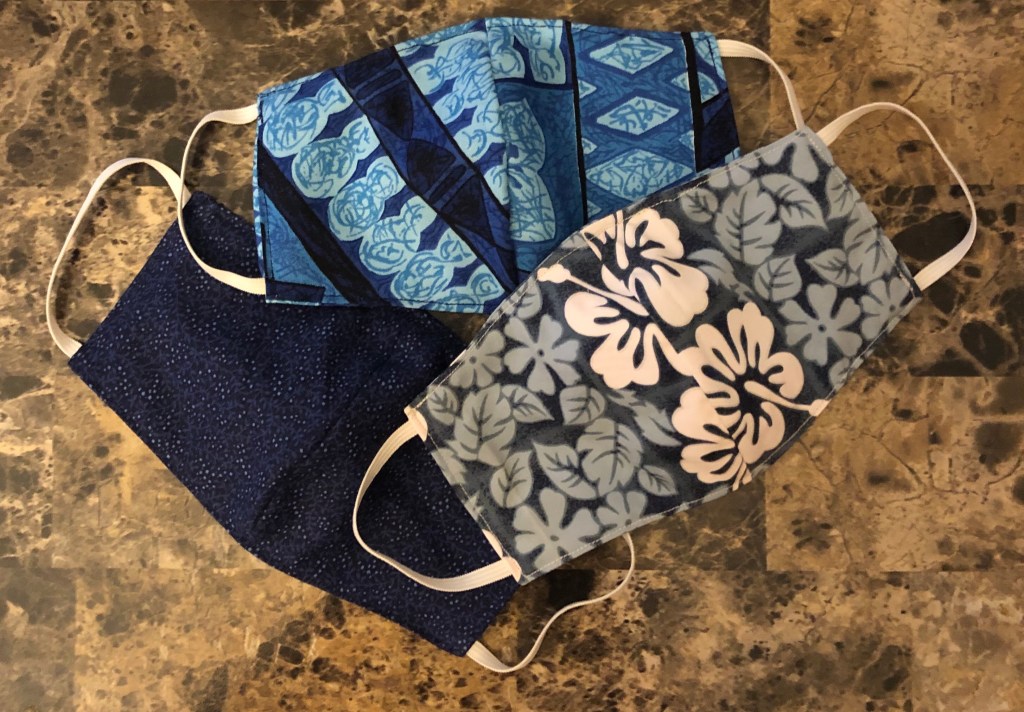
A friend wanted to know if my family would like some face masks.

She is making them.

She sent us pictures of the fabric—she has bolts of it—for us to choose the prints.

Yesterday she and her husband pulled up in our driveway to drop off the masks. My husband and I went out to meet our friends, offering our thanks only in words, no hand-grasps or hugs … a time to embrace, and a time to refrain from embracing … a few weeks back, we were all sitting around the dining room table here in the house, laughing and telling stories after a lasagna dinner. It seems long ago.

When will we be able to do so comfortably, again?

When I look at these masks, I see all that they represent. Shields in time of trouble. A friend channeling inertia into something productive, a practical means of battling an unseen enemy. Self-care spreading out like a blanket to cover others. Homemade love. Colorful patterns against the dark backdrop of our days.

These masks are artifacts of our times. Symbols of our story as we live it. And nothing connects humanity as much as story.

As I walked out to the driveway to receive these gifts, my grandmother’s voice echoed from across the years:

You won’t believe it, but where these woods are now used to be houses and farms, up and down this little road … when the Spanish flu came, it hit all but a couple of them … twelve people died in one week … Mama made pots of soup and Papa would carry it to their doors. He wouldn’t go in, of course …

Grandma wouldn’t have had living memory of this. When the influenza pandemic began in January 1918, she was only two. But she knew the stories. If my own memory serves me correctly, as I walked the tiny country cemeteries surrounding her homeplace, listening to her narratives of the people resting there—for she knew all their stories, and how they were connected— there was an unexpected commonality.

A death year. 1917.

That was before the Spanish flu.

Grandma nodded. There was a sickness before: They called it hemorrhagic fever. People would bruise and bleed from their noses and ears and eyes … a lot of people who tried to take care of the sick caught it and died, too …

She was hardly more than a baby then, a girl born and raised in a hard place in hard times, but here she stood, by the weather-worn stones under a cloudless blue sky, telling the stories seven decades later.

Because of story, these events are lodged in my memory a hundred years after they happened.

My father was Grandma’s first child, born during the Great Depression. Flour companies made their sacks with patterns and bright colors so people could make clothes out of them … look at my handmade face masks and tell me they aren’t reminiscent. A second child, my aunt, arrived with the war. Granddaddy moved the family from North Carolina to Virginia; he found work in the shipyard, where production increased to the point of cranking out ships in less than a third of the time it normally took. How can one not compare that to the scramble for mass production of ventilators today …

Grandma said: It was so hot that summer. I was miserable, being pregnant. I’d sit by the upstairs window and watch the iceman delivering blocks of ice to grocers … companies stopped making refrigerators … everything went into the war effort. I just cried. I’d have given anything for some of that ice … then we had ration cards and could only get certain things at certain times … once my sister Jack and her husband pooled their gas ration cards with ours and we all went on a trip to Massachusetts … it was so beautiful and so cool there …

I look at these masks and that is what I see.

The story of overcoming. Of determination. Of resourcefulness in time of scarcity. Of finding a means to be a good neighbor, a good friend, a real and present help in time of need, even if from a safe distance. Sharing so that everyone has enough. Acts of service, gifts of love. Sacrifice.

The story of surviving.

It’s a collective one.