Strewn with loss

Yesterday I wrote to the WordPress daily prompt on fate/destiny.

Today’s prompt:

What experiences in life helped you grow the most?

Loaded question.

My title today comes from a line I wrote in yesterday’s post. Will this be my pattern every day I take on the Slice of Life Story Challenge? Don’t know. We shall see.

As to this prompt about experiences…

Doesn’t most growth come from a place of pain?

*******

Dear Mom:

Someday I will do a better job of writing about this than what I am about to do now, but here goes.

I understand you have died. About a year ago.

I’ve not been able to find your obituary anywhere, nor your grave. Your plate on the headstone beside Daddy’s remains blank. My guess is that things were kept private, simple, as inexpensive as possible.

After twenty-three years without any contact, I have a few questions, but not much to say.

I have to say it, even though you’ll never know.

I got over my anger long ago. I had to, or it would have consumed me. I had young children of my own to care for; they were my priority. I now have two beautiful granddaughters. Your great-granddaughters, who will ask for the story, someday.

I got over my fear of your destructive behavior, which marked Daddy’s last years, and which shattered our family. I know it continued because, every so often in the ensuing decades, debt collectors would call my house looking for you. I would tell them the truth: I had no contact with you.

The pattern would not be broken, but people would. There could be no going back. Only forward.

I am past the point of blaming. We make our own choices. We paint our narratives in the colors of our liking, to our own purposes. To keep living with ourselves, I suppose, instead of changing. I chose the filter of Fact. Grannie once told me that she didn’t believe in divorce but she had to do it to survive your violent father. I didn’t believe in cutting ties with my own mother, either, but I had to do it, to survive. In the better part of you – for it was surely still there, somewhere – you would have understood this.

But I am not writing to justify or to judge. It’s not my place. It doesn’t matter now, anyway.

What I want to say is thank you.

Thank you for every sacrifice you made throughout my childhood. You did so much with so little.

Thank you for the sewing machine running late in the night, making our beautiful clothes.

Thank you for playing gospel records that I listened to when I was supposed to be asleep, and for the way you could paint and repair most anything.

Thank you for your humor and your unbridled cackling, contagious laughter; no one else laughed like you.

Thank you for being a safe haven for kids of troubled families in the neighborhood as well as for our neighbor who suffered a nervous breakdown. I see her frantic blue eyes, even now. Thank you for inviting the meanest bully of all to my birthday party without telling me, because you saw a child who was hurting inside, who needed to be part of something happy.

Thank you for advocating (surely, as I can’t imagine it was Daddy’s idea), to get my pet parakeet, and later for the puppies (which he forbade, to no avail; you won out).

Thank you trying to save my sick kitten, Edelweiss, which died in your hands while you tried to feed her with an eyedropper.

Thank you for your incredible creativity, the way you could whip up a costume like magic, and for coming so proudly to my school plays, your sisters in tow.

Thank you for pulling my wedding together, for mending the gown and veil from the discount racks so they’d be presentable, for weeping with sheer relief when Grandma offered to pay for the cake, and for making my all my bridesmaid dresses and my sky-blue going-away outfit. I recall you saying you were married in a blue dress; you didn’t have a wedding gown. And thank you for removing the iridescent white beads you wore to my wedding, pulling them off your neck to put around mine at the last minute, to set off that sky-blue dress as I was leaving.

I bet you thought I’d forgotten, all these long years since.

I have not. I remember it all.

As I said, one day I’ll write about it better than I can right now.

Just one more thing, as I sit by the window on this bright day, with winter fading and spring stirring in a wild dance of golden light and flickering shadows across my kitchen walls and floors: Thank you for taking me to church when I was a child. When I lost you to the darker part of yourself, I still had the church. The faith. The Lord. This has been my life. This has been the life of my family.

You might have forgotten many things. I might be one of them. I will never know.

But it’s okay. I choose to remember the good bits of you reflected in every shard I salvage from this story strewn with loss, set in motion long before I was ever in the world.

Some will say how sad, that no one ever never reached across the abyss to make amends.

I do not say this. I say it is over. The abyss is closed. Filled in. Time takes us all. The hurt is gone, although the healing will never be complete in this life.

I carry the shards.

Peace to you at long last, Mom.

P.S. I dreamed of you awhile back. Small and white-haired, but you looked well. You held your arms out to me in welcome.

“My baby has come home,” you said.

And I hugged you.

Because it was finally safe to love you again.

*******

with thanks to Two Writing Teachers for the annual March Slice of Life Story Challenge.
This is my ninth year participating alongside fellow teacher-writers,
as a means of continually honing the craft.

To those of you out there dealing with loss, death or otherwise:
Writing brings clarity.
Writing in community builds courage.

Write your story and trust.

Zest

noun

keen relish; hearty enjoyment; gusto.

an agreeable or piquant flavor imparted to something.

anything added to impart flavor, enhance one’s appreciation, etc.

piquancy; interest; charm.

liveliness or energy; animating spirit.

the peel, especially the thin outer peel, of a citrus fruit used for flavoring: lemon zest.

—Dictionary.com

I’ve been thinking about “zest” recently.

Truth be told: I needed a “z” word anyway for my post title today, as this is the 26th day of the March Slice of Life Story Challenge and I secretly decided to stick with the abecedarian approach that worked for me last year. “Ta-daaa,” as my sixteen-month-old granddaughter would say.

But there’s also the fact that I haven’t felt much zest for anything of late, having battled viral congestion for the last four weeks, in the midst of this already extremely challenge-riddled school year. One really cannot have zest for sleep, right? It’s an oxymoron. I did crave citrus, however, for one zest-ish connection. Last week I stocked up on clementines and three kinds of juice; nothing has been more restorative than drinking giant glasses of pure o.j. on ice throughout the day. Clearly I needed the vitamin C, for I am almost well now. That plus time…

It just so happens that I’ve been reading about zest being part of necessary human strengths as defined by positive psychology, which focuses on eudaimonia, Greek for “good spirit.” Turns out that zest, or enthusiasm, is linked to courage and other traits necessary for individual happiness, satisfaction, mental health, and living life well. It’s a relatively new and accordingly controversial domain of psychology… yet I hear a ring of truth in it.

Maybe I should say I can taste the truth in it.

Consider these phrases from the Dictionary.com definition of zest: keen relish, hearty enjoyment, gusto; anything added to enhance one’s appreciation; piquancy, interest, charm; liveliness or energy; animating spirit...

In short, a person must have positive experiences to look forward to (akin to hope) that bring true enjoyment. The very knowledge is energizing; so is the savoring of the experiences. In its own way, zest is the antidote to the inertia of despair. If we are zest-deficient, what can we do about it? It’s different for different folks…does it mean finding a new job or career, or being an agent of change where you are? Does it mean taking up skydiving, parasailing, horseback riding, or volunteering in a place where people are suffering? Is zest in itself an end goal, or does it forge a path to a different kind of fulfillment tied to purpose and value?

All food for thought. In the end, zest is a motivator for something intrinsically rewarding. There are people with a zest for cooking, gardening, sports, hiking, biking, singing, building, redecorating… the greatest connective tissue I see is energy. These are physical activities.

I think about writing. I love it. I work at it. I set a goal to write a meaningful post every day last year and I accomplished it. Yet I cannot say zest was often or even occasionally involved…which brings me to ask myself: Where is there zest in my life? Once upon a time, people might have jokingly mentioned the soap; remember the slogan “You’re not fully clean until you’re Zestfully clean”?

As soon as I ask, an image begins forming in my mind…

A birthday party a few years ago, with extended family. The guest of honor, turning sweet sixteen. Dark eyes sparkling, cheeks rosy from all the attention on this special day. She loves acting, her grandmother informed me. Wants to perform onstage.

She could have been me, years ago. I relished performing in plays at her age…I wanted to do it for the rest of my life. Zest!

It is not what happened for me, but as cake and ice cream was served, immense gratitude for the life and family I have flooded my soul.

Zest, by the way, is also linked to gratitude; a savoring, as I mentioned.

I took my plate of cake and ice cream, which I expected to be vanilla, but—oh!

“Is this lemon ice cream?” I asked. I knew it was. Unexpected and amazing. Not tart. Just sweet silken cream, with a breath of light lemon fragrance…

“Yes,” came the answer. “It’s homemade.”

I had to have the recipe. I thought immediately of two people for whom I wanted to make it: my daughter-in-law and my sister-in-law. They love lemon. I like it, say, in old-fashioned (real) lemonade, in my ice water, in pound cake…not so much in meringue pies. This ice cream, though, was divine.

And so I’ve made it several times since, usually as a topping for blueberry cobbler straight from the oven. Last time I made it was at the beach. My sister-in-law arranges for our families to vacation there each summer. She started doing this after her brother, my husband, had a massive heart attack and was almost taken from us. And so we celebrate togetherness and the good life (another translation of eudaimonia). I sat at the big wooden table in the upper room of the beach house while my nephew-in-law cooked dinner. Everyone was laughing and talking, we were hungry from having been in the sun all day, the ocean sparkled like diamonds beyond the windows, and there was a faint taste of salt on my lips as I grated the lemon rinds to make this ice cream.

Zest. For my family.

My sister-in-law took one spoonful and said, “That’s the best ice cream I’ve ever had in my life.”

It’s also the simplest…as the best things in life are.

No machines, needed, just a bit of work and a willing spirit, ready to share.

Of course this post would not be complete without the recipe…

A bit of zest for your day, friends, on the wings of wellness.

Lemon Ice Cream

1 pint whipping cream
1 cup sugar
2 tablespoons lemon zest
1/3 cup fresh lemon juice

Combine whipping cream and sugar; stir until sugar dissolves

Stir in lemon zest.

Sir in fresh lemon juice.

Pour into freezer-safe container, and freeze.

Savor.

lemon ice cream. jules:stonesoup. CC BY 2.0.

Threads

While National Mental Health Awareness Month (May) is still weeks away, the COVID-19 pandemic has called greater attention to the need for support. Youth.gov explains the purpose of the national focus: “Mental Health Month raises awareness of trauma and the impact it can have on the physical, emotional, and mental well-being of children, families, and communities.” 

I note that children are mentioned first. They are at the mercy of the grown-ups, and when the grown-ups in their lives are suffering, children suffer. They often don’t understand or have a framework for understanding, not for years to come, or maybe ever. To a child, your norm is your norm. You have little to no power of your own. Think of how long the Turpin children suffered, before one managed to escape and get help.

Last month, in the neighborhood of the school where I work, a little girl was found dead with her mother in an apparent murder-suicide. I didn’t know this child; she wasn’t one of our students. But I have mourned her, mourned for whatever she suffered in her short life, mourned that a mother, unable to cope with whatever lies in her untold story, would resort to taking the life of an estranged partner and then her child.

People speak of unbreakable bonds, of the ties that bind. Sometimes those threads are very, very fragile.

Some of the threads running through the background are beautiful and bright, even as the family portrait bleeds away from the canvas. 

Sometimes destruction doesn’t come all at once, but by a long, slow unraveling.

Threads 

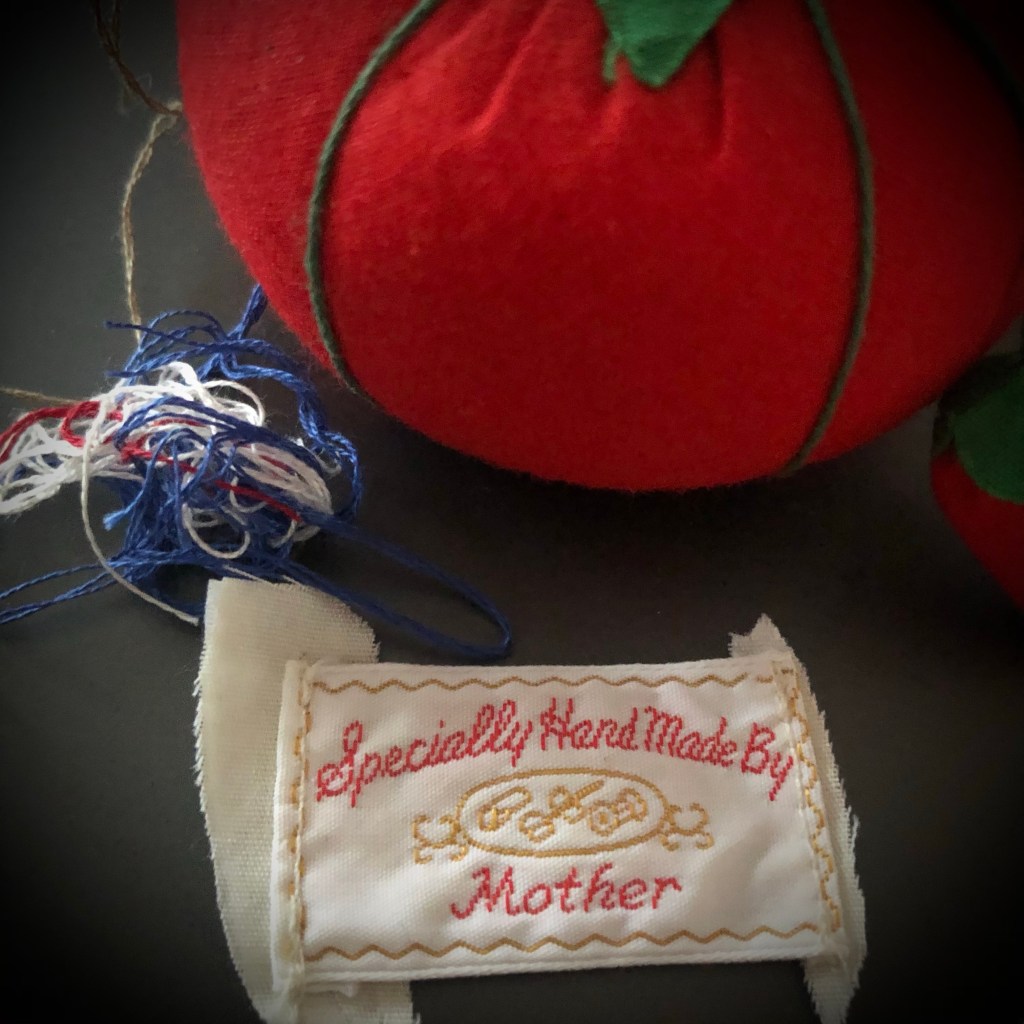
This morning I trimmed the threads off of my patchwork writing journal.

As I balled them up to throw them away

I realized the tangle of color in my hand.

They spoke to me: Remember?

Oh yes, I used to see you all over the floor when I was a child.

Rolling lazily across the hardwoods when we walked by

or nestled in the frayed carpet of the living room.

Fragments of my mother’s handiwork

vestiges of the artist she was

crafter of clothes we wore

tailor for many more.

Who’d have believed that such a creator

could destroy so completely?

A family of threads, each one its own vibrant color

in seams ripped apart

scattered far and wide

drifting on

and on

and on.

*******

The annual Slice of Life Story Challenge with Two Writing Teachers is underway, meaning that I am posting every day in the month of March. This marks my fifth consecutive year and I’m experimenting with an abecedarian approach: On Day 20, I am writing around a word beginning with letter t.

The poem has been sitting as a draft for exactly two years today while I pondered publishing. I wrote the original draft as a participant in professional development for literacy coaches, of all things. I can’t remember the prompt now, only that we were to share our poems with a colleague.

My colleague wept.

I share it for the children.

What’s in a word

Perhaps you have taken part in the “one little word” tradition for the New Year as a means of living more intentionally and reflectively, maybe letting it guide your writing. At the beginning of 2020, I had a word in mind for the year.

Reclamation.

Here’s what I wrote, ten weeks before COVID-19 shut us down:

Moving forward becomes an act of will, a revised determination to do what you can, what’s most important, for that given day. Recovering ground, inch by precious inch.

Whether life is suspended, or stagnant, or spinning out of control, we still have choices. Maybe it’s resting more. Writing more. Reading more, singing more. Praying more. Maybe it’s seeking help. Maybe it’s restoring relationships, or releasing them. Or creating something beautiful, meaningful. What we want to do and what we’re actually able to do in a day, a week, a month, a year, may be vastly different, but reclamation doesn’t happen all at once. It happens in determined, consistent bits by bits. It is deliberate and intentional.

At the end of 2020, I have to reflect on what my original vision of reclamation was, and what it became.

Life suspended, stagnant, spinning out of control. At the time, those words were mirroring 2019, when my husband was recovering from cardiac arrest and two heart surgeries. We spent weeks at the hospital in late summer. I never imagined the pandemic lying just ahead…moving forward becomes an act of will, a revised determination to do what you can, what’s most important, for that given day. Caring for my husband took precedence over returning to work when school resumed that fall. When I did return, I fought a daily battle to catch up, to hit any kind of stride, as 2020 dawned. In February I broke my foot. In mid-March, the governor closed our schools due to COVID. In May, George Floyd was killed. America erupted. COVID continued erupting across the world. The election…really, one runs out of words. Life suspended, stagnant, spinning out of control…moving forward becomes an act of will, a revised determination to to what you can, what’s most important, for that given day.

Reclamation, I wrote, involves choices. Both large and small. Every day.

One of my original intents for the year resembled a true environmental reclamation project: repairs and improvements around the house. Did I succeed? As I was home a lot more than ever before, thanks to the pandemic, yes, I accomplished a good bit. There’s just always more to do. One thing (don’t we know) often leads to another.

In 2020 I meant to write more. Did I? Most definitely. It wasn’t the type of writing I envisioned. I thought I would finally complete some things I started in years past. My blog post productivity increased. I ended up writing a lot more poetry than I have in decades. What does that say about the power of poetry in coping with powerlessness, inertia, darkness, even despair? Psychologists avow its therapeutic benefits. Poetry-writing invokes calmness, healing, strength. It calls to the spirit in a unique way. There’s something about the rhythms and breaks, something in the metaphor and imagery, in the cadence, the musicality, that soothes the soul and brings release. Not to mention the good old-fashioned value of hard work in trying to hammer a thing out, especially if there’s a desire to create something beautiful, meaningful.

Perhaps the most interesting take I had on “reclamation” in January 2020 had to do with teaching—before the scramble of completely reinventing it:

I write this not only for myself, but for other educators and instructional coaches struggling for clarity and a foothold in an ever-changing, shifting field: Beware the great chasm between theory and application, between programs that are packaged as “the magic bullet” and cost a pretty penny, but fail to deliver. Be aware of the great gulf between data that’s visible and the stories of human children, not so visible. Push back all that encroaches on growing the children, that which would inhibit their love of learning. Reclaim that for them. Know them and their families and their stories. Know your colleagues and their stories.

—I bolded the part I find most haunting, in retrospect. When I wrote those words I had no clue that children would be learning from home for months, that families would be scrambling to manage it, that devices and hotspots would have to be distributed on a massive scale, that people would lose jobs and loved ones to COVID, that food insecurity would become so widespread, that crisis and survival would keep some students from their learning, let alone a love of it.

What remains true, more so than ever, is that data can’t capture it all. We do need to know families and their stories. We need to know each other’s. From what else are compassion and empathy born? How else will we move forward, together? Reclamation in this sense involves pushing away whatever encroaches and consumes. It involves building something new, taking back what is being lost, reasserting rights…I am thinking of teachers now as much as of students, submerged by systems, structures, checklists, machinery. Of reclaiming a sense of humanity from processes, protocols, and programming which are, in the end punitive. When, if not now? Was a time ever “riper”? I wrote: It’s hard daily work, reclamation. Progress is slow to see for a time. The point being, start.

I also wrote: We reclaim the very heart of our humanity when we share our stories.

I have never been more grateful for the outlet of writing and the writing communities that feel like home to me. Writing taps an inner strength we may not realize is there; sharing the stories knits us to one another by our heartstrings. In a time of distance, isolation, stress and anxiety, with spiking mental health issues, connection is ever more vital. Therapists say that one of the best things a person can do to reduce stress is to write or journal (writing therapy and poetry therapy are real things). In the action of framing thoughts, or facing fears, we collect emotional resources, resilience, and creativity lying dormant or hidden as we wormhole our way through. One more line from my pre-COVID January 2020 vision of reclamation: In this day of restorative practices and social-emotional wellness, why are people not writing more? Here’s a point to ponder: a study by the National Literacy Trust in the UK (June 2020) says that children are turning to imaginative writing more than ever as an outlet for self-expression, creativity, and well-being, now that they have time and freedom to do so…

Life is, after all, writing us. In the words of Albert S. Rossi, clinical psychologist and Christian educator, which I’ve read before and rediscovered this week: We don’t live life. Life lives us.

As the page turns from 2020 to 2021, we’ll see where life leads. It may be in charge of the story, but we are in charge of the craftsmanship.

On that note, I am thinking twice about choosing a word for the new year. Maybe I’ll just see what it wants to say for itself.

In the meantime, resting more, reading more, singing more, praying more absolutely helps. Seek more help when needed. Be more gentle with yourself (a lesson I am still trying to learn).

Keep on writing alongside life.

*******

with a debt of gratitude to Two Writing Teachers and the ongoing Slice of Life Story Challenge which is, above all, a joy

and to the gathering at Sharing Our Stories: Magic in a Blog, a divining rod of inspiration

Spiritual Journey: Seeled

seel: close (a person’s eyes); prevent (someone) from seeing. —Dictionary.com

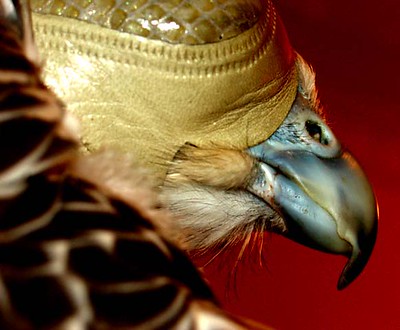
seel: to close the eyes of (a bird, such as a hawk) by drawing threads through the eyelids. —Merriam-Webster.com

A Spiritual Journey Thursday reflection

Over Thanksgiving break from school, I read a book about a family of twelve children, six of whom (all boys) were diagnosed with schizophrenia: Hidden Valley Road: Inside the Mind of an American Family. I expected to learn more about the disorder, how it manifests as a distorted, alternate reality, affecting a person’s thoughts, feelings, and behavior. I expected to learn about the part genetics play (six siblings!). I expected loads of medical research and new scientific insights…more than anything, I expected to be moved by the story.

I did. I was.

In a word: Devastating.

I never expected to learn a haunting little detail about falconry.

Originating in ancient times as a form of hunting, it became a sport and status symbol of the nobility in medieval Europe. A pastime of the Galvin family in Hidden Valley Road, falconry involves trapping a bird and training it to be completely dependent on the bidding of the falconer by “seeling” its eyes—stitching its eyelids closed.

Young Don and Mimi, parents of four boys at the time, trapped their first bird of prey, a red-tailed hawk. They consulted the local zoologist for guidance on training. He said, “Now sew the eyelids together”:

Stabler explained that [falcons’] eyelids protect them as they dive at speeds upwards of two hundred miles per hour. But in order to train a falcon the way Henry VIII’s falconers did it, the bird’s eyelids should be temporarily sewn shut. With no visual distractions, a falcon can be made dependent on the will of the falconer—the sound of his voice, the touch of his hands. The zoologist cautioned Mimi: Be careful the stitches aren’t too tight or too loose, and that the needle never pricks the hawk’s eyes. There seemed to be any number of ways to make hash of the bird…Mimi went to work on the edge of each eyelid, one after the other…Stabler complimented Mimi on her work. “Now,” he said, “you have to keep it on the fist for forty-eight hours”…At the end of those forty-eight hours, Mimi and Don had successfully domesticated a hawk. They felt an enormous sense of accomplishment. This was about embracing the wild, natural world and also about bringing it under one’s control. Taming these birds could be brutal and punishing. But with consistency and devotion and discipline, it was unbelievably rewarding.

Not unlike, they often thought, the parenting of a child.

For me, the fleeting sense of wonder is outweighed by horror on reading these lines… for suffering of the bird, for the foreshadowed suffering of these parents, these children.

The image will not leave my mind. I think about what a falcon symbolizes. Among many things, freedom. Which was taken away, here.

Also wisdom.

The most famous book of wisdom and suffering happens to mention a falcon. In Job 28, the title character continues a speech around the question “Where is wisdom?” Job marvels at the precious resources hidden in the earth and humans’ ability to extract them through mining. Human industry brings silver, gold, iron, copper, sapphires from the depths to the light.

Job speaks of the hidden way to such treasures:

That path no bird of prey knows, and the falcon’s eye has not seen it (28:7).

The metaphor is for wisdom, how elusive it is to mankind, and that its value is far above any earthly riches: “Man does not know its worth” (v. 13). The word “hidden” is referenced or alluded to over and over; wisdom can’t be seen even by the creatures with the keenest eyesight, birds of the air. Wisdom comes only from God (v. 28).

A song also plays in my mind, this line from Bob Dylan’s “Blowin’ In the Wind”: How many times can a man turn his head and pretend that he just doesn’t see?

Hidden wisdom, hidden treasure. Hidden Valley Road. Hidden suffering, to an unimaginable degree…

I can’t help but think, as the year 2020 comes to a close, how those numbers stand for perfect vision—and the irony of so much we never saw coming.

Moving forward, let us seek wisdom, above all. Let us not be guilty of seeling our own eyes—or our hearts—to suffering beyond our own. Let us see.

Most of all, Dear God, don’t let us perpetuate more of it.

Photo: el7bara. CC BY

Quotation: Robert Kolker, Hidden Valley Road: Inside the Mind of an American Family, 2020, p. 5-6.

Written with gratitude for my Spiritual Journey family. See more at A Word Edgewise – thank you, Linda, for hosting.

Spittin’ image

Memoir is probably my favorite kind of writing.

It’s like small moments on steroids. When I write myself back into childhood, scenes, conversations, little forgotten details are pumped full of meaning, for I have the advantage of understanding so much more than I did then . . .

This event occurred when I was seven or eight. As I write, I think of how we don’t know all that children are experiencing or how they’re trying to navigate life. Families don’t make perfect portraits. There are so many reasons why.

We are our stories.

With that in mind I’ve opted to change family names here. It gives me the final shot of courage needed to share “Spittin’ Image.”

*******

We are going to visit my grandfather.

Not my Daddy’s daddy, my Sunday-afternoons-in-the park Granddaddy who bought me red rubber boots when I started school because all my kindergarten friends had them and I wanted them, too.  We are going to see my Mama’s daddy.  I don’t know him very well. He came to visit us once, sat in our living room chair with his hand stuck out so that when I ran by, not paying attention, not being careful, his cigarette burned me.

Mama says he lives in a hospital.

I don’t know why anyone would live in a hospital. I don’t want to go see him, don’t know why we have to go.

My mother gets snappy: “He’s your granddaddy—you’re going!”

My aunts are taking us because Mama doesn’t drive. She doesn’t know how.

“Last time I seen Daddy, he was looking better,” says Aunt Bobbie, who’s driving us in her maroon Ford LTD, a Marlboro sticking out from the first two fingers of her right hand on the steering wheel. I see her mouth in the rear-view mirror. There are little pucker lines around her lips. “I believe he’s eating good. Acted happy to see me, too.”

Aunt Imogene—Genie, I call her—is riding shotgun in front of me. She takes a long drag on her own cigarette. I slide over so I can see the thick white smoke pouring out of her mouth and how it all goes right up her nose, like a waterfall in reverse. It’s neat to watch. About ten minutes pass before she speaks; Genie never does anything fast.

“Waaaay-yelllll…” says Genie, stretching the word well into four or five syllables, “at least we know he’s taken care of at the Home.”

Beside me in the backseat, Mama puts a Salem Menthol in her mouth and flicks her lighter, inhales. She doesn’t do fancy stuff with her smoke. She is quiet.

She is often quiet.

The ride takes forever. Finally Aunt Bobbie says, “We’re here,” and we pull into a parking place bordered by pine trees.

Mama drops the butt to the ground and grinds it into the gravelly dirt with her sandal. This is my grandfather’s Home, I guess, but Mama told me it was a hospital, so I’m confused. When we go in there are many small rooms but no bright lights, no doctors in lab coats, no nurses wearing white dresses and little caps. There’s a lot of wood paneling. The Home makes me think of a really big cabin but the people here don’t look like campers. Some are in wheelchairs, some are standing. Some are in pajamas. Not all of them are old. They stare at us as we go by and I don’t like the feel of their eyes.

Aunt Bobbie leads the way, down a hall, around a corner. I peek in one room and see a man with long white hair lying in bed with his mouth open, but he’s not asleep.

I want to run out of here.

Genie says, “Waaaay-yelll, hey, Daddy.”

He’s sitting in an armchair in a little living room area, holding a lit cigarette in the first two fingers of his right hand. All of his fingers have yellow stains. His nails are brown and long, and the ashes on that cigarette are the longest I’ve ever seen; why don’t they fall?      

Genie hugs him. Aunt Bobbie hugs him. He says “Hey” to them in a high, raspy voice. He doesn’t have much hair. His face is long, kind of yellowish, kind of gray, with brown spots. His clothes have spots, too, except that they’re actually small holes. From dropping cigarettes. Or ashes.

Mama is hanging back but Aunt Bobbie pulls her over.

“Daddy, look who come to see you. Beverly Ann.”

“Hey Daddy,” says my mother, bending to hug him, then stepping back. “How are you doing?”

My grandfather looks at her, his daughter, my mother, and I can tell he doesn’t know her.

Next thing I know, she’s yanking on my arm.

“I brought your granddaughter to visit.” She tugs. “Come on, give your granddaddy a hug.”

I do not want to.  I don’t move. I just look at him.

Genie pokes me from behind.

“Go and see him,” say my aunts. “He’s your granddaddy.”

I already see him and he sees me. For a minute I look into his eyes—they are big, green like moss—and the emptiness there makes me think of a hole in the ground that has no bottom. Or the time Daddy was holding me when he opened the medicine cabinet and its mirror reflected into the mirror over the sink. Mirror, mirror, on the wall . . . it became a mirror, mirror, mirror hall, reflected mirrors going on and on and on, growing tinier and tinier, like a never-ending nothingness. I’m frightened of my grandfather’s eyes, frightened that he’s looking at me with them, that something about them makes me think of my mother.

Then they light up. He knows me! He holds out his hand—not the one with the cigarette, I have my eye on that one—and calls to me:

“Beverly Aaaannn…” he says, drawling like Genie does.

“No, Daddy,” says Aunt Bobbie, “this is Beverly Ann’s daughter. That,” she points to Mama, “is Beverly Ann.”

He keeps right on staring at me.

He doesn’t get it. He thinks I am my mother. When she was little.

I hug him because I have to, because the sisters, his daughters, are making me. His skin is cool and frog-like. When I pull away, he’s still looking at me.

 Am I supposed to love him? I don’t know him. And he doesn’t know me.

We don’t stay long. As soon as we’re outside, Genie bums a light off Mama, who’s shakily firing up another Salem. Genie sucks deep, does her dragon-smoke thing, nods at me.

“I’ve said it a thousand tiiiiiimes, you are your Mama’s child, that’s for sure. Spittin’ image.”

“Ain’t she though?” agrees Aunt Bobbie.

I walk beside Mama. The aunts move ahead of us. Hoping they won’t hear, I whisper: “Why did he think I’m you, Mama?”

“His mind’s not right. Never has been,” she says, taking a drag, looking off in the distance at nothing in particular. “I really wasn’t around him much. I was a little girl when he left home.”

“Why did he leave?”

She turns her eyes on me. Dark brown eyes, like mine, and for a second they have that bottomless look. She’s slow to answer but not in the way that Genie is slow to do things. She takes another long drag.

“Grannie sent him away because he tried to hurt her.”

“Were you sad?”

“No.” Then, softly: “I was scared of him.”

Aunt Bobbie cranks the maroon LTD; Genie is getting in the front passenger side. Mama looks back at the Home and I wonder what she’s thinking. As I reach for the door, I catch my reflection in the backseat window. I glimpse the pines and the cloudless blue sky behind me. Crows fly overhead, cawing loudly. Yes, I do look a lot like my Mama. Even I can see that.

I feel shaky, too. I lean in to look closely at my own eyes, hoping to God I never find them so empty.