Silky string: a memory

For Ethical ELA’s Open Write today, host Jennifer Guyor Jowett states this purpose: “We are going to tug at your memories, perhaps even look for a way to express that which is hidden.”

Jennifer goes on to share how Emma Parker, a textile and mixed-media artist from the UK, inspired her own poem: Emma Parker’s themes are “often around the broken, the abandoned, and the forgotten.” She explains that thread and cloth hold the metaphors of mending, repairing, and connecting and becomes interested in the stories the materials hold and who has touched them before.

Before I could even finish reading the rest of Jennifer’s intro and prompt, my mind was spiraling in countless directions. First, writing about memories. My favorite kind of writing. Second, themes of “the broken, abandoned, forgotten.” So much to say about that. Then the whole bit about fabric and cloth, mending and repairing… my mother was a seamstress. An image from my earliest days immediately came to mind for a poem, but the ideas do not stop there, no, not at all.

To be honest, I’ve spent much time thinking on the broken parts of life and generations of brokenness. Some people overcome while others are never able. So many stories in my own family and in my husband’s. I keep picking up the pieces in my mind, marveling at the incredible beauty of some, mourning over the ones beyond repair. Someday, someday…I will see what written mosaic I can make of these. Perhaps.

But for now, a poem with the first image that came to mind:

Silky String

Who
gave me
the blanket
trimmed with satin?
Someone receiving
a new baby to hold.
Did this someone ever know
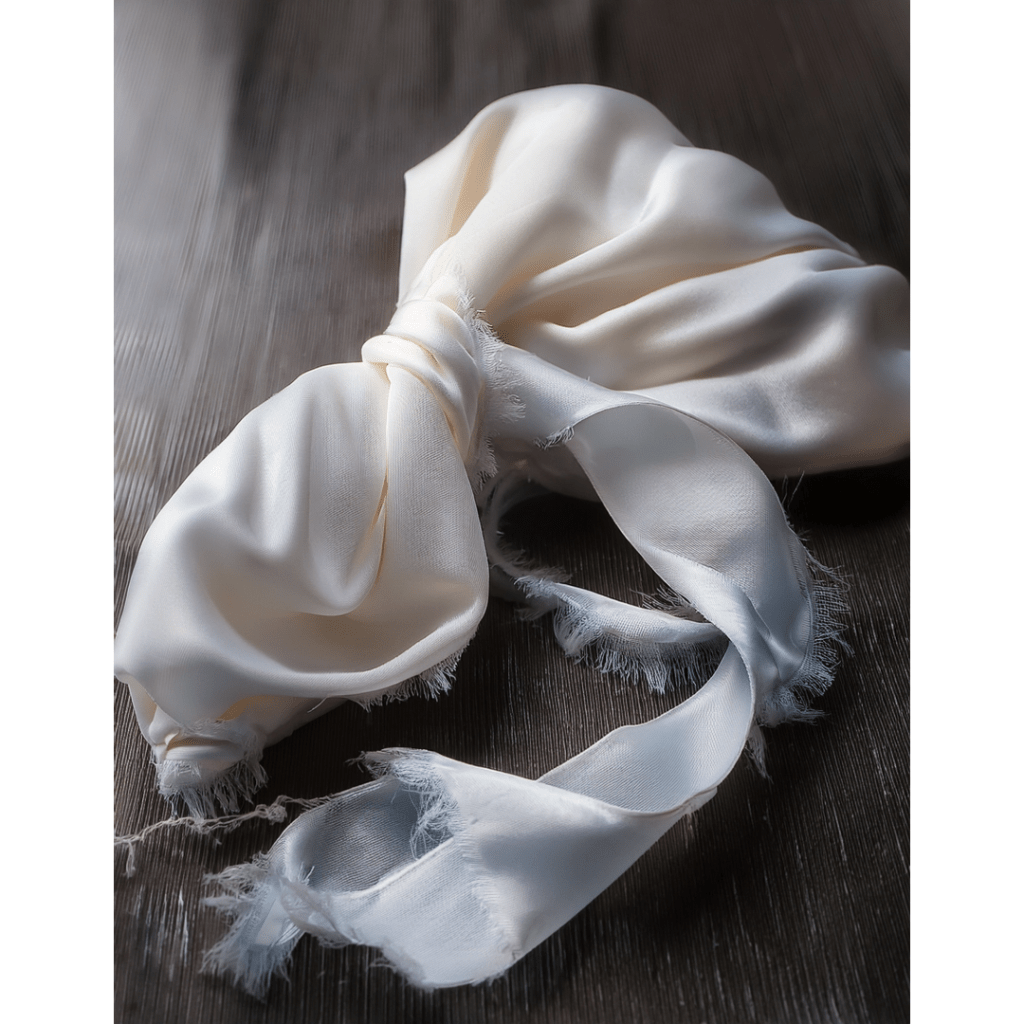
that my sweet blanket, white as snow,
would become my babyhood lifeline
even as it all disintegrated?

-the blanket, that is, from too much loving.
Over time the satin pulled away
and someone (who?) tied it in knots
to keep it from being lost.
Priceless, my silky string,
for rubbing across
my nose, thumb in
mouth…soothing
me to
sleep.

Note: I didn’t plan to write a double (or reverse) etheree. After the first two lines, the form took charge. Jennifer, the Open Write host, called it “an in and out etheree,” like a blanket unfolding and fading away.

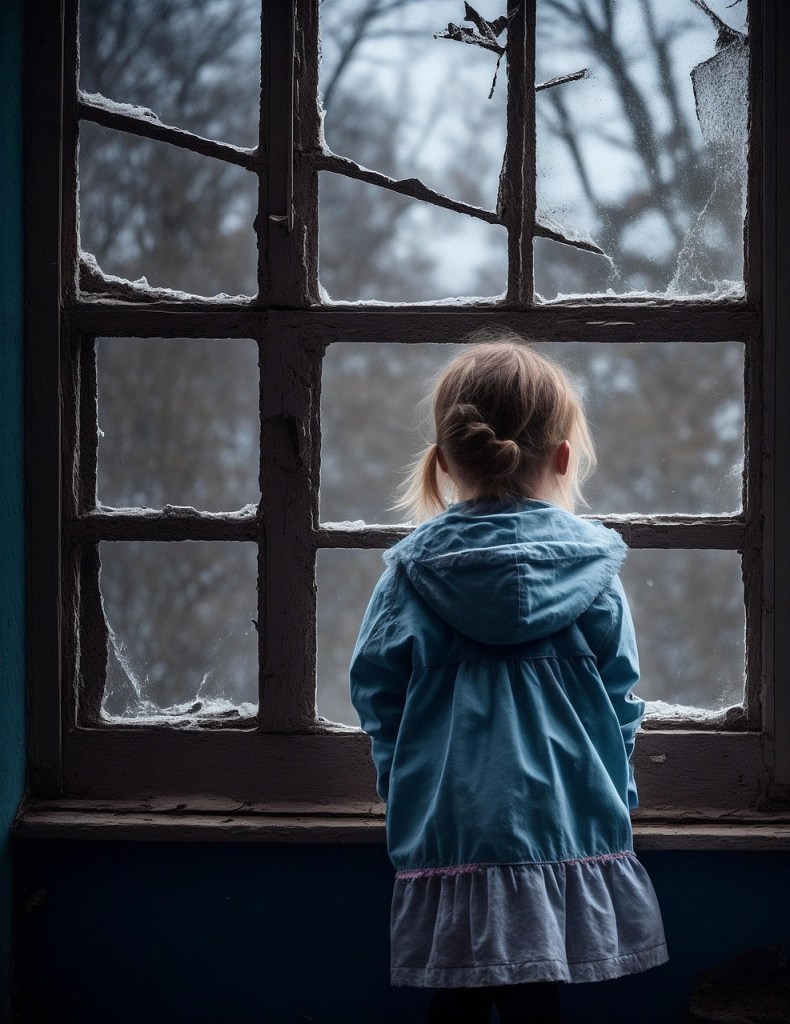
AI-generated image. Took a few tries to get this. Some of the results were haunting. But so is reality, sometimes.

Still waters

It’s been a while since I wrote a post, dear Reader and Writer Friends. Life keeps happening. The spiritual journey presses on, across craggy, unforgiving mountains with paths cut too near the edge; down through the valleys steeped in shadows and heavy rainfall; alongside the sea, where sun and salt pull at the wings of the soul longing to be free; and by the shady garden path where one can sometimes find an unoccupied bench to sit awhile, inhaling dewy flower-fragrances. —What is the spiritual journey, if not metaphor?

The beach is always the first summer getaway for my husband and me. Now that the children are grown and married, it’s just us…except for the new puppy, Jesse, now five months old (could this be a reason I haven’t written much of late? Indeed.). And so we headed east with our Jesse in tow.

We needed the break. There are a thousand reasons why. You have the same, yourselves. It so happens that this particular destination is in the quietest community we have ever experienced. New, colorful beach homes with impeccably manicured lawns, rustling palms, rippling birdsong on the ever-present stiff breeze —the ocean, making its nearby presence known. Human voices are almost entirely absent here. We marvel at it. Almost eerie but for the incredible sense of peace and intense sunlight that lasts longer than a summer day ought. Outside with Jesse, soaking up the radiant light, the silence, the rejuventating breeze, the word paradise comes to mind over and over. As does a longing for it to never end.

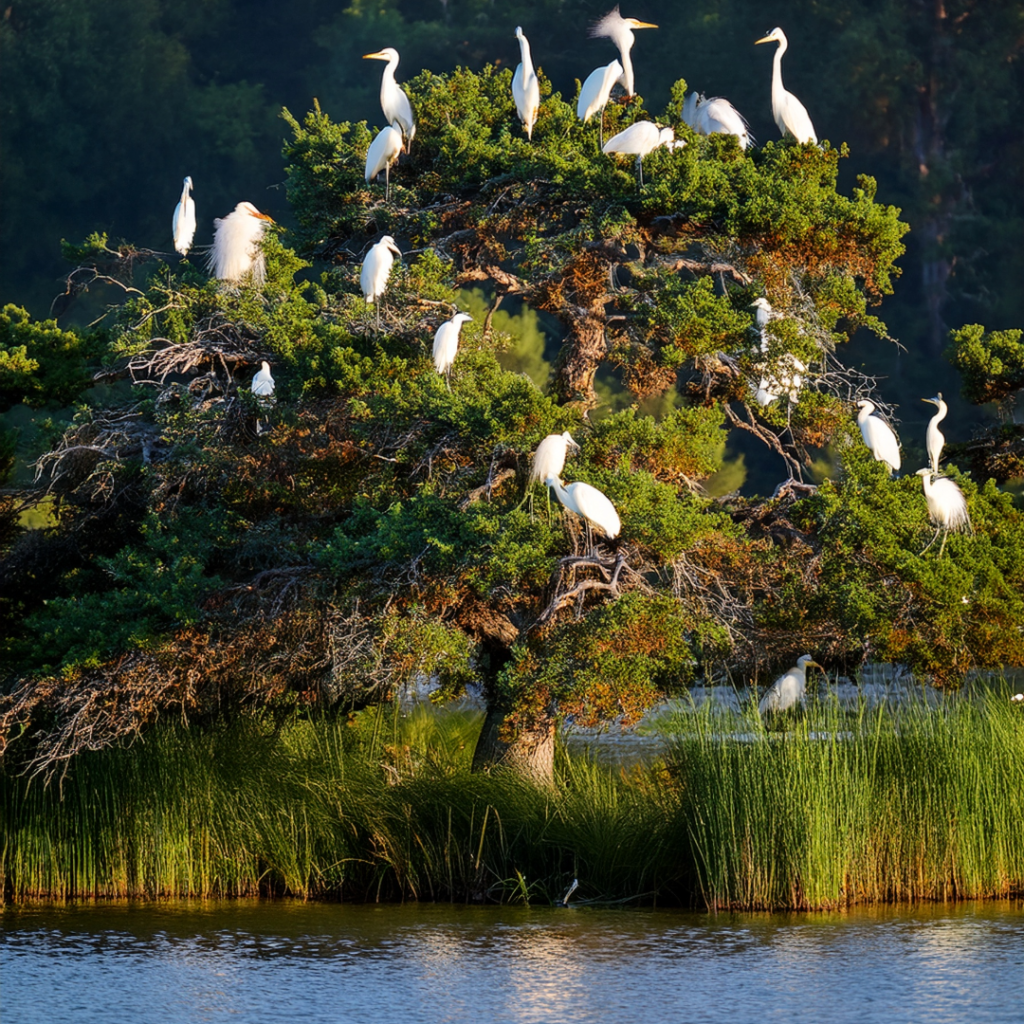
After dinner one evening my husband and I take a drive. I am the driver now; the loss of his eye and his heart condition make him nervous about driving the new car. This is how it is, now. This is how it will be, as long as our journey continues. On this particular evening, we travel to a beach our children enjoyed when they were small. The road meanders through marsh and lakes. As I am the driver, I can’t look at everything. I catch glimpses of big white birds sailing over the water. Egrets. Elegant. White as snow, poetry come to life. We round a bend and I see a whole colony of them, roosting in a tree by at the waterside.

I could not get a picture…even if I had, it would not do justice to the reality, the breathtaking beauty of that colony of big white birds in the deep, dark green tree by the still waters. Again, the word paradise returns to mind, with a fleeting recollection of being a little child in a bathtub singing a song I made up for myself: Bird of paradise, bird of paradise, you’re so pretty and nice…I don’t know what inspired me. Maybe I’d just learned the term “bird of paradise” and loved it for its lyrical feel.

How quickly time passes. One day a child splashing in a tub singing made-up songs, to—poof!—forty years married, splashing in the sunset chapters of life…still savoring the beautiful, all along the journey.

For it is there, it is there, if we but take time to see.

Thank God for the moments of awe and rest that only He can provide.

AI-generated image of egrets roosting in a tree by the water…does not do justice to the real sight.

*******

With thanks to Karen Eastlund for July’s Spiritual Journey “still waters” theme, and to my fellow SJT writers, who are such good company.

The wound in the wood

A little slice of memoir

*******

I was five when my dad bought the house where I grew up.

There were good things about the house. A Big Bathroom and a Little Bathroom. Having two seemed luxurious to me, a child accustomed to apartments. Cloud-like swirls on the ceiling that my mother said were made by twisting a broom in the plaster while it was wet. A huge picture window in the living room, through which I could see a very tall tree behind the neighbors’ house. To me, the tiptop of the trunk appeared to be a lady sitting and gazing across the earth like some kind of woodland princess. Day in and day out, she sat there atop of her tall tree-throne, a regal silhouette, never moving.

There were things I didn’t like about the house. The red switch plate on the utility room wall that my father said to never ever touch. I believed that if anyone touched this switch, the furnace would explode and blow us all to smithereens. Even after I outgrew my terror, I steered well clear of that red plate. I didn’t like the thick gray accordion doors on the bedroom and hall closets. Bulky, cumbersome, and stiff, they didn’t really fold. They came off their tracks easily. These hateful doors eventually disappeared; one by one, they were discarded. Our closets were just open places.

The linen closet stood directly across from my bedroom door in the narrow hall leading to the Big Bathroom.

It wasn’t a true closet, just a recessed place with wooden shelves. I don’t remember an accordion door ever being there.

What I do remember is that one of those linen closet shelves had a terrible gash along its edge.

It looked like a raw wound that might start oozing at any moment. A gaping slit. When I pored over pictures of how to do an appendectomy in my parents’ set of medical encyclopedias (and why did we have these—? An exceptionally persuasive door-to-door salesman—?) the pulled-back human flesh and tissue made me think of the wound in the linen closet shelf.

This shiny-pink raw place bothered me. It was ugly. Almost…embarrassing. Something that shouldn’t be seen, shouldn’t be exposed…why had the builders done this? Couldn’t they have turned the shelf around so the wound wouldn’t show? It was an affront to me as a child, before I knew what taking affront meant.

I know now that the flaw is a bark-encased scar. The shelf came from a tree (maple?) that was injured, somehow. Maybe by a cut or fire. An online search produces this AI-generated explanation:

The tree’s cambium layer, which is responsible for producing new bark and wood, starts to grow new cells around the wound, forming a protective layer of tissue called callus. 

As the tree continues to grow, the callus tissue can expand and eventually cover the original wound, creating a scar that is encased within the new bark.

In short: The scar is evidence that the tree worked to prevent inner decay and heal itself after being wounded, and that it went on living for a good while before it ended up as the shelf holding our towels and washcloths beside the Big Bathroom.

I never touched that raw-looking wound in the wood. I averted my eyes from it, even hated it for existing.

Now, when I return in my mind to the rooms and halls of my childhood home, they are always empty, and that old scar in the shelf is the thing I want most to see.

How strange.

Maybe I am drawn to it out of kinship. I do not know the story of the tree’s life, only that this remnant is testimony to its suffering and ability to overcome. I could liken the scar to the ways adults damage children, having been damaged as children. I could see it as a symbol for my mother, whose early wounds festered long, the extent of which would eventually be revealed in addiction.

That’s the real red switch, for it blew us all apart.

Maybe I just want to place my fingers on the old raw place at last, tenderly, in benediction. I would say that I understand now about layers of callus tissue expanding, covering, and absorbing the deepest of cuts over a long, long time…it is always there, but it hurts no more, and I am no longer ashamed to see it or to let it be seen.

In the shelf or in myself.

Image by Wolfgang Eckert from Pixabay

*******
with thanks to Two Writing Teachers for the March Slice of Life Story Challenge

To Life and Lafo

A haiku story poem inspired by today’s prompt over at Ethical ELA, with thanks to Amber, our host.

The snow is too cold
and powdery for packing
but it’s the first time

in her three sweet years
we’ve had enough snow to try
making a snowman.

We scrape buckets full
as her little hands turn red.
She has no mittens.

I give her my own.
They’re far too big and floppy
but she doesn’t mind.

Face aglow with glee
she lugs the snow bucket to
her big sister who

creates a snow-heap.
Shifting, slippery, shapeless…
but we still love it

our tiny snow-mound.
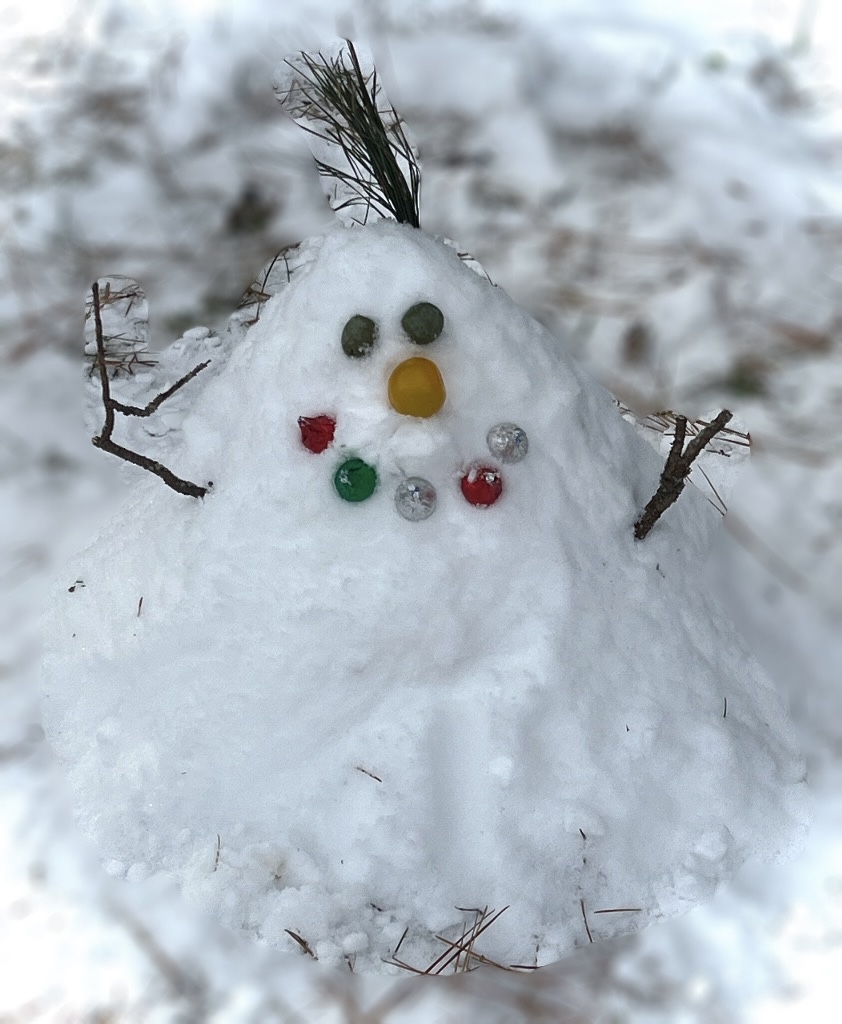
Red and green Hershey’s Kisses
make a shiny smile.

Green olives for eyes.
A tiny tomato nose
(I’m out of carrots).

She proudly chooses
these facial features herself,
bringing her snowman

to life. I find twigs for arms
under the pines and Sister
crafts a tuft of hair

out of pine needles.
We name our snow-dwarf Lafo
(Olaf’s name scrambled).

Lafo has few days
as temperatures go back
to the seventies.

Traces of him stay
longer than I expected.
The Kisses fall off

and I salvage them
(as wild creatures shouldn’t eat
foil and chocolate).

Each day, the remains
of Lafo remind me of
my beloved girls

and that our time here
together is brief as snow.
Let us pack it well.

Our little Lafo

*******
with thanks also to the Two Writing Teachers Slice of Life community

Ghosted

A slice of memoir for my writing friends, who requested the story of my mail-order ghost…

******

The 1970s were steeped in tabloids, monsters, horror, psychics, UFOs, and ghosts.

Weird times.

And I was a weird little kid.

I thought I could see a lady sitting high atop a tree across the street from my house. Every day, year after year, she sat there, a regal bark-colored woman, never moving, just looking out over the world from her tall branchy throne.

I thought I saw feet in a pair of bedroom slippers left in my Grannie’s hallway…where was the rest of the person? None of the adults could make sense of my sudden hysteria.

Speaking of hysteria: My young parents, for some inexplicable, out-of-character reason, carried me through a haunted house before I was two. Just as they were exiting, a witch popped out from a secret chamber and her long hair swept over me. I have no memory of this. My father told me the story; he said I screamed and screamed, like I’d been burned. I figure it marked me permanently. Like a smallpox vaccination. I wonder what kind of immunity witch hair carries…

I recall being really being burned. I was afraid of cigarettes, of their red-hot circular tips, because some grown-up or other at a family gathering hadn’t thought to move his indolent hand out of the way when my preschool self went running through the living room. Maybe this is why I also feared flames shooting up from backyard charcoal grills (smell that lighter fluid?), from the flattop grill behind the counter of the local diner, and the whoosh of brilliant blue whenever someone turned the burner knob on a gas stove.

I was afraid of big smells. Like collards cooking. I’d gag and run out of the house (love to eat ’em now, though, with plenty of hot pepper vinegar).

My weirdest childhood fear (perhaps): Black toilet seats. Utterly terrifying. Why did anyone ever think these were a great idea? I wouldn’t even enter the bathroom at the doctor’s office, let alone “go,” because of that ominous seat. I sobbed and tried to get away from my mother. Not understanding, she became angry.

And I was afraid of ghosts.

So much so that I didn’t want to go to sleep the first night I stayed with my grandparents after Granddaddy retired and they moved back home to the countryside. Their cozy little house sat amid whispering woods, strange canals, and a tiny dappled cemetery situated diagonally to the left of their front yard, across the dirt road.

I took one look at those weathering old tombstones gleaming white in the dusk and thought Ghosts.

Grandma, I’m scared of that place.

Oh, honey. Don’t ever fear the dead. Fear the living.

It didn’t help.

Oddly enough, TV shows about monsters and ghosts did.

The Addams Family: How did Morticia move at all in that skinny black dress, drawn so tight ’round her ankles? How could a disembodied hand called Thing materialize from random tabletop boxes throughout the psuedo-gothic house to deliver mail or light cigars? My parents’ then-childless friends got a black Lab puppy and named it Thing. I loved that dog. She dug a big hole in our backyard; in the years to follow, I’d expand Thing’s hole many times over, along with my imagination.

The Munsters: Who could be afraid of Herman, with his goofy laugh?

Casper the Friendly Ghost: I quickly grew to love him and all the dark gray haunted-house scenery on the Viewmaster reels Grandma bought me. Casper wasn’t remotely scary. He was cute. And comforting. Somehow.

And so it was, one summer when I was nine or ten, I happened upon the little ad in the back pages of a magazine (or maybe it was in a novelty catalog, another 1970s staple):

Order Your Own Ghost!

I didn’t bother to read the rest of the details. The creepy illustration sold me.

I went in search of Grandma.

I would have it. My own ghost.

My land. What do you want this for?

I just do… please, Grandma?

She sighed, clipped out the form, addressed the envelope, enclosed the couple of dollars (?), and mailed it.

When the package arrived she helped me open it. One doesn’t want to slit a ghost by accident.

I’m not sure what I expected. I knew the ghost couldn’t be “real,” yet the ad had conjured a misty apparition in my mind, a filmy thing that would do my bidding. Could it be the allure of supernatural power? The need to overcome a fear by mastering it? Sheer curiosity? All of the above?

Would the the thing rise before me as soon as the package was opened?

Um.

No.

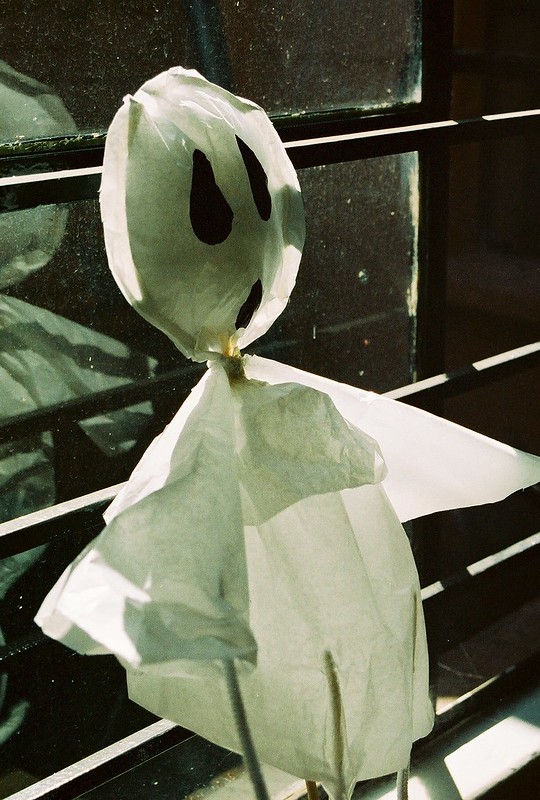
Opening the package the rest of the way, I found a folded white plastic sheet, deeply creased when I shook it out, a white balloon to blow up and place under the thin plastic, white thread for tying under the balloon “head” and to be taped to the top of the plastic so that the ghost could then be hung from a door or hook, etc., where it might move a little whenever we passed by (or if I decided to turn Grandma’s floor fan on it).

Oh, and helpful directions to locate a marker for drawing draw eyes and a mouth, if desired.

I felt like throwing the worthless stuff straight in the trash. When I eventually learned the term rip-off, this mail-order ghost would drift to mind.

Grandma, who’d tried to discourage the purchase in the first place, now tried to placate me: Here, I’ll blow up the balloon…

We assembled the sorry specter and strung it on the old bedroom doorknob where it dangled in front of the metal keyhole. I hated the sight of it hanging there, grinning at me.

I didn’t know it then, but Lessons were afoot…

Be careful what you wish for. You might get it.

It may not be at all what you thought.

Fears are exhausting.

Fears can be overcome by recognizing the inherent ridiculous (look up Harry Potter boggart).

Things and people will sometimes (oftentimes) turn out to be something other than they seem.

Above all: Life is a carnival, a strange journey of compelling facades and disappointing realities, a house of shattered mirrors with perpetual distortions and misperceptions obscuring truth, of false narratives and unseen, lingering harm lurking in the darkest corners, where occasionally flares a red-hot tip held in an indolent hand…

Ghosts are, in the end, about loss; what do we fear more than that?

I’d had enough. I balled up my ghost and smushed it into the trashcan where it belonged.

It was a beginning.

Ghost. David Ludwig. CC BY-SA

*******

with thanks to Two Writing Teachers for the Tuesday Slice of Life Story Challenge
Jewels

On March 17th I typically write a post contemplating my obscure Irish roots while celebrating the novelty of my grandfather’s middle name: St. Patrick. Yes. For real. No one knows why, my down-east North Carolina Methodist Granddaddy hated it, and by my lifetime he’d legally changed it to the initial S.

I love the uniqueness of it. I cannot let the day pass without saying that Columbus St. Patrick Brantley’s name remains a treasure to me, a jewel in my family’s living memory, a perpetual mystery in our supposed non-Catholic history.

Here is where I diverge from my norm to chase, not a name, but a word: jewels. In keeping with the day, of course. The first jewel I’m after is brilliant language, and the Irish are rich in that. It glimmers in every bit of their wit, storytelling, poetry, and song.

In 1996, Frank McCourt’s memoir Angela’s Ashes burst upon the world and won the Pulitzer Prize. As soon as I learned of the book, I had to have it. Reviewers raved about McCourt’s narrative voice: Stunning. Lyrical. Dazzling.

So I got my own copy. From page one…spellbinding. My concepts of writing and memoir were forever changed; McCourt’s Irish voice has never left my head.

Of his many glorious phrases, one that returns to me most often comes from the scene where young Frank is in the hospital recovering from typhoid fever. In the room next door is a girl recovering from diphtheria. They can’t see each other, but she calls out to him. She says she has a book about the history of England with her, if he’d like to read it. He does. Books are treasures to him; his impoverished family doesn’t own any. The girl sends the book to him via the nurse, Seamus, who delivers it most reluctantly, complaining because it’s about England “after all they did to us” and that there “isn’t a history of Ireland to be had in this hospital.”

McCourt writes:

The book has the first bit of Shakespeare I ever read:

I do believe, induced by potent circumstances
That thou art mine enemy
.

...I don’t know what it means and I don’t care because it’s Shakespeare and it’s like jewels in my mouth when I say the words.

Jewels in my mouth…

I knew exactly what he means. I loved Shakespeare from my own first encounter. The last line of Sonnet 73 is the heartbeat of most everything I do in life, certainly of the things I write: To love that well, which thou must leave ere long. Jewels in my mouth, in my heart…the bequest of beautiful language.

McCourt eventually left Ireland for America where he became a high school English teacher. He’d regale his classes with stories of his childhood, and they’d say Hey Mr. McCourt, you should write a book.

So he did.

Angela’s Ashes.

And so the world is changed.

That is the power of story.

That is the second jewel from McCourt: Story. Specifically, writing of your own life.

In his final memoir, Teacher Man, he’s become a creative writing teacher. He’s trying to inspire students to write about their lives when they think there’s nothing interesting to say. He tells them: Every moment of your life, you are writing. Even in your dreams, you’re writing…Dreaming, wishing, planning: it’s all writing, but the difference between you and the man on the street is that you are looking for it…realizing the significance of the insignificant, getting it on paper. You might be in the throes of love or grief but you are ruthless in observation. You are your material. You are writers and one thing is certain: no matter what happens, you’ll never be bored again. Never…nothing human is alien to you.

Jewels. Your words, your story, your every moment. All priceless.

I met Frank McCourt in the winter of 2000 when he visited North Carolina State University. I went despite a falling snow. I took my oldest son with me and we listened to McCourt speak of his books and devastating childhood in Ireland. We listened, and marveled. We listened, and wondered about the story of our own origins on The Emerald Isle.

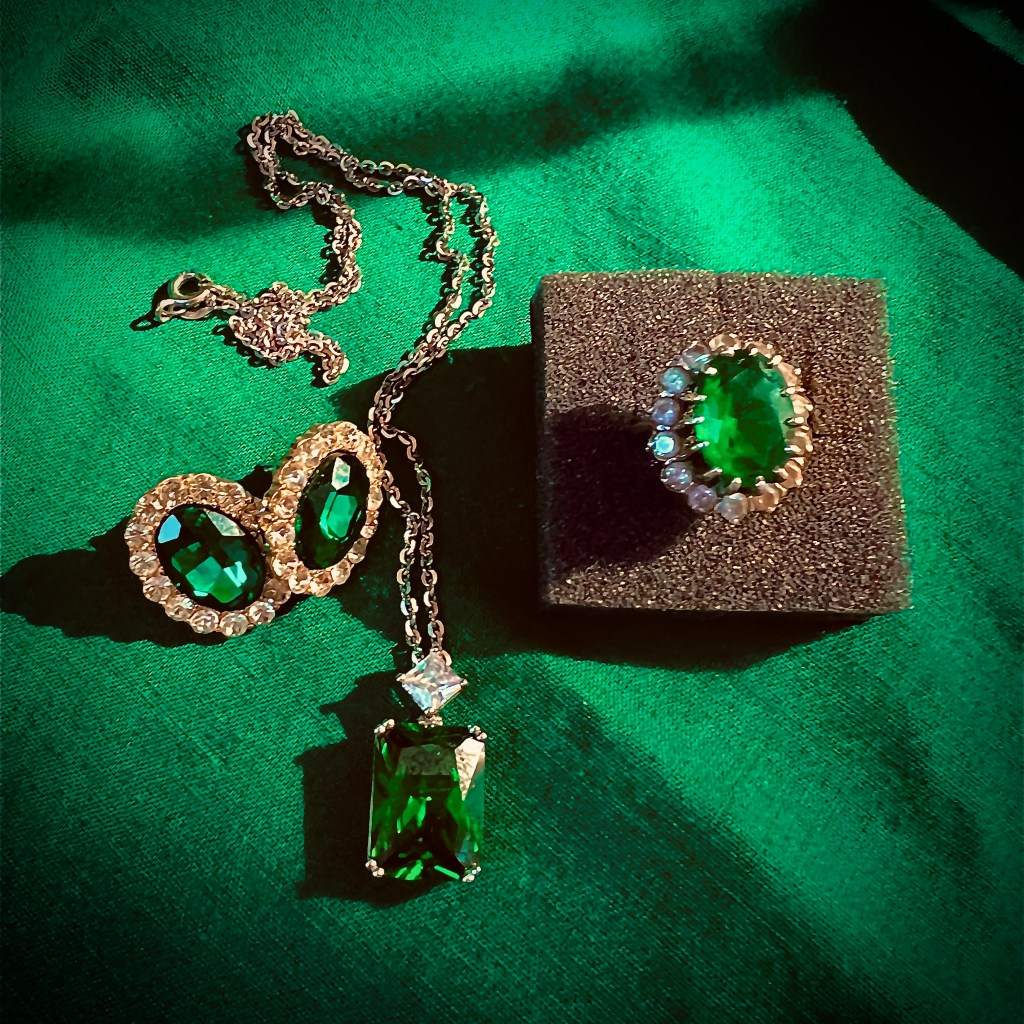
Which brings me to my final set of jewels for today: Christmas before last, my husband gave me a necklace and ring. His sister, without knowing or discussing it with him, gave me earrings. The jewelry, all bearing my birthstone, emerald, are a startling match. My sister-in-law chose the jewelry for me because she loves the color. My husband said, These are to remind you that one day, I’ll take you Ireland.

Where, I imagine, the voices of my distant ancestors still whisper in the wind…perhaps when I go, if I am very still, I might hear them…learn from them…

Until then, and always, I shall be about the excavation of my own story-jewels, with McCourt’s words echoing in my brain and my curious link to St. Patrick forever pulling at my heart.

As for today… here’s to proudly wearin’ o’ the green.

*******

Composed for Day 17 of the Slice of Life Story Challenge with Two Writing Teachers
*******

Works cited:

McCourt, Frank. Angela’s Ashes: A Memoir. New York, Scribner, 1996. (Pages 195-196)

McCourt, Frank. Teacher Man: A Memoir. New, York, Scribner, 2005. (Pages 244-246)

Life’s a cupcake

Some time ago, I had my nails polished in a pale color delightfully named “Life’s a Cupcake.”

I’ve been hanging onto that, in case I ever decided to write something out of it.

—Why not today?

If Life’s a cupcake
then use real sugar.

If Life’s a cupcake
then add your own flavor.

If Life’s a cupcake
then try not to burn it.

If Life’s a cupcake
then savor the filling.

If Life’s a cupcake
then frost it thick with love.

If Life’s a cupcake
then offer it to others.

If Life’s a cupcake
then eat every crumb.

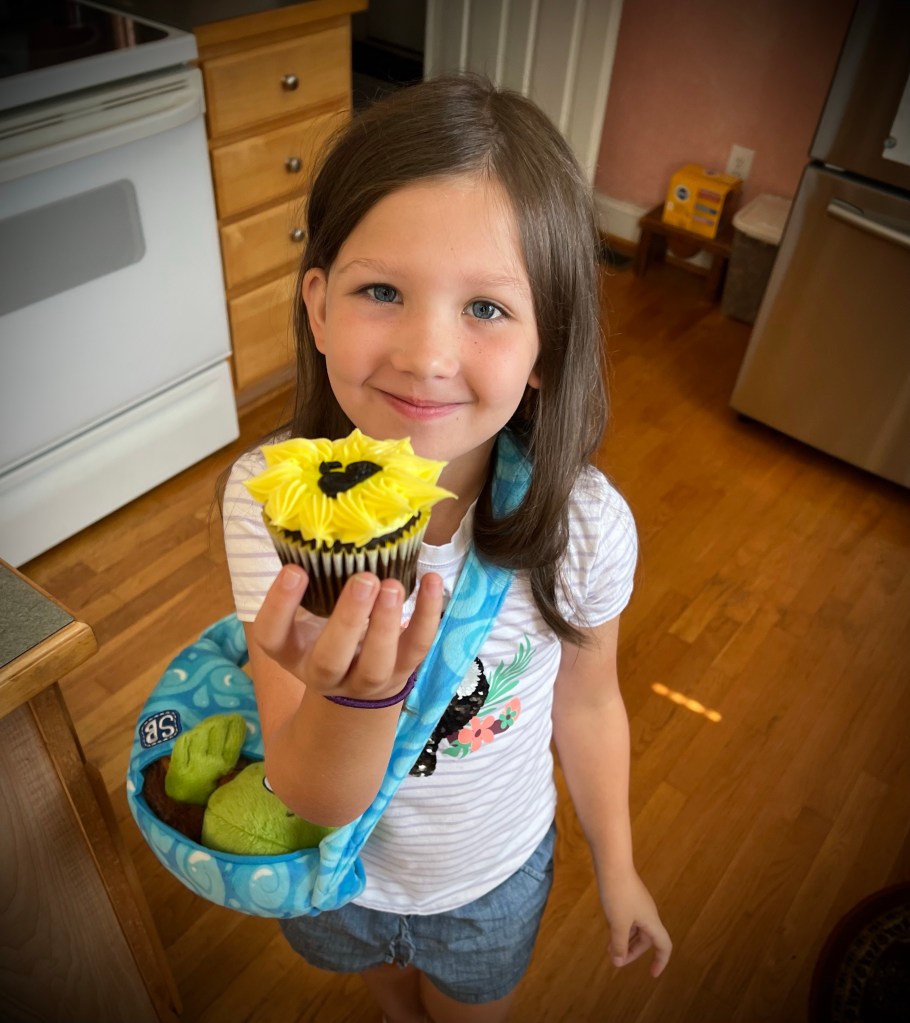
My sweet Scout, summer before last

*******
Composed for Day 15 of the Slice of Life Story Challenge with Two Writing Teachers
–oh, if you’re curious about the nail color, check it out: Life’s a Cupcake polish.
Note the brand name, “Creative Play”—how fitting!

Blessing

noun

a favor or gift bestowed by God, thereby bringing happiness.

—Dictionary.com

*******

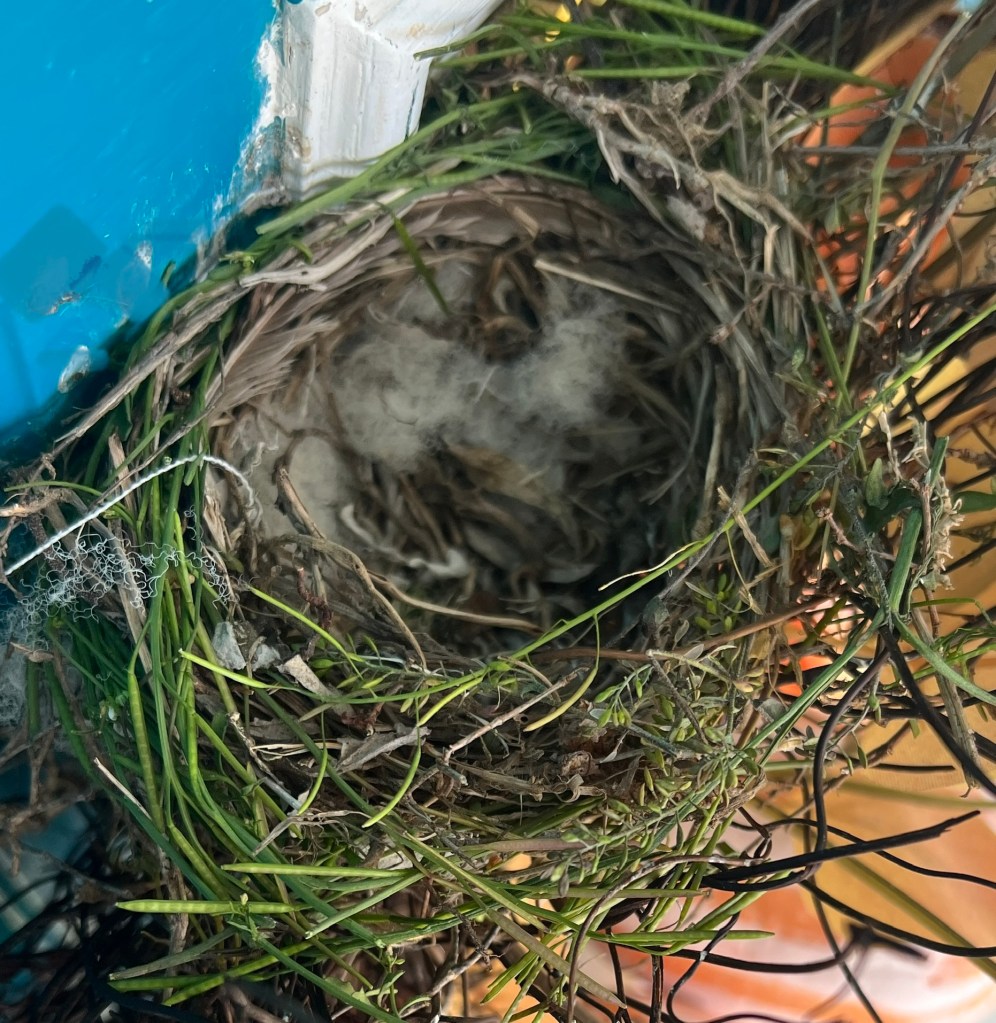
I could hardly wait to get home yesterday to check the progress of the new finch nest on my door wreath.

On Day Two, it now has the characteristic cup shape. It’s lined with white fuzz, a soft cushion for the precious eggs to come.

It is comprised almost exclusively of fresh green grass. The color of newness and life.

House finches are said to represent new beginnings.

Their nests always fill me with awe, and never more than now, watching the parents working together to rebuild immediately after two of their babies died in the previous nest, which I tore down. Confession: I wasn’t sure I was doing the right thing. Nature is mighty, ever-resilient, wise; it is imbued with regenerative power. Yet there are so many delicate balances within it. I didn’t want to upset any of these. I am a mere student of these birds. They are the experts.

So to see this nest being built in the exact spot as the ill-fated former one is a gift. It sends my spirits soaring, exponentially.

House finches are considered symbols of joy. If you ever hear one singing, you understand why.

In some parts of the world, they’re called the blessing bird.

They chose my door years ago as the place to bring new life into the world. I now share the wonder of it with my seven-year-old granddaughter, our “nurture scientist.” Together we have witnessed the miracle of tiny life coming into existence and eventually taking flight. In a couple more seasons, her baby sister will be able to enjoy it, too.

After I took this photo of the new nest, rejoicing and wondering when the first egg will appear, I went into the house to find a mysterious package my husband had retrieved from the mailbox.

Neither of us had ordered anything.

Curious.

I opened it…

A gift from a friend I met through writing, who reads about my finches each spring, who knows of the recent loss.

I am awed again.

A writing community is like a nest: a safe place especially created for growth, where we nurture one another and encourage each other to stretch our wings and fly.

It is here that we learn the true power of story and how it knits our hearts together. In the beginning, in the end, we are story.

To live it, write it, build it together, is a gift.

And the time for doing it is now. Today.

My love for the finches, like my love for writing, is inextricably woven through and through with gratitude for the blessings in my life. It’s all a song in my heart, greater than words.

Each day brings its own gifts. It’s up to us to see them, accept them, celebrate them.

And to give in return.

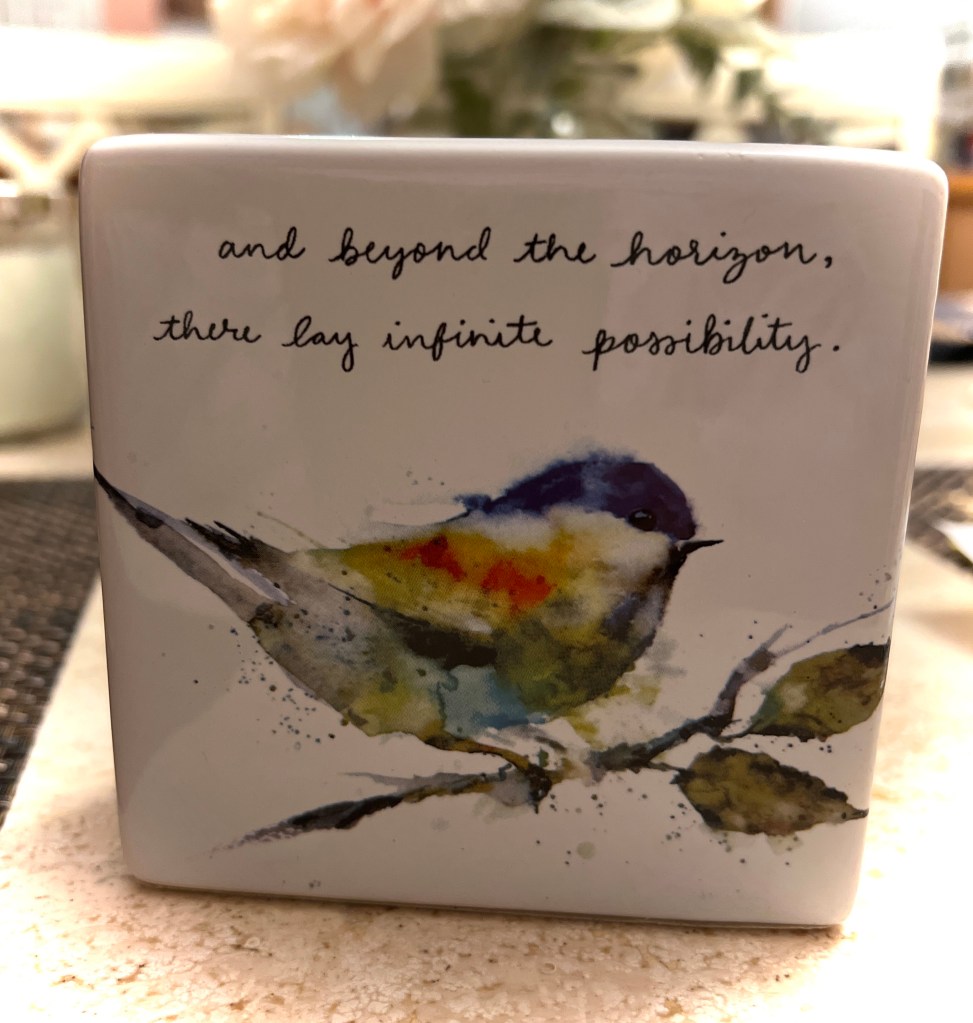
Beyond the horizon
Lies infinite possibility
Eyes cannot see.
Sky meeting sea
Sea meeting sky…
I fly ever onward
Nested and rested in the
Giver of every good and perfect gift.

Today, there might be an egg.

********
with thanks to Two Writing Teachers for the monthlong Slice of Life Story Challenge

and my dear gift-giver

Wall on the writing: a scrambled idiom poem

On the last day of Ethical ELA’s Open Write, host Denise Hill offered this invitation:

“Take a metaphor or idiom and reverse it or twist it up in any which way you choose – mumbo jumbo jam it!

Then write from the ‘sense’ the new phrase makes. It may be total nonsense. That’s perfectly fine! It may provide a ‘feeling’ or strike a memory chord or a fantasy chord with you in some way that inspires your poem today. Just go with it!”

Here is what came of my scrambling the writing on the wall

The Wall on the Writing

In prehistory
cave-dwellers
dipped their fingers
into animal fat
charcoal
their own earwax

then dirt and ash

to paint their stories
on the walls
by flickering torchlight

over time
many caves
collapsed

to be reabsorbed
by the earth

In the course 
of human migration
the region of the caves
became a fortified city
with iron gates
and great stone walls

one of which
was constructed
over the buried caves

It is said that at this wall
the great orators
gave their mighty speeches
humble petitioners
made their prayers
poets composed their epics
chroniclers penned histories
and storytellers
found their words

I do not know
if the wall 
or the legends
are real

but I do know
that when I
hit a writing block
that I cannot
go over
around
or through
if I dig
deep
deeper
deeper still
within

I will find
the words

just human DNA
finding its way
with story
waiting 
deep
deeper
deeper still
beneath the wall
on the writing

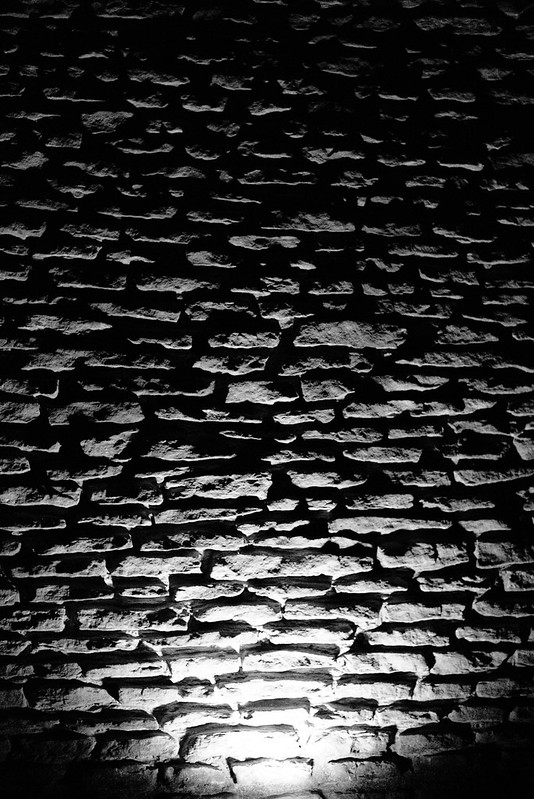
Stone Wall. jcubic. CC BY-SA 2.0.

with thanks to Denise Hill and the Ethical ELA Open Write community

and Two Writing Teachers for the monthlong Slice of Life Story Challenge

for story really is

in our DNA

Focus

I am always looking for them.

Hawks.

I see them most often on power lines, easy to spot, as they are so much larger than other birds perched on high.

Alone. What other bird would perch with a hawk?

Some of them have so much white plumage that I think of snowy owls (which do not live in this southern clime).

In recent weeks I’ve seen a hawk in the branches of a winter-bare tree.

Regal. Breathtakingly beautiful.

Raptors, living on prey. Solitary creatures, not socialites. Steeped in symbolism.

Ultimately they are creatures of intense focus, and that is the lens I will use now.

It occurs to me, while contemplating hawks, that what we focus on feeds us.

Not our stomachs. Our spirits. Our souls.

Everything we devour isn’t good.

It also comes out that way, somewhere, somehow.

Somewhere, somehow, I think it was the hawk that inspired me to give up negativity for Lent.

I don’t need to partake of it or serve it (the whole point being repentance and not returning to it again).

I stepped away from social media quite some time ago; not gone, exactly, just…distanced. Able to hone in, occasionally, for what’s really of value.

I’ve stopped dwelling in the shadows of this school year (a work in progress). Perhaps more hours of daylight have helped with this…the hawk doesn’t waste precious time rueing the daily grind of life. It just does it. Concentrating on the task at hand. Never losing direction. Knowing when and where to move; until then, waiting and watching. With wide perspective.

Of course all the challenges don’t just disappear (as the hawk surely knows).

But in shedding unnecessary weights, the heights are easier to obtain. The mental eye is clearer, sharper.

Yes, focus.

Consider this, from Merriam-Webster:

The Latin word focus meant “hearth, fireplace.” In the scientific Latin of the 17th century, the word is used to refer to the point at which rays of light refracted by a lens converge. Because rays of sunlight when directed by a magnifying glass can produce enough heat to ignite paper, a word meaning “fireplace” is quite appropriate as a metaphor to describe their convergence point. From this sense of focus have arisen extended senses such as “center of activity.”

Directed light, channeled energy…being a conduit.

My thoughts spin homeward, to the hearth and heart of my life.

And as I drive at the end of the day, my freer spirit soars like the hawk on high, wind ruffling the embers of its breast.

Red-shouldered hawk. Photo by my friend E. Johnson

*******

with thanks to Two Writing Teachers for the Slice of Life Story Challenge

Like crows, hawks use tools
to get what they need.

Writing is a tool
for the soul.

A lens
for a better focus
on life.