Death calls

Subtitled The morgue, part 2. A slice of memoir.

And so it was that the house for the dead became a house for the living. If there were any ghosts of soldiers or prisoners lingering in it for over twenty years, perhaps a three-month-old baby’s cries and the acrid odor of diapers drove them on.

Even I wouldn’t be there long. The shadow of death falls like a blanket; the living must keep moving out from under it.

My memories of the house are fragmented, all in black and white. A living room with plain white walls. A window with pale curtains likely made by my mother. The black slats of my crib. Years later my mother said there were little black footprints on the wall from where I pressed my feet through the crib slats. She didn’t have the heart to wash them off. My grandmother wanted to know why I’d been put to bed with dirty feet.

I had a white blanket with satin trim. I sucked my thumb and rubbed the satin against my nose with my forefinger; eventually the satin pulled away from the blanket. I’d rub it between my left thumb and fingers while sucking my right thumb. A soothing rustle, rustle, rustle. I called it my Silky String.

That is almost all I can remember for myself of the old house that was once an Army hospital morgue.

Pa-Pa was the reason we came to live here; he was the reason we had to go. He owned the house. When he died suddenly from a heart attack, his children took over his property. We were the stepfamily. Grannie had to leave the big house next door. My father, mother, baby sister and I had to leave this first house of my remembering. It was March. I was not yet three, when the long shadow sent us searching for a place to be.

When death calls, the living must answer.

*******

All these years later, I watch the news. Tanks, warships, airstrikes, destruction. A hundred and nine empty baby strollers placed in Lviv’s central square today, commemorating the children killed in the invasion of Ukraine.

I think of morgues.

And of the mothers. And little footprints left behind.

And people being driven from home. That is what wars do. That is what death does.

My son, in his mid-twenties, comes in as night falls. Dressed in suit and tie. I know he’s tired.

“Long day, wasn’t it?” I ask.

“It was,” he answers. “Maybe I won’t get called out tonight.”

For a minute I see him at age five, pulling out the church directory every time a member passed away. He’d grab a pen, cross out the person’s photo, and write the word Died.

Funny how these things come back to you. Memories are ghosts.

And life is circular; all things are connected.

My boy eats supper, collects Dennis the dachshund, goes upstairs to rest and, I hope, to sleep. Unless his phone should ring in the night. If it does, he’ll be back in suit and tie, leaving home to pick up someone. He’ll transport them to the house waiting to receive them, where he’ll begin the preparations for their burial or cremation. Got a death call, he’ll say, if his dad and I are still up. If not, he just goes quietly into the night, a mortuary emissary.

For when death calls, the living must answer.
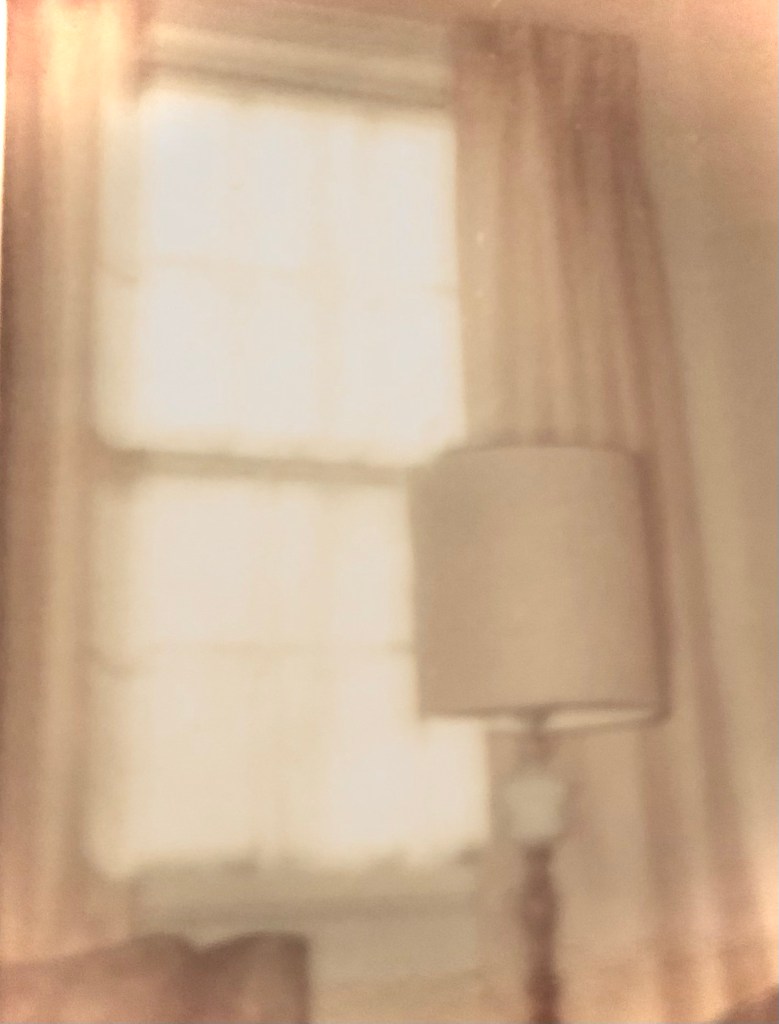
Window in the living room of the house that was originally an Army hospital morgue.
I lived here from about age three months to almost three years.

*******

with thanks to Two Writing Teachers for the Slice of Life Story Challenge every day in the month of March.

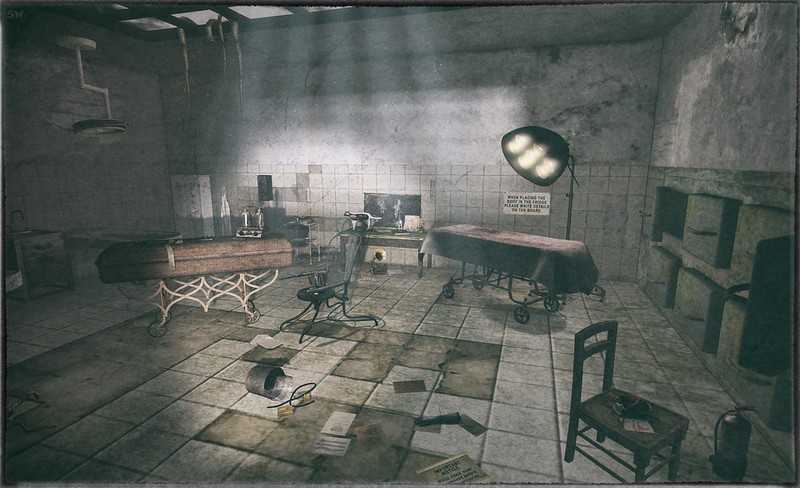
The morgue

a slice of memoir

By 1949, the Army base where a million and half people were processed for service in WWII stood deserted. This had been the last stop before boarding ships for western Europe. All branches of military personnel, not just Army, passed through here — even some civilians on secret missions. Surely these young people made time for the cantina, laughing and maybe dancing to big band music, or for a show in the base’s theater before they left American soil, maybe for good… how many wouldn’t return to see the wooden arch bearing the message WELCOME HOME at the camp’s entrance, erected over the wide road cut through the forest? And how did the Axis POWs feel, seeing this sign on their arrival? Did they wonder what welcome awaited them here in an Allied prison? They would be put to work; they would also be given their own canteen.

All that remained four years after war’s end were empty buildings, ephemeral fliers, yellow canteen coupons occasionally spiraling in the wind, and weeds growing tall in their eagerness to swallow it all, to satisfy the hungry forest.

A local man overheard talk that the decommissioned land was being sold and if you had a way to move a building, you could buy one cheap.

He had a way of moving a building. He had a place for it, on his own land right beside his own house. He signed the papers and took his building.

It made for a nice little home, he thought. It had a concrete floor with pipes running through for radiant heat. Solid. It would need a little paint, a little work here and there. He could do it. He was pleased with himself. He would rent it it out, make a little money…

Quite some years later, a young man came to ask about the house: We can’t stay in the apartment where we are anymore. It’s not working out… he and his wife had a baby. They wanted to be in a safer place.

The older man, now gray-haired, pursed his lips for just a moment before agreeing.

And that is how I came to live in the house which was once part of a bustling World War II Army base at a port of embarkation.

That was my dad and mom who needed a place to live.

That was my step-grandfather, Pa-Pa, the sometime opportunist who’d moved the building. He’d married my mother’s mother.

I, of course, was the new baby.

This house is the first home I remember. In this place, my memories would first come into being while I watched the interplay of light and shadow on the walls. Here I would dream my first dreams and cry out in the darkness until my father came to settle me back to sleep, sometimes holding me in his arms all night when I suffered asthma attacks. Here I would begin to recognize the distant rattle and whistle of trains, long before I first crawled on the warm, warm floors in wintertime or knew the cold and silvery moon.

I wonder if this is where I first came to understand the word ghost.

The little white house with the heated floors was, after all, the Army hospital morgue.

Photo: Shocking Wonder. CC BY

*******

with thanks to Two Writing Teachers for the Slice of Life Story Challenge every day in the month of March.
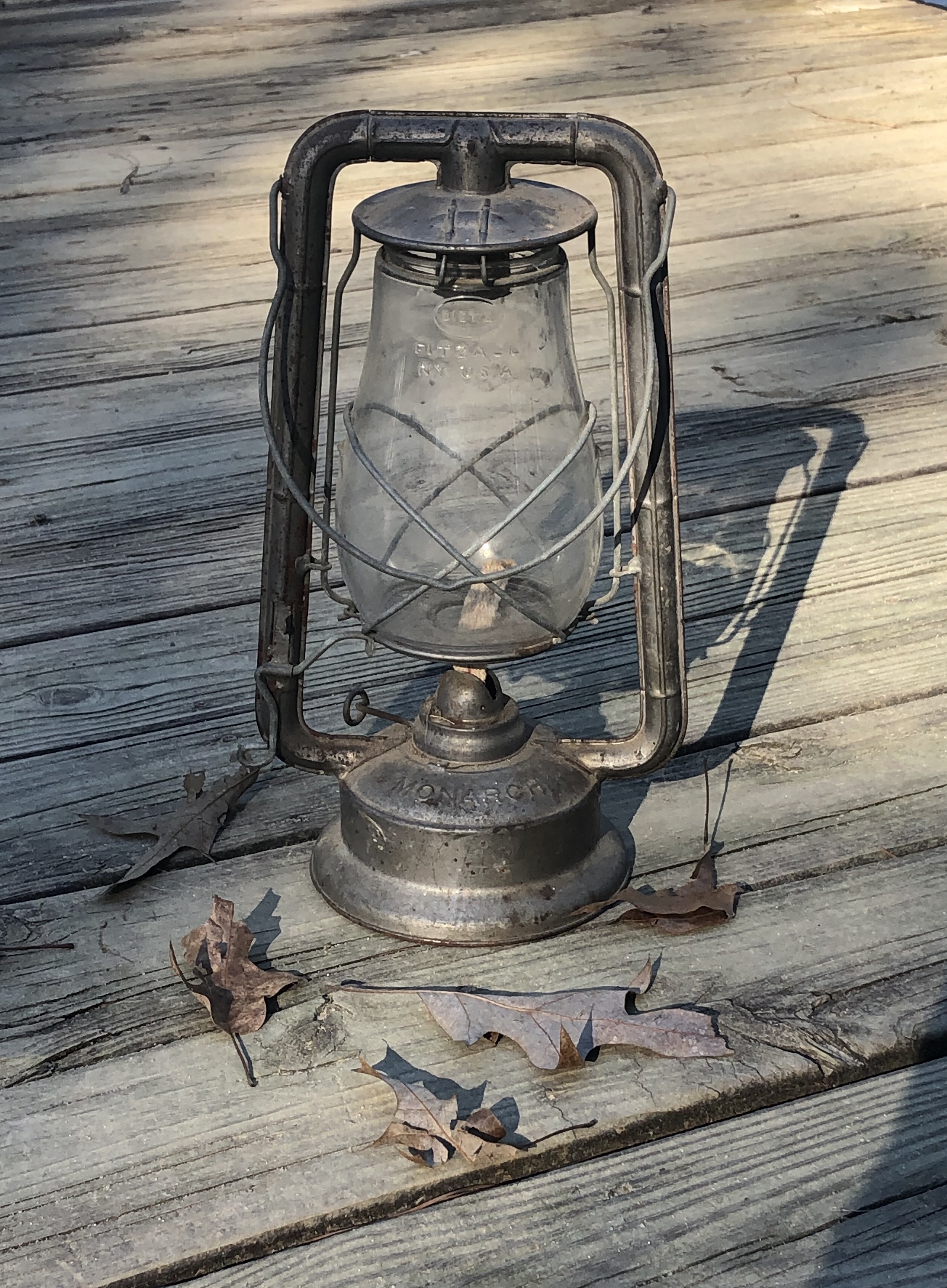
The lantern

Pa-Pa’s lantern

In the lamplight, the withered leaves collect at my feet 

and the wind begins to moan. 

—”Memory,” Andrew Lloyd Webber & Trevor Nunn

It is all I have of him.

I don’t recall ever seeing it until I returned home after my Grannie’s death, years ago. My father picked the dusty old lantern up from a box of her belongings: “This was Pa-Pa’s,” he said. “You don’t remember him.”

I bristled a little. “Yes I do, Daddy.”

He smiled, shook his head dismissively. He placed the lantern on the bookshelf by the front door.

“He had white hair,” I said. “And glasses.”

Daddy’s brow furrowed just a bit.

“And he wore a gray . . .  jumpsuit or something,” I continued. “And he was tall . . .”

Daddy chuckled. “No, he wasn’t! He was a short man, although he did wear a gray work suit. He was a mechanic.”

“Well, I was little. He looked tall to me.”

He looked at me strangely, then.

And told me I could have the lantern.

Pa-Pa was my step-grandfather. There are very few images of him in my mind. He and Grannie, my maternal grandmother, lived in the big house with the long stairs outside. My mother and father and I lived in the small white house right next door. One day Pa-Pa came over, sat in the floor with me, and taught me how to spin a rubber ball. Round and round it went, white and pink, blurring, round and round; I didn’t want it to stop. I must have amused him because he laughed a lot . . . when I recalled this to my mother, she said Yes, he thought a lot of you. He didn’t get along with his own family. 

When I first saw a model of the Earth rotating, it brought to mind Pa-Pa and that ball on the floor.

My memories of those days are fragmented, strange. In Grannie and Pa-Pa’s living room I saw a pair of bedroom slippers that still had feet in them. I screamed in terror and couldn’t make anyone understand me. Another time I was standing between the kitchen and the living room when something behind me exploded. I saw the flash, the fire, reflected in the picture window behind the sofa where the grown-ups were sitting. They came running —it turned out to be a pan of grease left on the stove, igniting. No one was hurt but, again, I was terrified.

Pa-Pa let me ride in his wheelbarrow, out past the blue snowball bushes (hydrangeas) in his yard.

—That’s about all.

I have no recollection of his vanishing.

I know now that his grown sons told my parents we couldn’t stay in the little house anymore; we had to find another place to live.

Much later I learned that Pa-Pa bought the little house after World War II, when a nearby Army camp was decommissioned and its buildings were sold for a song. He had it moved to its place beside his big house. When I was born and my parents weren’t happy with their apartment, Pa-Pa offered it to them.

That little house, the first home I remember, had been the Army hospital morgue.

Ghosts, ghosts, everywhere . . .

I wonder why he comes to mind this night, why I suddenly think about his lantern.

Perhaps because he died in March.

I didn’t know this, either, until I found his grave a few years ago.

I stood reading his headstone, shivering in the dusk, brown leaves swirling, rattling softly at my feet. The month, the year—I could hardly believe it, myself.

He died in March.

I would turn three in May.

But I remember you, Pa-Pa. I remember.

—Your old lantern still lights.