Taking back

For Ethical ELA’s Open Write today, fellow teacher-poet Margaret Simon invites participants to write to a photo. “This Photo Wants to Be a Poem” is a regular feature of her blog, Reflections on the Teche.

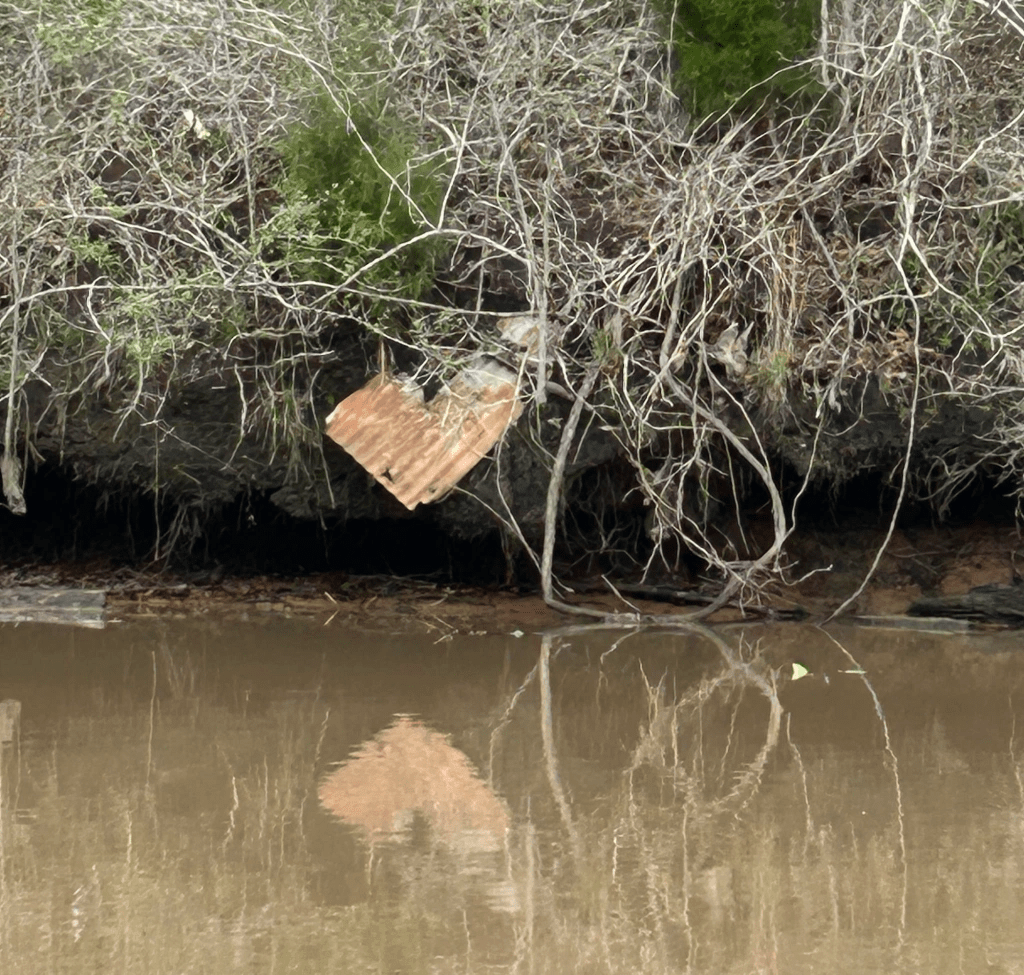
Margaret is also an artist, always viewing the world with artist eyes. She saw this scene on a canoe ride with her husband and knew she needed a photo… found art, shall we say, for a found poem (of sorts):

Here is my poem.

Earth gives
metal

Man makes
barns

Time rusts
mettle

Storms bring
harm

Swamp doesn’t
meddle

only opens its
arms

to heart-pinned
medal

recalling Earth’s
charms.

Provision

Provision is the title of the prose poem I share here, originally written to a nature prompt on Ethical ELA’s Open Write. A poet-friend suggested turning it into haibun by adding haiku at the endVoilà.

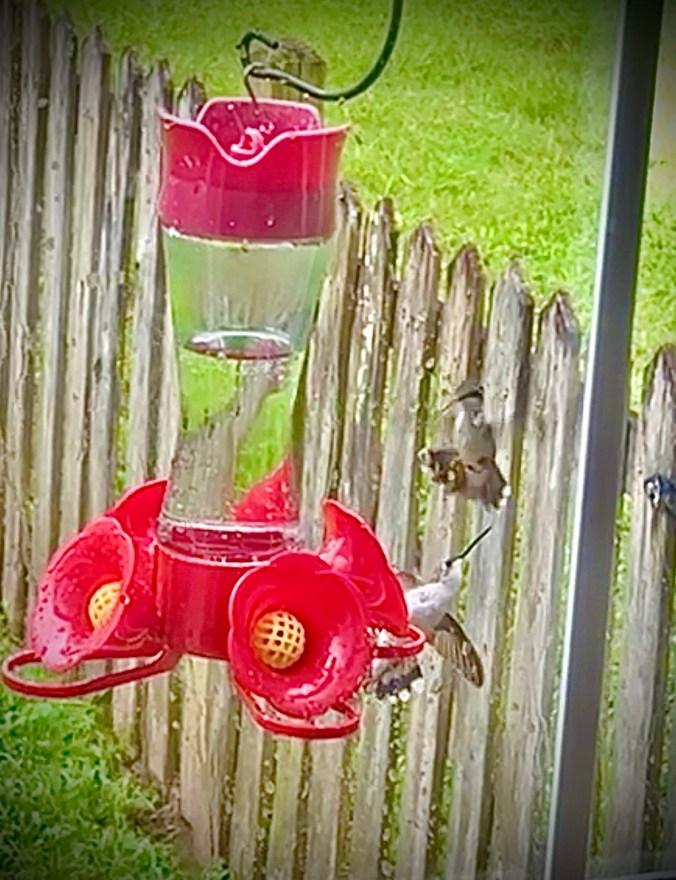
It is July. The hummingbirds are drinking a whole feeder of sugar water a day. My friends say they have no hummingbirds this year and I joke that they are all coming to me. My granddaughters try to help me count, but, in all the frenetic zoomings from window to crape myrtle and every which way, we lose track: Is it seven? Ten? We cannot be sure, even though every bird has different markings. Most are female. One silvery girl has a red dot at her throat. This is somewhat rare, research reveals. I have taken to calling her The Princess. She was here last year. She has come home again to her own realm and it is my great pleasure to serve her.  A documentary tells me that every day of life is a combat zone for hummingbirds. I already know this; I am eyewitness to their fierce competition for food. I am occasionally startled by the sound of a tiny body slamming against the window—THUNK! — where the feeder hangs. How is it so loud? How does the body-slammed bird not die? The hummingbird’s awareness and aerial acrobatics are astonishing. Once in a while, a male finds his way to the feeder, his brilliant ruby-throat like nothing else in nature, as long as the light is right. His jewel-fire turns black in shadows. The women soon drive him away. They rule the feeder. I see females sometimes picking near-invisible insects off of its red plastic flowers, likely to carry to their young. I am thinking some of these birds hatched here in our trees last year. We have never had this many before. It is not hummingbird nature to “bring your friends.” They do not have friends. They are individuals. Loners. Warriors. As fierce and resilient as anything in the animal kingdom. They are, in their way, mightier than eagles. And they know me. I step outside to a helicopteresque whirrrr accompanied by loud chips and chitterings…food’s gone! they say, so hurry up, hurry UP. A bird hovers nearby as I rehang the feeder full of fresh, cool sugar-water, condensation already running down the glass, gleaming in the light. They are back at it before I can open the door to go inside. I do not expect their gratitude. Their love. Their allegiance. None of that is possible in this life. Their beauty and perseverance, their very presence, is enough. They perch on the twig-branches of the pines out back whenever I am on the deck, nearly indistinguisable from the pinecones. They are watching me, these tiny winged wonders of sublime iridescence and supreme intelligence. They know me. It is more than enough. 

The battle is Yours
—I trust Your sweet provision,
grace in every drop.

Hey, Beaver

On Sunday I wrote a poem about my weekday commute being my “breathing place.”

The poem starts like this:

Along the road
among the trees
the wild things live
and wait for me

That day, we had torrential rains in our neck of the woods.

The next day, as I drove to work, right smack in the middle of the road, a wild thing was waiting for me, all right.

Well, hey, Beaver:

Covered in mud and what looked like bits of bark, the Beaver considered me (or my car, anyway) for a moment before carrying on with its business. Building, I suspect. Possibly home repairs. Maybe it just needed a breathing place for a minute, too…a break from all the dam work.

(Sorry, y’all – couldn’t resist having a little pun).

*******

with thanks to Two Writing Teachers for the March Slice of Life Story Challenge

A place to breathe poem

On Sunday, Dr. Sarah Donovan, founder of Ethical ELA, hosted the March Open Write. She invited participants to write about a place you go to breathe and know that everything will be okay.

She offered these opening lines as a model, from poet Christine Hartman Derr in “A Place to Breathe”:

Off the path,
behind some trees,
a clearing sits
and waits for me.

Dr. Donovan asked two questions to prompt our thinking:

  • Where or what are the places that wait for you?
  • Where are the places and who are the people around which you can simply be?

I write of my “breathing place” all the time: my drive through the countryside, to work and home again.

Here’s my poem.

Breathing Place

Along the road
among the trees
the wild things live
and wait for me

They do not know
about things like grace
or that they are
my breathing place

When they appear
as I drive by
my spirit soars
eagle-high

My heart, it sings
oh, glory, glory
for their presence
in life’s story

Peace descends
and folds its wings
—I breathe the breath
of wild things

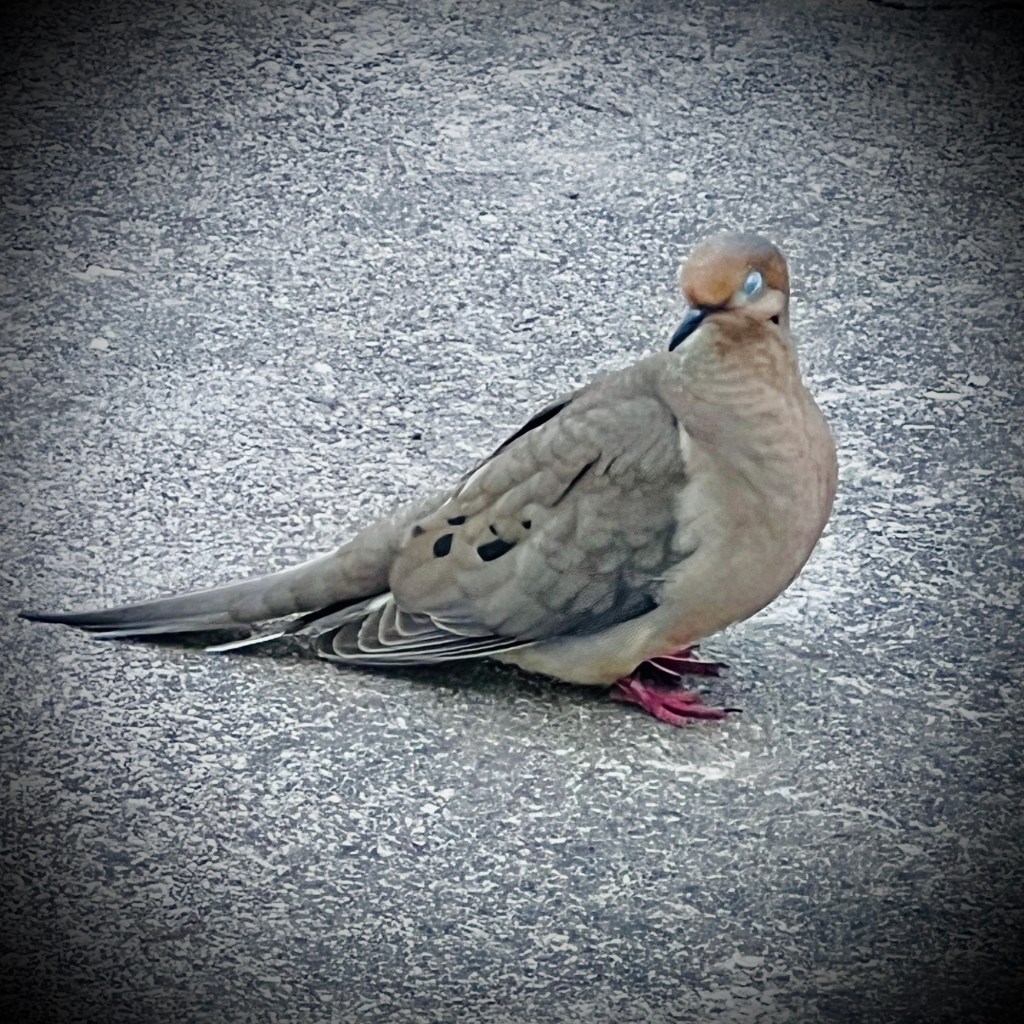
Mourning dove, resting in my driveway

*******

with thanks to Two Writing Teachers for the March Slice of Life Challenge

Absence

As many of you know, I write a lot about birds.

Every March, I write specifically about the house finches which build a nest in my front door wreath. They have done this for years, except for 2020 during COVID-19, strangely. They built a nest in the wreath that year but never laid eggs.

This year my husband put his foot down: Enough. We haven’t been able to open our front door or enjoy our porch every spring and summer since I don’t know when. Don’t let the birds build a nest in that wreath.

I knew a pair of little finches had been already been eyeing it, however. I have heard them “talking” out there on the porch in their singsong voices. They didn’t seem to like this wreath, really: it’s a winter one, still up from Christmastime.

I should have taken it down a while back. I knew better than to put out a spring wreath, for, against my husband’s wishes, it would become a finch nursery. I would be a frenzied Franna again, roping off the porch to keep the babies safe. I wasn’t always successful. Some babies died in the nest, and I grieved as I removed it. The parents carried on, rebuilding in no time, laying more eggs.

Naure is astoundingly resilient.

I’d also take the granddaughters out for an occasional up-close glimpse of tiny new life coming into the world. I would marvel at the parents’ unfailing care of their young. I would hear their songs, the most beautiful trills and warbles. It’s a pure, sweet, glorious song. The sound of joy.

Yesterday I noticed that the finches had started a nest in the wreath…they are so stealthy about it!

Today my husband took the wreath down (because I couldn’t).

I understand. I do. It’s a pain to keep the front of the house roped off for months – yes, months – at a time, for these prolific little songbirds.

Yet it always felt like a gift, to have them here and to provide shelter for them, so that more beauty could fly out into the world.

I am bracing myself for the finch’s discovery of the disappeared wreath. They planned on having their babies there. I do not think I can bear the sound of their sweet voices asking Why?

But as yet, there is no sound from the porch. The sun is very bright this morning, and I hear all sort of birds in the distance.

I expect my finches will rapidly find another place to build. I pray they do. The world needs more of these little creatures who were never supposed to have survived in the first place. House finches were released in the wild years ago by unscrupulous pet shop owners. The house finch didn’t die out; it proliferated.

It’s just that, in this moment, the silence, their absence, is an ache in my heart.

There’s no way to tell the finches that I am sorry. Or how much I love them. Not so they’d understand.

And so I write.

What I know is…no matter what, they go on, singing.

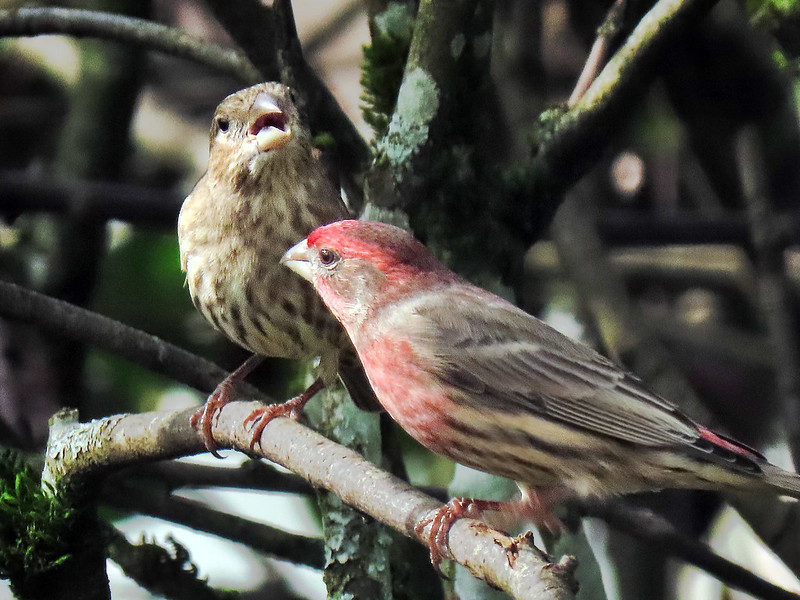
House finch pair. Birdman of Beaverton. CC BY-SA 2.0.

*******

with thanks to Two Writing Teachers for the March Slice of Life Story Challenge

Whole

On the first Thursday of each month, a group of us gather online to write to a theme. We call this Spiritual Journey Thursday.

I’ve been out of the loop awhile. Today I take up the invitation again. Denise Krebs is hosting, and she has offered us the topic of wholeness:

What does it mean to be whole, on our spiritual journey?

I feel like my reponse could take a whole book.

Maybe that’s because I understand brokenness.

Last Sunday I wrote a letter to my mother after learning of her death (the post Strewn with loss). We were estranged for almost twenty-three years. It’s a story of mental illness, compulsions, a family paying a price, and no reconcilation. The truth is that after such a shattering we can’t wish wholeness into being; we can only find something of beauty in the pieces. We must learn to treasure that. To be grateful for it. The letter to my mother is to thank her for the beautiful shards amidst the brokenness. There are many. She loved me, once. I loved her. I forgave her. She never knew. She is gone. I could not fix her or the relationship. I had to learn to be whole without her.

The truth is that we are all broken in some way, and sometimes, wholeness doesn’t look or feel like being whole. It’s not perfection. It’s not even peace. It’s more like a path.

If we choose to take it.

To me wholeness being productive, fulfilled, and able to love. Three things I rely on to get me there: Faith, nature, writing.

I’ll take them one at a time:

Faith. I believe God is sovereign. God is at work even when we cannot see it or feel it, and when we can’t seem to make any sense at all of what we are living through. He often does his best work through the least likely people and in impossible situations (for nothing is impossible with God, Luke 1:37). In my current rereading of the Bible, what stands out to me, over and over again, is God’s provision to those who love and obey him. If I am to be honest about my own spiritual journey…I fail at this miserably. But that is the point. I am broken like everything else in this world. The desire for relief from pain or a racing pulse or an anguished heart or a reeling mind is the very desire that pulls me toward God. I do not have to understand ungodly things. I have only to seek God’s help in rising above them all. He will make a way. He will provide. This requires that I know more about him and so I study. Again…wholeness is a path.

Nature. I won’t go into my many bird stories here. I will just say that having a sense of awe, as in understanding that you are part of something greater than yourself, brings purpose and wholeness. It also brings wisdom; King Solomon “spoke of beasts and of birds, and of reptiles and of fish” (1 Kings 4:33). Says my study Bible: “Careful observation of the natural world and how it works it one of the ‘normal’ ways in which people gain wisdom… Solomon was concerned with the natural world.” Nature opens your mind and your heart. It imparts awe in abundance. Trees can communicate with each other. They try to help each other. When grass is cut, it immediately begins to heal itself; that’s the fragrance you smell. That very same chemical is also warning other grass that danger is near. The networkings of mushrooms is mind-blowing. It’s called “The Wood Wide Web.” Not long ago, a first grader told me earthworms are so important that none of us would be here without them (!). Nature offers healing. If you haven’t read Something in the Woods Loves You by Jarod K. Anderson…give it a try. He is frank about his battles with depression and how nature helped pull him out of the abyss and into a better place.

He writes:

Kindness won’t make you rich, but it will make you whole. I know there is hurt in your life…These pains stick to us like burrs. They tell us to lash out, to stop feeling, to turn away and turn inward… But these impulses do not control us. They don’t write our stories, and each time you hear them and answer, “No, not today,” you have given a gift to the world…The world will give back to you in kind, but receiving those gifts can take a little practice… Nature is out there and she is in you. Meet her halfway.

I do this, every day. I meet nature. I look for birds. And more. Here’s the thing: Start looking, and they will come.

So might the feathers of wholeness that grow into wings.

Writing. I haven’t done as much writing this past year as in previous ones. I could say life gets in the way. That I don’t have a lot left to give at the end of the workday. That I am busy with my family, from my husband’s health issues to savoring any time I can get with my granddaughters…these things are true, but they’re not all. The “whole” truth is that I am tired. So, when the March Slice of Life Challenge rolled around again, I decided I would not take it on. Despite having loved it in the past, the idea of writing for thirty-one straight days and responding to others tired me even more. And then I woke up in the wee hours of March 1st and thought, why not write, you will feel deprived if you don’t. And so I got up and wrote. The following day, I wrote that letter to my mother…something I realized I really needed to do even though she will never know about it. That doesn’t matter; she’s free of her suffering in this world. And once again I realized the power of writing. Since I took on the daily challenge, I haven’t been as tired, strangely. I’ve felt stronger. More able. More clear-minded.

More whole.

Most of that is due to you, my friends. Coming back to my writing communities is like coming home to a place of profound belonging.

What is wholeness? Being productive, fulfilled, and able to love. How to attain it? Through faith, nature, writing…

Thank you, my fellow travelers, for being such a vital part of my journey.

And my wholeness.

*******

with thanks to Two Writing Teachers for the March Slice of Life Story Challenge
and to the SJT writers
and to my friend Denise, for her invitation to “wholeness”
A tail to tell

I happened to catch sight of it through my kitchen window.

A big brown creature in the yard, over by the birdbath.

First thought: Neighbor’s cat.

But in the milliseconds it takes to process thought, I knew the creature was too big, too low to the ground, too oddly-shaped, too uniformly brown to be the cat.

Oh! A groundhog.

They’re pretty common around here, usually sighted standing up by the roadside like little totems.

The groundhog sniffed the air like a dog…what does it smell?

I grabbed my phone for a photo. Better yet, a video…the granddaughters will want to see this…

The groundhog bunched itself up. Humpbacked, it made an about-face and trotted away alongside the fence toward the woods.

That’s when I saw its tail.

A very long, very ratlike tail.

You are not a groundhog.

Their tails are furry. Wider, flatter.

Clearly not a beaver, although, come to think of it, how does one tell a beaver from a groundhog unless one actually sees the tail?

What ARE you, strange creature?

A muskrat.

I showed the video of the muskrat to my husband.

“It’s HUGE!” he said. “I thought muskrats were a lot smaller.”

“It has that rat tail,” said I.

I showed the video to friends at church.

“It’s not a muskrat,” said one, an avid outdoorsman. “It’s a nutria.”

My husband and I have lived in these parts for over thirty years and have never seen a nutria before (to our knowledge; maybe a former “groundhog” or two may have been this creature instead?).

We had never even heard that nutria live ’round here.

My daughter-in-law, a Louisiana native, knew it right away: “Oh, a nutria rat!”

I looked them up.

Nutria have frothy white whiskers and giant, terrifying orange teeth. They live in marshlands. This one was headed back through the woods toward a field; marshes are nearby, but in all the recent rains, everything out here is marshy. Nutria also detroy wetland ecosystems (I learned on Wikipedia that Louisiana loses wetland acreage the size of a football field every hour). Needless to say, the creature is a rodent. Invasive. A nutria can weigh upwards of twenty pounds. They carry diseases that can be transmitted to humans.

I stopped reading these fun facts and switched to symbolism instead.

In various cultures, nutria stand for good luck. Balance. Humility. Resourcefulness. Strength. Resilience. Prosperity. The interconnectedness of all things.

I’ll be honest: It had a rather friendly face (I couldn’t see the teeth).

Its rather inocuous name means “mouse-beaver.”

In Brazil, however, nutria are called ratão-do-banhado: big swamp rat.

I gotta say the Brazilians hit the tail—er, nail—on the head.

*******

with thanks to Two Writing Teachers for the Tuesday Slice of Life Story Challenge

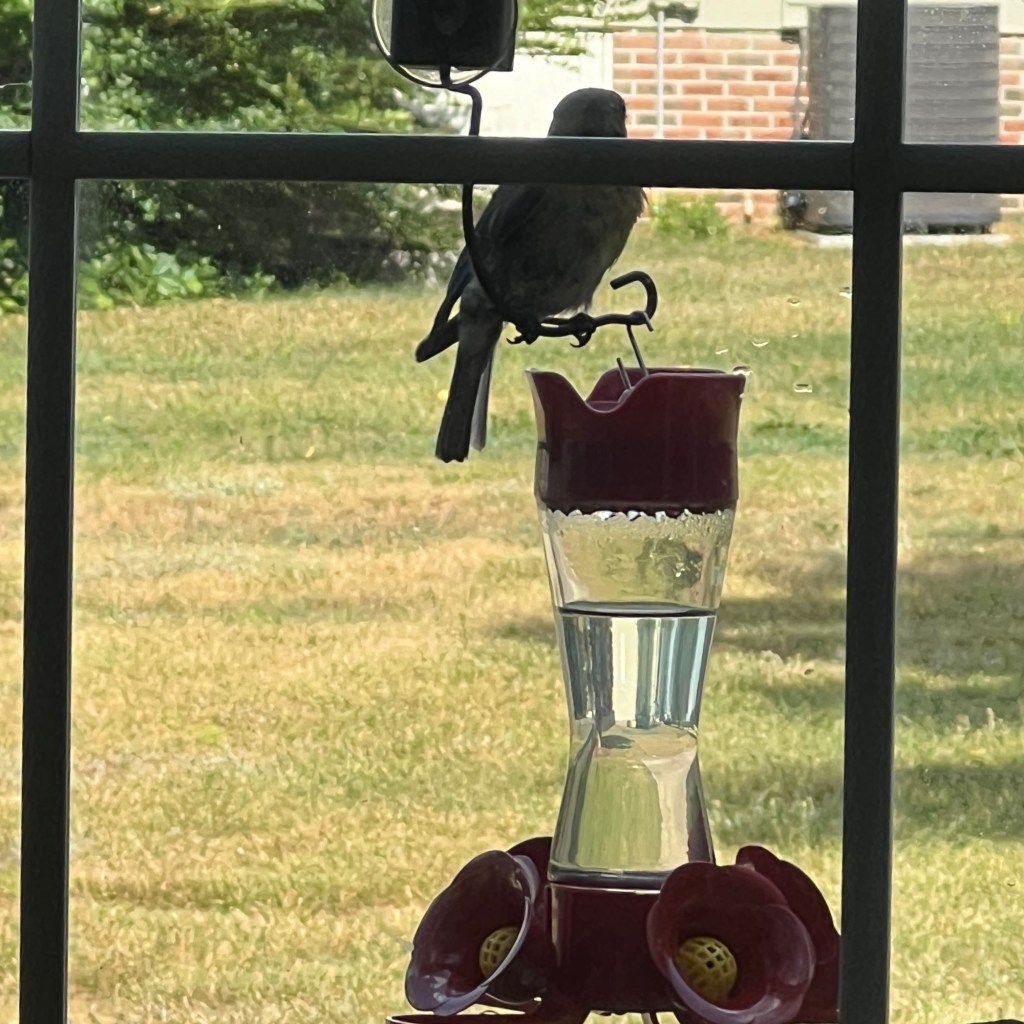
Parched

She perches
atop the hummingbird feeder
at my kitchen window

Mama Bluebird

haven’t seen her in a while
she keeps a low profile

when new fledglings
are about

I think she’s playing defense
watching me
watching her
(bluebirds are
ferocious guardians)

until I see
her open beak

she doesn’t close it

I’ve never seen
such behavior
before

from any bird

I look it up

she’s suffering
from the heat

trying to
cool off

birds can’t sweat

she stays on this perch
watching me
watching her

I sense a plea…

I take a cup

run a little water
at the kitchen sink

carry it out
into the drought

(she flies away)

pour it on the top
of the hummingbird feeder

(it’s really meant
to be an ant moat)

and as soon as I return
to the kitchen

I see she’s back
sipping
sipping
sipping

she stays a good while

perched
parched

until she’s refreshed enough
to close her beak again

and fly

maybe back
to help her children

all I know
is that my soul

(sometimes just as parched)

rejoices
that I was able
to provide

this little oasis

when I have felt
so utterly unable

to ease
the longsuffering

of others

Thank you
Mama Bluebird

for refreshing
me

******

with thanks to Two Writing Teachers for the Tuesday Slice of Life Story Challenge

Eagles

I grew up in the city, a child of sidewalks, stoplights, bridges, and clattering trains. I could walk to church, to the 7-Eleven for Slurpees or candy, to Woolco buy the latest hit song on a 45 RPM record, and to all three public schools I attended from kindergarten through twelfth grade.

The memories of nature from my neighborhood, other than the maple tree which dropped its leaves in the front yard every fall, are the gray roly-polies I played with on the concrete steps at the back door, the slugs I salted to watch them dissolve (sorry, slugs), ants, and eastern tent caterpillars with their beautiful rainbow patterning. I caught them put and them into recycled butter tubs with lids, to be disappointed when they turned into such plain moths. Oh, and the random mouse that got in the house to startle my mother, who screamed. And the ditch rat that got into my bedroom… another story for another day, that.

I know there were birds. There had to be birds.

I can’t remember them.

I longed to live in the country, with my grandparents. Even though the mosquitoes, yellow flies, and ticks might eat me alive, I could find tiny gray toads the size of my thumbnail. I would marvel at the dazzling colors of dragonflies, once I got over my terror of them. Hummingbirds zoomed past me for my grandmother’s flowers, never minding my presence, their emerald and ruby feathers gleaming like jewel-fire. Cicadas rattled the earth and my heart with their rhythms. There were deer, rabbits, snakes (alas!), and birds, always birds, chattering and singing incessantly in the dense woods…

The longing never left me, so when my husband and I settled in the countryside, I knew I was home. I rejoiced that our boys would grow up treasuring a closeness to nature…

So I thought.

The oldest always wanted to live in the city (is this always the way? Wishing for the exact opposite of what we have?).

He grew up. He went to the city.

He was miserable.

He came back…got married, became a father…

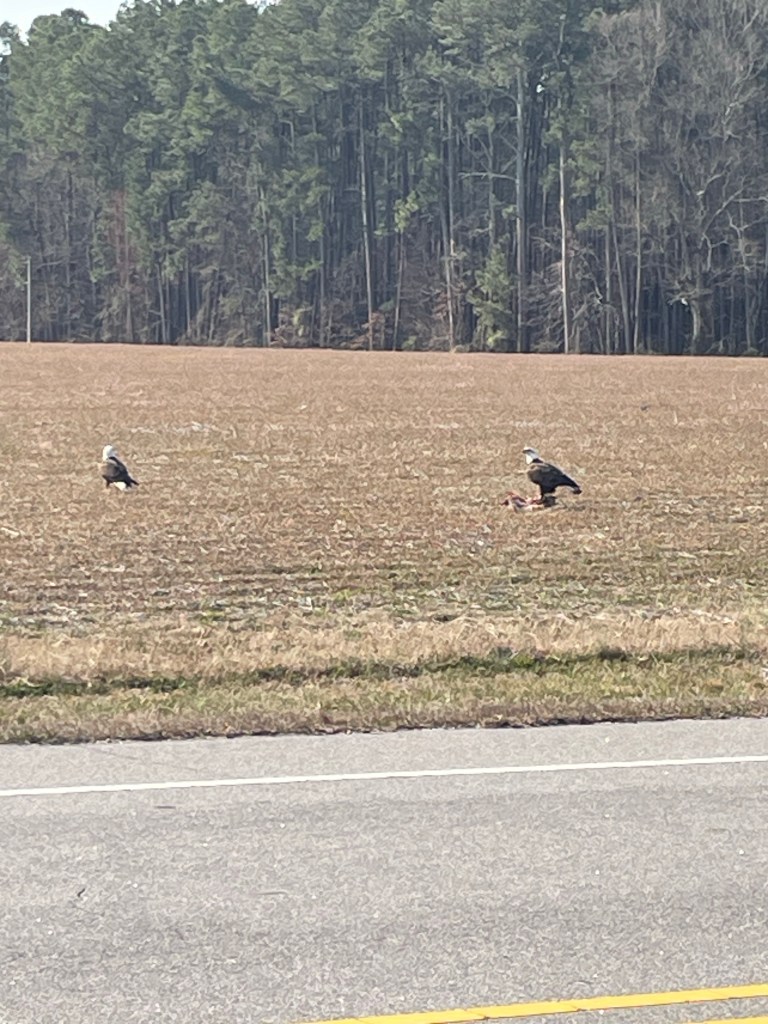
He texted me a photo recently, with tremendous excitement: Look what I just saw!

A barren field along a deserted country road…

Where stood two bald eagles.

His eyes sparkled when he saw me later: They were huge! So beautiful…

It is better than I ever dreamed, this life, here in the country.

Isn’t it, Son.

*******

Composed for Day 22 of the Slice of Life Story Challenge with Two Writing Teachers

February elfchen poem

Today on Ethical ELA’s Open Write, my friend Margaret Simon invites fellow teacher-poets to compose elfchen, also known as “elevenies,” poems of eleven words. Margaret says that the basic elfchen rules can be found on Wikipedia; she shares these guidelines:

Line 1: One word
Line 2: Two words about what the word does.
Line 3: Location or place-based description in 3 words.
Line 4: Metaphor or deeper meaning in 4 words.
Line 5: A new word that somehow summarizes or transforms from the original word.

This is a first for me, never having attempted an elevenie before. Although I love forms with word and syllable counts, the seemingly-simple, enchanting elfchen proved deceptively difficult!

February Elfchen Chain

February
gray desolation
brightened by bluebirds
and sudden pink blossoms
overcoming

winter
gusting winds
squeak naked branches
against each other, awakening
desire

greenness
seeps imperceptibly
to the edges
Nature revels in pre-season
preparation

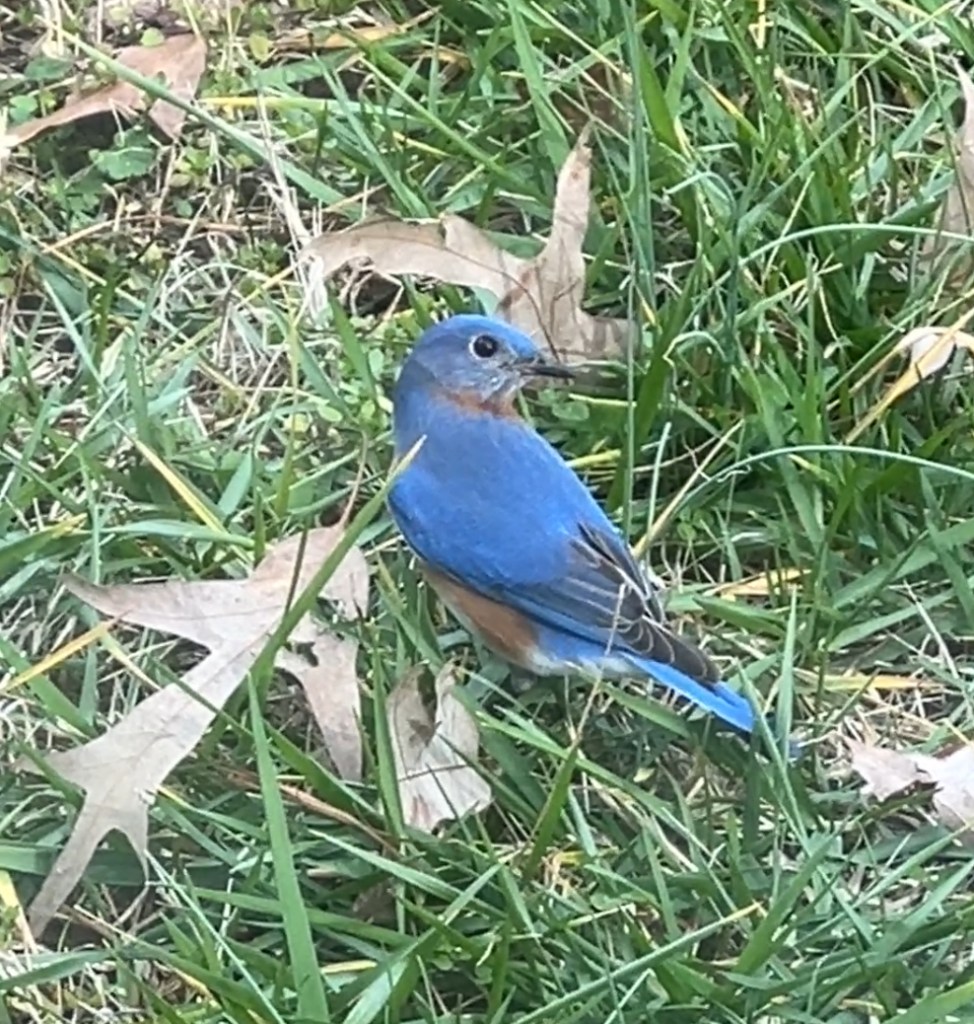
One of my bluebirds, February 10, 2024.