Scavenger

My newlywed son and his bride are still settling into their home here in the countryside. Every day they savor the sunrise over the pond and the wildlife that takes their presence in stride. Red-shouldered hawks sail in and out of the trees. White-tailed deer creep to the edge of the yard at night, their eyes glowing in the firelight from the backyard pit.

One day, my son said: “I think we have a raccoon. Or a possum. Something is getting into our trash every night and scattering it all over the yard.”

“What will you do?” I asked.

“For now, just watch and see if we can figure out what it is.”

So it was that as my son and my daughter-in-law were sitting by the firepit one crisp evening, they heard the telletale rattle of plastic from the trashcan.

The creature had arrived.

My boy and his bride strained their eyes, trying to make it out.

Small. Not gray. Not a possum.

A bit of brown, a patch of white…not a raccoon.

They finally got a good look at the wild thing:
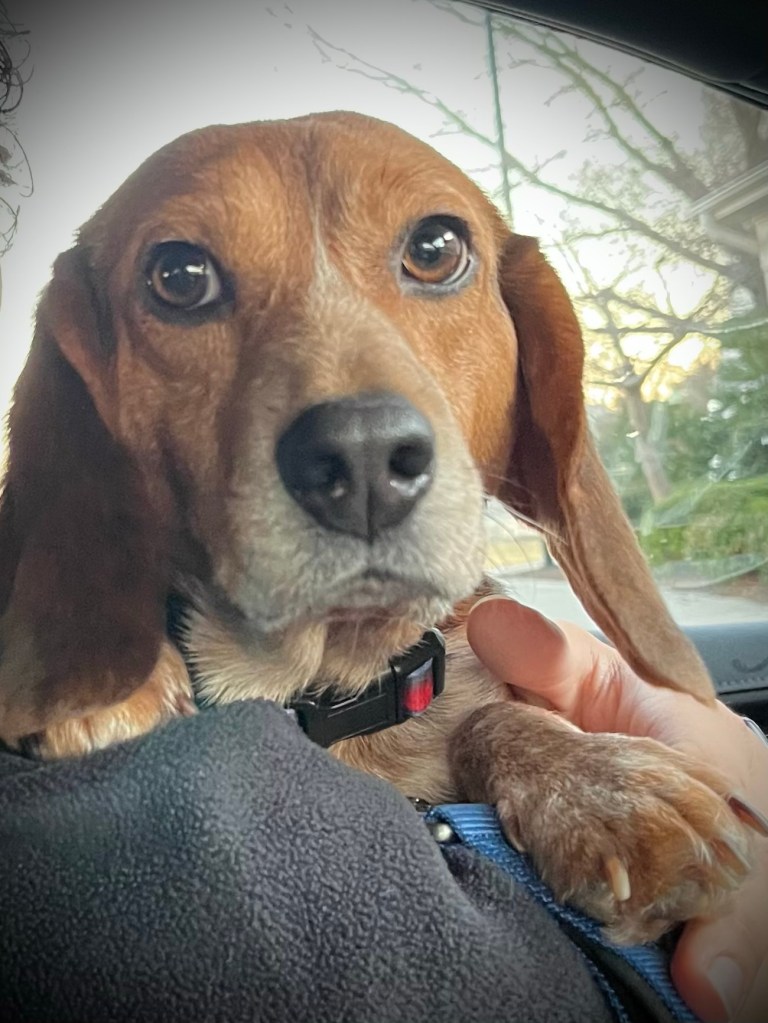
A dog.

A beagle, to be precise.

With a great deal of coaxing, the skittish scavenger finally crept over to them on its belly.

Covered in layers of greasy residue, wearing a monstrous shock collar that had left a bald place on its neck, the little dog slithered over and submitted himself to his new family, who loved him from that very first moment. They bathed him, fed him, cut away the collar and pitched it, took him to the vet, made every effort to find the owner (no chip). They give him meds to rid him of heartworms.

His name? Buddy. That’s what they called out to him, the night he was hiding in the brush, deciding if he could trust them or not.

“Come here, buddy,” they’d called. “It’s ok, buddy. We won’t hurt you.”

They have learned that they have to keep the dog food secured or he’ll bust into it when they’re gone…the scavenger days are too recent, plus, beagles are known to gorge themselves.

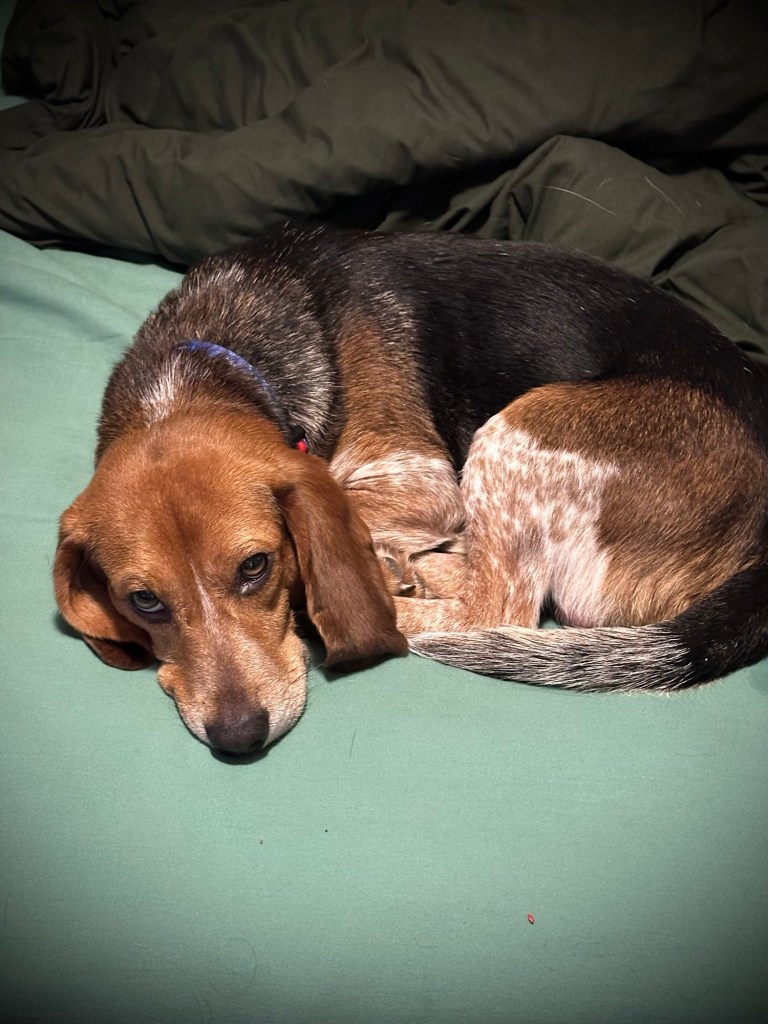
Buddy seems to have learned, though. that his days of insecurity are over.

He’s made himself at home:
He’s even made a new friend that he utterly adores:
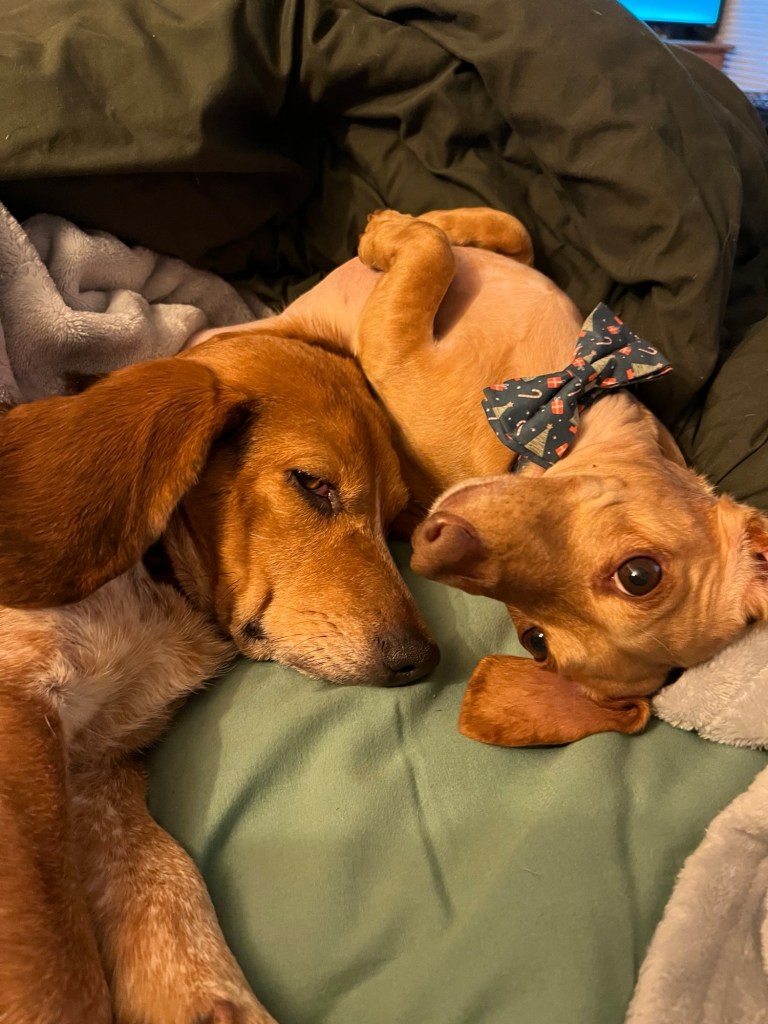
Dennis the dachshund has been most gracious toward his new sibling…he just won’t be outdone for attention, as you can see.

I’ll say it for my husband, for my boy and his wife, for their two cats, two guinea pigs, and hammy little dachshund: There’s one more thing to love and cherish here in our neck of the woods.

*******

with thanks to Two Writing Teachers for the Tuesday Slice of Life Story Challenge

Changed and transformed

This week, my friends from across the country have reached out to see if my family and I are okay in the wake of Hurricane Helene.

We are. Here in central North Carolina we did not suffer damage like the western part of the state, where many people are dead and many more are still missing. East of us, a tornado flattened buildings in a city where my youngest son once served as a church worship leader.

Speaking of my son: He was in the North Carolina mountains when the storm struck. He and his bride spent the last day of their honeymoon without power, food, and water, trapped by downed trees on the only path to the main road. After someone eventually arrived with a chainsaw, my new daughter-in-law navigated their journey out by using her phone to pull up road closings.

They were fortunate to even have cell service. Thoughout the region, service failed just when it was needed most. It has yet to be restored in many places, meaning that families and friends still cannot communicate with loved ones.

Travel remains precarious. 300 roads are still closed, many of which are shattered with portions and bridges washed away. Mudslides added to the havoc of catastrophic flooding. The picturesque little village of Chimney Rock has been wiped out; “there’s nothing there,” says one eyewitness, except muddy brown water and debris choking swollen Lake Lure. A clogged sea of splintered wood and trash. A friend of mine was in Boone like my son during the deluge and saw a house carried off by the river; it floated away before her eyes. Asheville, a favorite destination and home to the famous Biltmore, is devastated. My husband and I watched the news unfolding and saw this beautiful city submerged. It looks wartorn. We no longer recognize the familiar streets where we love to walk. Recovery will extend well into next year, meaning that the major tourist season and local income is also destroyed.

We North Carolinians know that bodies are still being recovered (some from trees) and that the extent of the damage is not fully depicted in the news.

Words that keep recurring in the reports are transformed and changed. The mountain communities have been “utterly transformed and cut off from the outside world.” An artist with the River Arts District of Asheville, a hub of warehouses converted to thriving studios, galleries, music venues, and businesses, spoke to its ruination: “This changes everything.”

Loss does change everything. Life is forever categorized into before and after. Overcoming is a long, arduous journey, moment by moment, like breathing. Even though restoration may eventually diminish the pain of loss, soul-scars remain with us as long as we live. We are changed.

For those of you who pray, please do so for the victims of Helene. For those of you with means, please offer any help you can to organizations taking donations for those who have lost all. My school, my church, my community are doing so.

I think of the process of refining gold. I will not apply it to suffering and loss but to the effort of alleviating them. In this act, I believe, we are most transformed… in responding to the alchemy of the Spirit working in us to love our neighbors as ourselves.

It changes everything.

with thanks to all of you reached out to check on my family this week
and to my fellow Spiritual Journey writers

Quotable Patrick

And so this festive feast day rolls ’round again, leaving me pondering my (supposed) green roots.

I grew up wearing green on this day just so I wouldn’t get pinched at school.

We weren’t Catholic, so for a long time I didn’t understand the history of saints and feasts.

I did understand leprechauns, however, because I loved books of legends, lore, and mysterious creatures.

The generations before me were Protestants hailing from rural eastern North Carolina, and despite my ancestry of Rileys on one side and Mayos on the other, our Irishness wasn’t discussed.

Except.

I write about this every year: My Granddaddy’s middle name was St. Patrick.

For real.

He didn’t love it at all (being a Methodist, or… because that’s really odd?) He had it legally changed to the initial S. in my lifetime.

But my aunt Pat was already named for him.

When I was a young adult, my dad tried to trace the Irish family line, maybe in search of a reason for this peculiar name choice borne by his father (whose brothers mostly had Biblical names like James, Hosea, Job Enoch, Asa…). And Granddaddy’s rustic accent bore traces of Elizabethan English: His brothers Hosea and Asa were Hosey and Acey; a neighbor, Etta, was Etter. Listen to Brits pronouncing Diana today and you may catch it: Dianer.

In short: All I can recall from my dad’s research is a convoluted story without a clear end.

But.

I did hear Granddaddy mention his grandfather speaking of Dublin. Just once, long, long ago.

Nowadays, with all of them gone, I am left to wonder, except that my DNA report says my ancestry is 92% British and Irish. As for strongest Irish evidence, County Dublin is listed second; County Mayo, fourth.

I do know that Saint Patrick’s Day wasn’t an official public holiday in Ireland until 1903…Granddaddy was born in 1906, so…hmmm…

All in all, despite the mysteries, I feel an affinity for the ancient Apostle of Ireland and his Christian ministry. My grandparents were devout salt-of-the-earth people. I am who I am largely because of their faith, their prayers. My husband and oldest son—with a surname tied to an ancient Irish family seat—are ministers.

That’s enough green threads for me to honor the day with a few favorite quotes attributed to the saint. There are prayers that I find profoundly beautiful and worth meditating upon, every day.

But I’ll leave you with these little pearls that make me smile:

Never trust a dog to watch your food.

May the light always find you on a dreary day.

We cannot share this sorrow if we haven’t grieved a while. Nor can we feel another’s joy until we’ve learned to smile (#WhyIWrite).

And from one of my life’s verses, Psalm 46:10:

Be still and know that I am God. Be still and know that I am. Be still and know. Be still. Be.

I shall, Saint Patrick.

I shall.

Honestly, Granddaddy did resemble this a bit, sans beard.

*******

with thanks to Two Writing Teachers for the monthlong Slice of Life Story Challenge
In the place of the sweet trees

with thanks to Denise Krebs for encouraging “multiple languaged” poems for today’s Ethical ELA Open Write and NCpedia for shedding a little more light on name origins…

In the Place of the Sweet Trees

Long ago, the first People knew the river.

They named it for the trees growing there
where spice-bark and great white flowers
perfume the air. 

In this place of the sweet trees
along the riverbank
a vine began to grow. 

It bore fruit in the shape
of spheres
of the Earth itself
as yet unknown.

Thick-hulled green-gold
pearls of the vine
that the People named
for the blackwater river
in the place of the askupo,
those heavy, fragrant trees
rooted in swampy soil.

The People, standing in the cool shadows
of the sweet trees by the river,
tasted the askuponong,
the scuppernong,
and understood
the Divine.

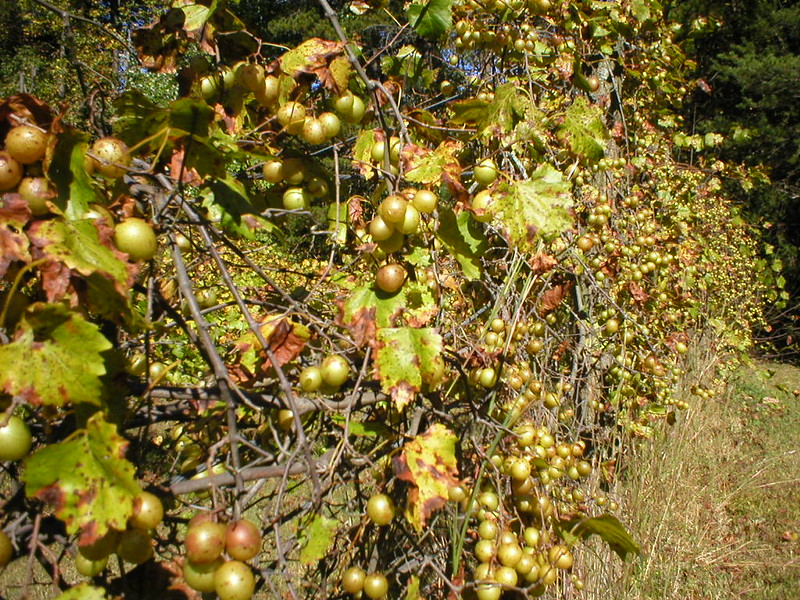
Scuppernongs getting ripe. -Mandie-CC BY-NC-ND 2.0.

Dinnertime guest

He comes to dine each evening
between four and five o’clock
resplendent in his crimson cravat
in an emerald flash, he’s gone
breathless, I await his return

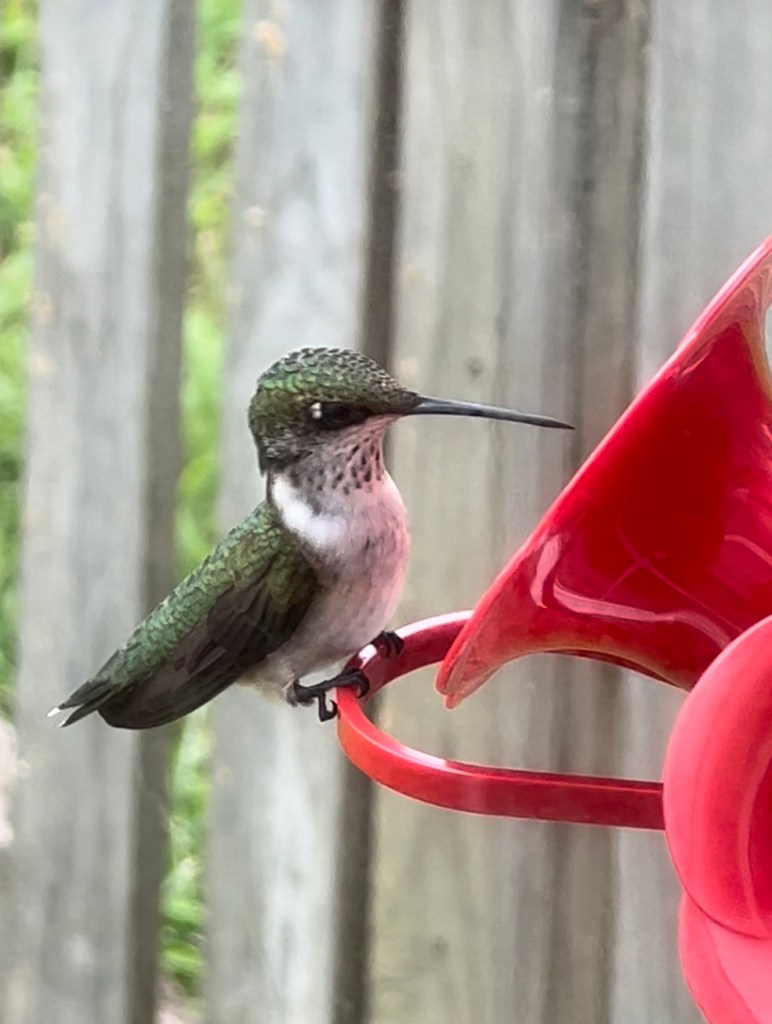
A female ruby-throated hummingbird giving the feeder over to a male: If you look closely, you can see his tongue lapping up the sugar water. A hummingbird’s tongue is forked, like a snake’s, with edges that trap nectar. During my impromptu summer study I’ve learned that males are the minority. They are fewer and never linger as long as females. So many days have gone by without sighting a male that I wondered if they’d all migrated; they are the first to go. Then this fellow began arriving every evening for dinner. He’s quite punctual. I’ve been reading that hummingbirds may not leave my central North Carolina neck of the woods until winter. We shall see… in the meantime, I watch and marvel over nature, its rhythms, its endless curiosities.

Time will tell

Went on vacation last week and upon returning, a discovery
that only the female hummers come to my feeders now.
Quite possibly, the fiery-throated males have migrated
to central Mexico or Panama. —How I miss them.
These females are suddenly voracious drinkers…preparation?

Previously, the sugar water in the feeders lasted several days until I had to change it to keep it from fermenting in the high heat, i.e, avoiding drunk hummingbirds. Now the feeders are drained in a day and half. Males migrate first…maybe these females really are stocking up. I have also read that hummingbirds occasionally remain in residence all year in some parts of North Carolina. Time will tell…in the meantime, the feeders stay out until I see the little birds no more.

Hog-ku

Ordinary day
except for the feral hog
strolling through the yard

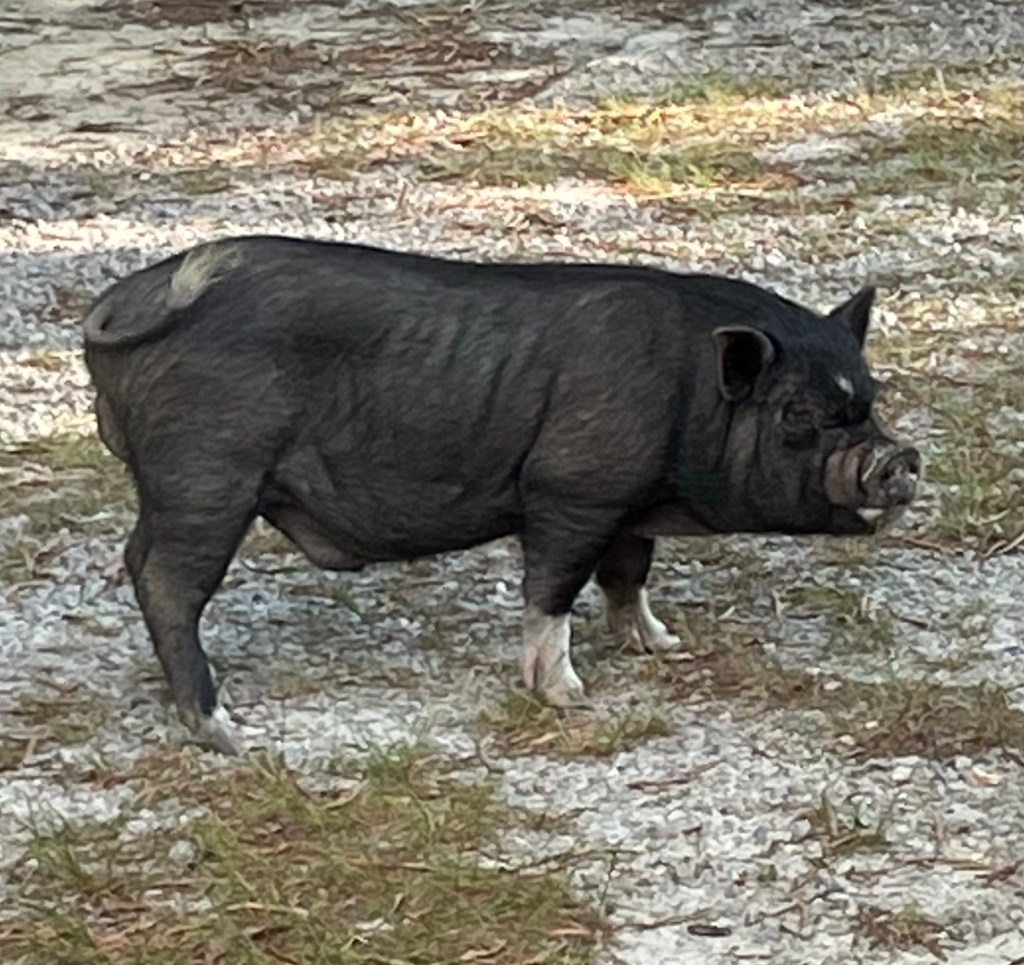
We’ve seen a lot of critters throughout our years of living in the countryside, but this is the first wild pig, enjoying a Sunday afternoon ramble through my son’s yard. My son took photos and sent them to me with an article on how feral hogs are an increasing concern in North Carolina. Apparently they do millions of dollars’ worth of damage to crops and pose a disease threat to livestock and pets. The state actually has a Feral Swine Task Force.

A zoomed and cropped shot, nevertheless too close for comfort…fortunately the hog wandered off.


Of racehorses and old roads

As I write, the National Anthem’s being sung at Churchill Downs for the start of the Kentucky Derby.

I’ll be pulling for a horse not favored to win.

His owner grew up in eastern North Carolina on a little stretch of road in the country. It’s paved now, but people have living memory of it being dirt… and I have an affinity for old dirt roads in these far reaches.

Once upon a time, I was a child who stayed in a little house on a dirt road in the summertime. I swung from a tire swing that Granddaddy hung from the pecan tree all studded with woodpecker holes. I swung to the deafening rise-and-fall rhythms of cicada-rattles, alongside the old dirt road across from the clearing where timeworn gravestones stood over people my grandmother knew when she was a child. I swung back and forth, round and round through the dappled afternoon, singing a favorite folk song from my father’s Peter, Paul, and Mary album…

Stewball was a racehorse
and I wish he were mine
he never drank water
he always drank wine…

The song goes on to say how the speaker bet on the gray mare and the bay, when:

ahead of them all,
came a-prancin’ and a-dancin’,
my noble Stewball.
The hoot owl, she hollered…

This past week, early one morning, I recorded a hoot owl (barred owl) hollering from the pines behind my home.

Memory runs so deep, so strong.

And so I pull for the horse named Barber Road, whose odds keep going down in these remaining moments before he gets to the gate.

Here’s to my own beloved road by another name in eastern North Carolina, and childhood, and belonging, and ol’ Stewball who wasn’t favored to win, either, but did, and to the hoot owl, the stories, the songs, and overcomings.

And here’s to you, Barber Road.

Run on.

Thoroughbred racehorseMIKI Yoshihito. CC BY 2.0.

Update: Barber Road finished 6th. By now the world knows that Rich Strike, the least-favored horse (80-1,) took the Derby in the second-biggest upset in its 148-year history. Secretariat, the first racehorse I remember, and who still fills me with awe to the point of tears, holds the record.

Carry on

The bird at the roadside sat
day after day after day
by the body of his lifetime mate
after she passed away

The naturalist saw him there
day after day after day
’til finally with some rotting meat
she lured the bird away

You must carry on, old boy
carry on carry on carry on
a marvel, how you honor your mate
when she’s carrion carrion carrion

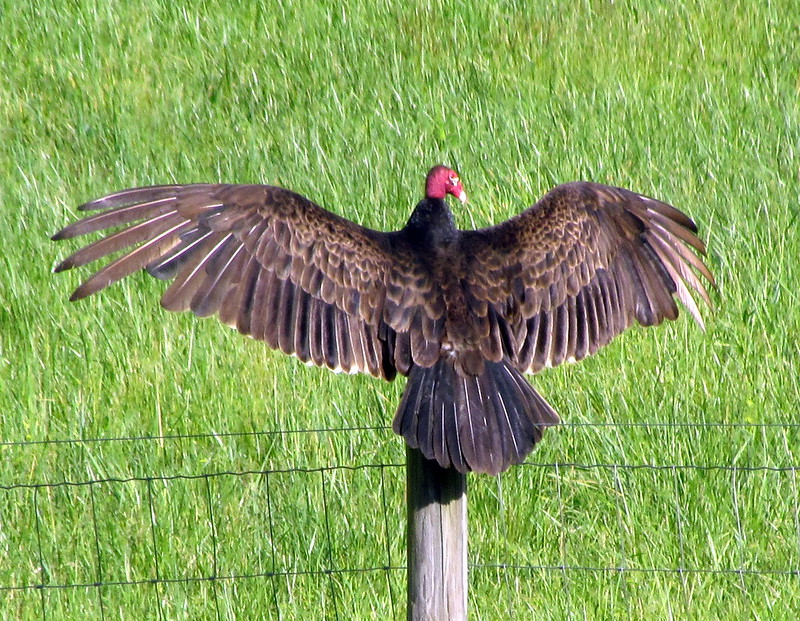
Dedicated to the local buzzard who mourned his dead partner by the roadside. Until this story reached me, I didn’t know that turkey buzzards mate for life. I’ve since learned that they lack vocal organs…they cannot call or sing or cry. They can only grunt and hiss as they go about the humble work of cleaning up carcasses…but not, apparently, those of their mates.

Photo: 11 Turkey Buzzard Pittsboro NC 9425bobistraveling. CC BY 2.0.

*******

with thanks to Two Writing Teachers for the Slice of Life Story Challenge every day in the month of March. This is my sixth year participating.

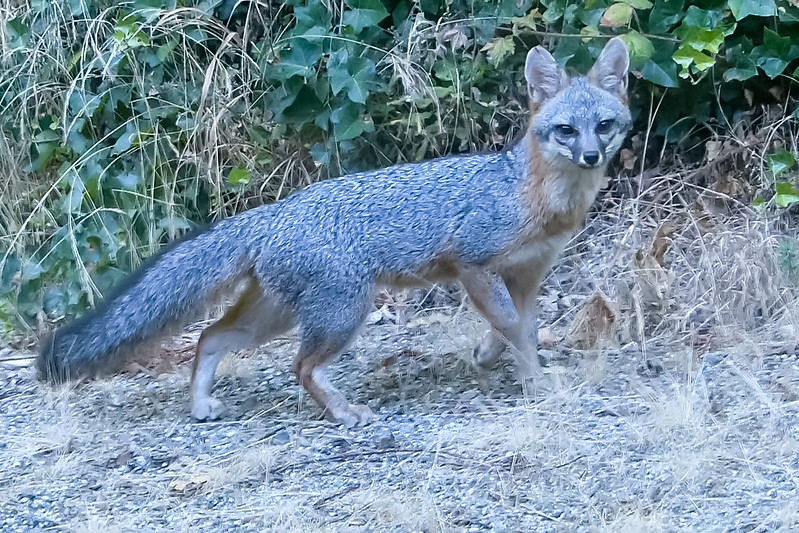
Mystery creature

Pleasant evening drive
after a taxing workday
heading to supper

ahead, in the road,
a little creature trotting
like some kind of cat

I said, What IS that?
I can’t tell, said my husband
so sphinx-like, it was

long, low, and silver
big pointy ears, feline grace
canine whiskered face

—oh! we cried, a fox!—
as it vanished, phantom-like,
in the shrouding woods.

We’d have known it right away, had it been red. We see those occasionally. Gray foxes are actually native to the area, however; the red fox didn’t appear in this part of the country until the 1800s. I cannot recall having seen a gray fox before. It was small and lovely, with a grizzled silver coat so prized by hunters. These are the only foxes that can climb trees.

I wonder where our enigmatic gray fox was going on its jaunt along the woodland road just before dusk…and how many more of its kind are about, in the secret places…

Photo: Gray FoxKeith Wescourt. CC BY-NC-SA 2.0