Unforced rhythms of grace

Learn the unforced rhythms of grace.
– Matthew 11:28-30 (The Message)

Pay attention to the intricate patterns of your existence that you take for granted.
-Doug Dillon

It may feel like a wasteland
some days
nothing like you imagined
it would be

you might be challenged
to see
that anything of value
anything beautiful
lies within

but it does
it does
it always has

it dances, it sings

reveals hidden things

grace has a pulse
and beating wings

it believes

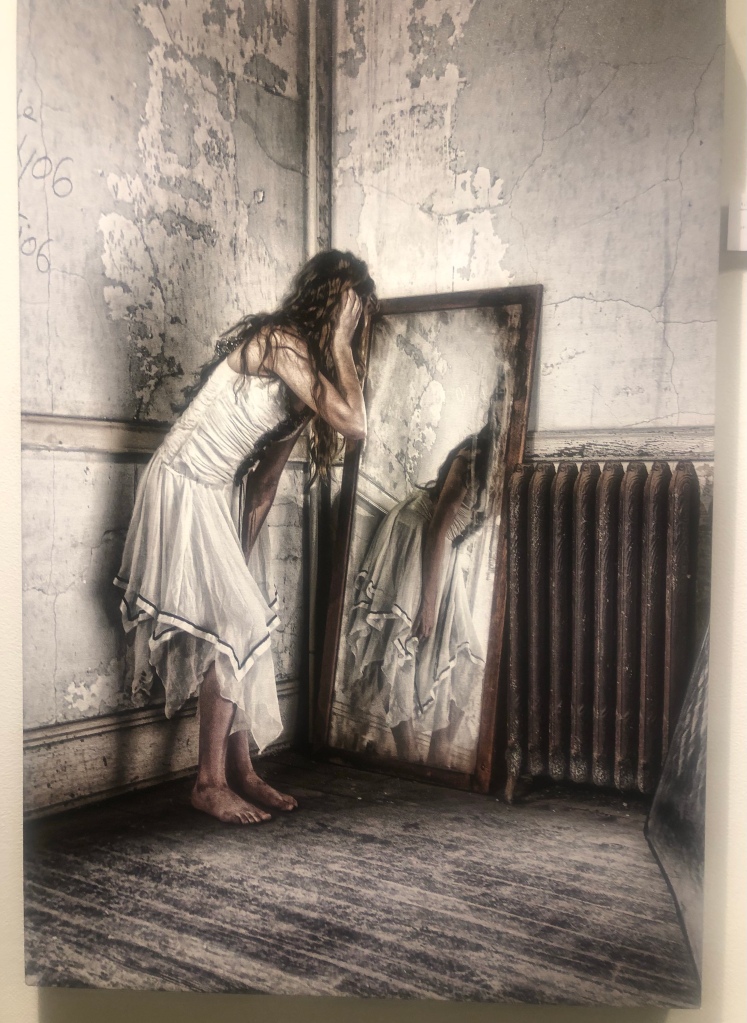
Girl in the Mirror. Gallery wrapped canvas, hanging in a hotel, Asheville, NC.

She reminds me of me, long ago.

*******

with thanks to Ruth Ayres, who posted this unusual version of the Matthew verse on SOS-Sharing Our Stories: Magic in a Blog. I suspect I will write again on learning the unforced rhythms of grace.

2021: A year of awe

Some people call it one word. Others call it one little word, abbreviated OLW. Either way it’s the tradition of choosing a focus word for a new year. Maybe even a new word for each month. Make of it what you will, how you will, the chosen word serves as a tool for reflection, a lens for living, a frame for your days.

At the outset of 2021, I wasn’t in the frame of mind to choose a defining word unless it was survival or endurance or possibly perseverance, none of which were inspiring or lyrical (shouldn’t your OLW strike deep chords in your spirit?). After 2020, I was tired. We were tired, all of us. It was a year that seemed liked ten. The world as we knew it changed overnight. Quarantine, separation, isolation, closed businesses, bare shelves at the stores, working from home, doing school online. Plans disrupted. Staggering losses of so many kinds. Grief. Rage. Despair. Navigating the unknown every single day. The COVID-troubled world kept turning but we almost didn’t recognize it or ourselves anymore…literally, behind the masks.

We hoped. We clung to our screens. We cherished every glimmer of light in the long, dark night of the soul. How long? we wondered. How long?

On the brink of 2021, as I wearily turned the page in my academic planner, I said something like this to myself: Forget the one little word thing. I don’t have the energy to think around it or write around it. What difference does it really make, anyway. After all, my word for 2020 was reclamation. I wrote in January, before the onslaught of COVID-19 in March, when everything shut down that Friday 13th for what we thought would be only two weeks: Moving forward becomes an act of will, a revised determination to do what you can, what’s most important, for that given day. Recovering ground, inch by precious inch.

Note to self: Be careful what you wish for…

But then, then, turning that page… I discovered this quote, in tiny font, sitting on January 1, 2021, in my planner: Experiencing awe (the feeling of being in the presence of something bigger than you) can improve your physical health and make you feel more altruistic. Intentionally create awe this month by spending time in nature, meditating, volunteering, etc.

I knew, then.

Whatever might come in 2021, I must look for awe. I must keep the door open for it. Anticipate it. Invite it.

There’s a psychology, a science, to awe. A savoring of life, an ineffable hope, a spark of joy, an inhaled breath of wonder at the wonders all around, a reverence. It can make you feel more altruistic…desiring to benefit others at your own expense…can the world not use more of this?

I sat in awe of this revelation…and that is the story of awe choosing itself as my word for this year, now in its final days.

It’s everywhere, awe.

In fragile periwinkle flowers poking through the January snow, in the piercing cry of a red-tailed hawk, in the flight of an eagle near enough for me to see its white head. In the resilience of children learning from home and in their happy dogs who attended class with them. In my own dog, who slept in my lap during those long hours online. In colleagues who stopped resisting new learning in the hardest of times and began embracing it…and each other. In children learning to read despite all, in one student pointing to a new word, “trombone” (without a picture), and telling me I don’t know how to say it, but it’s a musical instrument. In resuming church services and eventually singing hymns again. In the return of the little finches which have built a nest on my front door wreath every year except for 2020. In the gift of new life…in the announcement that my son and his wife were expecting a baby in the fall. In the long summer of anticipating, in finally making it to the ocean again, in seeing how seabirds stood on the shore, protecting one of their own that was missing a foot. In passing three white horses in a grassy meadow on morning drives to school, reminding me of a game my father taught me to play on long journeys when I was a child (I have a lot of thirty-point days now, Daddy). In teaching poetry again, in seeing the kids’ faces light up with their own writing discoveries. I wrote a lot of poetry in 2021; much of it centered on awe.

I have so much more to write. I am awed by what my sons have accomplished this year, one as a minister, the other as a funeral assistant and musician. I am awed by other people who say your boys have blessed me.

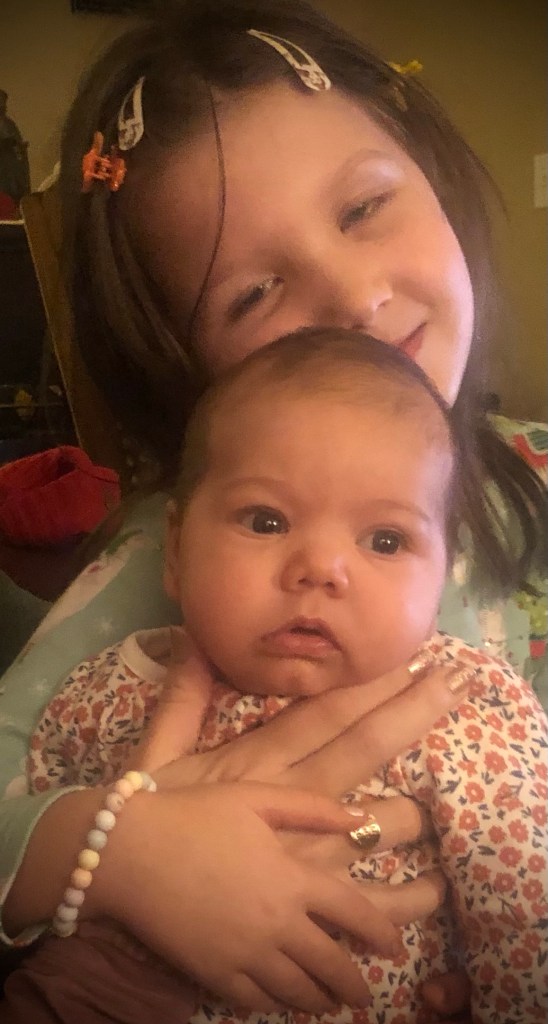
Baby girl Micah arrived at the end of October. Her big sister’s wish, come true.

Christmas Eve at my house, 2021

Awe abounds. It waits to be found. Just like the little present placed in my stack on Christmas Eve during our family gathering.

That’s especially for you, Franna, said my daughter-in-law.

I opened it.

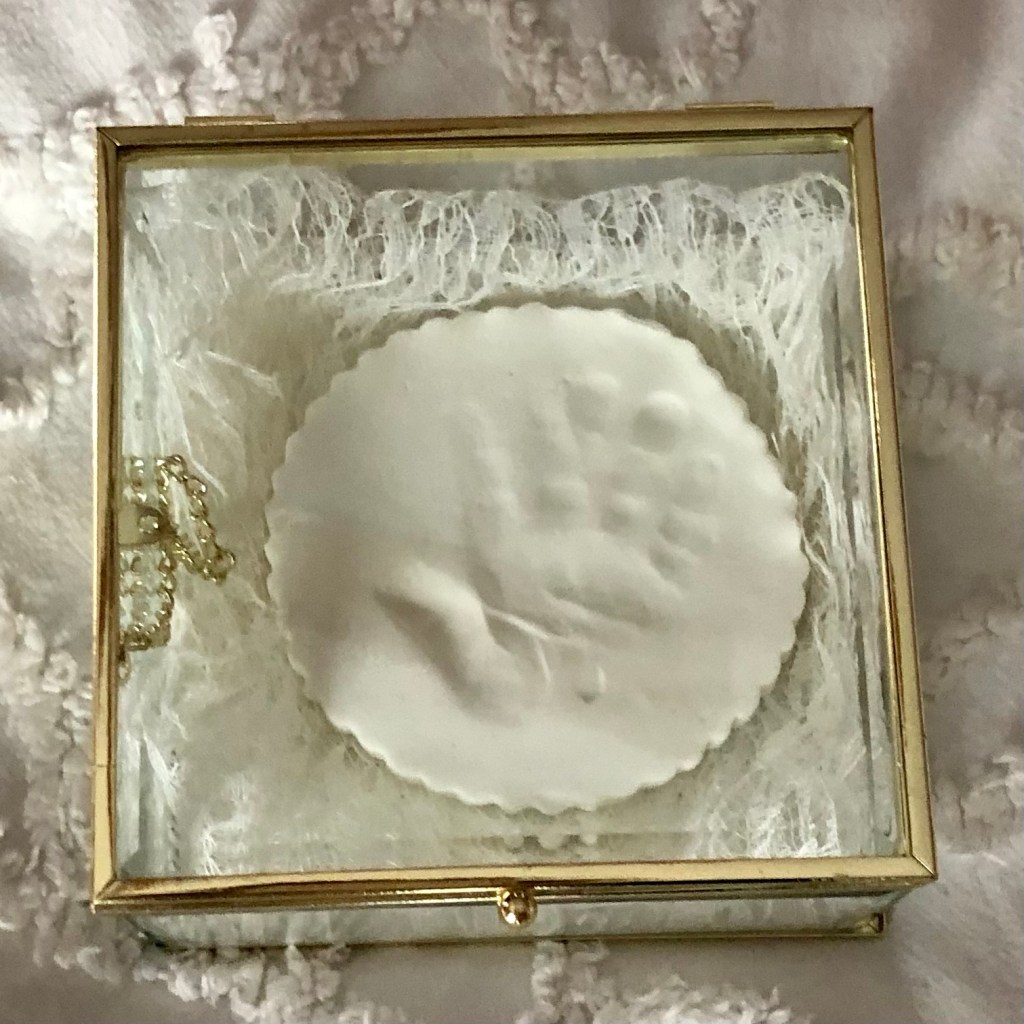
Micah’s tiny handprint, in white plaster.

Awe.

And tears. Too overcome for words.

My daughter-in-law didn’t know the story. One day I will tell Micah about the handprint I made for my grandmother so long ago, how it hung on her bedroom wall for over thirty years…

Awe. Awe. Awe. Life in its abundance, making full circles. Light to be found, even in the darkest season. The treasure of having each other. Love, blessing, wonder, the gift of life itself, all from the hand of Almighty God.

I see no reason whatsoever for changing to a new word in 2022.

Wishing awe to you all – each new day with its waiting treasures

*******

with much love and gratitude to the Two Writing Teachers for the weekly Slice of Life Story Challenge. There is sustaining power in writing. There is more in a writing community.

On waiting: Spiritual journey

All dressed for church
waiting for our ride
because Mama doesn’t drive
never got her license:
I get too nervous, she says—

so we wait while she watches
through the picture window
where I see our reflection: 
Mama, little sister, and me
against the empty street beyond

after a while she says
you might as well change
we have been forgotten

her voice is strange 
and when I look up
there are tears

sliding down her cheeks.

excerpt, “Picture Window.” Draft poem, F. Haley

On the first Thursday of each month, a group of us teacher-writer-blogger-believers post spiritual journey reflections. Today Chris Margocs hosts our gathering on her blog, Horizon 51. We are writing around the theme of “waiting, with a side of hope.”

Earlier this year I wrote those lines above, remembering the scene from long ago. My mother had asked another church member to please stop by and pick us up. We waited, and waited…until my mother understood the ride wasn’t coming. And cried.

I might have been six or seven. I wasn’t too upset about changing my clothes (likely a dress made by my mother) and not going to church. But I was sorry for my mother’s sadness. I couldn’t understand being forgotten.

My childhood pastor once preached on Isaiah 49:15: Can a woman forget her sucking child, that she should have no compassion on the son of her womb? Even these may forget, yet I will not forget you.

I couldn’t understand that either, at the time: How can a mother forget her child? It seemed impossible, inconceivable…

Decades later, as a mother and grandmother myself, I decorate for Christmas with exceeding great joy because of the new baby in our family. As I plan and wrap and make preparations, humming along to holiday music, I can’t imagine ever forgetting my sons, my little granddaughters. I would cease to be me if I did. They’re such joys. Layer upon layer of richness and fullness on all of my days. But mothers can forget. They do forget. There are mental health issues. Addictions. Illnesses. Diseases. Destroyed relationships. A number of things can separate a child from a mother’s love and from her memory.

The Apostle Paul wrote: For I am sure that neither death nor life, nor angels nor rulers, nor things present nor things to come, nor powers, nor height nor depth, nor anything else in all creation, will be able to separate us from the love of God in Christ Jesus our Lord (Romans 8:38-39).

How this links to God’s promise in Isaiah: I will not forget you.

Christmas is a reminder of exactly that.

We are not forgotten; we are not alone. The prophet Isaiah, again: Therefore the Lord himself will give you a sign. Behold, the virgin shall conceive and bear a son, and shall call his name Immanuel (7:14).The Gospel of Matthew repeats this prophecy as fulfillment in the first chapter detailing the genealogy and birth of Christ: Behold, a virgin shall be with child, and shall bring forth a son, and they shall call his name Emmanuel, which being interpreted is, God with us (1:23).

Words that resonate. God with us. Every day, all the time. How long a wait it was—around eight centuries—from Isaiah’s prophecy to the coming of Christ.

A long, long wait…but we were not forgotten.

That church member from long ago apologized profusely to my mother for failing to pick us up that day. My mother, I presume, graciously forgave. Whenever the weather was nice, we walked to church, my mother, my little sister, and me. I couldn’t know then that my childhood pastor would ordain my future husband to the pastorate one day. I just walked along, hoping Mama would take us to Hardee’s for lunch afterward. The Looney Tunes glasses we collected from those after-church excursions remain in my cabinet to this day, much as memories rest on the shelves of my mind. They are a treasure. I do not want to forget.

My childhood pastor would eventually tell me that when the church’s bus ministry began, my mother was the first person to sign up. No more waiting for rides that might not show. God provided the vehicle to get us where we needed to go.

He always does. In the fullness of time.

Even now, I hear the distant chiming of those church bells of years long gone:

Savior, Savior
hear my humble cry
while on others Thou are calling
do not pass me by.

He hears. He is here. He remembers.

So do I, Mama.

one of my favorite Christmas cards

*******

with thanks to Chris and all my dear Spiritual Journey friends

a blessed Advent to all
the first candle lit on the Advent wreath this week symbolizes hope


Against the zeitgeist: lines of gratiku

Today, a “sick-out”:
cafeteria workers
protest for more pay

District wrote parents:
“Staff shortages mean no meals”
-but not at my school

Today I thank you,
beautiful food providers,
for still being there

greeting the long lines
of children coming to eat,
for your loving words

Today I thank you,
bus drivers, who kept rolling
despite a protest

that kept many kids
from getting to school, again
-except for my school

Today I thank you,
my superhero colleagues,
for coming to work

for you are the glue
keeping pieces together
for kids, for us all

again reminding
collaborative spirits
always win the day

*******

and thanks always to
Two Writing Teachers for space
and place to express


Try

inspired by Ruth Ayres on Sharing Our Stories: Magic in a Blog.
Ruth quotes Elon Musk:
“If something is important enough, you should try. Even if the probable outcome is failure.

Begs the question: What is ‘failure’? Who gets the final say? Surely not the inner critic…

I shall try…

to believe, during the darkest night
to seek the infinite ribbons of light

to love more, to judge less
to concentrate on words that bless

to remember my job is a livelihood, not my life
to free myself of unnecessary strife

to not crumble under self-defined defeat
to keep trying, and trying, again to complete

daily acts of grace, others and self forgiving,
thereby seizing the joy of living

trusting the sense of second sight
urging me always to write, to write.


On fire and prayer

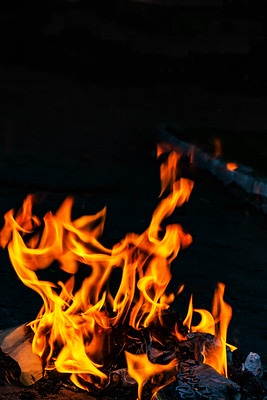
On the last Monday of October I drive to work in pre-dawn darkness as deep as midnight. Rounding bends on deserted backroads past unlit houses, gaping stubbled fields, hulking shapes of farm equipment, shadowed barns, patches of woods, when off in the distance, through silhouetted tree trunks—fire.

A bonfire. Tall flames, bright orange against the blackness, undulating skyward. Startling. So Halloween-esque. Hauntingly beautiful in its way except….I can’t tell what’s burning. Probably trash. The fire seems large for that, and before sunrise? I am too far away to see anything but the fire itself. I cannot see smoke or smell it. No screaming sirens. No alarms. Only silence, stillness…should I investigate to be sure? The road twists and turns, demanding my attention, and as I reach a tricky intersection where a few sets of headlights from opposite directions approach and pass, I realize: I’ve lost sight of the fire now. I am not sure of its location. Somewhere close by it’s burning, consuming, destroying, I hope nothing precious, nothing of value… and so I cross the intersection, praying it is controlled until extinguished.

On I drive in the darkness, shivering.

I think of anger.

*******

Fire, anger. The contrast of being controlled, purifying, and righteous, or uncontrolled to the point of destroying, intentionally or not, what is precious, valued, and loved. Thinking of that fire throughout the day yesterdaythere were no reports of damagereminded me of a poem I wrote last week:

Why I Pray

In the absence of peace,
I pray.

When my mind cannot fathom
or even form questions,
I pray.

When I am weary
of injustice, of sifting truth and lies,
when my inner well has run dry,
I pray.

I pray for power beyond my own.

To overcome the red-hot dagger of fury,
that I should not wield it,
thereby scarring others
and myself.
To knit words of healing instead,
one by one, 
like snowflakes falling
to form a blanket of blessing,
a holy hush.

Freeing myself by forgiving
myself
as well as others,
feeling the weight drop away.

That quickening sense of awe,
for even if I cannot call
fire from Heaven (thankfully),
I can move mountains of ice
in my own heart.

Because, as long as I live,
I will battle need, loss, and fear, 
trusting that love conquers all
—its beating wings in my heart,
forever my reason 
to pray
again.

*******

with thanks to Andy Schoenborn for the “Embrace your why” prompt and the mentor poem written by a student, shared on Ethical ELA’s Open Write last week.

and to Two Writing Teachers for the weekly Slice of Life Story Writing Challenge, always encouraging “a world of reflective writers”—so needed.

Photo: Burning fire at nightwuestenigel. CC BY 2.0

Poignant poise

(a pantoum)

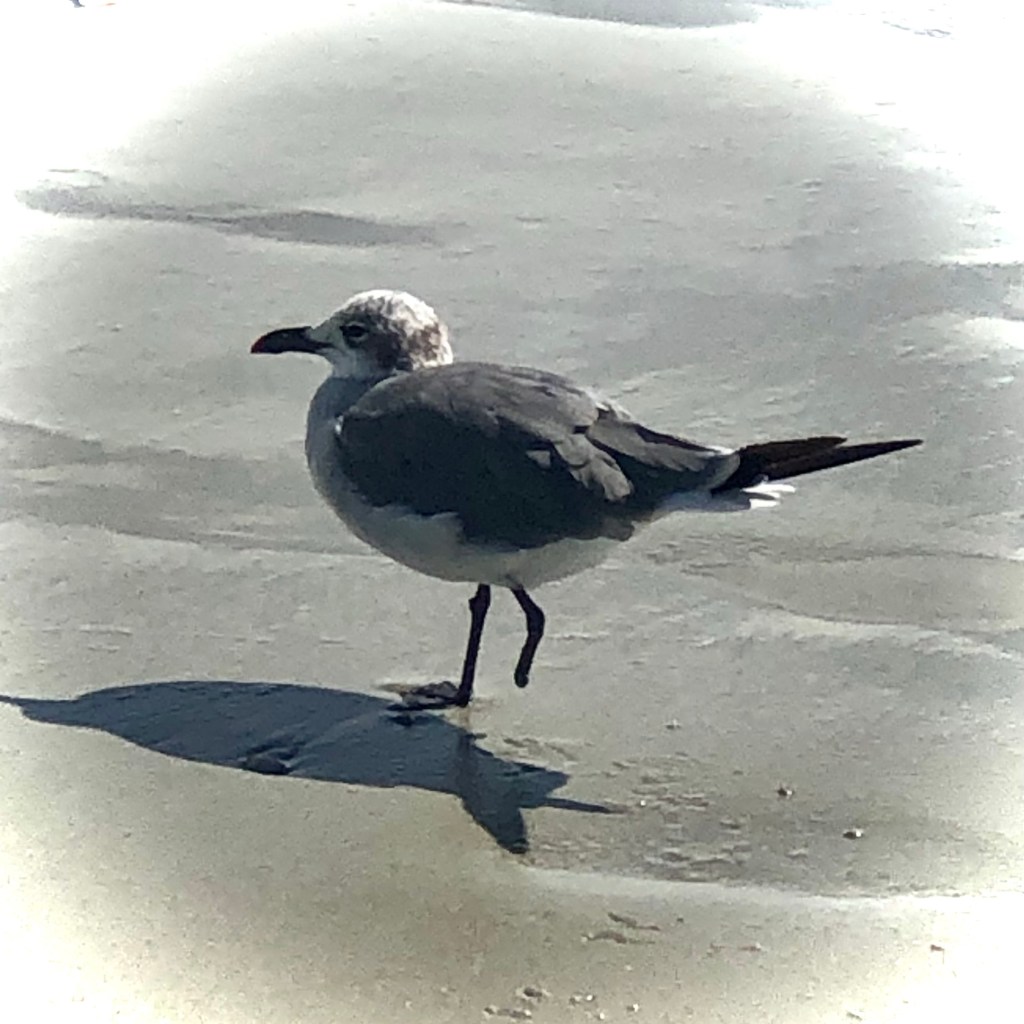
Little seabird with only one foot
Standing perfectly balanced at the shore
You’re so calm, so still
Despite wind-ruffled feathers


Standing perfectly balanced at the shore
You’re a picture of grace
Despite wind-ruffled feathers
For you aren’t alone


You’re a picture of grace
Safeguarded, transcending
For you aren’t alone
Flanked by faithful friends keeping watch


Safeguarded, transcending
You’re so calm, so still
Flanked by faithful friends keeping watch

Little seabird, with only one foot.

As best I can determine, this is a laughing gull, already wearing winter plumage. I thought it was merely standing on one leg before realizing the other foot was gone. I have since learned that such sightings are common: many gulls lose feet and legs when they become entangled in fishing nets while hunting for food. What you cannot see in this close-up are two fellow gulls standing nearby, looking in different directions like bodyguards. I was struck by the poignant poise of this little shorebird and the proximity of the others. Gulls are symbols of adaptability, resourcefulness, community, survival, and strength. Maybe even uncommon grace.

*******

with thanks to Two Writing Teachers for the Tuesday Slice of Life Story Challenge

Milk carton analogy

breakfast for all if they want it
during COVID,
so they enter the cafeteria,
pick up a bag with a biscuit or
cereal or french toast sticks
(without syrup;
the cafeteria ran out of it yesterday)
or breakfast pizza, whatever
that given day provides,
and wait for a neon-vested
safety patrol in fifth grade
to send them,
one by one,
to my colleague or to me
so we can seat them

protocols say they can’t sit facing
one another at the diagonal,
spaced-out tables
so seats fill up fast,
and a lengthening line
of masked, bag-clutching children
must stand until somebody in the
crowd finishes eating, meaning that
my colleague or I must dash over
with spray cleaner and a paper towel
(that won’t absorb)
while calling for safety patrol:
“I can take one here!”

the children seem so dazed, sometimes,
like they don’t recognize this planet or
maybe even humanity anymore
but once at the seats,
they open the bags
to eat

forgot the jelly

go back and get it

I need a spoon

it’s in your bag, look again

and invariably, the one thing
most often prompting a
little raised hand:

I can’t open my milk

I see. Have you tried?

shaking of small head

well, you must try

some little fingers are more adept
than others…some little faces light
up upon realizing: they actually can
open the milk carton, without help

some must be told, no, not
on that side, see the side with
the arrow, it says open here,
push it back, all the way back,
see these words, push here,
no, not smush, more like pinch,
like this, see?

one by one, the cartons open

like windows in the mind, for one
does have the ability to do things
not attempted before, and the secret
is really in the trying, not relying

learned helplessness

is what I am thinking about
as I scrub my hands five times
before I can go finish preparing
four training sessions
for teachers tomorrow,
on professional learning teams
and problem-solving
in the time of COVID
even though I’m already tired
and the day’s only just begun

yes, we can
we must try

*******

special thanks to Two Writing Teachers for the weekly Slice of Life Story Challenge

Shedding

Let me preface this post with a restated confession: I am not exactly a fan of snakes.

But they, like all of nature, have lessons to teach, if one is willing to learn.

I hope to always be teachable, so…

Early in the summer I found a snakeskin in my garage. Just a little one, but still.

A few weeks later, I found another.

This morning, I found a couple more.

So.

Snakes seem to have been vacationing in my garage. Let us think on that momentarily versus thinking that they’ve taken up permanent residence there.

Here is why I say this: The skins, I’m pretty sure, belong to smooth earth snakes. I’ve seen a couple over the past year or so, which is saying something: These are nonvenomous, shy, fossorial snakes that don’t like to be seen. The first one I saw was dead, lying across my sidewalk after a rainstorm. Pale gray body. I thought it was a worm until I saw the tell-tale scales. The second one was stretched out in my flowerbed mulch, black tongue flickering in and out “smelling” the air, trying to determine what I was. That’s it for my lifetime earth snake sightings. Two. They are uncommon, tiny creatures…just the size of these silvery skins left behind.

So they live in the ground around my home, harmless little things, going about their business of eating earthworms and itty bitty snails or whatever.

And coming into my garage to moult.

Which is nevertheless discomfiting. For me, anyway. Not for the bashful snakes.

I don’t especially want one to come all the way inside and hang out or anything.

But they do have me thinking (among many things) about shedding one’s skin. Metaphorically, that is. As in, what sorts of things I wrap around myself and cling to when I could be letting go and growing. Mindsets, habits, beliefs, assumptions, what have you. Which things actually nourish me, and which actually constrain me? Which are beneficial, and which are harmful? What do I need to shed and leave behind, to better move forward?

I suppose this thinking occurs because summer is waning. I return to work next week not knowing what the year ahead will look like, other than back to masked here in my district. I think about the possibility of a full return to virtual learning. It is more than a great many teachers can take. Yet… we got through last year. The children got through. There were good things in spite of the trials; there were surprises. Many from the children and most concerning ourselves. School of 2020-2021 took a toll on everyone. We had to shed quite a bit of familiarity and comfort to get things done. But we did it. We grew.

I don’t wish for a repeat any more than I wish for snakes to be summering in my garage. I cannot ignore the timing of COVID rearing its more-venomous-than-ever head again when we thought it was on its way out, just when we are on our way back into the schools. I now have a granddaughter starting kindergarten. Her little sister will be born this fall. There’s always a lot at stake when it comes to children—in the words of Herbert Hoover (ever how unpopular a president he was in his day): “Children are our most valuable resource.” There’s nothing more precious. They represent our tomorrows; they are the culmination of our yesterdays. We have to shed the fear of failing them. Not assuming the worst, or that “we can’t,” but doing daily, as only that given day dictates, what must be done for their care and nurture as well as for our own. We have to be… well, “as wise as serpents.” When it comes to plans, we have to hold on loosely, ever how painfully contrary it is to our nature.

This summer I had plans for household repairs and updates. That was before the dryer quit working. Followed by the air conditioning during the hottest week of the year (of course). Followed by turning on the water one morning and nothing coming out of the faucet; the pump died.

I did repairs, all right. Just not the ones I planned.

But I got through. I now have a new dryer and water pump. The AC unit didn’t have to be replaced, thank heaven. All is working well. Throughout this whole process I thought about adapting. I dried clothes out in the hot sun. I remembered how my grandparents never owned a dryer. I thought about that one window air conditioner they had (late in their lives) against a sweltering Carolina summer and no AC at all in the old Ford Galaxy 500; I once left a stack of 45 RPM records on its back deck under the windshield. They melted. They warped and ruffled like clam shells. I’ve never had to pump or draw water in my life, but I had plenty of bottled water and didn’t have to miss my morning coffee while waiting on the new pump.

So I attempt to bring the lesson of shed snakeskin to a point here: In the discomfort is growth. Newness lies ahead; it approaches incrementally as we scratch away at the constraints and setbacks of now. Endurance is possible. We certainly know this. Sometimes the thing that needs shedding most is our perspective…

Meanwhile, I go back to cleaning out my garage, another thing I hadn’t planned to do right now, but the snakeskins sparked it. Time to purge what needs to go and put up a shelf to keep everything else off the floor. I am working on it. Hot, tiresome, dusty work, but I can see my progress.

And it feels good.

Thanks to the snakes.

******

thanks also to the Two Writing Teachers community, where writing our way through is a way of life…courage and strength to all.

A poem is a pearl


Inspired by a course I’m taking on poetry. Although I am learning a lot and have been given a trove of resources, I’ve found my output to be lackluster. The word “why” floats in my brain like a hard nugget beneath layers of questions. I ask myself: Is this my best work? (no) Has my inspirational well run dry? (feels like it) Is the attempt of something of this caliber at the end of a school year—this year in particular—a bad choice? (possibly) Do I love anything I have written? (maybe a line here and there but much of it feels stilted, stunted, superficial; my verse is not “alive,” Miss Dickinson, I don’t even have to ask). It’s a conundrum, really, how I can write poems every day for a month straight and then dive with great eagerness into a course on the craft only to find my Muse has departed. I am adrift in the ocean in a makeshift raft. Am I having a writerly crisis? (not exactly…but I AM re-evaluating my efforts). Is this my own fault? (perhaps I am not pouring myself into it as I should) If I were to “name my feelings,” what words come immediately to mind? (is “paralyzed” a feeling? How about “shy,” not as in being timid in front of others—heavens no!—but as in going to the doctor’s office and being handed a cup for obtaining a urine sample and discovering you have a “shy” bladder. Which leads me back to the thing at the center of it all: why).

I only know one antidote for writing malaise.

Writing.

Since the problem is poetry, poetry I shall write. On my own terms, for my own self.

Here’s a small beginning, anyway…

A poem is a pearl
with organic origins
that will not be rushed

hard grain entering
the shell of my skull, somehow
scratching my soft brain

provoking action
jets of milk-stimulation
solidifying

layer on layer
it materializes
from my own nacre

I can’t estimate
its costliness, completeness
beyond my own brain

…to be continued, I think…

...and, it just so happens that as I hit “publish,” WordPress tells me this is my 500th post.

Cracked pearl. Filter Forge. CC BY

Lead photo: Pearl. amboo who? CC BY-SA