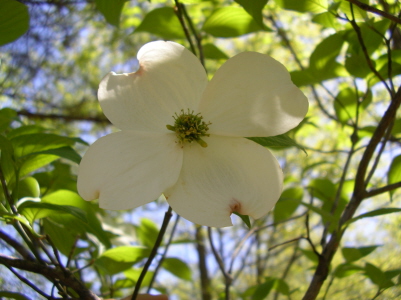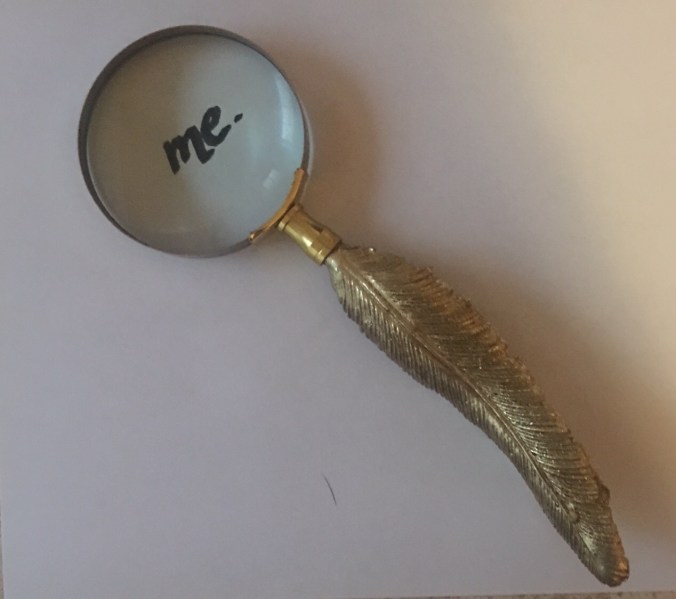
Seeing me

img_4994

Come back to examine this image after you read: In how many ways does it represent the information in this post? 

The big question on Day Three of our Teacher Summer Writing Institute: How do I see myself as a teacher of writing—no matter my grade level or content area? 

The day became a collage of images and symbolism.

Teachers were tasked with using postcards and personal artifacts as metaphors for teaching writing. They used these ideas as springboards into poetry and a means of writing to inform.

Then came the birds.

It began with the fact that 2018 is the Year of the Bird. The National Audubon Society and National Geographic, among other organizations, made this designation to honor the centennial of the Migratory Treaty Act, the most powerful and important bird-protection law ever passed. My co-facilitator posed this question: How do birds inform us? Group answers: They indicate coming changes in the weather, or the quality of the air. Their migration patterns have changed because the climate has changed; the birds are getting confused. That’s a reflection of society and the world, don’t you think? This segued into an activity called “Everyone Has a Bird Story.” For just a couple of minutes, teachers were challenged with a quick write about a bird (everyone really DOES have a bird story of some kind). The teachers gathered in a circle afterward, each reading one line aloud from his or her story, to compose a group bird poem. The effect was funny, strange, and beautiful. The closing question: How might we use this activity to inform student writers?  Answers: It’s a visual way to show students about organization and revision. Students can actually move around so that their poem makes more sense,  or to attain better flow. You can use this activity to physically show students how to group like ideas. It’s an easy way to show students that writing is fun. 

Just as the group broke for lunch, two birds—doves, to be exact—crashed into the windows of our meeting room. Generating both awe and alarm, they hovered, wings flapping, knocking against the glass as if seeking a way inside. A couple of us ran out to guide them away before the birds injured themselves.

Birds, ancient symbols of freedom and perspective, the human soul pursuing higher knowledge, the dove especially representative of peace, love, gentleness, harmony, balance, relationships, appearing at this gathering of teacher-writers as if invoked . . . so much to analyze there, metaphorically . . . .

Following lunch, the group spent time exploring abiding images. These are images that stay with us in our memories (and sometimes in our dreams); they usually have deeper meanings and significance than are obvious at first. One of mine, shared as an example: long, skinny, flesh-colored worms with triangular heads that my grandfather and I encountered when I was a child. He didn’t know what they were (land planarians, I’ve learned), we never saw them again,  and neither of us could have guessed what they have the power to do. They just resurfaced in memory recently; I had to figure out why. Here’s the story of that experience, if you’d like to read it: First do no harm.

Participants were then invited to take virtual journeys in their minds to capture the specific sights, sounds, smells of their favorite places. Others went outdoors to capture the same (see Abiding images for my original experience with this). Whether the journey was real or virtual, everyone encountered something unexpected or fascinating —something so representative of writing itself. The point of collecting abiding images is the intensity of focus, the close examination and capturing of the smallest detail, which might be used later in writing vivid scenes and settings that are necessary in both fiction and nonfiction, as well as for metaphor in poetry. Writers communicate information to readers through images. Teachers must be able to test and try ideas and creative processes—this is called birdwalking—through things like abiding images to inform their teaching and to communicate information to students.

And to write.

At this point teachers could rotate through any or all of three breakouts: Minilessons and content area writing, where they discussed ways to incorporate their new learning to grow student writers, or continuing to work on their own writing with the option of conferring with a facilitator, if desired.

As this vibrant day on writing to inform and “How do I see myself as a teacher of writing?” came to a close, my co-facilitators and I received the most welcome information from our fellow educators who span grades K-12 and all content areas, including ESL and AIG: These have been the most helpful sessions—I have learned so much about writing. There’s so much I want to try with my students! I am excited! How can I find more workshops like this? With most professional development, I am tired before lunch, and the afternoon is a long haul, but with these I go to lunch energized and can’t wait for the afternoon! The breakout sessions, where we choose to work on what we want to, are exactly what we need. Don’t change anything; just keep it coming!

That is like music—or shall I say birdsong?—to our ears.
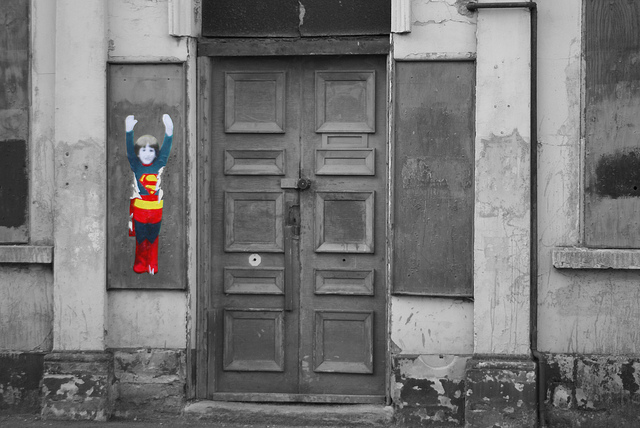
 

Like Superman

Superman

Superman. Ian HarveyCC BY-SA

I’m seated at the old computer table, listening to second-graders read. Poetry conferences, we’re having. Revisions and final edits before their teacher sends everything off to publish a class book of poems.

“Is it my turn? It is it my turn?” he keeps asking me, from his seat in the middle of the room.

Actually, he’s not on my list of students that his teacher asked me to meet with. So I say, “Not yet. Not yet.”

He manages, somehow, to sneak between his classmates. I look up from notes I’m making to find his impish face beaming up at me. His tiny body wriggles in the chair beside me.

“My turn!” he insists.

I call across the room to his teacher, who’s also conferring with students: “May I PLEASE work with our friend here?”

“Yes, sure!” she answers. “I’m about to meet with him, but if you want to  . . .”

If I want to?

How can I say no?

“Okay, YOUR TURN! Read your poem to me,” I tell my exuberant conferee.

Grinning, he shoves his paper over to me.

There’s nothing on it. Not even his name.

“What, you haven’t written anything yet?”

He shakes his head. He’s still smiling. “No! But my English is bigger!”

He remembers.

At the beginning of the year, I assessed his reading. Just as I was about to console him on his having missed all of the words, he patted my arm and said, “You have big English. Me”— he patted his chest— “little English.”

His perception of everything around him is astonishing.  Whether he has all the words for it or not.

I’ve noticed, in the hallways, that he doesn’t greet me as Haley! anymore. Now it’s Hi, Mrs. Haley. That when I say How are you? he says, I’m good.

“Yes,” I say, “your English is a LOT bigger. That’s for sure. Now, this poem. What do you want to write about?”

He shrugs. “I don’t know.”

“Well, what do you like?”

His face lights up. The response is immediate: “BASEBALL!”

“Okay, so, what do you want to say about baseball?”

I take the paper and pencil.

“I like baseball,” he says.

“Perfect.” I write down the words. “That’s your first line. What else?”

“I like hitting the ball with the bat.” He acts this out. He’s a boy full of endless energy.

“Great. That’s your second line.” I write it down. “What else can you say about playing baseball?”

He thinks, gets excited, garbles his words. Something about running . . .

“Wait, slow down. Did you say running?”

He nods, bouncing in the chair. “I run like SUPERMAN!”

Superman . . . 

The first time I saw him, over a year ago, when he came to the United States, to our school, he had no English at all. Unused to a school setting, he frequently had outbursts because he couldn’t communicate his wants, his needs, his questions, his feelings, anything.

He was a frustrated, forlorn soul.

Wearing a Superman shirt.

My first words to him were, “Hey, you’re Superman.”

I pointed to the on his little shirt.

He didn’t understand, but he smiled.

Now, he understands.

Within five minutes, the poem is written. I point to every word, reading to him, then he points to every word, reading back to me. I watch him bounce away to his desk to copy the poem over in his own handwriting.

I write, too:

So you run like Superman when you play baseball.

Maybe you really mean that you fly

because you do

because you ARE Superman.

We shall stand marveling in your wake

it’s a bird, it’s a plane

it’s you.

Supersonic.

*******

For an earlier encounter with my little friend, read Big English

For the record, poetry is an excellent way to help English language learners—really, any student—write more. Poems can be brief with less emphasis on conventions. Energy can go freely into capturing images, ideas, emotions, and building vocabulary.

The tree I’d be

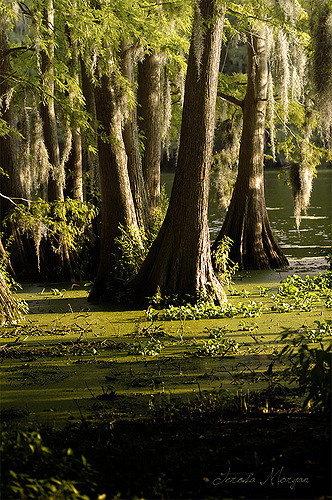
Cypress trees.jpg

Sunlit Cypress. Teresa PhillipsCC BY-SA

A few days ago,  I happened upon this captivating tweet:

I am well on the way to becoming a tree myself. I put down roots. I sigh when the wind blows. My sap rises in the spring and I turn towards the sun. Which tree would I be? Definitely a walnut tree.

-Roger Deakin, journal entry for April, quoted by writer Robert Macfarlane, Twitter, 04/04/2018

Macfarlane then asks: “Which tree would you be and why?”

—A cypress.

That was my immediate thought.

But why?

After all, one of my favorite scents is Fraser fir (the predominant Christmas tree in North Carolina). I vacuum the stubby needles at holiday’s end and try not to empty the canister for as long as possible, because the fir fragrance fills the air with every subsequent use. The trees of my childhood are dogwood, pine, live oak, magnolia, sweet gum. I have early memories of sun-dappled sidewalks covered with “helicopters”—one-winged seeds, or samaras—that spiral down from maple branches. I tossed the helicopters again and again, as high as I could, to watch them swirl like propellers. Crape myrtles lined my grandparent’s yard; I climbed their smooth trunks, sat in the crooks of their branches, countless times.

Why does cypress come to mind first, then?

Poets and writers, you know when an image appears so vividly that it holds some significance begging to be explored . . . .

For starters, my image is of Taxodium distichum, more commonly known as a bald cypress, or, my preferred name, a southern-cypress tree.

It’s rooted in the swamps of the southern United States, where my roots are. A tree at home in water, in rivers. I grew up in a place called Tidewater, entered the world in a hospital named for its proximity to water: Riverside.

My first recollection of the word cypress was my grandparents’ reference to a place on beyond where they lived, where the little dirt road curved past canals and thick woods that had grown to obscure stately houses: up Cypress Swamp, they’d say. Grandma’s best friend from first grade, who grew up to marry Grandma’s brother, was from Cypress Swamp. As a child, standing on the dirt road, looking through the treetops, if the sun was right, I could glimpse a bit of one old, abandoned house—a roof of cypress shingles.

The word sounded poetic to me even then: cypress. Like a whisper. Like something inviting. Maybe magical.

Although, through the ages, a cypress was usually associated with funerals and mourning. My affinity for the tree is clearly fused to my eastern North Carolina heritage, a reminder of the generations that have gone before me. My family tree, so to speak. It is ancient. Maybe nothing encapsulates that so well as this passage from Our State magazine, in which the author chronicles his boat journey on a river through a cypress forest:

 Many of the trees here must have witnessed those long-vanished species. They would have nodded over Native Americans in dugout canoes. They would already have been tall when the Lost Colony was lost, when the Mayflower sailed, when Attila the Hun was on the move. A few might have stood when Christ was born.

-T. Edward Nickens, “In Search of Methuselah,” Our State, June 8, 2016.

They live for so long, cypress trees, due to their ability to withstand storms; they thrive despite adverse growing conditions. Cypress wood is hard, strong, water-resistant—hence those shingles on the old country houses still standing as a forest  grows up around them. Those hand-hewn shingles sheltered the life therein. Like Noah’s ark, made of gopher wood from an unknown tree that some researchers speculate to be . . . cypress.

I cannot say the adversity, the storms, in my own life are any greater or worse than those weathered by other people I’ve known. I can only say that I’m still here. I view the cypress not as a funeral tree but one that preserves, celebrates, and affirms life; that, ultimately, is the whole reason why I write, why this blog exists at all.

On a fanciful note: Earlier I mentioned the word cypress sounding magical. When I was a child I loved the Chronicles of Narnia. I still do. In these books, C.S. Lewis borrowed from Greek mythology to depict dryads and hamadryads, the spirits of trees that took the form of young girls with their particular tree’s physical characteristics: a birch-girl dressed in silver, another with hair like long, willowy branches. Does a cypress call to me, then, because I am tall (5’8″ in bare feet)? That’s taller than the average American woman (5’4″) but not dramatically so. There must be something more, then, as to why the cypress chooses me, something unique to the tree and to me, other than our having southern roots in watery regions.

The knees.

In cypress forests, knobby projections stick up from the water. Theory has it that those “knees” help the tree breathe, enabling it to take in more oxygen. I don’t know how much truth lies in that theory, but I can tell you this: For my entire childhood I suffered from asthma and the only way I could sleep at night, the only way to breathe, was by curling up in a ball with my knees drawn up under me.

So, yes, my knees helped me breathe.

*******

In the old places

where the water stands still

they live on

holding all their stories

not evergreen

but ever-enduring

reassuring

reaffirming.

With every breath

drawn on their knees

they whisper,

“Remember.”

Real

and ethereal

—if I were a tree

a cypress

I’d be.

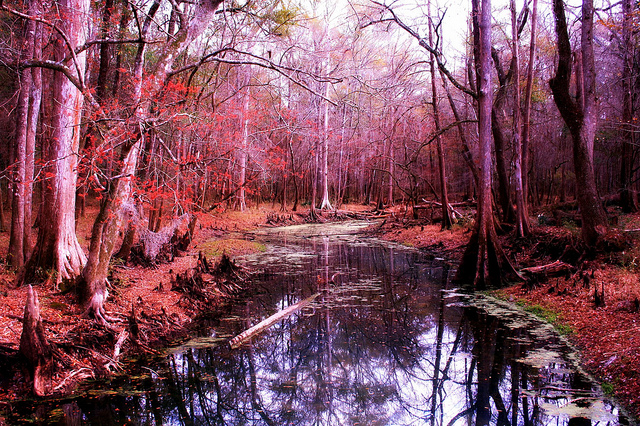
Cypress trees - pink

“When we are present in each moment, the past gently rolls up behind us and future slowly unravels before us.” echorooCC-BY

Relics

Mom's empty room

Mom’s empty room. The_DoodlerCC BY_SA

So many stories 

in every room

in every thing.

A lifetime packed

tight in every closet

in every drawer

for even in the time

of abundance 

the memory of deprivation

remained.

A lifetime of love

recorded in cards and letters

all saved 

even poems 

I don’t remember writing.

The photos of my children

so carefully preserved

growing up all over again

here in my hands.

Their father captured 

as a  little boy

in black and white

long ago.

His own father in uniform

smiling, alive

his olive-green dress hats

sealed in a bag 

on a shelf 

deep in her closet.

The ghost of holidays past

pulled from the attic 

with childhood toys

long forgotten.

Tarnished silver in the kitchen

and a fine layer of dust

on the crystal. 

Cookies in a jar

grown stale 

maybe in hopes of

grandchildren coming.

Things with no explanation

only wonder 

as to what they are

and what they’re for. 

So many stories

in rooms once beautiful

in every thing crammed

holding on, holding on

in the hidden places.

A lifetime packed

with living

and loving.

Decades of

acquiring

prospering

overcoming

remembering

all dismantled 

and disposed of

in the space of

a single afternoon.

Only a minute

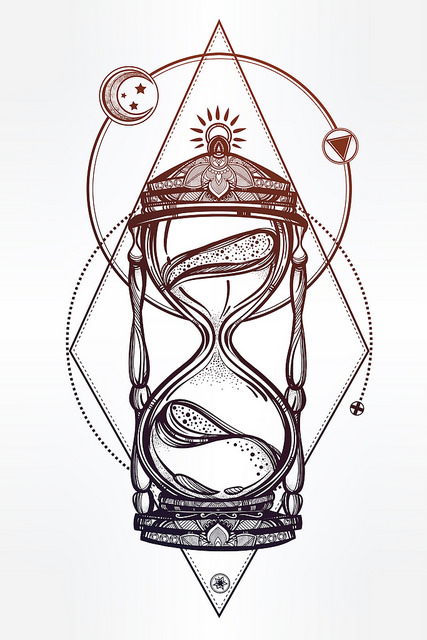
Hourglass

Hand drawn romantic design hourglass. jl71077CC BY

Every so often, this poem comes to mind.

I first heard it years ago, when a young co-worker recited it from memory. Listening to her mellifluous voice, rising and falling in all the right places, I thought, How profound.

I’ve used it with students for interpretation, for inferring, for fluency practice, for the pleasing rhythm.

Mostly I just mull the truth of it, in its utter simplicity.

Especially the last two lines.

I’ve only just a minute,

Only sixty seconds in it.

Forced upon me, can’t refuse it,

Didn’t seek it, didn’t choose it,

But it’s up to me to use it.

I must suffer if I lose it,

Give an account if I abuse it,

Just a tiny little minute,

But eternity is in it.

Attributed to Dr. Benjamin E. Mays

You’ll bring your own interpretations, images, minutes to this.

I think of all the stories that hang in the balance of a minute. In the wavering. In the choosing. There’s always that minute before the accident, before the attack, before the kiss of human or substance, before the choice that cannot be unmade is made. In a minute, lives are created, lives are destroyed. Fortunes gained, fortunes lost. The young, often consumed with this minute, blinded by now, cannot see forward; the old, bearing the weight of all their minutes, look back, see them all too clearly, and sigh.

We do not choose our minutes. We cannot save them or store them. We can only seize them, endure them, waste them, invest them, or pay for them. A choice lies inside each minute, always, even when there seems no choice.

I think of the ripple effect of one minute’s choice, how it never affects just one person but countless others, spanning families, communities, cities, nations, maybe generation after generation. For better, for worse.

I see the news. I read. I hear people’s stories, every day. We live our stories, we make them, every single minute, by our choices, actions, reactions. In some minutes I pause, recalibrate, celebrate, breathe a prayer of gratitude. In other minutes I sink under the anesthesia of why.

Only a minute, come and gone, and we are changed, whether imperceptibly or instantly, forever.

And that line whispers to me, once more. It’s never far away, really.

Just a tiny little minute, but eternity is in it.

Last blast

I watch the pouring snows/ The last of winter’s throes . . . 03/12/2018

First the stillness

portending

the silence

descending.

The last of winter this way comes.

The first flakes

wending,

waxing larger,

distending.

She surges, clings, suppresses, numbs.

As we endure,

transcending,

her spirit

commending,

   Spring, over throes, a requiem hums.

Abiding images

Last week I spent several days on Ocracoke Island, North Carolina, studying writing with teaching colleagues from across the state.  This extraordinary opportunity was provided to us by the North Carolina Center for the Advancement of Teaching – heartfelt thanks to you, NCCAT, for your support of teachers, and for inspiration at a time when it is needed more than ever.

Ocracoke is, in the words of our faculty advisor, who’s native to the island, “a windy, sandy, watery place.” It’s also tiny and breathtakingly beautiful. One of our assignments was to capture abiding images from this idyllic locale in our writer’s notebooks.

Abiding images are symbols with deep personal meaning to us, often recurring, according to dream analysts. Abiding images are part of us, shaping our lives the way the wind and the water continuously shape this island. To poets and writers, abiding images come from a wellspring inside us – stories, dreams, conscious and unconscious memories – each as unique to us as our own fingerprints.

Our task was to walk in this brine-tinged breeze, under the moody sky, without speaking to one another. We were to walk alone, searching for the images that speak to us.

I prefer to think of it as being called by the images that wish to speak to us.

The long beach grass rippled like hair against the ground; the sea, shimmering and calm on the Pamlico Sound side, flowed ceaselessly from left to right like words across a page. Come, was the inherent, compelling invitation. Come. Listen to me. I have stories to tell.

I filled seven pages with abiding images and took pictures of a few.

There were the pink wildflowers, startlingly bright against the beach grass. Marsh pinks, they’re called. Sabatia stellaris. Our advisor said for anything to survive on the island, it must be hardy, yet here were these delicate flowers with perfect yellow stars in the center, as if painstakingly hand-painted by an artist. Incongruous. Surprising. Hopeful, somehow, for these flowers carry the mark of the heavens in their upturned faces.

I came across some shells by a small hole in the sand, out of which grew a thin, solitary blade of grass. No other grass stood anywhere near this one long, lonely strand, this one hair from this one follicle. There are secrets in the sand, the advisor told us. So much more goes on in it and below it than we really know. 

This curious wisp of grass shivers, nods.

I walk farther and discover the ivory-yellow skeleton of . . . something. I don’t have a frame of reference for it, other than knowing it’s a bone, something once alive. It worries me. I want to know what creature it was and why it’s here in such pristine condition, with no other marks in the sand near it in this isolated spot. How long has it been dead?

I learn later that it’s the skull – just the skull, although it’s the size of a chicken – of a red drum. North Carolina’s state fish.

I still don’t know why it was lying there all by itself.

The last of my abiding images is at the marina in front of the NCCAT building, which used to be the old U.S. Coast Guard lifesaving station. As I turn to go back inside, I encounter a rusted handle quite suddenly in the sand near the marina’s edge. It’s sticking upright, clearly attached to something buried there, and it’s obviously been around a long time. What’s THIS secret hidden in the sand? I don’t tug on the handle, although I want to; I imagine pulling it and a door coming forth from the sand to reveal an opening with stairs leading down to . . . anywhere. A bunker, a secret gathering place, another world, another time. Oh, the stories this strange handle evokes!

Perhaps I will write one of them yet.

For now, the images abide in my notebook and in my mind; they shape me, even as I shape my thoughts about them. I carry them with me while I leave a piece of my heart, perhaps a piece of my soul, behind with them.

We belong to one another. That’s what I think as the sun goes down over the Sound, as I hear boats over in the marina rocking as if they are waking from a long sleep, coming back to life.

We abide.


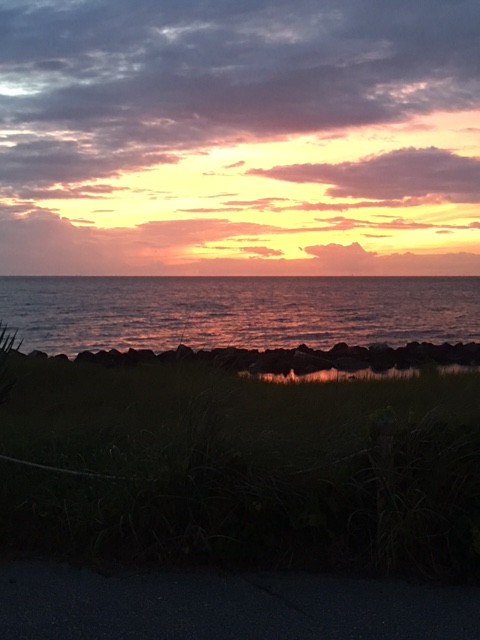
Sunset Pamlico Sound

Sunset on the Pamlico Sound.

In reading and in writing, our instructors told us, “Setting is everything. It drives the story, drives the characters’ actions.” 

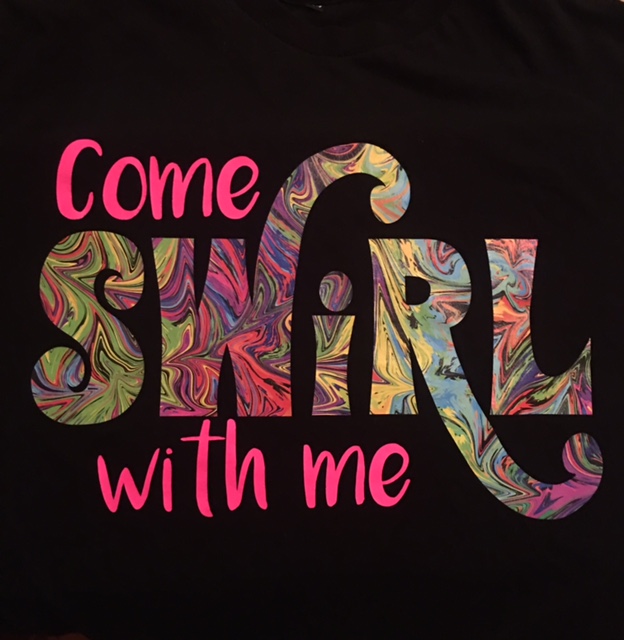
Come SWiRL with me

SWiRL

Our Literacy Lunch team’s T-shirt design

Q: What’s a fun way to engage families in English Language Arts activities with their children?

A: Have a Literacy Lunch!

Every year, families look forward to Literacy Lunch at our school. It’s one of our best-attended events.

Our theme this year, “Come SWiRL with Me,” centered on the facets or domains of language: Speak, Write, Read, Listen (we added the “i” to the SWRL acronym to make a real word), as speaking, writing, reading, and listening comprise the ELA standards and language skills needed across all disciplines.

So, grade levels came up with activities that encompassed all elements of SWRL. Some included poetry, in recognition of National Poetry Month.


Spring poems 1st

First graders wrote spring poems with families, to read aloud. Second graders wrote “I wish” poems.

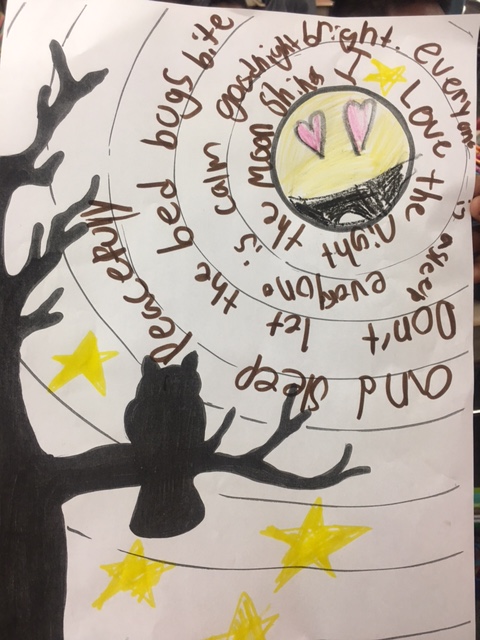
Swirl poem 4th

Fourth graders composed “swirl” poems with families.

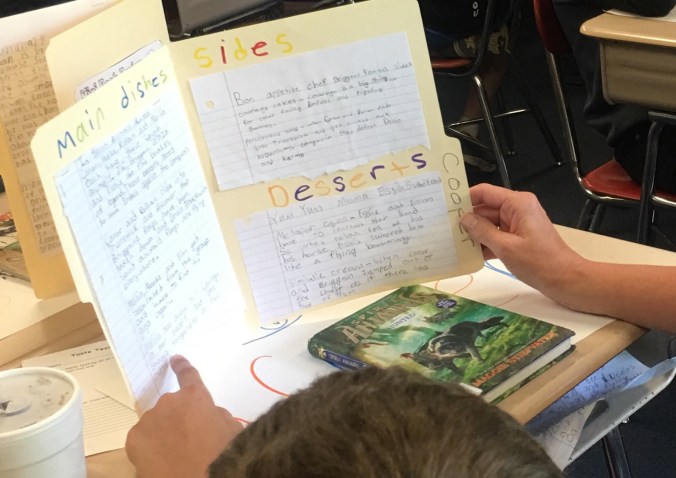
Book tasting 5th

Fifth graders treated parents to a “book tasting.”

Wax museum 3rd

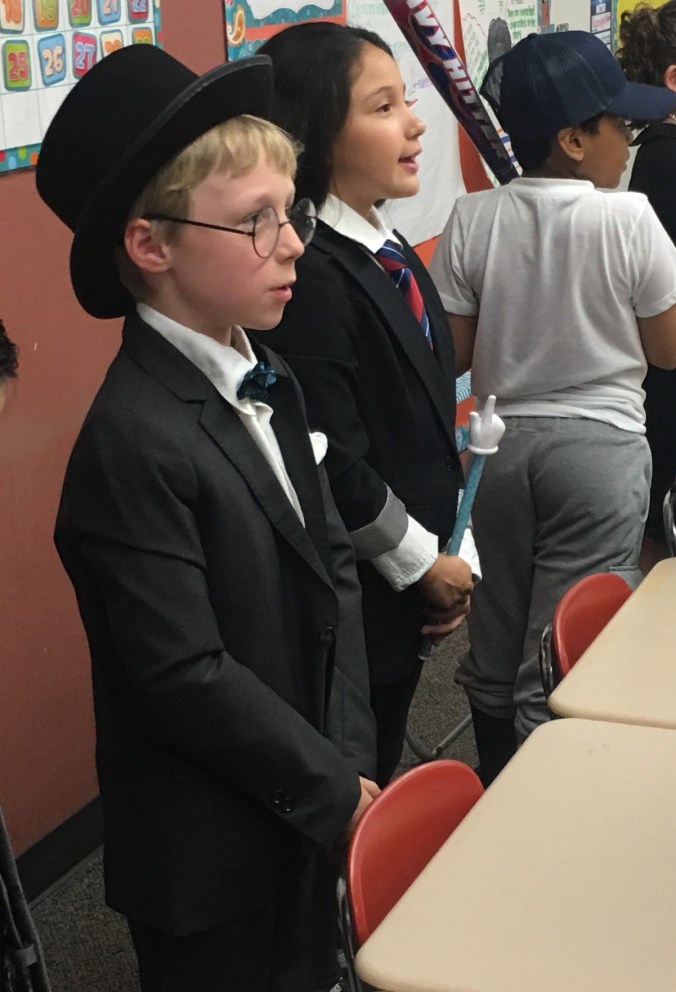
Third grade’s wax museum: Meet Woodrow Wilson, Frederick Douglass, and Jackie Robinson. Visitors pressed a “button” to hear the historical figures speak. This was the culmination of a biography writing unit.

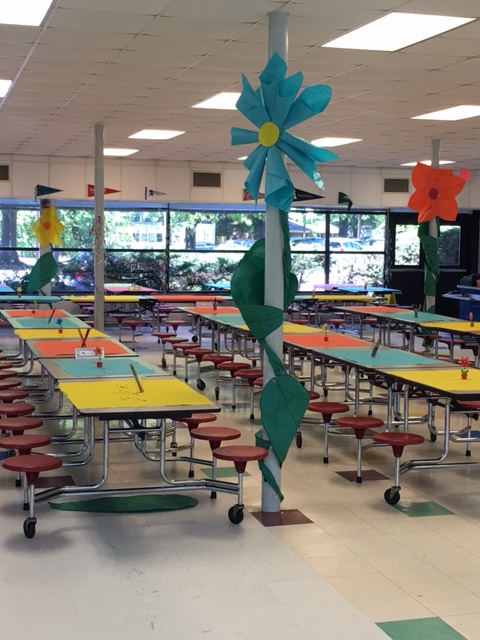
After the in-class activity, families went to the cafeteria:

SWiRL - Cafe

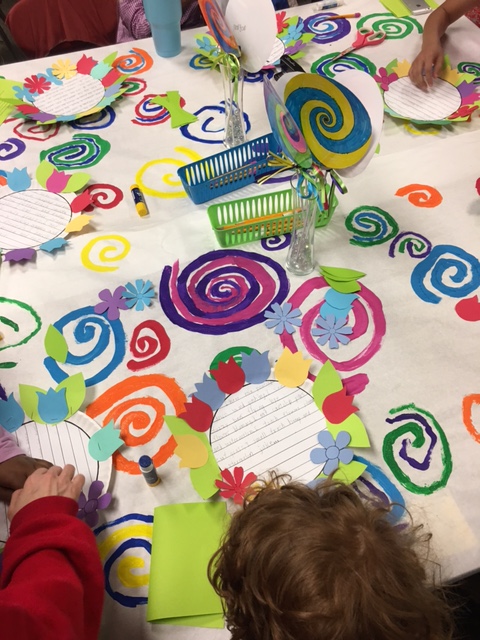
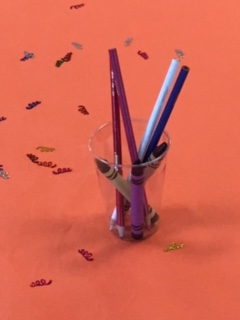
All ready for families to eat together – and to write on the tablecloth.

The children seemed to enjoy writing on the paper tablecloths at lunchtime the most – at the end of each lunch, tablecloths were covered with messages and small sketches. One carefully crayoned note from a first grader: “I love you.” Underneath, the neat printing of a parent: “I love you, too.”

Upon exiting, parents gave feedback: They were in awe of the artwork,  fascinated by the children’s ideas and their creative expression. One parent commented: “Public speaking is VERY IMPORTANT!” Another parent, after attending kindergarten’s renditions of reader’s theater, wrote: “I’ve seen so much improvement in my son’s writing and speaking.”

Perhaps most telling is this comment, one frequently echoed throughout our years of Literacy Lunches: “Thank you for this special time with my child.”

Speak, write, read, and listen well, for words are important.

So is time.

SWiRL table

Reflect: What message do you need to communicate to someone today? Make time.


Elegy written in the countryside

Tobacco barn

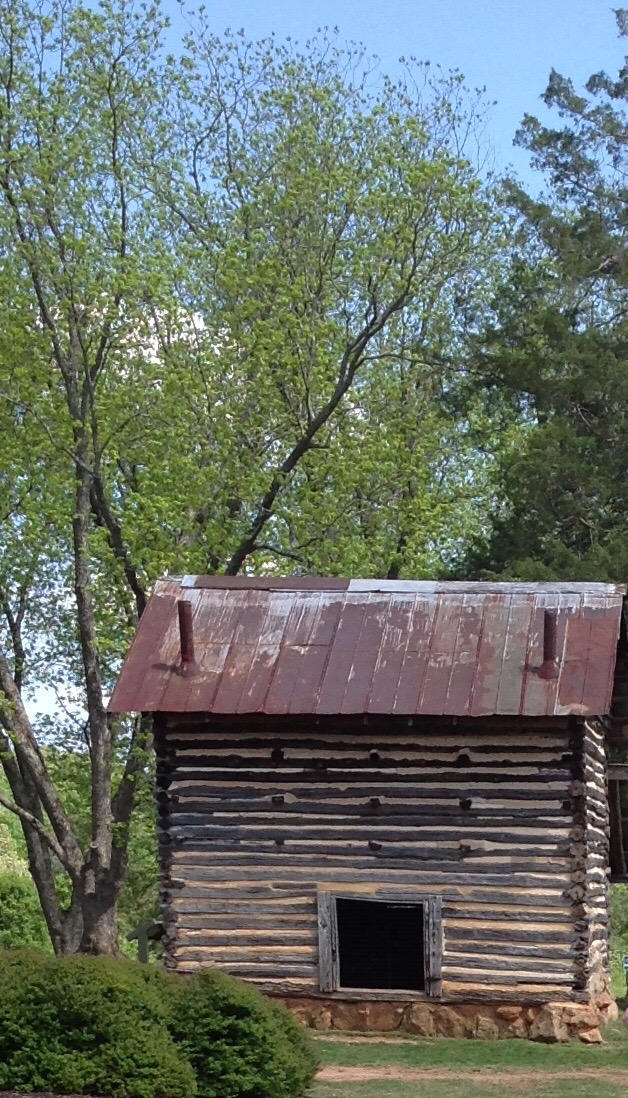
A friend tells the story of a visitor from England who, while riding through our rural North Carolina community, asked: “What are all those quaint, narrow houses in the fields?” My friend chuckled: “Those aren’t houses – they’re tobacco barns.” 

I thought: They’re really elegies written all across the countryside.

I love tobacco barns. Within a short radius of my home stands a grand one with a shiny tin roof, another crumbling in a timbered wood, and another housing two mules – seeing this makes me feel as if I’ve stepped back in time. So, with serious apologies to Thomas Gray, I attempt to pay homage to tobacco barns on this last day of National Poetry Month.

Along the winding roads, bereft, they stand
Beyond their use, and most beyond all care,
Just empty shells of creaking wood, unmanned;
Gone gold, within, leaves sweetness in the air.

The fires no longer burn, nor flues convey
The curing smoke, the farmer’s cash-crop dreams;
Those hands and hearts that worked all night and day
Lie spent, burned out, unremembered, it seems

But for the spectral structures standing yet,
Hand-hewn ghosts, whispering to passers-by:
“Press on, work hard before your sun shall set,
Live, love, build well.” – I hear the old barns sigh.

Reflect: What in your landscape, your neck of the woods, speaks to you? What does it say? Why? Listen – and write. 


Celebrate today

Dogwood

Dogwood. JenniferCC BY

The first day of April – glorious. A sky as blue as it ever gets, hardly a cloud to be seen. Dogwoods and redbuds, bare just days ago, flowering profusely. On the breeze, the scent of blossoms, almost like perfume – winter daphne, I think.

All marking the end of desolation. Nature composes a theme of renewal with color, fragrance, amber light and birdsong.

At the close of the day, I celebrate its beauty. I celebrate the inherent message of hope with the arrival of another spring. Even the news carries a rare inspirational story about a man opening his front door to find his dog, missing for four years, back home on the porch. He sat down and the dog put her head in his lap – what an emotional celebration that must have been.

Today is also the first day of National Poetry month. I have recently discovered a lost booklet of poems that I wrote as a teenager. All things considered, this particular poem struck me as one appropriately celebratory  – winter is over, spring has returned; a lost dog has returned home; my lost poems are found.

I wrote it when I was sixteen. Back then, I called it “Yesterdays.”

Yesterdays are gone

Leaving nothing but memories behind

And, if meant to be, a chance for tomorrow.

So weep no more

For what once was,

For it may be

Once again.

Celebrate today.