Dear Writing poem

Shortly after NBA champion Kobe Bryant died, I watched his film, Dear Basketball, for the first time. I was profoundly moved by his passion for the game and by his gratitude for it. I composed a post afterward, Dear Writing. Today on Ethical ELA’s Open Write, Susan Ahlbrand invites us to write a letter to something we are passionate about, in poetic form.

Here is my first attempt at reworking my letter into an epistolary poem…

Dear Writing,

It is time to tell you
how much you mean to me
for it is more 
than ever before.

Let me begin
at the beginning
when you first materialized.
I was, what, about six years old? 
I wonder now whether I discovered you
or you discovered me
sitting there at the coffee table 
in the living room, 
wide-ruled paper in front of me,
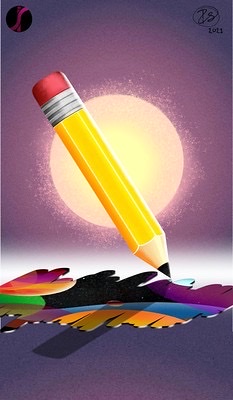
a fat pencil in my hand. 
All I know is that it began with story. 
A pull 
a beckoning
a desire 
to get what was swirling inside me 
onto pages. 
By some great alchemy
my blocky letters
erratic spelling
rudimentary sentences 
ceased to be merely themselves; 
combined, they became something
distinctly Other. 
And there you were.
Almost a living, breathing presence. 

I didn’t know then
that you’d come to stay
that as I grew
you would grow with me. 
That you would, in fact, 
grow me, 
always pulling me to more.
To think more
explore more
discover more
strive more
play more. 
To be more.

Do you remember the diary
Grandma gave me for Christmas 
when I was ten or eleven? 
The front cover adorned
with an illustration of a little girl
trimmed in pink
complete with brass lock and tiny key. 
Do you remember this entry: 
I wrote a story and 
I hope it will be published…
whatever happened to that diary—? 
To that story? 
They’re lost in time. 
No matter. 
I can see that page in my mind to this day
—is it you that keeps this memory alive?

People began to notice our relationship
early on, didn’t they.
Teachers said we were a good thing
and offered tips 
on how we could be stronger. 
Friends and family told me 
to stick with you: 
Please keep writing. 
I owe them all 
for how they shaped
you and me.

Where would I have been without you 
in my teenage years? 
In the early days 
of my marriage? 
Those were the poetry years
the journal years
when you let me glimpse 
the beautiful inside the uncertain
when you compelled me 
to pour out my heart. 
You were bigger than 
my anguish
my anger
my fear. 
You channeled it all, 
absorbed it all. 
Ever how circuitous the path
how violent the storm
how steep the mountain
how dark the night
how deep the pain
you were there
leading me 
to safety
to calm. 

Even now, I reach for you
and you are there. 
Like the ocean
you bring forth 
unexpected treasures
and healing. 
When my emotions 
and energy are spent
washed clean away, 
you reveal over and over 
one thing 
that always remains: 
Hope.

For there’s always more 
to the story
to the ones that I create
to the ones that I live. 
I think that’s perhaps 
the most important lesson 
you’ve taught me: 
This chapter of life is ending.
A new one is about to begin. 
Embrace it. 
This is but one
of your extraordinary powers. 

Then there is
your amazing ability 
to mine my memory…

With you I am any age I ever was. 
I sit on my grandfather’s lap once more. 
He walks with me, holds my hand. 
I hear his voice. 
I am in Grandma’s kitchen
while steam fogs the windows
I am in her arms 
as she rocks me and sings: 
Jesus loves me, this I know
I see my father’s blue eyes
I hear my mother’s laughter 
and the whir of her sewing machine 
late into the night. 
With you my children are still little
my husband is young
black-haired
healthy
whole
and out on the court 
shooting hoops. 
And every dog I ever loved 
comes bounding back to me 
in absolute joy
all my shortcomings
forgiven.

With you, I relive it all. 
The parts I am proud of 
and the parts I’m not
the moments I cherish 
and the ones I survived. 
With you, they all become 
a celebration
of living,
of learning.

I learned long ago 
that I can harness your power 
to attack 
but you showed me 
that this doesn’t bring me peace.
You taught me, instead, 
to defend. 
Not as a warrior 
with drawn sword
but as a careful guardian
of my own mind and heart. 
Not by destroying
but by edifying. 
You enable me to walk 
in another’s shoes 
and see through another’s eyes
to understand that fighting 
doesn’t move the hearts of others
but story does. 

There’s something
of the divine about you.
Marvel of marvels
how a spark 
in the human brain 
becomes a thought 
and a thought
becomes substance 
because of you. 
Like something from nothing. 
Ex nihilo. 
It’s how God created, 
speaking the world into existence. 
With words. 
Without limits.
Anything is possible.
Believe. 

I believe there’s a sacredness 
behind the human spirit’s desperate craving 
to create
to express
to be heard…

which brings me back 
to six years old
at the table
pencil in my hand.

You will outlive me. 
You are my record.
You are what I leave behind.

Let it be the best of me.

Know that you’re an inextricable part
of who I am, 
one of my life’s greatest gifts. 
Meant to be given. 

And so I give you away.

I am grateful beyond words.

I love you.
Fran
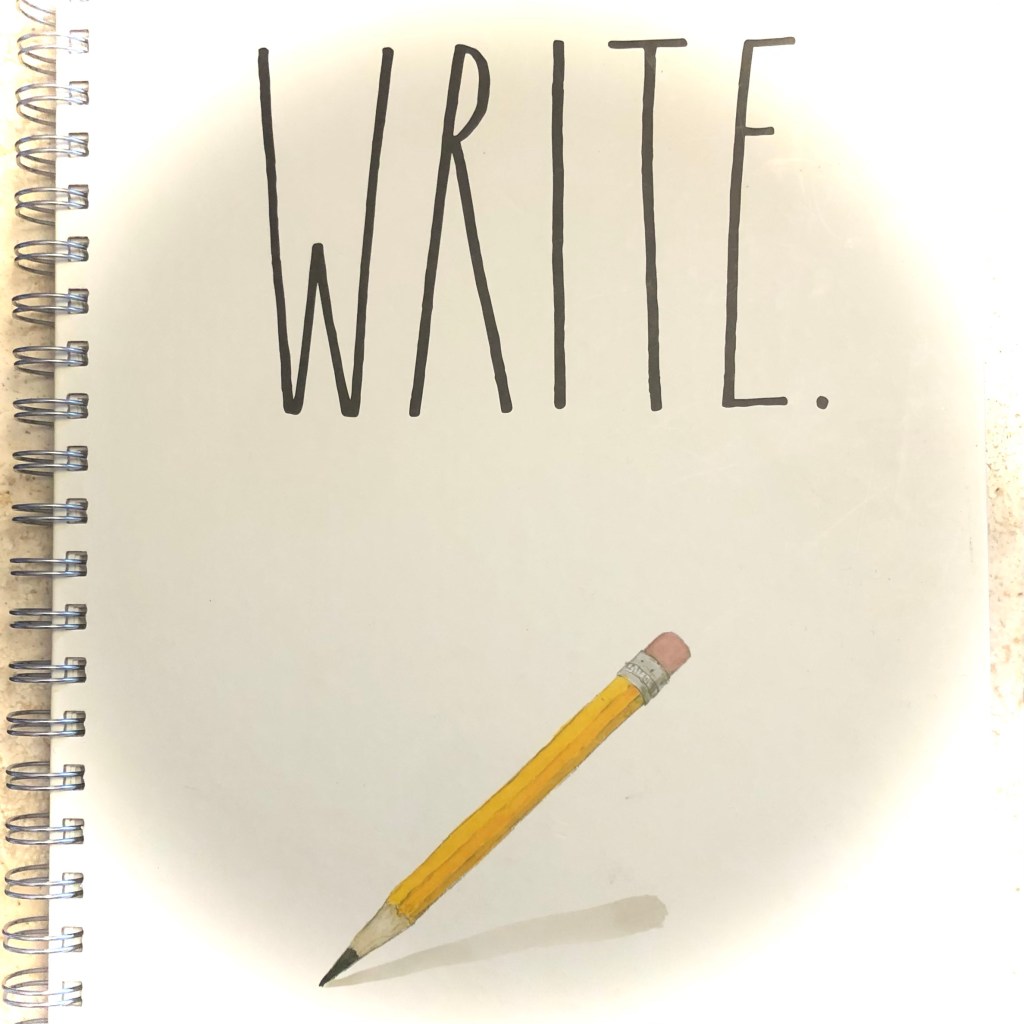
One of my many writing notebooks
I want to be the kind of writer…

with thanks to SOS-Sharing Our Stories: Magic in a Blog for the inspiration

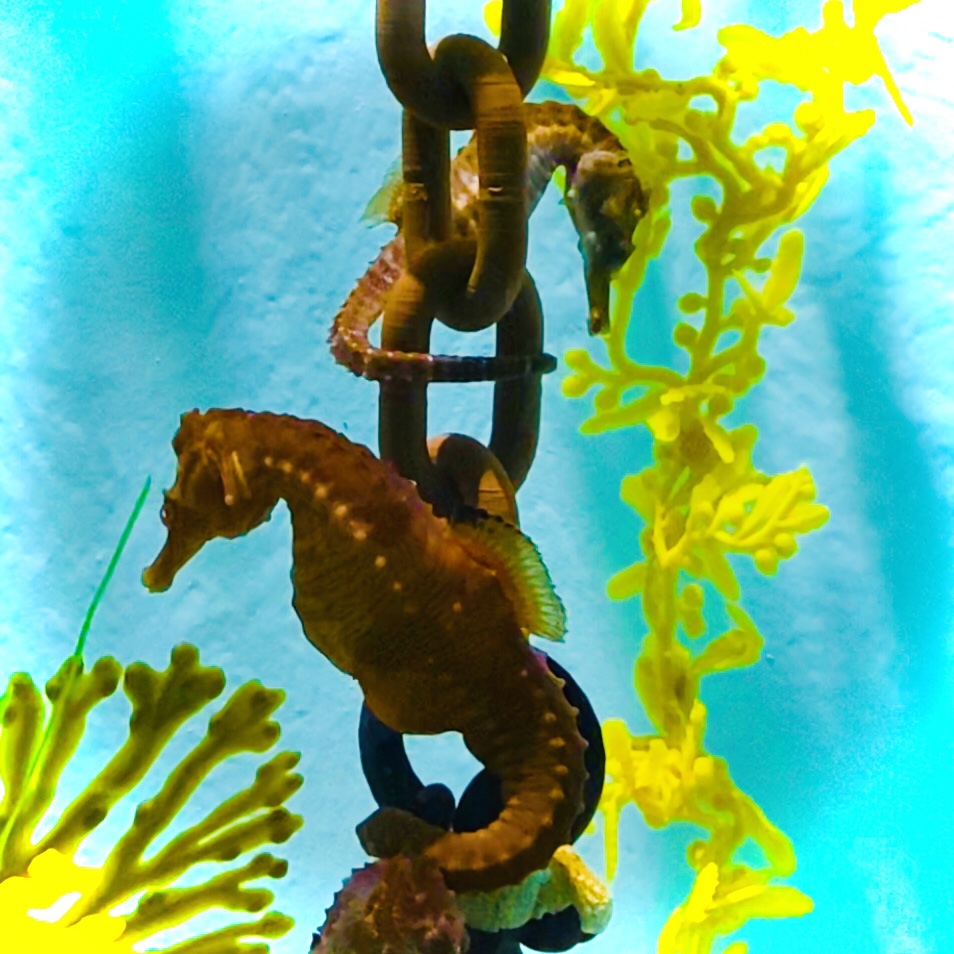
I want to be the kind of writer who seizes every moment, carpe momentum, for the meaning it contains, for the uniqueness it brings, for the virtue of its existence and my existence within it, for these are fleeting: my presence of mind and my presence here. I want to the the kind of writer who lets the tap of memory flow full force, who drinks long, deep drafts in thirsty gratitude for every image that lives in the sea of my brain, inside the little seahorse itself. Precious hippocampus, my writer-symbol. I want to be the kind of writer who feeds it, keeps it strong, leaves floodgates open for all that rides the currents of memory, all that rises to the surface, all that washes up like flotsam and jetsam from long ago, even if but random bits of objects or recalled treasure like moments with those I loved and who loved me, still very much alive and real in the iridescent foam bubbling at the edges. I want to be the kind of writer who doesn’t attempt to pin a fragile new idea to the page but who stops to acknowledge it when it appears, makes note of it, gives it room to breathe, to unfurl its wings, for the thing has something to reveal. Yes, I will write to it, write around it, capture it; but softly, without force. Ideas are living things. They are to be nurtured and examined, not hammered and dissected (even in the name of research). I want to be the kind of writer who honors the organic and spiritual nature of the craft and the transcendent power of story in the human heart. It is a matter of mattering. I want to be the kind of writer who spins crystals of my memory, thought, sensation, perception, emotion, and imagination into stories of substance that matter to readers, that maybe add layers of meaning to their moments, too…the way that writers have done, still do, for me. I hear the echo of their words daily as I go about the moments of my living; the writers, the writing, the words, ever-present, tickling the hippocampus, anchoring in my soul, forever bubbling, forming and reforming, spawning yet more ideas. I want to be the kind of writer always reaching for what’s beyond my grasp, always discovering, always inviting awe, always listening, always and infinitely grateful to have been alive.

Carpe momentum.

I am working on it.

The seahorse is a favorite writer-symbol for me, sharing the same name with the part of the brain regulating memory and emotion: hippocampus. Photo: E. Johnson

For love of Narnia

Discovering people who love Narnia is the closest thing there is to actually waking up and discovering you’re in Narnia. From the time I was ten I felt the same longing of those fictional English schoolchildren who found their way in though several different portals between that magical world and this one, that constant desire to return, to see Aslan again…

So when my children were born, I set about imparting a love of Narnia (and books) in their hearts.

My oldest loves books to this day. Narnia, however, never seemed to hold the same Deeper Magic for him that it does for me.`

Until recently.

He began reading the series to his five-year-old daughter last year and Narnia pulled him in. All the way in.

That is what Narnia does.

He would text me at different points on his adventure, the same adventures I’ve had over and over all my life. The snow. The lamppost. The thaw. Talking Beasts. Dr. Cornelius. Bree the Horse. Boarding the Dawn Treader. Meeting Reepicheep. The royal line of kings. Falling in love with Aslan, over and over and over again…

At the beginning of The Last Battle, this text: It’s heartbreaking.

Later: I got to the part where Cair Paravel has fallen and Tirian says Narnia is no more…am weeping…

Later still: Just finished The Last Battle. It broke me.

I learned from my little granddaughter, who whispered in my ear: “He cried so much that I told Mama we should be really nice to him. His eyes were all red.”

My boy, my boy. Once Narnia gets a hold of you, it never lets go. It’s in your blood, forever and ever.

Trust me.

It is but the beginning.

For Christmas he gave me this necklace with Lucy and Mr. Tumnus
in The Lion, the Witch, and the Wardrobe.

Pencil wizard

Once upon a time, I said that writing is the closest thing there is to magic.

Here is why.

Magic is not, well, magic. It is a lot of work (or why would Hogwarts exist? Just saying).

Writing is a lot of work.

Work (a lot of it) makes the magic happen.

Here is a true story of magic moments at the end of this dystopian school year (know that I am suppressing the urge to compare virtual learning to disapparating, i.e., teleporting from place to place, or essentially vanishing). After end-of-grade testing—I said dystopian, right? What does the State expect this data to look like?—a fourth-grade teacher sent me a note:

One of my students has been writing a story in his free time. He wants to read it to the class. He knows it needs some work and I am wondering if you have any time to help him? He’s not usually motivated to write…

I made time. I would shift heaven and earth for this.

He came to my room wearing a giant grin, clutching his pencil and notebook. I recognized the cover—it’s a notebook our district distributes to teachers. His teacher must have given it to him especially for his story, for in grades 2-5, our district doesn’t use writing workshop any more (and that, Dear Readers, is a whole ‘nother tragedy for the telling on another day).

“Come in, come in!” I said. “Have a seat here beside me and read me your story.”

Without giving too much away (for the story is his): It’s a fantasy, a battle between humans and wizards, the protagonist a young wizard with power to make living things grow. The student read it all aloud and then we went back to make some changes for clarity and flow, with my asking:

“What exactly do you mean here, when…”

“What is it you are trying to tell the reader? What do you want readers to think or feel here?”

“Think of an action to add here, so readers or your audience can better see what’s happening in their minds, like we do when we watch a movie. What are you seeing here in your own mind? That’s what you need to get across.”

“What’s a better word choice here, to make the meaning clear?”

While the boy thought and elaborated aloud, I began typing the story. As I read the lines back to him, his face glowed: “Perfect! That’s amazing!”

“That is the power of revision,” I told him. “When you start writing, it’s all about getting your ideas down. When you go back to make the meaning clear, by adding these kinds of details and taking out what you don’t need, that’s where all the magic happens.”

“We’ve made a lot of changes,” the boy observed, “but it’s SO much better.”

And yet the story remained the story he wanted to write.

We’d changed city to town, people to townspeople. He made the stylistic choice to capitalize Humans. We’d added transitional phrases to keep the readers from falling out of the story. We added gestures for the young wizard when he makes vines grow (“I need to see how the wizard does this,” I explained). The student vetoed my suggestion to go ahead and incorporate “earthbending power” (a phrase borrowed from video games): “I am not ready to tell readers yet about earthbending power,” he stated. —Such a tone of authority!

“All right then! You’re the author. Save it for when the time is right in the story. Just make a note here to add earthbending power later.”

And then the word tome… “Is tome the word you want here, where you say the wizard found a tome in the laundry?”

“Yes. It’s a big book of spells.”

I blinked. “Indeed! That’s impressive. Just make sure your readers know what you mean here, that they can see and understand what you mean by tome.” It became an ancient tome of spells, hidden in a robe in the laundry, that the young wizard began to read “without realizing the power he now carried”—those are the student’s own words, not mine.

And thus I spent the last days of school this year watching the love of writing take root and flourish in the heart of a child…magical, indeed, in a year where so much felt anything but, even in some of my own writing of late.

As I write this morning, sunlight streaming in my window like all the glories of summer on the cusp, I recall my final words to this child as he carried his typed version away in a bright yellow folder: “Keep writing!”

In my mind’s narrative, I add: Young word-wizard, with earthbending power.

For that is the magic of writing.

May he cultivate it all of his life.

Imagine. Indy Sidhu. CC BY

with my thanks always to Two Writing Teachers, a community dedicated to the craft, power, and love of writing, for all Humans.

Title poem

with thanks to Dr. Stefani Boutelier on Ethical ELA’s #VerseLove today. She writes of the way a title can change the interpretation of a poem, or how it might add layers of metaphor: “I invite you to write a poem where the title helps identify its content, theme, or purpose. The topic and form are up to you–the focus today is on the title.”

I will share my poem’s title at the end.

For Day Fifteen of National Poetry Month

The stories
of time before my time
I lived them
through your telling
felt them through
your pounding heart
breathed them
with your young lungs
until I wanted to run
coughing from
the reek of smoke
the acrid taste of ash
and I think of
how you spent your years
giving yourself
to others
despite the ghosts
that surely clung
as smoke clings to clothing
and as I enter the doorway
I can hardly breathe
for the cloying scent of flowers
and there you are on the table
ready and waiting
in your little box
conveniently resting
in a little white tote
I dare not trust the handles
I just wrap my arms around you
and carry you against my heart
like I did my babies
only there’s no car seat needed now

still, I must keep you safe
in your new lightness
so I strap the seatbelt across us both
pondering the measure of a man
larger than life
so reduced

but I’ve got you, I’ve got you
cradled close
see now, I’m driving you home
sun and shadows flickering
over us like old newsreels
of liberation

******

Title: What Remains

Dedicated to my father-in-law, a World War II veteran.

His birthday is next week.

I didn’t know I loved poem

with thanks to Barb Edler who posted the prompt for #VerseLove on Ethical ELA: “Consider the challenges you’ve overcome, the celebrations you can rejoice, the way you may miss something that you never realized you missed”…as inspiration for a “things I didn”t know I loved” poem.

When I returned to college later in life, after having had a family, I was asked to write an essay on “My Most Memorable Teacher.” I’d never thought about this before and was unprepared to write on the teacher who came immediately to mind…but I did write.

I had to.

On Day Nine of National Poetry Month, I give it to you in poem form.

For Mrs. Cooley

You terrified me, you know
looming large
an immovable mountain
in pearls and heels
casting your dark shadow
over my fourth-grade days

The topography of your years
etched deep on your face
your eagle eyes
piercing my very existence

The fear and trembling
of math drills—
Dear Lord
save me
from subtraction!—
I look up 
and there it is 
in your expression:
You can’t squeeze blood
from a turnip

I did not know
that many years later
when I’d be asked to write
of my most memorable teacher
that you’d spring to mind
clear as day
overshadowing all others

and that what I’d recall
is how you read 
Charlotte’s Web to the class

I did not know
I could love a spider so

and then how you read us
Old Yeller

My God my God
I almost died with 
that dog

I did not know
that you were the one
who made me love reading
for there is a difference
in being able to 
and it being the air you breathe

I could not believe
how worried you were
when I fell on the playground that day
how you cradled my distorted left arm
all the way to the office 
and waited with me
‘til Daddy came

I never dreamed
you’d come see me at home
when I had to stay in bed
propped with pillows
ice bag on my cast

I saw you
and the tears came—
I am missing the last two weeks of school
I won’t pass the fourth grade

I did not know you could CHUCKLE
that your sharp blue eyes
could go so soft
and watery
and I never heard that phrase before:
flying colors
you pass with flying colors

Would you believe
I am a teacher now
it isn’t what I planned
but here I am

I never knew until Daddy told me
years ago
that you’d passed
how much I’d long
to see you again
to ask you a thousand things
maybe even to laugh

but more than anything
to thank you
with all my heart

so I do that now
in hopes that you
and Charlotte
and Old Yeller
know that
my love
lives on

Photo: Girl reading. Pedro Ribeiro Simðes. CC BY – reminds me of young me

*******

Thanks also to Tabatha Yeatts for hosting the Poetry Friday Roundup

Snowball

Is there a childhood toy that stands out in your memory? For me, that’s Snowball.

He’s one of my first experiences with loss.

*******

Kindergarten. Show-and-Tell. It is my favorite part of the day and today I am especially excited: I’ve brought Snowball, my toy dog. He sleeps with me every night, he eats with me, he does everything with me except take a bath, because Mama says that will ruin him.

This is Snowball, I tell my friends, sitting in a circle on the rug for Show-and-Tell.

I hold him up.

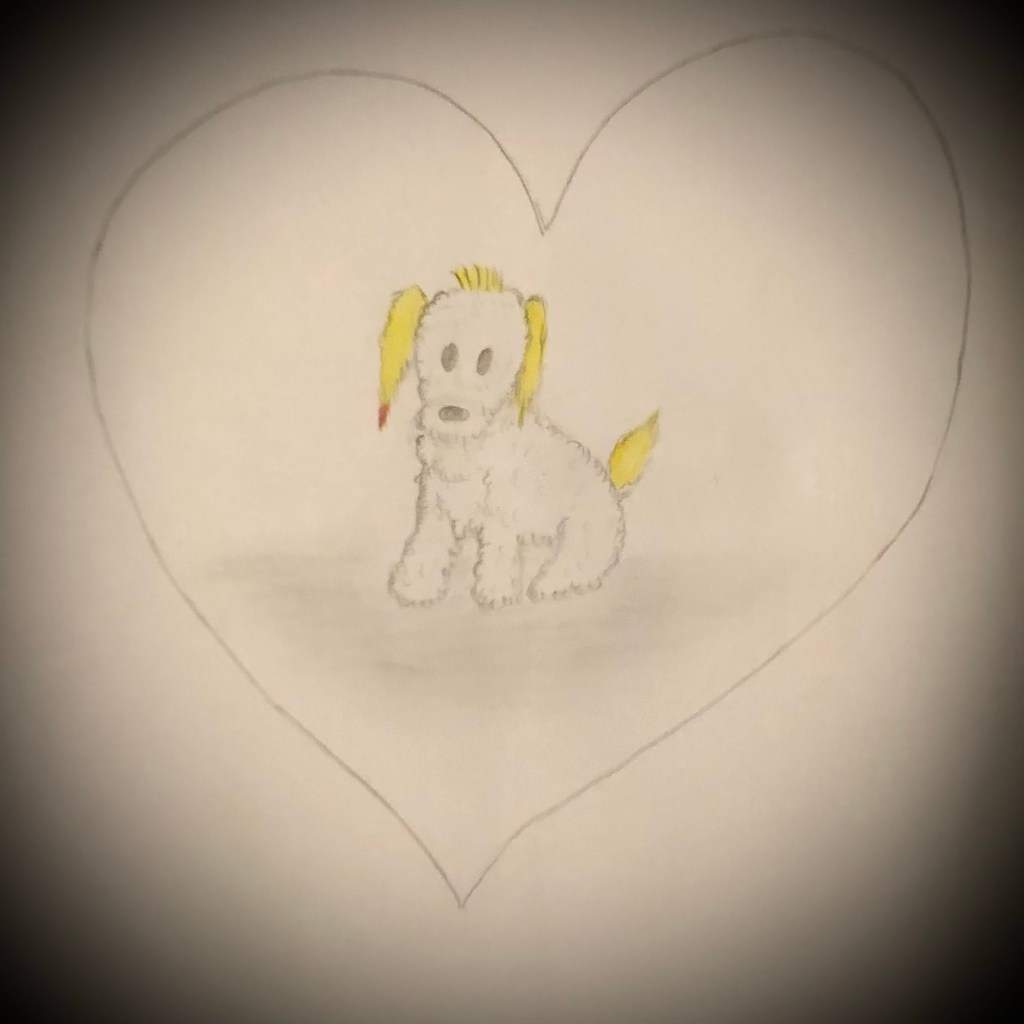
Oooooos and aaaahhhhs, because Snowball is so beautiful. His yellow ears and tail are made of ‘real’ fur. One ear has a little bit of ketchup on it from falling into my plate while I was eating fries. His stuffed body is woolly white, which is why I’ve named him Snowball.

I tell my friends: I saw him on a shelf at the store and Grandma bought him.

They all want to hold him and stroke his silky ears.

When recess comes, I decide to take Snowball out to the playground.

We have a really tall sliding board on our playground. It’s red and silver, not so shiny.

We take turns. I hand Snowball to a friend and climb, climb, climb to the top of the slide. Whoosh! It’s almost too fast, but SO fun. I make sure to hold my feet high for sailing over the mud puddle at the bottom, that worn-out place made by many, many feet landing there.

An idea: Snowball should have a turn.

Hey, Snowball wants to slide! I say.

My friends hop up and down. Let him slide! Let him slide!

Susan E. is standing beside me. When I climb up and I let him go, you catch him for me, I tell her.

I will! says Susan E. She moves toward the bottom of the slide.

I walk around to the tall, tall ladder. You will LOVE this! I tell Snowball. I give him a squeeze.

I climb, climb, climb, hanging onto the rail with one hand, onto Snowball with the other.

At the landing, I call down to Susan E.:

Are you ready?

Yes! She leans over the puddle with her hands held out.

I’m gonna count to three and let him go!

Okay! Susan E. shouts up.

One

two

three…

here he comes!

I release him.

Snowball slides so fast, so much faster than me…bumpity-bump…

Susan! calls a friend from the sandbox.

Susan E. turns her head.

—Susan! I cry from the top of the slide.

But it’s too late.

NOOOOOO!

With a soft splash, Snowball lands in the mud puddle.

—SNOWBALL! I slide down like a crazy person, scrambling, clawing…

Susan E. stands there, frozen. Then I’m sorry! I’m sorry!

I lift Snowball out of the puddle. He’s soaked through. His woolly white body is gray-brown; dirty water drips from his beautiful silky ears. They’re flat against his head, silky no more.

Sobbing, I carry him back to the classroom. I wrap and wrap him in paper towels. I cry the whole walk home after school.

Mama, I think. Mama will fix him.

When I get home, I pull the wet paper towels off to show her Snowball’s mushy, muddy body.

Honey, I can’t fix him, she says. He is ruined.

ruined

ruined

ruined

—Can’t you just put him in the washer and dryer? I am crying so hard that I can hardly speak.

It is my fault.

my fault

my fault

She shakes her head. He’s not meant to be washed that way. He’d probably come apart.

She says we have to throw him away.

I beg, I cry, but Mama says there isn’t any choice. It has to be done.

I wrap Snowball back in the muddy paper towels. I hold him close one last time, shaking with terribleness. I am sorry, Snowball. I am so sorry. I will always love you.

I lay him in the trashcan.

I cry in my bed all night long. Snowball is not there, will never be there again, to comfort me.

*******

Is it childish that, five decades later, writing the memory, I still cry...

I once drew him for students during writing workshop, when they asked if I had a picture. Even the ketchup on his ear.

*******

The annual Slice of Life Story Challenge with Two Writing Teachers is underway, meaning that I am posting every day in the month of March. This marks my fifth consecutive year and I’m experimenting with an abecedarian approach: On Day 19, I am writing around a word beginning with letter s.

What’s in a word

Perhaps you have taken part in the “one little word” tradition for the New Year as a means of living more intentionally and reflectively, maybe letting it guide your writing. At the beginning of 2020, I had a word in mind for the year.

Reclamation.

Here’s what I wrote, ten weeks before COVID-19 shut us down:

Moving forward becomes an act of will, a revised determination to do what you can, what’s most important, for that given day. Recovering ground, inch by precious inch.

Whether life is suspended, or stagnant, or spinning out of control, we still have choices. Maybe it’s resting more. Writing more. Reading more, singing more. Praying more. Maybe it’s seeking help. Maybe it’s restoring relationships, or releasing them. Or creating something beautiful, meaningful. What we want to do and what we’re actually able to do in a day, a week, a month, a year, may be vastly different, but reclamation doesn’t happen all at once. It happens in determined, consistent bits by bits. It is deliberate and intentional.

At the end of 2020, I have to reflect on what my original vision of reclamation was, and what it became.

Life suspended, stagnant, spinning out of control. At the time, those words were mirroring 2019, when my husband was recovering from cardiac arrest and two heart surgeries. We spent weeks at the hospital in late summer. I never imagined the pandemic lying just ahead…moving forward becomes an act of will, a revised determination to do what you can, what’s most important, for that given day. Caring for my husband took precedence over returning to work when school resumed that fall. When I did return, I fought a daily battle to catch up, to hit any kind of stride, as 2020 dawned. In February I broke my foot. In mid-March, the governor closed our schools due to COVID. In May, George Floyd was killed. America erupted. COVID continued erupting across the world. The election…really, one runs out of words. Life suspended, stagnant, spinning out of control…moving forward becomes an act of will, a revised determination to to what you can, what’s most important, for that given day.

Reclamation, I wrote, involves choices. Both large and small. Every day.

One of my original intents for the year resembled a true environmental reclamation project: repairs and improvements around the house. Did I succeed? As I was home a lot more than ever before, thanks to the pandemic, yes, I accomplished a good bit. There’s just always more to do. One thing (don’t we know) often leads to another.

In 2020 I meant to write more. Did I? Most definitely. It wasn’t the type of writing I envisioned. I thought I would finally complete some things I started in years past. My blog post productivity increased. I ended up writing a lot more poetry than I have in decades. What does that say about the power of poetry in coping with powerlessness, inertia, darkness, even despair? Psychologists avow its therapeutic benefits. Poetry-writing invokes calmness, healing, strength. It calls to the spirit in a unique way. There’s something about the rhythms and breaks, something in the metaphor and imagery, in the cadence, the musicality, that soothes the soul and brings release. Not to mention the good old-fashioned value of hard work in trying to hammer a thing out, especially if there’s a desire to create something beautiful, meaningful.

Perhaps the most interesting take I had on “reclamation” in January 2020 had to do with teaching—before the scramble of completely reinventing it:

I write this not only for myself, but for other educators and instructional coaches struggling for clarity and a foothold in an ever-changing, shifting field: Beware the great chasm between theory and application, between programs that are packaged as “the magic bullet” and cost a pretty penny, but fail to deliver. Be aware of the great gulf between data that’s visible and the stories of human children, not so visible. Push back all that encroaches on growing the children, that which would inhibit their love of learning. Reclaim that for them. Know them and their families and their stories. Know your colleagues and their stories.

—I bolded the part I find most haunting, in retrospect. When I wrote those words I had no clue that children would be learning from home for months, that families would be scrambling to manage it, that devices and hotspots would have to be distributed on a massive scale, that people would lose jobs and loved ones to COVID, that food insecurity would become so widespread, that crisis and survival would keep some students from their learning, let alone a love of it.

What remains true, more so than ever, is that data can’t capture it all. We do need to know families and their stories. We need to know each other’s. From what else are compassion and empathy born? How else will we move forward, together? Reclamation in this sense involves pushing away whatever encroaches and consumes. It involves building something new, taking back what is being lost, reasserting rights…I am thinking of teachers now as much as of students, submerged by systems, structures, checklists, machinery. Of reclaiming a sense of humanity from processes, protocols, and programming which are, in the end punitive. When, if not now? Was a time ever “riper”? I wrote: It’s hard daily work, reclamation. Progress is slow to see for a time. The point being, start.

I also wrote: We reclaim the very heart of our humanity when we share our stories.

I have never been more grateful for the outlet of writing and the writing communities that feel like home to me. Writing taps an inner strength we may not realize is there; sharing the stories knits us to one another by our heartstrings. In a time of distance, isolation, stress and anxiety, with spiking mental health issues, connection is ever more vital. Therapists say that one of the best things a person can do to reduce stress is to write or journal (writing therapy and poetry therapy are real things). In the action of framing thoughts, or facing fears, we collect emotional resources, resilience, and creativity lying dormant or hidden as we wormhole our way through. One more line from my pre-COVID January 2020 vision of reclamation: In this day of restorative practices and social-emotional wellness, why are people not writing more? Here’s a point to ponder: a study by the National Literacy Trust in the UK (June 2020) says that children are turning to imaginative writing more than ever as an outlet for self-expression, creativity, and well-being, now that they have time and freedom to do so…

Life is, after all, writing us. In the words of Albert S. Rossi, clinical psychologist and Christian educator, which I’ve read before and rediscovered this week: We don’t live life. Life lives us.

As the page turns from 2020 to 2021, we’ll see where life leads. It may be in charge of the story, but we are in charge of the craftsmanship.

On that note, I am thinking twice about choosing a word for the new year. Maybe I’ll just see what it wants to say for itself.

In the meantime, resting more, reading more, singing more, praying more absolutely helps. Seek more help when needed. Be more gentle with yourself (a lesson I am still trying to learn).

Keep on writing alongside life.

*******

with a debt of gratitude to Two Writing Teachers and the ongoing Slice of Life Story Challenge which is, above all, a joy

and to the gathering at Sharing Our Stories: Magic in a Blog, a divining rod of inspiration

Of stifling, stories, and stars

What stifles you?

This question appeared today on Sharing Our Stories: Magic in a Blog.

The first thing the word stifle conjures for me is heat—stifling southern summer afternoons, air turning to bathwater.

Hard to breathe.

Which makes me think of COVID-19.

And masks.

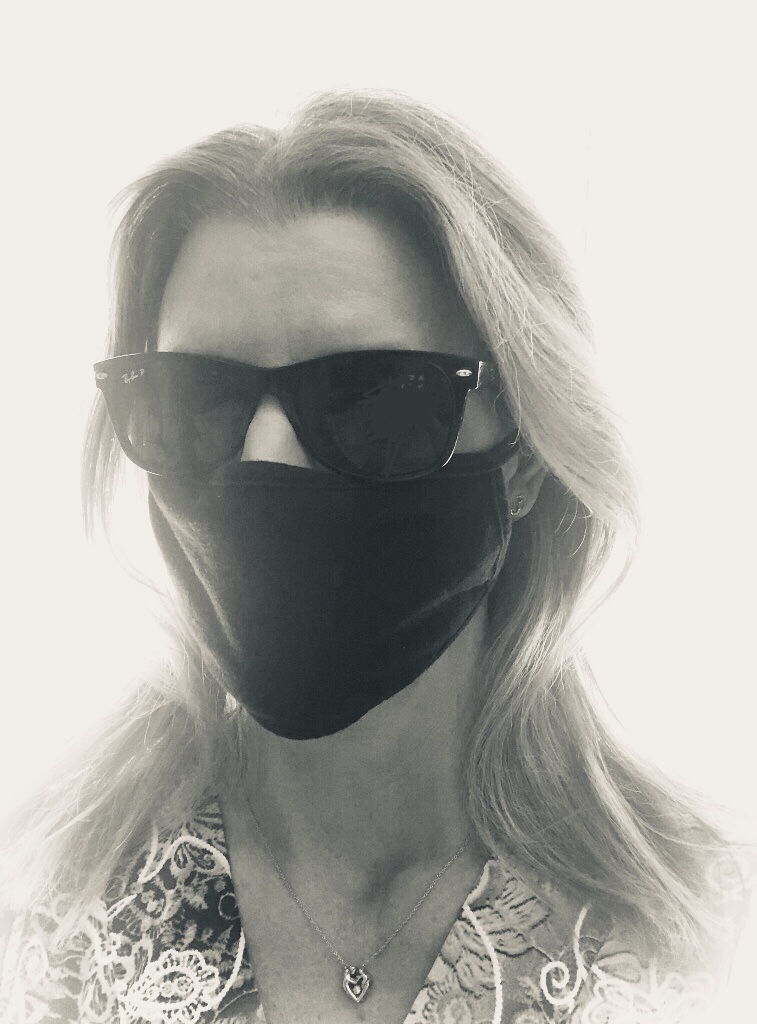
It’s hard to breathe with a mask, if you have to expend much energy, if you have to talk very much… I know, because I wear one when I’m out and about.

In thinking of masks, I come to another layer…

Filters.

There to help protect. To keep harmful stuff out.

Or in. Depending.

Masks may be somewhat stifling.

Filters aren’t stifling at all.

It’s the lack of filters I find stifling, out there in the daily atmosphere, the zeitgeist of our times. Words of fire, of ash, of acid rain, meant to destroy…when their creative power could be harnessed instead to edify, to transform, to transcend. To honor. To heal. The poets know it…

I can only be vigilant with my own filtering. With what I let into my own mind, heart, and soul. With what I let flow in return… recognizing that

Fear stifles creativity
Inner critics stifle courage
Loudness stifles contemplation
Turmoil stifles contentment
Excuses stifle commitment
Regret stifles today—and tomorrow

—I’d like to continue the acrostic with a sort of reversal using each letter of “stifle” and “filters” on every line but I am tired now. Tiredness stifles the brain.

Humanity is stifling. As in, one’s own. Today an education colleague and I joked that we were done with Earth, having had enough of not-knowing, of virtual realities of teaching, of the inability to move forward with life in general and the tolls taken on us all in so many ways. We kidded about going to live on the Space Station. Even now, recalling, I am “slipping the surly bonds of Earth,” as WWII fighter-pilot-poet John Gillespie Magee wrote, to circumnavigate our planet every ninety-two minutes, seeing fifteen sunrises and sunsets in one day, like the astronauts do. To be among the stars…

Which evokes another favorite quote, this one from Muriel Rukeyser:

“The universe is made of stories, not of atoms.”

And so I slip away from the cosmos, down through our protective atmosphere, back to my own country, to my home, my family, my little spot carved out here in the kitchen, to the waiting keyboard, feeling again the heaviness of humanity.

For us all.

For our very atoms, for the stories we live and breathe.

I reach for the words and it’s a little like reaching for the stars. Not those beyond but their remnants within; as scientists say, we humans are made of stardust.

Well then.

Seems we should be about filtering light.

I’ve enjoyed the open community of writers over at Sharing Our Stories: Magic in a Blog. If you write (or want to write) just for the magic of it, consider this your invitation to join.

Blanketgeist

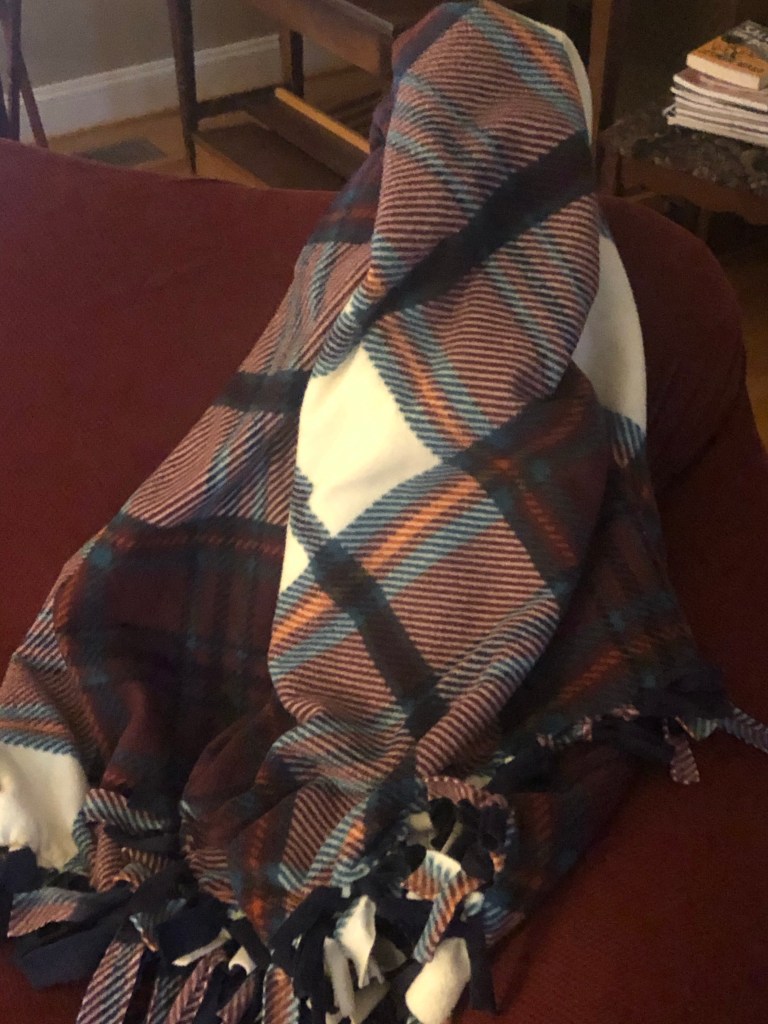
One recent morning, dark and dreary, as I pondered, weak and weary, after binge-watching vintage noir films (as if one needs more psychological drama on top of taking one’s husband for another ER visit due to his sky-high blood pressure and pains in his still-healing heart, rising pandemic numbers and escalating real-life horrors televised nonstop on the news, hurricane-spawned thunderstorms, demon-possessed Internet connectivity, and Election Year), I’d had enough couch-cocooned passivity. I tossed my safe warm blanket aside. I got up, showered, dressed, fixed my hair and makeup even if I wasn’t going to see another person but my husband and son, who’d taken his dad to pick up new prescriptions. I would face the day and whatever it held, head-on.

Having pulled myself together, feeling quite in command for the first time in a while, strolling back through the living room, picking up random bits of fluff from Dennis the dachshund’s destruction of yet another furred squeaky toy (why do we keep buying these), I noted one of my guys sitting on the couch.

Huh. Could’ve sworn they’d already gone to the pharmacy... barely glancing, bent on my fluff-retrieval mission, I said, “Hey, didn’t know you were—”

Whoever it was, sitting there on the couch, wasn’t.

There were no feet on the rug.

No legs, either.

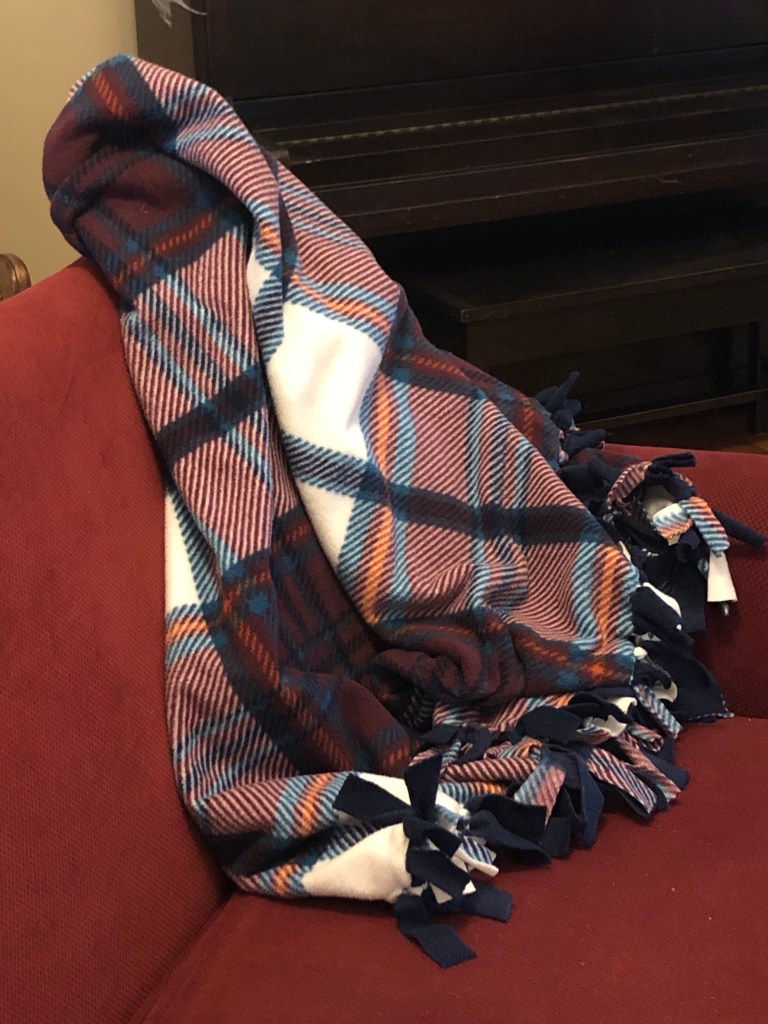
It was the blanket. Sitting on the couch, right where I tossed it.

Now, this is when it either really pays, or really, really, really doesn’t pay to be a reader/writer/film noir binge-watcher.

Because, voilà! A STORY.

And because, Heaven help me, I know too many, truth is stranger than fiction, brains can’t always process what eyes are seeing, I overdosed on ghost stories and tabloids like National Enquirer and Weekly World News as a youngster, watched too many Twilight Zone marathons as an adult, it’s my fault I’m this wired from excessive cups of coffee, that my mind short-circuits with what and why and how, as in: How could the blanket land exactly like that and look so like a person? Albeit a kind of smallish one? Unless… unless it happens to be covering something heretofore invisible… and how long might it have been sitting here without my knowing?

But it’s only the blanket, right?

I check the driveway. Yeah, my guys are gone. No one’s here. Just me and Dennis, who saw me cleaning up his toy-wreckage and promptly took off for the bedroom to hide under the bed.

I eye this blanket. I walk around it.

All those times I told students to think what if? comes back to haunt me… What if the blanket has taken on a life of its own, after I cocooned myself in it for so long? What if my melancholy has taken form, substance, become a Thing, made manifest by the blanket? What if I’m just, like, finally losing it (would that be so terrible)?

—POP—

I almost come entirely out of my hide to leave it lying beside me as yet another separate Thing. I was beside myself …

It’s just the house popping, does it all the time, you’d think I’d be used to it by now (why is it SO LOUD, it sounds deliberate … what if someone is living in the attic? has been living there for ages and I haven’t known? … don’t be ridiculous, the floor up there is incomplete, no one has fallen through the ceiling… yet…).

Well.

The blanket isn’t moving.

It’s just sitting. Rather benignly.

I decide to take a few photos (proof, you know. In case of… whatever).

That’s what I said I was ready to face, right? The day and whatever it held? Head-on?

Be careful what you wish for…

So silly. Absurd. Over it.

Time to reveal what is and isn’t real. I reach for the edge of the blanket and

—is that faint chuckling I hear?