Nature’s divine voice

Nature is the infrastructure of our communities…Nature enriches us economically and culturally and historically, but it also enriches us spiritually. God talks to human beings through many vectors: Through organized religions and the great books of those religions, through the prophets and wise people, and through art and literature and music and poetry, but nowhere with the same detail and texture and grace and joy as through Creation. And when we destroy nature, we impoverish our children. We diminish their capacity—and our own—to sense the Divine, to understand who God is, and to grasp what our own potential is as human beings.” —Robert F. Kennedy, Jr.

Confession

Before I started writing
in earnest
I didn’t know
how much
I love nature

I should have known
by the way
cicada summersong
stirs sacred memories

I should have known
by the certain slant
of light
on fiery autumn trees
there’s hope within
which never leaves

I should have known
from the brilliant beckoning
of silversharp stars
on a clear winter’s night
or by Venus,
glittering bright
over the ocean
as the sun rises
that the soul
must keep reaching
for what it cannot
grasp

I should have known
that once I start seeking
I will find
just as I discover hawks
perched high above me
every single time
I think to look up

I should have known
by the poignant scent
of fallen pines
and freshcut grass
that newness
returns
after the pain

I should have known
how much humans
have lost
by not living close
to the earth
as we were meant to
(as we did, in ages past)
or how this void
is behind
the longing
of every soul
crying out
for belonging
healing
restoration
and peace

I should have known
all things
are interconnected
and sustained

by the voice
speaking through
nature…

Before I started writing
in earnest
I didn’t know
how much
I love nature

but the important thing
is that I know it now

I will always know it, now

for, like finchsong
at my door,
untold glories
surround me

weaving their way
into my writings
so that I recognize
holy rhythms
of life

spoken into being
into my being

—let me listen
oh, let me listen.

One of last year’s baby bluebirds hanging out by its natal home, on my back deck

*******
Composed for Day 13 of the Slice of Life Story Challenge with Two Writing Teachers
A poem of body and song

On the last day of National Poetry Month, Sarah J. Donovan, creator of Ethical ELA, invites teacher-poets to celebrate thirty days of writing for VerseLove. In studying a collection of poems dealing with struggle and celebration about what we are told and believe about ourselves, Sarah says: “I thought a lot about how our bodies hold and shape so much of who we are.” Today we write to own that we are writers and poets, considering figurative body language, other voices that have influenced us, and our own song.

For me, writing calls from sacred places, inherently requiring, as an act of creation, sacred spaces.

As such, writing, poetry in particular, takes on a life of its own. It starts as one thing and becomes another. This may be more than one poem. I am just letting it be.

Polyhymnia at the Core

And there was I as smooth and soft as a peeled switch and smaller than I had been.
—C.S. Lewis, “How the Adventure Ended,” The Voyage of the Dawn Treader
 
The ghost
of my father
and grandfather
are here 
in the shape
of my face
something of them
about my cheekbones
my mouth
a certain turning

My grandmother
is in my bones
those are her arms
in the mirror
fixing my hair

no denying
my mother’s eyes

the Spirit sighs

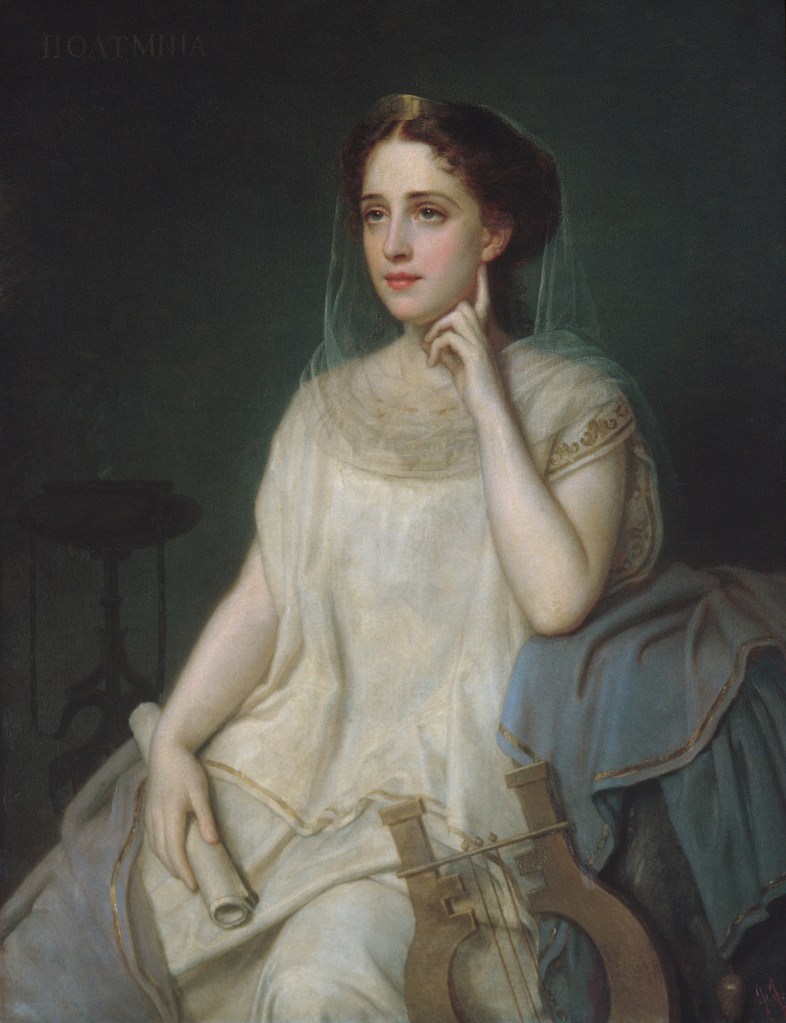
I imagine Polyhymnia
nearby
(if I can choose
my Muse)
in long cloak and veil
finger to her lips
bright eyes glimmering
silken rustlings
as she leans
whispering, 
always whispering

it is with great love
that she raises
the lion’s claw
piercing every knobby layer
of my being
peeling away
until all that remains
at my tender core
is wordless song
singing there
all along

you are alive
alive alive alive
in the listening
in the remembering
in the faces
in the sacred spaces
where you have been brought
to learn
the unforced rhythms
of grace

now find your words
and be

Polyhymnia. Joseph Fagnani, 1869.

Polyhymnia’s name means “many praises.” She is the Muse of sacred poetry, hymns, and meditation.

The lion’s claw in my poem is an allusion to the referenced chapter in The Voyage of the Dawn Treader, where Aslan peels away the enchanted dragon skin from Eustace, restoring him to his true—and transformed—self.

“Learn the unforced rhythms of grace” is from the paraphrase of Matthew 11:28-30 in The Message.

I want to be the kind of writer…

with thanks to SOS-Sharing Our Stories: Magic in a Blog for the inspiration

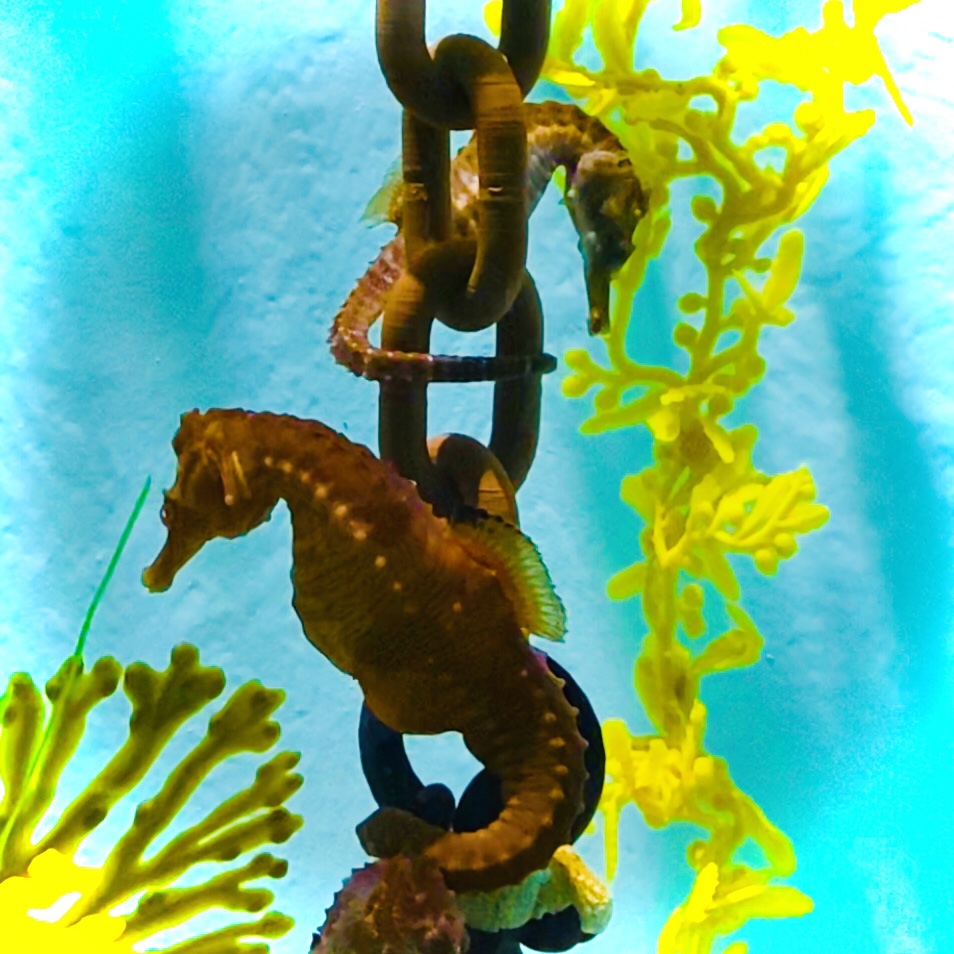
I want to be the kind of writer who seizes every moment, carpe momentum, for the meaning it contains, for the uniqueness it brings, for the virtue of its existence and my existence within it, for these are fleeting: my presence of mind and my presence here. I want to the the kind of writer who lets the tap of memory flow full force, who drinks long, deep drafts in thirsty gratitude for every image that lives in the sea of my brain, inside the little seahorse itself. Precious hippocampus, my writer-symbol. I want to be the kind of writer who feeds it, keeps it strong, leaves floodgates open for all that rides the currents of memory, all that rises to the surface, all that washes up like flotsam and jetsam from long ago, even if but random bits of objects or recalled treasure like moments with those I loved and who loved me, still very much alive and real in the iridescent foam bubbling at the edges. I want to be the kind of writer who doesn’t attempt to pin a fragile new idea to the page but who stops to acknowledge it when it appears, makes note of it, gives it room to breathe, to unfurl its wings, for the thing has something to reveal. Yes, I will write to it, write around it, capture it; but softly, without force. Ideas are living things. They are to be nurtured and examined, not hammered and dissected (even in the name of research). I want to be the kind of writer who honors the organic and spiritual nature of the craft and the transcendent power of story in the human heart. It is a matter of mattering. I want to be the kind of writer who spins crystals of my memory, thought, sensation, perception, emotion, and imagination into stories of substance that matter to readers, that maybe add layers of meaning to their moments, too…the way that writers have done, still do, for me. I hear the echo of their words daily as I go about the moments of my living; the writers, the writing, the words, ever-present, tickling the hippocampus, anchoring in my soul, forever bubbling, forming and reforming, spawning yet more ideas. I want to be the kind of writer always reaching for what’s beyond my grasp, always discovering, always inviting awe, always listening, always and infinitely grateful to have been alive.

Carpe momentum.

I am working on it.

The seahorse is a favorite writer-symbol for me, sharing the same name with the part of the brain regulating memory and emotion: hippocampus. Photo: E. Johnson