Dear Goat In The Pasture At The End Of The Street Where I Make a Right Turn On My Way to Work Each Morning:
I just want to say thank you for lifting my spirits on weekday mornings as I drive by your pasture. You cannot know that I look for you and your herdmates, or how the sight of you fills me with inexplicable peace. Perhaps it’s the idyllic setting, the pastoral scene with its inherent restfulness. Maybe it’s the continuity. Your pasture remains as it always has, while all around us fields are being bulldozed and sculpted for the coming of houses. The trees farther down this road are being timbered this very moment… I wonder: Had birds already nested in them? Were there any little eggs that are now lost? It’s possible; this is March. Isn’t tampering with birds’s nests and eggs a crime? I digress. I cannot help it, watching the trees come down even though I know the new houses to be erected will be homes where people will build their lives and live their stories, where children will grow up… meanwhile, on the other side of the world, a man is busily destroying people’s homes, sending them fleeing from danger like animals trying to outrun a raging forest fire, in search of a different place to survive…
Yesterday as I came through here I heard a bird calling and wondered if its tree is gone. Will the big, beautiful,snowy-feathered hawks soon be gone, too? I haven’t seen one for weeks now. I keep watching. And in all the years I’ve lived here, I’ve never seen skunks until last week when I saw two dead in the road and my son saw a third. We didn’t smell them, thankfully. Makes me wonder about them never seeing the end coming…
I don’t know why I should be telling you all of this, dear Brown Goat in your green pasture so often dappled with new morning light when I drive by. All I really meant to say is thank you. I see you grazing in the grass and a tiny bit of balance returns to the universe. Your placid nature spills into mine. You somehow impart the right and needed mood for the day…
I am grateful for you.
Sincerely,
An Admirer
P.S. I would deliver this letter to you in person but I suspect you would only eat it… I’ve had to eat my words before and it’s not a particularly pleasant experience… trust me.
*******
with thanks to Two Writing Teachers for the Slice of Life Story Challenge every day in the month of March.
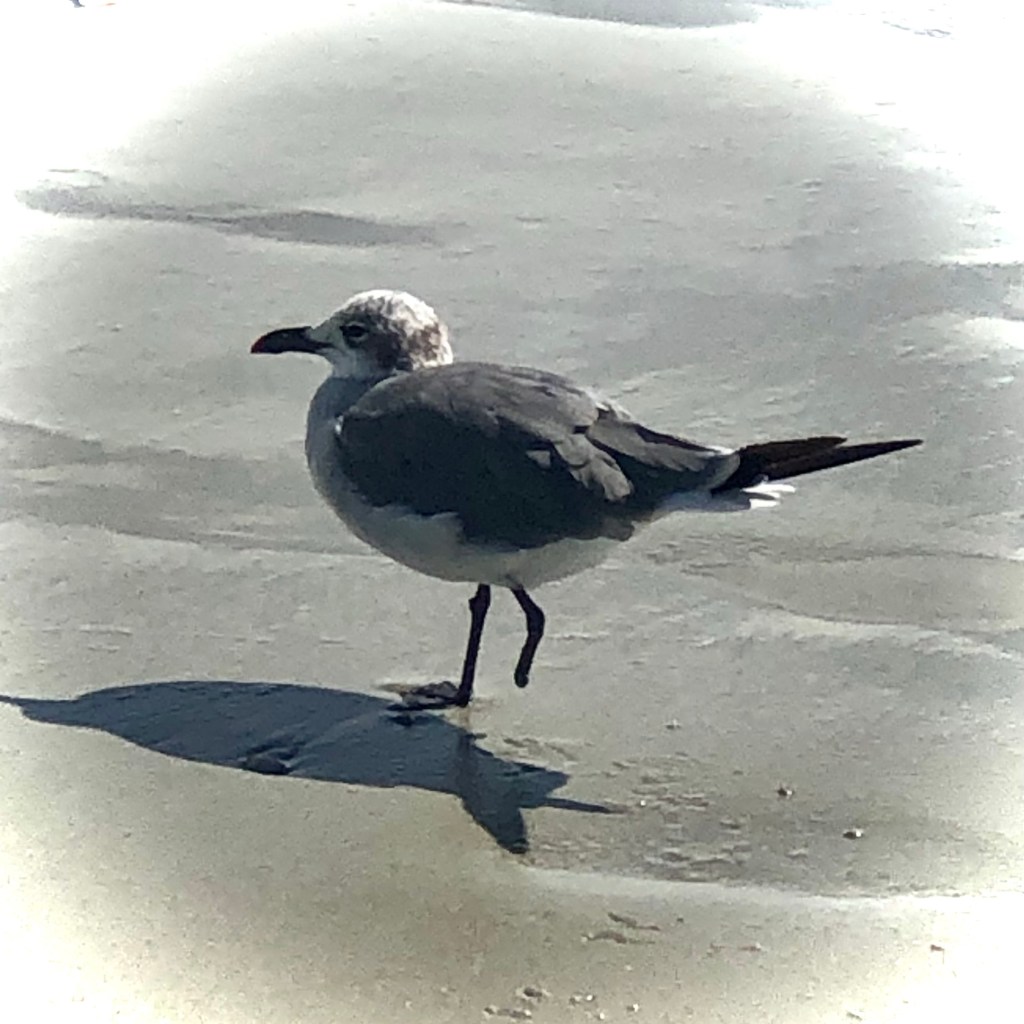
Little seabird with only one foot Standing perfectly balanced at the shore You’re so calm, so still Despite wind-ruffled feathers
Standing perfectly balanced at the shore You’re a picture of grace Despite wind-ruffled feathers For you aren’t alone
You’re a picture of grace Safeguarded, transcending For you aren’t alone Flanked by faithful friends keeping watch
Safeguarded, transcending You’re so calm, so still Flanked by faithful friends keeping watch Little seabird, with only one foot.
As best I can determine, this is a laughing gull, already wearing winter plumage. I thought it was merely standing on one leg before realizing the other foot was gone. I have since learned that such sightings are common: many gulls lose feet and legs when they become entangled in fishing nets while hunting for food. What you cannot see in this close-up are two fellow gulls standing nearby, looking in different directions like bodyguards. I was struck by the poignant poise of this little shorebird and the proximity of the others. Gulls are symbols of adaptability, resourcefulness, community, survival, and strength. Maybe even uncommon grace.
*******
with thanks to Two Writing Teachers for the Tuesday Slice of Life Story Challenge
with thanks to Susan Ahlbrand who invited writing around an old snapshot today for #verselove at Ethical ELA.
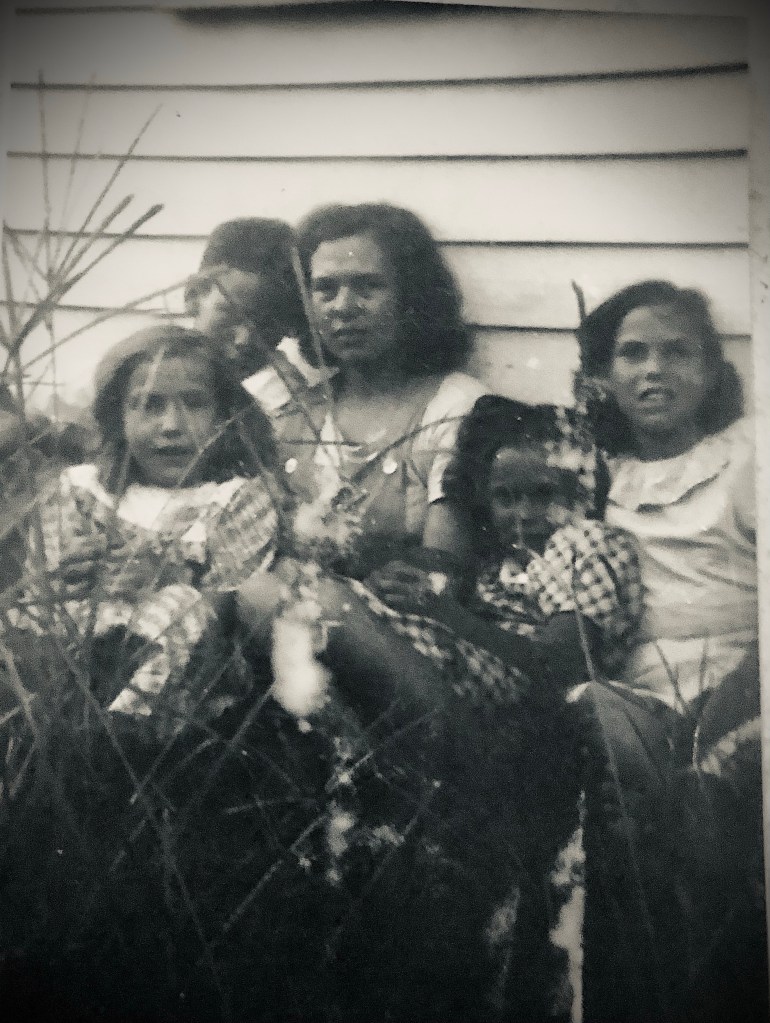
A tribute to my grandmother, who had six children by age twenty-two, during the Depression. She outlived four of them. One baby boy died a few years before this photo was taken.
For those of you who read my poem for Earnie (my aunt Earline): she’s second from right, the child snuggled closest to her mother.
A pantoum for Day Twenty-Four of National Poetry Month
In the tall, tall grass a mother’s determined love covers a multitude of sins revealed in time
A mother’s determined love surviving day by day revealed in time burns at the roots of deprivation
Surviving day by day her feisty, firebright glow burns at the roots of deprivation before the brokenness shows
Her feisty, firebright glow covers a multitude of sins before the brokenness shows in the tall, tall grass
Next-to-the last day of March. Early morning. Still dark. Chilly.
I sit at my laptop, sipping coffee, catching up on my Slice of Life blog comments. The neighborhood rooster across the street crows for all he’s worth.
My husband comes into the kitchen: “Is she up yet?” he whispers.
He means our granddaughter. She spent the night. We stayed up way late watching Frozen II (again). We watched her dancing to the ending credits soundtrack, performing her own astoundingly artistic interpretation, cheeks pink, blue eyes glowing…followed by punchy laughter before the crashing.
“Not yet,” I whisper back. He retreats to his study to work on sermons.
Shortly, though, she here she comes, a gift of the dawn, Aurora’s child, barefoot in a blue flannel gown, cloaked in long, disheveled hair, ethereal smile of joy illuminating the semi-dark kitchen. Favorite lines of a Billy Collins poem come to life:
But tomorrow dawn will come the way I picture her,
barefoot and disheveled, standing outside my window in one of the fragile cotton dresses of the poor. She will look in at me with her thin arms extended, offering a handful of birdsong and a small cup of light.
My radiant dawn-child climbs into my lap. I let her read my post about Dennis the dachshund and his toy moose. At five, she reads with exactly the right inflection in exactly the right places, decoding beyootiful without batting an eye.
“That rascally Dennis!” She laughs aloud.
My husband returns, his own face alight at sight of her. “There she is!” he exclaims. “I’ve been waiting for you, Sugar Magnolia.”
He sings the opening line of the Grateful Dead song:
Sugar Magnolia blossom’s blooming…
Just so happens that our granddaughter’s middle name is Magnolia. A nod to her Louisiana heritage. A native tree here in North Carolina, too.
I think how, less than two years ago, my husband wasdead, until EMS and CPR brought him back. I think of all he’d have missed…
What matters is that we’re here together now, today, in this moment. The Grateful Alive.
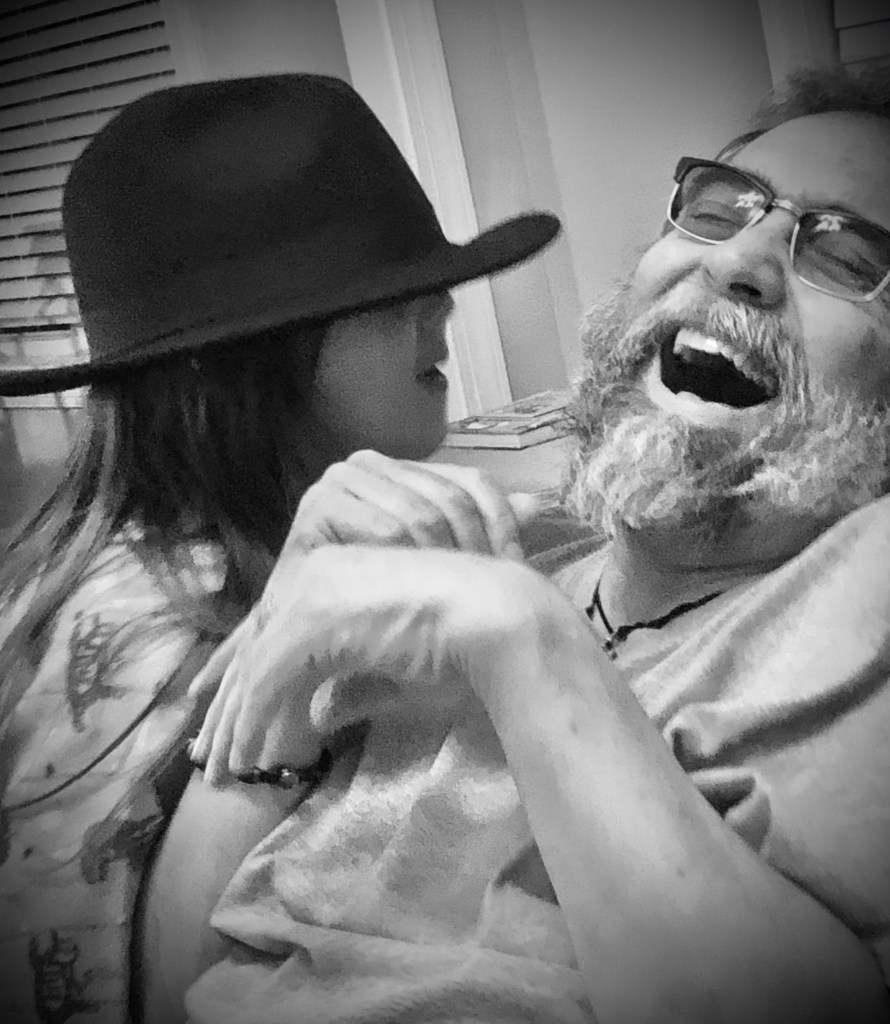
Sugar Magnolia, in one of Grandpa’s hats
When we are dressed for the day, she asks: “Can I pick out your earrings? And your necklace?”
“Certainly.”
She picks the magnolia. She and my son gave it to me for my birthday last year.
She hands me the necklace, watches me clasp it, smiles with satisfaction.
She will look in at me with her thin arms extended, offering a handful of birdsong and a small cup of light…
Just beyond the bedroom door, from the windows in the foyer, birdsong.
The finches.
I waited for them all of March, in vain. Then, here at the very end, within the space of these last twenty-four hours, a nearly-complete nest rests on my front door wreath. More on this tomorrow, when I write with the Spiritual Journey gathering on the first Thursday in April…for now all that needs to be said is that the finches always come to my door, every year except this last one. They vanished without warning, without a trace, during COVID-19. Now they’re back, making their home in the wreath.
The magnolia wreath.
Front door wreath and nest-in-progress
Magnolias, magnolias, everywhere…
They are tougher than they look. The oldest flowering plants on Earth. A symbol of love, longevity, perseverance, endurance.
It’s that word that captures me: Endurance.
It is the end of March.
We’ve endured the COVID pandemic for a whole year.
We’ve endured the reinvention of life as we knew it, school as we knew it, teaching as we knew it.
My family has endured distance, isolation, individual private battles…and we all get our second round of vaccinations over these next two days.
My husband has endured. He is alive.
My granddaughter has endured. She is the light of our days.
The finches have endured. They have returned to resume nesting.
This is my last post for the Slice of Life Story Challenge; for thirty-one consecutive days, I’ve endured. My writing has endured.
I wrote a lot of memoir in the Challenge, for memories endure. I wrote of a walled garden and roots and the need to get out of the comfort zone; I did that with some of my writing. I think now of my magnolia metaphor and look back at its deep roots in my childhood. Southern heritage. My grandmothers, steel magnolias (although they wouldn’t have thought it of themselves). Women who endured wars, deprivation, unspeakable losses. The stand over the landscape of my life like the old magnolia trees near their homes, their churches. They were the encompassing, protective shadows against the burning sun and sweltering heat, the solid coolness of the earth under my feet, where lie the curious, fuzzy seedpods of my existence, my remembering, my gratitude, my faith. From these branches waft the eternal fragrance of sacrificial love and forgiveness; nothing on God’s Earth smells as sweet.
One final curious image—it persists, so I have to figure out if and how it will fit here: When I was very small, I spent a lot of time with Grandma, Daddy’s mother. She and Granddaddy lived nearby in city apartments until he retired and they moved back home to the country when I was six. In this scene, I am around four, I think:
I am waiting in the hall for Grandma. She’s turning the lights out; we are getting ready to go. She calls my name from another room. I call back: “I am here.” My voice keeps bouncing, off the walls, off the stairs going down, down, down, into the darkness; we have to go through it before we can get to the door and the sidewalks and the sunlight outside.
“Grandma!” I cry. More bouncing voice, hollow, strange.
She’s there in an instant. “What’s the matter?”
“What is that sound?”
“Oh, honey, that’s just your echo.”
She calls out, “Hello”…her voice bounces, just like mine.
“Echoooo…” I call. Echooo-ooo-ooo, says the shadow of my voice, rolling down the stairwell.
And I am no longer scared, because now I know.
What does this have to do with magnolias?
Only that we are on our way to the park, where she would offer me bread to feed the ducks, which would come to eat from my hands, from my little extended arms…and where the magnolias still grow in abundance. The memory is a cup of light I carry with me, just as the echo of her voice remains, just as I find myself echoing her, for we are always echoes of the ones we love most. As blood circulates in our veins, so do remembered light and beloved voices, long past shadows and silence. These are things that endure.
Grandma’s homeplace was named for the dawn, by the way. She’s literally Aurora’s child.
But tomorrow dawn will come the way I picture her…
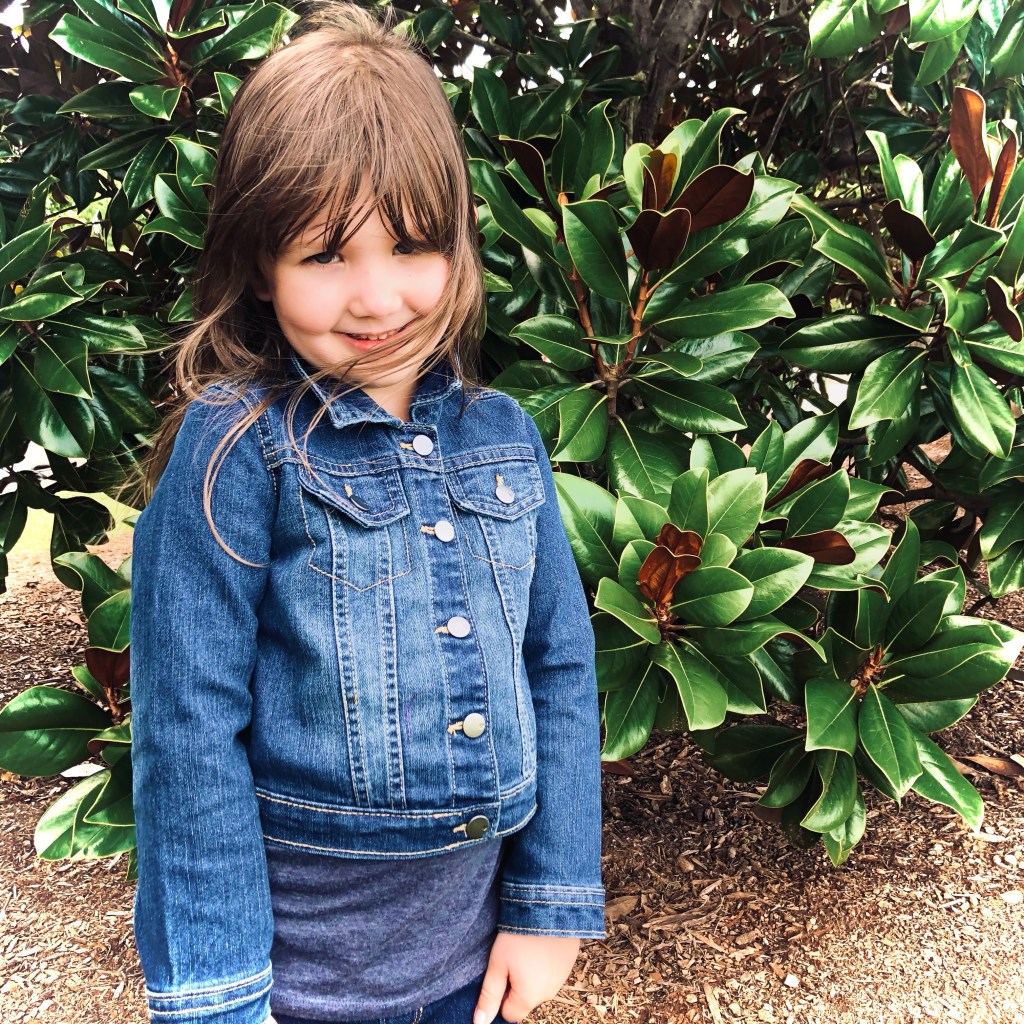
“Stand right there, honey. Let me get your picture by that tree,” I tell my granddaughter, on our first trip to the park.
It’s a different park. A different tree.
But still, and always, a magnolia.
Our Sugar Magnolia, by “her” tree.
*******
With abiding gratitude to the community at Two Writing Teachers during the annual Slice of Life Story Challenge, which concludes today. It was a joy to write alongside you every day in the month of March. Thank you for every cup of light you offered; I will savor the echo of your voicesfor many days to come.
While National Mental Health Awareness Month (May) is still weeks away, the COVID-19 pandemic has called greater attention to the need for support. Youth.gov explains the purpose of the national focus: “Mental Health Month raises awareness of trauma and the impact it can have on the physical, emotional, and mental well-being of children, families, and communities.”
I note that children are mentioned first. They are at the mercy of the grown-ups, and when the grown-ups in their lives are suffering, children suffer. They often don’t understand or have a framework for understanding, not for years to come, or maybe ever. To a child, your norm is your norm. You have little to no power of your own. Think of how long the Turpin children suffered, before one managed to escape and get help.
Last month, in the neighborhood of the school where I work, a little girl was found dead with her mother in an apparent murder-suicide. I didn’t know this child; she wasn’t one of our students. But I have mourned her, mourned for whatever she suffered in her short life, mourned that a mother, unable to cope with whatever lies in her untold story, would resort to taking the life of an estranged partner and then her child.
People speak of unbreakable bonds, of the ties that bind. Sometimes those threads are very, very fragile.
Some of the threads running through the background are beautiful and bright, even as the family portrait bleeds away from the canvas.
Sometimes destruction doesn’t come all at once, but by a long, slow unraveling.
Threads
This morning I trimmed the threads off of my patchwork writing journal.
As I balled them up to throw them away
I realized the tangle of color in my hand.
They spoke to me: Remember?
Oh yes, I used to see you all over the floor when I was a child.
Rolling lazily across the hardwoods when we walked by
or nestled in the frayed carpet of the living room.
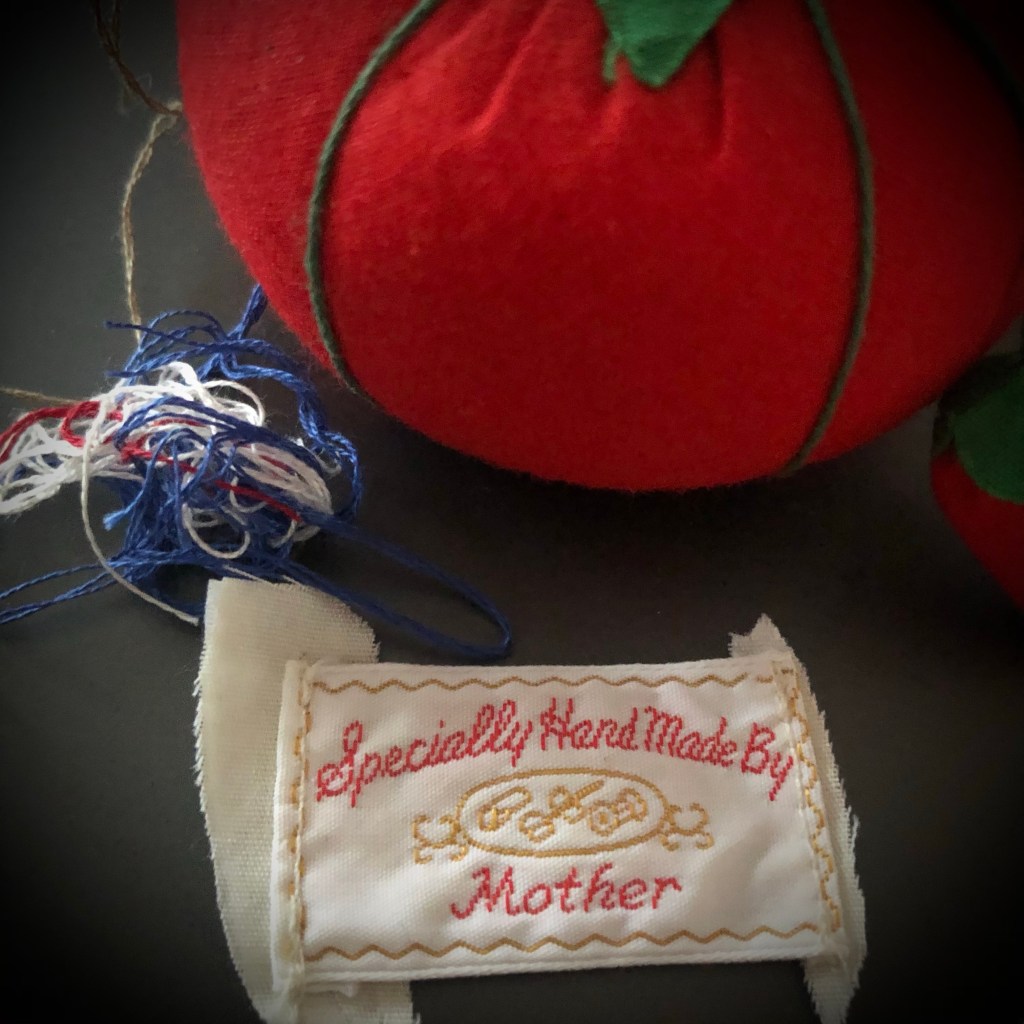
Fragments of my mother’s handiwork
vestiges of the artist she was
crafter of clothes we wore
tailor for many more.
Who’d have believed that such a creator
could destroy so completely?
A family of threads, each one its own vibrant color
in seams ripped apart
scattered far and wide
drifting on
and on
and on.
*******
The annual Slice of Life Story Challenge with Two Writing Teachers is underway, meaning that I am posting every day in the month of March. This marks my fifth consecutive year and I’m experimenting with an abecedarian approach: On Day 20, I am writing around a word beginning with letter t.
The poem has been sitting as a draft for exactly two years today while I pondered publishing. I wrote the original draft as a participant in professional development for literacy coaches, of all things. I can’t remember the prompt now, only that we were to share our poems with a colleague.
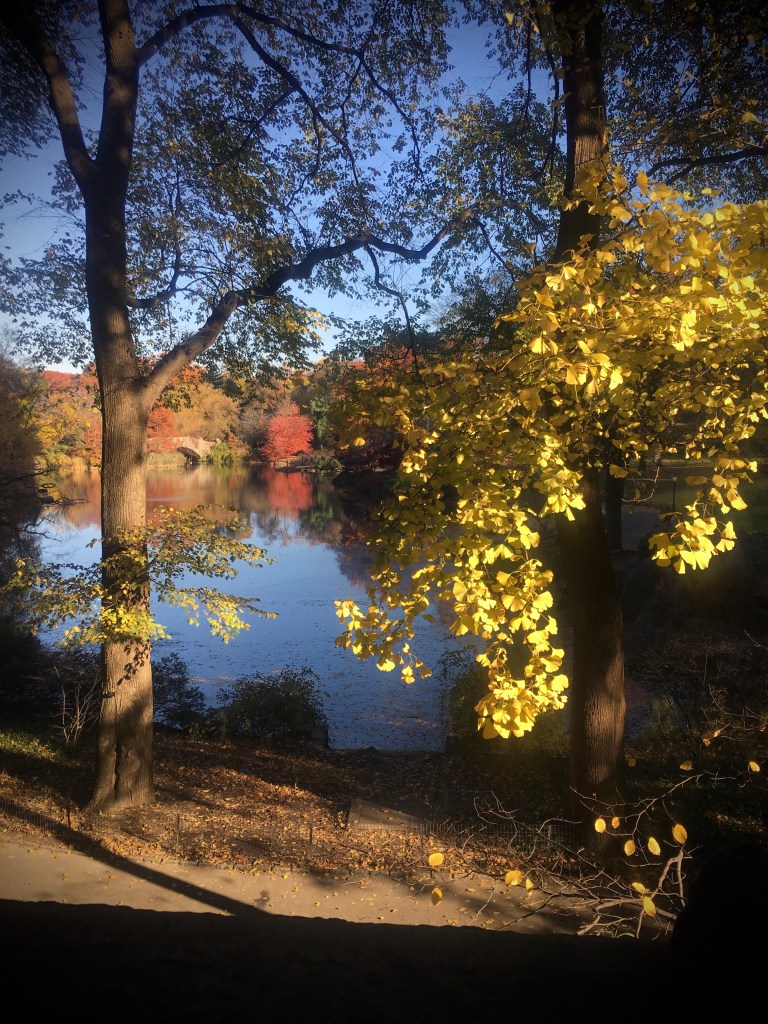
Autumn. Hallowed season, full of color and oblique light, slanted and golden. Echoes from distant places wafting in chilly air, laced with spice and earthy riches, tasting like promise. Leaves falling like pages of a book turning, ending another chapter, moving to the next…
A time for contemplating life.
And trees.
And what they have to say, about being alive.
I am drawn by research on ways that trees communicate with one another. Their intricate root system (scientists call it the “wood-wide web”), their pheromones, their electrical pulses… so much more is going on than what we humans can see or hear. Trees can warn each other of danger; they can nourish and heal each other.
I stumbled across a book I am going to need, The Hidden Life of Trees: What They Feel, How They Communicate—Discoveries From a Secret World, by forester Peter Wohlleben. Journalist Richard Grant writes of Wohlleben’s observations on the topic in “Do Trees Talk to Each Other?” (Smithsonian Magazine, March 2018):
Wise old mother trees feed their saplings with liquid sugar and warn the neighbors when danger approaches. Reckless youngsters take foolhardy risks with leaf-shedding, light-chasing and excessive drinking, and usually pay with their lives. Crown princes wait for the old monarchs to fall, so they can take their place in the full glory of sunlight. It’s all happening in the ultra-slow motion that is tree time, so that what we see is a freeze-frame of the action.
Wohlleben also discovered chlorophyll in a huge beech stump from a tree felled four to five centuries ago—meaning it is still alive. Grant writes: There was only one explanation. The surrounding beeches were keeping it alive, by pumping sugar to it through the network. “When beeches do this, they remind me of elephants,” he [Wohlleben] says. “They are reluctant to abandon their dead, especially when it’s a big, old, revered matriarch.”
I contemplate these words, considering the trees undergoing their autumnal change. Communicating with each other, communal to the end…
For some reason, lines of the old hymn, “Abide with Me,” come to mind: The darkness deepens…change and decay in all around I see…
What might the trees say?
Let us reserve our resources pool our energy by the still waters. By this reservoir we drink our fill after the darkness we shall be here, still.
They shed their fragile, light-capturing organs because it would require too much energy, would be too costly, to try to keep one’s leaves alive in winter’s dark, icy blasts. They cannot live if they don’t let go.
Shed your shoulds like leaves in woods Trees shorn of fragility preserve their ability to survive.
Hear should rustling: ‘Don’t forget’ like leaves curling with regret Spiraling, sigh by sigh piling inside, dead and dry cluttering today.
Beware should’s false measure robbing Now of its pleasure Shed those shoulds like autumn woods composting for tomorrow.
For me, in the autumn of my own existence, everything is bathed in oblique light, slanted and golden…I walk my wooded path, here and there scattering extensions of myself, posts and poems and words, stopping to gathering those of others, a communal communication that never ceases to amaze and which has everything to do with survival. Perhaps writing stems from a deep-seated need to renew, to live life anew, to make something new and beautiful from the jumbled pattern of our days, while they last.
In the great scheme of things, it’s a collective glory-story.
Can’t you hear each leaf whispering, as it falls:
Abide.
*******
with thanks to the nourishing, beauty-scattering Poetry Friday community and to Robyn Hood Black for hosting today’s Roundup.
The others will have their turn, soon. For now they wait in the wings and on the screens…
In a month when masks are normally worn for celebrating, they came masked for protection—of others.
Several of us stood as sentinels in the misty gray morning, waiting, also masked. Gloved, thermometers ready, when the first bus rolled up and its door opened to release three children.
Another bus carried only one.
But when the first child passed inspection and entered the building, the gathered staff cheered. Applauded. Like welcoming a hero home.
They are heroes.
These kindergarteners, these first, second, third graders in their colorful masks, quietly navigating the building, sitting socially-distanced (alone) at lunch… I suspect these images are etched deep in my brain for the remainder of my days.
I saw this verse on a StoryPeople print by Brian Andreas (1993):
When I die, she said, I’m coming back as a tree with deep roots & I’ll wave my leaves at the children every morning on their way to school & whisper tree songs at night in their dreams. Trees with deep roots know about the things that children need.
I think about how trees
help us breathe
cleanse the air
provide refuge
absorb storms
soften hard edifices
beautify
welcome
are calming
are cooling
change with the seasons, yet remain constant
color the world
Tree leaves do whisper. Trees talk to each other (they do). They live in groups and look out for one another.
They carry the stories they live within them. You can read them, in their rings.
I cannot decide which is best, to be the tree with deep roots, waving my leaves at the children on the way to school, singing in their dreams…or to be the child, asleep, hearing the tree-song…
I stand, a sentinel in the gray silence of the empty bus loop, masked, gloved, thermometer in hand, watching bits of red and yellow and fiery orange swirling through the air as if stirred by an unseen hand… tree confetti, celebrating life, letting go in order to hold on through the coming winter, who knows how dark or cold, and I’m seized by the sudden desire to run into those dancing colors…
—I am bits of both.
*******
Thanks to Two Writing Teachers for the invitation to share on Slice of Life Tuesdays and for also knowing about the things that children need. They, too, carry their stories within them…
Woke in the wee hours to total darkness, power loss, Hurricane Isaias smacking the house, tearing at the roof. Isaias is purely physical. He has no voice, unlike the ghost-wind that moaned and mourned for weeks under our eaves with the advent of spring and COVID-19.
Yet somewhere in the darkness, despite the raging gusts, little frogs kept up a cheery chorus.
Not much to do but stay in bed and wait it out.
And fall back asleep. And dream…
I am driving a car that belongs to my father, I think. Except that it doesn’t look like any car he ever owned. Nice little SUV, dark gray. I am coming home from visiting my grandparents in the country. I reach the quaint part of the city where they lived when I was little, before my grandfather retired. I’ve always loved this place… but I realize just now that I can’t turn the car. The steering wheel is gone. How have I managed to come so far without it? The car begins to spin and slide; I’ve lost control of it, I fear it’s going to be hit, but somehow I get it to a safe parking spot by a curb. I will have to backtrack and find that missing steering wheel—how could I have lost it? How is that even possible?
I go (on foot? in the same steerless car?) all the way back to my grandparents’ home. They’re out in the yard, very busy loading and unloading big objects (equipment? furniture?)on some kind of truck. Grandma’s face is serious. She doesn’t have time to talk to me [should have been a major clue that I was dreaming, as this never happened in reality]. When I tell her why I’m back she just says the steering wheel is over there (she points) in the road. Seems I lost it on the very start of my journey home…
I go to reclaim the steering wheel only discover two things: This is a rather large steering mechanism but the actual wheel isn’t there… and the little old road is freshly-tarred and paved. It’s never been paved. It’s supposed to be gravel. Sure, it looks nice, stretching out smooth and black, but why would anyone pave these tiny, meandering back roads where so few people live? This is a lot of work and expense that isn’t really ‘better’, I say to myself. With mounting sadness, I run a short dash on this new pavement to see that my grandmother’s home place—a small, white house with a porch and a tin roof, where Grandma and her seven siblings were born over a hundred years ago—is gone. An expanse of green grass is all there is to see…
And then I wake.
Loving symbolism as I do, I know the dream connects to having little or no control in life. We’re living through a pandemic. A hurricane rages. I work in a school and the return next week will be drastically different. Life plows on despite the loss of the familiar. Nothing looks or feels or works quite like it used to. We travel a strange road interspersed with shadows of the real and surreal. The world, and our existence, have been altered in myriad ways. But… to be without power is not the same as being powerless…
As I write, Isaias has moved on. There is no damage here, no trace of him whatsoever now. I could revel in this glorious day, the azure sky with occasional cottony clouds drifting by, the unidentifiable bird with long wings soaring high, cicadas resuming their buzzing in the still-standing trees from which they were not shaken…that sound being one that connects me more than anything to safety and my grandparents’ home in the eastern North Carolina countryside. I could employ here my one word for the year, reclamation… reclaiming the day, reclaiming life, even my strange dream-attempt at reclaiming that lost steering wheel in a vehicle that wasn’t mine…
But the power came back on and the TV is full of destruction in the northeastern regions of my state. Homes destroyed by tornadoes spawned by Isaias. People dead and missing (some were children, who’ve since been accounted for).
And I think instead that the road to reclamation is so hard, so strange, so littered with precious, scattered fragments of life, obstructed by such mountains to move. We can control so little.
When we find we are unable to steer, perhaps that is when we are being driven most toward one another. Reclamation, then, lies in our responsiveness. In our willingness.
So does, perhaps, our redemption.
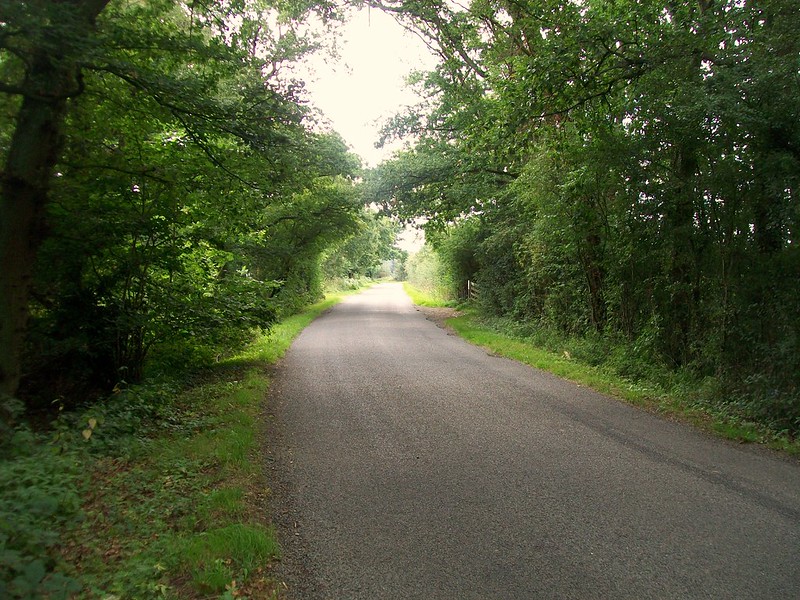
Photo: The road back to Stevenage. Peter O’Connor. CCBY-SA
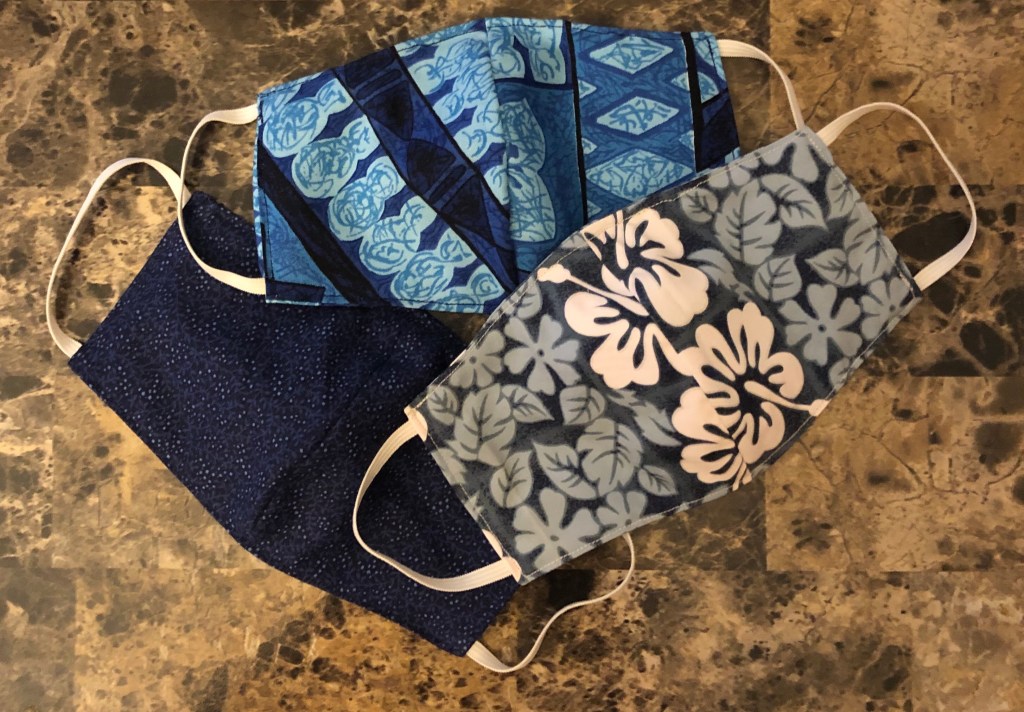
A friend wanted to know if my family would like some face masks.
She is making them.
She sent us pictures of the fabric—she has bolts of it—for us to choose the prints.
Yesterday she and her husband pulled up in our driveway to drop off the masks. My husband and I went out to meet our friends, offering our thanks only in words, no hand-grasps or hugs … a time to embrace, and a time to refrain from embracing … a few weeks back, we were all sitting around the dining room table here in the house, laughing and telling stories after a lasagna dinner. It seems long ago.
When will we be able to do so comfortably, again?
When I look at these masks, I see all that they represent. Shields in time of trouble. A friend channeling inertia into something productive, a practical means of battling an unseen enemy. Self-care spreading out like a blanket to cover others. Homemade love. Colorful patterns against the dark backdrop of our days.
These masks are artifacts of our times. Symbols of our story as we live it. And nothing connects humanity as much as story.
As I walked out to the driveway to receive these gifts, my grandmother’s voice echoed from across the years:
You won’t believe it, but where these woods are now used to be houses and farms, up and down this little road … when the Spanish flu came, it hit all but a couple of them … twelve people died in one week … Mama made pots of soup and Papa would carry it to their doors. He wouldn’t go in, of course …
Grandma wouldn’t have had living memory of this. When the influenza pandemic began in January 1918, she was only two. But she knew the stories. If my own memory serves me correctly, as I walked the tiny country cemeteries surrounding her homeplace, listening to her narratives of the people resting there—for she knew all their stories, and how they were connected— there was an unexpected commonality.
A death year. 1917.
That was before the Spanish flu.
Grandma nodded. There was a sickness before: They called it hemorrhagic fever. People would bruise and bleed from their noses and ears and eyes … a lot of people who tried to take care of the sick caught it and died, too …
She was hardly more than a baby then, a girl born and raised in a hard place in hard times, but here she stood, by the weather-worn stones under a cloudless blue sky, telling the stories seven decades later.
Because of story, these events are lodged in my memory a hundred years after they happened.
My father was Grandma’s first child, born during the Great Depression. Flour companies made their sacks with patterns and bright colors so people could make clothes out of them … look at my handmade face masks and tell me they aren’t reminiscent. A second child, my aunt, arrived with the war. Granddaddy moved the family from North Carolina to Virginia; he found work in the shipyard, where production increased to the point of cranking out ships in less than a third of the time it normally took. How can one not compare that to the scramble for mass production of ventilators today …
Grandma said: It was so hot that summer. I was miserable, being pregnant. I’d sit by the upstairs window and watch the iceman delivering blocks of ice to grocers … companies stopped making refrigerators … everything went into the war effort. I just cried. I’d have given anything for some of that ice … then we had ration cards and could only get certain things at certain times … once my sister Jack and her husband pooled their gas ration cards with ours and we all went on a trip to Massachusetts … it was so beautiful and so cool there …
I look at these masks and that is what I see.
The story of overcoming. Of determination. Of resourcefulness in time of scarcity. Of finding a means to be a good neighbor, a good friend, a real and present help in time of need, even if from a safe distance. Sharing so that everyone has enough. Acts of service, gifts of love. Sacrifice.





 lit bits and pieces