Compassion: a spiritual journey

My friend Kim Johnson chose the Spiritual Journey Thursday theme for October.

Kim is in the process of grieving her father. As she puts it: “I’m in the anger stage of grief, and along with everything else going on the world, I’m feeling the word COMPASSION calling to me as this month’s topic. I need to have more of it as I work my way toward acceptance.”

Compassion literally means to suffer together. The distress of another person sparks within us an intense desire to alleviate it. It is one of the purest facets of our humanity. Not mere emotion. Compassion is complex: I see your suffering. I am wiling to enter it, to help you.

There’s also a thing called compassion fatigue. It comes from prolonged exposure to traumatic events or being overwhelmed by the suffering of others, ultimately leading to physical, mental, and spiritual depletion. Our wellspring of compassion dries up. We find ourselves numb, in a desert devoid of hope, crushed beneath a boulder of distrust, breathing an atmosphere deprived of positivity. What is the point of it all, anymore?

The point is that we all need help. We want to get rid of the pain and anxiety eating us alive. We would heal ourselves, were it in our own power—even as our souls rage and wage war. Our fiery reaction, our fierce retaliation, is a temporary outlet that cannot bring true satisfaction, because it can never bring the peace we crave. How can we find peace when we are so unable to live peaceably? The fight is a wounded animal’s, a defense mechanism when existence is threatened. For…being alive… the innermost part of us is crying out against the knowledge that we will die.

I will speak now of the snake.

A week ago my granddaughter, almost four years old, asked: “Franna, do you like snakes?” She is asking all sorts of intriguing questions: Why is this your house? Why are you my Dad’s mother? She is forming her understanding of the world and affirming her place in it.

I answered as honestly I could. I do not want her to be afraid, like I was, for most of my life: “Do I like snakes? Not especially. But they can be helpful.”

Someday I will tell her how my Granddaddy taught me never to kill black snakes because they eat rats and mice. I may never tell her how he hacked copperheads to death with his hoe, or that when he became too elderly to manage the hoe, he shot them with his shotgun. It wasn’t that he didn’t like snakes. He was protecting his grandchildren and great-grandchildren from potential harm. Out of his love for us.

Note here how the spiritual journey employs foreshadowing. A thing is encountered; give it time. It is soon to reappear with greater significance. A portent.

The week after the snake question, I was at school, walking students down the sidewalk at dismissal, when I saw it, there on the cement by the edge of the grass: A little gray snake. Dead. Its body twisted, white belly frozen in an upward arch.

My first thought: It died painfully, in the act of writhing.

Second thought: Why aren’t the kids flipping out?

Not a one of them noticed the snake lying there.

Not that day, nor the next, or the next.

But I saw it, and it flooded me with…compassion.

For a snake, a creature I recently confessed to not especially liking.

It was alone. Abandoned. Not seen.

It was little. Not venomous (an earth snake). Not harmful.

And it was dead, with no one to acknowledge its existence or to mourn its passing.

I actually mourned it. I am sorry that it suffered, spiraling on itself in great pain as it died.

I am sorry we all have to suffer and die.

Every time I passed the snake the words mortal coil came to mind. Hamlet: When we have shuffled off this mortal coil…

I suppose that is the whole of the spiritual journey, is it not? Shuffling off this mortal coil. Someday shedding this battered body, being freed of the suffering.

Freedom from suffering is the very meaning behind the caduceus, symbol of the medical field. Snakes coiled around a staff. Odd. It just so happens if you research “symbols of compassion,” the caduecus appears. We do not think of it as representing compassion, but healing.

It is also linked to peace.

Many myths are behind the symbol, notably one in which the Greek messenger god, Hermes (Mercury in Roman mythology) saw two snakes fighting and cast his wand between them. The snakes gave up the battle and entertwined themselves peacefully around the wand.

In the Bible, God tells Moses to cast a bronze serpent and place it on a wooden pole as a cure for poisonous snakebite, a direct consequence of the people’s continued rebellion. God, out of his great compassion, provided a cure: Anyone bitten by a snake was healed of its venom by looking at the serpent on the staff, “high and lifted up.”

Herein lies THE point. Is there an antidote to the suffering we experience from the beginning of our existence, all the physical pain, mental anguish, and the thing we fear most—loss? Is it fighting venom with venom, or is it the active decision to stop battling each another, to cease provoking, retaliating, mocking, belittling, degrading, and causing more harm, until we seal our own destruction in utter carnage? Or is it a matter of realizing we’re all snakebit, and in the act of trying to alleviate another’s suffering, we ease our own? Can desperately-needed relief come in the very midst of our pain by desiring to help another….in compassion, “suffering together?” Not pulling others into our pain, but pulling ourselves into theirs?

Is this not THE point of Christ’s ministry and mission? He saw the suffering of people around him, out of compassion. He healed out of compassion. He wept at death for the ugly, unnatural thing it is, out of compassion. He was tortured and gave up his own life for broken humanity, out of compassion.

Compassion is born of love. Selfless love. Sacrifical love. As long as we have such love…we have hope.

Lest I sound too idealistic…today is my father’s birthday. A week ago today marked the twenty-third anniversary of his sudden death and the implosion of our family. It might as well have been dismemberment. Pain sliced us apart like a mighty warrior’s well-honed sword.

It isn’t supposed to be this way.

Someday, someday, we will shuffle off our heavy mortal coil and discover how great God’s compassion truly is…as well as his power to reverse and restore.

Until then, let us keep trusting. Let us wrap our wounds and our arms around each other. The pain will not disappear, not yet; but we can help each other through it.

That’s what the journey is for.

with special thanks to Kim — I hold you in my heart and prayers each day —
and to the SJT band of writers, for so often inspiring me to rise above.
Taking back

For Ethical ELA’s Open Write today, fellow teacher-poet Margaret Simon invites participants to write to a photo. “This Photo Wants to Be a Poem” is a regular feature of her blog, Reflections on the Teche.

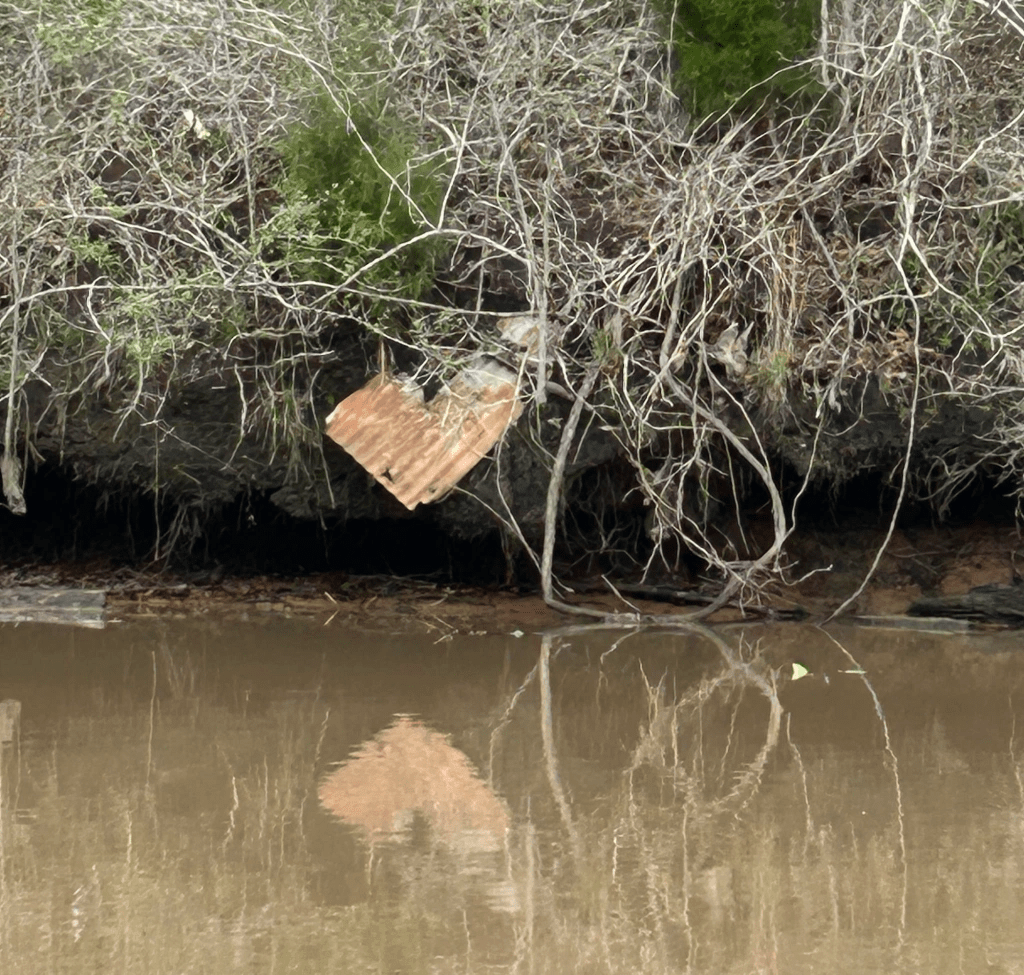
Margaret is also an artist, always viewing the world with artist eyes. She saw this scene on a canoe ride with her husband and knew she needed a photo… found art, shall we say, for a found poem (of sorts):

Here is my poem.

Earth gives
metal

Man makes
barns

Time rusts
mettle

Storms bring
harm

Swamp doesn’t
meddle

only opens its
arms

to heart-pinned
medal

recalling Earth’s
charms.

The wound in the wood

A little slice of memoir

*******

I was five when my dad bought the house where I grew up.

There were good things about the house. A Big Bathroom and a Little Bathroom. Having two seemed luxurious to me, a child accustomed to apartments. Cloud-like swirls on the ceiling that my mother said were made by twisting a broom in the plaster while it was wet. A huge picture window in the living room, through which I could see a very tall tree behind the neighbors’ house. To me, the tiptop of the trunk appeared to be a lady sitting and gazing across the earth like some kind of woodland princess. Day in and day out, she sat there atop of her tall tree-throne, a regal silhouette, never moving.

There were things I didn’t like about the house. The red switch plate on the utility room wall that my father said to never ever touch. I believed that if anyone touched this switch, the furnace would explode and blow us all to smithereens. Even after I outgrew my terror, I steered well clear of that red plate. I didn’t like the thick gray accordion doors on the bedroom and hall closets. Bulky, cumbersome, and stiff, they didn’t really fold. They came off their tracks easily. These hateful doors eventually disappeared; one by one, they were discarded. Our closets were just open places.

The linen closet stood directly across from my bedroom door in the narrow hall leading to the Big Bathroom.

It wasn’t a true closet, just a recessed place with wooden shelves. I don’t remember an accordion door ever being there.

What I do remember is that one of those linen closet shelves had a terrible gash along its edge.

It looked like a raw wound that might start oozing at any moment. A gaping slit. When I pored over pictures of how to do an appendectomy in my parents’ set of medical encyclopedias (and why did we have these—? An exceptionally persuasive door-to-door salesman—?) the pulled-back human flesh and tissue made me think of the wound in the linen closet shelf.

This shiny-pink raw place bothered me. It was ugly. Almost…embarrassing. Something that shouldn’t be seen, shouldn’t be exposed…why had the builders done this? Couldn’t they have turned the shelf around so the wound wouldn’t show? It was an affront to me as a child, before I knew what taking affront meant.

I know now that the flaw is a bark-encased scar. The shelf came from a tree (maple?) that was injured, somehow. Maybe by a cut or fire. An online search produces this AI-generated explanation:

The tree’s cambium layer, which is responsible for producing new bark and wood, starts to grow new cells around the wound, forming a protective layer of tissue called callus. 

As the tree continues to grow, the callus tissue can expand and eventually cover the original wound, creating a scar that is encased within the new bark.

In short: The scar is evidence that the tree worked to prevent inner decay and heal itself after being wounded, and that it went on living for a good while before it ended up as the shelf holding our towels and washcloths beside the Big Bathroom.

I never touched that raw-looking wound in the wood. I averted my eyes from it, even hated it for existing.

Now, when I return in my mind to the rooms and halls of my childhood home, they are always empty, and that old scar in the shelf is the thing I want most to see.

How strange.

Maybe I am drawn to it out of kinship. I do not know the story of the tree’s life, only that this remnant is testimony to its suffering and ability to overcome. I could liken the scar to the ways adults damage children, having been damaged as children. I could see it as a symbol for my mother, whose early wounds festered long, the extent of which would eventually be revealed in addiction.

That’s the real red switch, for it blew us all apart.

Maybe I just want to place my fingers on the old raw place at last, tenderly, in benediction. I would say that I understand now about layers of callus tissue expanding, covering, and absorbing the deepest of cuts over a long, long time…it is always there, but it hurts no more, and I am no longer ashamed to see it or to let it be seen.

In the shelf or in myself.

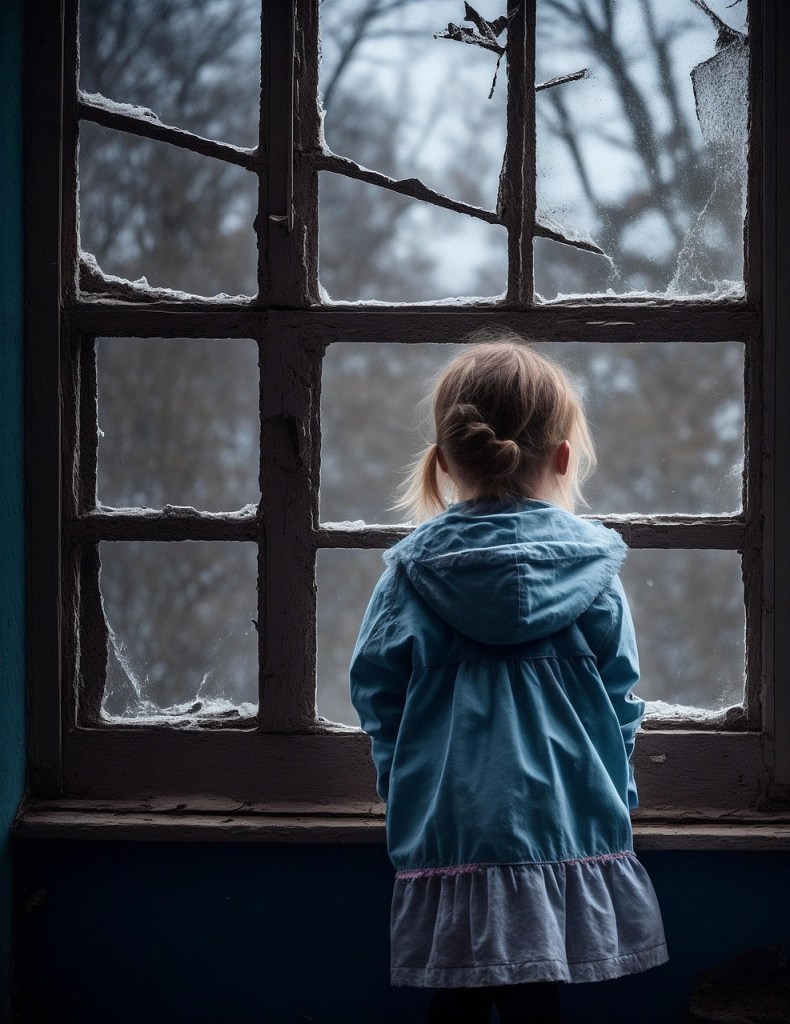
Image by Wolfgang Eckert from Pixabay

*******
with thanks to Two Writing Teachers for the March Slice of Life Story Challenge

The white feather

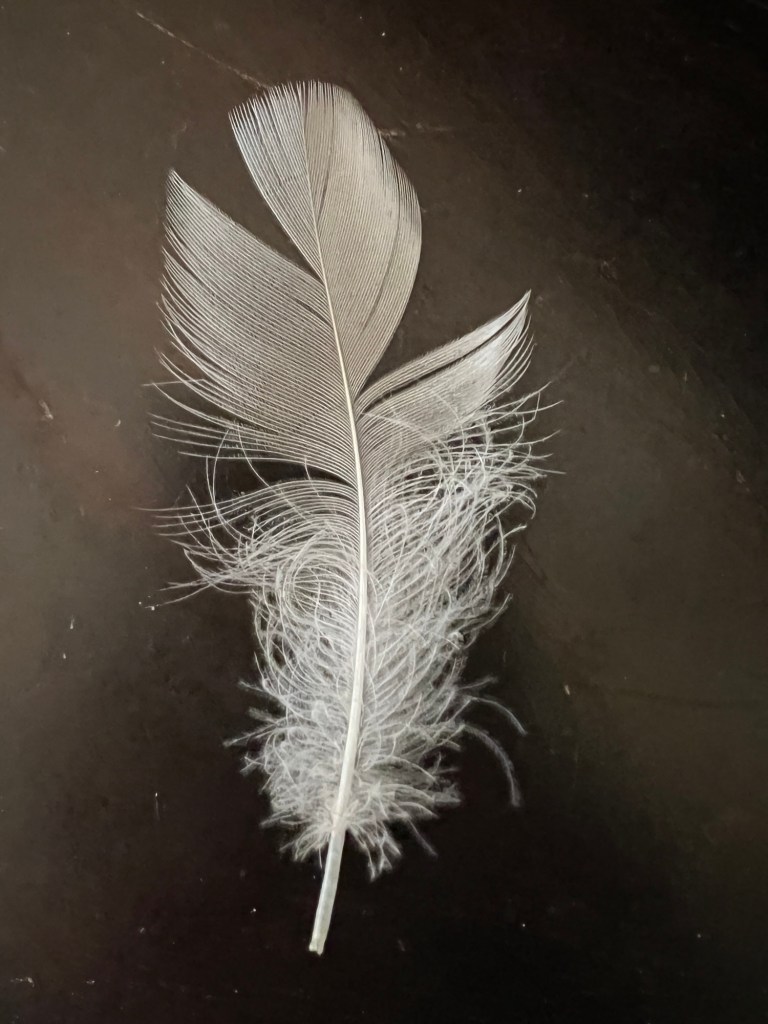
On a recent Sunday morning I pulled into the church parking lot, got out of my car, and found it lying right there at my feet.

A white feather.

Just one. No others anywhere in sight.

Now, I know there are legends about solitary white feathers and loved ones and guardian angels…I really didn’t have time to think about all that just then. Choir practice was starting and I had a Bible lesson to teach. No time to waste… I am not going to over-spiritualize this. I’ll figure out later where this feather came from…and I hurried into the church.

I promptly forgot about the feather.

Until, several Sundays later, when I was leaving the church and there, on the sidewalk right in front of me, was another white feather.

Now, I know there’s a law about not picking up bird feathers…but I couldn’t help myself.

I needed to know.

I took it to my husband, pastor of the church.

He was sitting at his desk in the study.

“Have you been seeing white feathers like this around here?” I asked, holding out the feather in my palm.

If he said no…I might have to consider those legends. Was I the only person finding a white feather — on two occasions now?

If he said yes…what kind of bird is shedding these feathers around the church? And why?

My husband barely glanced at the feather.

“Yes,” he said, finishing a note he was writing. “It’s from Mr. H.’s feather duster. He shakes it outside after he’s done cleaning on Saturdays.”

Glad I didn’t over-spiritualize…

with thanks to Two Writing Teachers for the March Slice of Life Story Challenge

Rainbow reminder

a pantoum

At the rainbow’s appearing
just stop to savor;
all the cares of this troubled world,
you can endure.

Just stop to savor
how the light bends into glory.
You can endure
the storms of life.

How the light bends into glory!
Look up and be awed.
The storms of life
for a moment, disappearing.

Look up and be awed—
all the cares of this troubled world
for a moment, disappearing
at the rainbow’s appearing.

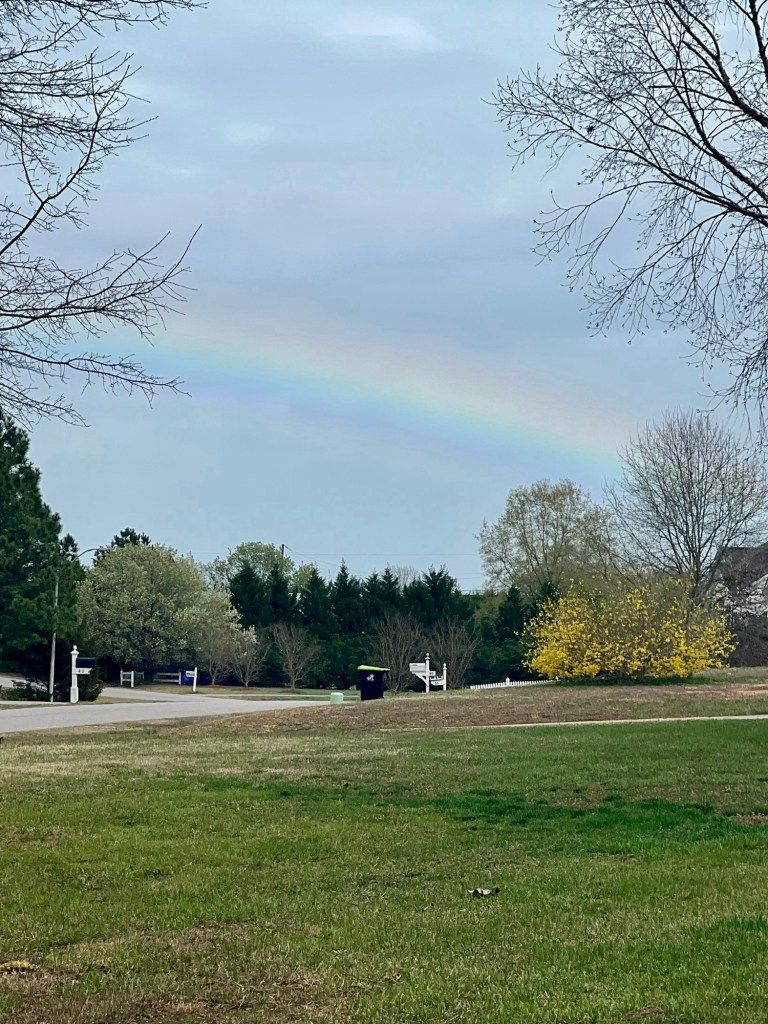
Rainbow over my neigborhood after a storm last week.
Note the forsythia beginning to bloom.

*******

with thanks to Two Writing Teachers for the March Slice of Life Story Challenge

Birdlove legacy

If you’ve read my blog for a bit, you know I love birds.

It’s an inherited love.

Or maybe a contagious love.

Either way: I got it from my grandmother.

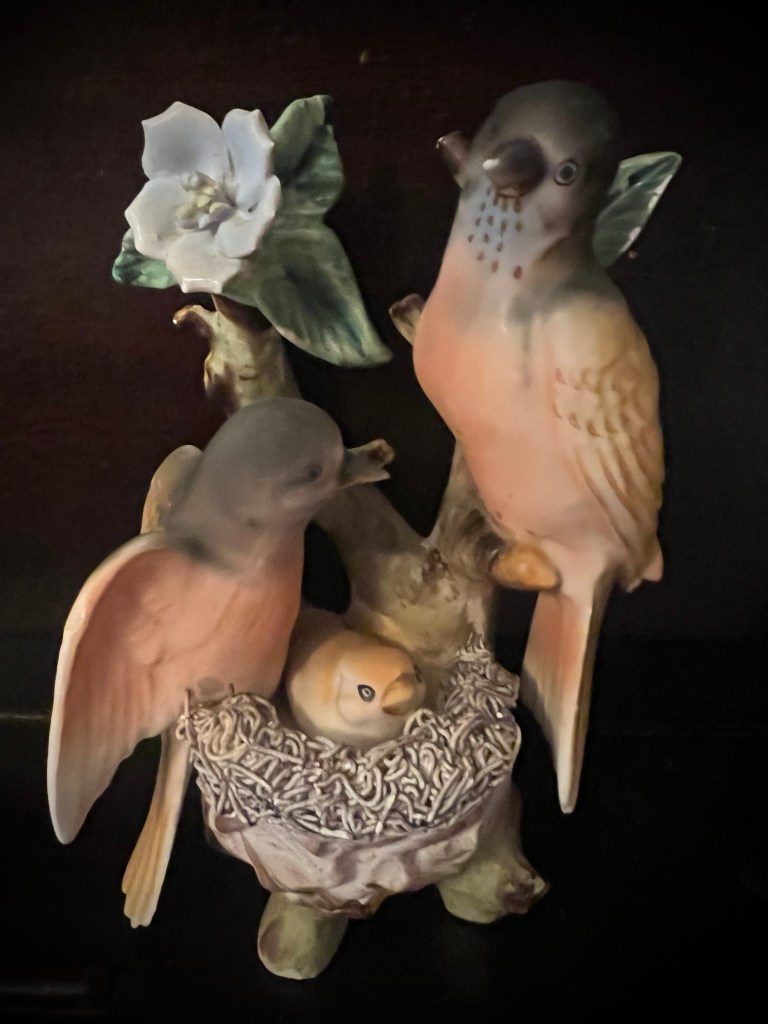
Some of my earliest memories are of sitting on her lap as she read to me, and one of the books was about birds and their nests. From shelves on her apartment walls, bird figurines looked over us like sentinels. Silent witnesses. “Ornaments,” she called them. One resembled a pair of robins. She lifted me up countless times to peer into their ceramic nest, to marvel at the baby bird inside:

This vintage 1960s figurine is exactly like Grandma’s. Her “ornament” went to someone else in the family but I found this one online a couple of weeks ago. It’s in perfect condition and now sits atop Grandma’s piano in my living room.

There’s another I hadn’t thought about in a while…until my recent sightings of bald eagles, to my great awe and consolation during a brief time of despair.

Grandma had an eagle ornament…whatever became of it?

I texted my aunt.

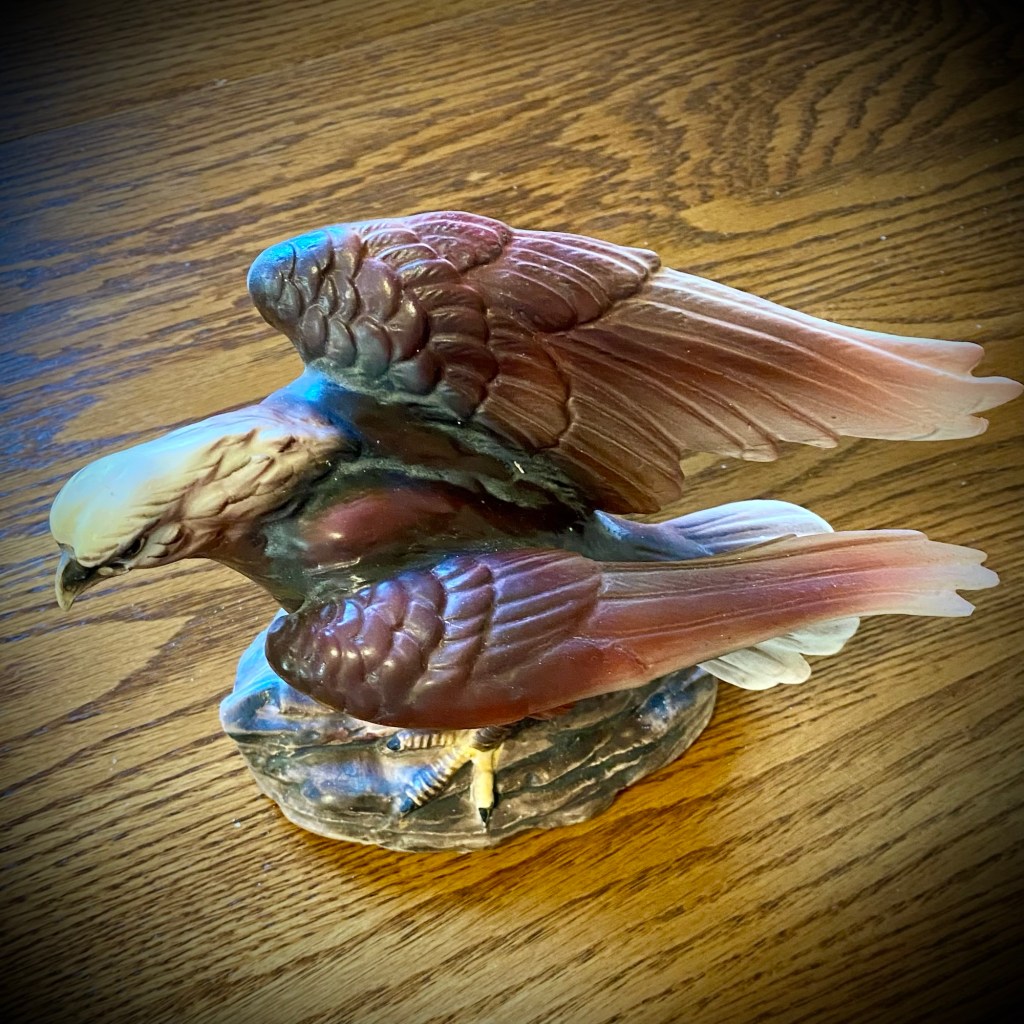
She has it. She told me that Grandma wrote on the underside: One of my favorites!

My aunt texted this photo. She said: The eagle is yours.

An unexpected, deeply meaningful gift. I am learning that the eagle comes out of the blue, when needed most. Even in my dreams. This past week I dreamed of taking a journey and high in the trees along the roadside were eagles’ nests; I could see white heads above the rims, peering down. Even in the dreamworld, I was awestruck. I woke feeling rested and strengthened. And watched over.

My granddaughters haven’t seen my bird nest ornament yet, and Grandma’s eagle is a way off still. But every spring, my girls stand beside me, marveling over the hummingbirds at the feeder. We watch Mama and Papa Bluebird darting in and out of the birdhouse with insects in their beaks, feeding hungry babies. I’ve held my granddaughters up to see real baby house finches in the nest on the wreath of my front door…which won’t happen this season, as the wreath has been removed. Micah learned to mimic me around age two, when I held her in my arms at the kitchen window; putting her tiny finger to her lips, she’d whisper: Shhh. Watch. Birds.

She is three now. She will remember.

Just as I do.

For a moment, I see Grandma’s smile, radiant as springtime sun. I feel her arms lifting me up for the wonder of seeing that baby bird in its ceramic nest, with its parents standing guard.

And I am quite sure I hear a faint rustling of wings, nearby.

*******

with thanks to Two Writing Teachers for the March Slice of Life Story Challenge

Dictionary poem

Katrina Morrison hosted the March Open write at Ethical ELA on Tuesday.

Her invitation: I am calling [this] a“Dictionary Poem.” If anything can define and expound upon the meaning of a word, it is poetry…pick a word to take apart and put back together in a poem. Begin with the dictionary definition of the word. Obviously, some words will offer multiple meanings. Craft your poem however you will. After the definition, expound upon the word’s meaningthe vicissitudes of life may direct you to write a haiku or a villanelle or free verse today.

I will NOT be attempting the villanelle again anytime soon; I wrestled that form to the ground on Saturday and haven’t recouped the stamina yet to give it another go. I went with an acrostic, because the word “shards” stays in my mind, and I keep turning it around and playing with it anyway, to find out all it wants to tell me. I love this word, so…the poem:

Defining

shard

  (shärd) also sherd (shûrd)

n.

1. A broken piece or fragment, as of pottery or glass.

2. Zoology A tough scale or covering, such as the elytron of a beetle.

Dictionary.com

The Poet’s interpretation:

shards

plural

sharp-edged fragments of memory, or

seeking healing among remnants, despite suffering

Somewhere in the shattering
Healing awaits, disguised
As sharp points
Ready to draw yet more blood…
Dare to touch the memories. Discover
Scattered diamondlight, all around.

Image: beasternchen. Pixabay.

*******

with thanks to Two Writing Teachers for the March Slice of Life Story Challenge

Grace upon grace

Yesterday Leilya Pitre opened the March Open Write over at Ethical ELA with an invitation to compose poetry inspired by the Ides of March.

The Roman calendar confuses me, with all the backward counting. An “ide” is one day before the middle day of the month. For March, that’s the 15th – yesterday’s date. Leilya gave several poetic form suggestions: villanelle, free verse, limerick. She prompted participants with a choice: 1) Write with “an air of inevitability and doom…mirroring the idea of a foretold fate,” or 2) “Write a poem that celebrates a moment of change or transformation, akin to the original meaning of the Ides of March as a day of transition in Roman history.”

A day of transition…hmmm.

Change.

What needs to change more than the human heart?

I confess to wanting to run for my life at the idea of writing a villanelle (see how much the very word looks like “villain”?). The form is deadly! And there’s only one Dylan Thomas. Nobody else can rage, rage at the dying of the light quite like him. And so I opted for free verse, my default form.

Crickets. Nothing. No ideas on ides.

And so I returned to the villanelle – drat it all! – with “an air of inevitablity and doom,” for sure.

But then: Two repeating lines came to me. I started a rhyme search. A villanelle takes a pile o’ rhyming words. Not all of them will work. One of my favorite images re-materialized in my head: the “golden rim.” Yes. Let us drink from the golden rim of the goblet…no, chalice. Yes. What are we drinking, and why? What’s the point? What does it mean?

Have you ever heard that what you need is there, right within your reach, if you just look?

In this case, what I needed was literally right there within reach: the bracelet on my wrist. You’ll see.

Here’s the poem. Still tinkering with it.

Gratiam pro gratia

As evening descends in shadows dim
Let’s toast to ceasefire of life’s fight:
Drink, my love, from the golden rim.

The face of the morrow will be less grim
—See, our ashen embers retain the light
As evening descends in shadows dim.

Toss off your cloak with fraying trim.
Kneel by me, pray, well we might—
Drink, my love, from the golden rim.

There sparkles yet a priceless gem
Within the pocket, glittering bright
As evening descends in shadows dim.

Hold my hand — let’s sing a hymn
Before we take our earthly flight.
Drink, my, love, from the golden rim.

Sweet chalice of life, abrim,
Despite this darkest night…
As evening descends in shadows dim,
Drink, my love, from the golden rim.

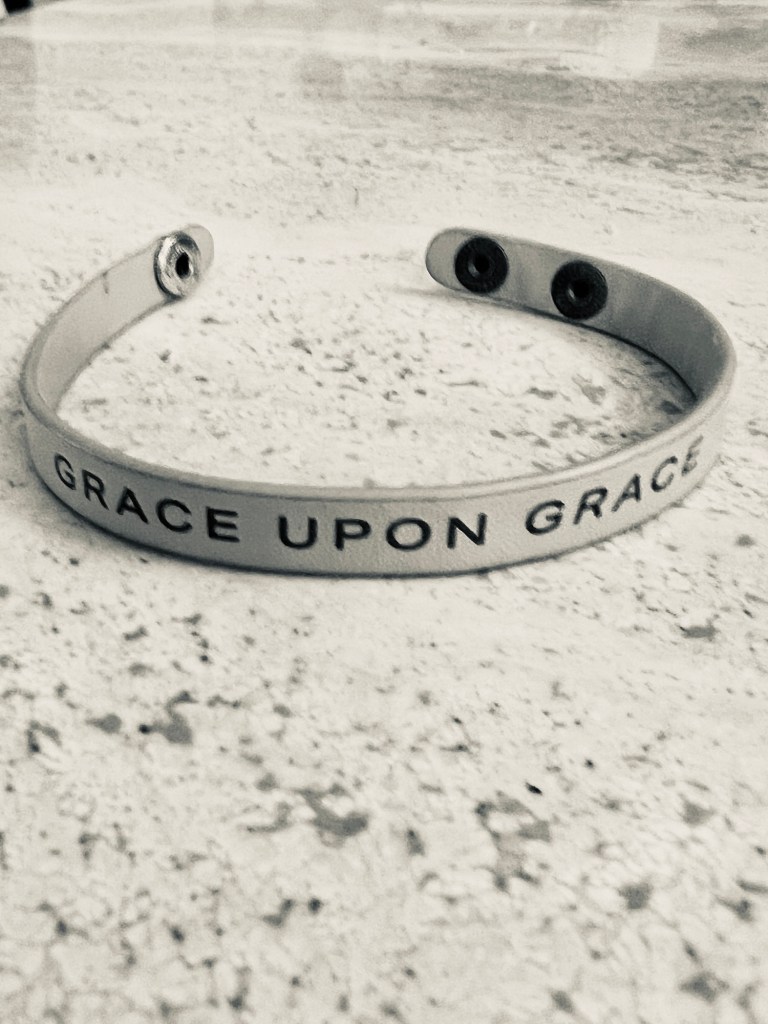
My poem’s title is Latin for the words on my bracelet. An excerpt of John 1:16: from the fullness of Christ, we have received “grace upon grace.” I wear it as a reminder to give grace, having received it in such abundance. I purchased the bracelet at a coffee shop called Charis (“Grace”) which has a wall plastered with customers’ prayers written on tiny slips. The owners donate a portion of proceeds to organizations that are working to make the world a better place. Our time here is short. Let us be about this work, in communion with one another, giving each other grace.

*******

with thanks to Two Writing Teachers for the March Slice of Life Story Challenge

Squirrel

Today’s WordPress prompt: Which animal would you compare yourself to and why?

Yikes. This could take awhile.

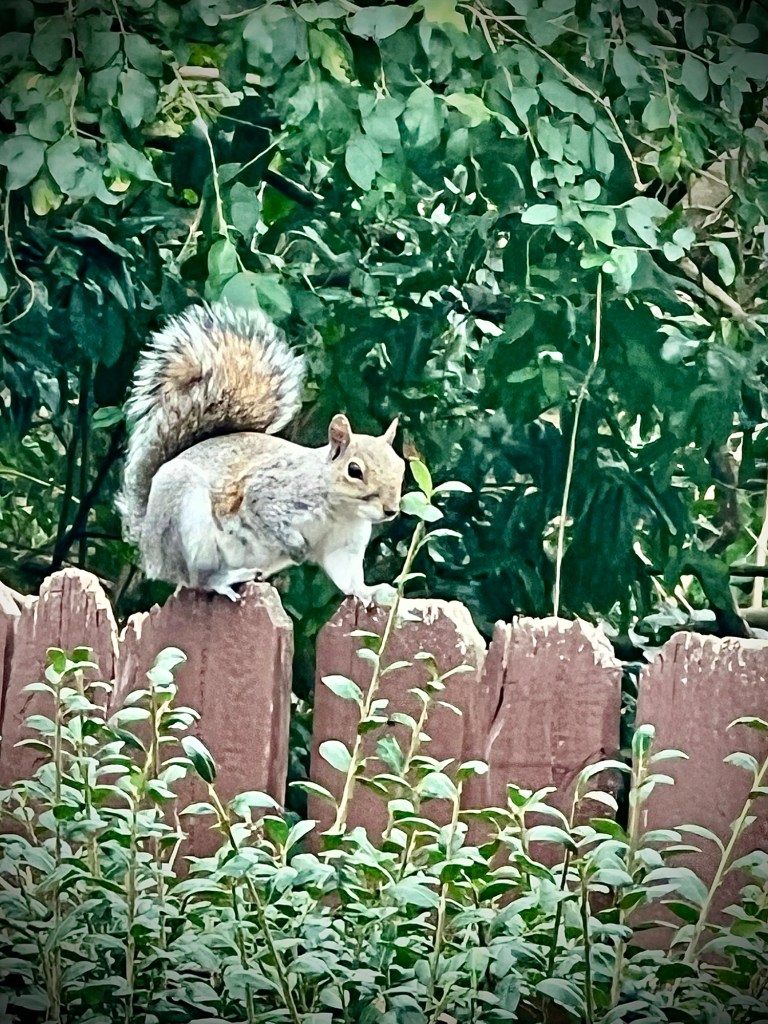
However…yesterday afternoon I had a dentist appointment, and this creature was sitting on the fence as as I pulled into the parking space:

“Well hello, Squirrel,” I say from the driver’s seat.

The squirrel does not move.

I take a picture of it with my phone.

The squirrel does not move.

The wind is kicking up, rain starts spattering…

The squirrel does not move.

It watches me as intently as I’m watching it.

I note the right paw raised, perhaps in readiness to flee…

Which is what the squirrel does, as soon as I look away to reach for my purse, for in that fraction of a second – poof! – it is gone.

So, back to the WordPress prompt: Which animal would you compare yourself to and why?

I wouldn’t have thought to compare myself to a squirrel, but since one came to me, and since I have no idea of what else to write about today in the March Slice of Life Challenge, I will consider how the squirrel and I are alike. Isn’t this a hallmark of the writerly life, using everything that comes your way?

Here’s what I found with a bit of research:

Squirrels are preparers.

Squirrels are resourceful.

Squirrels can symbolize that it’s okay to forget and move forward.

Squirrels can symbolize that life’s blessings can take root in unexpected ways.

I never expected to discover such a kinship with the squirrel.

I am also captivated by the etymology of “squirrel.” Derived from Ancient Greek, it means shadow-tailed.

Squirrels use their beautiful “shadow” tails for balance, a warm cover against the cold, a means of communication, and even in expression of emotions. They flick their tails when alarmed, happy, and frustrated.

Symbolically speaking, the squirrel’s tail can represent the past (as a “shadow” behind the squirrel, which is attached to it, and follows it).

Think on that awhile. The shadows of the past…ever with us.

Haunting? Not necessarily. As someone who likes dabbling with memoir, I find unexpected riches in writing about the past. A cache of courage. A hallowed hoard, even in the darkest places.

In those shadows, I find the first book I can remember being read to me… here I am, a toddler, sitting on my grandmother’s lap, listening to the playful rhyming lines in a book about…squirrels.

Thank you, Squirrel, for being here.

*******
with thanks to Two Writing Teachers for the March Slice of Life Story Challenge

Hark: the hawk

haiku for the king of our backyard sky:

from on high: the cry
this kingdom is mine mine mine
hear ye, hear ye, all

Our resident red-shouldered hawk was staking its territorial claim on Monday morning. If you look closely at the large tree branches in the center of the video frame, you will find it perched above the “play” arrow. The cry starts at 14-15 seconds in.

I think of hawk symbolism. I will include it below, because it’s fascinating, especially since I am sharing this with a community of writers taking on a daily challenge; I marvel at how much seems especially applicable. I will say that for me the hawk’s wild cry evokes something within that I cannot quite name. A longing, I think. Maybe to rise above the world with clearer vision. Maybe to have been an ancient warrior along green woodland paths, following the king’s bird. Maybe to respond, living thing to living thing, in natural communion as apparently existed before Genesis 9, when animals began to fear people. And, I daresay, likewise. Loss unimaginable.

As I wrote in yesterday’s post: I watch birds and am awed by the way they know and “read” so much. Instinct, you say. Well, of course. And extraordinary intelligence, I must add.

Here’s what artificial intelligence has to offer on red-shouldered hawk symbolism (do a search; this comes up with links):

The red-shouldered hawk can symbolize a variety of things, including guidance, strength, and the ability to see the bigger picture.

Guidance

  • A red-shouldered hawk can be a messenger from the universe, bringing support and insight 
  • It can be a sign that you should trust yourself and your inner wisdom 
  • It can be a reminder to explore the unknown and take risks to reach your goals 

Strength 

  • Hawks can represent strength, focus, and poise
  • They can show you your hidden abilities to lead yourself and others

Seeing the bigger picture

  • Hawks can help you see the bigger picture and avoid getting caught up in small details 
  • They can help you elevate your perspective and activate your inner sight 

Connection to the spirit realm 

  • A red-shouldered hawk can signify a powerful connection to the spirit realm

Vision 

  • The Cherokee believed that red-shouldered hawks are messengers of vision
  • They believed that when you see a red-shouldered hawk, whatever you were thinking about at the time is happening around you

Across cultures, hawks have been used to convey teachings and wisdom.

—There you have it, writer-friends. Hearken unto the calling.

Meanwhile, I know that as I stand watching this magnificent bird, it is watching me, with considerably less awe. I am simply on its turf.

*******

with thanks to Two Writing Teachers for the annual March Slice of Life Story Challenge.
This is my ninth year participating alongside fellow teacher-writers.