The writing shows up

While I—er, I mean Henry, our dog—composes his own blog post, my younger son (the Cadillac man) drifts through the kitchen.

I pull up a previous post on my phone and hand it to him:

“Here, read the comments about you and Pa-Pa’s Cadillac.”

He reads, smiles. He’s pleased but says little. He’s a man of few words.

He won’t ask, so I tell him what I—um, Henry—is working on: “This is the next post. Henry is writing it in response to one I wrote about him interrupting my writing.”

“Hmmm,” replies the Cadillac man.

“Want to read it?”

“Sure.”

So the Cadillac man sits down at the table and takes my laptop. He reads Henry’s post-in-progress.

“I like it,” he says.

He sits for a minute.

Then: “I wonder if I could write from Nik’s perspective.”

Nikolaus is our sixteen-year-old dachshund. We got him as a puppy when my son was four.

As I take my laptop back, I say, rather airily, “You should try it.”

I don’t expect him to.

He hates writing.

This is a big, jagged stake in my heart.

His older brother loves writing and even maintained a blog for a while, long before I started this one. But the Cadillac man has gone all the way through his academic career cracking books only when he had to, writing only when forced for assignments, and utterly exasperating me with his lack of interest. He didn’t struggle with reading or writing. He just didn’t care about any of it.

At all. Ever.

He’s a brilliant musician, however, and a powerful vocalist. He’s loved music all of his life. At age seventeen, two weeks after graduating from high school, he was hired as a church music director. He’s working on a degree in that field. He’s adapted songs, composed a little—”just the music, not the words. I don’t do words”—and coaches others as they try playing instruments new to them. He speaks beautifully before a crowd, did so at Ma-Ma’s funeral despite not having any notes, because . . . he hates to write.

So, when he mentions writing about Nik, I think he’s just wondering out loud, nothing more.

He leaves the room. He comes back to the kitchen table with his new Chromebook.

“Do you have homework?” I ask.

“No, Mom, it’s spring break, remember? I’m going to write a story from Nik’s perspective. To see if I can actually do it.”

What?

The first time in his twenty years that he’s chosen to write a story.

I feel like the floor under my feet is shifting, that the Earth itself hangs in the balance. I have to leave the room.

I can’t stand it. I have to know.

I creep back into the kitchen.

He’s typing away.

“How’s it going?” I dare to ask.

“Pretty good.”

“Is it . . . fun?” I hear my voice quaver.

“It’s sad, really,” he says.

He finishes, lets me read it.

We know Nik won’t be with us much longer. He’s old. Frail. He’s going blind; his eyes are turning milky. My son’s words show Nik making his peace with all of this, that he’s satisfied he’s served his family well, and how he knows our other two dogs will “carry my torch of comfort and protection long after I’m gone.”

The attribution reads Nikolaus Haley, expert red dachshund.

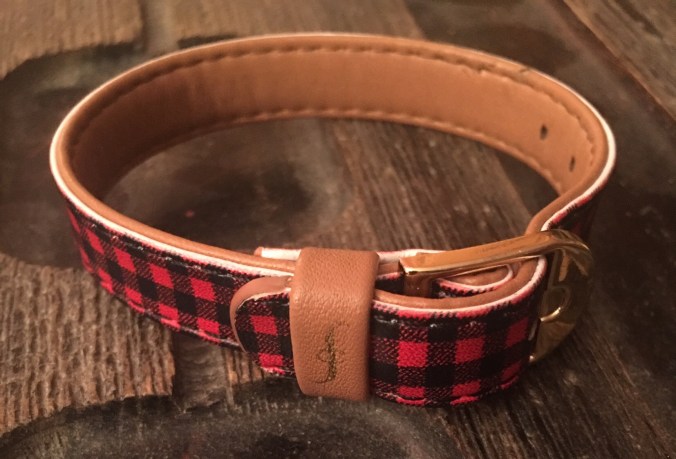
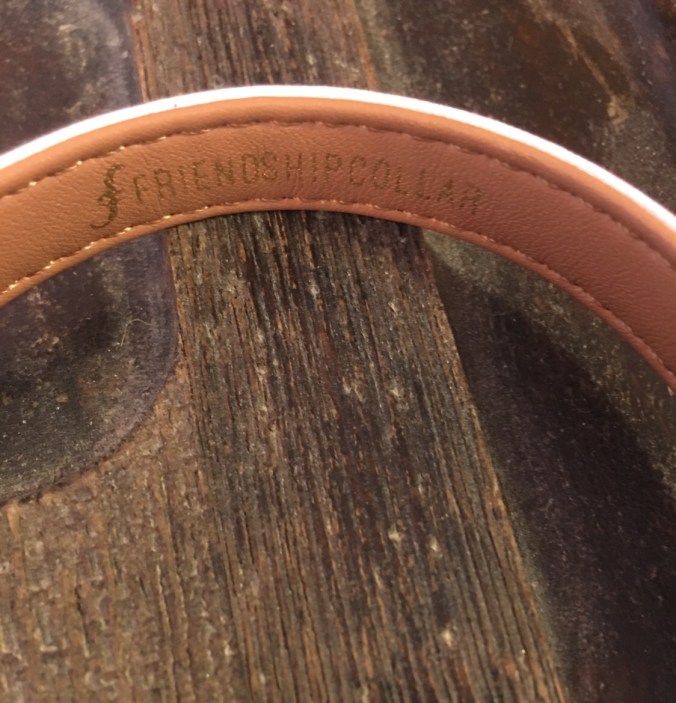
My throat is tight. Nik and the Cadillac man have been together almost their entire lives. Every single day. They wear a matching red-and-black checkered friendship bracelet and collar.

“It’s a powerful story,” I manage.

“Thanks,” says my son, softly. He gets up from the table, gathers Nik, who’s been wandering aimlessly around the kitchen this whole time, and takes him upstairs to “the lair,” as we call it.

I read the story again and again.

Thinking how he said to see if I can actually do it.

I think he meant getting in Nik’s head to write from his beloved dog’s viewpoint, rising to meet a challenge he set for himself.

And then I think how, when you finally show up for the writing, the writing shows up for you, and pulls you through.
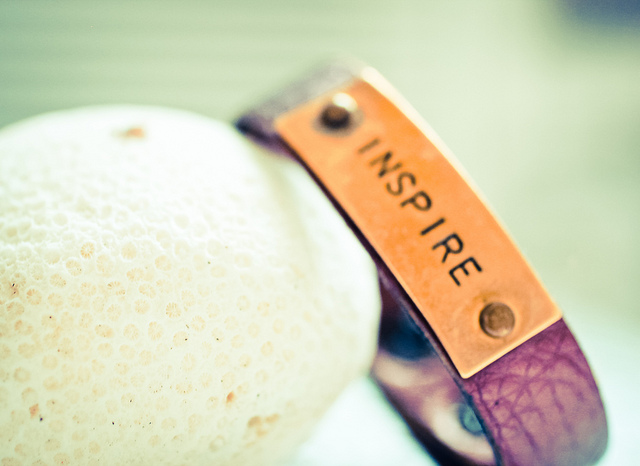
How do I inspire them?

Inspire

Inspire. chattygdCC BY 

The crowd of educators goes to lunch, posting their “gots” and “wants” on a chart as they exit the morning’s session on growing young writers. My co-facilitators and I look over these sticky notes, preparing to address the “wants” in the afternoon when the participants return.

One note in particular grabs my attention:

I want my students to be excited about writing and to write more. How do I inspire them?

“It’s all yours,” say my colleagues.

I smile.

This is what I love.

Educators talking about inspiration. It’s vital to professional development, to the work that we do

To inspire, one must first be inspired.

Author Avi, in a Skype with students at my elementary school a couple of years ago, defined inspiration as breathing life.

Writers are life-breathers.

So are teachers.

Lucy Calkins, speaking of launching writing workshop, says: “No matter how tentative and insecure you may feel, role-play your way into being confident of yourself and your children because they will hitch a ride on your enthusiasm.”

It’s more than modeling the writing; it’s modeling a passion for writing. It’s digging deep within yourself to find your own stories, your own ideas, your own stances, and giving life to them . . .

The crowd returns. Little knots of teachers, support personnel, and administrators spanning kindergarten through high school, chattering, laughing. They take their seats one by one; an air of expectancy settles over all as my co-facilitators and I respond to their “wants.”

It’s my turn.

I want my students to be excited about writing and to write more. How do I inspire them?

“If we want students to get excited about writing, we must be excited about writing. We must write more ourselves, for ourselves first. Walk the walk; if we’re telling them writing is important, we’d better be writing ourselves. That’s why I started my blog, to keep me writing consistently. Tap into your own memories, the things that matter to you. Write in front of the students; show them every step of the way, how the ideas and images come to you, why you want to say what you’re trying to say, why it’s important.  That’s authentic writing. Tell students writing is the closest thing to magic that there is. Show them the power that’s in it. That what THEY think and feel matters. Good writing is labor-intensive; they have to get a taste of why it’s worth it. Tap into their emotions; there’s always a way . . . help them see that writing isn’t just something to be done for school for a grade, over and done. Writing is about life itself . . . .”

Breathe life. From your writing to theirs, from your soul to theirs.

There’s a whole world within each young writer. There’s a world around them that they’re grappling to understand. A world with a place for each of them. We don’t create these worlds for them. We just open the doors.

“Another world is not only possible, she is on her way.

On a quiet day, I can hear her breathing.”

– Arundhati Roy

Still tripping the write fantastic


Pencil sky

Pencil sky. Ricky BCC BY

She settles into the armchair at the front corner of the classroom. The students, gathered on the carpet at her feet, lean in. There’s an air of anticipation, of expectancy, an unusual sort of hush for fourth grade.

She pushes her new glasses back up on her nose. Pale winter sunlight streams from the window over her shoulder onto the large binder in her lap.

She opens it, finds the page she wants, and commences to read.

She’s not a professor, a lecturer, or even a teacher. The chair almost dwarfs her, having been designed for an adult, not a pixielike middle schooler.

She’s a former student coming back to share her writing.

The fourth graders listen. They laugh. They hardly move a muscle until she finishes the chapter, when they applaud.

She grins self-consciously, but clearly pleased.

Hands go up in the air. The questions begin:

How much of this story have you written?

Just a few chapters, but I have other stories I am working on, too.

Where do you get your ideas?

Mostly from books I read or stories I hear. I start thinking, what if there was a character who had an experience a  little different from this, like, what if a character from our time could go back to a time long ago, to a setting from the historical novels I read. Stuff like that. Sometimes ideas just come; I don’t know from where.

What’s your favorite thing about writing? Why do you like to do it?

I can make anything happen in stories I write. It’s a lot of work but it’s so much fun!

How did you get so much detail in your story?

I have to look a lot of stuff up. Sometimes I don’t know what things are called or what things were like if I am writing about long ago. Or, if I decide to write about an earthquake or anything I haven’t, you know, experienced myself, I have to know what it it would be like to live through it, so I look stuff up all the time.

The questions go on and on. She answers them all patiently, honestly, with a grace and wisdom far beyond her years.

Do you want to publish a book one day?

Yes, I really want to.

She looks right at me and smiles.

Just two years ago, she was a shy fourth grader who didn’t call attention to herself. In fifth grade, between her teacher’s read alouds and writer’s workshop, somewhere betwixt historical fiction and fantasy units, the writing bug bit hard, prompting her teacher to send this child to me for extended writing lessons in every moment we could manage.

These sessions were the highlight of many a day—what a gift it is to work with a student so passionate about writing when writing is the very thing you love most yourself. Together we tripped the write fantastic, so to speak, with me listening to her story (multiple chapters with multiple revisions), asking her to clarify portions, to add detail to others, and to fill in the “holes” that leave readers behind, where the writer’s mind leaps ahead too much.

Then fifth grade was over and she was gone.

At the elementary Fall Open House, however, I happened to look up just as she came barreling toward me from across the media center, face all aglow, her mother and younger brother in tow.

Her mother’s comment: “She’ll stay up all night writing in her bed with a flashlight, long after I tell her it’s time to go to sleep.”

But Mom’s face glowed, too, with unmistakable pride.

Now our young writer returns again, by her own choosing, to share her sheer love of the craft, to pay it forward. Watching her from the back of the classroom, I am flooded with an incomparable warmth, an inner light that a thousand years cannot extinguish. She will go on to create more worlds of her own and to people them. She will conceive more problems for her characters, how they’ll cope and eventually overcome; such will be extracted from, and parlayed back into, her real life, her own future. She’s already learned the value of a driving question and how to research for answers—a true self-guided learner, a critical, creative thinker. She’s exploring ideas, generating new ones, playing with language, writing with voice for an intended impact on readers, and inspiring others to do the same.

And she’s just eleven years old.

All this world, and those springing from her mind, from her pencil, lie ahead of her; I can hardly wait to see how far they’ll take her, how far she’ll go.

Still tripping the write fantastic. What an absolute thrill.

May it always be so.

*******

For more about this student’s initial falling-in-love-with-writing experience, read Tripping the write fantastic.


To the children

writing in notebook

Writing. VassilisCC BY-SA

Dear Children,

I am thankful for you.

For your uniqueness, for your existence, for the lens through which only you can see the world.

I am thankful for your courage, your stories.

That you feel free enough to write about what you know, what you’ve lived, endured, and overcome in your young lives.

That you have the strength to share your early taste of loss—of pets, of parents, of siblings, of homes.

That you escaped abusive homes for ones where you could thrive.

That you left another country for mine—for ours.

That you learned from watching the failures and mistakes of others close to you.

That you learned to forgive others and even yourself.

That you learned to persevere, that you accomplished what you set your mind to because you kept trying.

That you faced your fears and came safely through.

I am thankful for what you teach me each day about listening, seeing, discerning, wondering.

I am thankful for the reminder that curiosity and questioning are natural, that creating something from whatever happens to be lying nearby is a hallmark of the human soul.

I am thankful for the beauty you bring to the world.

I thank you for daring to pour your hearts onto the page, for laboring at it, and for your truth.

I thank you for the unparalleled honor of reading your words, for the moments of laughing with you, crying with you, and standing in awe of you. For the privilege of helping you capture your ideas and communicate them clearly, of seeing you realize the power of your own voices. Of simply being on the receiving end of the important messages you have within you.

If I have inspired any of you, know that I am inspired a hundredfold in return.

Keep writing, Children, and I will do the same, for we owe it to ourselves and to each other—we need to read our stories as much as we need to write them.

I carry you and your stories, your abiding images, with me always.

Always believe in yourself, for I believe in you. In who you are now, in who you will become.

With love and profound gratitude,

your writing teacher

*******

Inspired by students I’ve taught and others whose work I’ve read.

Thanksgiving challenge: To whom are you deeply grateful, and why? Write this person a letter expressing your gratitude. If  your person is still living, read your letter aloud to them face to face or by phone. If your person is no longer living, read it aloud in a place that’s meaningful to you. Celebrate what this person has added to your life. Celebrate the power of writing and the transformative power of gratitude. 

slice-of-life_individual

Letters

img_2699

It’s a neither-here-nor-there day in June, the middle of the year, not exactly warm but not really cool, either. The blinding noon sun makes for dark shade under the trees while an intermittent breeze stirs the new leaves, dappling the sidewalks with moving shadows. People come and go from assorted shops, crossing the cobblestone street. Their voices are muted, distant. I concentrate on guiding my husband’s steps over the uneven pavement. Still adjusting to having just one eye, he struggles with depth perception and will stumble, so he grabs hold of my arm. The restaurant where we’re headed for lunch is just ahead and I am fantasizing about the she-crab soup when I happen to glance to my left, and that’s when I notice something unusual.

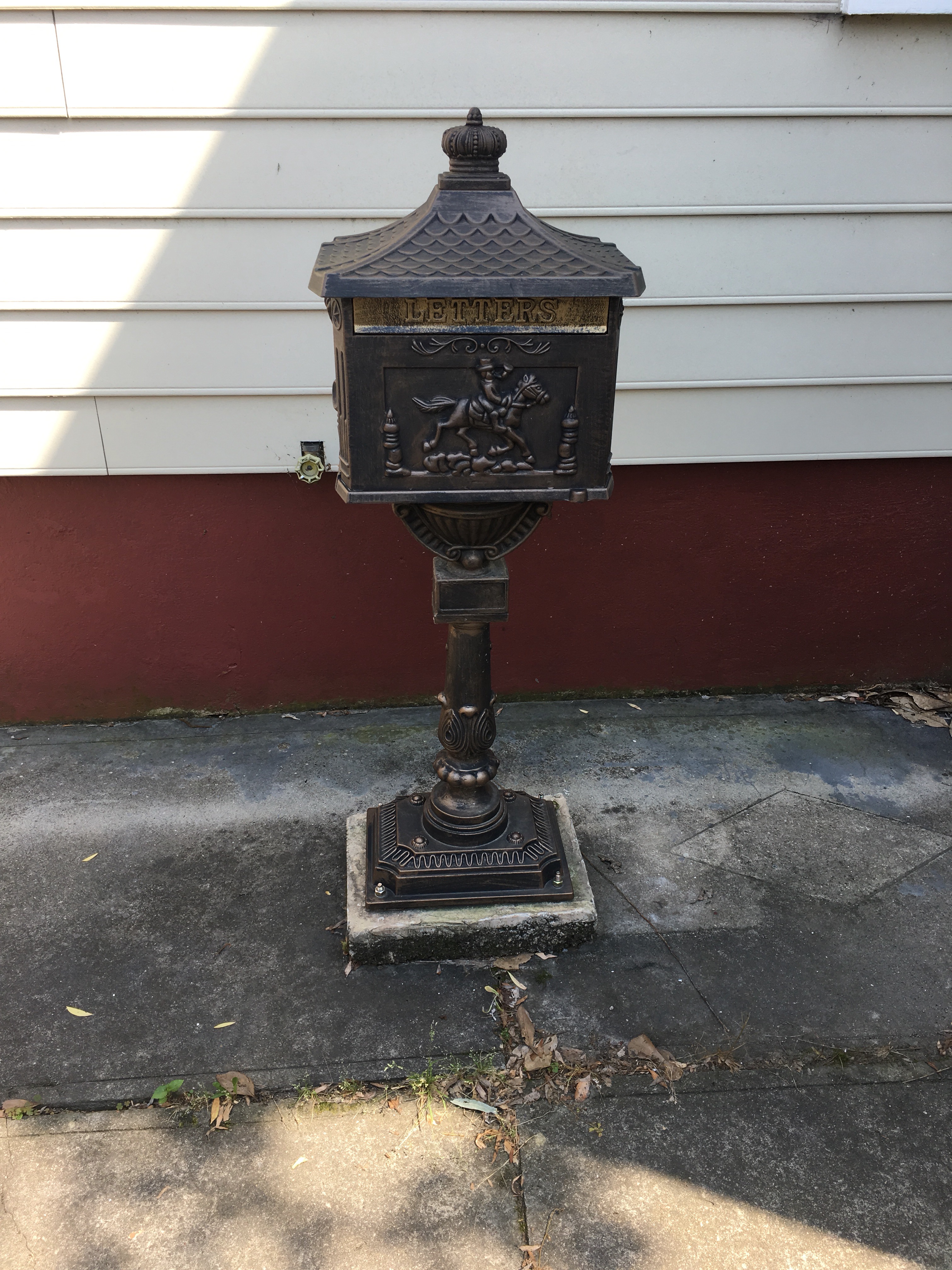
There, nestled close to a house entrance, in the flickering light and shadows, is an old letter box.

I’ve walked here many times and haven’t seen it before.

It appears to be wrought iron, standing on a pedestal. Ornate. I can’t tell how old it is; probably a replica, fittingly weathered.

It captivates me completely.

I forget my soup, my husband; his hand slips away. I wonder what stories might surround this vintage mailbox.

I can almost see a woman in long skirts, shawl pulled tight in one hand, a poke bonnet enshrouding her face, a creamy parchment envelope clutched in her other hand. A letter to her husband, off in battle:

The garden is thriving. I’m putting up quarts of snap beans and pickles, and soon I’ll be about the fig and pear preserves. The cow is sickly, however. I don’t think she’s long to be with us. I pray that your cough is better than when you last wrote. I think of you every passing hour, marking them with determined delight, as each one that passes brings your return that much closer. Baby and I miss you desperately. You will not believe how she’s grown in your absence, or how like you she is, so full of confidence. It shines in her eyes, which are your eyes, always reminding me . . . .

Or maybe there’s a barefoot girl in a long white gown, loose hair rippling over her shoulders, sneaking from upstairs to leave a letter just before daylight, darting back inside before the roosters crow and before a young man on a horse clip-clops down the street. He dismounts, goes to the box, finds what he’s waiting for—a time and a place. She’ll be there. He folds the letter, tucks it inside his shirt pocket, against his pounding heart, just as he remembers he shouldn’t be seen here. In one swift motion, he’s astride the horse and down the cobblestone street, fog closing in after him.

Maybe there’s a portly, mustachioed man in an overcoat, golden watch chain glittering against his vest, retrieving a notification that all his investments are gone. He staggers back against the house, slides down, collapses in a heap on the sidewalk.

Or a black-haired boy in breeches mailing a scrawled envelope: Santa Claus, North Pole. He isn’t asking for anything for himself: Dear Santa, This year can you please bring my Christmas present early? It isn’t really for me. It’s for my Mama and Papa. My baby brother only lived three days and they’re so sad. I didn’t even get to play with him or teach him how to play ball or take him for a ride in the goat-cart. If you could, please, Santa, could you bring a new baby brother? Or even a sister? Or can you ask God to send one soon, so Mama will not cry anymore?

Or . . . .

“Are you coming or not? Why are you just standing there?” My husband has gone several paces without me and has had to come back.

“Oh!” I start, my reveries vanishing. “I, um, just wanted to take a picture of this old mailbox.” Out with my phone. Center, snap. Done.

“Okay. Let’s go. I’m starving,” I say.

But it’s not she-crab soup I’m now hungry for, or food at all. I am craving the character of people who knew how to persevere, who could not have imagined sending and receiving messages on devices within seconds and growing impatient even with that. People who didn’t have the entire world at their fingertips but who read the world in a different way, with a wisdom born of living close to nature. People who knew how to read one another, who knew what mattered most, who had to wait for it, who kept on living in the meantime lives that were far richer with much less.

For everything that is gained, I muse, how much is lost.

For a time, then, I leave the mailbox behind me, but it remains in my mind, an image even clearer than the one on my phone. It pulls at me like an ancient lodestone draws iron. Every time I pass by now I will have to look and make sure it’s still there. I need for it to be. I want to step into the silence, into the moving shadows, to discover what messages await me there, to marvel over whence they come.

slice-of-life_individual

Why I Write 2017

The Light is On

The Light is on. Susanne NilssonCC BY-SA

Write the things which thou hast seen and the things which are, and the things which shall be hereafter.

Revelation 1:19

I write to celebrate the strange adventure of life.

I write to relive moments too precious to forget.

I write to light the way for the children, so that they will find their own writing paths.

I write to clear the clutter in my mind, to ease the ache in my soul – and to encourage others to do the same.

I write to set my imagination free, to create worlds, to discover what happens there.

I write because characters pop into my head and need a place to be.

I write because mental images materialize, insisting that they have meanings, and that their meanings matter.

I write because I am a warrior. I will defend what I believe.

I write because I believe writing is a transcendent, transformative force.

I write to celebrate having loved and been loved

because love and words never die.

I write because words are in my life’s blood, always flowing, arranging, rearranging, singing a story

that really has

no end.

*******

 Another celebration: This is the 100th post on Lit Bits and Pieces.

Roadside treasure

Spock & Kirk

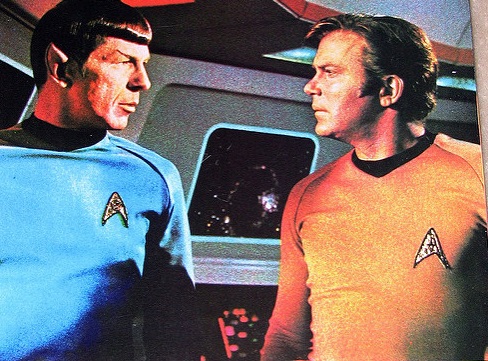
Star Trek Monthly Magazine Poster Book (cropped). Joe HauptCC BY-SA

The following is a narrative/memoir written several times with students in grades 3-5. I wrote a bare-bones version in front of students, then revised to model the vast difference of “showing, not telling” by adding detail and dialogue. “I can see it all happening!” the kids always exclaim, as the narrative comes to life. Yesterday’s eclipse brought this piece back to mind – the fascination with space, the many hours I spent watching and playing Star Trek when I was the age of these students. During the writing process, the kids ask countless questions. My favorite moment is when they realize what the story is really about.

I shake the device in my hand before I flip the lid and press the button to speak. “Do you read me, Spock?”

Nothing, not even static.

I pull the antenna out as far as it will go. I bang on the device a couple of times with my fist. I shout into it: “COME IN, SPOCK!”

My sister pokes her face from around the corner of our house. “This really ain’t logical!” she calls. She’s not even holding the device up to her mouth.

I sigh.

My sister is eight, I am ten, and we are tired of playing Star Trek. The batteries in the communicators we got for Christmas have quit working, and it’s no fun for Captain Kirk (me) and Mr. Spock (my sister) to keep yelling messages to each other across the yard, which has just one decent tree. There’s only so many pretend worlds we can explore when it all looks the same, with nowhere to hide from alien life forms.

My sister meets me at the street in front of the house. We leave our useless communicators behind in the grass and sit down on the curb as ourselves, not Kirk and Spock anymore.

“Let’s walk to the 7-Eleven and get a Slurpee,” says my sister. She likes the straws with the spoon on the end. She plays with them more than she drinks her Slurpee.

“I’m broke. I spent my last fifty cents on cinnamon Now-and-Laters and green apple bubble gum day before yesterday and it’s all gone already.” Our dad can’t stand green apple bubble gum. He says it stinks but I think it’s delicious, even though it turns my teeth and tongue green. “Do you have any money?”

“Nah, I thought you did,” says my sister, kicking at the grit beside the curb.

“Not anymore.”  I wish I had some green apple gum right now. I stretch my legs, which are getting long, out into the road. If a car comes, which isn’t all that often in our neighborhood, my sister and I will pull our legs up to our chests until it goes by.

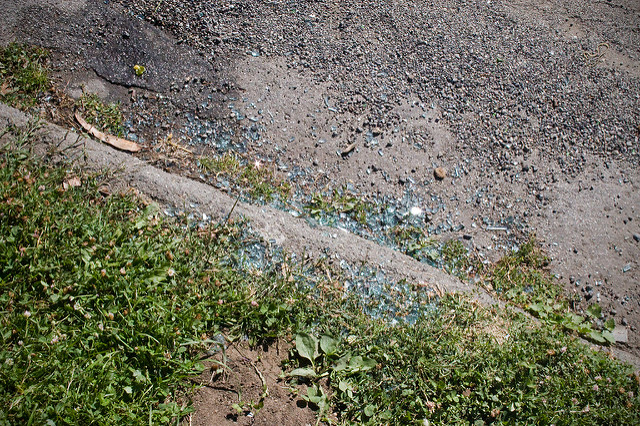
I look down at the edge of the curb where it meets the street, at the little loose rocks lying there. I see a stubby twig and pick it up to write my name in the dust when I notice tiny chunks of pale blue-green glass. I wonder where these came from. Someone must have thrown a Coke bottle out of a car and shattered it.  I push the pieces around with the twig, inspecting them – they don’t look sharp. Time and weather, maybe, have smoothed away the roughest edges.

“What would you do if you had a million dollars?” asks my sister.

“I don’t know.” I pick up a bumpy chunk of the glass and roll it around in my hand; it sparkles in the sunlight. “Maybe I would have a horse and a big house. Maybe I would travel all over the world and be famous. What would you do?”

“I’d give some to poor people for their kids to have toys and bikes and then I would get me a bunch of dogs. What is that?”

I show her the bit of glass in my hand. I smile: “It’s an aquamarine. March’s birthstone. If you were born in March I would give it to you but since you weren’t, I will sell it for thousands of dollars.”

“Hey!” My sister is half amused and half irritated. “Look here—I got my own aquamarine!” She plucks up another bit from the curbside dust.

Suddenly we’re both on a wild treasure hunt, crawling along the curb so fast that we’re scraping our knees. We find bits of brown glass; we say it’s topaz. Green bits are emeralds, my birthstone. The clear ones are diamonds, of course. We can’t find any sapphires, my sister’s birthstone. We forget that this is trash, just pieces of bottles tossed out because someone else didn’t have the manners to put them in a trashcan. In no time we have amassed enough jewels for a princess, maybe two.

The sun shines warm on our backs and a couple of cars go by, slowing down, almost stopping, as they pass. Maybe the drivers are nervous about two girls crawling so close to the street or maybe they’re just trying to figure out what we are doing there in the dirt, but the quartz in the pavement winks at us, glinting like gold, and I know my sister and I are rich beyond compare. We are not afraid to pick our jewels out of the dirt, because dirt is just part of the world, and right now, we own the world.

Broken glass

Broken glass, curbside grass. Orin ZebestCC BY

slice-of-life_individual

Tripping the write fantastic

Fantasy

Fill your life with love. Dianne LacourciereCC BY-SA

Without this playing with fantasy no creative work has ever yet come to birth. The debt we owe to the play of the imagination is incalculable. – Carl Jung

Her teacher sent her to me, to confer about her writing.

Not because the student is struggling.

The student, a fifth-grader, had written twenty pages of complex plot and extraordinary dialogue that revealed character personality and motivation.

“It’s amazing,” explained my colleague. “Out of the blue, she’s just taken off. I thought you could give her some pointers – her story is really good.”

The student, delighted at the prospect, immediately sent her work to me via Google Docs. Here are things I am thinking about, her message stated. She’d made notes about characters, problems with the story line, where she wanted to go with certain parts.

For a moment I felt transported to the future, as if I were an agent or editor receiving book ideas from an established author.

I read the work, praising the strength of the writing on sticky notes: Powerful, believable dialogue! and Excellent descriptive detail – I can “see” this scene vividly.

I looked for a couple of major areas to improve – only a couple – and they had nothing to to with spelling, format, or conventions at this point. The pressing thing at the moment was keeping those rich ideas flowing and clarifying this young writer’s meaning in some spots.

The child, beaming, comes to confer with me at the appointed time.

I sit beside her at my table:

“Ok, I have to know what inspired you. Clearly anyone who writes this much and this well – this dialogue is better than what I’ve seen some adults write! – is very inspired.”

Giggles ensue. “Well, it started with the fantasy writing unit in class. I got this idea of a girl who went back in time to the days of slavery. I am bad at history” – more giggles – “but that time period interests me, especially since my teacher read Chains to the class. That book made me want to go back in time and rescue some of those people, so that is what my main character will do. And she will meet her great-great-great grandmother.”

“That,” I say reverently, “is a story a lot of people might like to read.”

She goes on to share additional ideas that she got from other books like Serafina and the Black Cloak. 

As she speaks, I mentally toast the power of the read-aloud and student-selected texts.

To the student, I say: “Let’s go over what you’ve done here.”

I explain that switching narrators and times is using multiple story lines – “very advanced,” I tell her.

She grins.

I show her places where she lost me: “This is called a plot hole. You know what’s in your head and what you mean to say, but you jumped too fast and lost your reader.”

She nods. “Yes, I see that now.” We discuss ways she might want to fix it.

Off she goes.

That night, the Google Doc returns with revisions and questions.

Today she appears in my room, announcing: “I rewrote the entire first chapter. I felt that readers needed to know a little more about my main character’s life and her family in order to get the rest of the story.”

“Ah,” I reply, “exposition and backstory. That will help your readers.”

We look at the changes together.

“What we have to watch now is your pacing. Don’t spend too long on the beginning or you’ll lose readers – they want to know where this is going, so you want to speed up the less important parts and slow down at the more important ones.”

“And watch for plot holes,” she laughs.

“Indeed,” I smile.

Her ideas come fast and furious, and before we know it, time is up. As she turns to leave, she asks: “When is the next time we can meet?”

My turn to laugh. “Ask your teacher.”

At the end of the day, I return to my room to find a folded paper on my table – a schedule for when she can confer with me every day through the rest of the year.

I think of J.K. Rowling, who said that the idea of a boy wizard fell into her head on a train ride, when she had nothing to write on.

I think of C.S. Lewis, how an image of a faun carrying Christmas presents in the snow popped into his mind.

I think of Suzanne Collins, who grew up on her father’s stories about the effects of war.

I think of my young writer’s inspiration, and how fantasy and fairy tales help us work through the problems of the real world.

I recall telling my young writer: “Stick with it. You will be a famous author one day. I’ll come to your book signings.”

Giggling, she’d replied: “And you will be my famous helper.”

I look at the little conferring schedule in her handwriting, and smile.

We are tripping the write fantastic, she and I.


slice-of-life_individual