Q: What to write now?

WordPress, the content management system for my blog, regularly offers prompts to writers. A way to get the creative juices flowing, you know… and to connect people through sharing their stories.

For, as my fellow Slicers of Life can tell you, stories knit our hearts together like nothing else. Stories are the fabric of our lives, the storehouse of our memories, and one of our most creative endeavors. They are the way we see and shape our world. They shape us. Stories are among humankind’s greatest tools and gifts.

To that end: It occurs to me that a little inspiration might be needed for the Slice of Life Story Challenge. After ten days of writing, some of us may be running low on fuel. Here are a few WordPress prompts, just in case anyone out there can can use them…

  1. How has a failure, or apparent failure, set you up for later success?
  2. You’re writing your autobiography. What’s your opening sentence?
  3. What’s one question you hate to be asked? Explain.
  4. Do you have a favorite place you have visited? Where is it?
  5. What big events have taken place in your life over the last year?

Confession: It would be soooo convenient to end this post here and make another to answer my favorite of these questions (i..e, stretching this post into two; one DOES have to be strategic during a challenge), but the teacher-writer in me says You know you have to show, not just tell.

All right, all right.

My favorite from this list is #2: You’re writing your autobiography. What’s your opening sentence?

A: I have no idea.

First of all, not sure writing my autobiography is a venture I desire to undertake. A memoir, perhaps…a memoir in verse, even more appealing, but…hmmm. You writers know what our greatest fear is, don’t you: Will anyone really read it? Or care?

Which brings me to the point that this is a secondary concern.

Because…write for you first. Capture the words emerging in your brain like new and fragile butterflies. Jot the images before the rains of time wash them away like chalk from a driveway. Relive your memories; spend time with the people you have loved and lost and will miss all your days…along with the lessons you picked up along the way. Answer the Muse who stands so patiently (exasperatedly?) over you, tugging at your creative human soul where beats your struggling writer-heart. Just because you don’t feel the tug doesn’t mean she’s gone. Oh, she’s there, all right, standing with her arms crossed, tapping her foot.

Enough avoiding the task at hand…how would I start my autobiography?? (I do wish the question was for “memoir,” alas…I’d find it more compelling, even if the world at a large uses the terms interchangeably).

Here I am, stalling, tempted to say Check back tomorrow for the reveal! Truth is, I need to think awhile…

ALL. RIGHT. Here goes…

—Can I please switch questions? Can I answer #3 instead? What’s one question you hate to be asked? Explain.

A: Right now I hate to be asked what the first sentence of my autobiography would be, because I. HAVE. NO. IDEA. Furthermore, I am now asking myself WHY I ever picked it (I suddenly feel like a student trying to write a short essay on an exam after having selected my topic most unwisely).

Sigh.

I set my own foot on this path… so, let me see where it leads (do you hear me, Muse? You gotta take it from here. Please…).

My father named me for his mother, and that was the beginning of everything.

Well… it’s a start.
*******

Composed for Day 10 of the Slice of Life Story Writing Challenge with Two Writing Teachers
(keep going, y’all!)

Verily

On Day Two of the Slice of Life Story Challenge, I had a lot of fun playing with backwards names (You, reversed).

Today I am thinking about family names and the legends or lore surrounding them.

My mother had a unique name. My Grannie named her after her sister, Verlee. When I was little, Mama explained her name to me: It’s from the Bible. From the word “verily.”

Verily is an archaic English translation of several different Hebrew and Greek words throughout the scriptures. It means truly or certainly.

Grannie had six children by the time she was twenty-two, during the Great Depression. My mother was the last. They had a hard, hard life. I only know bits and pieces of their story; most of those who lived it are gone now. They experienced a lot of loss. A baby boy, Thomas, coming a year before my mother, died when he was a few days old. Grannie spoke of him to me when I was a child: I felt so empty, coming home without him. She never forgot him.

Mama said that when she was born Grannie brought her home from the hospital in a basket.

These images have lived in my head for years and years.

Quite some time ago, I started crafting a story about a family…not my mother’s, but with a few borrowings. I have a long version (incomplete) and a short story version. Every once in a while I go back and tinker with the tale , to see what the characters are up to…

Since the word came to mind today, I’ll share a little excerpt.

From my short story entitled “Verily, Verily”

One afternoon, when we was playing school on Grandma’s porch, a long black car that looked like it ought to belong to the mill owners pulled up.

Out stepped Mama.

At first I hardly knowed her. She didn’t look much like herself. Pure skinny for one thing, her legs just little bitty bird’s legs beneath the dress that the ladies’ sewing circle made and carried to the hospital for her. Her face, all sharp edges. Her eyes had changed the most. Huge, wild, like some hunted creature was looking out of Mama’s eyes.

When she seen us up on the porch, she tried to smile, but them too-big eyes filled with tears. “Well, girls – ain’t you even going to come hug your Mama’s neck and see what I brung you?”

Me and Artie May flew down the steps to throw our arms around her. Mama felt like paper and twigs, like a good breeze would carry her rattling away. She couldn’t hug us back very much because of the basket over her arm. Whatever she had in there was covered up with blankets.

“What is it, Mama? What’d you bring us?” shouted Artie, jumping up and down, trying to see inside the basket.

“Goodness, Artie May,” said Mama, “you don’t mean you’re just happy to see me on account of the surprise, are you?”

I felt happy to see Mama but I wanted to know what was in that basket, too. Just then, I seen something move under the blanket.

“Mama, you got a puppy in there!” I hollered.

Mama smiled then but her eyes didn’t smile with her. “No, Ollie Fay, it ain’t a puppy. It’s better than that. Come see.”

She kneeled in the yard. Artie May and me crowded close. Mama didn’t even smell like herself no more; she smelled like the inside of medicine bottles and new cotton cloth. I wondered what on earth could be better than a puppy, except maybe two puppies, as Mama pulled back the blankets.

Artie went Ohhhhhh and I ain’t never been more shocked in my life, to see a baby asleep in that basket. It had a round pink head with a little bit of dark fuzz for hair.

Mama said, “Girls, this here’s your little sister.”

Me and Artie just stared and stared before Artie finally asked, “What’s her name, Mama?”

“Well, I wanted to name her something from the Bible. I thought on it a long time and decided to call her Verilee.

Now, I knowed something of Mary, Martha, Ruth, and Hannah, but I ain’t never heared of no Verilee in the Bible before. Artie must of been thinking the same thing, because she asked, “Who was Verilee in the Bible, Mama? What did she do?”

I guessed, on account of the basket: “She was Baby Moses’s sister.

Mama shook her head. “No, Ollie Fay. That was Miriam. There won’t nobody named Verilee in the Bible. I took it from something Jesus said: ‘Verily, verily, I say unto you, he that believeth on me hath everlasting life.’”

Then Mama’s mouth started wobbling.

Grandma spoke from the porch: “Rose.” We got so caught up with the baby none of us even knowed she’d come out. She stood there with her arms crossed over her bosom. “That’s it, Rose. He’s gone and you know there ain’t no suffering where he is. Call the child whatever you want, she’s a sign that life goes on. We can only pray it ain’t always going to be so everlasting hard. Get in the house, girls, your supper’s on the table.”

Hmmmmm.

Maybe it’s time to tinker some more? Hammer out the many kinks and let these characters get on with their lives?

Verily, I say to y’all… that might be a whole lot of story.

My Grannie holding my mother, 1941.

*******
Composed for Day 5 of the Slice of Life Story Challenge with Two Writing Teachers

A thought: Dialect is often discouraged in writing because it’s hard do to well and can be challenging for readers. But sometimes that’s how the story wants to tell itself.

You, reversed

Yesterday morning during a read-aloud that mentioned “Backwards Day,” I watched students getting into the concept. One boy twisted his sweatshirt around so that he could pull the hood over his face. He took off his sneakers and tried, unsuccessfully, to put them on his feet backwards (note: these are second graders). Others said “What a terrible story!” meaning, of course, “What a great story!” And the guest reader, Gabby, said her name was “E-Bag,” to howls of kid-laughter.

It took me back to my own childhood, when a friend and I decided to call each other by our backwards-names: I was Narf. She was Irret.

Hysterically funny! So utterly original!

Until I mentioned it to my father, who burst my bubble: “I did that when I was a kid, too.”

“Oh,” I mumbled. So much for inventing one’s own new fun thing.

“Yeah,” Daddy went on, matter-of-factly, “I was Nodrog.”

NODROG?!

I collapsed in the floor, convulsing with laughter.

It sounded almost like a sci-fi/fantasy name. What would a character named Nodrog be like? Would he be an inept superhero who was basically good-hearted but forever blundering (à la Inspector Clouseau)? Or a giant, rugged, comic book character, a cinderblock kind of robot whose foosteps shook the Earth?

In either case, nothing like Daddy, with his silvery crewcut, work uniform, and photo gray eyeglasses. Who knew he’d actually been a real kid?

After the second-graders and “E-Bag” stirred the old memories, I found myself wondering:

What would a character named Narf be like?

Associations like Nerf and Nerd crowd my mind… but perhaps these are useful.

Maybe Narf would be athletic. Very fast and agile (I was a fast runner as a kid, whenever asthma didn’t do me in, but never really athletic, emphasis on never). I should like to think a facet of myself could be so skilled at sports, in something greater than Tetherball (if you know what this is, you are, like me, from a bygone era).

Or maybe Narf is from another world (my favorite kind of story!). This spawns all sorts of questions: How would Narf get to our world? And why? What would Narf’s world be like? Should we go there instead? Is it in danger of being destroyed? Is Narf on some kind of mission? Can Narf operate advanced technological devices and spacecraft, or even build them? … the possibilities here are endless…

Somehow I cannot think of Narf as an elegant being, except for maybe graceful while playing sports, but more likely a scrappy player. I can, however, envision Narf as something else entirely, a comical character wearing a big fascinator with giant, garish fruits fashioned from sponge (toldja those first associations might be useful).

And then I wonder…would Narf be my alter ego? My evil twin? (I accused my own children of having one).

—OH OH OH OH—

As the wan light began to fade, they stood side by side on a dune looking out over the desolation. Nothing but rippled sand to the smoky white horizon. No other living thing in sight. This was once the shoreline of the Great Sea, long since dried up.

Nodrog broke the deafening silence: This is where we must go our separate ways.

Narf nodded. After a moment, she spoke: Will we ever meet again?

She knew the answer.

Not in this world, Child. It is the last day. The end of Drawkcab.
You must remember what you have been taught.

His spear fell into the sand. He was already fading like the light, becoming the mist, same as all the others. Her hands shot out, grasping at nothing. She could not hold him.

Nodrog was no more.

She bent, picked up his spear, and leaned on it, weeping.

We will meet again, she said aloud, sure that he could still hear — is it not the last sense to go?

We will meet again, she repeated, louder, if not in Drawkcab, then Drawrof. Yes. Drawrof.

And she set out over the dry Great Sea-bed, shells crunching under her feet.

—What shall I do with them now, Nodrog and Narf? Should these newly-materialized characters live out their whole story, somehow?

Ot maybe I’ll save the names for a different manifestation, in case Nodrog and Narf should come to me in the form of, say, two pet dachshunds.

Somewhere, Daddy is shaking his head about all this.

In amusement.

I’m sure of it.

Life can only be understood backwards; but it must be lived forwards.” sylvar. CC BY 2.0.

*******

Composed for Day 2 of the annual Slice of Life Story Challenge with Two Writing Teachers.

Q: Where might your name in reverse take you?

Of foxes, finches, and Franna

Today I celebrate language.

Let me begin with the fox.

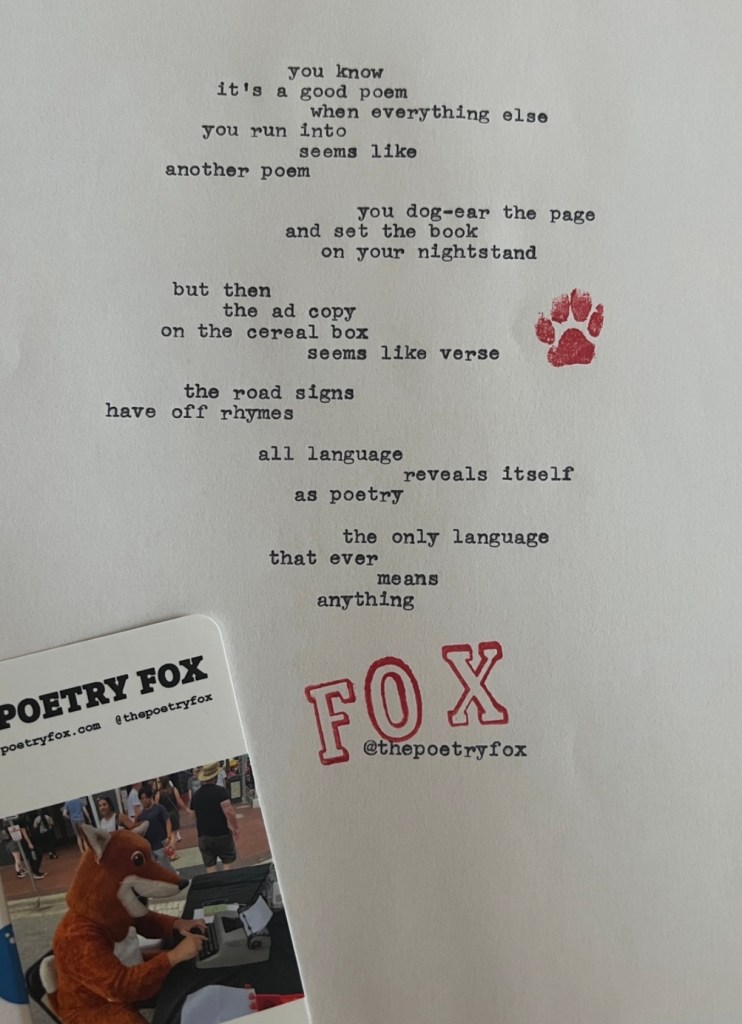
Last Friday I arrived at a hotel ballroom for a breakfast buffet in honor of educators and volunteers who had read aloud to children throughout the year. We had concluded a program built on developing positive relationships and instilling a love for reading in the kids.

There at a table, greeting folks upon arrival, sat the fox.

The Poetry Fox, to be precise.

A guy in a furry fox suit, typing away on an old-timey typewriter.

Turns out that if you gave the Poetry Fox a word, he would type a poem for you on the spot.

I nearly forgot the breakfast altogether; I had to stand in line for a poem.

Two women in front of me gave him the words daughter and twins (who are leaving the nest to go to college). Within two or three minutes, Poetry Fox tapped out each poem, stamped his “official” seal on the pages, and read them their poems.

I can hardly describe the looks on these women’s faces. Radiant. Smiling, slightly open-mouthed. Eyes wide, misting. The air about them even seemed to glow…

My turn.

“It’s National Poetry Month,” I said to the Fox.

“Indeed!” he replied with glee.

“As I love reading and writing poetry… that is the word I give you. Poetry.”

“Wow, no one’s ever asked me to write about the word poetry before,” said Poetry Fox. “I get creativity and inspiration but not poetry…okay, let’s go!”

He rolled a sheet of paper in the old typewriter and pecked away.

Here’s the poem:

In a word: awe. It’s my life-word anyway… those last lines, especially.

all language
reveals itself
as poetry
the only language
that ever
means anything

The glow of this poem, and the wonder of the Poetry Fox whipping it out on the spot, stayed with me for the remainder of the day…to be honest, it hasn’t left yet.

Early the next morning I was still thinking about poetry being the only language that ever means anything when the sound of loud, melodic chirping echoed through the house. The finches nesting in my door wreath, feeding the hungry babies. In the beginning, before their eyes are open, the babies sense a presence and open their mouths in silent cries for food. They do not yet have voices. They do now. They chorus like tiny Oliver Twists: Food, glorious food! We’re anxious to try it…three banquets a day, our favourite diet! Except that they consume more than three banquets a day; Mama and Papa work hard to keep the babies fed.

I decided to chance a photo when the parents were out fetching… when I neared, speaking quietly so they could hear me coming, the babies fell silent at once. They do not know what I am, but they know I am not Mama or Papa with food and instinct tells them don’t make a sound.

I am happy to report that all are presently doing well (you can see all five baby beaks here):

The baby finches deepen my awe of language and poetry. They are language and poetry to me, with their musical chatter and even in the cessation of it. So tiny and new, but so infinitely wise.

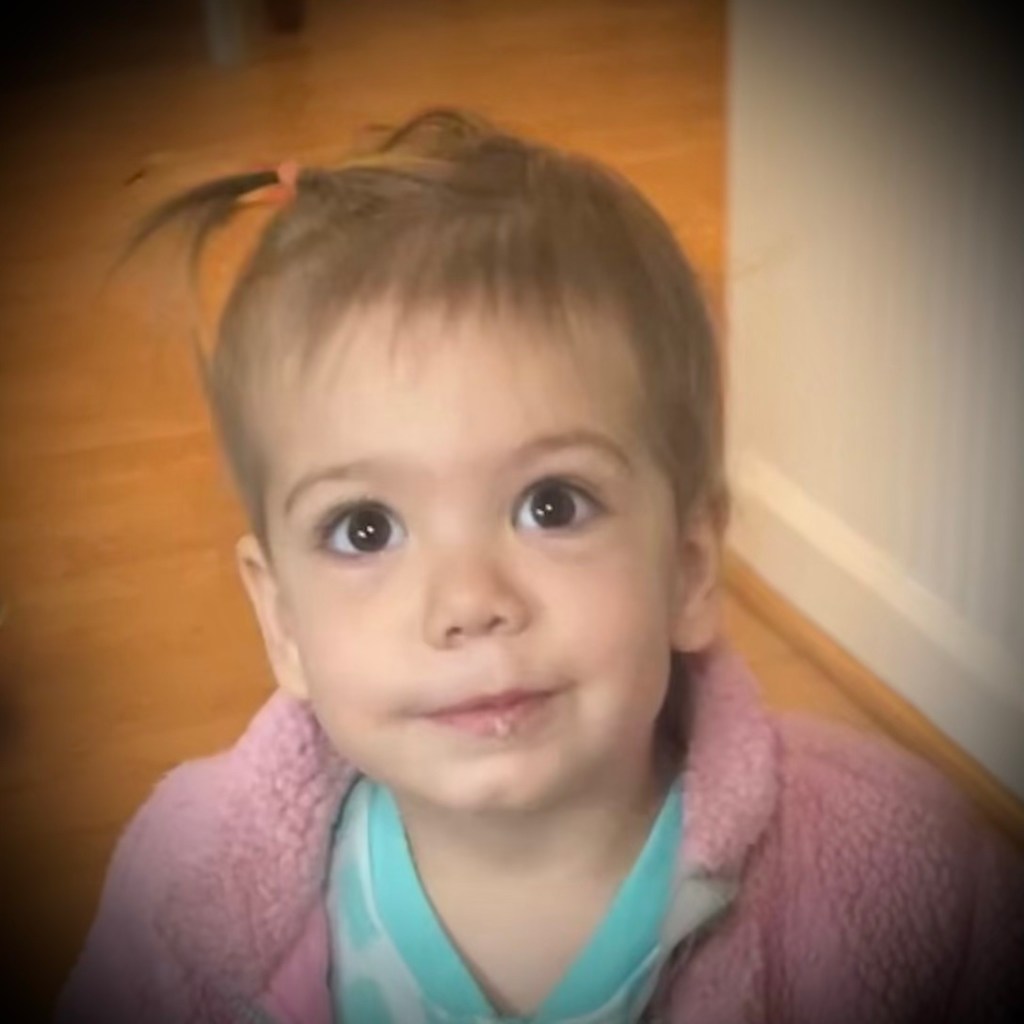
Which brings me to my granddaughter, age eighteen months.

She came that afternoon to stay with my husband and me. We marvel at the new words she’s acquiring every single day, how she studies our faces for responses, how she mimics actions. She now says Grampa quite clearly, to my husband’s utter delight. I’ve tried and tried to get her to say Franna, but she only grins; is she teasing?

But on this afternoon, she stopped playing with her favorite musical toy to walk over to him where he sat in the recliner. Looking up at him, she patted his hand with her tiny one.

Grampa, she said. Grampa.

It was a holy moment. I don’t know how else to say it. She was naming him, claiming him. A sacred act. My eyes welled.

And before I knew it, she was standing before me where I sat on the couch, looking at up me with gleaming brown eyes.

She patted my hand.

Franna, she said.

Pure poetry.

The only language that ever means anything.

*******

with thanks to Two Writing Teachers for the weekly Slice of Life writing share
and Lionel Bart for the song “Food, Glorious Food” in the Broadway musical Oliver!
and Poetry Fox
and the finches
and my beautiful Micah

Poetry: keeping the channel open

For VerseLove on Ethical ELA this week, host Margaret Simon shared this quote from dancer Martha Graham (on The Marginalian):

“There is a vitality, a life force, an energy, a quickening that is translated through you into action, and because there is only one of you in all of time, this expression is unique. And if you block it, it will never exist through any other medium and it will be lost. The world will not have it. It is not your business to determine how good it is nor how valuable nor how it compares with other expressions. It is your business to keep it yours clearly and directly, to keep the channel open. You do not even have to believe in yourself or your work. You have to keep yourself open and aware of the urges that motivate you. Keep the channel open.”

Margaret invited poet-participants to free-write for ten minutes and “just flow.” She shared a poem she composed in her Notes app while walking, along with this encouragement to keep going: “Mary Oliver says ‘You do not have to be good’ in her poem ‘Wild Geese’…accept what comes and be open to it. We all have an energy inside us waiting to be released in some creative way… Forget the rules today and flow, flow, flow.”

In keeping the channel open…here is where my mind went first.

Gifts from the Limbic Sea

Before it is quite morning
the otherworld of dreams
begins to recede
the hippocampus
swimming in its own sea
of memory
is unable to hold onto
the waving grasses
ever how beautiful
or important these
may be 

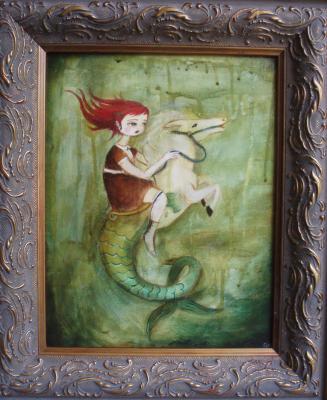
Try, I tell my twin seahorses
before I am quite awake
I would tighten
the ethereal reins
but I know I am
only dreaming

my hands cannot grasp
anything solid
images dissolve into foam
all I can feel
is a gentle current
ebbing away

or maybe 
that strange and bright
otherworld remains
and I am what transitions
from there to here
borne away on 
mystical tides 
back to reality

and so I rise 
in the darkness
before it is quite morning
to find my journal

and write
before the hippocampus
shakes off 
the remaining residue

it’s not much
this grasping
but I do it
because
these last particles
of dream-dust
preserved on the page
mean something

and they 
are mine

Hippocampus coronal sections. DanielsabinaszCC BY-SA 4.0

‘Hippocampus’ by The Black Apple. Halogen GalleryCC BY-SA 2.0

Found story-poem

On Ethical ELA this week, host Dave Wooley invited VerseLove participants to compose blackout poems: “Find a piece of writing that you want to use as a source, grab a black sharpie and start redacting. The words that are left will be your poem.”

Basically, a blackout is a found poem, with chosen words and phrases remaining in original order. Examples can be found here: How-To Blackout Poetry.

Great! I thought. This will be easy.

It was not.

The problem: First thing that came to mind was a new poem that completely awes me…

Amy Nemecek, The Language of the Birds, 2022.

I started blacking out lines and stopped, because a thing happened.

I just couldn’t reduce this stunning poem. It felt like…desecration.

Instead, I lifted a few words out that especially sang to me. They brought with them their own images, forming something new and other.

Thus was my “found-story haiku” born (not sure if that’s even a thing… I guess it is now):

History of Ideas

from firelight, a spark
illumination flaring
then dying in dust

from the river, song
improvisational joy
free and beckoning

from the silhouette
of trees against starlit sky
infinite longing

from the heart crying
against its impermanence
a reliquary

from calloused fingers
a hieroglyph on a wall
before papyrus

from the weightless bones
a shell of structure is formed
the embryo stirs

out of the static
spark, song, longing are harnessed
the fragile thing lives

For the record: I finished blacking to reveal the words I pulled, although this in itself is not a blackout poem.

It is my seed-bed of ideas.

Post title poem: an A-Z slice of life

with thanks to fellow Slicer-poet Denise Krebs, who, upon realizing my Slice of Life Story Challenge posts have followed an abecedarian pattern, asked: “Will you do a post about the titles? Perhaps make an abecederian poem using the titles?”

I hadn’t thought of that. Is it possible? Would it even be worth reading?

As I have come to the end of the alphabet with five more posts to write and no plan… why not?

Here goes…

Auspices are favorable for my

barefoot baby ballerina on her toes, at present so like

crows, the absolute embodiment of Thought and Memory. It shows, in throes of

doggerel she tries to recite from her baby books, before she even knows words.

Eavesdropping at nap time, I hear her singing her own invented lullabies.

Focus on saving details of her story, I tell myself. Like the way she calls “Good boy” to the

graze academy of cows pastured behind the manse, and how proud she is of

herself in her little pink coat that shall NOT be removed, nay, all the livelong day.

I remember these from my own early story, memories flitting like tiny gray-cloaked

juncos in ancient winter grass:

koala life lessons from a book my grandmother read to me, in verse;

love notes in the cadence of her voice, ethereal rhythms falling on me like gentle

March snow. There was a book of birds tending their

nestlings as lovingly as Grandma tended me, slathering me in an

ode to menthol (Vick’s VapoRub) when I couldn’t breathe. I am well-wrapped in legacy.

Pursuing knowledge came early: Why is Granddaddy’s middle name St. Patrick?

Quotable Patrick, aka Granddaddy, with a sigh: I got no ideer. And he changed it—!

Remember these days, I say. Write now; who knows what the future holds? A long

sleep experiment poem unfolds. And so each day I am about

taking stock: my pile of good things grows to wealth untold. I play with words like

unfare while my mind time-travels to and fro, a

vagabond in search of a keeping-place, forever digging under the

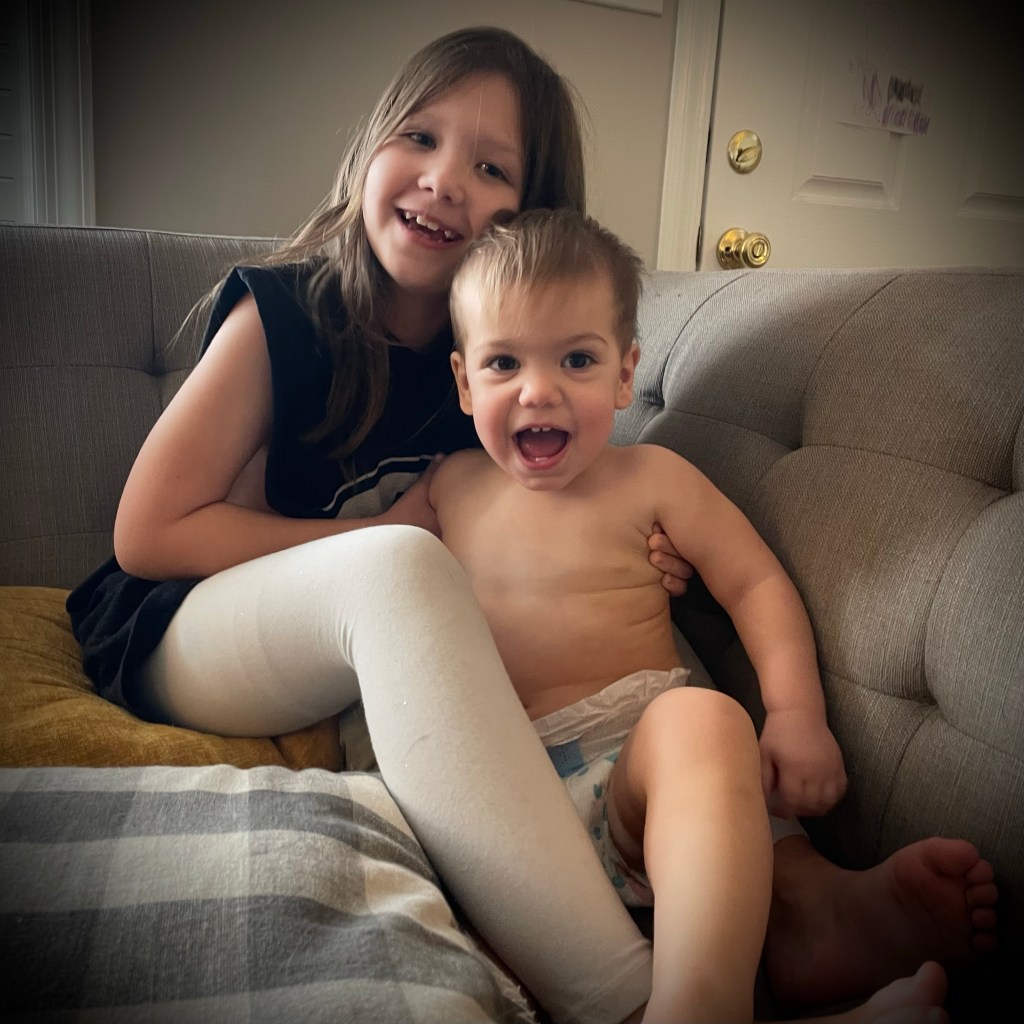
wall on the writing. Oh, my baby ballerina and big sister nurture scientist/Jeopardy

X-ray expert/backseat prophet, someday you’ll each know how Franna prayed for

your one wild and precious life, filled to running over with awe and

zest—the whole A to Z gamut of my existence.

My granddaughters

*******

with thanks to Two Writing Teachers for the monthlong Slice of Life Story Challenge

and several fellow Slicers who made requests for particular posts along the way

now: What to write tomorrow?

Ah, but story is in the making every precious moment that we live.

Wall on the writing: a scrambled idiom poem

On the last day of Ethical ELA’s Open Write, host Denise Hill offered this invitation:

“Take a metaphor or idiom and reverse it or twist it up in any which way you choose – mumbo jumbo jam it!

Then write from the ‘sense’ the new phrase makes. It may be total nonsense. That’s perfectly fine! It may provide a ‘feeling’ or strike a memory chord or a fantasy chord with you in some way that inspires your poem today. Just go with it!”

Here is what came of my scrambling the writing on the wall

The Wall on the Writing

In prehistory
cave-dwellers
dipped their fingers
into animal fat
charcoal
their own earwax

then dirt and ash

to paint their stories
on the walls
by flickering torchlight

over time
many caves
collapsed

to be reabsorbed
by the earth

In the course 
of human migration
the region of the caves
became a fortified city
with iron gates
and great stone walls

one of which
was constructed
over the buried caves

It is said that at this wall
the great orators
gave their mighty speeches
humble petitioners
made their prayers
poets composed their epics
chroniclers penned histories
and storytellers
found their words

I do not know
if the wall 
or the legends
are real

but I do know
that when I
hit a writing block
that I cannot
go over
around
or through
if I dig
deep
deeper
deeper still
within

I will find
the words

just human DNA
finding its way
with story
waiting 
deep
deeper
deeper still
beneath the wall
on the writing

Stone Wall. jcubic. CC BY-SA 2.0.

with thanks to Denise Hill and the Ethical ELA Open Write community

and Two Writing Teachers for the monthlong Slice of Life Story Challenge

for story really is

in our DNA

Sleep experiment poem

This is not what you think.

The poem you’re about to read is not about a sleep experiment.

It is an experiment in writing a poem about sleep, using Artificial Intelligence (AI).

On Day One of Ethical ELA’s OpenWrite, host Stef Boutelier invited participants to try AI for creating or modifying a poem, stating that “AI is here to stay. We might as well learn alongside and make sure our humanity isn’t disposed of too quickly.”

She shared these sites with the directive to “explore ways you might use, learn, or negate AI within the lens of poetry”:

So, as a test of AI vs. human creativity, I used the poem generator to write a villanelle.

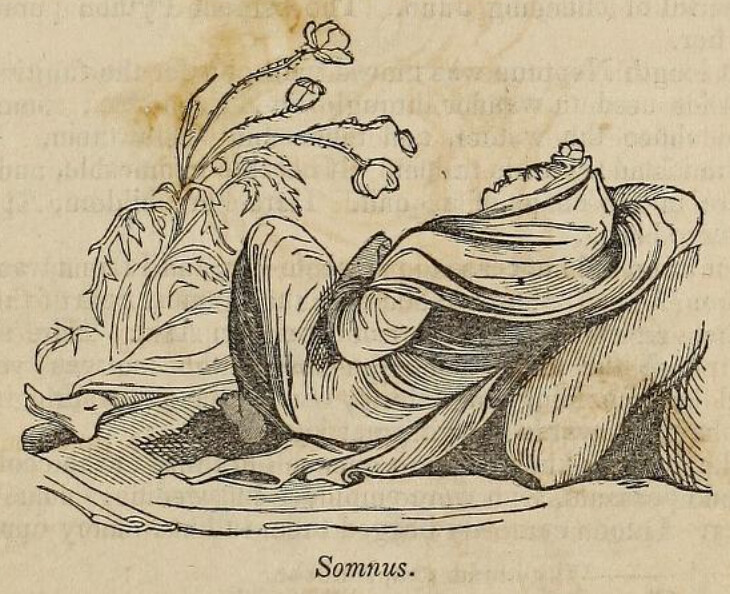
My topic was sleep (I am coveting it in the throes of getting over a lengthy cold, going into week three) and as I was prompted to choose two characters, who better than Somnus and his son Morpheus, gods of sleep?

Confession: I did alter a few of the rhyming words but that is all…

Without further ado, the experiment results:

Somnus’s Torment: The Villanelle of the Sleep

Somnus couldn’t stop thinking about the sleep
It was just so elusive and desired
But he could never forget the sheep

That morning, Somnus was shocked by the upkeep
He found himself feeling rather wired
Somnus couldn’t stop thinking about the sleep

Later, he realized that the sleep was deep
He thought the situation had become rather uninspired
But he could never forget the sheep

Morpheus tried to distract him with a leap.
Said his mind had become too misfired
Somnus couldn’t stop thinking about the sleep

Somnus took action like a veep
The sleep was becoming required
But he could never forget the sheep

Somnus’s demise was cheap
His mind became dangerously tired
Somnus couldn’t stop thinking about the sleep
But he could never forget the sheep

And there you have it.

Give me “Do not go gentle into that good night” any day.

This is not to say that AI can’t inspire or help with learning form and composition. In fact, its greatest offering might be a lesson in the power of revision.

And while it can actually generate some alarmingly wonderful things, I don’t think AI can ever out-poet the human mind.

I shall have to write my own villanelle now…but I won’t be using AI.

Has it ever seen or heard the birds? Has it ever smelled cut grass or felt the heartbeat of a living creature? Can it experience anything?

No.

Here’s to using the senses and the soul to capture the experience of being alive. Is this not the whole purpose of writing?

Meanwhile, sleep is still calling me…

*******

with thanks to Stef Boutelier on Ethical ELA
and to Two Writing Teachers for the monthlong Slice of Life Story Challenge

Ode to menthol

In the season
of sickness,
of a rattling
in the chest
that lingers
and lingers
and lingers
I seek
your healing power
O my elixir

none other will do
as well as you

your name
is not always recorded
on cryptic inscriptions

but I know
it’s you

nothing else
has that
distinctive
burn

Alas, you have become
such an elusive elixir

I search high and low
(on the shelves)
just to find
you’ve vanished

leaving no trace

it befits you,
vaporous thing
that you are

I cannot entertain
the notion
of orange
or honey
—fie!

These cannot
open passages
like you.

I wonder
what on Earth
I shall do

but wait…

memory stirs
like ghosts
like tendrils
like vapors, yes…

my own father
pouring your
precious substance
into a little silver tray
and plugging in
the vaporizer

there I was
suffering child
surrounded
by a steamy cloud
tinged with your
cool fragrance

sputtering
sizzling
on through the
long, long night

(you’re no cure-all
for childhood asthma, btw
but I’m not dealing
with that
anymore)

and speaking
of clouds…

back there
in the shroud
of Time
where sits
my father
and
my mother
puffing
puffing
puffing
on Salem cigarettes
there, the
telltale green carton
indicates your presence

I can still smell you
on the foil
of those packs
and in the
smoke ribbons
curling in the air
(aside: salem means
peaceful
complete
safe
perfect)

—what a cool operator
you are,
alternately healing
and stealing
breath

but then…

far back
so far back
I find you
at your purest,
perhaps

sick child
that I was
struggling
to breathe
(yeah, it’s a theme)

my grandfather
going to
his medicine cabinet
for a little
cobalt-blue tub
my grandmother
unscrewing the
aqua lid
and with one finger
slathering a good dollop
under my nose

(which now
no one is
ever
ever
ever
supposed to do
although clearly
I am alive)

and it is this memory
these moments
that are salve to my soul.
balm to my spirit

and so I come
to find you
like a miracle
in my own
medicine cabinet

whereupon I slather
my own self
up good

relishing your
mint-oil fire

your vapors
like a blanket
of love
enveloping me

breathing
breathing
Yea, with
a little
more ease

until this
lingering
lingering
rattle

evaporates
at last…

O, my elixir.


Fun facts: Vick’s VapoRub was invented in 1894 in the North Carolina county next to where I live now. It was originally called Vick’s Magic Croup Salve. From the NC Department of Natural and Cultural Resources: “The salve in the blue jar is made of menthol, camphor, oil of eucalyptus and several other oils, blended in a base of petroleum jelly.The creator invented it to cure his son of severe croup…which it did. Spanish flu killed the inventor in 1919 but, paradoxically, that pandemic drastically increased demand for his product. Oh…and guess who worked at the inventor’s drugstore as a teenager? O. Henry.

My ode, however is to menthol, not just Vick’s, seeing as I had to include my parents’ Salem menthols in the mix. I was an asthmatic child, my first attack occurring at age three months. As I grew, I often begged to stay with my grandparents when I was sick; they slathered me with this old remedy, hence my great affinity for VapoRub. Accordingly, my grandparents are ever-present in the healing power of that clean menthol burn…nowadays I am not troubled with asthma but when I feel a cold coming on, or, as in the present moment, trying to shake the rattling cough after a cold, Vick’s DayQuil with VapoCool is my go-to. It works, to which widely empty shelves attest. I finally had some delivered by Instacart (had to show ID, of course) so I can continue burning the rattle out of my chest…it’s the best thing I know of, outside of a certain homemade “recipe” made by one of my old-time church members from the country…not exactly sure what was in THAT jar, but it would’ve surely burned this stuff out long before now… that, however, is another story for another day.

Here’s to the healing power of menthol.

*******

with thanks to Two Writing Teachers for the monthlong Slice of Life Story Challenge
and to Kim Johnson,

whose series on Epsom salts convinced me that I really, really should write about menthol
(which, yes, can occasionally be dangerous, so use with care)