Starting a semi-sestina poem

with thanks to Wendy Everard for the Open Write invitation today on Ethical ELA. A traditional sestina has six stanzas and a three-line envoi; the initial six ending words rotate through remaining stanzas in a prescribed order. Today’s process begins with brainstorming six words. For a semi-sestina, one can alter stanzas and lines, exercising creative freedom…

Here are my six words and opening stanza at present. It will take some time to see where they lead…

fabric
scissors
fall
damage
pieces

pattern

Childhood Memory

She spreads the pattern across the fabric
placing the pins. Wielding her sharpest scissors,
she cuts along the grain. The scraps fall
to the floor, haphazard collateral damage.
She will not save the pieces
or remember their wholeness, before her pattern.

Cobbler cutting fabric with scissors. Ivan Radic. CC BY 2.0.

Light reading

A friend who knows my affinity for the natural world gave me The Book of Hope: A Survival Guide for Trying Times. It’s written as a conversation between Jane Goodall and her interviewer, Douglas Abrams. When I say it’s part of my current “light reading” I don’t mean easy (although it is) or frivolous (for it is not).

I mean light as in candleglow dancing on the walls of a dark room.

I’ve not gotten far yet but here are some lines that draw me in the first couple of chapters—flickerings of my own credo:

Hope is a survival trait.

The naturalist looks for the wonder of nature – she listens to the voice of nature and learns from it as she tries to understand it.

Hope does not deny all the difficulty and all the danger that exists, but is not stopped by them. There’s a lot of darkness, but our actions create the light.

And this from an Inuit elder, on confronting and healing our grief, which can manifest itself in the body as physical pain: Make space for grief…find awe and joy in every day.

—these, I believe. They are often the very reason why I write.

Recipe for Survival

Hold onto hope, and it will hold you
Open the ears, eyes, arms of your spirit
Perceive the call of awe, all around
Embrace it. Let the healing begin.

Tinkering with modern haiku

with thanks to Mo Daley for the Open Write invitation on Ethical ELA today: “Forget counting syllables for this writing exercise! The modern haiku does not trouble itself with syllable and line counts. Rather, write a short (usually 1-4 lines), unrhymed poem that juxtaposes two images to capture an insight about the world or oneself.”

This seems so simple…

The first things that comes to mind is the the gutter work we had done here yesterday—what to make of this?

Leaking gutters
purged of sludge, with new downspouts
stormwater conduits now capable
of saving my foundation.

A bit of satisfying metaphor, but not exactly juxtaposition.

Something of a challenge, this. I don’t know why I am clinging to the image of a gutter, other than it’s now stuck in my head. It’s one of those simple, unremarkable things (unless, of course, it has a gargoyle waterspout) with vital importance. Maybe a good metaphor for writer’s block.

Hmm. I will try again:

Life-giving rain and sheltering tree are in conspiracy
nonchalantly sneaking, bit by bit, into the gutter
for the ruination of my house
— rather a long-range plan, but still.

Maybe.

I was going to try another haiku with a father telling his sons to “keep their noses clean” when everything really depends on the gutters, or maybe one playing off Oscar Wilde’s quote: “We are all in the gutter, but some of us are looking at the stars,” but now I am weary of wrestling with modern haiku about gutters.

Guttered out, like a candle.

Translation

with thanks to Jennifer Guyor Jowett for the Open Write invitation on Ethical ELA today:

Think about your reality.
What do you see today?
Ponder the possibilities before you.
Allow a free verse poem to develop.
Begin with the line I see…

*******

Translation

I see the sign
on an office wall

simple black frame
simple black font
on a plain white field

devoid of décor

just words:

Alles ist fertig;
es muss nur noch
gemacht
weden.

I do not read
or speak
this language

but that doesn’t keep
images from
springing to mind:

I see furrows
lush and green against
chocolate loam soil
spread out
like a billowing blanket
to tree-lined ditches

I see my childhood
materializing like a ghost
in the white summer haze

I see the cadence
of cicadas
and storytellers
around the dinner table
long ago
(yes, I see them;

rhythms
have shape
and color

as tentative as candleflame
as sustaining as river
as permanent as earth).

—I see it all
even if
I don’t always know
what it all means.

Eventually
I’ll translate
what I see
into words
on a page
for the knowing.

Everything is ready,
it just needs
to be done.

Toadally true story

While working outside around the house, I paid no attention to the little brown rock in the driveway.

Until it hopped.

On closer inspection: Not a rock. A tiny, rust-colored toad, pretending to be a rock.

Reminded me, for just a fraction, of story characters who magically transform themselves into creatures or objects to avoid detection from enemies…

I leaned in while trying to maintain a respectful, non-threatening distance.

“You’re doing a magnificent job of it,” I told the toad.

Of what? its tiny taciturn face seemed to ask.

“Of pretending to be a rock,” I said.

It sighed (I think).

What gave me away?

“Well, rocks don’t hop.”

Its expression: pure disdain.

“Toads don’t talk, either,” it said, as it turned and hopped away across the hot pavement.

Okay…so this story may not be toadally true…

The toad. Less than one inch long. Stone-faced, isn’t it. Can’t decide if I’d call it Rusty or Rocky. Or perhaps just Fowler, as it appears to be a Fowler’s toad, with poisonous warts…fun fact: apparently ALL toads are poisonous. Not highly toxic to humans through touch, only if ingested (gulp). Think of those I caught as a child and brought home in my metal Peanuts lunchbox amongst the crusts of my PB&J (toadally true. Honest). Would make for fun fiction writing with students when they study animal defense mechanisms: The Revenge of the Toads…

*******

with thanks to Two Writing Teachers for the weekly Slice of Life Story Challenge
and, of course, to the toad

Purity

a tanka

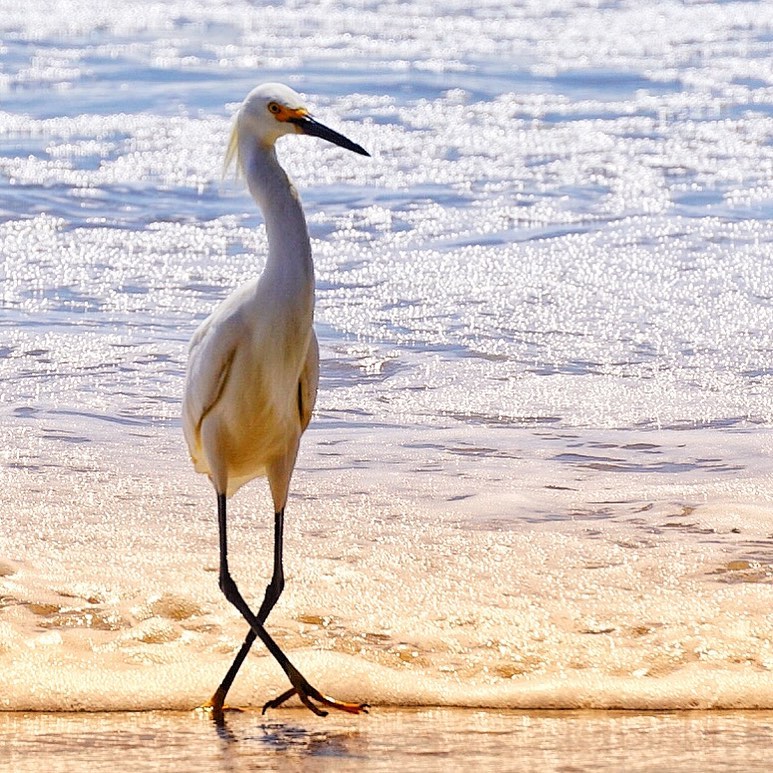
Photo: Egret by Kim Douillard

Lone snowy egret
by moonstone sea genuflects
in pious homage.
Opalescent baptism

on the wings of no regret.

*******

Thanks to Margaret Simon who shared Kim’s breathtaking photo for “This Photo Wants to Be a Poem” at Reflections on the Teche.

I love symbolism and am awed by certain images that come to mind during composition:

Egrets, snow, opals, and baptism all symbolize purity. So does the sea; it cleanses itself.

Egrets and moonstone are linked to balance. The colors on the water in this photo brought moonstone and opals to mind—they are gems of light-play. Note the posture of that bird.

Egrets also symbolize piety. They prefer solitude.

Horses on the fly

Sunny summer morning
driving home with groceries
along the winding backroads
past forests, clearings,
smatterings of houses

at the crossroads
where the tobacco field
gives way to pastures and pond
two horses, trotting
side-by-side

not uncommon, horses
being ridden
along these
country byways

except that these
are unsaddled
unbridled

riderless

in the left lane
headed toward us

moving in sync
at a lively pace
tossing their manes

faces covered
with fly masks

Look! cries my husband
who’s driving
immediately
slowing down
to a near stop

— no one’s with those horses!
And their eyes are covered
—they can’t see!

They can see,
I tell him
even though I know
next to nothing
about fly masks
and equine husbandry

I just know
by the certainty
of their movements
and their canter
that they can see

they are not blindfolded
to be led out of
a burning barn

but they’re here
on the road,
unattended

and drivers
who might be coming
from either direction
are unaware

and people drive
too fast
on these
winding backroads

—how, how,
I wonder,
did they get loose

these magnificent beasts
that someone
surely values
and loves

—should we call 911?
—what can they do?
—remember, we did that once

when we saw the mule
strolling up the street
in our neighborhood
—yeah but the farmer
figured it out and got to it
before it got to the highway
—should we get out and…
—and what? Try to hold ’em?
They don’t know us.
We don’t know them.

We don’t know
how to handle horses…

by now, the carefree pair
on its merry jaunt
has passed us

and I can only hope
the owners have realized
and are on the way
or that someone who lives
in the nearby houses
knows to whom they belong

or that these creatures
will use their intuitive
horse sense
to go home

I cannot think
the thousand terrible things
crowding my brain

images of beautiful beings
taking newfound liberty
headlong, headstrong
toward what they cannot know
and others
who do not see

Photo: IMG_2703. thatsavagegirl. CC BY-NC-ND 2.0.

We didn’t hear any news of something terrible happening to the horses; living in a small community, we would have. I am pretty sure that, a few days later, I saw these same two horses, still fly-masked, safe in the fenced pasture beside that same tobacco field where we saw them on the loose. The initial feeling of awe mixed with horror is hard to shake, however. The image of these two riderless, fly-masked horses is now an indelible one in my mind for potential harm, needless loss and destruction, and feeling utterly helpless in the face of it.

Lingering

with thanks to Ruth for the inspiration at Sharing Our Stories: Magic in a Blog:
“Invite the reader to linger and feel unexpected emotions.”

There was a time, before COVID, when we lingered. Not endured, not withdrew, not withstood…lingering did not mean an unshakeable cough, unshakeable fear, unshakeable uncertainty.

We lingered because we wanted to make the moments stretch and last. With purpose, holding onto goldenness before it melted away in lengthening shadows, desiring just to be, to savor, to breathe, without words for naming the why, unaware except in the deepest part of subconscious self that everything is temporal. Everything is always imperceptibly changing. We change, the people and creatures we love change. They leave us, in one way or another. In certain moments before the leaving, be it theirs or our own, we linger, suspending the faint ticking of the clock on the wall of our existence.

Tonight, I lingered.

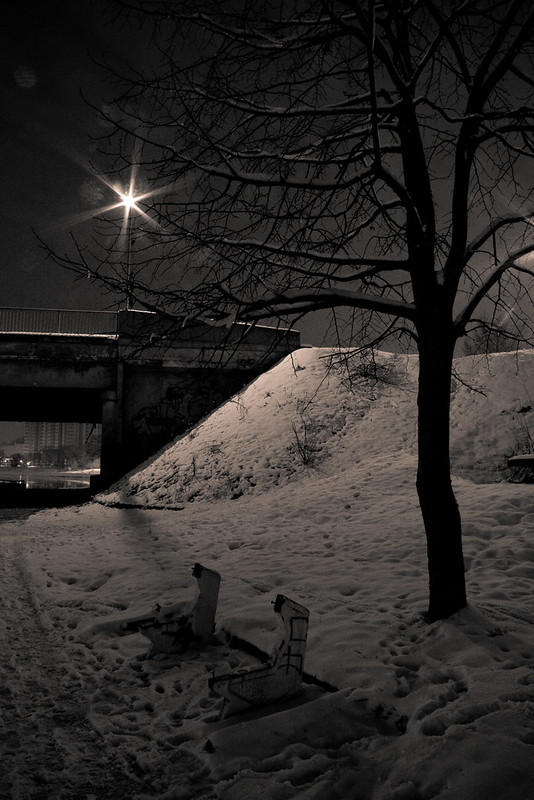
I discovered that winter lingers even on the cusp of July. Not like the witch’s enchanted Narnia (“Always winter but never Christmas; think of that”). My granddaughter wanted to watch a Christmas movie. Why not? And so we did. The hour was already late but in summer bedtimes do not matter as much (for her, anyway. I fight the good fight). Winter scenes rolled across the screen before us…an era long past, row houses standing dark in the evening, nightfall coming early, deserted streets coated in ice…for a few seconds, I was in that place, feeling the bitter bite of frigid air, the crunching under my feet, the barrenness settling into my bones. I remembered being a child in winter, walking outside, wondering at the stillness, the delicious desolation. Winter has a scent, a taste. A cleanness. A sharpness, unlike the crispness of fall. Both bracing and tiring. A paradox. Winter is halflight, chiaroscuro in gray, white, blue, and black. The stars shine crystal-bright in winter, nearer than ever.

—all this in a few seconds watching a Christmas movie on a lazy, balmy night, the last of June, when rabbits are sneaking from the woods into my yard to nibble their fill of fresh clover.

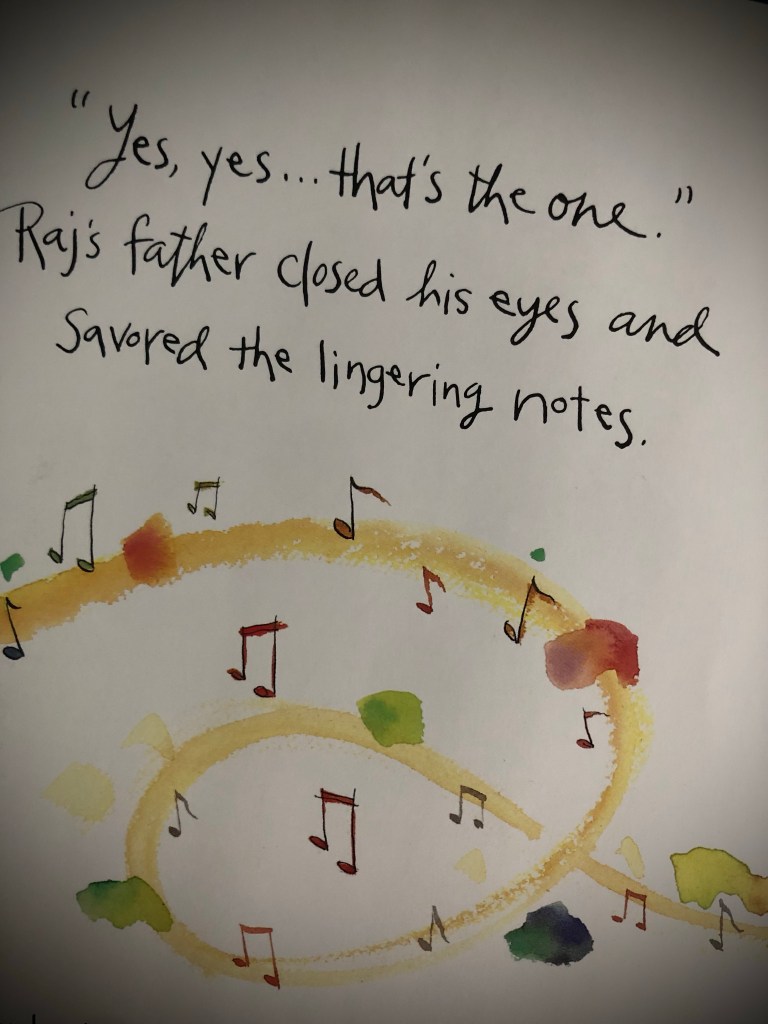
My granddaughter remained wide-eyed throughout the movie while I lapsed in and out of dreams. Then with the going-to-bed ritual of my reading her a story, she just so happened to choose a book in which the word lingering appears on the last page…

That is the magical way of that word.

Both beckoning and reminding.

For memories linger far longer than moments…

A winter night. Mourner. CC BY 2.0.