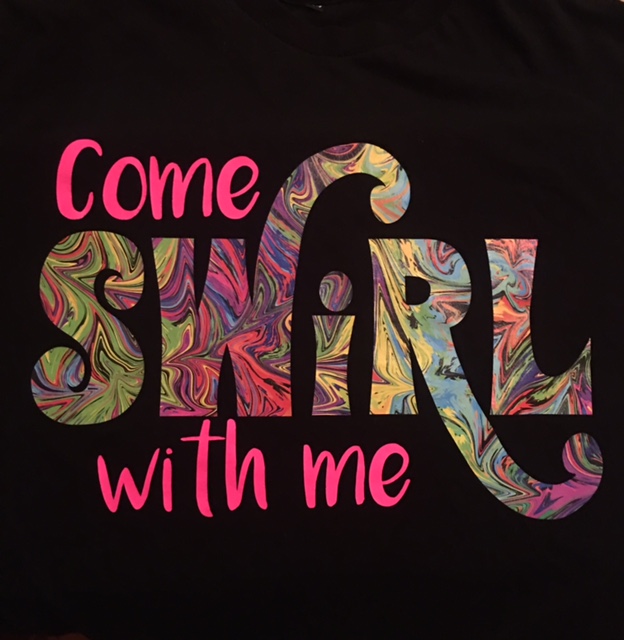
Come SWiRL with me

SWiRL

Our Literacy Lunch team’s T-shirt design

Q: What’s a fun way to engage families in English Language Arts activities with their children?

A: Have a Literacy Lunch!

Every year, families look forward to Literacy Lunch at our school. It’s one of our best-attended events.

Our theme this year, “Come SWiRL with Me,” centered on the facets or domains of language: Speak, Write, Read, Listen (we added the “i” to the SWRL acronym to make a real word), as speaking, writing, reading, and listening comprise the ELA standards and language skills needed across all disciplines.

So, grade levels came up with activities that encompassed all elements of SWRL. Some included poetry, in recognition of National Poetry Month.
 

Spring poems 1st

First graders wrote spring poems with families, to read aloud. Second graders wrote “I wish” poems.
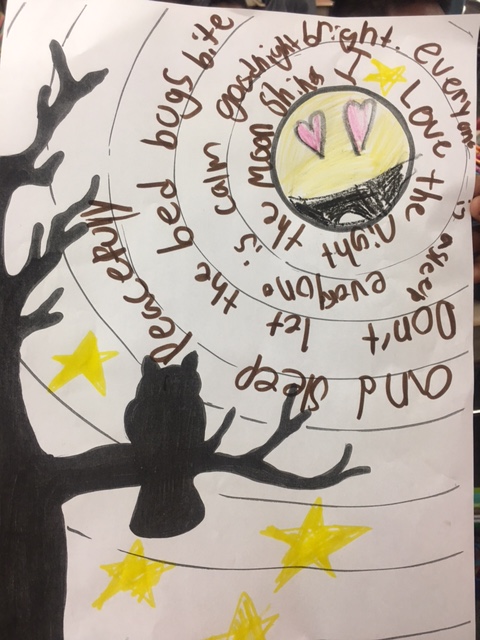
Swirl poem 4th

Fourth graders composed “swirl” poems with families.
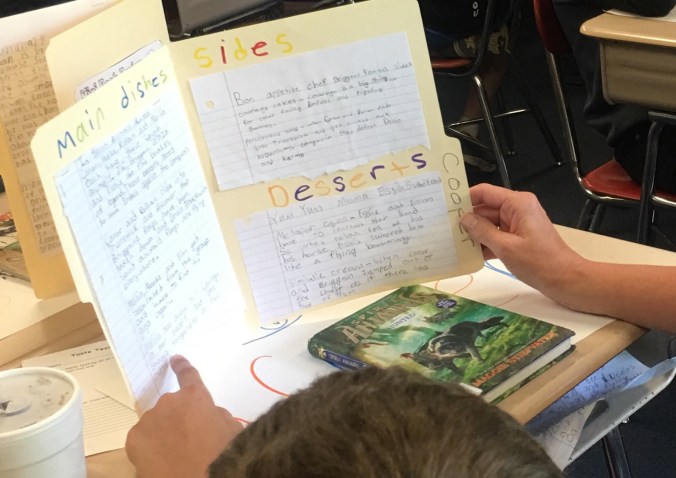
Book tasting 5th

Fifth graders treated parents to a “book tasting.”
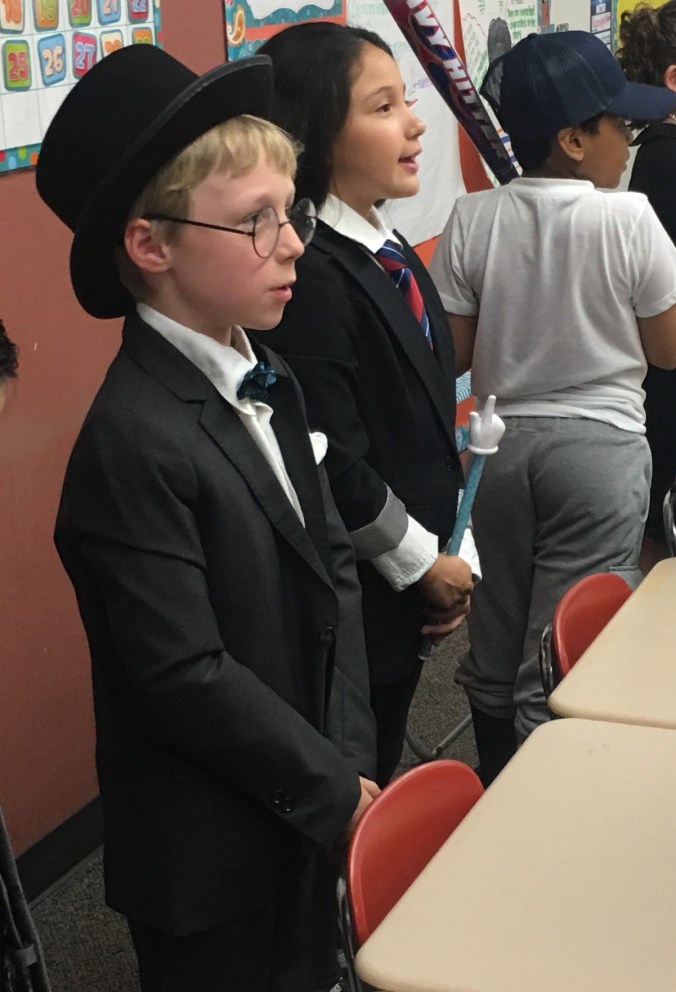
Wax museum 3rd

Third grade’s wax museum: Meet Woodrow Wilson, Frederick Douglass, and Jackie Robinson. Visitors pressed a “button” to hear the historical figures speak. This was the culmination of a biography writing unit.

After the in-class activity, families went to the cafeteria:
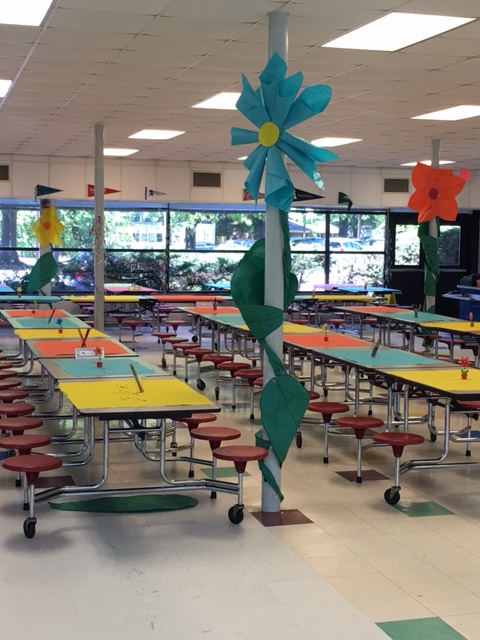
SWiRL - Cafe

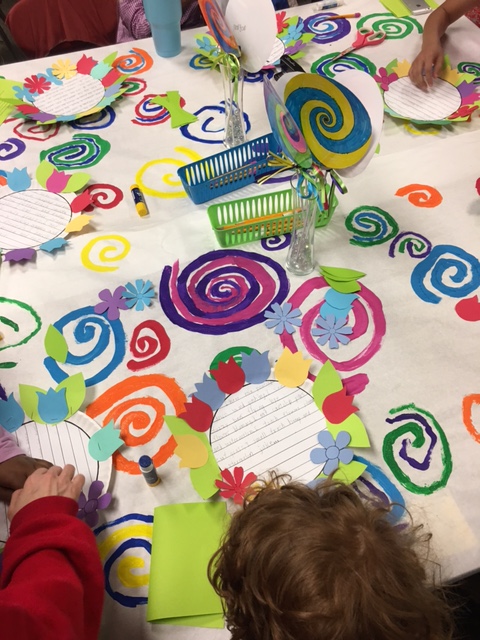
All ready for families to eat together – and to write on the tablecloth.

The children seemed to enjoy writing on the paper tablecloths at lunchtime the most – at the end of each lunch, tablecloths were covered with messages and small sketches. One carefully crayoned note from a first grader: “I love you.” Underneath, the neat printing of a parent: “I love you, too.”

Upon exiting, parents gave feedback: They were in awe of the artwork,  fascinated by the children’s ideas and their creative expression. One parent commented: “Public speaking is VERY IMPORTANT!” Another parent, after attending kindergarten’s renditions of reader’s theater, wrote: “I’ve seen so much improvement in my son’s writing and speaking.”

Perhaps most telling is this comment, one frequently echoed throughout our years of Literacy Lunches: “Thank you for this special time with my child.”

Speak, write, read, and listen well, for words are important.

So is time.
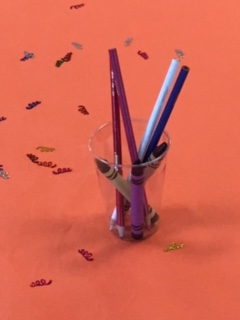
SWiRL table

Reflect: What message do you need to communicate to someone today? Make time.


Three cheers

Candles

Three is a magic number. Alan LevineCC BY

I love the sound of chimes.

I always have.

There’s something magic in those ethereal tones, something stirring, uplifting, echoing the fairy world, whispering of good things and better yet to come, hinting at happily-ever-afters. Perhaps this is why chimes sometimes play at the end of weddings, their light, airy sound signifying the beginning of a new, hope-filled chapter, the turning of a page.

Come to think of it, when I was little I had read-along books with audiotapes that chimed when it was time to turn the page.

The telephone on the kitchen wall of my childhood home was avocado green with a six-foot cord, and instead of ringing, it chimed. Visitors always said, “There’s the doorbell,” and we always responded, “No, that’s the phone.”

I never knew of anyone else’s phone that chimed like mine.

As a teenager my pulsed quickened at the sound, because I was sure the chiming meant someone was calling for me. It often was. I stretched that cord at least another two to three feet, enough for me to sit on the bed in my room and talk with the door closed. Yes, on the cord.

My smartphone is set to chimes now. When it rings, the melodic tones are like strings of tiny silver plates in the wind.

Perhaps no chime has given me as much pleasure as that of my WordPress app, however.

For me, that’s truly the sound of celebration.

I’ve heard this chime so often in the past month, denoting likes and comments on Lit Bits and Pieces during the Annual Slice of Life Story Challenge with Two Writing Teachers. The chime has come to represent the warmth of this community, the connection of minds, hearts, and kindred spirits, reiterating the power, the magic, of words. I am a first-time slicer and the words of others have borne me far in the completion of thirty-one posts in thirty-one days.

This is the thirty-first post. With it, I cross the finish line – my first cheer.

The WordPress chime also proclaimed two other milestones, two days ago:

Lit Bits 50

I hit the 50-post mark. My second cheer.

Lit Bits Anniversary

Lit Bits and Pieces turned one year old on March 29th, along with my first post. Cheer number three.

When I started Lit Bits and Pieces a year ago, I asked a friend to give me feedback. The friend said: “Hmmm. What’s your niche? Your target audience?”

I said, “I don’t really have a target audience in mind. I just want to write whatever I want to write.”

The friend looked skeptical.

I added, “It’s for human beings.”

To you, Dear Reader, I leave three parting thoughts on this Lit Bits and Pieces celebratory post. Chimes play for you, somewhere in the wind – I hope you hear them as you read:

  • Do, or do not. There is no try. -Yoda
  • Inspire. That means be a life-breather of ideas, tiny notions of stories. – Avi
  • Write.

 slice-of-life_individual31-day-streak-with-border


O. Henry

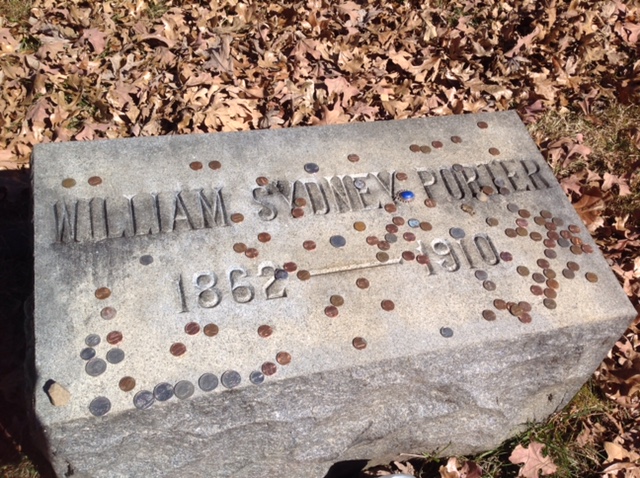
O. Henry grave 

Fall comes early in Asheville, North Carolina. The air is chilly when I get out of the car at the cemetery to visit the grave. I think of winter coming, of Christmas, of this writer’s most famous work. I take a picture, marveling at the coins spread over the gravestone. As I turn to go, a frigid wind gusts, scuttling leaves over the ground and across the driveway.

Leaves . . . I remember that story.

O. Henry’s headstone is covered in coins, mostly pennies, which usually add up to $1.87 –  the amount of money that Jim and Della had at Christmastime in his famous short story, “The Gift of the Magi.” This shortage of money is why Jim sold his gold pocket watch to buy combs for Della’s beautiful hair, and why Della cut and sold her hair to buy a platinum fob chain for Jim’s prized watch. Their sacrificial love for one another has made the story an enduring classic.

There is another story of O. Henry’s that I love almost as well.

I remembered it as I planned to write “Oh, Henry,” yesterday’s post about my son’s dog. I should write about O. Henry next, I smiled to myself. A little word play with the titles. How enticing.

That’s when I thought about the fallen leaves blowing over the writer’s grave.

I scrounged up my old paperback copy of O. Henry’s short stories and reread “The Last Leaf.”

In this tale, two young artists live in a three-story Greenwich Village building. One of them becomes sick with pneumonia. She watches the leaves dropping from an ivy vine against the wall just outside of her window, convinced that she will die when the last leaf falls. To her astonishment, the last leaf hangs on through high wind and rain. To make a short story shorter, the leaf remains because an old artist in the building crawled up a ladder in the dark of a raw November night and painted it on the wall with the vine. The girl begins to recover and the old man, Behrman, dies of the pneumonia he catches from being out in the weather while painting that night.

The old artist had always wanted to paint a masterpiece and never pulled it off – but the last lines of the story have the roommate telling the recovering girl about the leaf: “Didn’t you wonder why it never fluttered when the wind blew? Ah, darling, it’s Berhman’s masterpiece – he painted it there the night the last leaf fell.”

Self-sacrificial love at work again – but there’s more to it.

That leaf symbolized hope, sparking the desire to strive, to overcome. The old artist’s small gesture inspired the young artist to keep living.

This leaves me thinking, in the course of our days as teachers, as writers: Are we not the artists who paint the pictures of possibility, of hope, in the minds of others? Do we spark in others a desire to strive, to reach for what’s beyond their grasp, or to hang on only long enough until this, too, shall pass?

Our masterpieces may never be world-famous; they may be as simple as knowing the right word, the right idea, the right vision, the right story, and sharing it when it is most needed. Inspiration leaps from one heart to another, creating something to hang onto, outlasting high winds and rain. We may never see the full effect of our work, but that’s all right.

We paint the leaves where we can.

I close my old paperback book.

O. Henry, I am so thankful you were here.


slice-of-life_individualEarly Morning Slicer


Forgotten

Forgotten

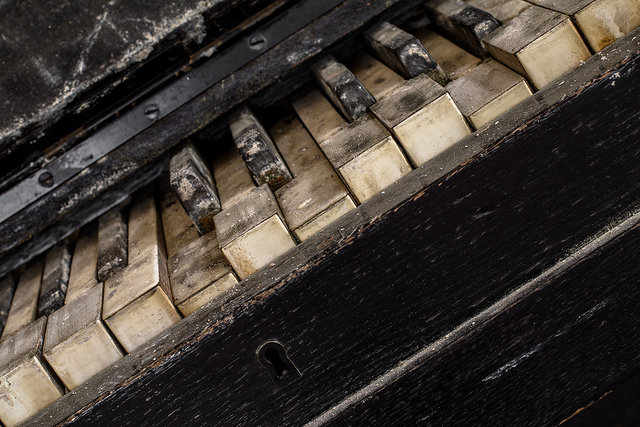
Forgotten Sounds Pt.II. Marco NurnbergerCC BY

Memory makes us. If we couldn’t recall the who, what, where, and when of our everyday lives, we wouldn’t be able to function. – “Memory Basics,” Psychology Today

This week, I remembered a poem I wrote as a teenager.

Some of the lines returned to me, complete and clear.

I couldn’t recall other lines at all.

I wrote the poem after a dream. In this dream, I was with a group of young people around my own age in a deserted beachy area with trees. We had reunited there on a hazy afternoon when the light is most golden, just as the sun begins to set, and with great joy, we began singing.

Except that I really did not know these people, this place, this song. In the dream I knew I was supposed to know all of these things, and I didn’t. I was meant to belong, to be a part, and I couldn’t. The sense of mounting sadness over the desperate attempt to remember the significance of these people and the words to the beautiful song so that I could join in was overwhelming.

The dream haunted me so that when I woke, I wrote the poem.

Remembering my poem for the first time in years, I wanted to reread it, to recapture the lines that were missing in my memory. I could envision the little stapled booklet I made, could actually recall other poems I wrote in it, word for word.

I couldn’t find it.

I searched everywhere I thought the booklet ought to be – I could not remember where I put it.

Things like this become compulsions for me. The more I searched without success, the more determined I became to find the missing poems.

At some point I realized the many layers of irony folded into this situation: I wrote a poem about forgetting something I could not remember in the first place, because I wanted to remember the experience; not remembering all the lines compelled me to read it again, and I forgot where I put it.

I began to think about what dementia patients must feel like.

But I kept looking, and yesterday, in a box of old notebooks, in a planner under some loose papers, I found it:

Forgotten Remembrance

My mind, it plays a melody

That it hasn’t ever heard

A voice sings in my memory

But remembers not a word

Faces I don’t recognize

Are singing this with me

Sadness streaming from my eyes

Such a haunting harmony

I hear the music chiming there

And then again it’s gone

Hidden in my mind somewhere

Chiming off and on

I ought to know this tune

These words I’ve sung before

I’ll try to learn them very soon

So I can sing them more

I can’t remember this refrain

I’ve forgotten it this far

My mind cries out to know this strain

And what the lyrics are

But all I know is sorrow

A deep and dark despair

I’ll cry and cry tomorrow

For what was never there.

At last. My mind can rest now.

I certainly can’t end on such a dark note, so today I pay tribute to the vital, mysterious power of memory, how it makes us who we are; to writing, which preserves who we are at various points in our lives and sets us free from whatever haunts or hurts us; and to the foresight of my young, rather gothic self for having grasped it.


slice-of-life_individual


The Writing Spa

Welcome to the Writing Spa.

Please put your things down and help yourself to salt scrub – wash your hands and refresh.

Or have some aromatherapy lotion.

Listen to the soft music, the sound of the ocean with the occasional distant gull.

That fragrance in the air? That’s a pillow mist. It’s called Peaceful.

Yes, it does smell very spa-esque, doesn’t it?

Today we will write. It’s so important that teachers of writing write themselves, with and for students.

Today you write for you.

You have a choice of stations: Refresh, Evoke, Escape. Start wherever you like. If there’s time, we will get to all three; if not, certainly two.

Let me explain.

The Refresh sign bears the Isak Dinesen quote: “The cure for anything is salt water: sweat, tears, or the sea.” Which salt water form grabs you first? Close your eyes and envision a scene where this salt water form played a significant role. Where were you? Who was with you? Get back into the moment – show, don’t tell.

Here’s an example, a time when tears played a healing role in my life ….

The sign at the Evoke station reads: “Nature speaks and wafts her perfumes. Capture it.” This is meant to connect us to the natural world with sounds and scents that lift our spirits and make our hearts rise. Write about any sound or any scent that does this for you, and why it has this effect. Who or what is associated with it?

I chose sound. I wrote about cicadas in the summer and what this evokes for me. I will share ….

The last station is Escape. There’s a place you long to return to – why? Who or what is connected to that place? Capture it in detail so the reader goes there with you. Share the reason for its specialness to you.

Here’s one of my special places. I only went there once ….

The teachers write. Some have tears in their eyes; some stop to look into the distance, far beyond the walls of the room, to different places, conjuring different images in each of their minds. The music is soothing. We are breathing in Peaceful. When it’s time to stop, those who wish to share their writing do so with one another; those who’d  rather not share are willing listeners, ready to give positive responses on the strength of the writing. There are more tears. There are also smiles, even a small eruption of laughter at the humor in someone’s writing.

We rotate and repeat.

For reflection, they write a takeaway for themselves and one for their classrooms. They write on white paper. 

Ball up your white paper. This is the Invigoration piece of the spa – we will now have a snowball fight! Have at it!

Much laughter ensures as teachers throw “snowballs” at one another. We stop; they choose a snowball and open it up to read to a partner. No one knows who wrote what and reflections that strike chords are shared with the group. We go another round. 

I hope you enjoyed your Writing Spa, everyone. However you view yourself as a writer, the goal for today is that you found writing a pleasurable experience. Writing must be pleasurable for teachers to be pleasurable for students. We create the atmosphere for writing in our rooms. Think of ways you might adapt what we’ve done here for your kids – pay it forward.

On your way out, by the door, there’s a basket of chocolate – help yourself to Chocolate Therapy. 

Go forth in writing wellness.

*******

I did two variations of the Writing Spa, one with teachers at my school last December and one on Monday with teachers attending the North Carolina Reading Association Conference. Improving writing instruction has been a major focus at my school for a couple of years, the most frequently-requested area of support. The spa was born from a synthesis of ideas: Teachers, however they feel about writing, need to have enjoyable experiences with it; professional development needs to lift teachers’ spirits; writing is about going deep, tapping the power that lies within us.

You are welcome, if you like, to read my sound and place pieces shared for Evoke and Escape.

I’m still working on my salt water piece.

(I finished itBaby’s breath)

slice-of-life_individualEarly Morning Slicer


Where the meaning is

My colleague is weeping.

She’s just read aloud a passage from The Unstoppable Writing Teacher: Real Strategies for the Real Classroom by Colleen Cruz, specifically from Chapter Five, entitled “I’m finding some student writing repetitive and boring.”

In this passage Cruz  relates the story of being observed by teachers who said that some students in the class had chosen “boring … almost shallow” personal essay topics. Cruz confers with one of these students. He’s writing about why Christmas is his favorite holiday – his reasons are the food, the presents, watching videos. As Cruz continues to converse with the boy, she feels pressure building under the skeptical eyes of the observers; the conferring is going nowhere. But Cruz presses on. She keeps talking, feigning enthusiasm: “There’s just so much to say about videos on Christmas. I would love to hear what you have to say about them.”

And then the boy explains that every year on Christmas, after the presents are opened, his mom lets him watch all their previous Christmas videos, when his dad was alive. She can’t endure the videos during the rest of the year, but at Christmas she watches them with her son.

“It’s like we’re all together again,” said the boy.

Like Cruz and the observing teachers in the story, my book study colleagues and I all have tears in our eyes.

I write in the margin of that page: Go deeper and deeper to the meaning. 

I think about a second grader writing realistic fiction. Her first attempt at dialogue was rambling, pointless; the characters were talking but not saying anything. When I mentioned that we can add things from our own lives to make characters think and feel things that we do, to “make it real,” she revised the dialogue to a conversation about a girl who was worried about her new stepfather liking her. When she read it to me, I said, “Wow, your story really came to life there! What made you write about the girl’s worries over her stepfather?”

The child answered, solemnly, “My mom is getting married next weekend.”

I think about a girl describing how she and her grandmother waded through the regular flooding of their impoverished hometown in Viet Nam.

I think about a fifth-grade boy who never liked writing, how he developed an enthusiasm for it with his memoir on making the hard choice to tell the truth after having lied. A girl new to the school wrote about a girl having to move often. The piece opened with the narrator shouting at her mom; the anger was palpable.

A dim recollection of the movie Where the Heart Is flits through my mind – the young pregnant girl pressing a hand against her abdomen, saying, “That’s where the heart is.”

Cruz says students “have a subconscious need to write about particular topics, but they don’t consciously know why.”

Our job, then, as writing teachers, is to help students go deeper to the why, to where the heart, the meaning, is.

slice-of-life_individualEarly Morning Slicer


Morning snow

Snow

There was crisp, dry snow under his feet and more snow lying on the branches of the trees. Overhead there was a pale blue sky, the sort of sky one sees on a fine winter day in the morning. Straight ahead of him he saw between the tree trunks the sun, just rising, very red and clear. Everything was perfectly still, as if he were the only living creature in that country.

-C.S. Lewis, The Lion, the Witch and the Wardrobe

Snow swirled down in the gray dawn yesterday, winter whispering farewell in its dying breath: I’m still here, but not for long. Just one more time . . . .

There’s a silence, a stillness, to Sunday mornings anyway, a sense of expectancy, an invitation to step away from the world.

Of course I think of Narnia. I always do when it snows.

I was ten years old, scouring the school library shelves for a book I hadn’t read yet, when I encountered a compelling title: The Lion, the Witch, and the Wardrobe. 

“Sounds interesting,” I thought, opening the cover, not realizing that it was a portal to another world that I’d never fully leave  – or want to leave. I fell in and never climbed all the way out again. Part of that pull is the longing C.S. Lewis infused into the Narnia Chronicles, the sense of “realness” that pervades the magic. Lewis poured what he loved into the stories, and they live because of it.

Having facilitated a writing workshop for teachers just the day before on “creating the magic” – writing about what matters to you, tapping into your heart, your dreams, your struggles, your memories, making your writing authentic so you can help students do the the same – I watched the snow, remembering Narnia.

Writing is the closest thing to magic that there is. As teachers we create the atmosphere for our writers. It’s one of excited expectancy, of energy, when young writers discover the power within them, learning how to harness words to impact readers. Writing, after all, is meant to be shared – it’s the connecting of human minds and hearts.

Which is why, for me, Narnia is never very far away.

Especially when it snows.

slice-of-life_individualEarly Morning Slicer


All that you hold dear

Fawn in hands

A new idea is fragile, fleeting

capture it as soon as you can.

Find the meaning

what it makes you think

how it makes you feel.

Nurture it

as you nurture the artist within you

so the idea and the artist will grow.

Play with the words

the images will come.

Play with the images

the words will come.

Trust your inner writer

to find a way

of conveying that idea, that image

so that others think and see

and feel.

There’s power in that fledgling thought

in every feeling connected to

 all that you hold dear.

More power in sharing it

than in holding it tight, unspoken.

Let it breathe

let it live.

It wants to.

It is precious.

Even

priceless.

Inspired by my writing workshop with teachers yesterday on “creating the magic”  – first as a writer, then for your writers.

slice-of-life_individualEarly Morning Slicer

Six-word memoir

Words pour in

“What do you love best? How can you use the things you love to represent you, to describe who you are, in just six words?”

I pause to let the fifth graders think.

“One thing that I love,” I continue, “is the sound of cicadas. Have you heard that sound?”

Hands shoot up. I nod to a girl who replies: “Those bugs that buzz really loud.”

“Yes. Every spring I look forward to hearing the cicadas again – they will buzz all summer long. They remind me of summers spent with my grandparents. The sound was deafening in the thick woods around their home. Hearing cicadas now makes me feel happy and safe, no matter what else is going on. It’s one of the things I love best. So I might try to write my six-word memoir about the sound of cicadas.”

With pencil on paper, using the document camera, I write:

Nature sings to me. I listen.

I see heads nodding.

“I might keep working these six words to see if I can make them represent me better. I might decide to work on another idea. Today you will make a list of things that you love – maybe things you love to do, or favorite objects, or even dreams you have of things you want to do or be – and think about how each thing represents you. Then we will work on capturing and hammering out those descriptions in just six words.”

Off they go around the room, to brainstorm.

I brainstorm, too. What else can I write? What’s another example I can give them?

Well, as far back as I can remember, I loved reading and writing – it’s who I am. It’s what I do. It’s why I’m in this very room this very minute, teaching it.

I think about it all night, and am ready for the next lesson.

“So, ladies and gentlemen, yesterday we brainstormed ideas for writing our six-word memoirs. We thought of things we love and how they might represent us. I thought of something else to represent me. Let me ask you: What do you think represents me? Think about what I do and what you know about me.”

A boy waves his hand: “I know! Harry Potter!”

The class giggles and a few say, “Yessss!”

I laugh. “Excellent. But think bigger than Harry Potter, if possible! Think about who I am and what I do.”

A quiet girl’s hand sneaks up. “You teach reading and writing.”

“There you go. I’ve loved reading and writing all my life. I think this idea might be a great choice for a six-word memoir. It really describes who I am. I have to think now about how to capture this idea in six words.”

With pencil, paper, and the document camera, I write:

I read, I write, I am.

Heads nod – and an image materializes in my mind just then.

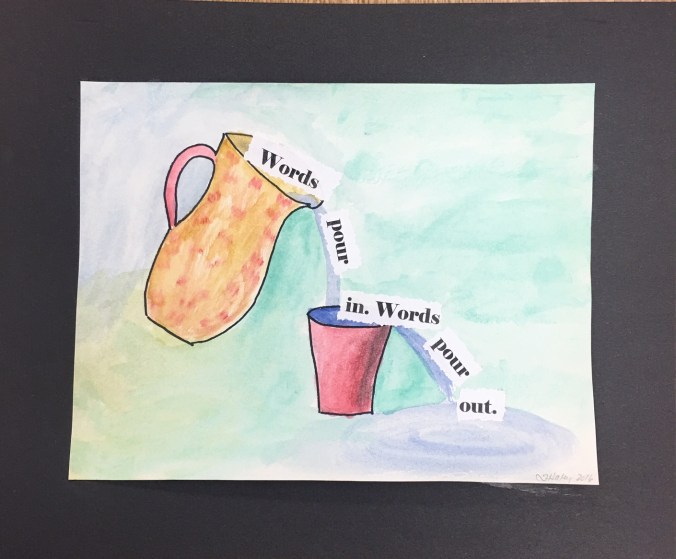
A pitcher, a glass, water pouring . . . .

“I just got an idea of how to make this better!”

I write:

Words pour in. Words pour out.

The children study these words.

“What do you think this means, ladies and gentlemen?”

A boy says, “First you wrote I read, I write, I am and you said you could make it better so I think you mean that if words pour in, you’re reading, and if words pour out, you’re writing.”

Across the room, faces light up.

I smile. “Well done. For a few minutes, share your ideas with your partner and talk about possible ways to begin writing your six-word memoir. Then we’ll all write.”

I listen as the ideas flow in and out, with a hum as vibrant as that of cicadas.

(If you’re interested in reading an earlier Slice on the sound of cicadas: Cicada rhythm)

slice-of-life_individualEarly Morning Slicer

Writing the truth

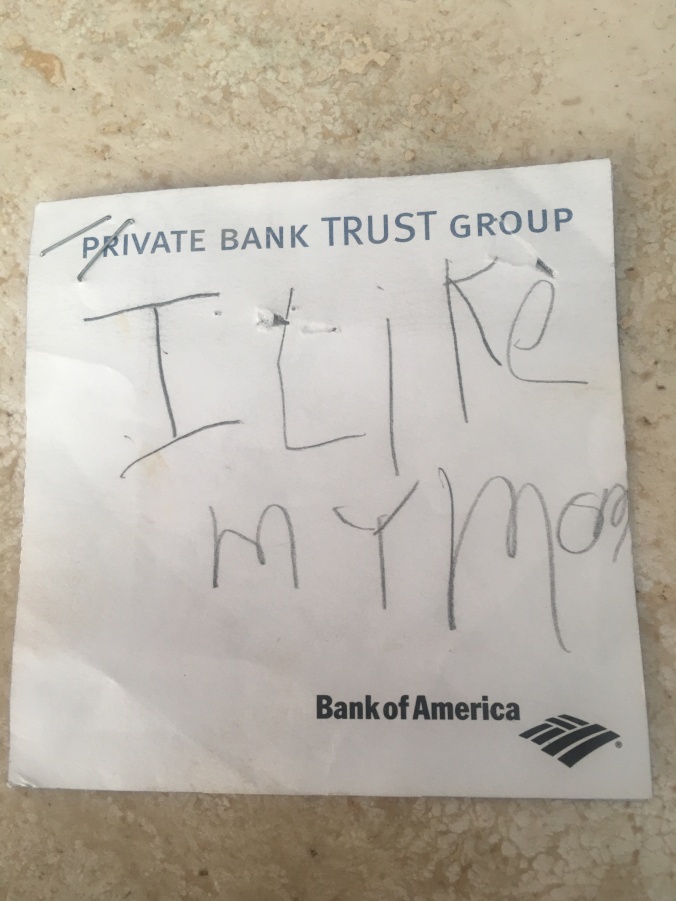
i-like-my-mom

Ernest Hemingway once said that it is the writer’s job to tell the truth. In A Moveable Feast, he describes his process:

“All you have to do is write one true sentence. Write the truest sentence that you know.”

I am sharing here one of the truest pieces of writing I have ever seen.

The background: When he was small, our younger son often went with my husband to church early on Sunday mornings. The little fellow sat in the church office and busied himself with writing sticky notes that he delivered to me on my arrival.

I saved them – they’re all in the bottom of my jewelry box.

This one is my favorite. As you can see, the note says “I like my mom.”

Not love, mind you . . . .

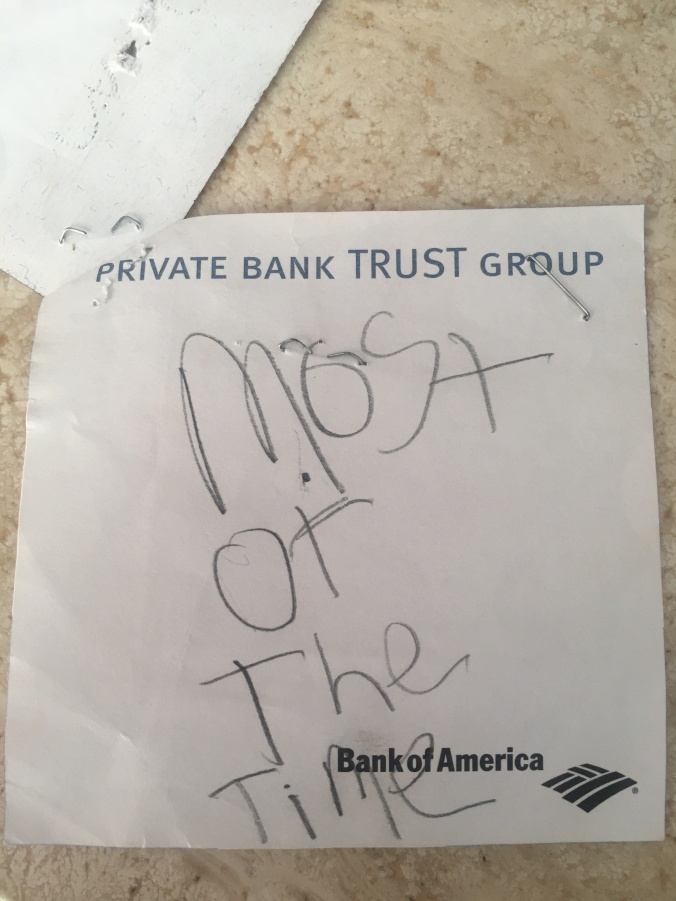
But this is a two-pager (see the staples?). The sentence continues on Page Two:

most-of-the-time

“I like my mom – most of the time.”

I ask: Has a truer sentence ever been written?

slice-of-life_individual